Living Trust Agreement
Description




Get your form ready online
Our built-in tools help you complete, sign, share, and store your documents in one place.
Make edits, fill in missing information, and update formatting in US Legal Forms—just like you would in MS Word.
Download a copy, print it, send it by email, or mail it via USPS—whatever works best for your next step.
Sign and collect signatures with our SignNow integration. Send to multiple recipients, set reminders, and more. Go Premium to unlock E-Sign.
If this form requires notarization, complete it online through a secure video call—no need to meet a notary in person or wait for an appointment.
We protect your documents and personal data by following strict security and privacy standards.

Make edits, fill in missing information, and update formatting in US Legal Forms—just like you would in MS Word.

Download a copy, print it, send it by email, or mail it via USPS—whatever works best for your next step.

Sign and collect signatures with our SignNow integration. Send to multiple recipients, set reminders, and more. Go Premium to unlock E-Sign.

If this form requires notarization, complete it online through a secure video call—no need to meet a notary in person or wait for an appointment.

We protect your documents and personal data by following strict security and privacy standards.
Looking for another form?


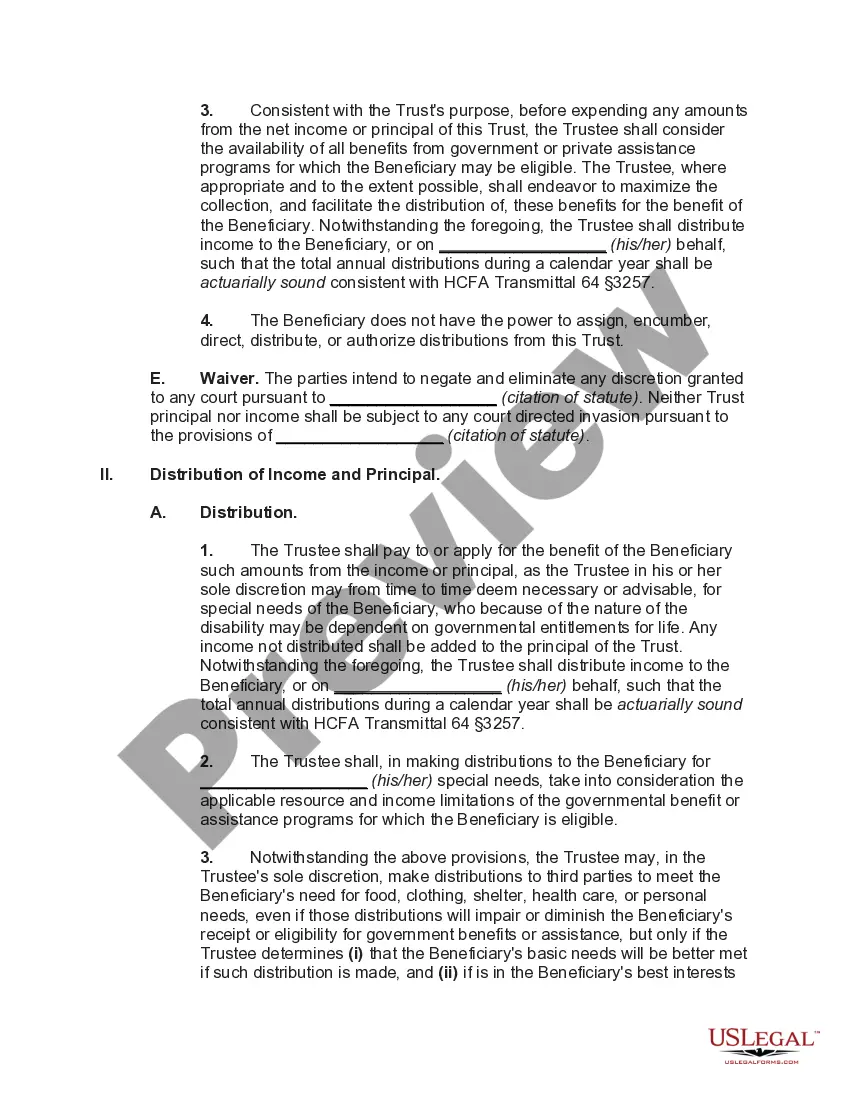
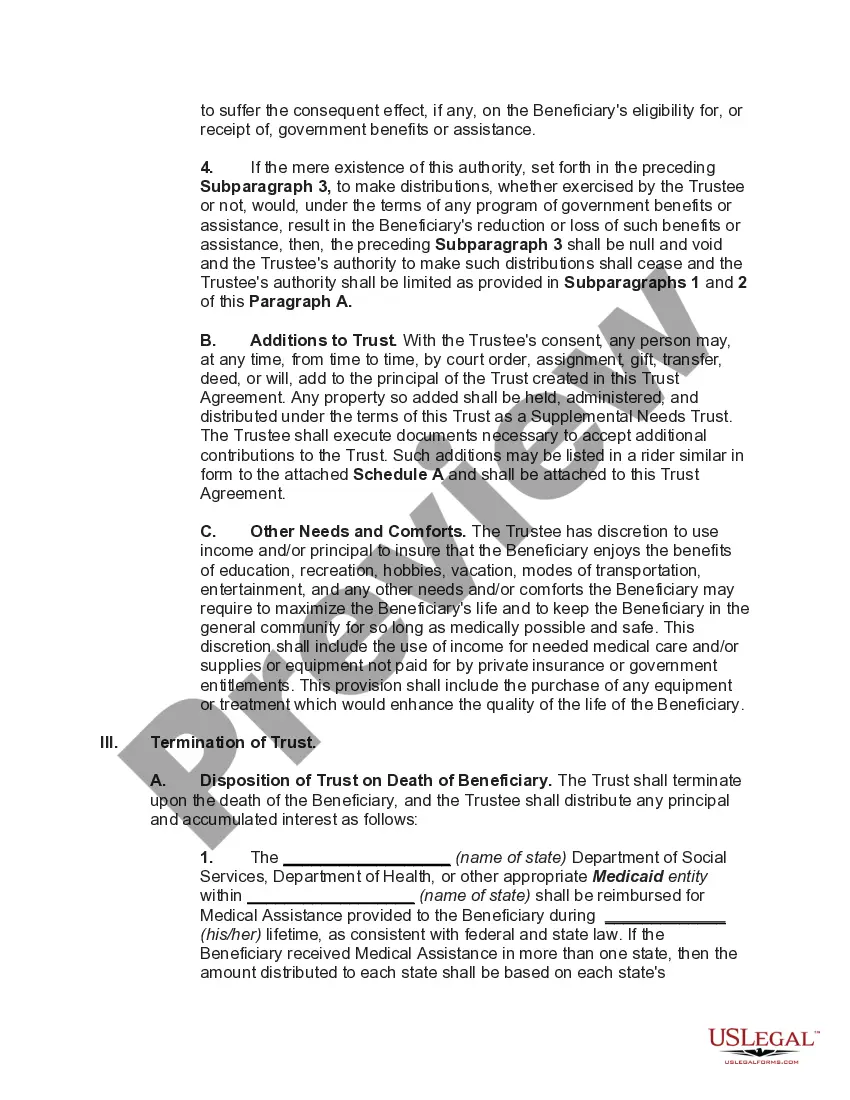
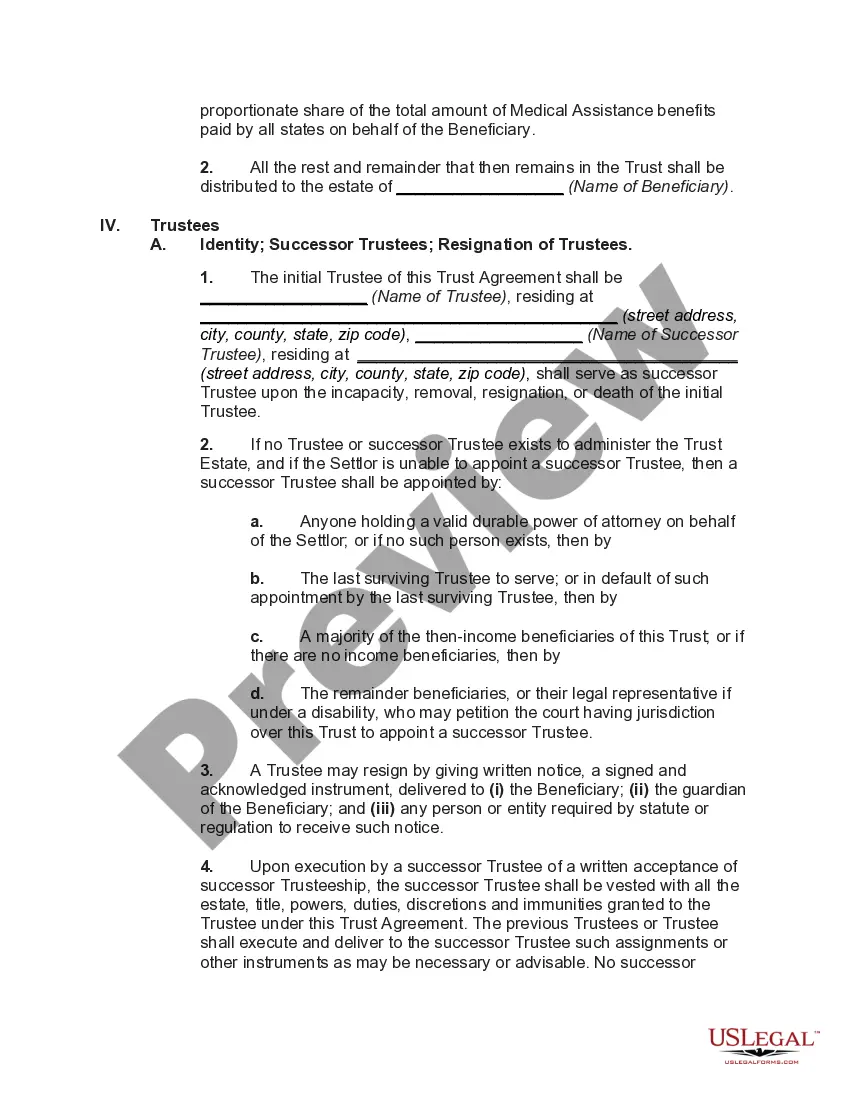
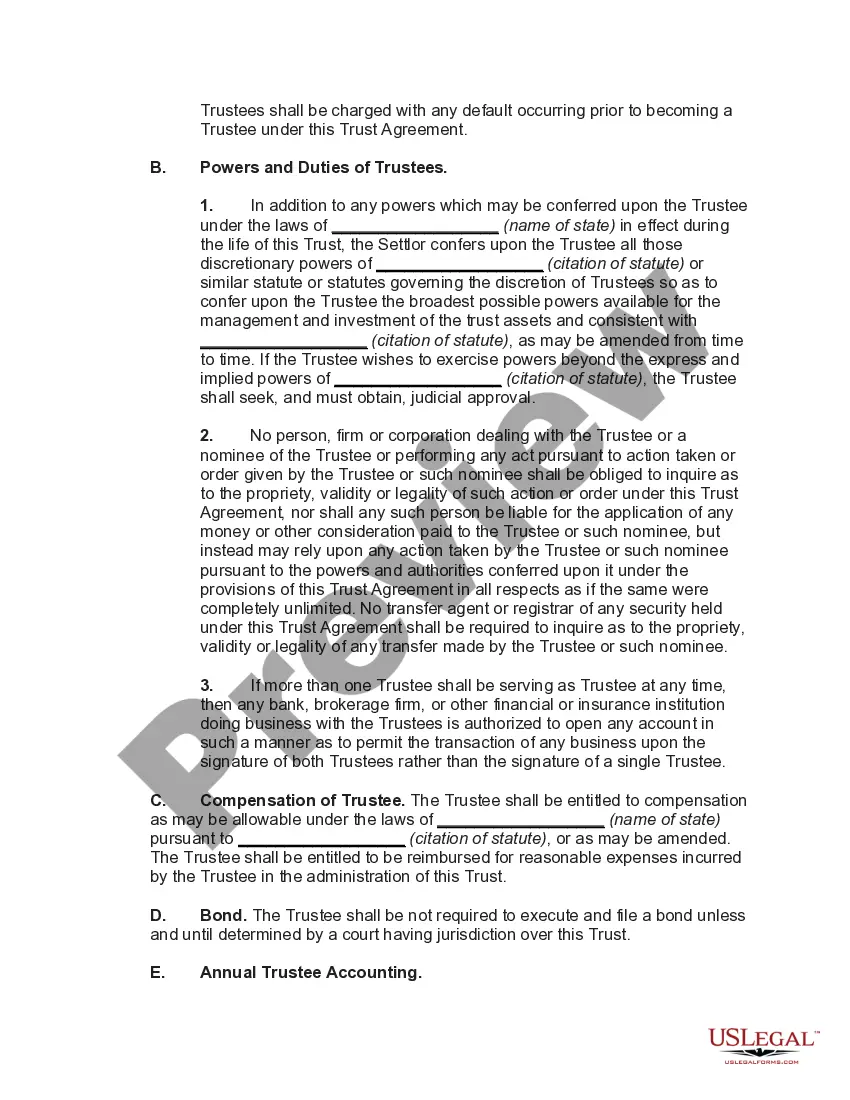
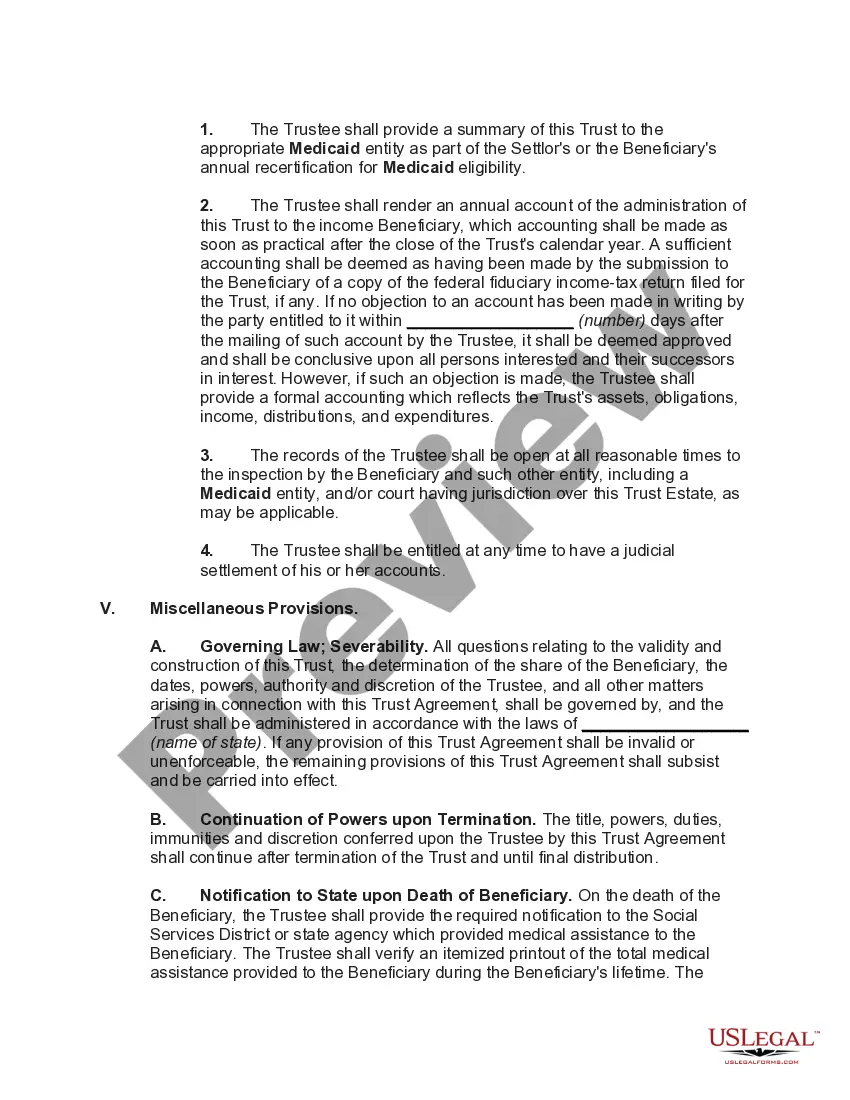
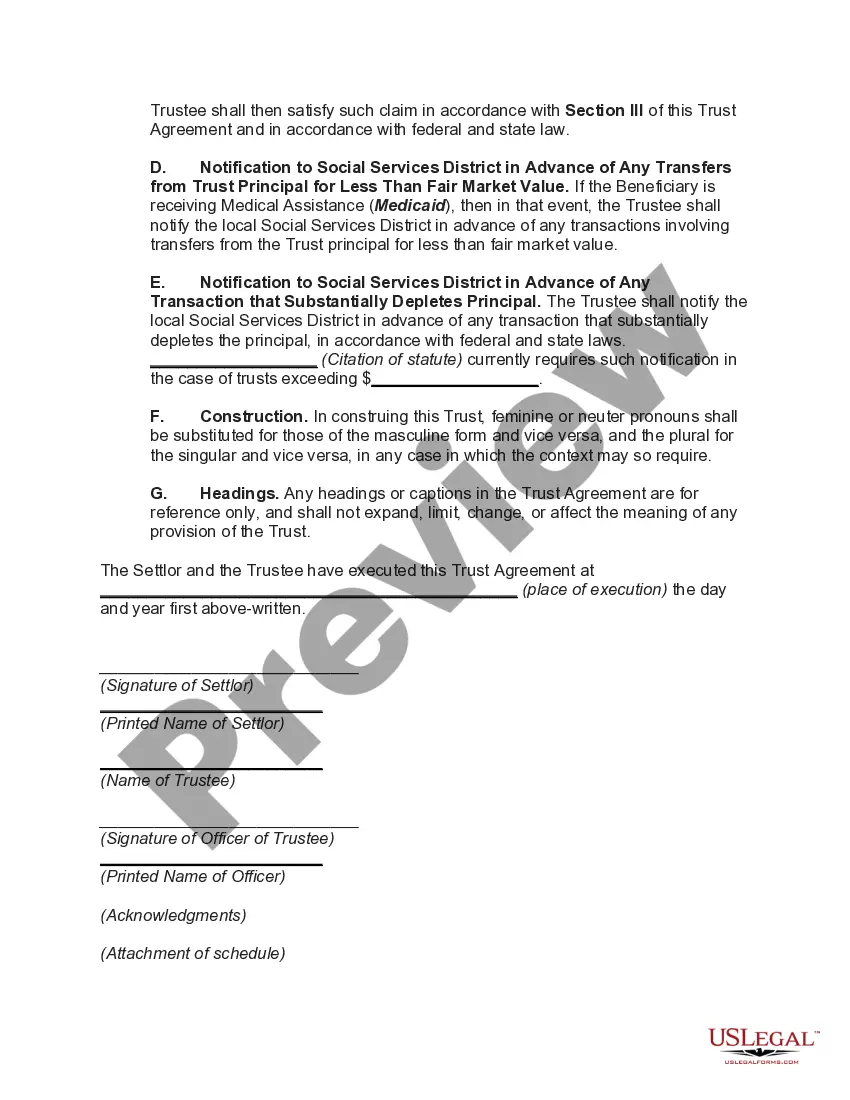
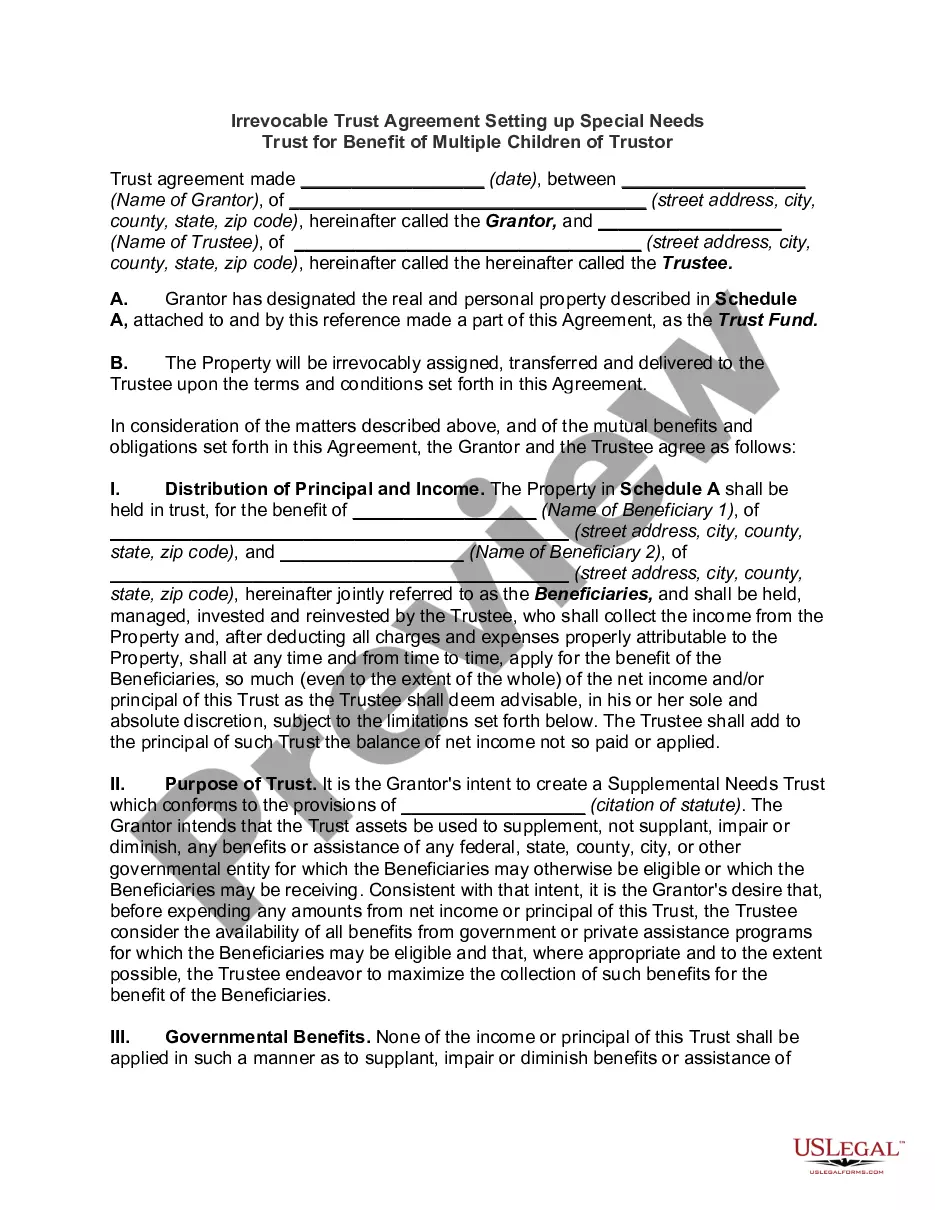
How to fill out Special Needs Irrevocable Trust Agreement For Benefit Of Disabled Child Of Trustor?
- Log in to your US Legal Forms account to access your documents if you're a returning user. Ensure your subscription is active; renew if necessary.
- If you’re new to the service, start by browsing the templates. Use the Preview mode and read the descriptions to find the living trust agreement that best suits your needs and complies with your local laws.
- If you need to refine your search, utilize the Search feature to locate an alternative template that meets your requirements more accurately.
- Once you've found the appropriate form, click on the Buy Now button. Choose your preferred subscription plan and create an account to access additional resources.
- Complete your purchase by entering your payment information via credit card or PayPal.
- Download the completed living trust agreement to your device, and access it anytime from the My Forms section of your profile.
The process of obtaining a living trust agreement through US Legal Forms is straightforward and efficient, helping you secure your assets with confidence.
Explore the vast collection of over 85,000 legal forms today and empower yourself to create legally sound documents with ease!
Form popularity
FAQ
In California, trust documents, such as a living trust agreement, do not need to be recorded with the county recorder. Trusts remain private documents, allowing you to retain control over your assets without public disclosure. However, if your trust holds real estate, you may need to record the deed transfer to ensure proper title ownership. If you require further assistance, US Legal Forms can help you with the documents necessary to manage your living trust agreement successfully.
Finalizing a living trust agreement in California involves several steps. Start by executing the trust document properly, ensuring all necessary signatures are in place. Next, fund the trust with your assets by transferring ownership into it, which solidifies its authority. For detailed guidance, US Legal Forms offers templates and resources to help you navigate this process effectively.
No, a trust does not have to be filed with the court in California. Filing a living trust agreement is optional since it functions outside of the probate system. This means you can execute your plans without the public scrutiny or costs associated with court proceedings. Should you need assistance, US Legal Forms can provide valuable resources for establishing your living trust agreement seamlessly.
In California, you typically do not have to file a living trust agreement with the court. A living trust is a private document, allowing you to manage your assets during your lifetime and distribute them after your death without court involvement. However, you might choose to file certain documents if disputes arise or if the trust includes real estate. It's best to understand your specific situation, and platforms like US Legal Forms can guide you in creating and managing your living trust agreement.
The primary purpose of a living trust agreement is to manage your assets during your lifetime and dictate their distribution after your passing. This type of trust helps avoid probate, which can be lengthy and costly for your heirs. Additionally, it allows you to maintain control over your assets while you are alive and ensures that your wishes are honored when you can no longer make decisions. For a seamless experience, consider using uslegalforms to create your living trust.
While a living trust agreement offers several benefits, it has some potential pitfalls to consider. First, creating a living trust may involve upfront costs for legal fees and setup. Second, assets must be re-titled to the trust, which can be overlooked and lead to complications later. It's crucial to weigh these factors and possibly seek guidance from a professional to ensure it aligns with your estate planning goals.
Typically, certain types of assets cannot be placed in a living trust agreement. For example, retirement accounts like 401(k)s and IRAs usually require specific beneficiary designations instead of being held in a trust. Additionally, life insurance policies should maintain direct beneficiaries outside of the trust. Therefore, it is advisable to consult with a knowledgeable estate planner to optimize your asset allocation.
Filling out a living trust agreement involves several key steps. First, you need to gather all necessary information about your assets and beneficiaries. Next, you should use a reliable template or form, such as those offered by UsLegalForms, which guides you through each section. Finally, ensure that you sign the trust agreement in front of a notary to make it legally binding.
One of the most common mistakes parents make when setting up a trust fund is failing to properly fund the trust. This oversight can result in assets remaining outside the trust, negating its benefits. To avoid this pitfall, carefully ensure that all intended assets are transferred into your living trust agreement, thereby securing your family’s financial future.
Creating a living trust by yourself involves a few key steps, including identifying your assets and drafting the trust document. You will also need to decide on your trustee and beneficiaries, clearly outlining their roles. With resources available on uslegalforms, you can easily navigate this process, ensuring your living trust agreement accurately reflects your wishes.