Irrevocable Trust Trustor With Trust
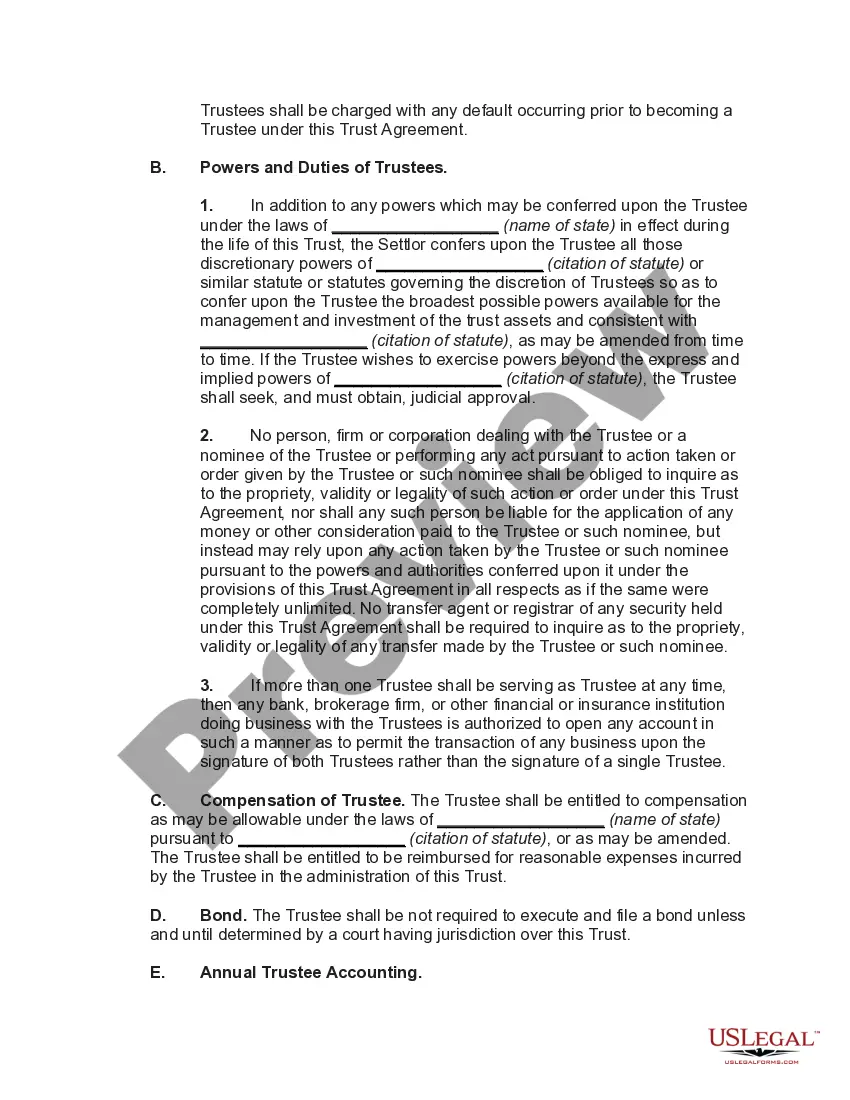
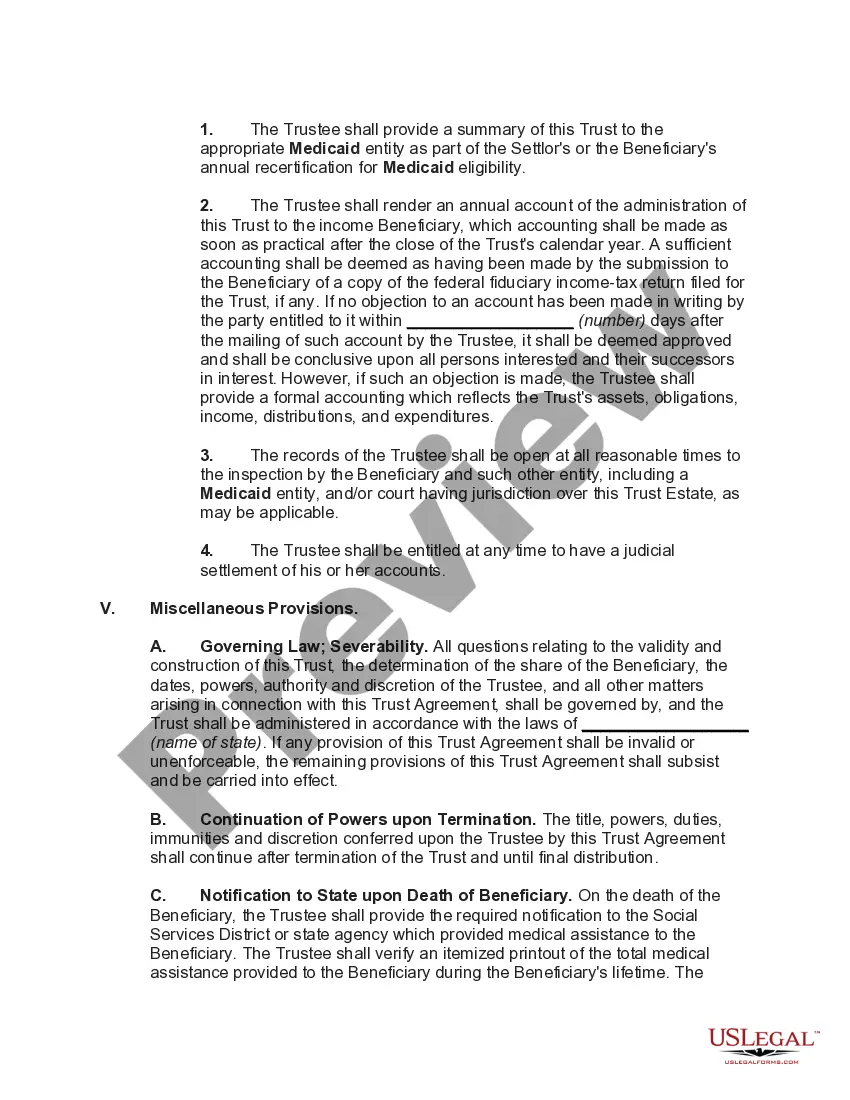
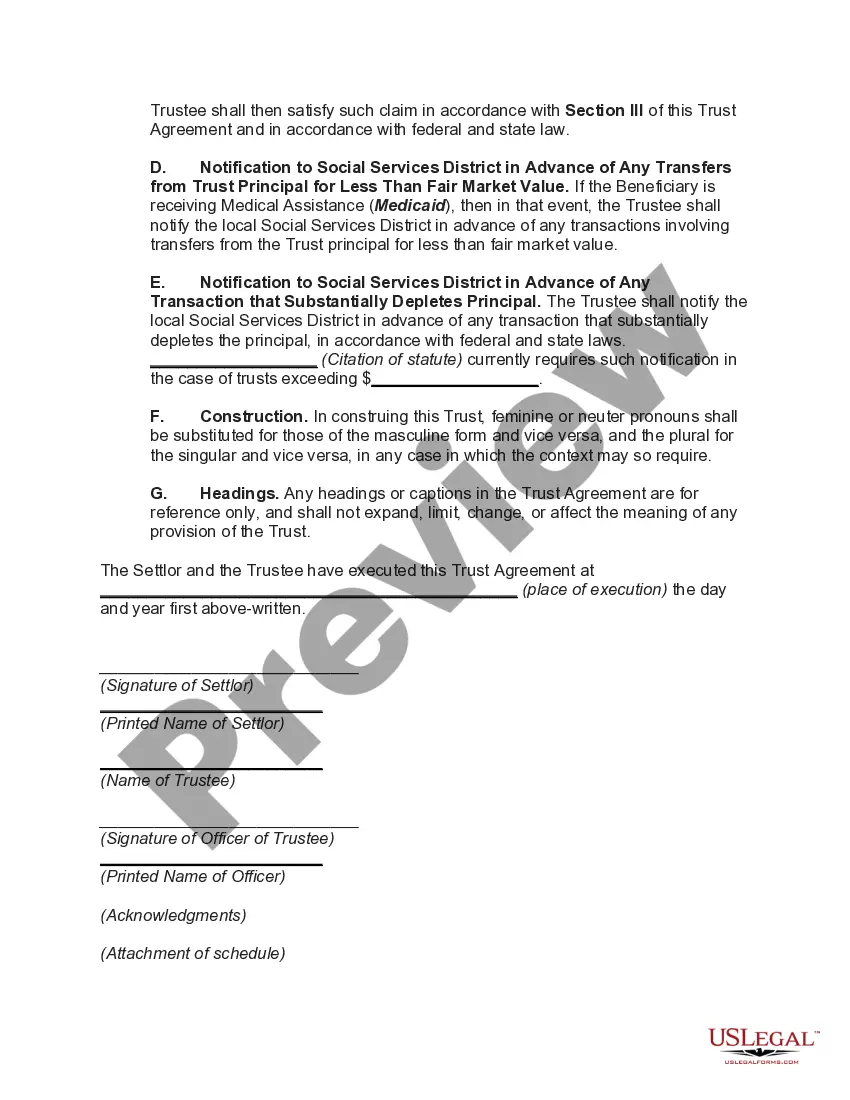
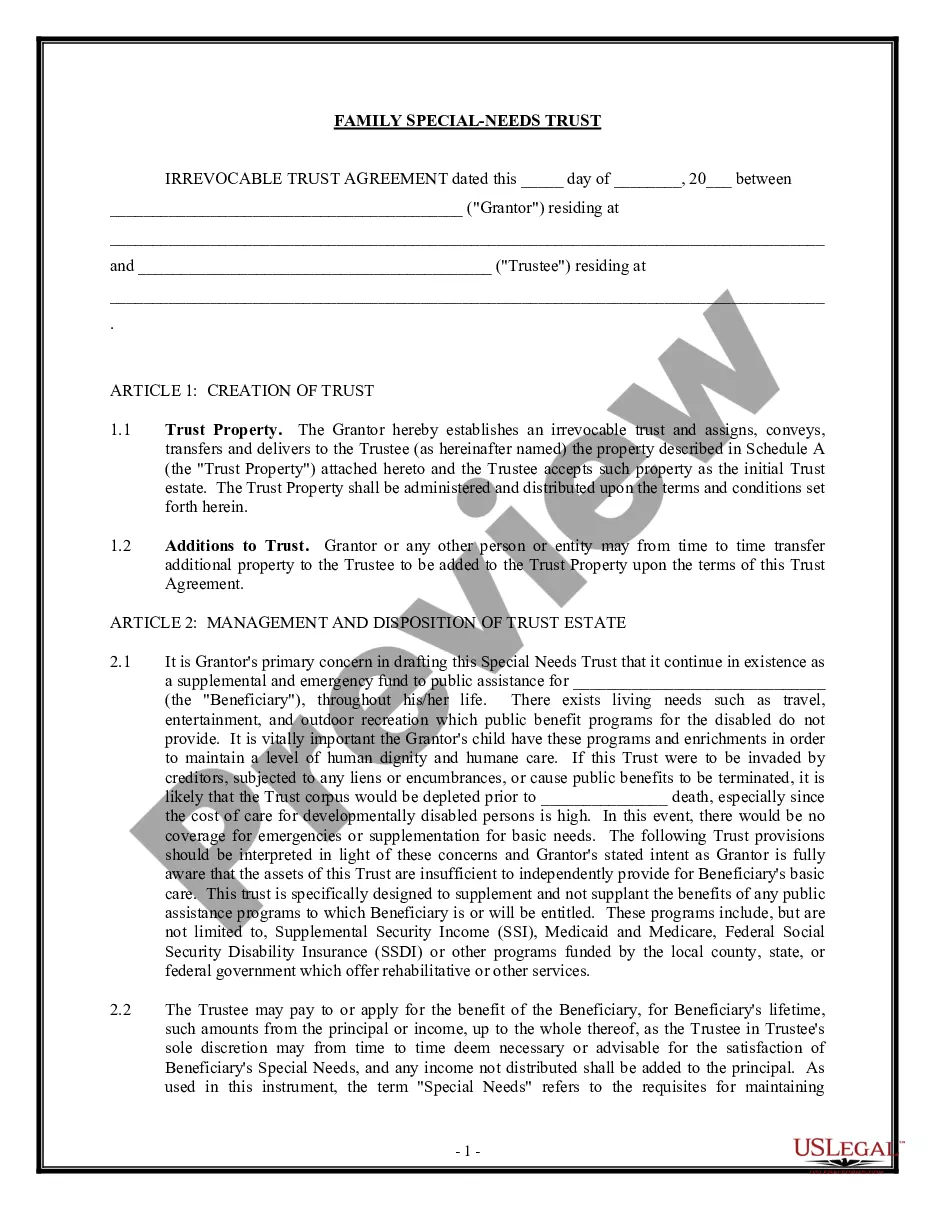
Description


Get your form ready online
Our built-in tools help you complete, sign, share, and store your documents in one place.
Make edits, fill in missing information, and update formatting in US Legal Forms—just like you would in MS Word.
Download a copy, print it, send it by email, or mail it via USPS—whatever works best for your next step.
Sign and collect signatures with our SignNow integration. Send to multiple recipients, set reminders, and more. Go Premium to unlock E-Sign.
If this form requires notarization, complete it online through a secure video call—no need to meet a notary in person or wait for an appointment.
We protect your documents and personal data by following strict security and privacy standards.

Make edits, fill in missing information, and update formatting in US Legal Forms—just like you would in MS Word.

Download a copy, print it, send it by email, or mail it via USPS—whatever works best for your next step.

Sign and collect signatures with our SignNow integration. Send to multiple recipients, set reminders, and more. Go Premium to unlock E-Sign.

If this form requires notarization, complete it online through a secure video call—no need to meet a notary in person or wait for an appointment.

We protect your documents and personal data by following strict security and privacy standards.
Looking for another form?


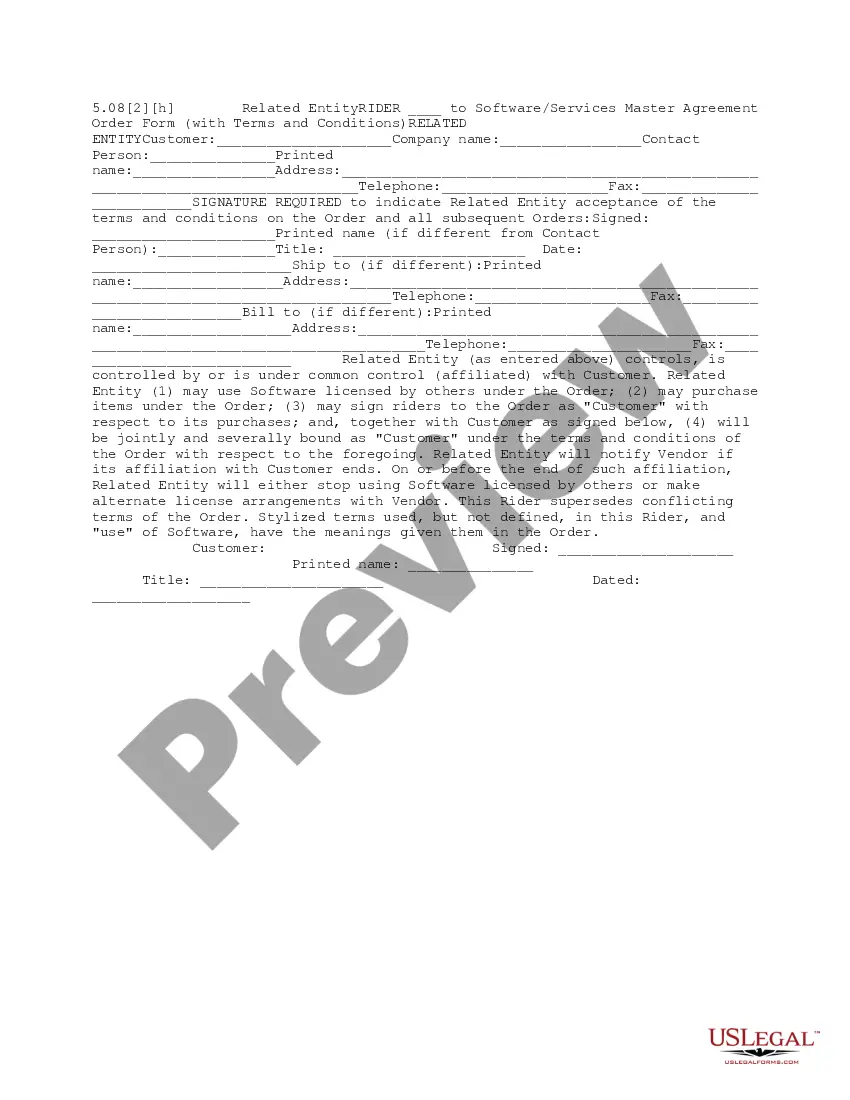



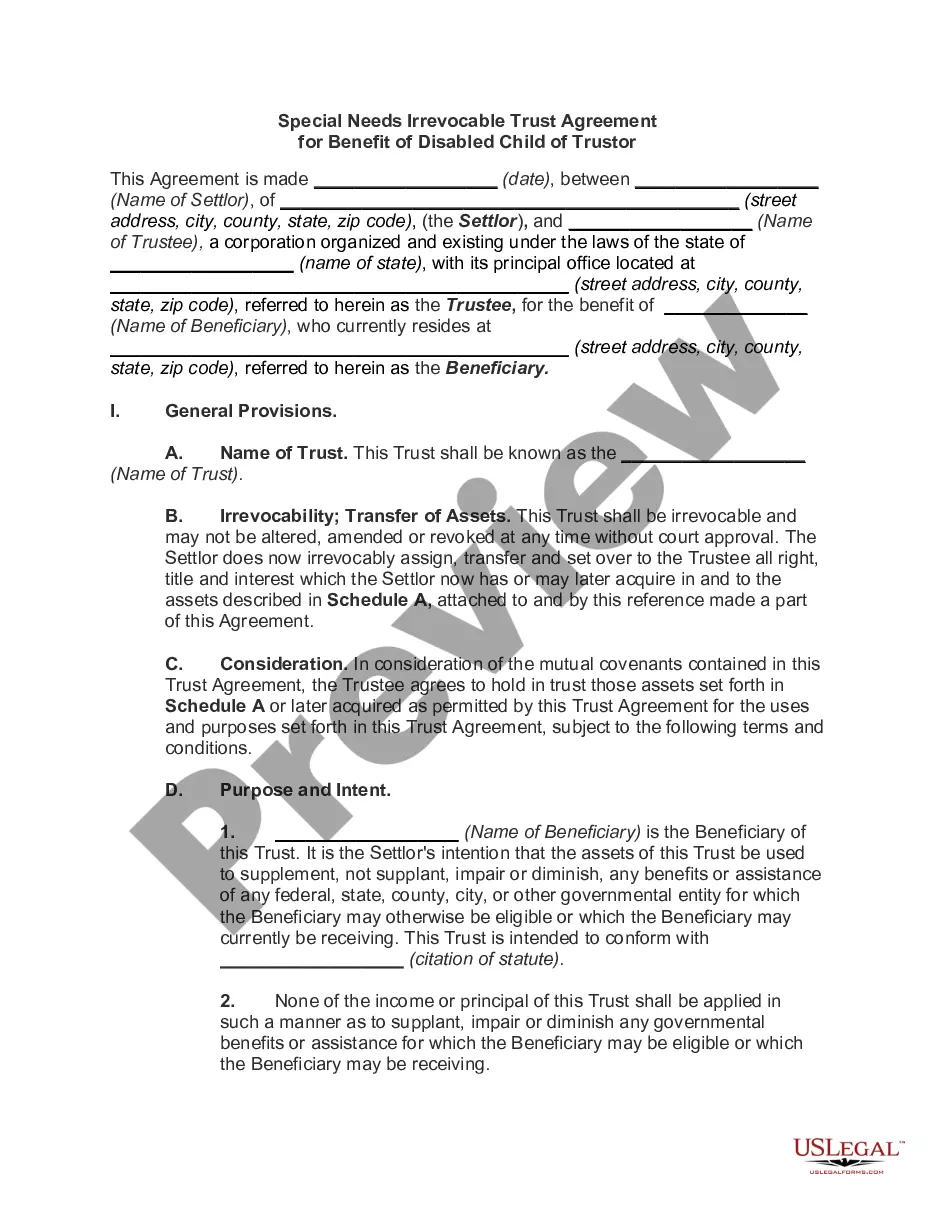
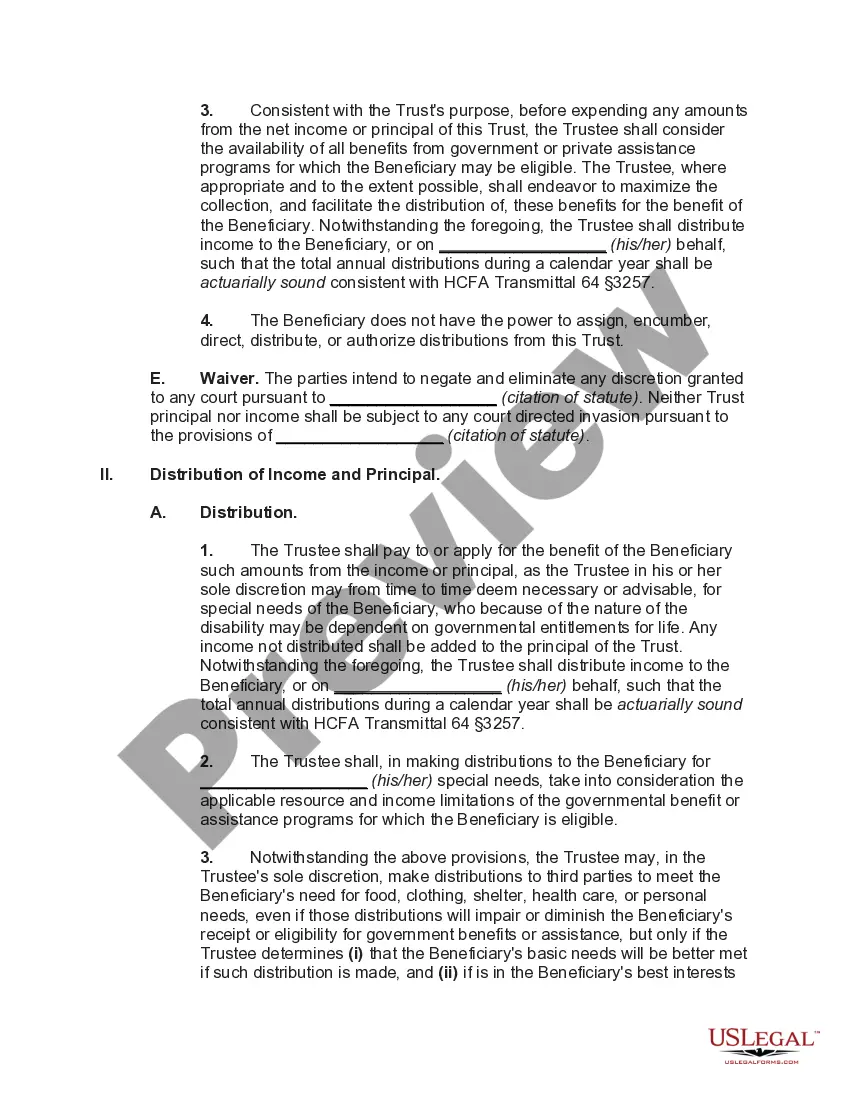
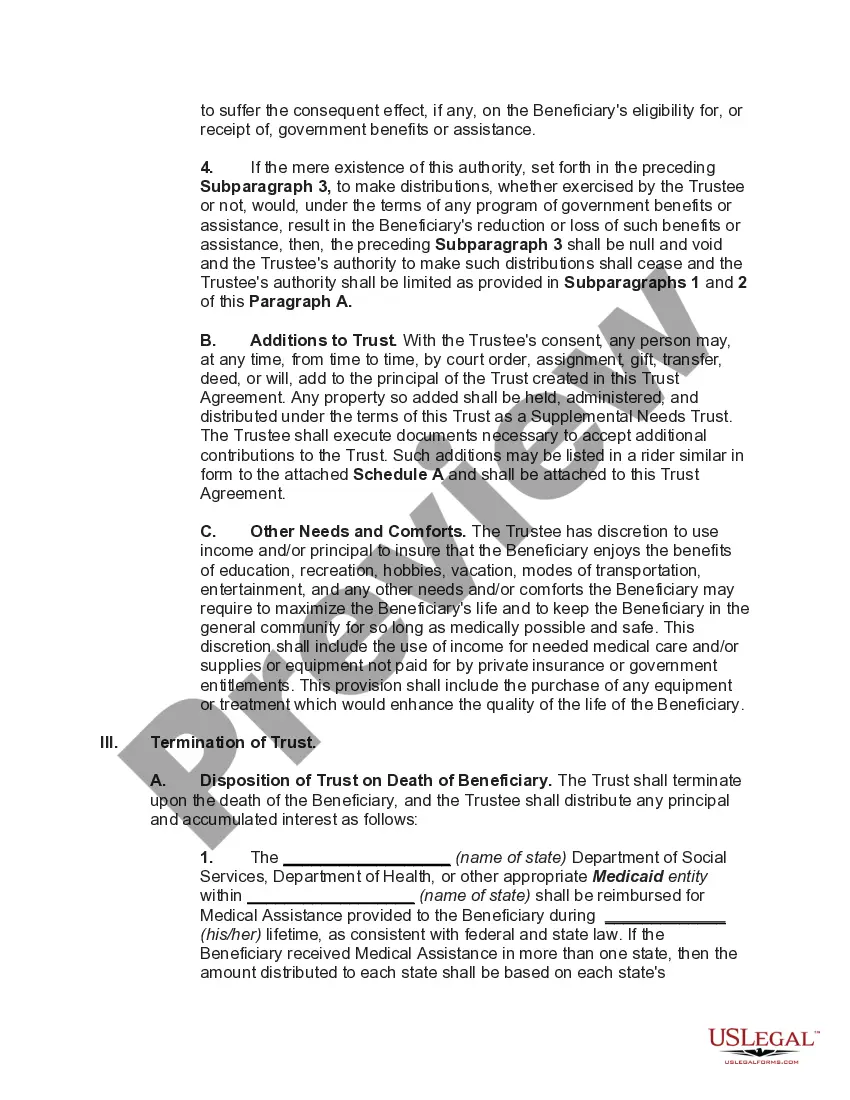
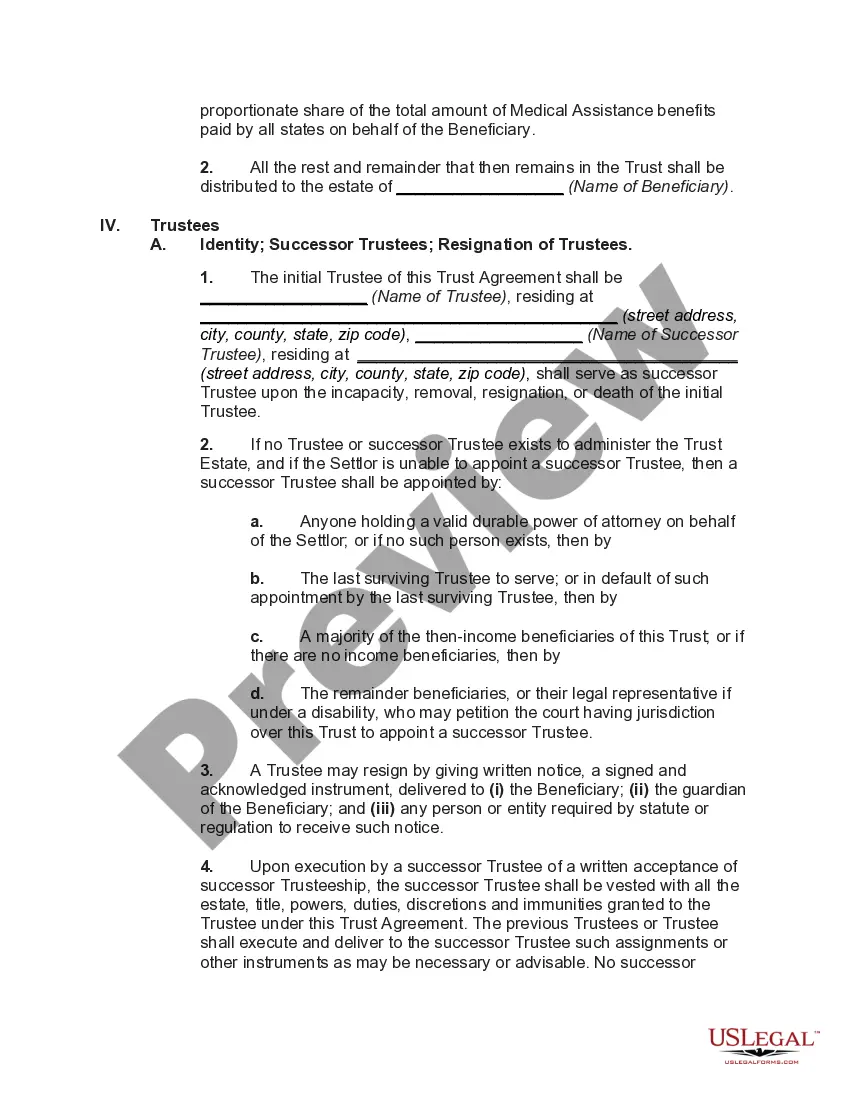
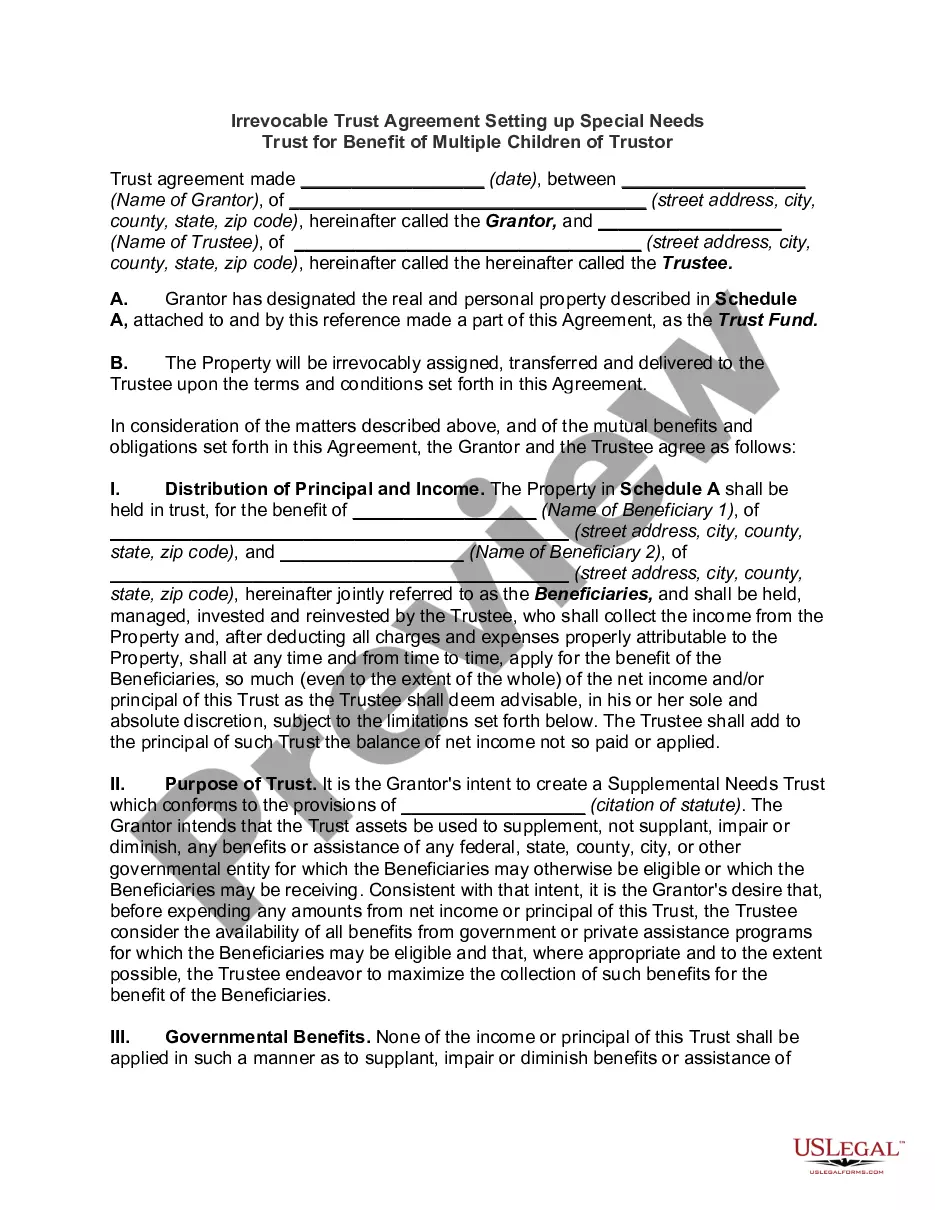
How to fill out Special Needs Irrevocable Trust Agreement For Benefit Of Disabled Child Of Trustor?
- If you are a returning user, log in to your account, check your subscription validity, and download the necessary form template.
- For first-time users, start by reviewing the Preview mode and form description to ensure you select the appropriate document for your jurisdiction.
- If discrepancies arise, utilize the Search tab to find the document that accurately meets your requirements.
- To proceed, click the Buy Now button, select your preferred subscription plan, and create an account for full access to our resources.
- Complete your purchase by entering your payment details through credit card or PayPal.
- After your transaction is successful, download your form and save it to your device, accessible in the My Forms section anytime.
US Legal Forms provides unparalleled resources for both individuals and attorneys, empowering them to efficiently execute legal documents with confidence.
Get started today and experience the ease of accessing over 85,000 legal forms tailored to your needs!
Form popularity
FAQ
Typically, the trustor cannot serve as the trustee of their own irrevocable trust due to the nature of relinquishing control. This structure is designed to enhance the protection of the trust assets and ensure that the beneficiaries receive the intended distributions. However, appointing a trusted individual or professional as the trustee can ensure proper management and adherence to the trust's terms.
Certain assets cannot be placed in an irrevocable trust, including items that require ongoing management and oversight. Additionally, personal property that the trustor intends to use during their lifetime, like a primary residence, generally should not go into the trust. It's essential to consider the implications of placing specific assets into the trust, as some can affect tax obligations or benefits received by beneficiaries.
The trustor, or creator, of the irrevocable trust is typically considered the owner of the trust. However, once the trust is established, the trustor cannot change the assets or the terms of the trust without the consent of the beneficiaries. Thus, while the trustor has established the irrevocable trust, they relinquish control over it to ensure the intended distribution of assets and the benefits to the beneficiaries.
Yes, you may need to file a 1041 for an irrevocable trust if it generates income. It's important to monitor any income activity throughout the year. Consulting a resource like uslegalforms can provide you with the necessary guidance as an irrevocable trust trustor with trust.
The new IRS rules for irrevocable trusts may require more disclosure regarding income and beneficiary distributions. These updates aim to enhance clarity and compliance for trustors. As an irrevocable trust trustor with trust, staying informed on these rules is essential to avoid penalties.
The biggest mistake parents often make when setting up a trust fund is failing to communicate the purpose clearly to their heirs. This misunderstanding can lead to disputes and mismanagement later on. As an irrevocable trust trustor with trust, transparent communication ensures smoother transitions.
If your irrevocable trust has no income, you typically do not need to file a 1041. However, it is essential to keep records complete, as the trust might still have other noteworthy financial activities. Understanding these obligations is vital for every irrevocable trust trustor with trust.
In an irrevocable trust, the trustor and trustee can be the same person, but this arrangement limits the trust’s legal protections. This dual role might not provide full benefits of asset protection. Consult a legal expert to understand the implications as an irrevocable trust trustor with trust.
Any trust, including an irrevocable trust, must file form 1041 if it has any taxable income during the year. This applies to estates and trusts that earn income over a certain level. As an irrevocable trust trustor with trust, being aware of income thresholds is important for compliance.
You need to file a 1041 if your irrevocable trust has earned income during the tax year. If the trust has a tax liability, filing is necessary. Check if your specific situation with the irrevocable trust trustor with trust requires this action each year.