Personal Trust
Description
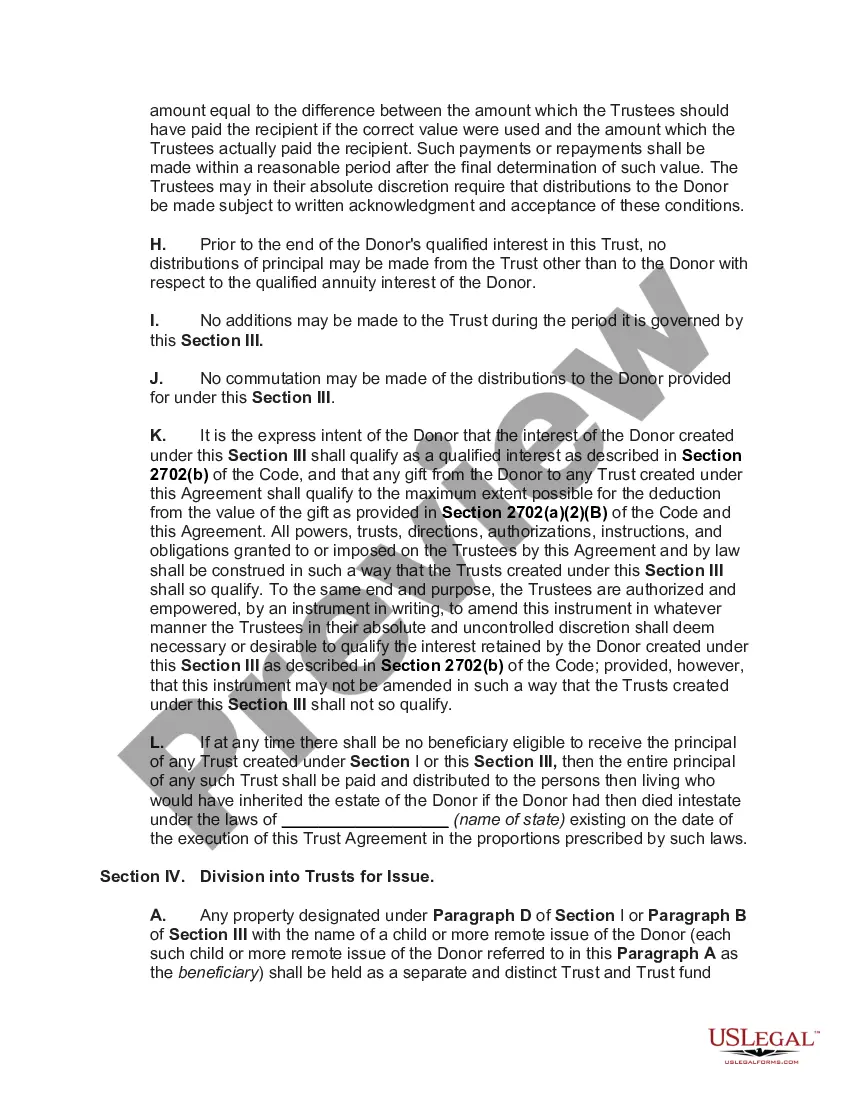
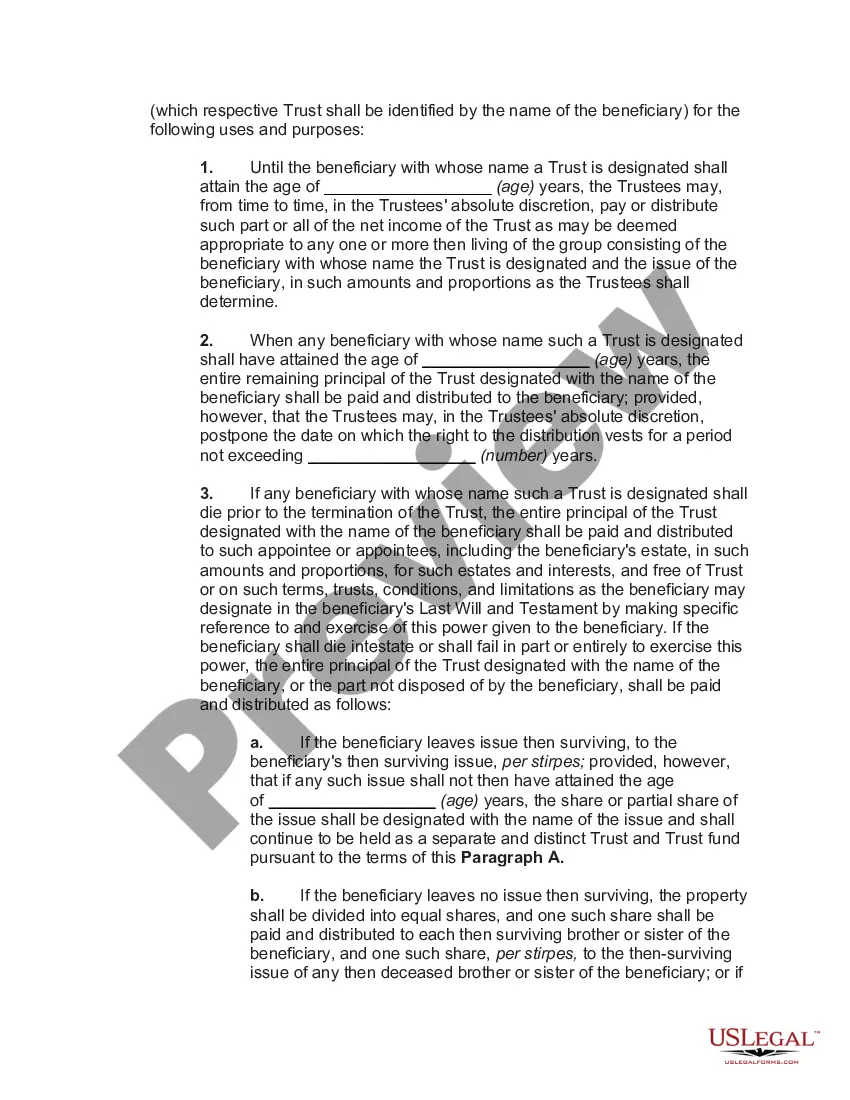
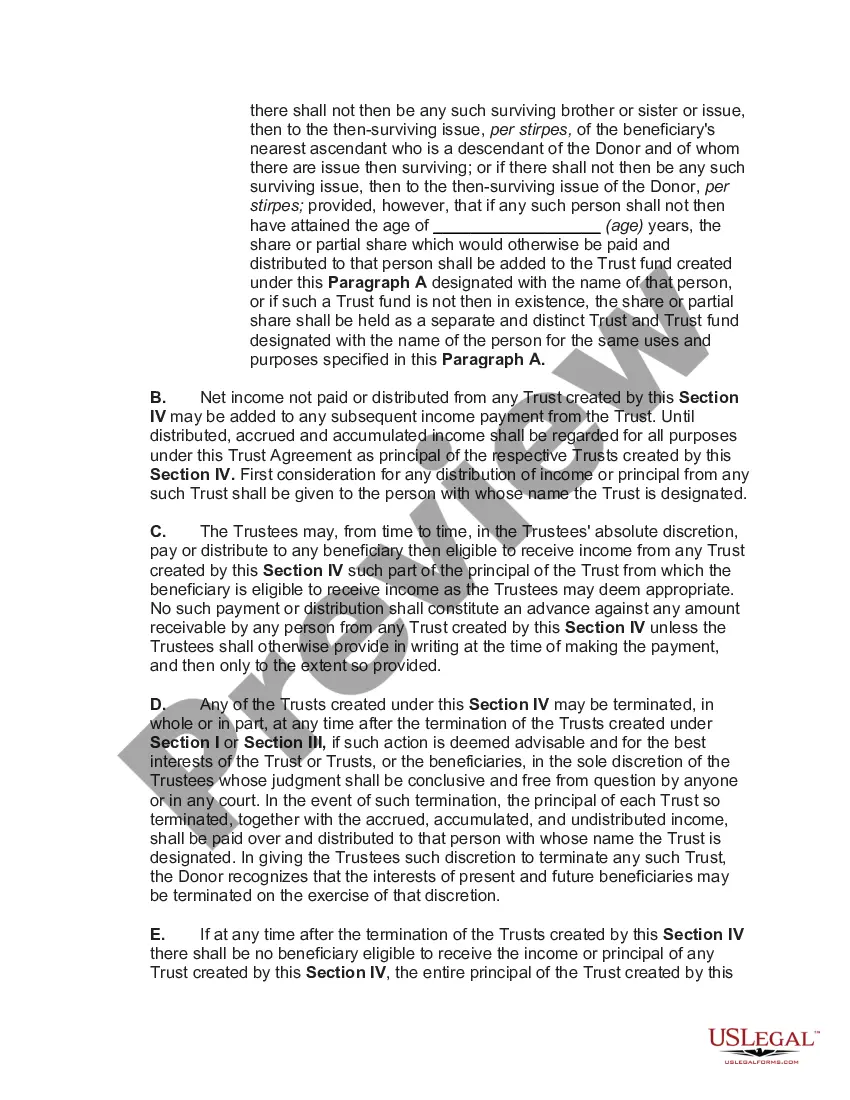
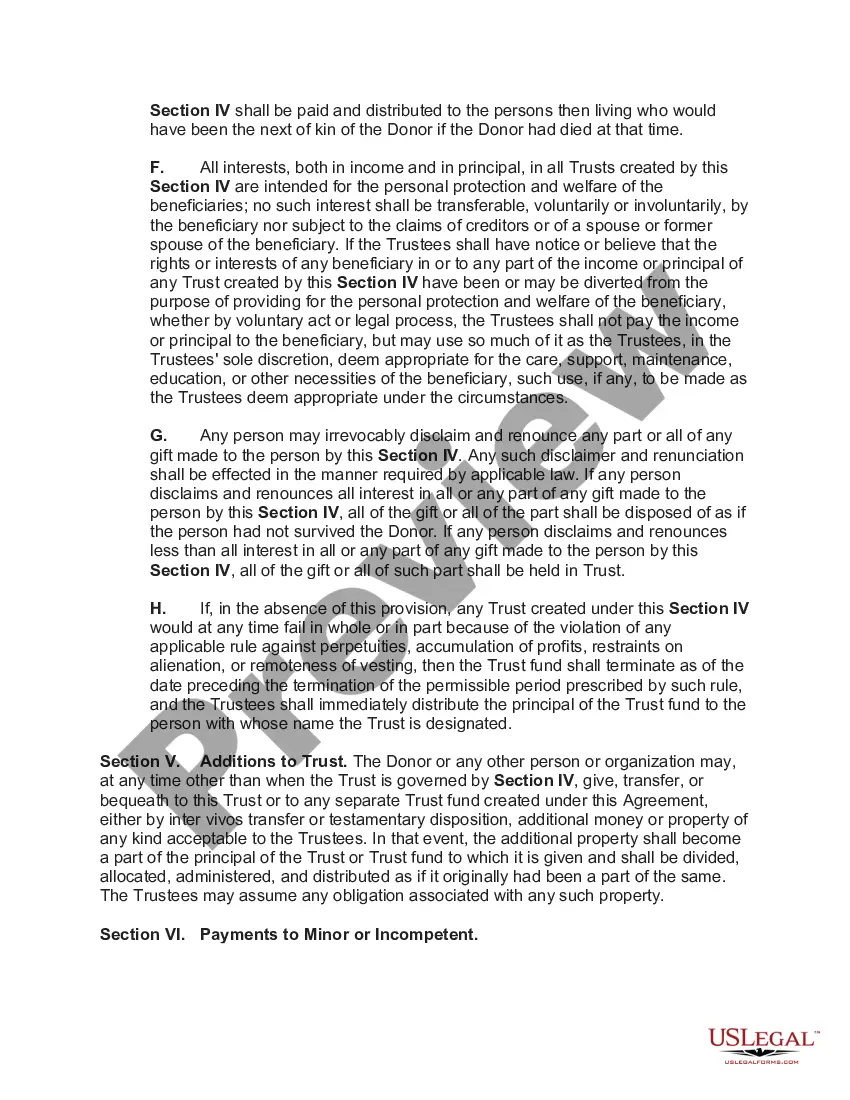
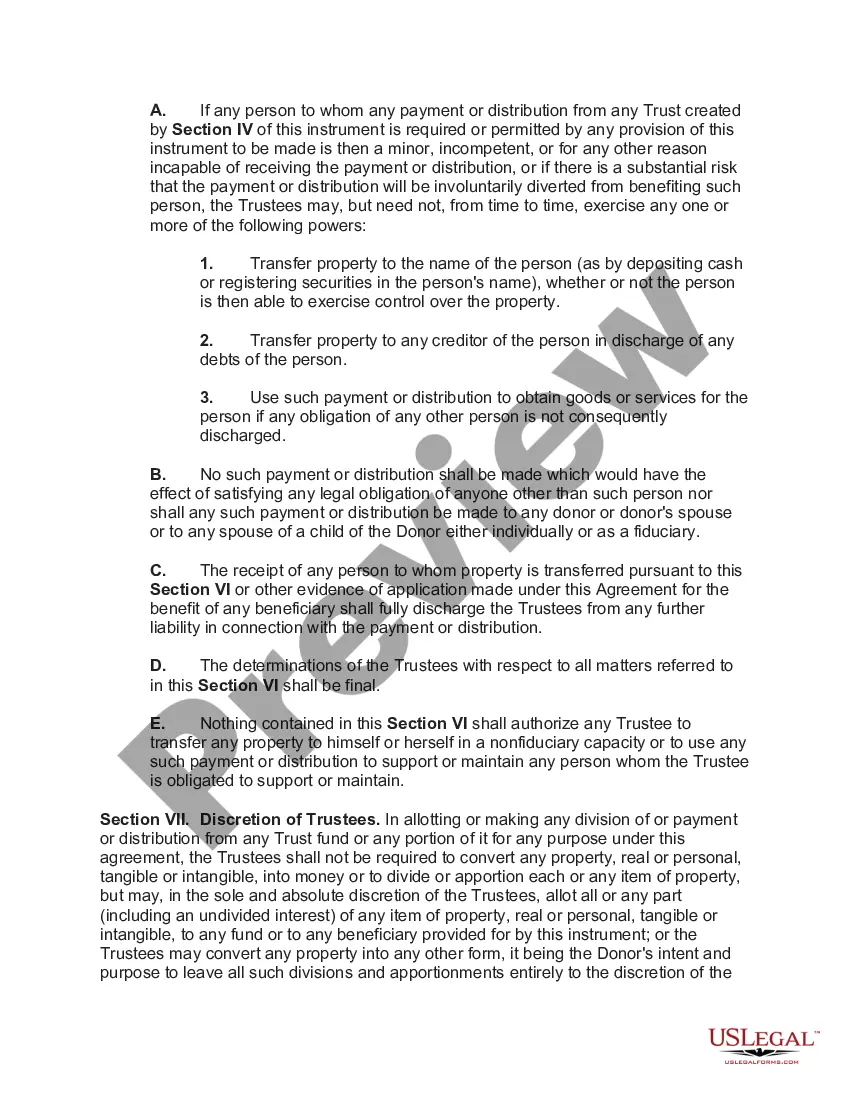
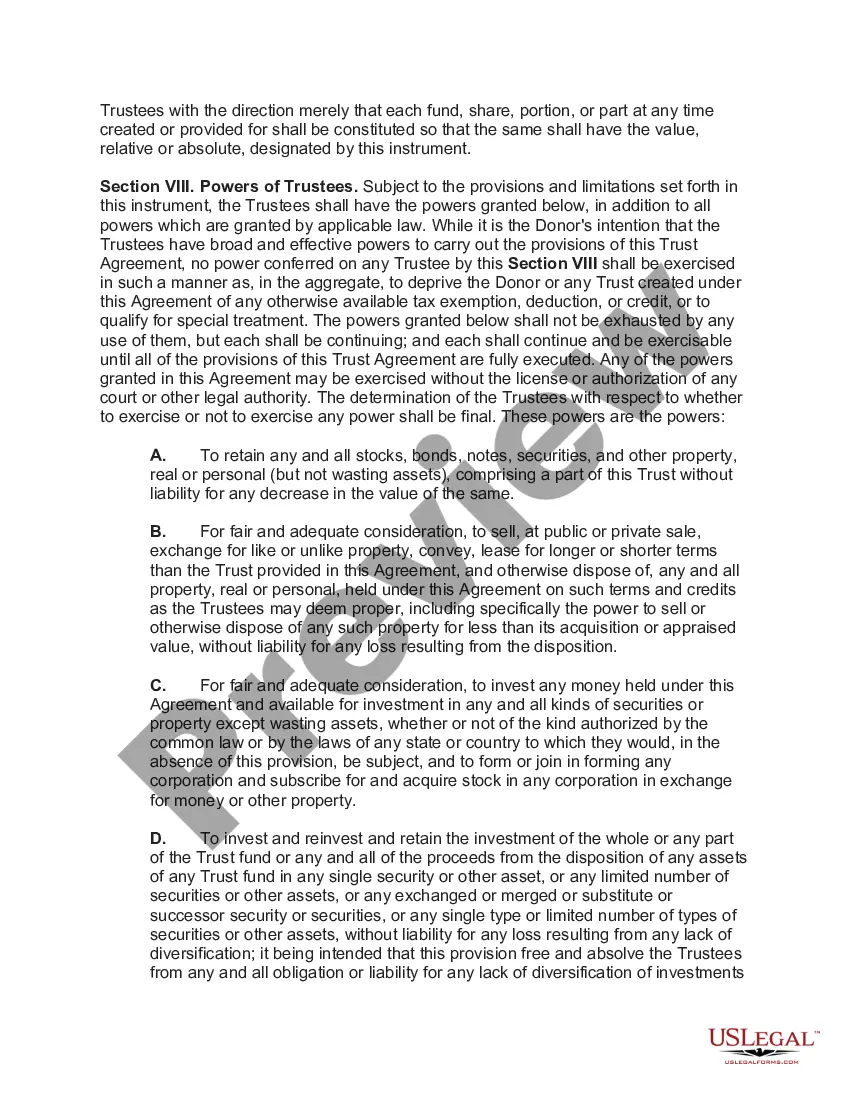

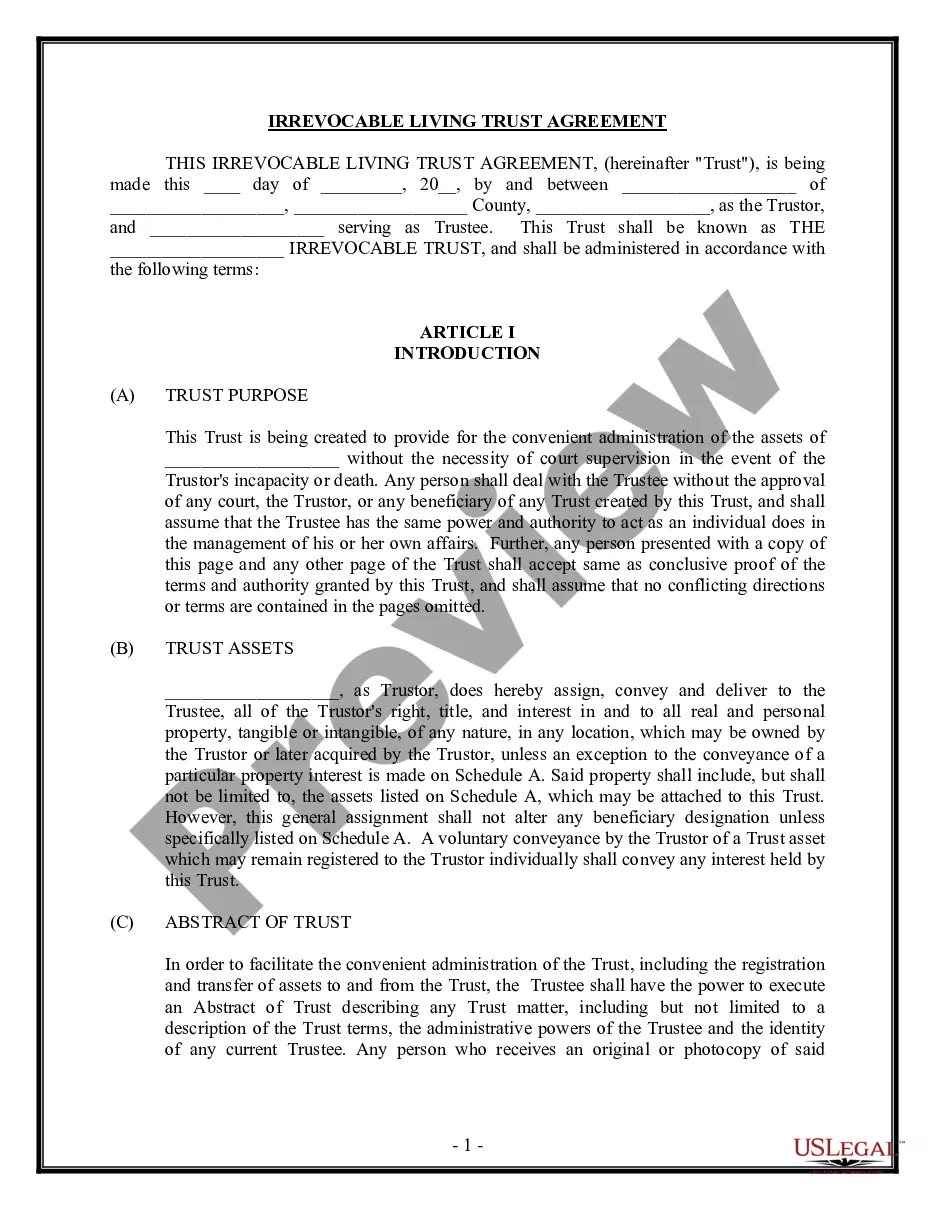
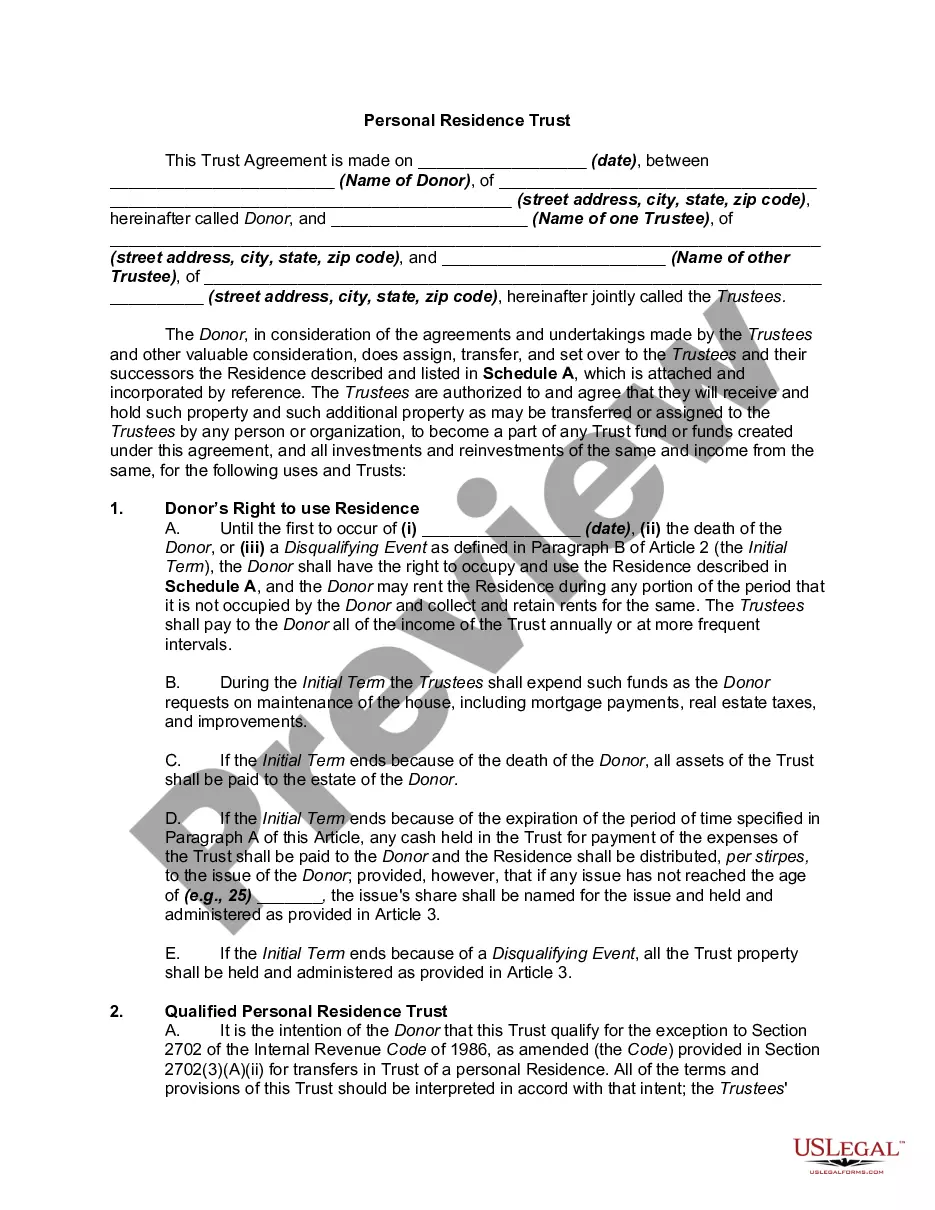
Get your form ready online
Our built-in tools help you complete, sign, share, and store your documents in one place.
Make edits, fill in missing information, and update formatting in US Legal Forms—just like you would in MS Word.
Download a copy, print it, send it by email, or mail it via USPS—whatever works best for your next step.
Sign and collect signatures with our SignNow integration. Send to multiple recipients, set reminders, and more. Go Premium to unlock E-Sign.
If this form requires notarization, complete it online through a secure video call—no need to meet a notary in person or wait for an appointment.
We protect your documents and personal data by following strict security and privacy standards.

Make edits, fill in missing information, and update formatting in US Legal Forms—just like you would in MS Word.

Download a copy, print it, send it by email, or mail it via USPS—whatever works best for your next step.

Sign and collect signatures with our SignNow integration. Send to multiple recipients, set reminders, and more. Go Premium to unlock E-Sign.

If this form requires notarization, complete it online through a secure video call—no need to meet a notary in person or wait for an appointment.

We protect your documents and personal data by following strict security and privacy standards.
Looking for another form?






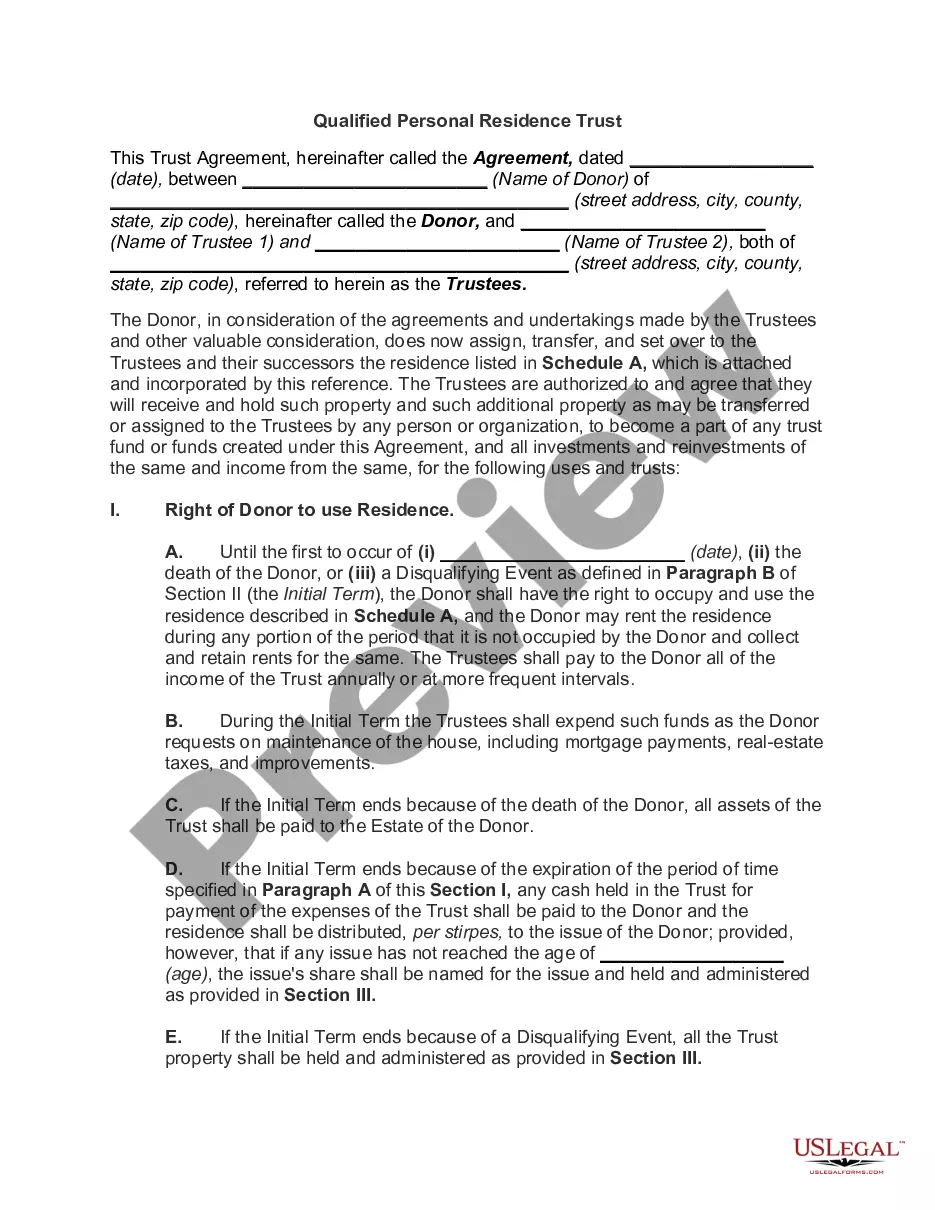
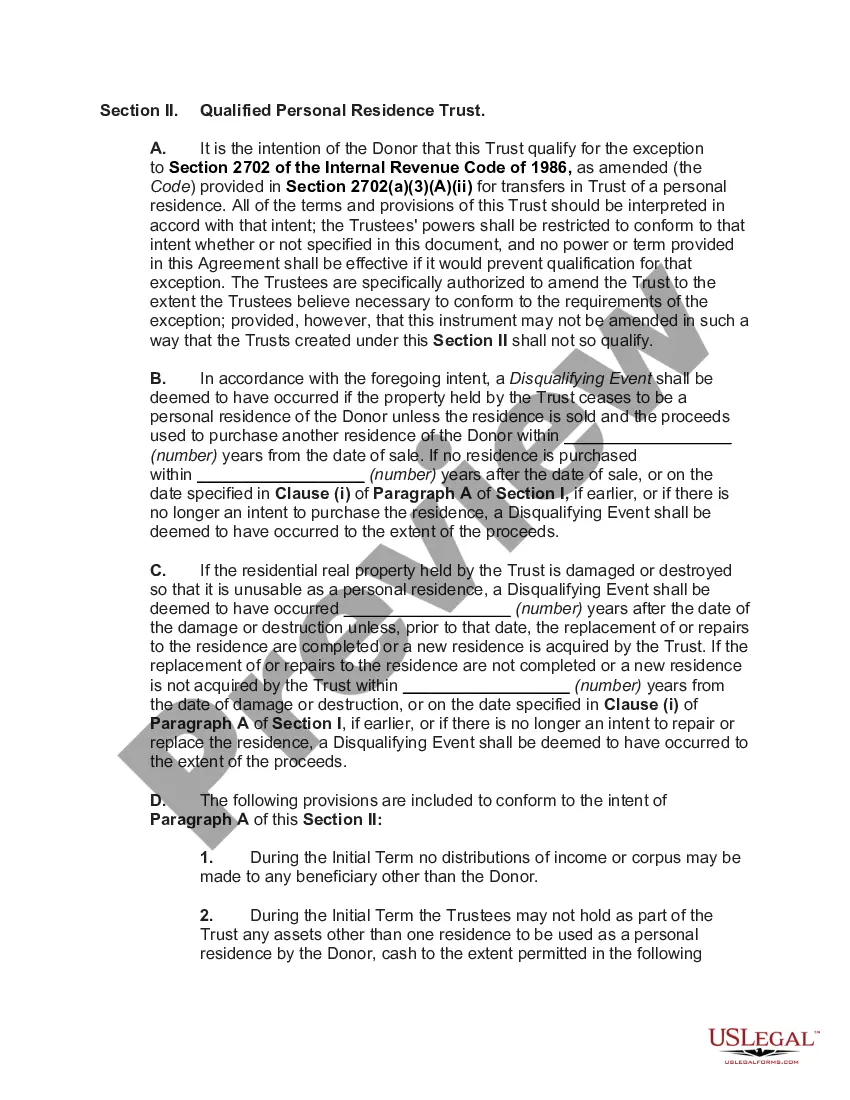
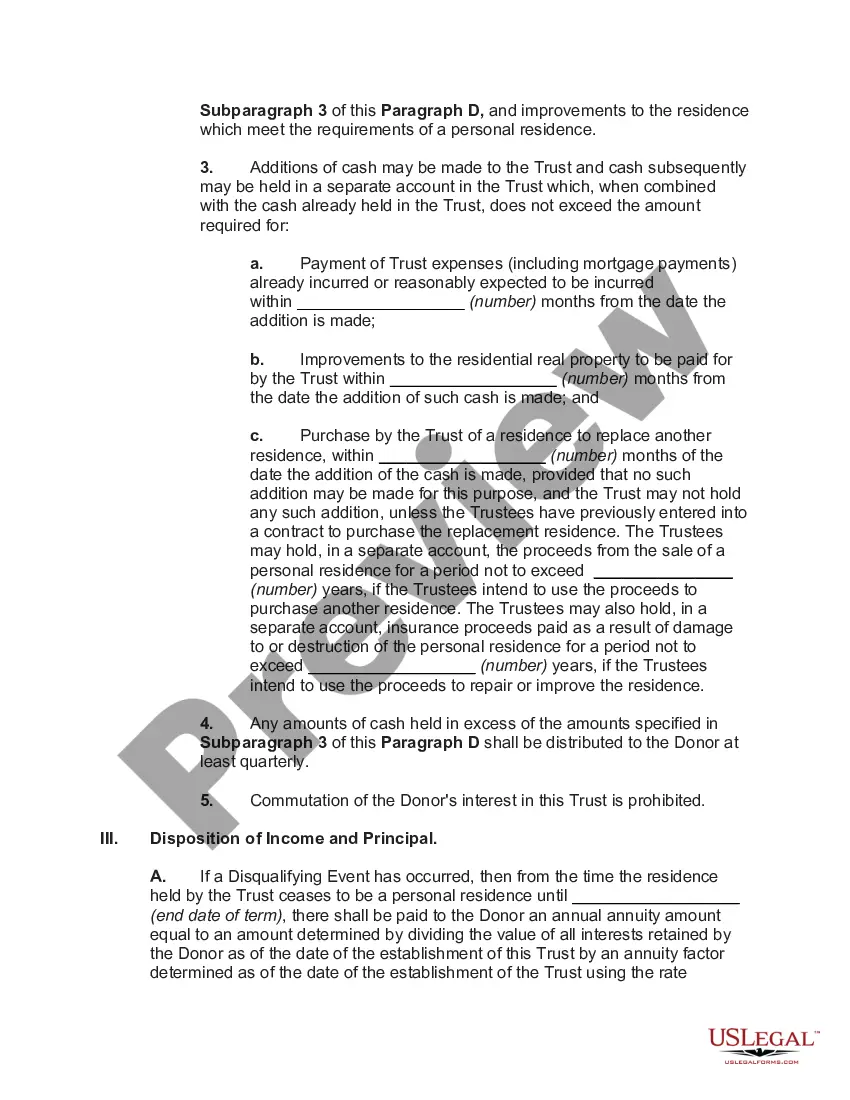
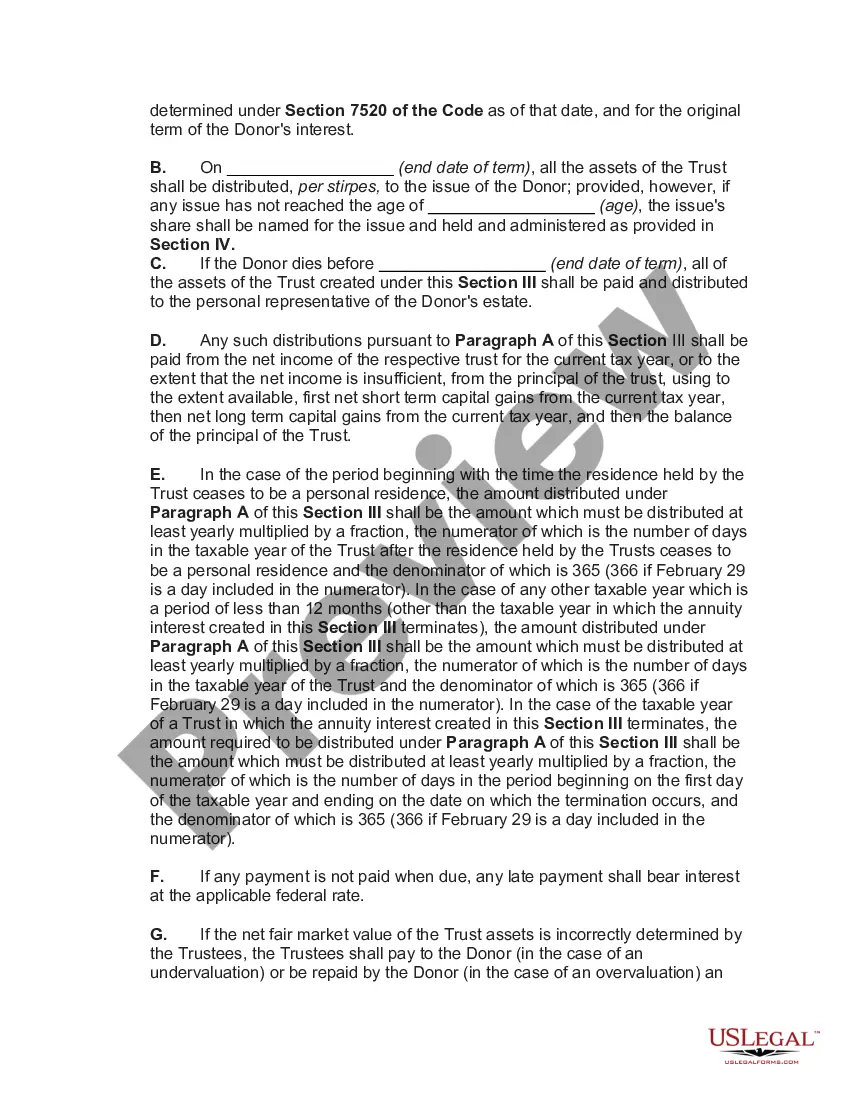
How to fill out Qualified Personal Residence Trust?
- If you’re a returning user, log in to your account and check your subscription status. Download your required template by clicking the Download button.
- For first-time users, review the Preview mode and form description carefully to ensure it aligns with your needs and legal requirements.
- If necessary, conduct a search using the Search tab to find the right template that meets your requirements.
- Choose the document you need, then click on the Buy Now button to select your preferred subscription plan and create your account.
- Enter your payment details using a credit card or PayPal to complete your purchase.
- After purchase, download your form to save it on your device. You can access it anytime through the My Forms section of your profile.
By following these steps, you can easily access the necessary forms for your legal processes. US Legal Forms' comprehensive library and user-friendly interface provide a hassle-free experience, allowing you to focus on what matters most.
Start managing your personal trust documents today—visit US Legal Forms to explore their extensive resources!
Form popularity
FAQ
A personal trust works by designating a trustee to manage the assets placed in the trust for the benefit of the beneficiaries. The grantor specifies how the assets should be used or distributed over time, ensuring their wishes are followed. This arrangement can provide financial security and control over the distribution process. With US Legal Forms, you can easily navigate the complexities of setting up and managing a personal trust to ensure it works effectively for your needs.
A personal trust is a legal arrangement where a person, known as the grantor, transfers their assets into a trust managed by a trustee for the benefit of certain individuals, called beneficiaries. This arrangement allows for the efficient management and distribution of assets according to the grantor's instructions. A personal trust can offer various advantages, including probate avoidance and potential tax benefits. If you're considering this structure, US Legal Forms can provide you with the necessary resources and documentation.
A personal trust is typically established by an individual known as the grantor, who transfers assets into the trust. Once created, the grantor often retains certain rights over the trust, but the trust itself is owned by the trust entity. Beneficiaries, who may receive benefits from the trust, are distinct from the grantor, ensuring that assets are managed according to the grantor's wishes. Understanding ownership is crucial, and platforms like US Legal Forms can guide you in setting up a personal trust correctly.
There are three main types of personal trust that you should know about: revocable trusts, irrevocable trusts, and testamentary trusts. Revocable trusts allow you to modify or dissolve them during your lifetime, while irrevocable trusts provide greater asset protection but are difficult to change. Testamentary trusts are established through a will and come into effect after your passing. Each type serves a unique purpose, so it's crucial to choose the one that fits your needs.
A private trust can have several disadvantages worth noting. One major issue is the complexity involved in managing the trust, which may require ongoing legal assistance. Furthermore, if improperly structured, a personal trust may not provide the desired asset protection or tax benefits. Understanding these risks can help you make an informed decision about creating a trust.
While a personal trust can offer many benefits, it may come with drawbacks. For instance, setting up and maintaining a trust can involve legal fees and administrative costs. Additionally, there could be tax implications depending on the type of trust. It's essential to weigh these factors and consider consulting with a professional to ensure it aligns with your financial goals.
Starting a personal trust involves several steps. First, you need to define the purpose of the trust and determine who will be the beneficiaries. Next, you will select a trustee who will manage the trust's assets. Finally, you should draft a formal trust document. You may find resources on uslegalforms to help you create this document efficiently.
A significant downfall of having a trust involves the maintenance and administration costs associated with it. These expenses can add up over time, particularly if professional management is necessary. Additionally, if the trust isn’t set up correctly, it may not provide the desired protections. Utilizing a user-friendly service like US Legal Forms can help minimize such risks.
Certain assets, such as retirement accounts or life insurance policies, may not be suitable for inclusion in a personal trust due to complex tax implications. Furthermore, personal items, like vehicles or collectibles, often require special handling outside of a trust. Understanding which assets to keep separate can help streamline the estate planning process. Consult with experts or services like US Legal Forms for personalized guidance.
Whether your parents should place their assets in a personal trust depends on their individual circumstances and goals. Trusts can help in avoiding probate and reducing estate taxes, making them a favorable option for some families. It's essential for them to weigh the pros and cons carefully. Engaging with platforms like US Legal Forms can help clarify their options.