Secured Party Creditor Withholding Tax
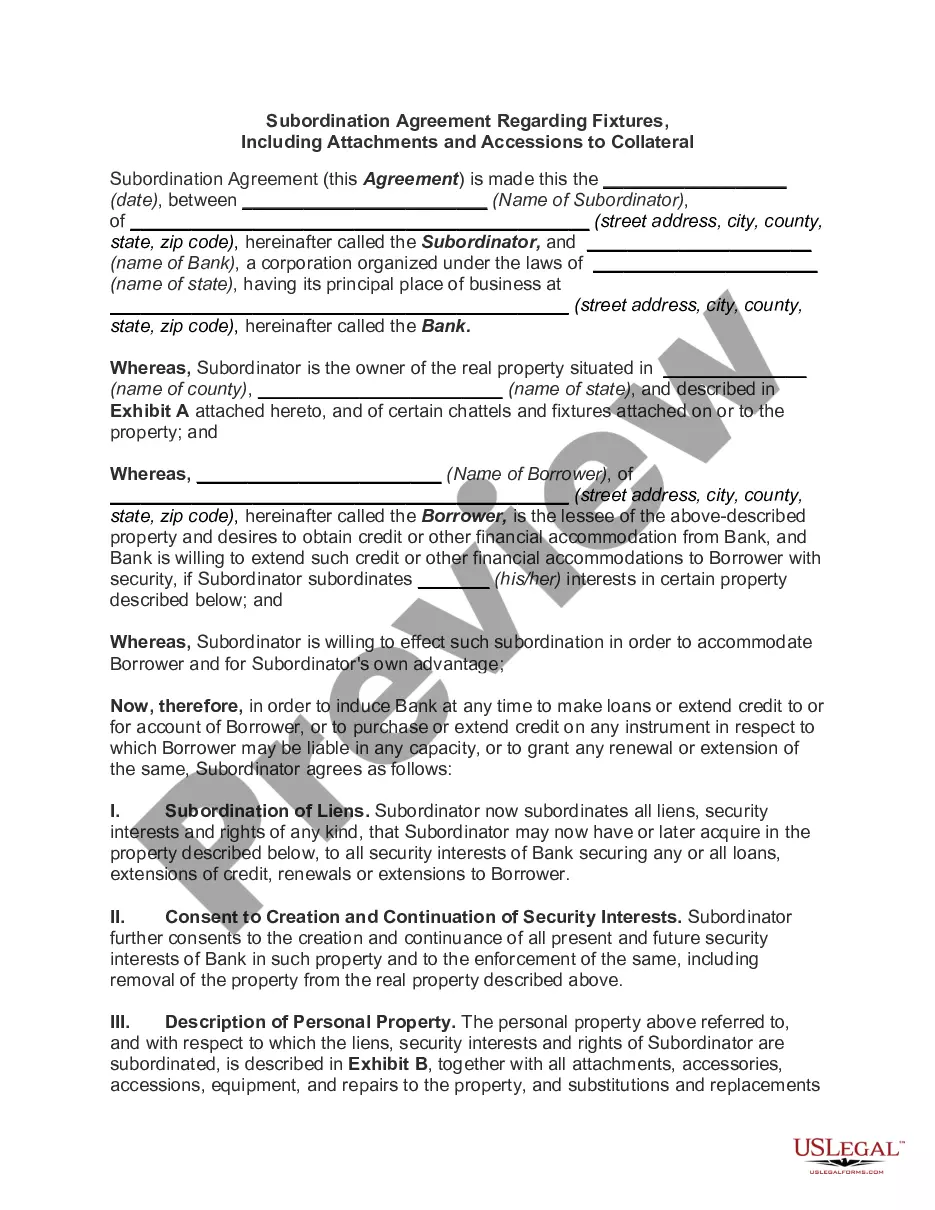
Description

Get your form ready online
Our built-in tools help you complete, sign, share, and store your documents in one place.
Make edits, fill in missing information, and update formatting in US Legal Forms—just like you would in MS Word.
Download a copy, print it, send it by email, or mail it via USPS—whatever works best for your next step.
Sign and collect signatures with our SignNow integration. Send to multiple recipients, set reminders, and more. Go Premium to unlock E-Sign.
If this form requires notarization, complete it online through a secure video call—no need to meet a notary in person or wait for an appointment.
We protect your documents and personal data by following strict security and privacy standards.

Make edits, fill in missing information, and update formatting in US Legal Forms—just like you would in MS Word.

Download a copy, print it, send it by email, or mail it via USPS—whatever works best for your next step.

Sign and collect signatures with our SignNow integration. Send to multiple recipients, set reminders, and more. Go Premium to unlock E-Sign.

If this form requires notarization, complete it online through a secure video call—no need to meet a notary in person or wait for an appointment.

We protect your documents and personal data by following strict security and privacy standards.
Looking for another form?









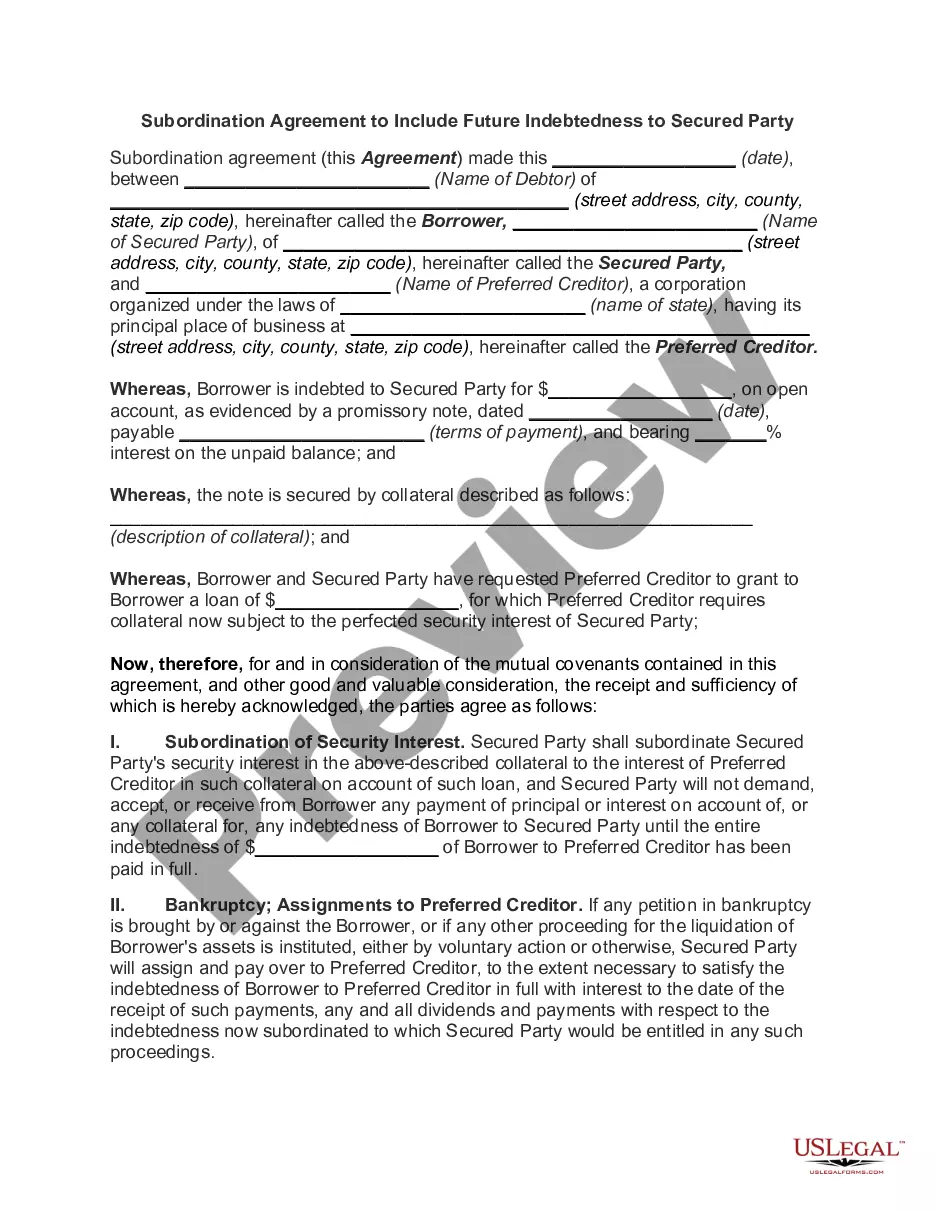
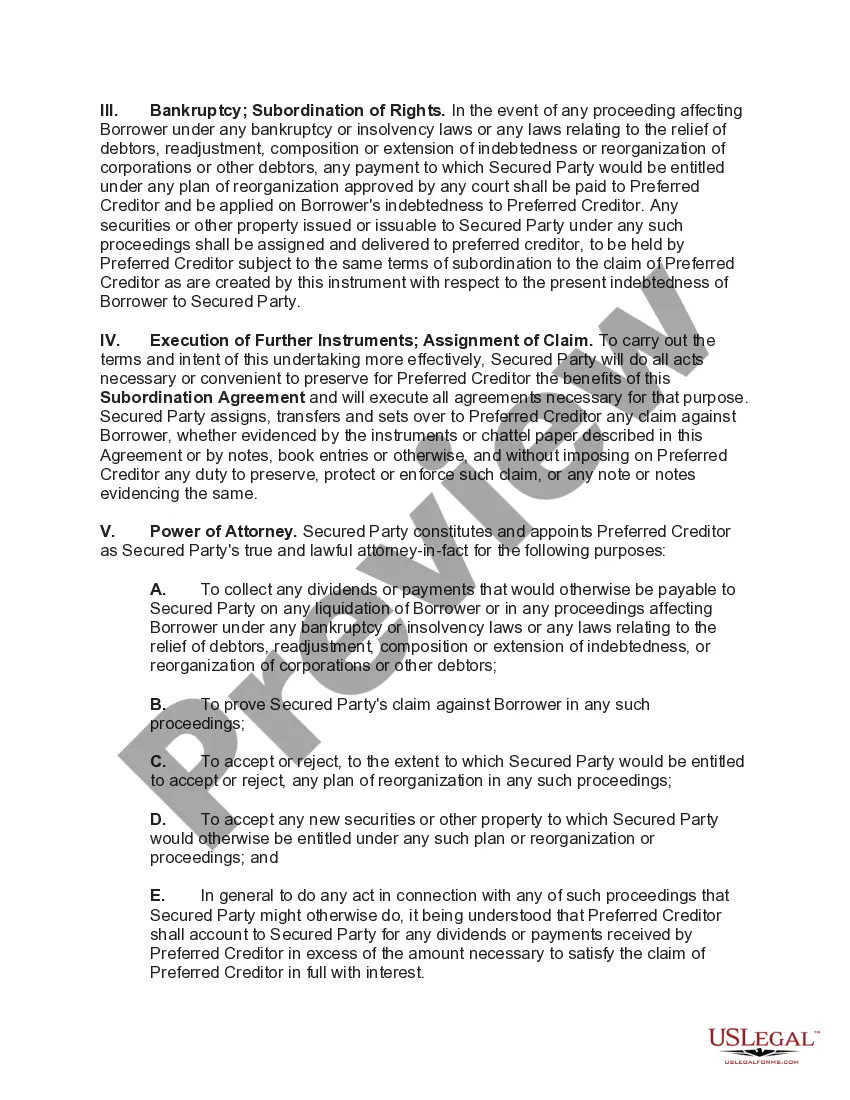
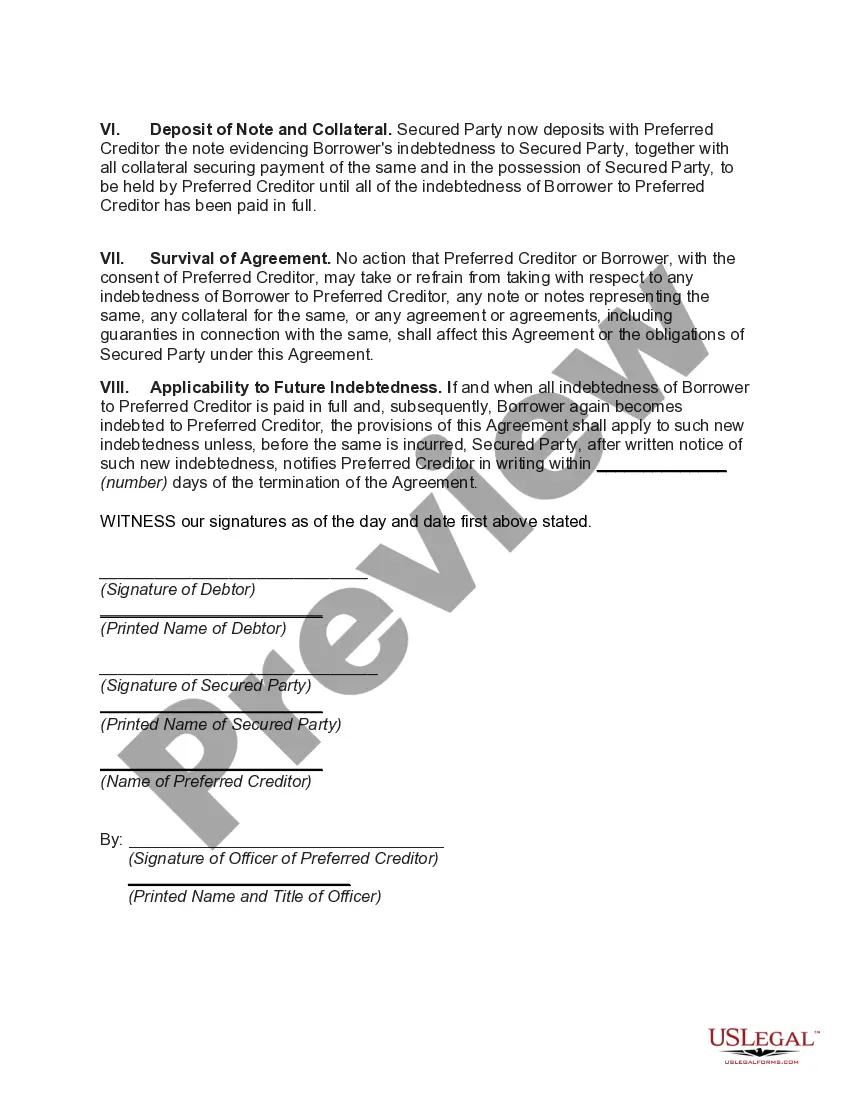
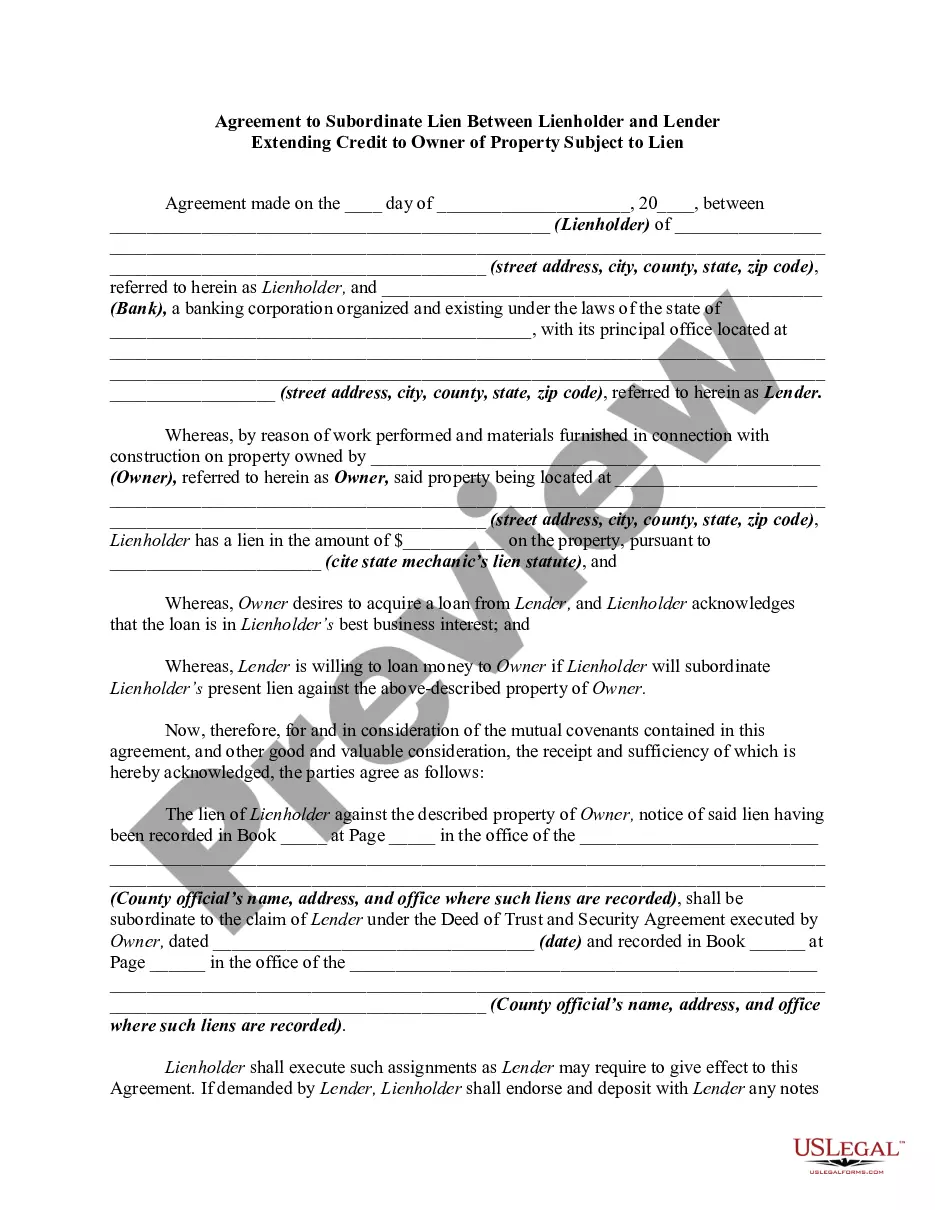
How to fill out Subordination Agreement To Include Future Indebtedness To Secured Party?
How to obtain professional legal documents that comply with your state's regulations and prepare the Secured Party Creditor Withholding Tax without hiring a lawyer.
Numerous services online provide templates to address various legal scenarios and formal requirements. Nonetheless, it may require time to identify which of the available samples satisfy both your specific needs and legal criteria.
US Legal Forms is a dependable platform that assists you in finding official documents crafted in accordance with the most recent updates in state law, saving you money on legal services.
If you do not have an account with US Legal Forms, follow the guide below.
- US Legal Forms is not a conventional online library.
- It is a compilation of over 85,000 verified templates for diverse business and life situations.
- All documents are categorized by area and state to expedite your search process and minimize hassle.
- Moreover, it connects with powerful solutions for PDF editing and electronic signatures, enabling Premium subscribers to effortlessly complete their paperwork online.
- Securing the necessary documentation requires minimal effort and time.
- If you already possess an account, Log In and ensure that your subscription is active.
- Download the Secured Party Creditor Withholding Tax by clicking the related button next to the file name.
Form popularity
FAQ
To be exempted from certain taxes as a secured creditor, you typically need to submit specific forms that demonstrate your eligibility for tax exemptions. Common forms include tax-exempt certificates and proper documentation of your secured status. The secured party creditor withholding tax can influence your filings, so it’s beneficial to consult with a tax professional or utilize a platform like USLegalForms for assistance in navigating these requirements effectively.
To become a secured creditor, you need to establish a lien against the collateral provided by the borrower. This usually involves signing a security agreement that details the terms of your interest in the collateral. By doing this, you gain priority over unsecured creditors in case of default. Understanding the secured party creditor withholding tax implications is essential as it impacts your tax obligations and rights.
Yes, cancellation of debt can impact your credit because it may signal that you were unable to repay your obligations. While canceled debt itself is not reported, it can be associated with previous missed payments. Therefore, proactive financial management is essential to maintaining a healthy credit profile. Additionally, understanding secured party creditor withholding tax may help clarify the tax implications of debt cancellation.
The IRS requires a 1099-C to be issued when a creditor cancels debt of $600 or more. This threshold is significant, as it triggers the obligation for the debtor to report canceled debt as income. Being aware of this limit can help you understand your potential tax liabilities. You should explore how secured party creditor withholding tax applies to your individual tax situation for a complete picture.
Receiving a 1099-C can potentially affect your credit if it means a debt has been canceled, as it indicates prior non-payment. While the cancellation itself doesn't directly appear on your credit report, it could indicate a history of delinquencies. It’s important to manage your accounts to mitigate any negative impact on your credit score. Consider learning more about secured party creditor withholding tax, which may relate to debts you manage.
You should file Form 56 with the IRS to inform them of a fiduciary relationship for a trust. This form provides the IRS with essential details about the trust and its administrators. You typically file it by mailing it to the appropriate IRS office as specified in the form's instructions. Familiarizing yourself with secured party creditor withholding tax can ensure that you meet your obligations as a fiduciary without unexpected tax consequences.
To file as a secured party creditor, start by ensuring all necessary documentation is prepared. You will need to register your security interest with the appropriate state agency, often the Secretary of State’s office. Properly filing this paperwork can protect your rights as a creditor and establish your claims against the collateral. Awareness of secured party creditor withholding tax can help in understanding your overall tax obligations during this process.
C form indicates that a creditor has canceled a debt you owe, which may impact your taxable income. Generally, the amount of canceled debt is considered taxable income by the IRS, increasing your tax liability. To navigate the effects of the 1099C and its potential implications on your finances, understanding secured party creditor withholding tax is crucial. You may consider consulting with a tax professional for guidance tailored to your situation.
To become a secured creditor in the US, you need to establish a security interest in the assets of a borrower. This involves drafting a security agreement that details the collateral and obtaining the necessary documentation to file a UCC-1 financing statement. Familiarizing yourself with secured party creditor withholding tax is vital, as it influences how you handle potential default situations. Resources like UsLegalForms provide templates and guidance to streamline this important process.
To report a 1099-C in Lacerte, you would usually enter the details directly in the income section of your tax return. Ensure you include the canceled amount, as it may affect your overall tax liability, including the secured party creditor withholding tax. If you encounter difficulties, consult the Lacerte user guide or seek assistance from UsLegalForms for clarification on tax reporting processes.
