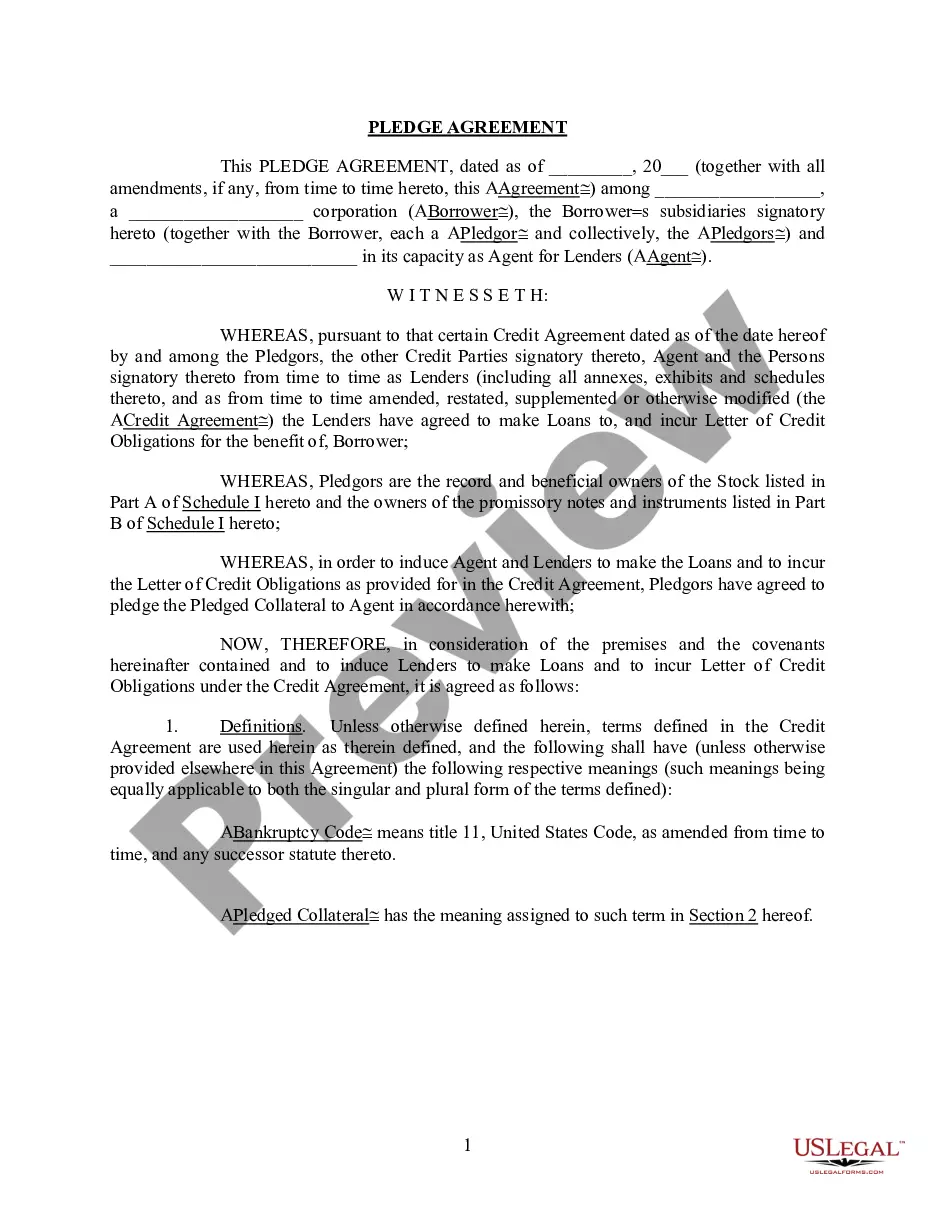
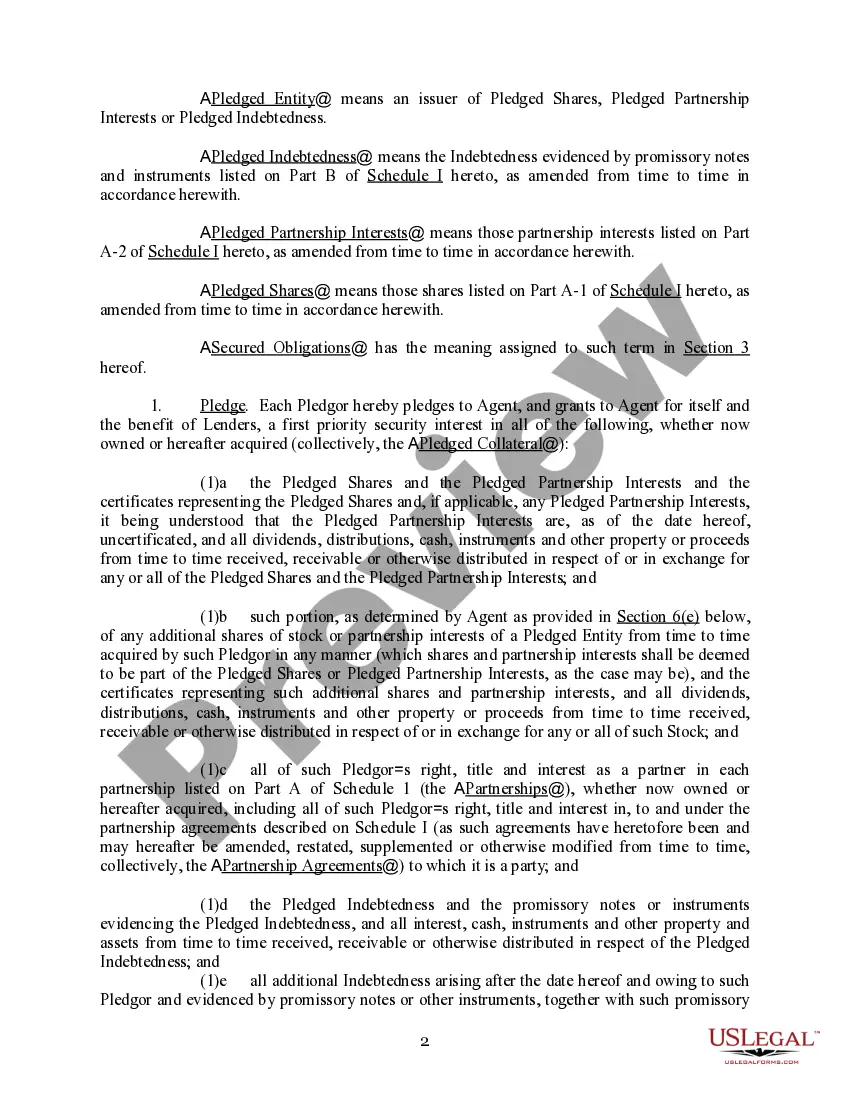
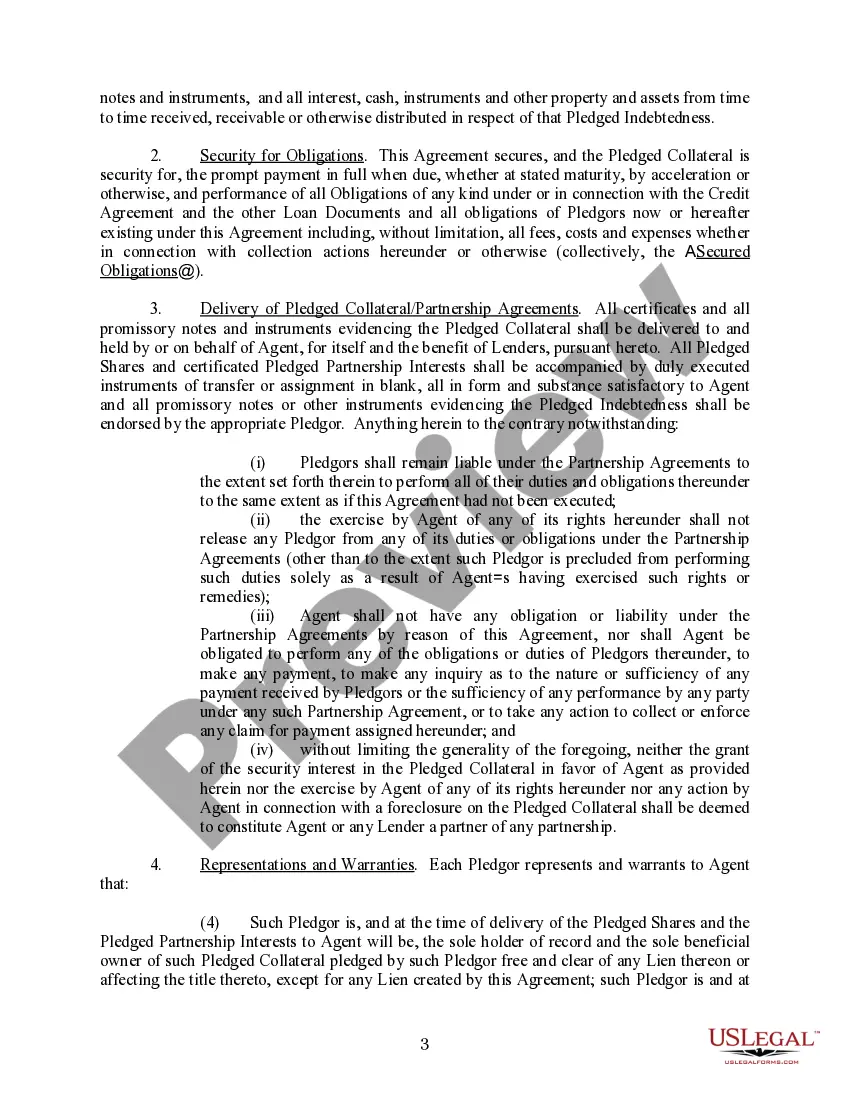
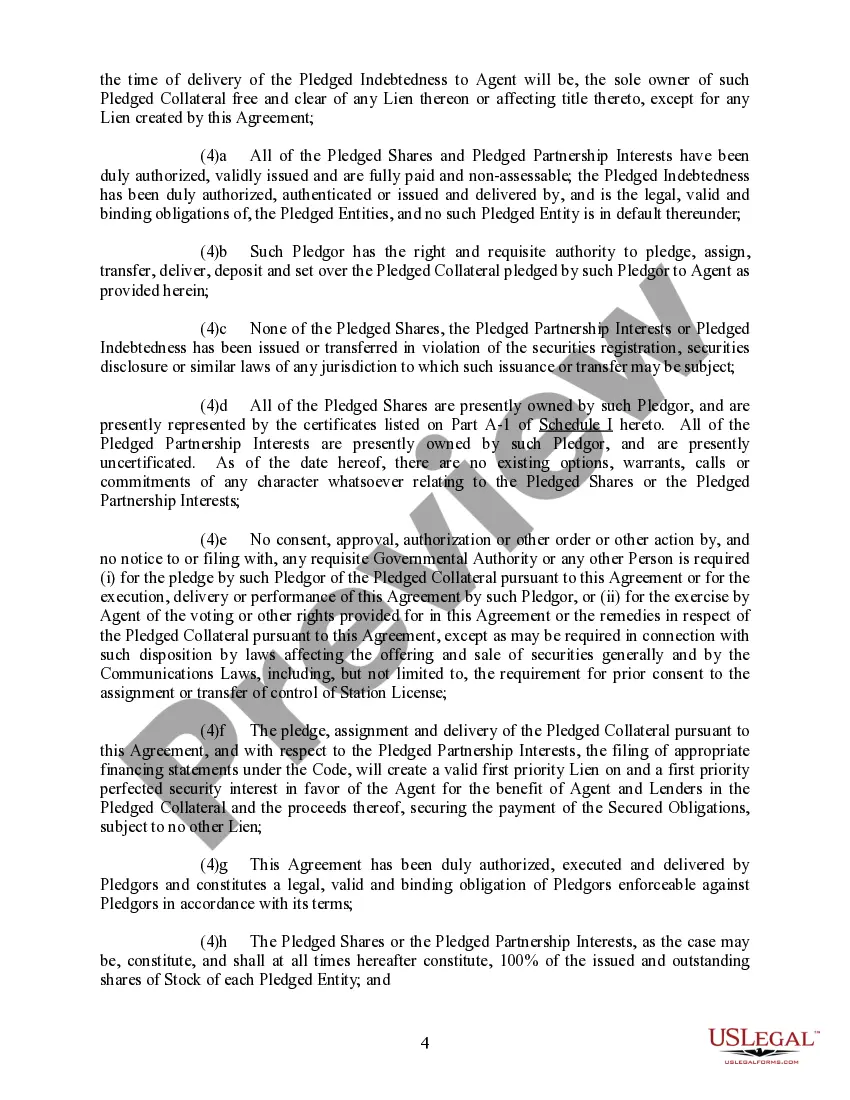
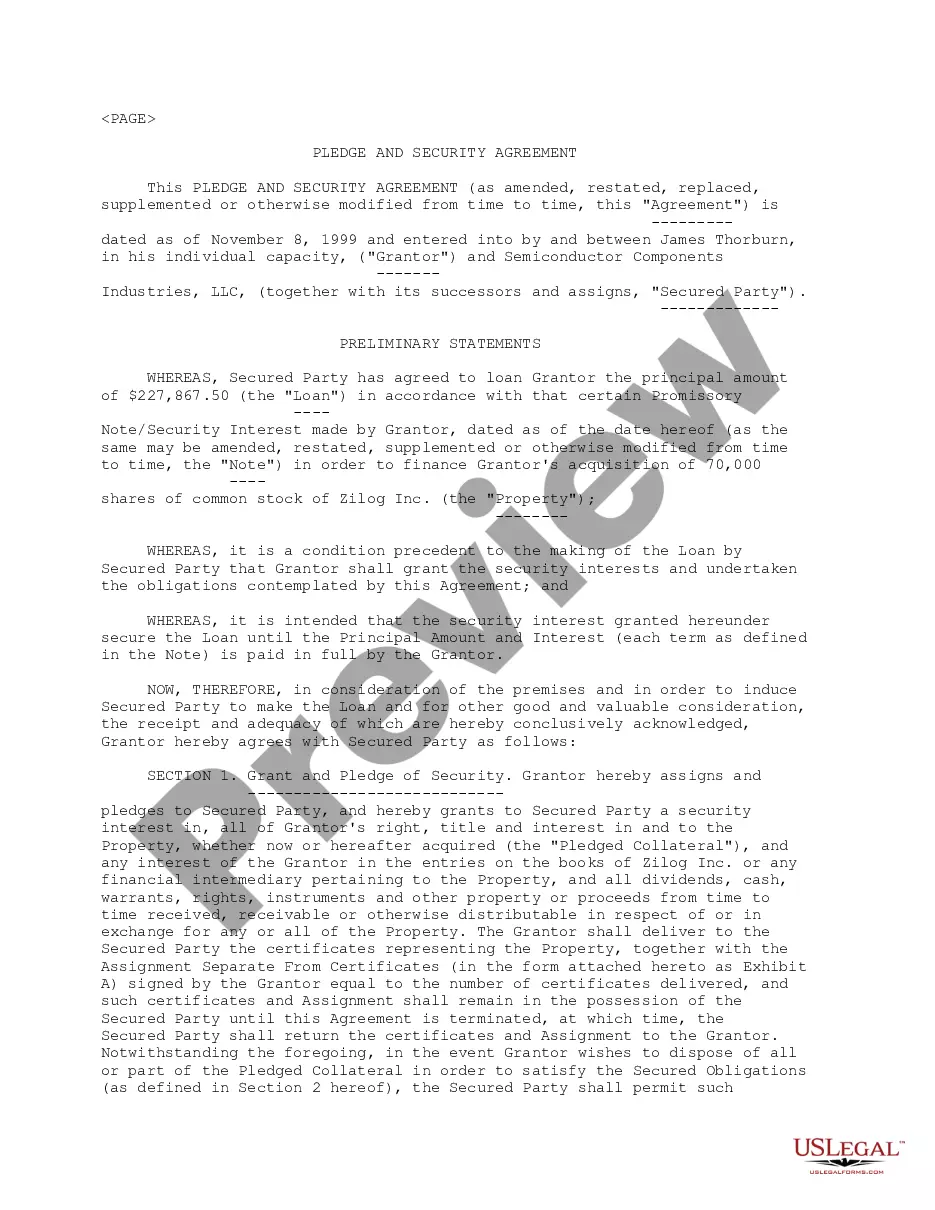
Collateral Pledge Agreement For Bank
Description

Get your form ready online
Our built-in tools help you complete, sign, share, and store your documents in one place.
Make edits, fill in missing information, and update formatting in US Legal Forms—just like you would in MS Word.
Download a copy, print it, send it by email, or mail it via USPS—whatever works best for your next step.
Sign and collect signatures with our SignNow integration. Send to multiple recipients, set reminders, and more. Go Premium to unlock E-Sign.
If this form requires notarization, complete it online through a secure video call—no need to meet a notary in person or wait for an appointment.
We protect your documents and personal data by following strict security and privacy standards.

Make edits, fill in missing information, and update formatting in US Legal Forms—just like you would in MS Word.

Download a copy, print it, send it by email, or mail it via USPS—whatever works best for your next step.

Sign and collect signatures with our SignNow integration. Send to multiple recipients, set reminders, and more. Go Premium to unlock E-Sign.

If this form requires notarization, complete it online through a secure video call—no need to meet a notary in person or wait for an appointment.

We protect your documents and personal data by following strict security and privacy standards.
Looking for another form?



How to fill out Agreement Pledge Of Stock And Collateral For Loan?
It’s clear that you cannot instantly become a legal specialist, nor can you swiftly figure out how to create a Collateral Pledge Agreement For Bank without having the appropriate expertise.
Assembling legal documents is a lengthy undertaking requiring specific training and abilities. Therefore, why not entrust the development of the Collateral Pledge Agreement For Bank to knowledgeable professionals.
With US Legal Forms, one of the largest collections of legal templates, you can access everything from court documents to templates for internal communication.
If you require another template, start your search again.
Create a free account and select a subscription option to purchase the form.
- We understand the importance of compliance and adherence to federal and state laws and regulations.
- This is why all templates on our platform are specific to locations and current.
- Here’s how you can begin using our platform and obtain the document you need in just minutes.
- Find the document you want using the search bar located at the top of the page.
- View it (if this option is available) and check the accompanying description to determine if the Collateral Pledge Agreement For Bank is what you need.
Form popularity
FAQ
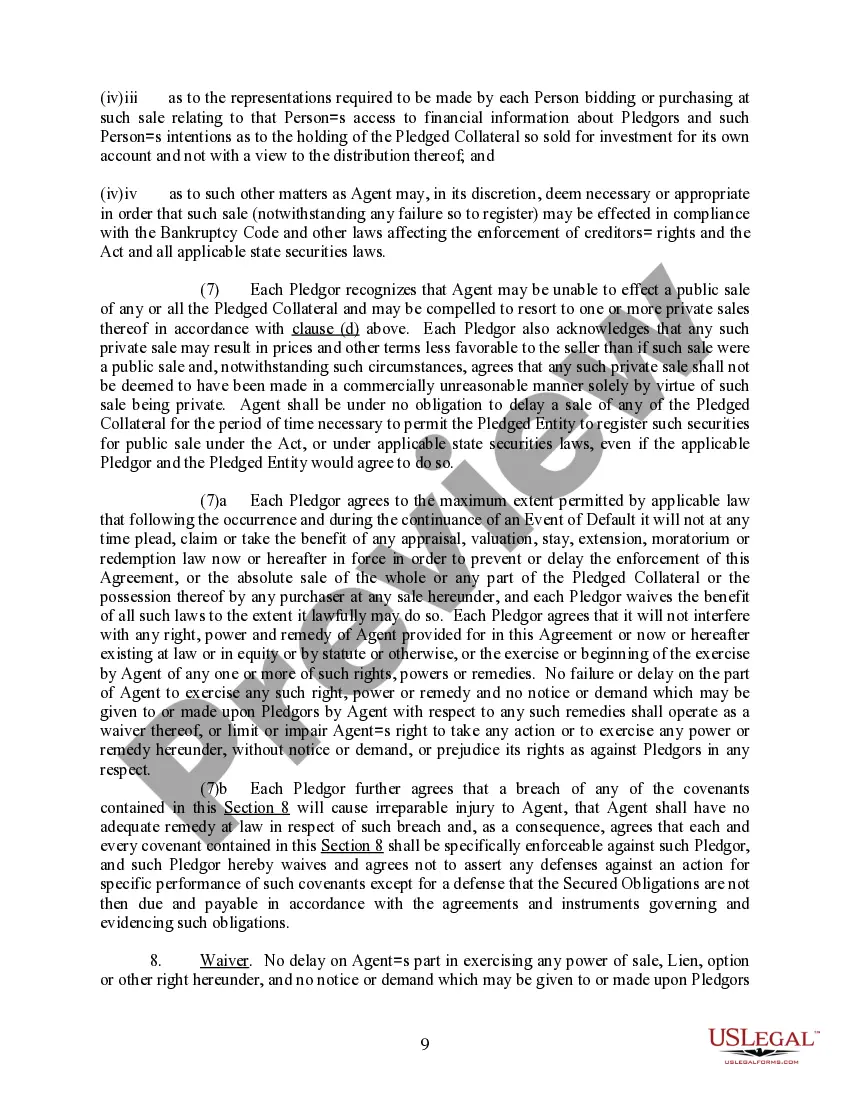
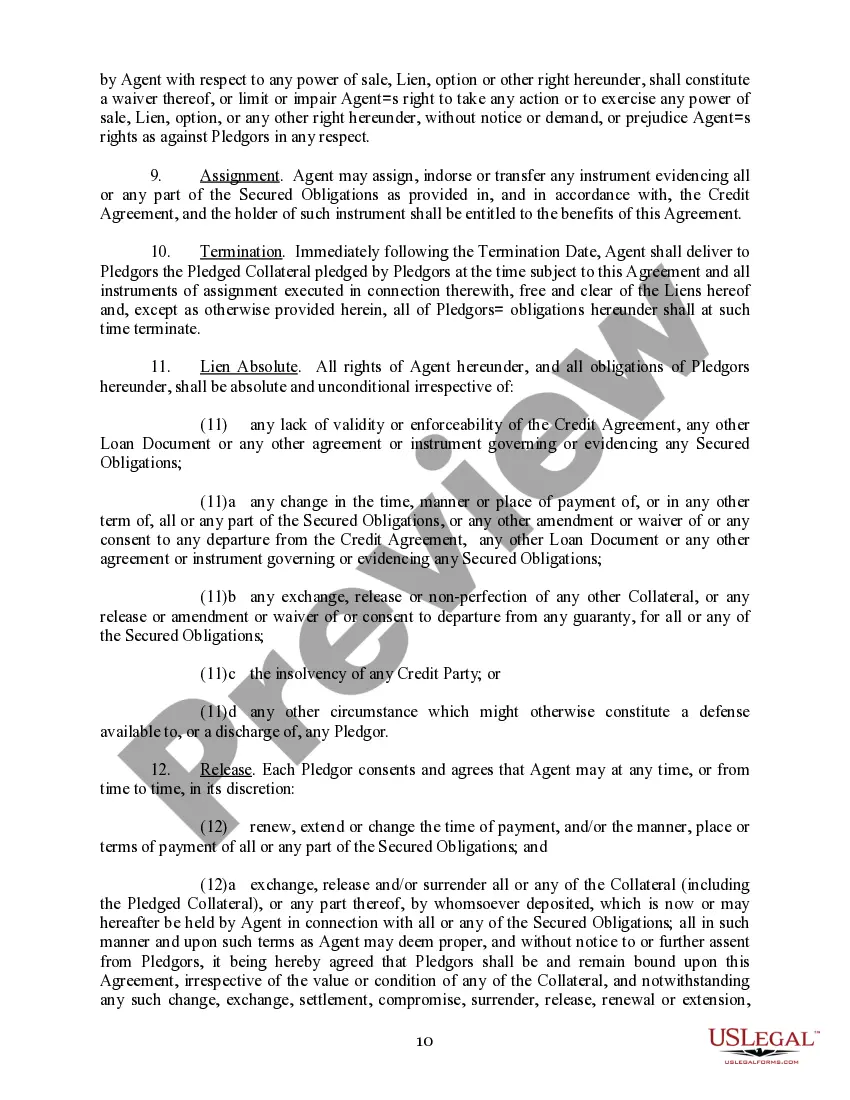
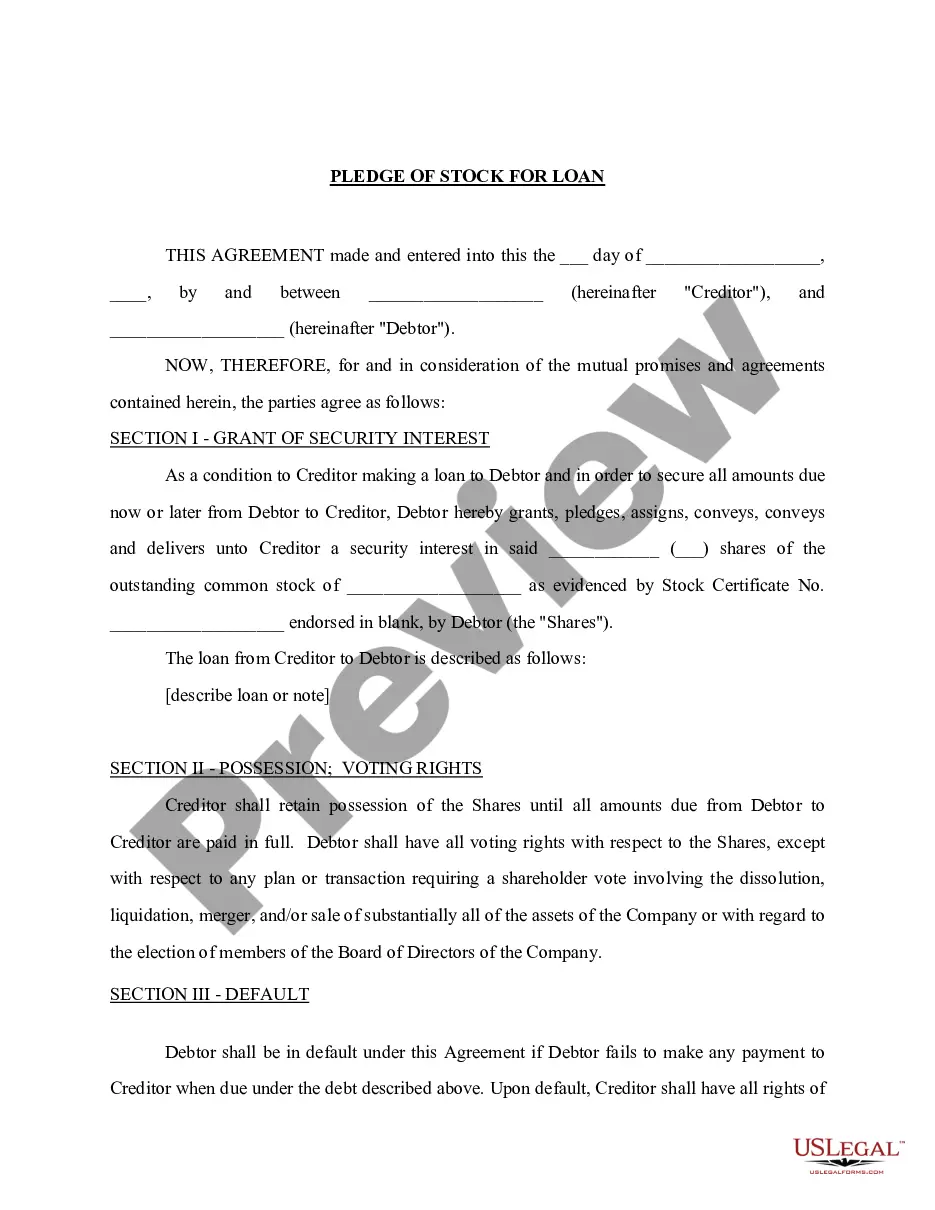
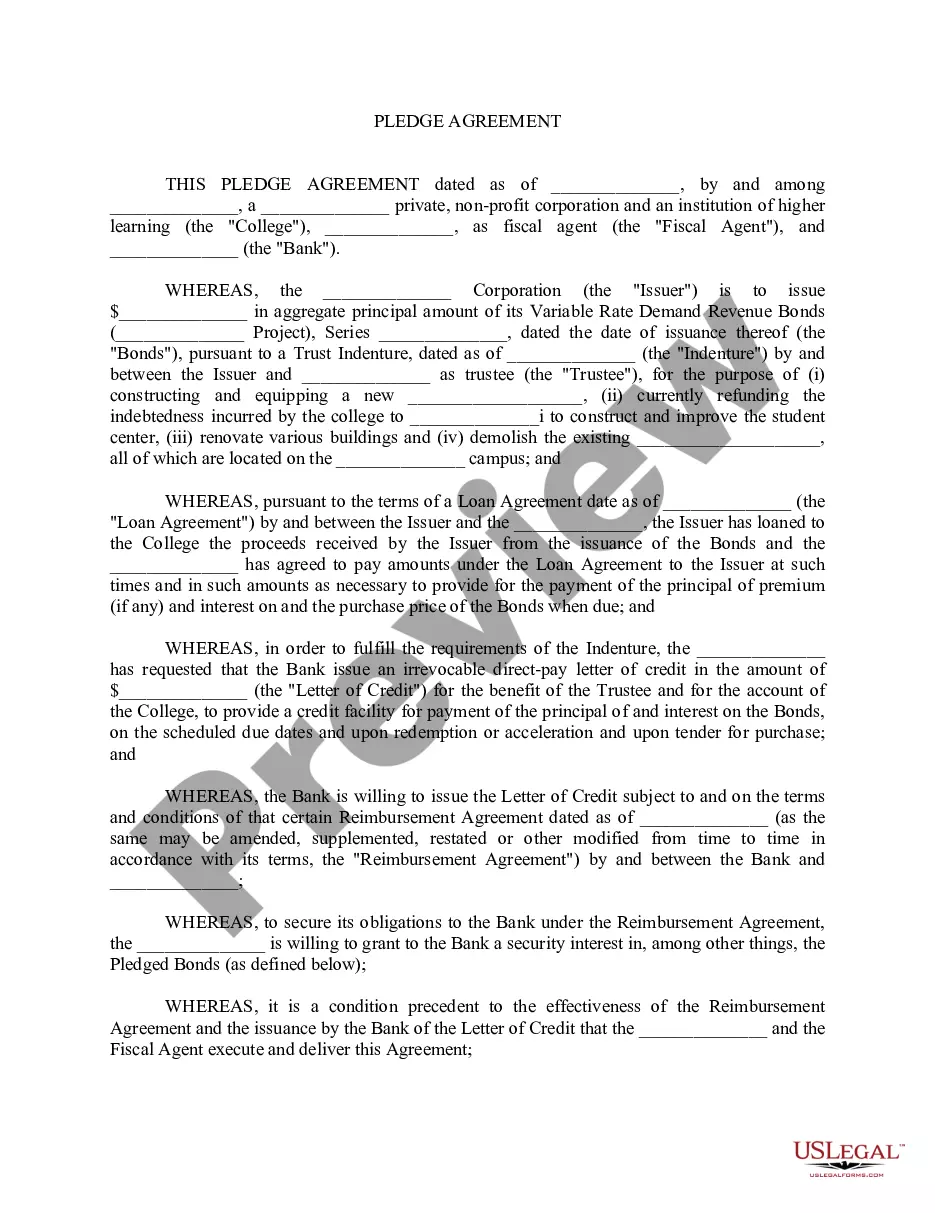
To pledge assets as collateral (or Pledging) is the act of offering assets as collateral to secure loans. Assets pledged can be in the form of security holdings and act as assurance for recovering the borrowed amount should a borrower fail to pay up.
For example, if you pledge your house as collateral, you can still live in the house and continue paying the mortgage. However, if the lender seizes the collateral property after you default, you would have to vacate the home.
Pledging here refers to an activity in which the borrower (pledgor) of funds uses securities as a form of collateral to secure the funds it borrows or takes from the lender (Pledgee).
In business, a company may pledge various types of property as collateral. A borrower may pledge physical assets, such as equipment, machinery, real estate, buildings, or inventory, or it may pledge trade receivables, such as the value of the company's accounts receivable, which represents money owed to the company.
Some examples of pledge are Gold /Jewellery Loans, Advance against goods,/stock, Advances against National Saving Certificates etc. (2) Hypothecation is used for creating charge against the security of movable assets, but here the possession of the security remains with the borrower itself.