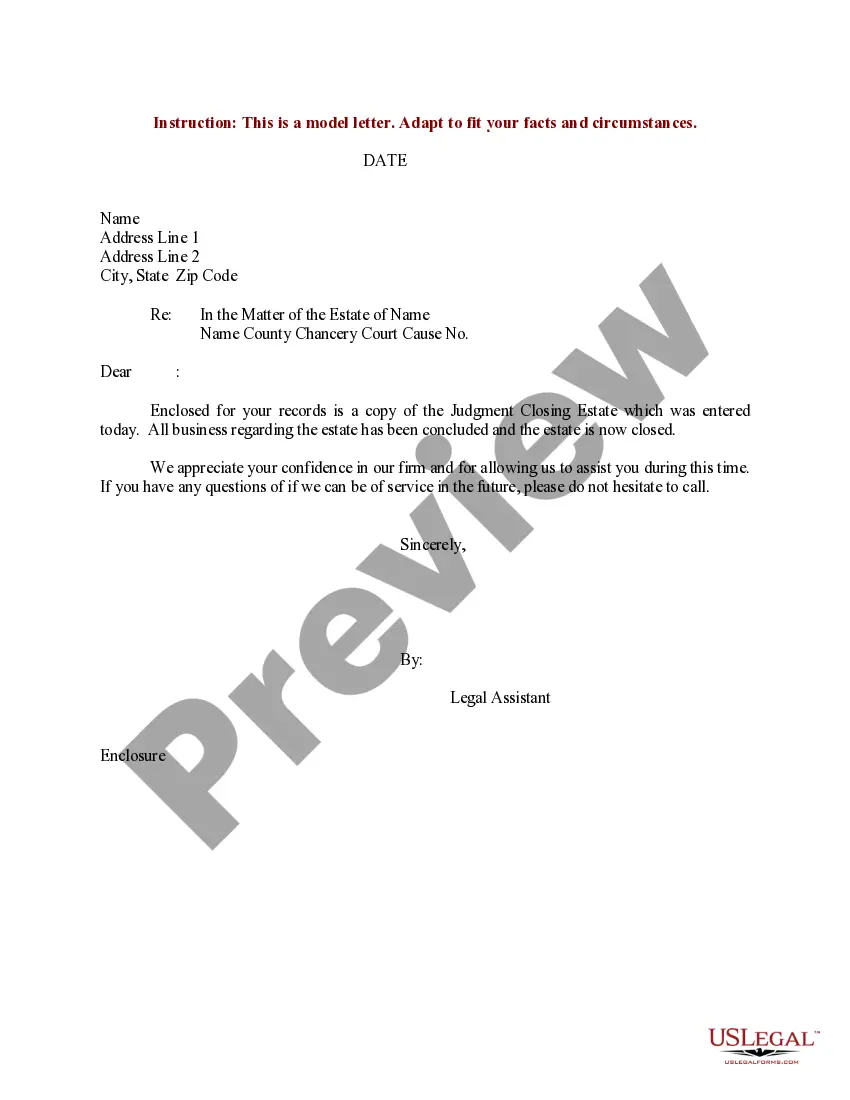
Estate Closing Letter To Beneficiaries With Trust
Description
Get your form ready online
Our built-in tools help you complete, sign, share, and store your documents in one place.
Make edits, fill in missing information, and update formatting in US Legal Forms—just like you would in MS Word.
Download a copy, print it, send it by email, or mail it via USPS—whatever works best for your next step.
Sign and collect signatures with our SignNow integration. Send to multiple recipients, set reminders, and more. Go Premium to unlock E-Sign.
If this form requires notarization, complete it online through a secure video call—no need to meet a notary in person or wait for an appointment.
We protect your documents and personal data by following strict security and privacy standards.

Make edits, fill in missing information, and update formatting in US Legal Forms—just like you would in MS Word.

Download a copy, print it, send it by email, or mail it via USPS—whatever works best for your next step.

Sign and collect signatures with our SignNow integration. Send to multiple recipients, set reminders, and more. Go Premium to unlock E-Sign.

If this form requires notarization, complete it online through a secure video call—no need to meet a notary in person or wait for an appointment.

We protect your documents and personal data by following strict security and privacy standards.
Looking for another form?
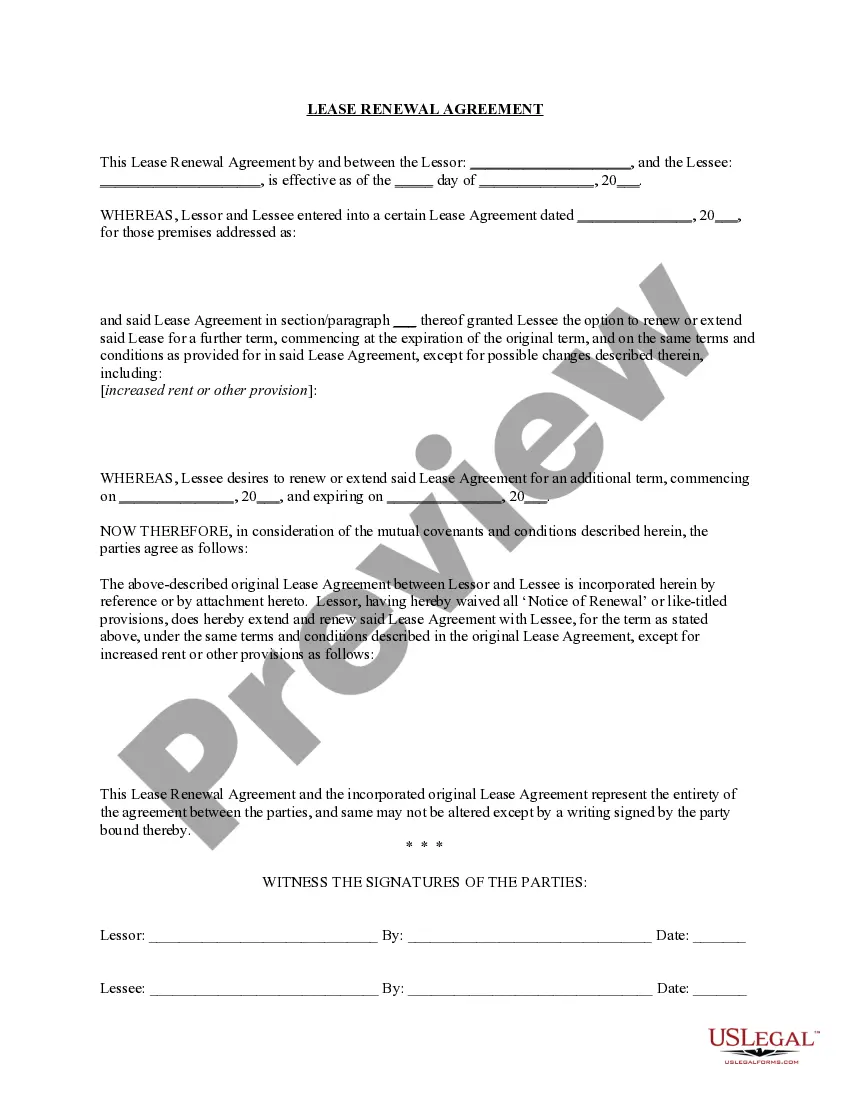
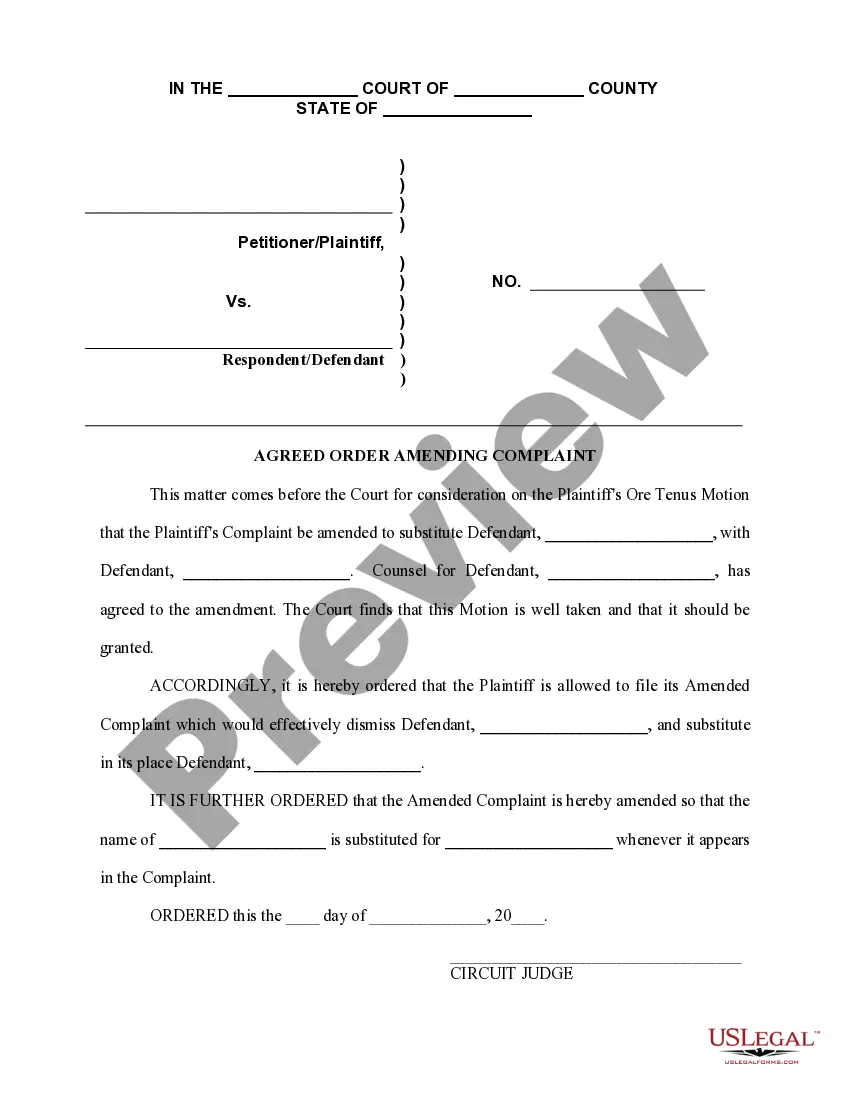
How to fill out Sample Letter For Closing Of Estate?
Finding a reliable source for the latest and suitable legal templates is a significant part of navigating bureaucracy.
Selecting the correct legal documents requires precision and meticulousness, which is why it is essential to obtain samples of the Estate Closing Letter To Beneficiaries With Trust solely from trustworthy providers, like US Legal Forms. An incorrect document can waste your time and frustrate the process you are dealing with.
Eliminate the stress associated with your legal documentation. Explore the vast US Legal Forms catalog, where you can find legal templates, assess their applicability to your situation, and download them instantly.
- Use the library navigation or search box to locate your template.
- Check the form’s information to ensure it meets the standards of your state and area.
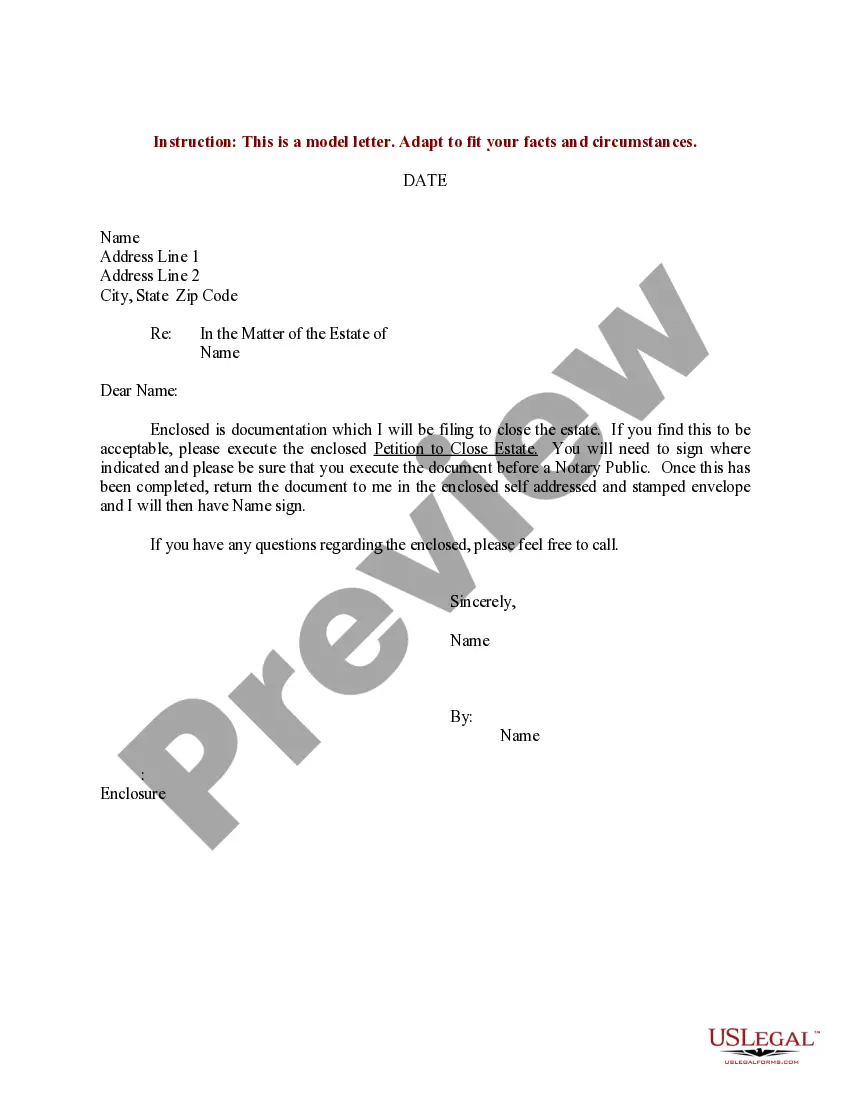
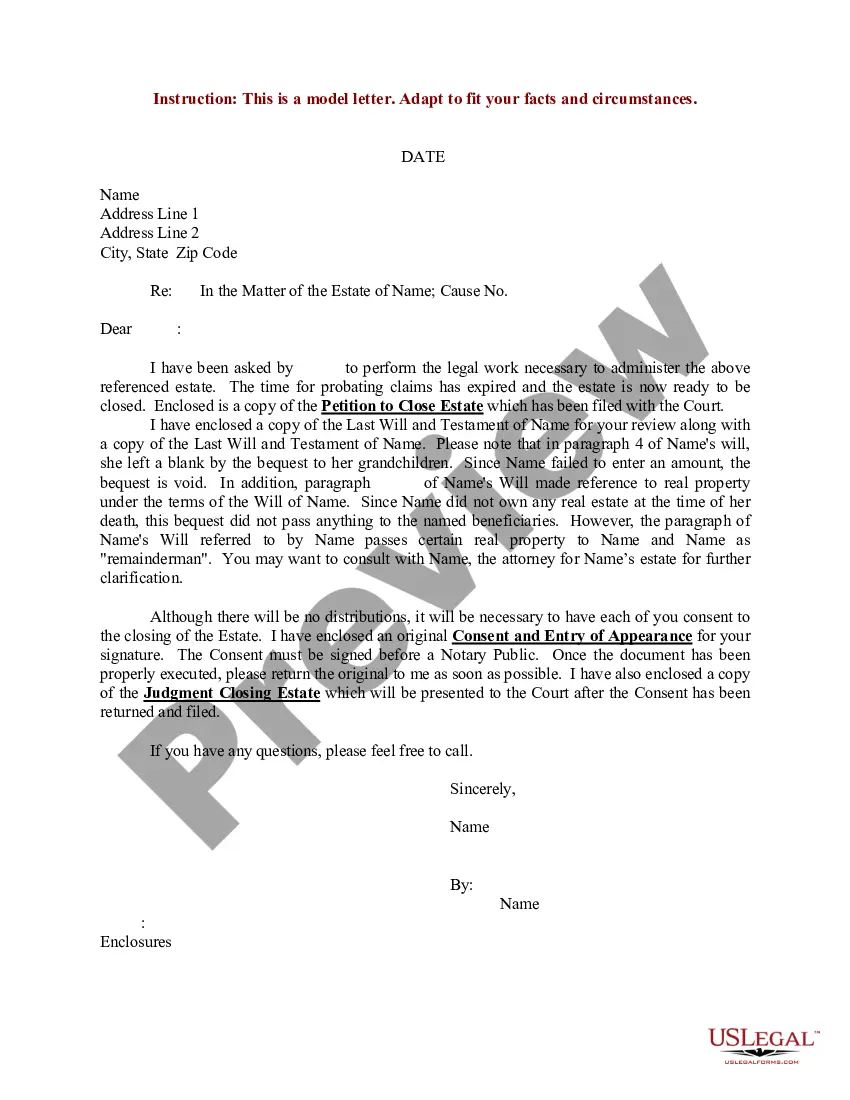
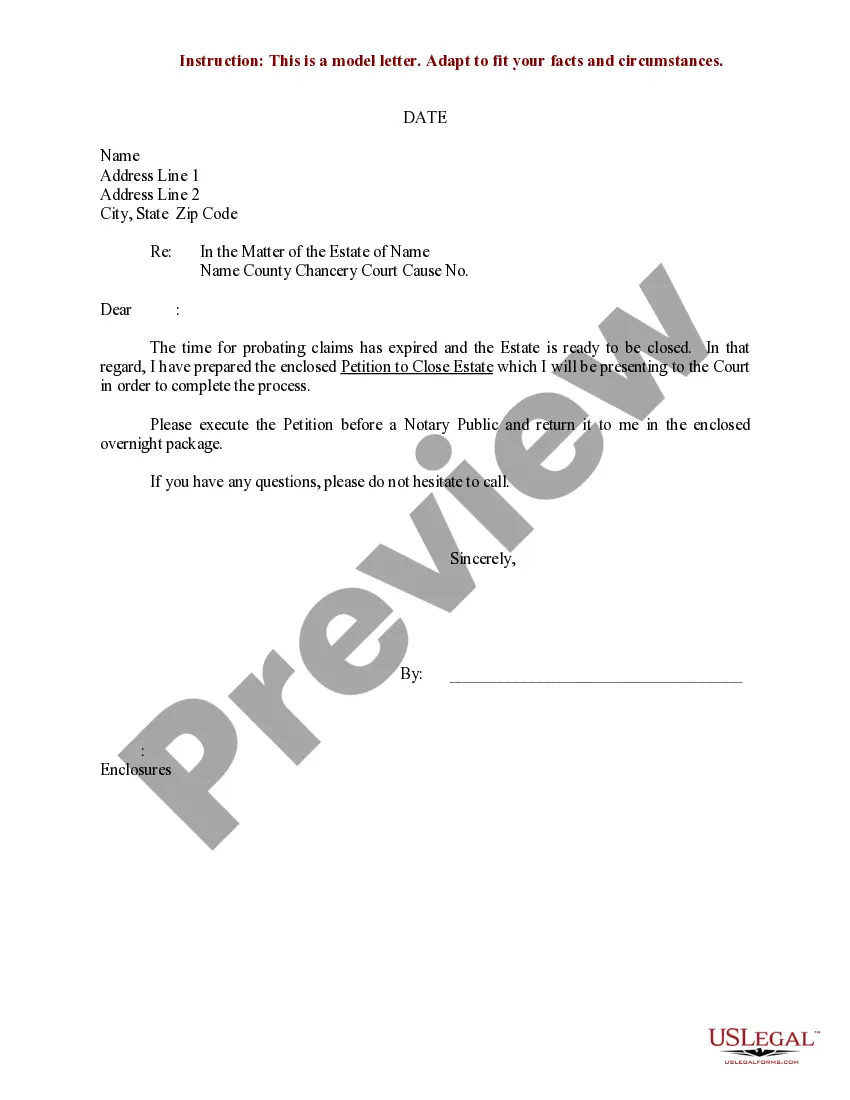
- Look at the form preview, if available, to confirm it is the document you need.
- Return to the search if the Estate Closing Letter To Beneficiaries With Trust does not align with your needs.
- If you are confident about the form’s suitability, download it.
- If you are a registered user, click Log in to verify and access your selected forms in My documents.
- If you do not have an account yet, click Buy now to acquire the template.
- Choose the pricing option that fits your requirements.
- Continue with the registration to finalize your purchase.
- Complete your purchase by selecting a payment method (credit card or PayPal).
- Choose the file format for downloading the Estate Closing Letter To Beneficiaries With Trust.
- Once you have the document on your device, you can edit it with the editor or print it out and fill it in by hand.
Form popularity
FAQ
To obtain an estate closing letter, you should contact the executor or trustee managing the estate. They are responsible for preparing this letter, which details the final distributions to beneficiaries and confirms the conclusion of the estate process. If you are unsure of how to proceed, platforms like USLegalForms can guide you through the necessary documentation, ensuring you receive your estate closing letter to beneficiaries with trust without hassle.
The 5 year rule for trusts refers to a provision in tax regulations that can impact distributions to beneficiaries and trust taxation. This rule ensures that assets distributed from a trust are not subject to additional tax penalties if they remain in the trust for five years. Understanding this rule is essential for trustees, as it influences decisions regarding the timing of distributions and the preparation of the estate closing letter to beneficiaries with trust.
The final letter to beneficiaries from the executor is a formal communication that outlines the distribution of assets and informs beneficiaries of their entitlements. This letter acts as a summary of the estate’s final accounting and provides transparency into the estate closing process. It's crucial for the executor to send this letter, as it includes the estate closing letter to beneficiaries with trust, confirming their shares.
To settle an estate with a trust, you first need to gather all estate assets and review the trust document. Next, you will distribute the assets according to the terms specified in the trust. Additionally, ensure that all debts and taxes are settled before final distribution. Once all steps are complete, you can provide the estate closing letter to beneficiaries with trust.
A trust distribution example could include a letter outlining that the beneficiaries will receive shares of the trust funds, along with the value of those shares. This example would specify the distribution date, any conditions for receiving the funds, and the next steps for the beneficiaries. Providing clear examples is vital to help beneficiaries understand their expectations.
To write a trust distribution letter, begin by addressing the beneficiaries clearly and stating the purpose of the letter. Include essential details about the trust and the assets being distributed, ensuring you explain the distribution process. It is crucial to maintain clarity and a respectful tone, as this strengthens trust and communication.
A letter for distribution of funds to beneficiaries specifies the amount and timing of the funds being disbursed. It clearly states how these funds relate to the trust and any necessary actions the beneficiaries must take. Such letters ensure that beneficiaries are aware of their entitlements and help prevent misunderstandings.
A letter notifying beneficiaries of a trust serves to inform them about their rights and entitlements under the trust. It outlines the terms of the trust and the actions being taken on behalf of the beneficiaries. This communication is essential for transparency and helps maintain trust between the trustee and the beneficiaries.
A final trust distribution letter from a trustee informs beneficiaries about the completion of trust distribution. This letter details the assets being distributed, outlines their value, and explains the process followed. Essentially, it acts as a confirmation of the distribution, helping beneficiaries understand what they will receive from the trust.
The IRS does not automatically send an estate tax closing letter after the estate tax returns are filed. Instead, the estate executor must request this letter to confirm that the estate tax obligations have been settled. It is a good practice to include this information when sending an estate closing letter to beneficiaries with trust to ensure all parties are aware that tax duties are complete.