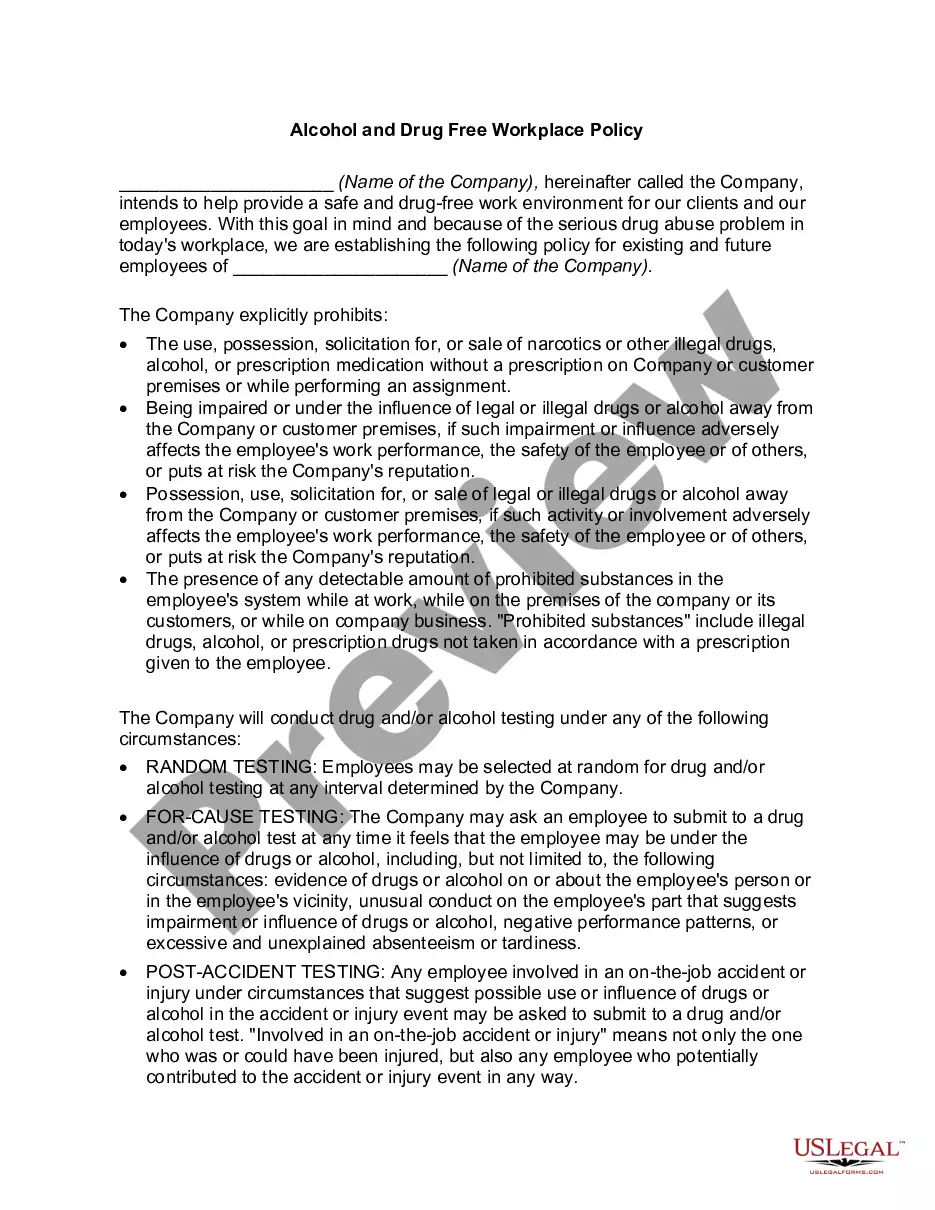
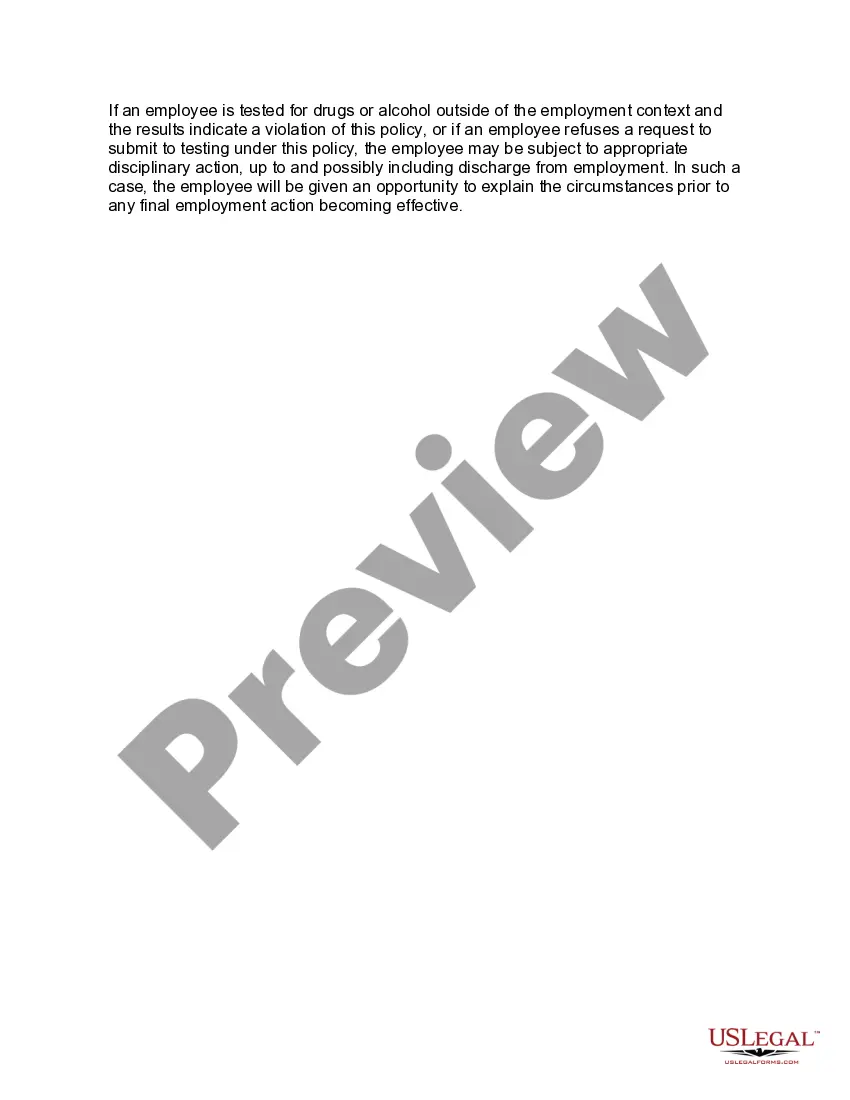
Workplace Policies Drug Testing For Employees
Description
Get your form ready online
Our built-in tools help you complete, sign, share, and store your documents in one place.
Make edits, fill in missing information, and update formatting in US Legal Forms—just like you would in MS Word.
Download a copy, print it, send it by email, or mail it via USPS—whatever works best for your next step.
Sign and collect signatures with our SignNow integration. Send to multiple recipients, set reminders, and more. Go Premium to unlock E-Sign.
If this form requires notarization, complete it online through a secure video call—no need to meet a notary in person or wait for an appointment.
We protect your documents and personal data by following strict security and privacy standards.

Make edits, fill in missing information, and update formatting in US Legal Forms—just like you would in MS Word.

Download a copy, print it, send it by email, or mail it via USPS—whatever works best for your next step.

Sign and collect signatures with our SignNow integration. Send to multiple recipients, set reminders, and more. Go Premium to unlock E-Sign.

If this form requires notarization, complete it online through a secure video call—no need to meet a notary in person or wait for an appointment.

We protect your documents and personal data by following strict security and privacy standards.
Looking for another form?





How to fill out Alcohol And Drug Free Workplace Policy?
- Log in to your US Legal Forms account if you are a returning user, ensuring your subscription is active. If it’s expired, renew it to continue accessing forms.
- For first-time users, begin by checking the Preview mode and description of the required form. Confirm it matches your legal needs and adheres to your jurisdiction's regulations.
- Utilize the Search tab above to find alternative templates if your initial choice proves unsuitable. Select the most appropriate form.
- Click on the Buy Now button and choose a subscription plan that best fits your requirements. Registration is mandatory to access the vast document library.
- Enter your payment details, using either a credit card or your PayPal account to finalize your purchase.
- Download your selected template directly to your device. You can revisit and access it anytime through the My Forms section in your profile.
US Legal Forms not only offers a robust collection of forms but also connects you with legal experts for assistance. This ensures your documents are accurate and compliant with current laws.
Take the first step towards a safe workplace today by obtaining your drug testing policy form. Visit US Legal Forms now and empower your organization!
Form popularity
FAQ
Employers can conduct their own drug testing, but it's crucial to adhere to legal requirements and maintain accurate records. Utilizing a third-party testing service generally enhances credibility and compliance with laws surrounding workplace policies drug testing for employees. Choose a reputable provider to ensure that testing processes remain objective and reliable. Always remain informed about local regulations to avoid legal pitfalls.
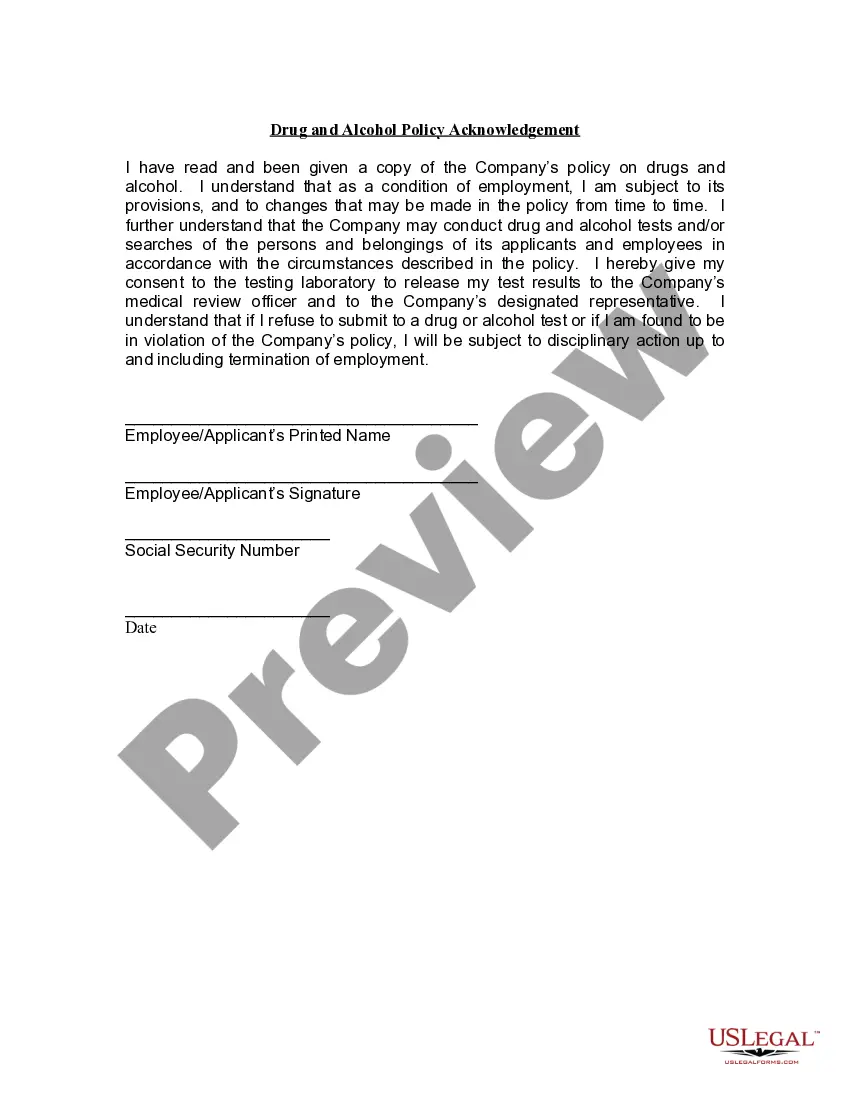
The procedure for a drug test typically begins with notifying the employee and providing them with a consent form. Afterward, the employee will provide a sample, which is often urine, but could also include saliva or hair. The specimen is then sent to a certified laboratory for analysis. Once results are available, you must follow up according to your workplace policies drug testing for employees to maintain fairness and transparency.
To effectively set up drug testing for employees, first establish comprehensive workplace policies drug testing for employees. This policy should outline the reasons for testing, the types of tests used, and how results will be handled. Additionally, create a timeline for regular testing, and communicate this plan to employees to foster a culture of safety and accountability in the workplace.
Setting up a drug test for an employee involves several key steps. First, ensure that your workplace policies drug testing for employees are clearly defined and communicated. Next, choose a reliable testing provider, and schedule the test in a confidential manner. Inform the employee about the process and what to expect, which helps create transparency and trust.
When developing workplace policies drug testing for employees, it's essential to identify specific substances to test. Commonly tested drugs include marijuana, cocaine, opiates, amphetamines, and PCP. Tailoring your drug testing policy to reflect the most relevant drugs can enhance workplace safety and maintain productivity. Always consult legal guidelines to ensure compliance with state and federal regulations.
Yes, an employer may choose not to administer drug tests for its employees, depending on the industry and company culture. Employers must evaluate the need for testing based on workplace policies drug testing for employees, safety concerns, and legal obligations. It’s important for companies to have clear guidelines on their stance regarding drug testing.
Yes, an employer can terminate your employment if you test positive for drugs, especially if workplace policies drug testing for employees are clearly outlined and communicated. It is essential for employees to review these policies to understand the consequences of a positive test. Employers should handle such situations fairly and consistently.
OSHA does not have a specific rule regarding drug testing; however, it stipulates that employers must not retaliate against workers for refusing to take a drug test after an accident. Employers should ensure their workplace policies drug testing for employees are in alignment with OSHA guidelines to foster a safe and compliant work environment.
Employers typically have a specified window, often within 24 to 72 hours, to conduct drug testing after an injury. Adhering to these timeframes is crucial for workplace policies drug testing for employees, as it ensures accurate results and preserves the integrity of the testing process. Check your company’s policy for specific timelines.
In the USA, drug testing is not universally mandatory for all employment. Certain industries, particularly those related to safety-sensitive positions, often implement workplace policies drug testing for employees. Employers have the discretion to require pre-employment drug tests, depending on their policies.