Workplace Drug Policies With Ai
Description
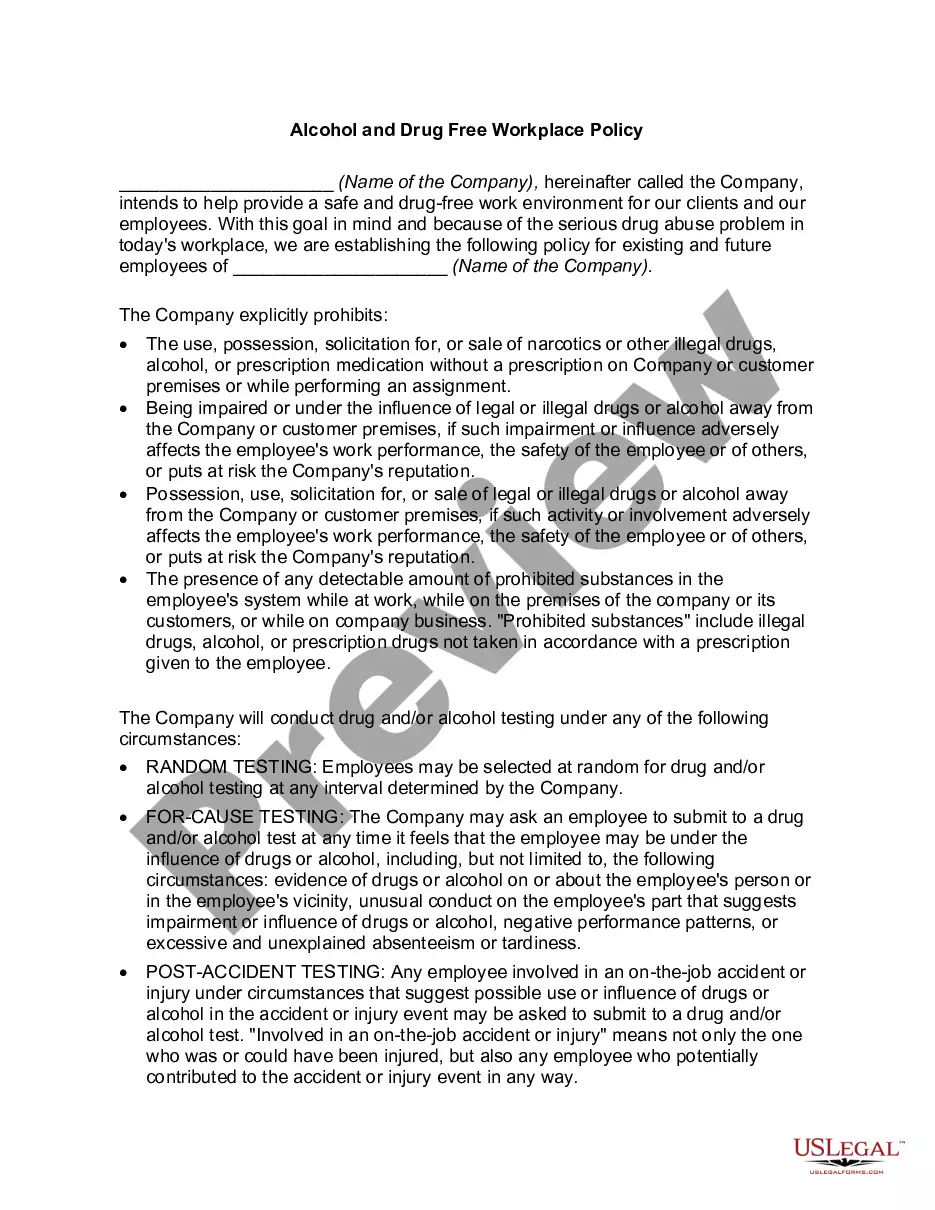
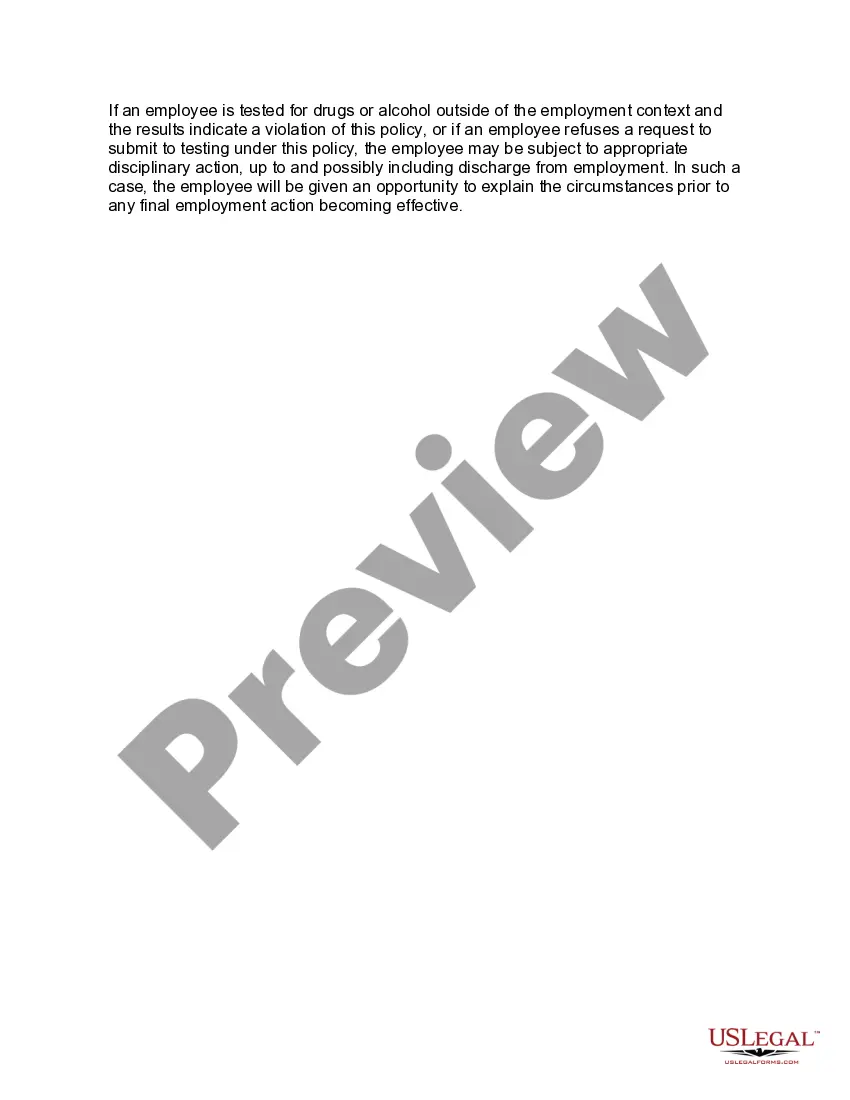
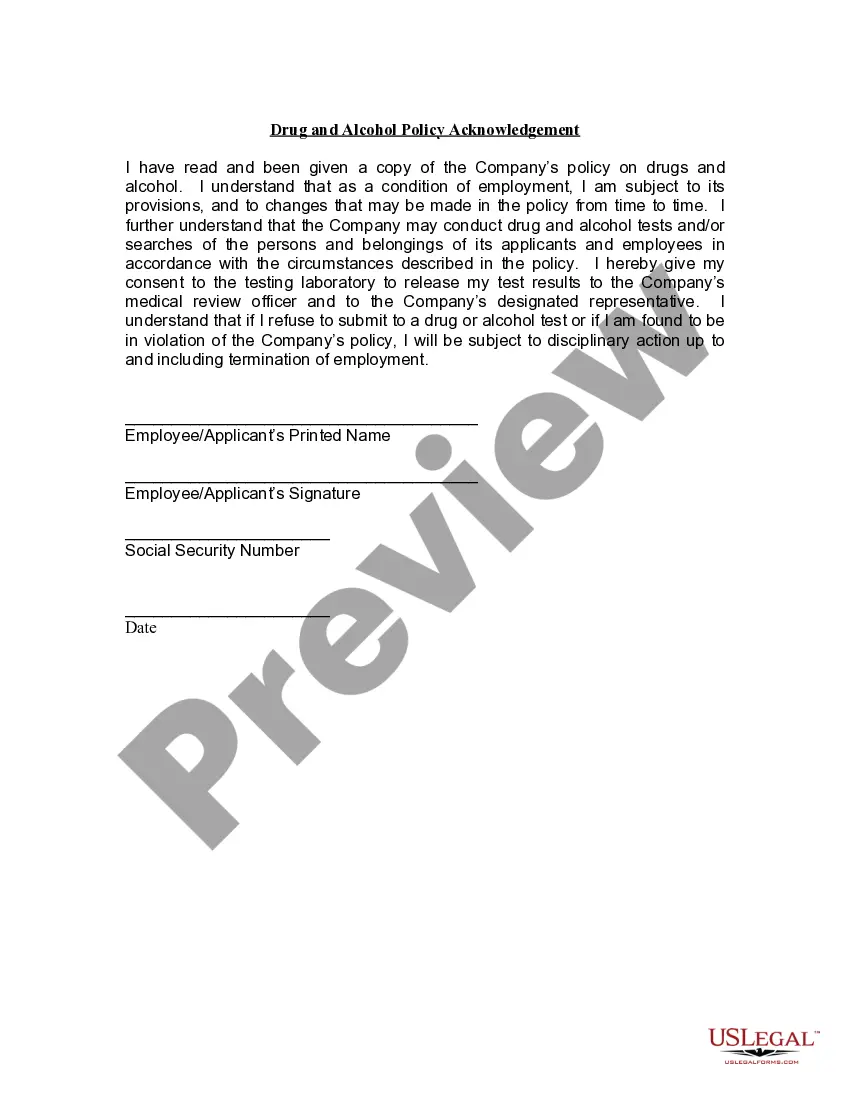
Get your form ready online
Our built-in tools help you complete, sign, share, and store your documents in one place.
Make edits, fill in missing information, and update formatting in US Legal Forms—just like you would in MS Word.
Download a copy, print it, send it by email, or mail it via USPS—whatever works best for your next step.
Sign and collect signatures with our SignNow integration. Send to multiple recipients, set reminders, and more. Go Premium to unlock E-Sign.
If this form requires notarization, complete it online through a secure video call—no need to meet a notary in person or wait for an appointment.
We protect your documents and personal data by following strict security and privacy standards.

Make edits, fill in missing information, and update formatting in US Legal Forms—just like you would in MS Word.

Download a copy, print it, send it by email, or mail it via USPS—whatever works best for your next step.

Sign and collect signatures with our SignNow integration. Send to multiple recipients, set reminders, and more. Go Premium to unlock E-Sign.

If this form requires notarization, complete it online through a secure video call—no need to meet a notary in person or wait for an appointment.

We protect your documents and personal data by following strict security and privacy standards.
Looking for another form?









How to fill out Alcohol And Drug Free Workplace Policy?
- Visit the US Legal Forms website and check if you have an existing account. If yes, log in to access your templates.
- In case it's your first time, preview the form library and choose a template that meets your specific workplace needs and complies with local regulations.
- Should you need additional forms, utilize the Search feature before proceeding to ensure you have the correct documentation.
- Click on the Buy Now button and select a subscription plan that best fits your requirements. Make sure to create an account for access.
- Complete your purchase by providing your payment details, either via credit card or your PayPal account.
- Finally, download the selected template to your device and save it in the My Forms section for easy retrieval.
In conclusion, US Legal Forms offers a robust collection of legal documents that allows users to create thorough workplace drug policies with AI assistance. With over 85,000 forms at your fingertips and expert support, you can ensure your policies are both compliant and effective.
Start using US Legal Forms today to streamline your legal document processes.
Form popularity
FAQ
Johnson & Johnson is one of the leading pharmaceutical companies utilizing AI extensively in its operations. They focus on using AI tools to improve research and development, leading to breakthroughs in treatment options. This commitment to incorporating AI aligns with the need for effective workplace drug policies with AI, ensuring that the work environment remains safe and productive.
AI platforms have led to the creation of remarkable drugs such as Insilico Medicine's drug for idiopathic pulmonary fibrosis. These innovations demonstrate how AI-driven methods can significantly expedite the drug development process. By utilizing AI, we can enhance workplace drug policies with AI, offering solutions that ensure both innovation and safety.
Machine learning is one of the most common AI techniques used for drug target identification. It enables the analysis of large datasets to uncover patterns and predict how various drugs will interact with specific targets. The application of machine learning contributes to the development of more effective workplace drug policies with AI, ensuring safer environments.
Several drug companies are harnessing AI to enhance their processes, including massive players like Pfizer and Merck. They leverage AI technologies to streamline drug discovery, optimize clinical trials, and improve workplace drug policies with AI. By integrating AI solutions into their operations, these companies aim to enhance efficiency and effectiveness while complying with regulations.
To use AI in drug development, organizations should integrate machine learning algorithms to analyze data throughout the research process. This can optimize the selection of potential drug candidates and streamline clinical trials. Implementing workplace drug policies with AI not only enhances research outcomes but also ensures that ethical practices are followed in every stage of development.
The FDA's guidance for AI in 2025 focuses on establishing frameworks for the safe and effective use of AI technologies in healthcare. It emphasizes continuous monitoring of AI systems post-approval and encourages collaboration with industry stakeholders. As companies adapt workplace drug policies with AI, understanding these guidelines will be crucial for compliance and innovation.
AI is transforming the pharmaceutical industry by optimizing drug discovery, enhancing clinical trials, and personalizing medicine. It analyzes large data sets to identify trends, predict outcomes, and improve efficiency in drug development processes. Many companies are implementing workplace drug policies with AI to safeguard employee health and ensure compliance throughout these innovative practices.
AI regulation refers to the set of guidelines governing the development and use of artificial intelligence technologies. These regulations often address ethical concerns, data privacy, and the safe integration of AI into various sectors including pharmaceuticals and healthcare. Adopting AI regulation ensures that workplace drug policies with AI are designed to prioritize patient safety while fostering innovation.
AI plays a critical role in pharmaceutical regulatory affairs by streamlining processes and ensuring compliance with evolving laws. It helps analyze vast amounts of data to identify potential issues early, aiding in the development of effective workplace drug policies with AI. By automating routine tasks, AI allows regulators to focus on more complex issues, improving overall efficiency.
AI regulation in the pharmaceutical industry focuses on ensuring that AI technology is used safely and ethically in drug development and patient care. Regulations often require transparency in AI algorithms, protecting patient data, and adherence to workplace drug policies with AI. These regulations aim to maintain trust in AI applications, ensuring they enhance, rather than compromise, public health.