Drug Policy Workplace With The Government
Description
Get your form ready online
Our built-in tools help you complete, sign, share, and store your documents in one place.
Make edits, fill in missing information, and update formatting in US Legal Forms—just like you would in MS Word.
Download a copy, print it, send it by email, or mail it via USPS—whatever works best for your next step.
Sign and collect signatures with our SignNow integration. Send to multiple recipients, set reminders, and more. Go Premium to unlock E-Sign.
If this form requires notarization, complete it online through a secure video call—no need to meet a notary in person or wait for an appointment.
We protect your documents and personal data by following strict security and privacy standards.

Make edits, fill in missing information, and update formatting in US Legal Forms—just like you would in MS Word.

Download a copy, print it, send it by email, or mail it via USPS—whatever works best for your next step.

Sign and collect signatures with our SignNow integration. Send to multiple recipients, set reminders, and more. Go Premium to unlock E-Sign.

If this form requires notarization, complete it online through a secure video call—no need to meet a notary in person or wait for an appointment.

We protect your documents and personal data by following strict security and privacy standards.
Looking for another form?





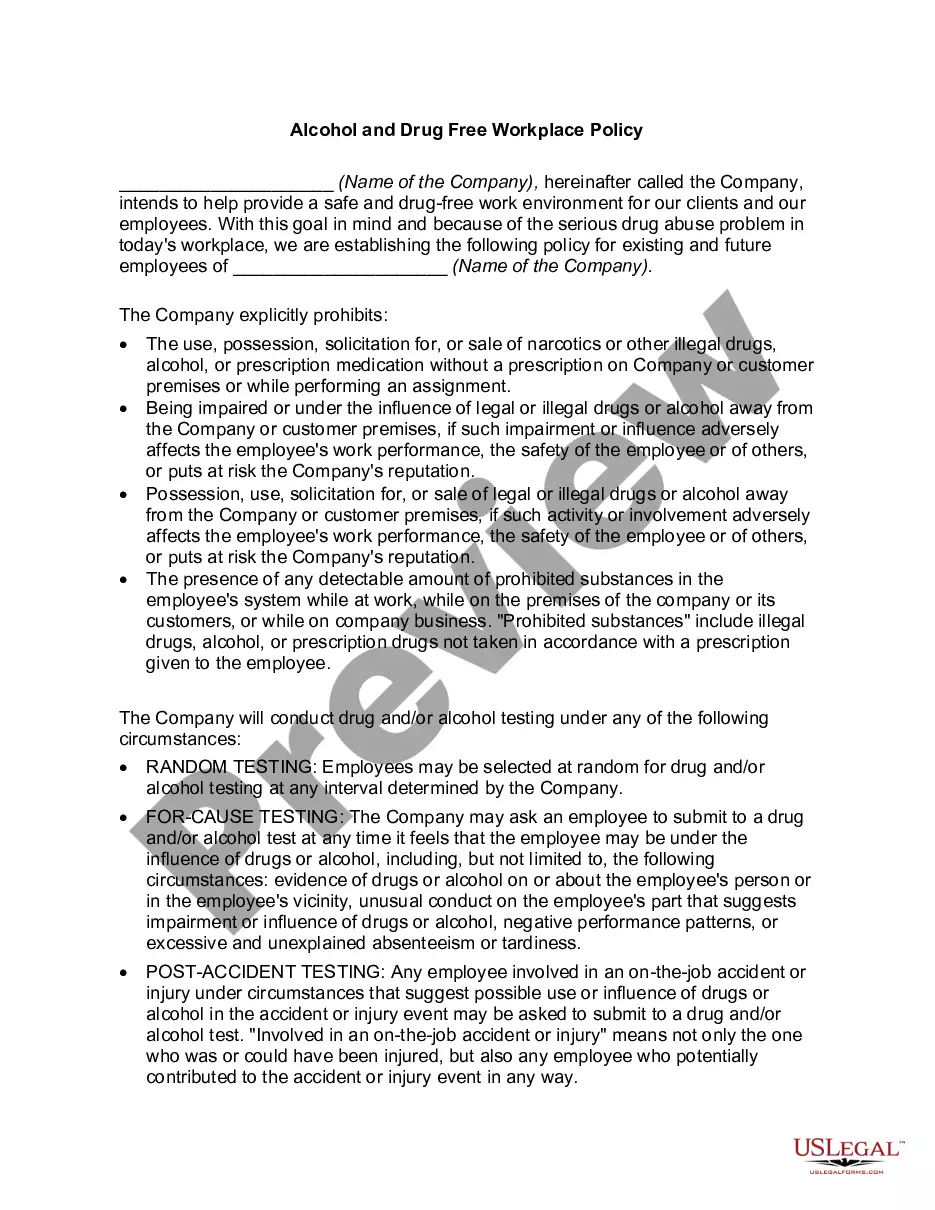
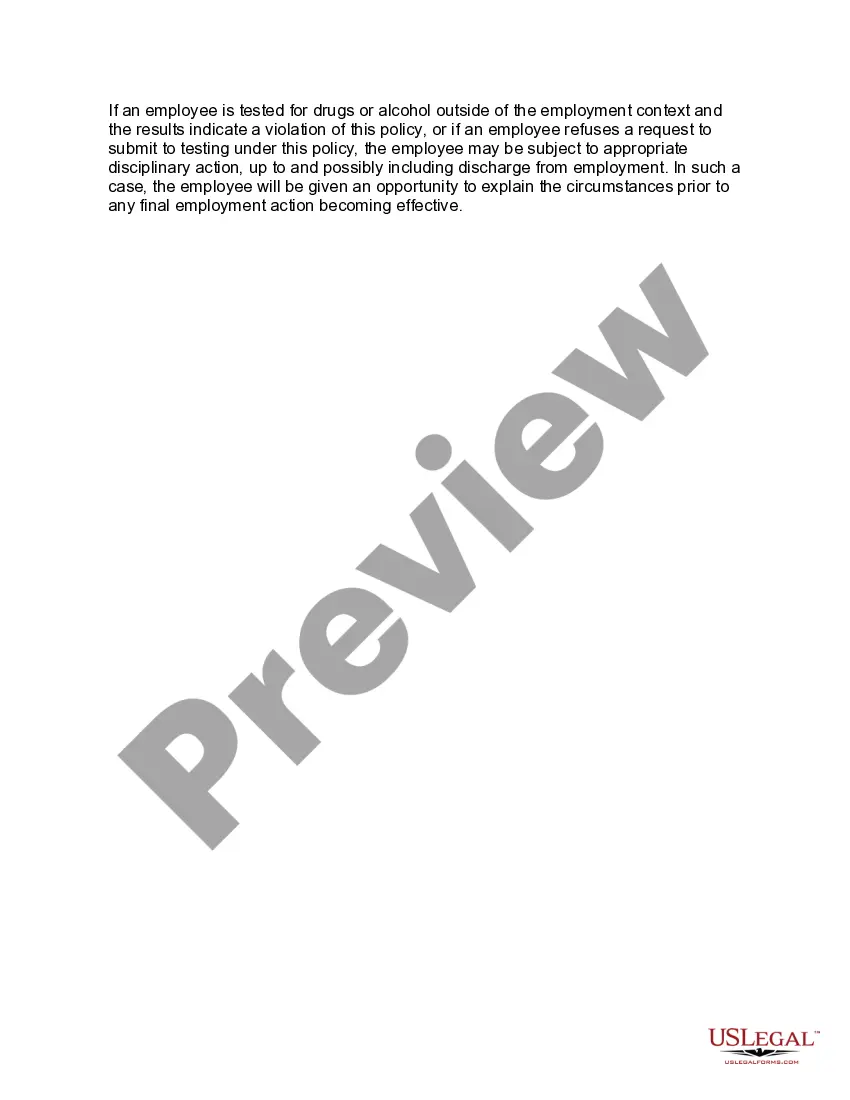
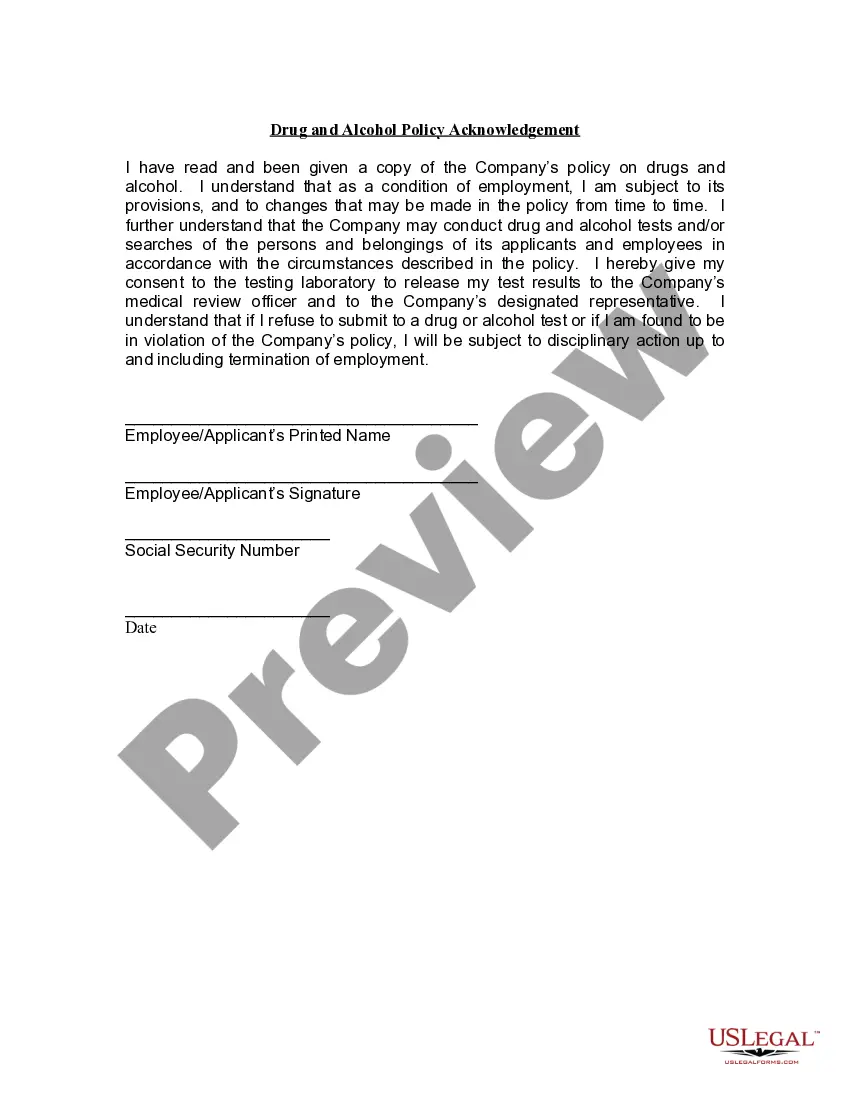
How to fill out Alcohol And Drug Free Workplace Policy?
- If you're an existing user, log in to your account and locate the desired template. Ensure your subscription is current, renewing if necessary.
- For new users, first, browse the Preview mode. Review the form descriptions to verify that the selected document aligns with your needs and complies with local regulations.
- If the initial template does not fit, utilize the Search tab to find the appropriate form that meets your specifications.
- Proceed to purchase your document by selecting the Buy Now button and choosing a suitable subscription plan. You will need to create an account to access the resources available.
- Complete your purchase by entering your payment information, either through credit card or PayPal.
- Download your chosen form and save it to your device. Access it anytime through the My Forms section of your profile.
In conclusion, US Legal Forms offers an unparalleled selection of legal forms, with more options than competitors at a similar cost. Their extensive library, combined with expert assistance, ensures that you'll have the necessary documents for compliance with government drug policies in the workplace.
Explore US Legal Forms today to simplify your legal documentation process and ensure compliance with workplace drug policies!
Form popularity
FAQ
An example of a substance abuse policy in a drug policy workplace with the government may outline procedures for identifying and addressing substance use issues among employees. This policy could include provisions for employee assistance programs, options for treatment, and confidentiality assurances. It aims to provide support to employees while maintaining workplace safety. Clear communication of this policy helps to encourage a culture of openness and recovery.
To create a drug policy workplace with the government, begin by developing a framework that reflects your organization's values and legal requirements. Consult with experts to ensure compliance with applicable laws and best practices. You should also include an overview of the policy's purpose, procedures for reporting drug use, and support options for employees. Finally, review and update the policy regularly to adapt to changing laws and workplace dynamics.
The most effective drug policy workplace with the government promotes safety and support rather than punishment. It includes education about the dangers of substance misuse and provides resources for employees struggling with addiction. Moreover, effective policies incorporate regular training and clearly defined procedures for enforcement. This balanced approach fosters a healthier workplace culture.
Creating a drug policy workplace with the government involves assessing your organization's needs and legal obligations. Start by researching federal and state regulations regarding substance use. You should also engage stakeholders, such as employees and legal advisors, to gather input. Finally, draft a clear and comprehensive policy that addresses prevention, testing, and support for employees seeking help.
A drug policy workplace with the government typically includes protocols for handling drug use by employees. For instance, a common example is a zero-tolerance policy that prohibits the use of illegal substances during work hours. This policy outlines the consequences of violations, ensuring a safe and productive work environment. It's essential for organizations to communicate their drug policy clearly to all employees.
Writing a drug policy involves several key steps, including defining the purpose, outlining prohibited behaviors, and detailing testing procedures. Ensure your policy is clear and comprehensive to promote safety and compliance within the drug policy workplace with the government. Utilizing resources like USLegalForms can help you draft a legally sound policy tailored to your organization’s needs.
A standard federal employee drug test panel typically screens for five substances: marijuana, cocaine, opiates, amphetamines, and phencyclidine (PCP). Some agencies may expand this panel to include additional substances based on their specific drug policy workplace with the government. Understanding what substances are tested can help employees prepare and promote a safe working environment.
Federal employees undergo drug testing under specific circumstances, such as pre-employment screenings, random testing, and upon reasonable suspicion of drug use. The frequency of testing varies depending on the agency and the employee's job responsibilities, particularly in safety-sensitive positions. It's important to have a clear understanding of your agency's drug policy workplace with the government to ensure compliance and protect employee rights.
The government drug policy consists of regulations and initiatives aimed at minimizing substance abuse and its associated risks. It includes various programs designed to educate the public and enforce laws related to drug use. For businesses, understanding the government drug policy is vital in developing a drug policy workplace with the government that aligns with federal guidelines and protects both employees and the organization. USLegalForms offers resources that assist businesses in crafting policies that comply with these regulations.
A common example of a drug policy in the workplace includes pre-employment drug screenings and random drug testing for employees. Such policies may also outline the types of substances tested and the consequences for positive results. Implementing a comprehensive drug policy workplace with the government helps organizations promote safety and accountability among employees. Utilizing tools like USLegalForms can streamline the creation of effective drug policies that meet legal requirements.