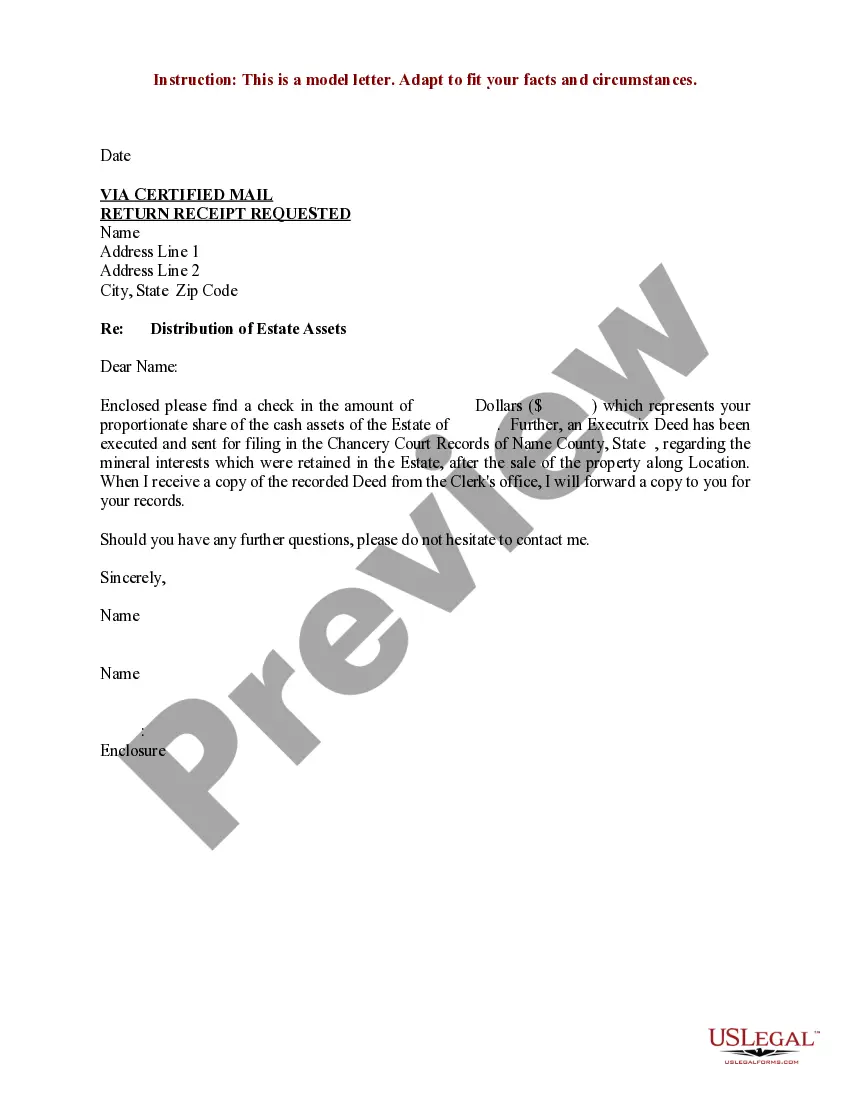
Inventory Estate Forms For Sale By Owner
Description

Get your form ready online
Our built-in tools help you complete, sign, share, and store your documents in one place.
Make edits, fill in missing information, and update formatting in US Legal Forms—just like you would in MS Word.
Download a copy, print it, send it by email, or mail it via USPS—whatever works best for your next step.
Sign and collect signatures with our SignNow integration. Send to multiple recipients, set reminders, and more. Go Premium to unlock E-Sign.
If this form requires notarization, complete it online through a secure video call—no need to meet a notary in person or wait for an appointment.
We protect your documents and personal data by following strict security and privacy standards.

Make edits, fill in missing information, and update formatting in US Legal Forms—just like you would in MS Word.

Download a copy, print it, send it by email, or mail it via USPS—whatever works best for your next step.

Sign and collect signatures with our SignNow integration. Send to multiple recipients, set reminders, and more. Go Premium to unlock E-Sign.

If this form requires notarization, complete it online through a secure video call—no need to meet a notary in person or wait for an appointment.

We protect your documents and personal data by following strict security and privacy standards.
Looking for another form?
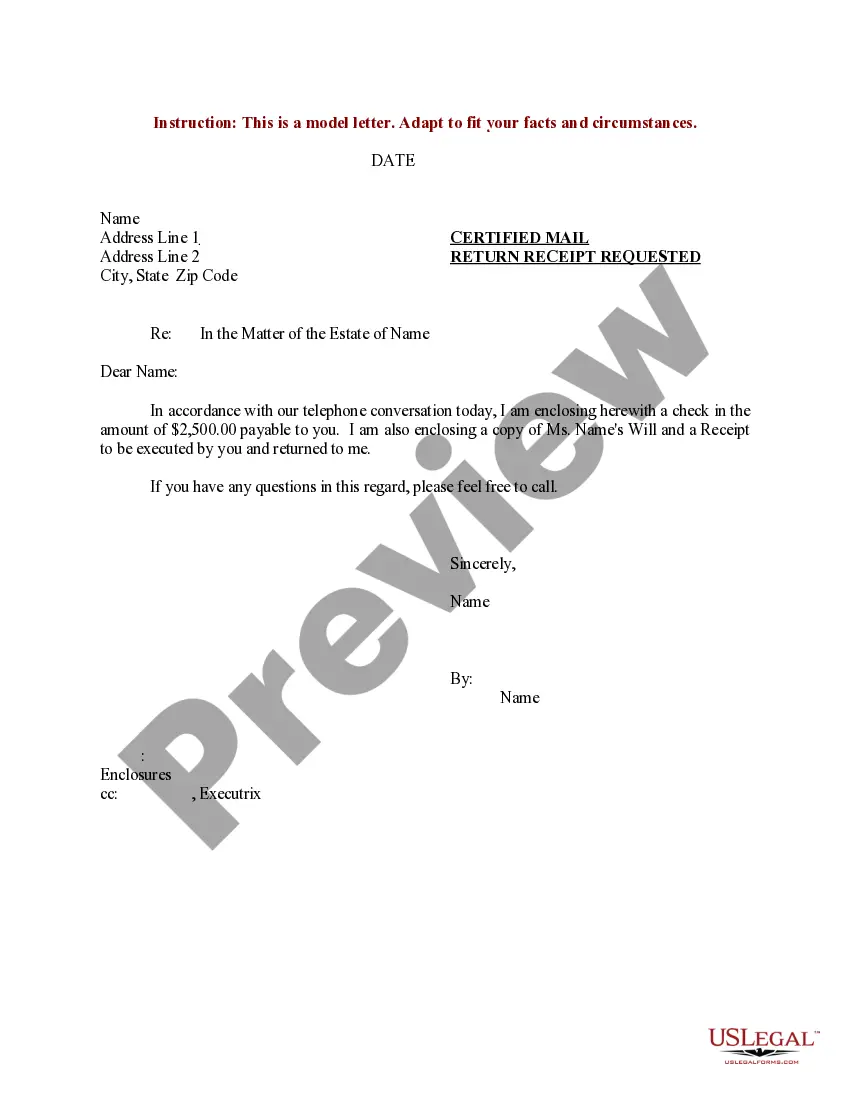
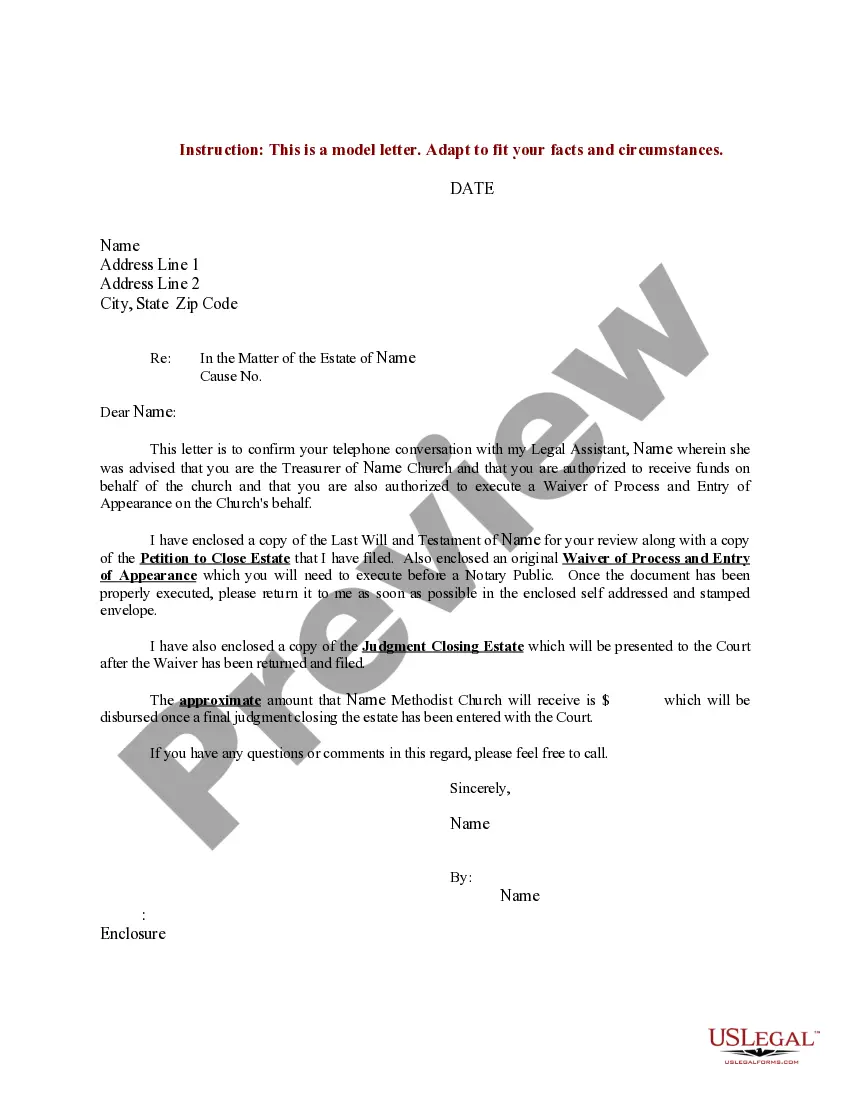
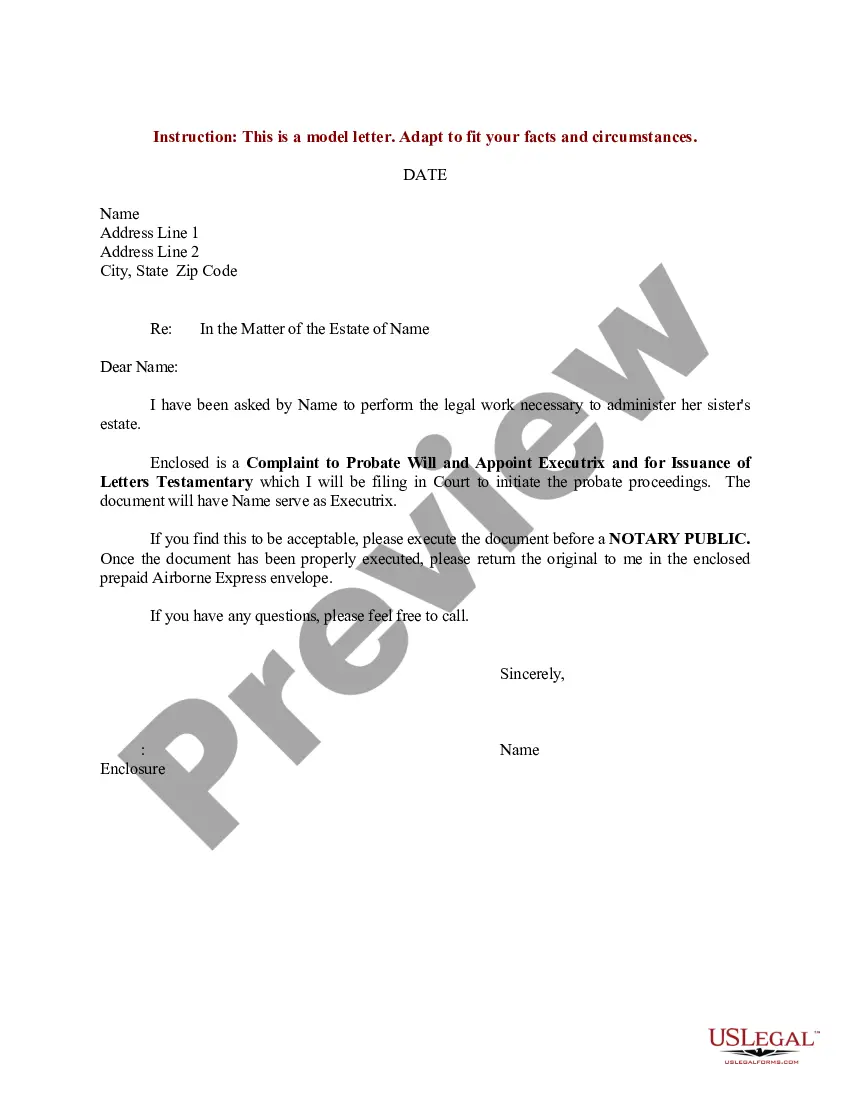
How to fill out Sample Letter For Distribution Of Estate Assets?
It's well known that you cannot transform into a legal expert in a flash, nor can you swiftly learn how to prepare Inventory Estate Forms For Sale By Owner without a specific expertise.
Drafting legal documents is a labor-intensive procedure that necessitates particular training and abilities. Therefore, why not let the specialists handle the preparation of the Inventory Estate Forms For Sale By Owner.
With US Legal Forms, one of the most extensive legal document repositories, you can find everything from court papers to templates for internal business communication.
You can revisit your forms from the My documents section at any time. If you're a current client, you can simply Log In, and locate and download the template from the same section.
Regardless of the reason for your forms—whether financial and legal, or personal—our website meets your needs. Experience US Legal Forms now!
- Locate the form you require by utilizing the search feature at the top of the webpage.
- Examine it (if this feature is available) and read the accompanying description to determine if Inventory Estate Forms For Sale By Owner is indeed what you seek.
- Restart your search if you require an additional form.
- Sign up for a complimentary account and choose a subscription plan to acquire the form.
- Click Buy now. Once the purchase is completed, you can download the Inventory Estate Forms For Sale By Owner, complete it, print it, and deliver it to the appropriate individuals or organizations.
Form popularity
FAQ
Generally speaking, assets not accounted for by the estate plan include the following: Pension plans. Savings bonds. Living trust assets. 401 (k) accounts. Savings accounts (in select circumstances)
On the 90-day inventory form, you will need to list the following information: The decedent's county of residence. The decedent's name. Any accounts in the sole name of the decedent and their value. Any joint accounts, the percentage the decedent owned, and their value.
Generally speaking, assets not accounted for by the estate plan include the following: Pension plans. Savings bonds. Living trust assets. 401 (k) accounts. Savings accounts (in select circumstances)
Do I Have to List All Bank Accounts on the Inventory? Yes. Any and all bank accounts that the decedent owned must be listed on the inventory. This is true even if the bank accounts were held with payable-on-death (POD) designations or if the bank accounts were jointly held with the right of survivorship.
Every state sets the priority ing to which claims must be paid. The estate's beneficiaries only get paid once all the creditor claims have been satisfied. Usually, estate administration fees, funeral expenses, support payments, and taxes have priority over other claims.