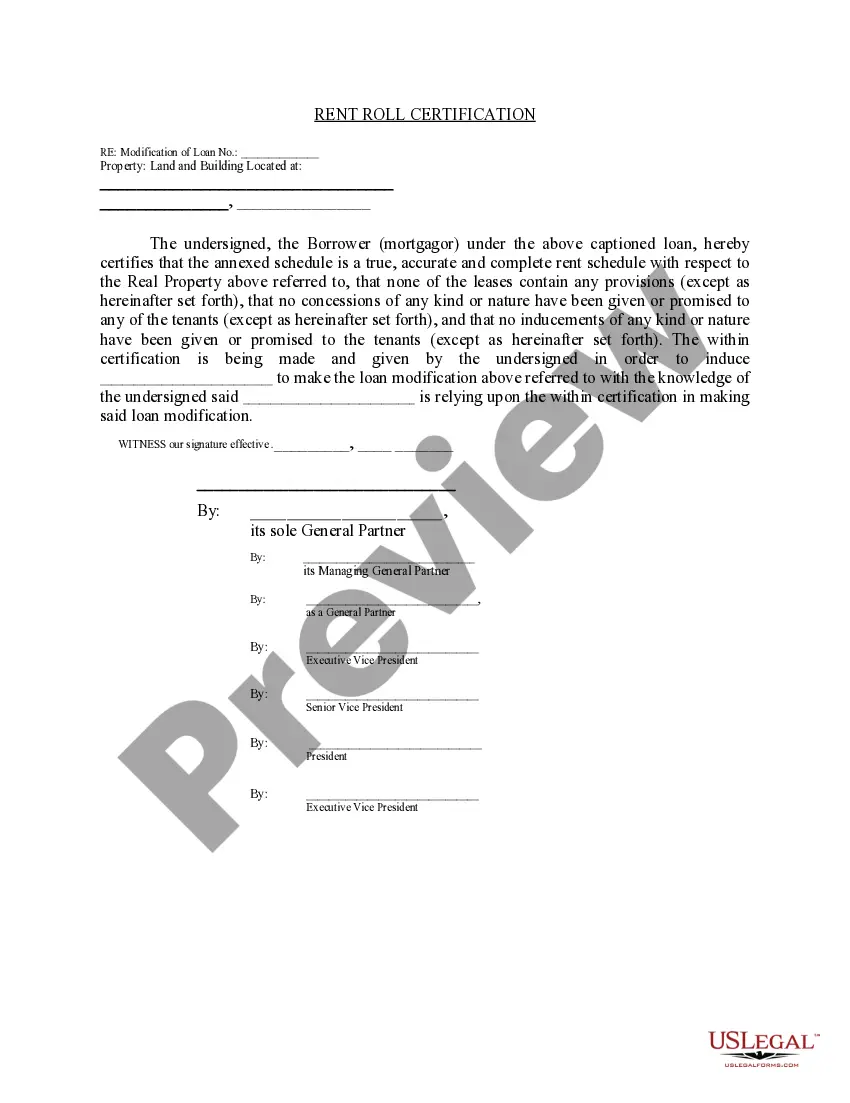
Rent Roll For Commercial Property
Description
Get your form ready online
Our built-in tools help you complete, sign, share, and store your documents in one place.
Make edits, fill in missing information, and update formatting in US Legal Forms—just like you would in MS Word.
Download a copy, print it, send it by email, or mail it via USPS—whatever works best for your next step.
Sign and collect signatures with our SignNow integration. Send to multiple recipients, set reminders, and more. Go Premium to unlock E-Sign.
If this form requires notarization, complete it online through a secure video call—no need to meet a notary in person or wait for an appointment.
We protect your documents and personal data by following strict security and privacy standards.

Make edits, fill in missing information, and update formatting in US Legal Forms—just like you would in MS Word.

Download a copy, print it, send it by email, or mail it via USPS—whatever works best for your next step.

Sign and collect signatures with our SignNow integration. Send to multiple recipients, set reminders, and more. Go Premium to unlock E-Sign.

If this form requires notarization, complete it online through a secure video call—no need to meet a notary in person or wait for an appointment.

We protect your documents and personal data by following strict security and privacy standards.
Looking for another form?






How to fill out Rent Roll Certification?
Engaging with legal documents and processes can be a lengthy addition to the daily routine.
Rent Roll For Commercial Property and similar forms often require you to search for them and comprehend how to complete them correctly.
Therefore, whether you are handling financial, legal, or personal issues, utilizing a comprehensive and user-friendly online library of forms readily available will greatly assist.
US Legal Forms is the leading online platform for legal templates, offering over 85,000 state-specific forms and a variety of resources to help you complete your documents with ease.
Is it your first time using US Legal Forms? Sign up and create your account in just a few minutes, and you’ll have access to the form library and Rent Roll For Commercial Property. Then, follow these steps to complete your form: Ensure you have located the correct form using the Preview feature and reading the form description. Select Buy Now when you are ready, and choose the monthly subscription plan that fits your needs. Click Download then fill out, sign, and print the form. US Legal Forms has 25 years of experience helping users manage their legal documents. Find the form you need today and simplify any process without any hassle.
- Explore the collection of relevant documents accessible to you with just a single click.
- US Legal Forms provides state- and county-specific forms that are available for download at any time.
- Safeguard your document management processes with a premium service that lets you prepare any form in minutes without extra or hidden fees.
- Simply Log In to your account, find Rent Roll For Commercial Property, and obtain it right away from the My documents section.
- You can also access previously saved forms.
Form popularity
FAQ
Yes, in many jurisdictions, commercial rent can be part of public records. This information may include rental amounts, lease terms, and property ownership details. Accessing this data can help prospective tenants and landlords alike, and knowing how to manage a rent roll for commercial property ensures transparency in rental practices.
The minimum term for a commercial lease typically ranges from one to five years. However, this can vary depending on the nature of the property and the agreement between the landlord and tenant. A clear understanding of the lease's duration is vital when preparing a rent roll for commercial property, as it determines rental income stability.
In Pennsylvania, a landlord generally needs a rental license to rent out commercial property legally. Operating without a license can lead to fines and legal complications. If you are unsure about licensing requirements, exploring USLegalForms can provide clarity and assistance in understanding local regulations about renting commercial properties.
Obtaining a rent roll for commercial property involves collecting data from your tenant lease agreements. You can also utilize property management software to streamline this process. For landowners, reaching out to a professional or using platforms like USLegalForms can help in generating accurate and compliant rent rolls efficiently.
To rent commercial property, you typically need to provide a few essential documents. This may include your business license, financial statements, and a detailed business plan. Additionally, having a rent roll for commercial property is beneficial, as it demonstrates your rental income history and shows landlords your capacity to meet payment obligations.
To value commercial property based on rent, calculate the gross rental income and apply a capitalization rate, which reflects the expected rate of return on the investment. Use the formula: Property Value = Annual Rent / Capitalization Rate. This method provides a straightforward way to assess property value, making a detailed rent roll for commercial property a vital resource to ensure accuracy in your calculations.
Reporting commercial rental income involves accurately recording all rental payments received on your tax return. You must report this income on Schedule E of your Form 1040 or through the appropriate business tax form if you're operating a business entity. Keeping a detailed rent roll for commercial property helps facilitate this process and ensures you include all necessary information for the IRS.
To set up a rent roll for commercial property, start by gathering all lease details, including tenant names, lease terms, and payment amounts. You can create a simple spreadsheet or use professional property management software to organize this information efficiently. Ensure you update the rent roll regularly to reflect changes and maintain accurate records. US Legal Forms offers templates to assist you in managing these documents effectively.
When determining rent for commercial property, a common guideline suggests that rent should be around 1% of the property's total value per month. However, this can vary based on location, market demand, and property type. It's important to consider current market trends and the property’s specifics. A well-structured rent roll for commercial property can help you track these metrics and make informed decisions.
Having a rent roll is essential for evaluating the financial health of a commercial property. It provides clarity on income streams, highlights tenant relationships, and aids in lease negotiation processes. By keeping an accurate rent roll for commercial property, landlords can better forecast income and assess potential risks. Our platform makes it easier for you to maintain and analyze your rent roll.