Corporation Assets With Donor Restrictions
Description
Get your form ready online
Our built-in tools help you complete, sign, share, and store your documents in one place.
Make edits, fill in missing information, and update formatting in US Legal Forms—just like you would in MS Word.
Download a copy, print it, send it by email, or mail it via USPS—whatever works best for your next step.
Sign and collect signatures with our SignNow integration. Send to multiple recipients, set reminders, and more. Go Premium to unlock E-Sign.
If this form requires notarization, complete it online through a secure video call—no need to meet a notary in person or wait for an appointment.
We protect your documents and personal data by following strict security and privacy standards.

Make edits, fill in missing information, and update formatting in US Legal Forms—just like you would in MS Word.

Download a copy, print it, send it by email, or mail it via USPS—whatever works best for your next step.

Sign and collect signatures with our SignNow integration. Send to multiple recipients, set reminders, and more. Go Premium to unlock E-Sign.

If this form requires notarization, complete it online through a secure video call—no need to meet a notary in person or wait for an appointment.

We protect your documents and personal data by following strict security and privacy standards.
Looking for another form?









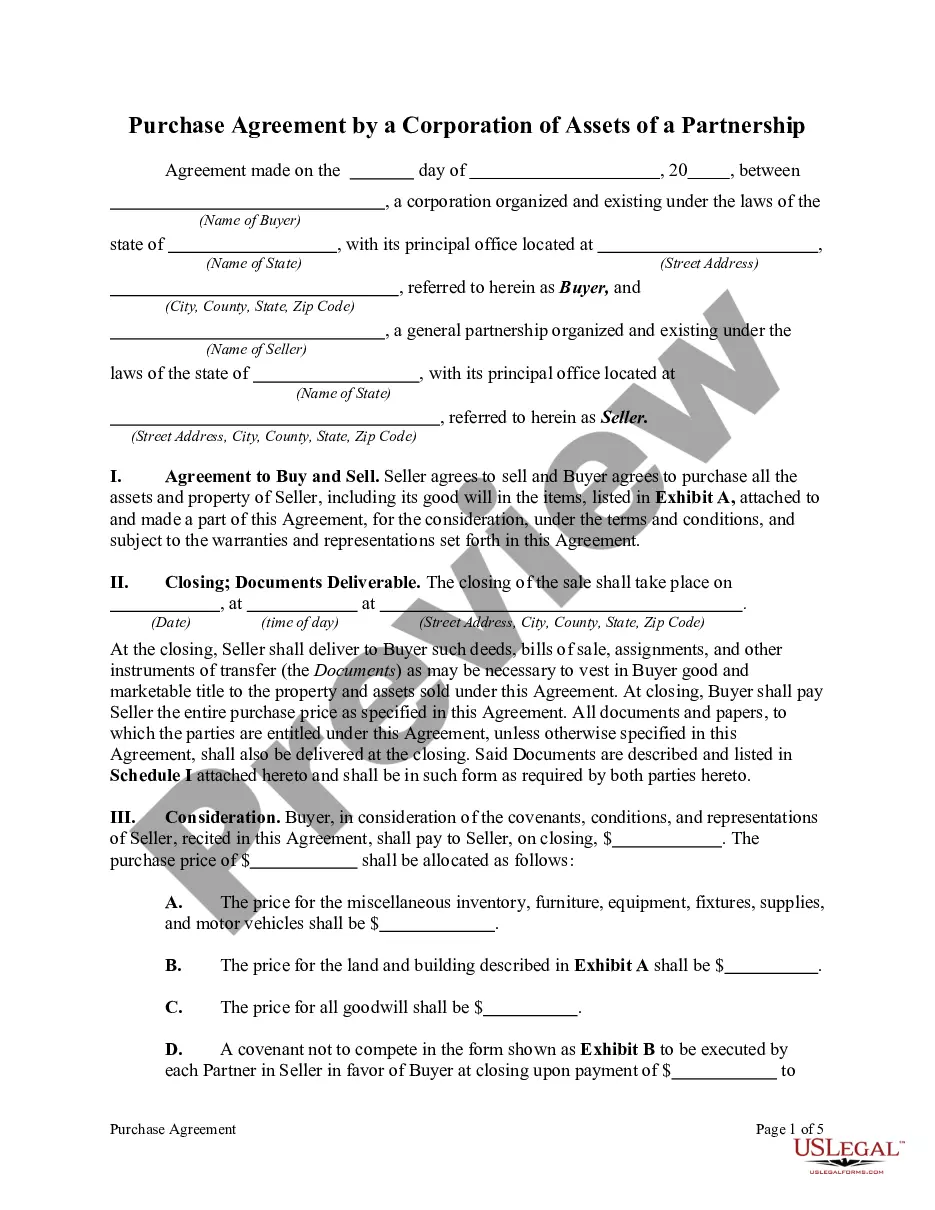
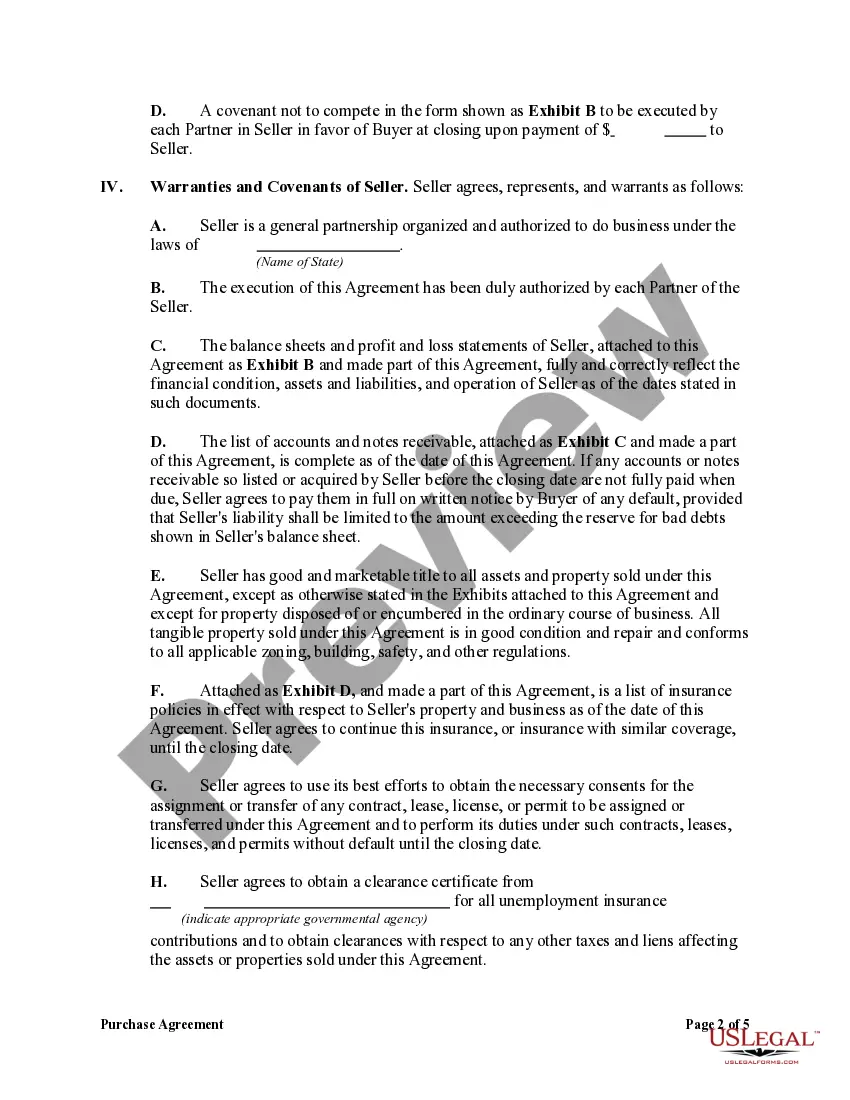
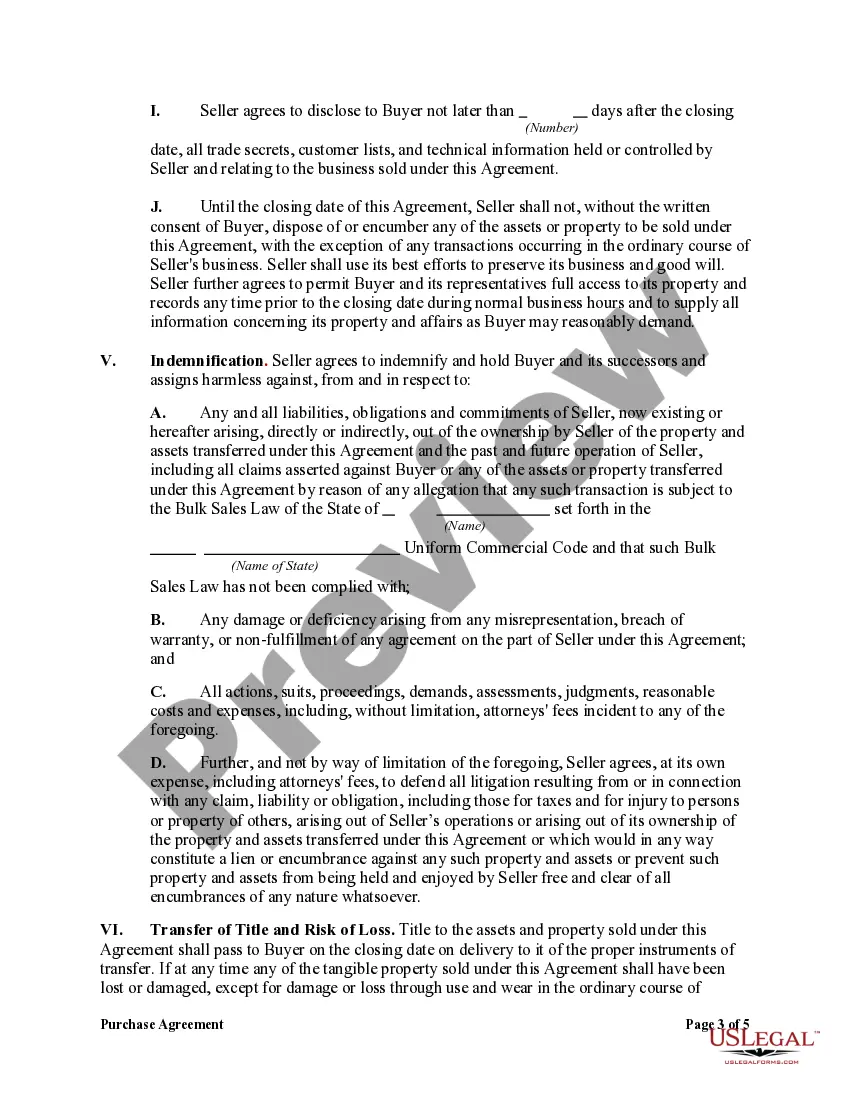
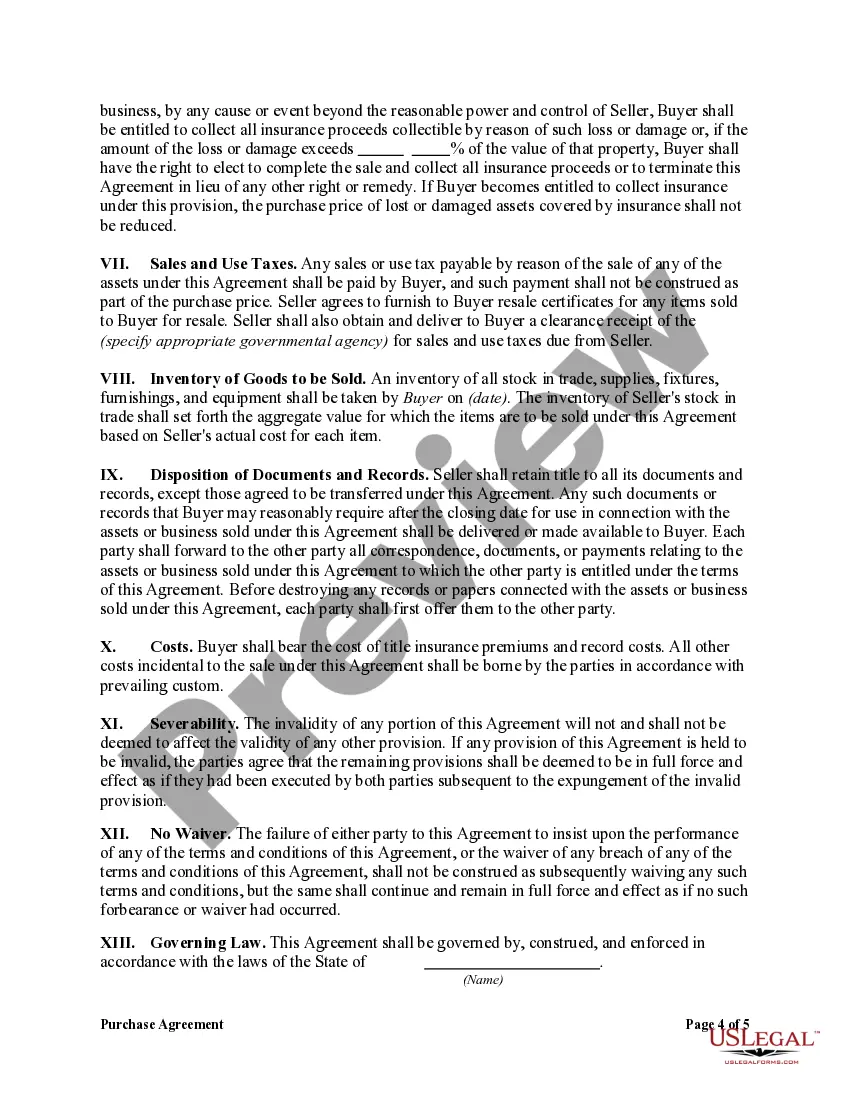
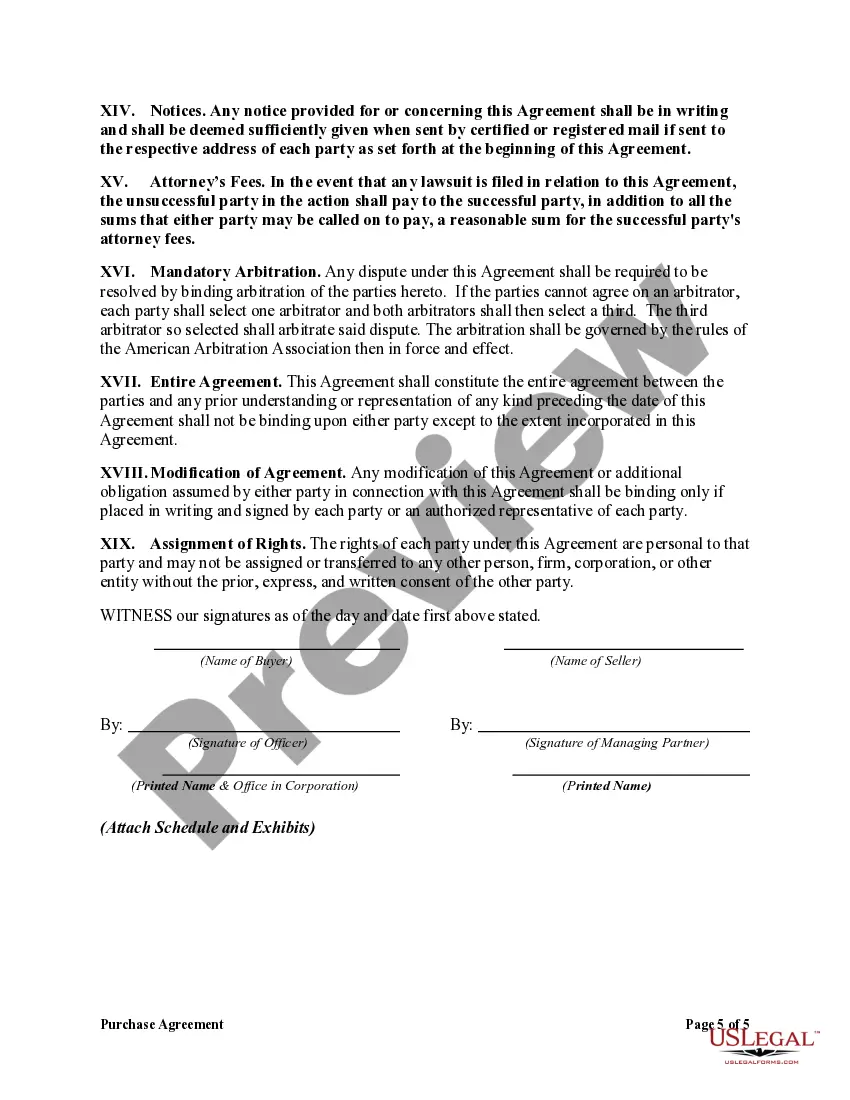
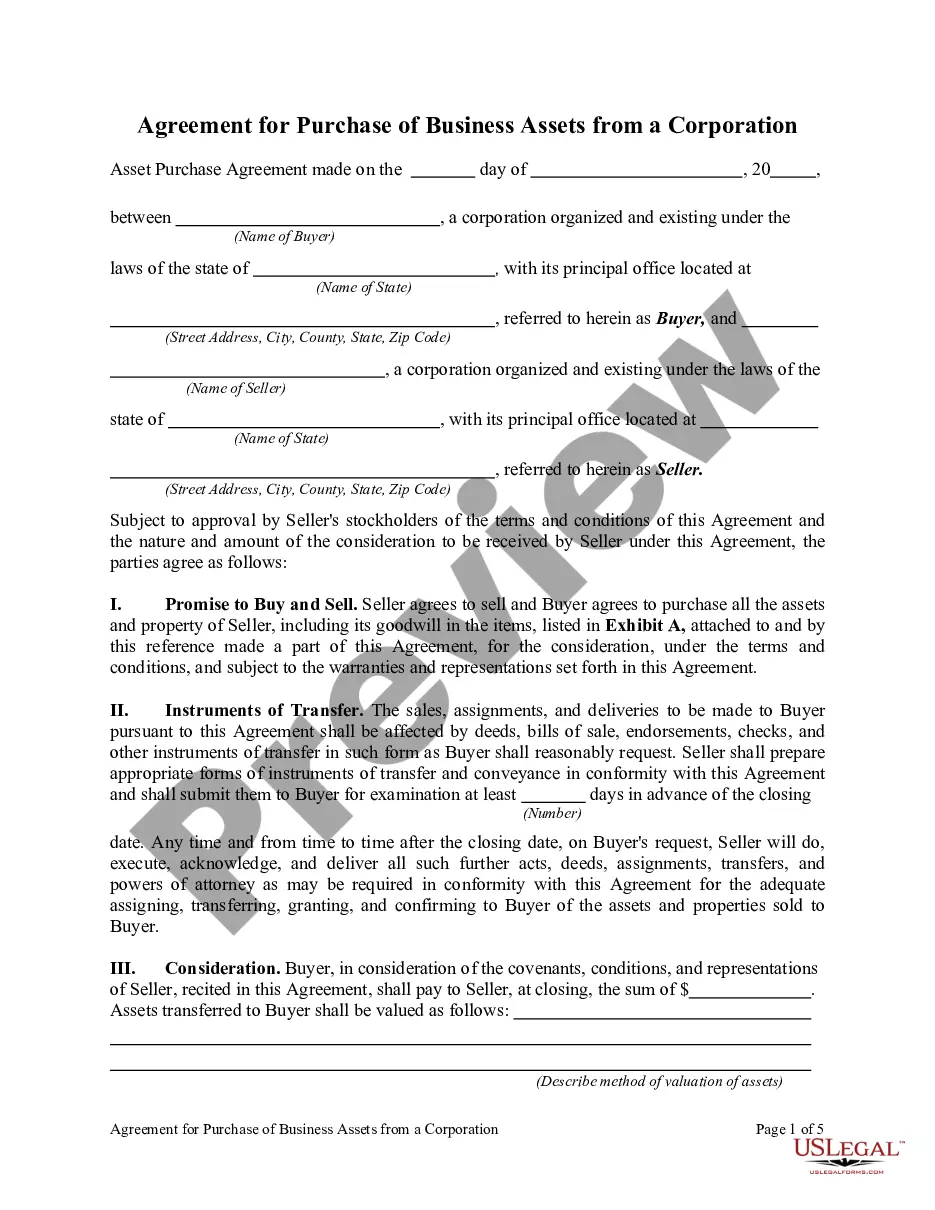
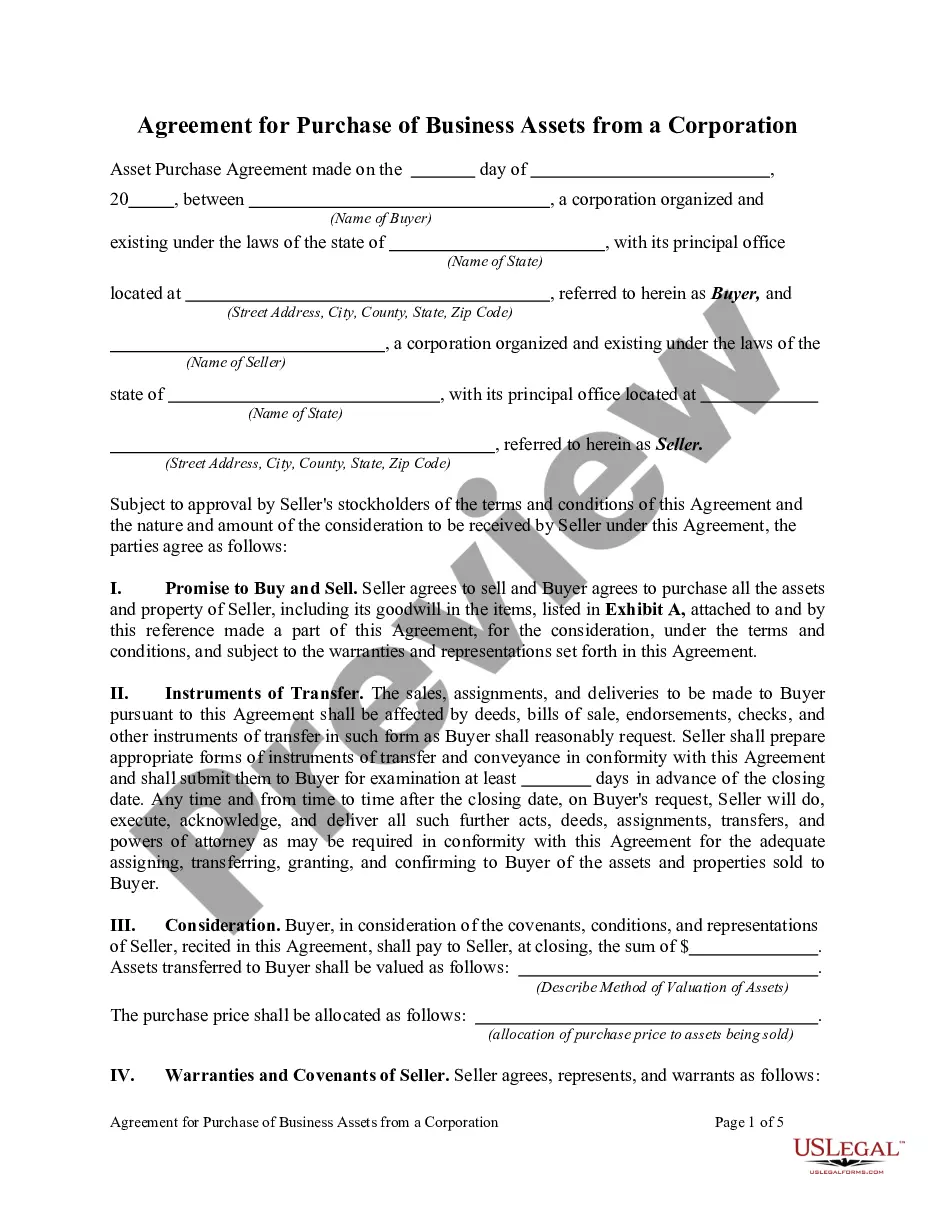
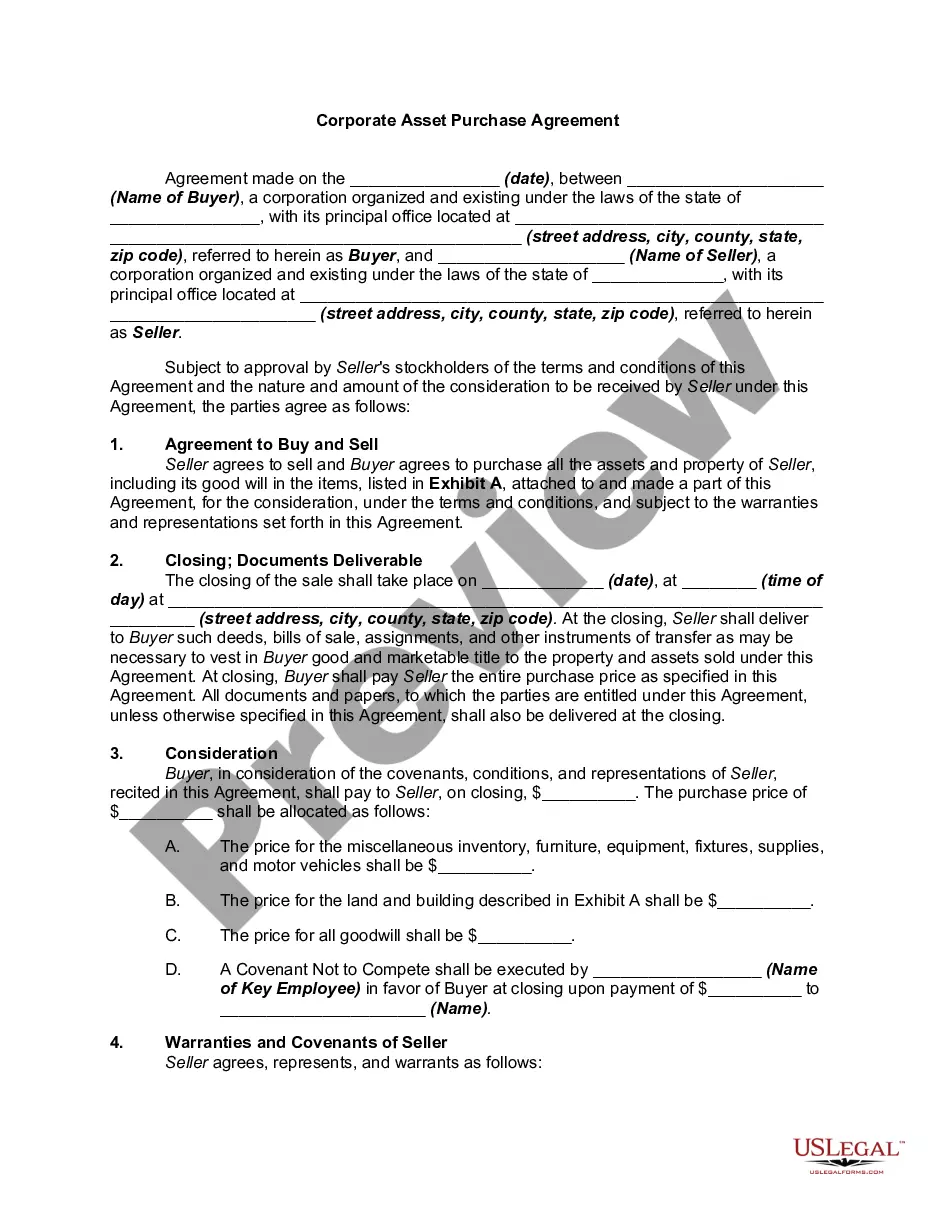
How to fill out Purchase Agreement By A Corporation Of Assets Of A Partnership?
Finding a dependable location to obtain the most up-to-date and pertinent legal templates is a significant part of navigating through bureaucracy.
Selecting the appropriate legal documents requires precision and careful attention to detail, which highlights the necessity of sourcing Corporation Assets With Donor Restrictions exclusively from credible providers, such as US Legal Forms.
Eliminate the inconvenience that comes with your legal documentation. Discover the extensive US Legal Forms library where you can locate legal templates, assess their suitability for your situation, and download them instantly.
- Utilize the library navigation or search bar to identify your template.
- Examine the form’s description to verify that it aligns with the stipulations of your state and county.
- Check the form preview, if available, to ensure it is indeed the form you require.
- If the Corporation Assets With Donor Restrictions does not fulfill your needs, continue your search for the suitable template.
- Once you are confident about the form’s applicability, download it.
- As a registered user, click Log in to validate your identity and access your selected templates in My documents.
- If you do not have an account yet, click Buy now to acquire the template.
- Choose the pricing plan that meets your requirements.
- Proceed with the registration to finalize your purchase.
- Complete your transaction by selecting a payment method (credit card or PayPal).
- Opt for the file format to download Corporation Assets With Donor Restrictions.
- After acquiring the form on your device, you can modify it using the editor or print it out to fill in manually.
Form popularity
FAQ
To record restricted donations in accounting, start by recognizing the donation as revenue, but classify it under a restricted net asset account. This ensures that the funds are not mistakenly used for unrestricted purposes. You can utilize platforms like US Legal Forms to streamline the process, ensuring that your accounting records reflect the restrictions accurately while maintaining transparency in your financial reporting.
A common example of a donor restriction involves a donation made specifically for a certain project or purpose, such as funding a scholarship or supporting a community program. This means that the corporation must use the assets solely for that designated purpose. Understanding these restrictions is crucial for managing corporation assets with donor restrictions effectively and ensuring compliance with donor intent.
When accounting for corporation assets with donor restrictions, it is vital to recognize the donated assets at their fair market value on the date of donation. These assets should be classified separately in your financial statements to reflect their restricted status. Additionally, you will need to track the usage and compliance with the donor's stipulations to ensure proper reporting and accountability.
To account for restricted donations, record them separately in your financial statements to reflect their designated purpose. It's important to track how these funds contribute to your programs or projects over time. Using a platform like uslegalforms can streamline this process and help maintain accurate records of corporation assets with donor restrictions, ensuring compliance and transparency.
The 33% rule for nonprofits indicates that a nonprofit organization should not spend more than 33% of its total expenditures on administrative costs. This guideline helps ensure that a significant portion of funds goes directly to programs and services. Keeping this in mind can aid organizations in managing their corporation assets with donor restrictions efficiently.
A net asset with donor restrictions refers to funds or resources that donors specify for particular uses within a corporation. These restrictions can be temporary or permanent, impacting how and when the assets can be utilized. Understanding these assets is crucial for managing nonprofit finances effectively and ensuring compliance with donor intentions.
To calculate net assets released from restrictions, begin by identifying the total value of corporation assets with donor restrictions that have been met. Next, subtract any liabilities related to those assets. The result represents the net assets released from restrictions, showcasing how much of the restricted funds are now available for general use.