Attorney-at-law - Tradução
Description

Get your form ready online
Our built-in tools help you complete, sign, share, and store your documents in one place.
Make edits, fill in missing information, and update formatting in US Legal Forms—just like you would in MS Word.
Download a copy, print it, send it by email, or mail it via USPS—whatever works best for your next step.
Sign and collect signatures with our SignNow integration. Send to multiple recipients, set reminders, and more. Go Premium to unlock E-Sign.
If this form requires notarization, complete it online through a secure video call—no need to meet a notary in person or wait for an appointment.
We protect your documents and personal data by following strict security and privacy standards.

Make edits, fill in missing information, and update formatting in US Legal Forms—just like you would in MS Word.

Download a copy, print it, send it by email, or mail it via USPS—whatever works best for your next step.

Sign and collect signatures with our SignNow integration. Send to multiple recipients, set reminders, and more. Go Premium to unlock E-Sign.

If this form requires notarization, complete it online through a secure video call—no need to meet a notary in person or wait for an appointment.

We protect your documents and personal data by following strict security and privacy standards.
Looking for another form?









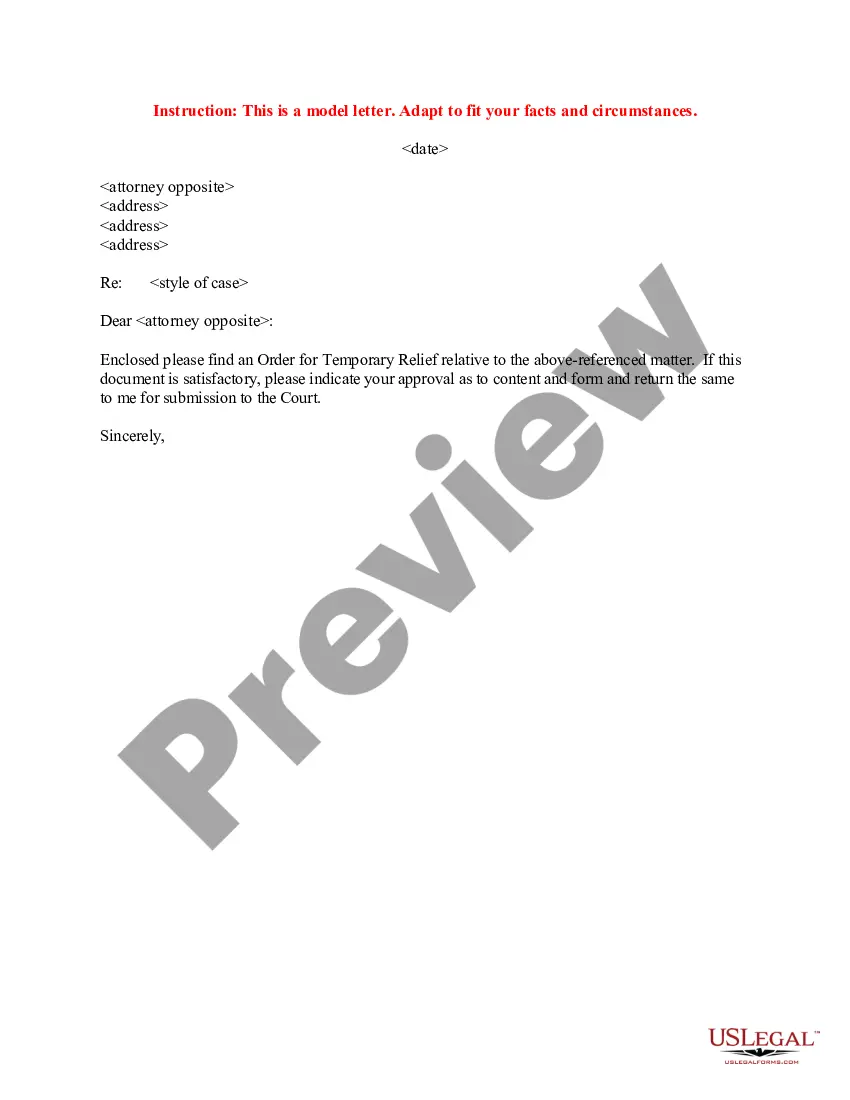
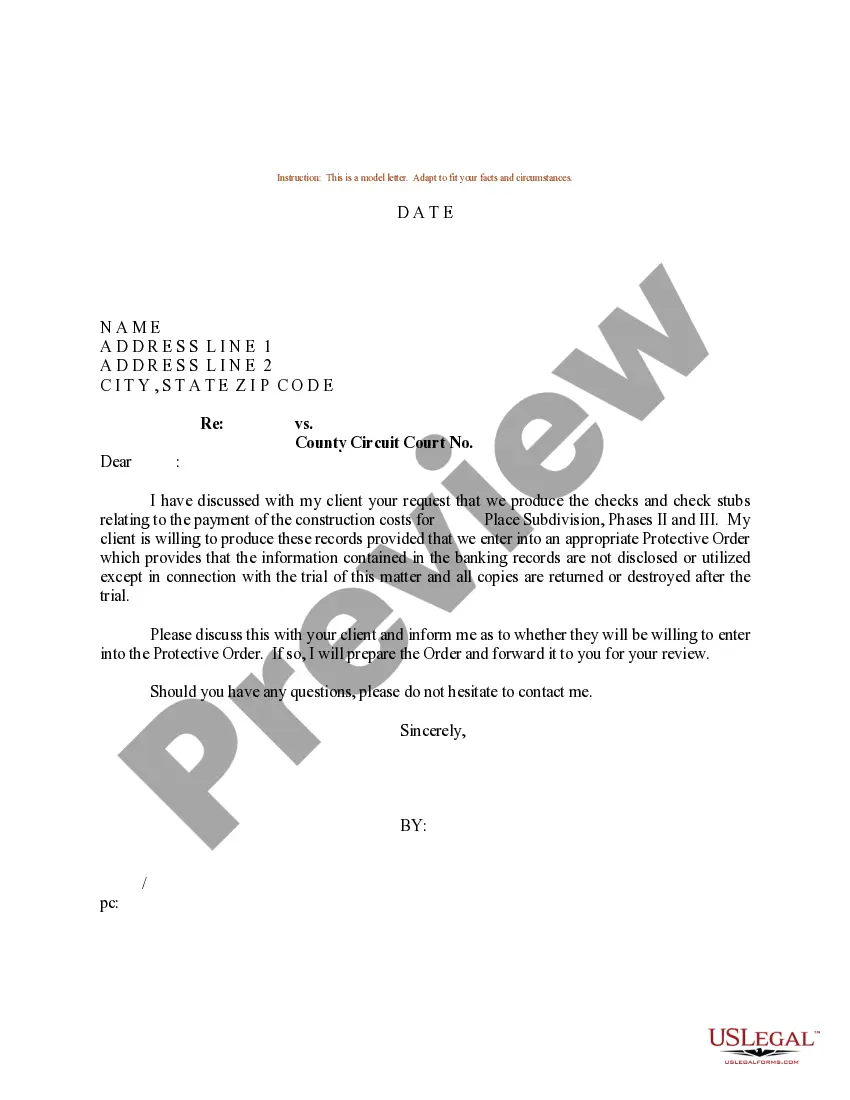
How to fill out Sample Letter For Order For Temporary Relief?
- Start by logging into your account. If you're a new user, create an account to access the library.
- Review the form previews and descriptions carefully to ensure you're selecting the correct document.
- If the needed form isn’t available, utilize the search function to find alternatives that suit your needs.
- Select your desired document and click on the 'Buy Now' button to proceed with your subscription.
- Fill in your payment details, whether by credit card or PayPal, and complete your purchase.
- Once purchased, download the form to your device and access it anytime through the 'My Forms' section of your account.
Utilizing US Legal Forms not only gives you access to a robust collection of legal templates but also connects you with expert advice, ensuring the forms you complete are accurate and legally binding.
Ready to simplify your legal form needs? Start now and explore the benefits of using US Legal Forms today!
Form popularity
FAQ
Reaching out to an attorney-at-law - tradução for the first time can seem daunting. Start by researching local attorneys with experience in your specific situation. You can call their offices directly or use online platforms like UsLegalForms to simplify the process. Be prepared to discuss your case briefly and ask about their approach to handling similar issues.
The most frequent complaint against a lawyer often revolves around inadequate communication or failure to keep clients informed about their case. Clients expect prompt updates and honesty regarding their situation. If such issues occur, platforms like uslegalforms can help you draft clear communication agreements with your attorney-at-law.
You can invoke the right to an attorney by clearly stating your request during any interrogation or legal proceeding. This fundamental right ensures that you have representation to navigate the legal aspect of your situation. If you require assistance in formalizing your rights, consulting an attorney-at-law for guidance is beneficial.
The primary difference lies in the ability to practice law in legal settings. A lawyer can offer legal advice, but an attorney-at-law holds the necessary credentials to represent clients in court. This distinction becomes crucial when facing legal challenges, as you need someone qualified to navigate the judicial process.
In essence, an attorney-at-law possesses more power regarding legal representation in court compared to a lawyer. Attorneys have an active role in litigation and can advocate for their clients' rights in the legal system. Hence, if a situation involves court proceedings, an attorney's role becomes vital.
An attorney-at-law holds the authority to appear on behalf of clients in legal matters before a court. Lawyers may provide legal counsel but lack the ability to officially represent clients in judicial proceedings without the attorney qualification. Therefore, when your matter demands court representation, you need an attorney.
A power of attorney cannot make healthcare decisions if there is a separate directive outlining those choices. Additionally, a power of attorney cannot act in a way that conflicts with the wishes of the principal during their lifetime, such as altering a will. An attorney-at-law can guide you through the complexities of setting up a power of attorney effectively.
An attorney-at-law can represent clients in court and provide legal advice specific to their case. While all attorneys are lawyers, not all lawyers hold the designation that allows them to practice law in a courtroom setting. Hence, the role of an attorney extends to actual representation, making them pivotal in legal proceedings.
Winning a lawsuit typically requires a well-prepared strategy and thorough understanding of your case. First, gather all evidence and documentation relevant to your situation. Next, work closely with your attorney-at-law to formulate a solid argument. Utilizing resources like the US Legal Forms platform can also streamline your preparation, ensuring you have the right forms and information to support your case.
One of the hardest questions to pose to a lawyer often revolves around the likelihood of winning a case. Many clients fear the honesty that comes with such queries. However, understanding the strengths and weaknesses of your case helps you prepare for what lies ahead. It's vital to approach these conversations openly with your attorney-at-law, as they aim to guide you toward informed decisions.