Court Letter From Therapist
Description
Get your form ready online
Our built-in tools help you complete, sign, share, and store your documents in one place.
Make edits, fill in missing information, and update formatting in US Legal Forms—just like you would in MS Word.
Download a copy, print it, send it by email, or mail it via USPS—whatever works best for your next step.
Sign and collect signatures with our SignNow integration. Send to multiple recipients, set reminders, and more. Go Premium to unlock E-Sign.
If this form requires notarization, complete it online through a secure video call—no need to meet a notary in person or wait for an appointment.
We protect your documents and personal data by following strict security and privacy standards.

Make edits, fill in missing information, and update formatting in US Legal Forms—just like you would in MS Word.

Download a copy, print it, send it by email, or mail it via USPS—whatever works best for your next step.

Sign and collect signatures with our SignNow integration. Send to multiple recipients, set reminders, and more. Go Premium to unlock E-Sign.

If this form requires notarization, complete it online through a secure video call—no need to meet a notary in person or wait for an appointment.

We protect your documents and personal data by following strict security and privacy standards.
Looking for another form?
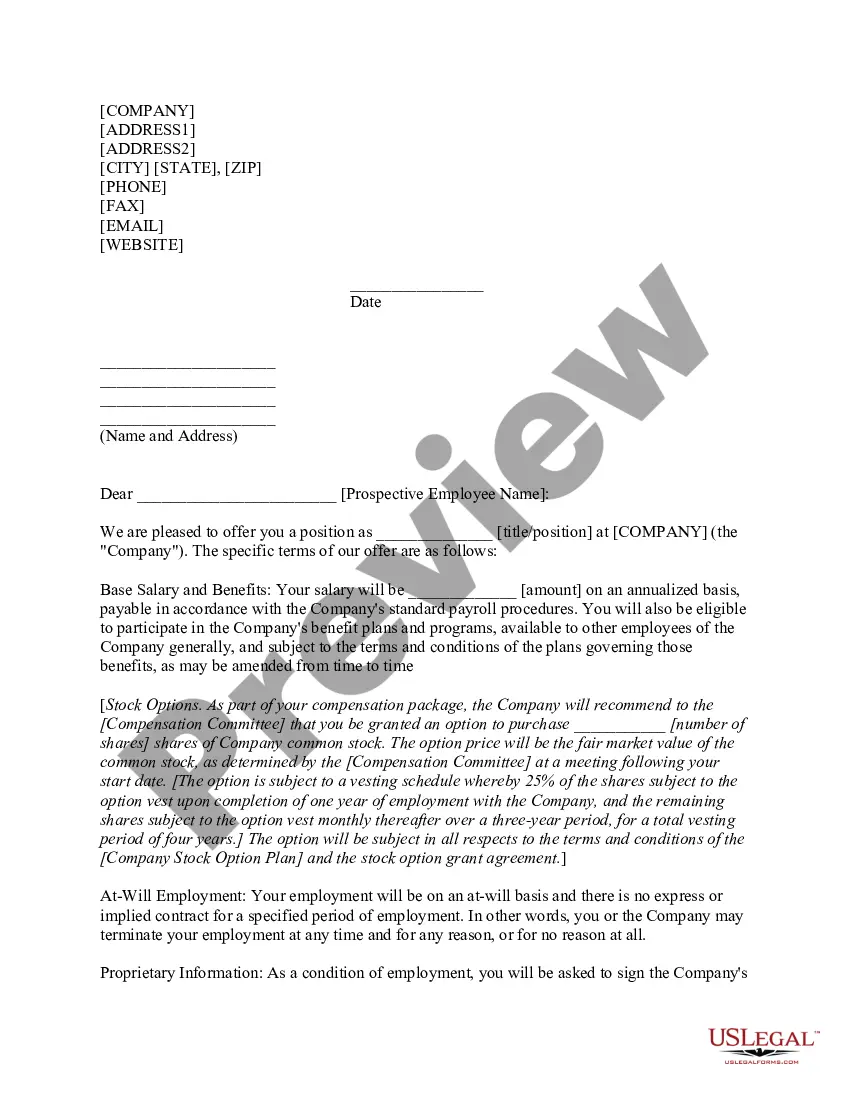
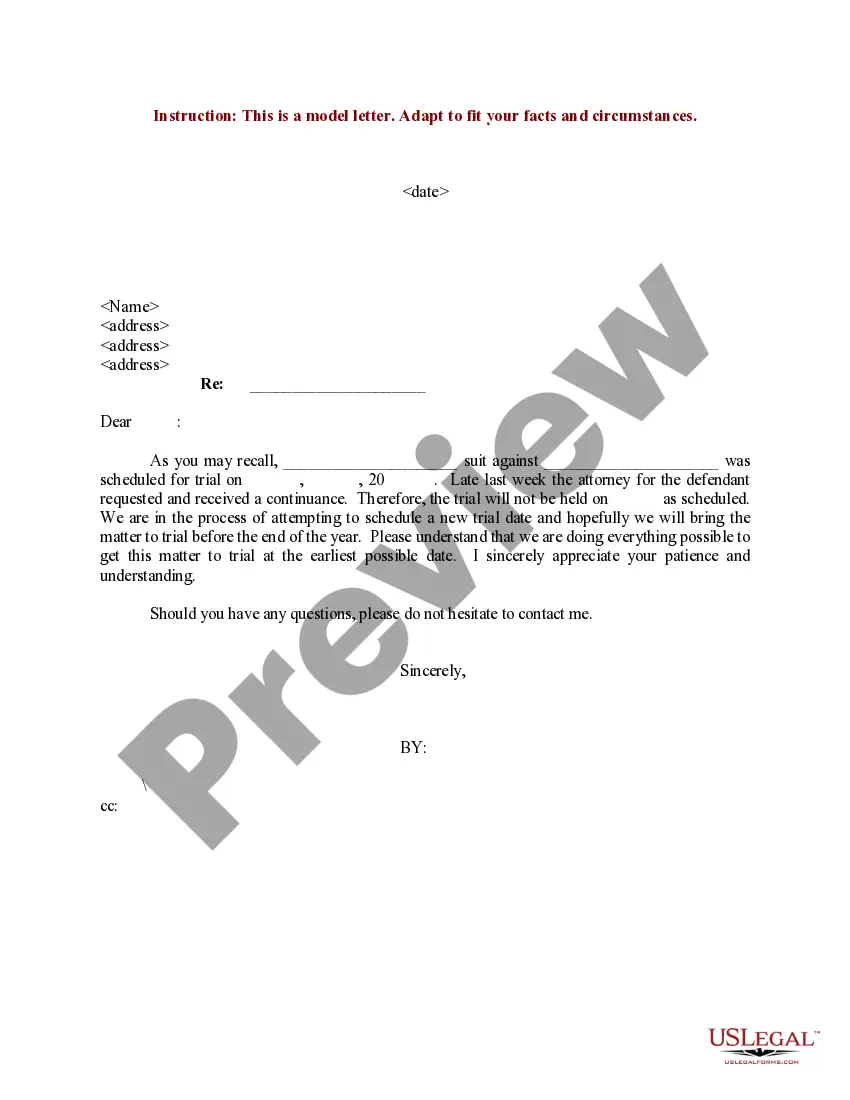
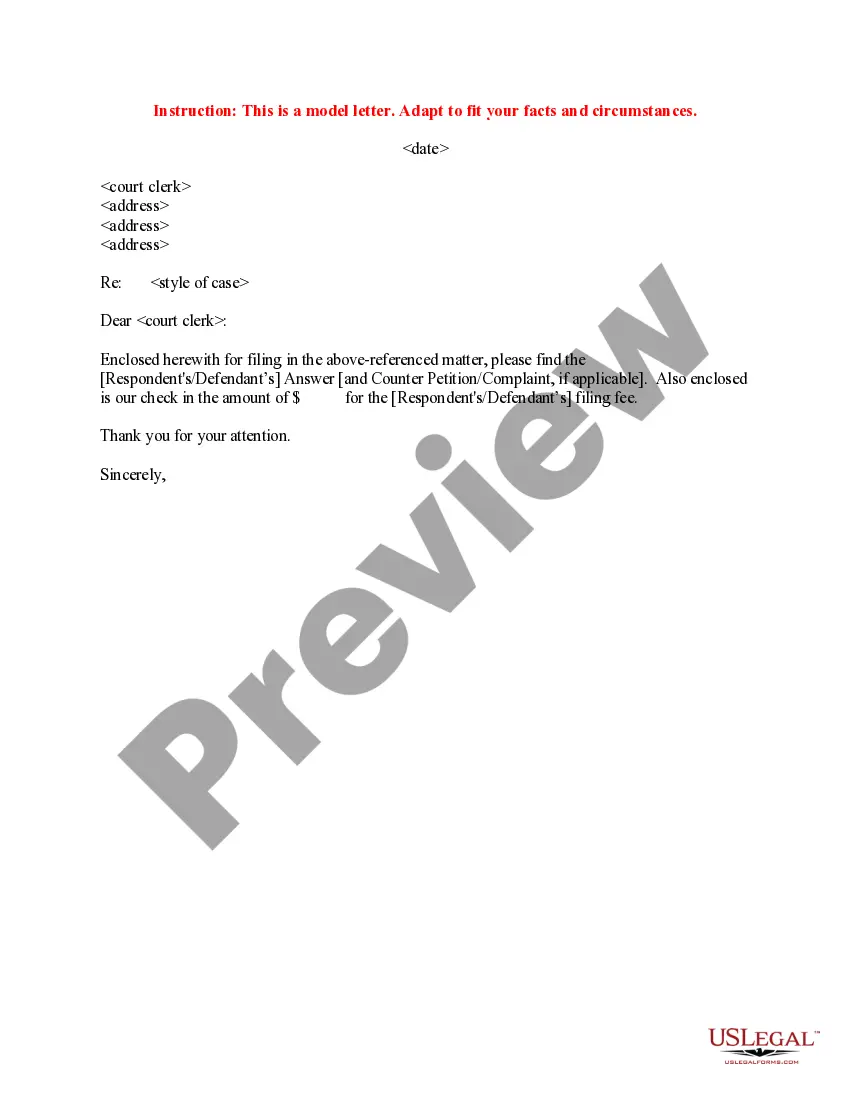
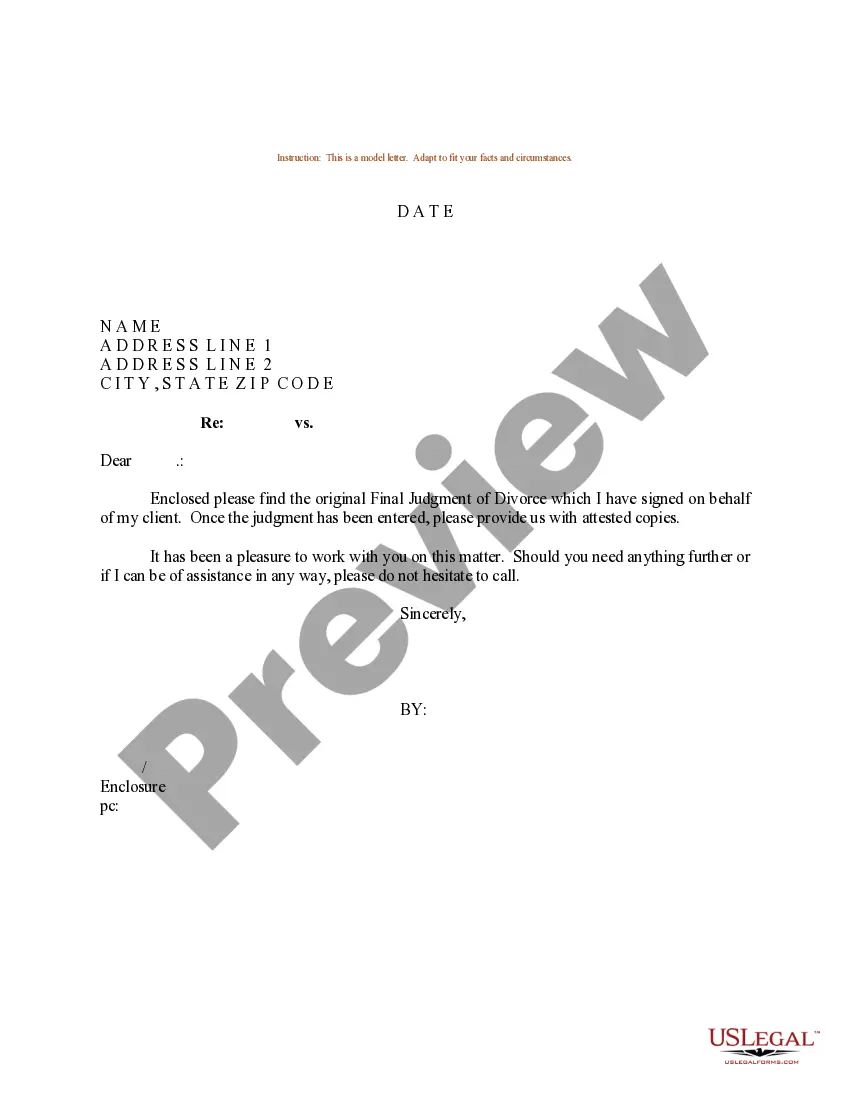
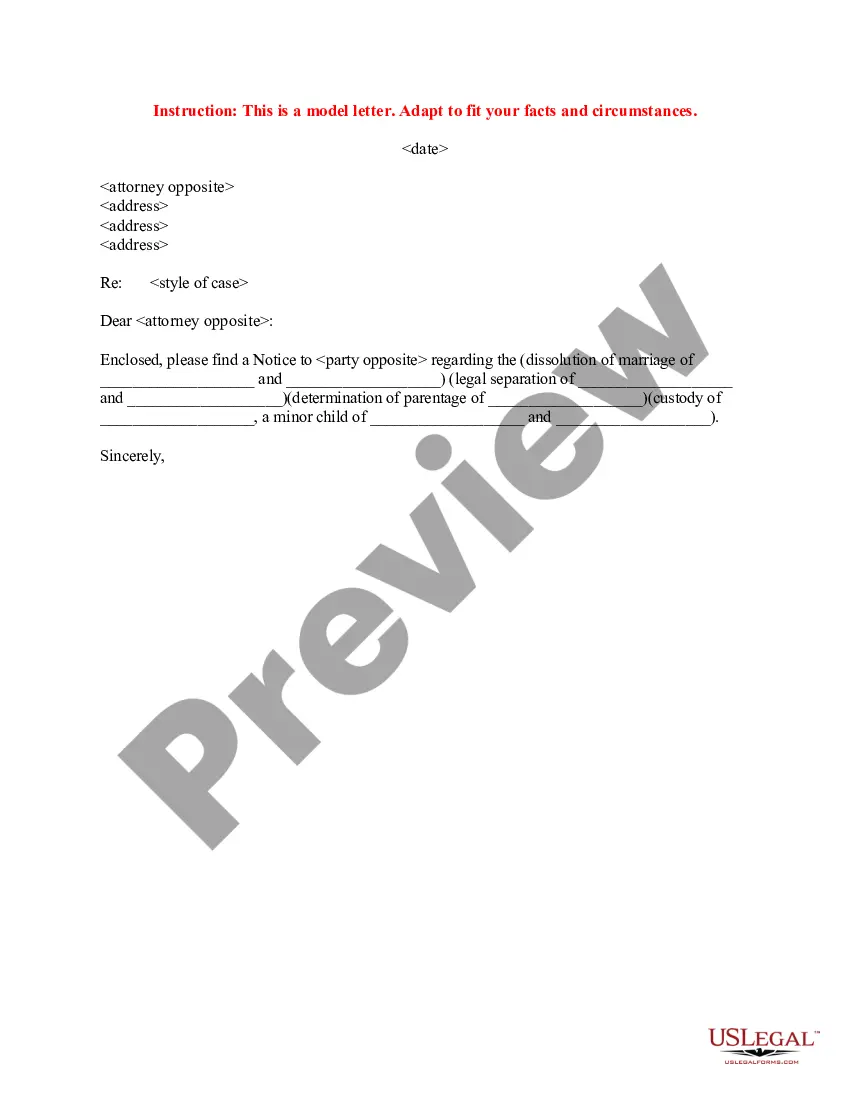
How to fill out Sample Letter To Court Clerk Regarding Filing Answer - Cover Letter?
Utilizing legal document examples that comply with federal and state laws is essential, and the internet provides a variety of choices to select from.
However, what is the benefit of spending time searching for the suitable Court Letter From Therapist example online when the US Legal Forms digital library already consolidates such templates in one location.
US Legal Forms stands as the largest virtual legal archive with more than 85,000 customizable templates created by legal professionals for various professional and personal situations.
Maximize the benefits of the most comprehensive and user-friendly legal document service!
- They are easy to navigate with all files categorized by state and intended use.
- Our specialists stay informed on legislative changes, ensuring you can trust that your document is current and in compliance when obtaining a Court Letter From Therapist from our site.
- Acquiring a Court Letter From Therapist is quick and straightforward for both existing and new users.
- If you already possess an account with an active subscription, sign in and download the necessary document template in your desired format.
- If you're new to our site, follow the steps outlined below.
Form popularity
FAQ
Absolutely, a therapist can help you in court by providing expert testimony and creating a court letter from therapist to support your claims. They can explain your mental health condition and how it affects your situation. Engaging a therapist who understands your case can significantly strengthen your position in court.
Yes, you can request your file from your therapist. Therapists are generally required to provide you access to your records under privacy laws. By reviewing your file, you may find information that can contribute to a court letter from therapist, enhancing your understanding of your case.
Writing a letter can be helpful, but it usually cannot replace your physical presence in court. The court may require your testimony for clarity and to assess your emotions and credibility. Discuss this option with your attorney, as they can provide guidance on whether a court letter from therapist could support your case.
Yes, your therapist can write you a court letter from therapist if they believe it will benefit your case. This letter typically outlines your mental health status and any relevant insights that could help in court. It's important to discuss your needs with your therapist to determine the appropriate content and format of the letter.
Therapist records are typically protected by confidentiality, meaning they cannot be used in court unless certain legal standards are met. In some situations, the court may allow the use of these records if a release is signed or if a critical legal issue arises. It's essential to approach this carefully; a court letter from a therapist may provide necessary insights while adhering to confidentiality protocols.
Therapy records are generally considered confidential, making them inadmissible in court without appropriate release agreements or court orders. If consent is granted or if there are legal exceptions, these records can be presented. A court letter from a therapist may substitute for detailed therapy records while maintaining the spirit of confidentiality.
A therapist can absolutely write a letter for court, which can play a significant role in legal proceedings. This letter can address your mental health status, explain treatment, and support your position in a case. A well-crafted court letter from a therapist can serve as a valuable tool in your legal strategy.
In general, things said to a therapist are protected by confidentiality laws. However, there are exceptions where statements may be admissible if a court order exists or if the client waives their rights. In such cases, a court letter from a therapist can provide insights while aiming to respect client confidentiality.
Therapy recordings are generally protected by confidentiality and cannot be used in court without explicit consent from both the therapist and the client. However, if a court orders disclosure, the recordings may potentially be examined. A court letter from a therapist may clarify aspects of therapy without compromising confidentiality.
Yes, a therapist can write a letter for you, tailored to your needs. This letter can serve various purposes, such as supporting your case in a legal matter. A court letter from a therapist can outline your treatment, progress, and any relevant details that align with your circumstances.