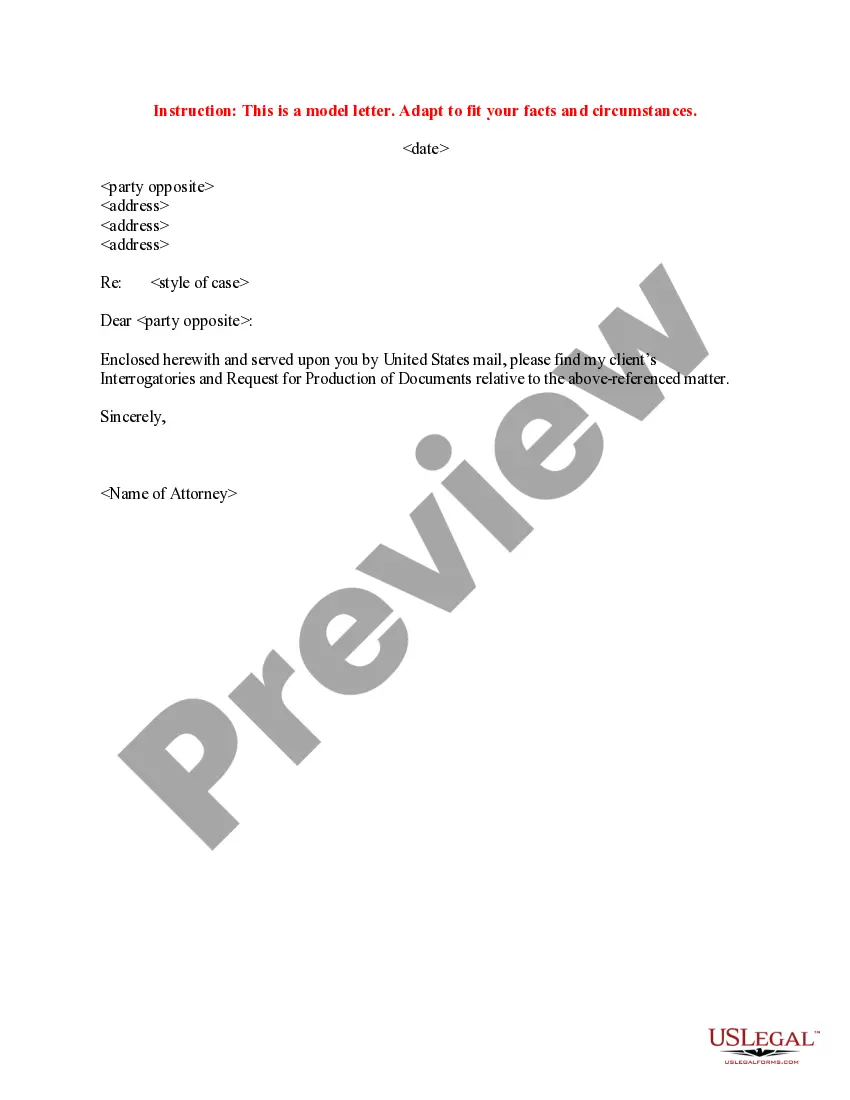
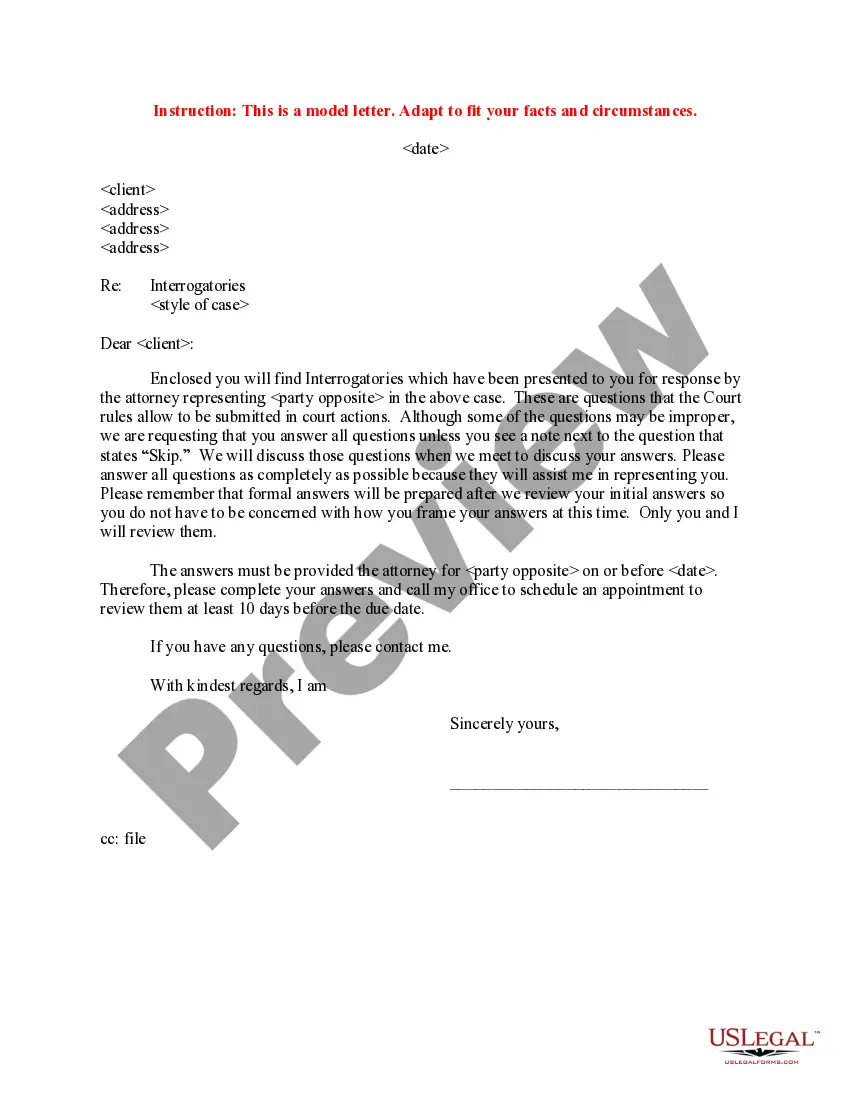
Discovery Letter To Defense
Description
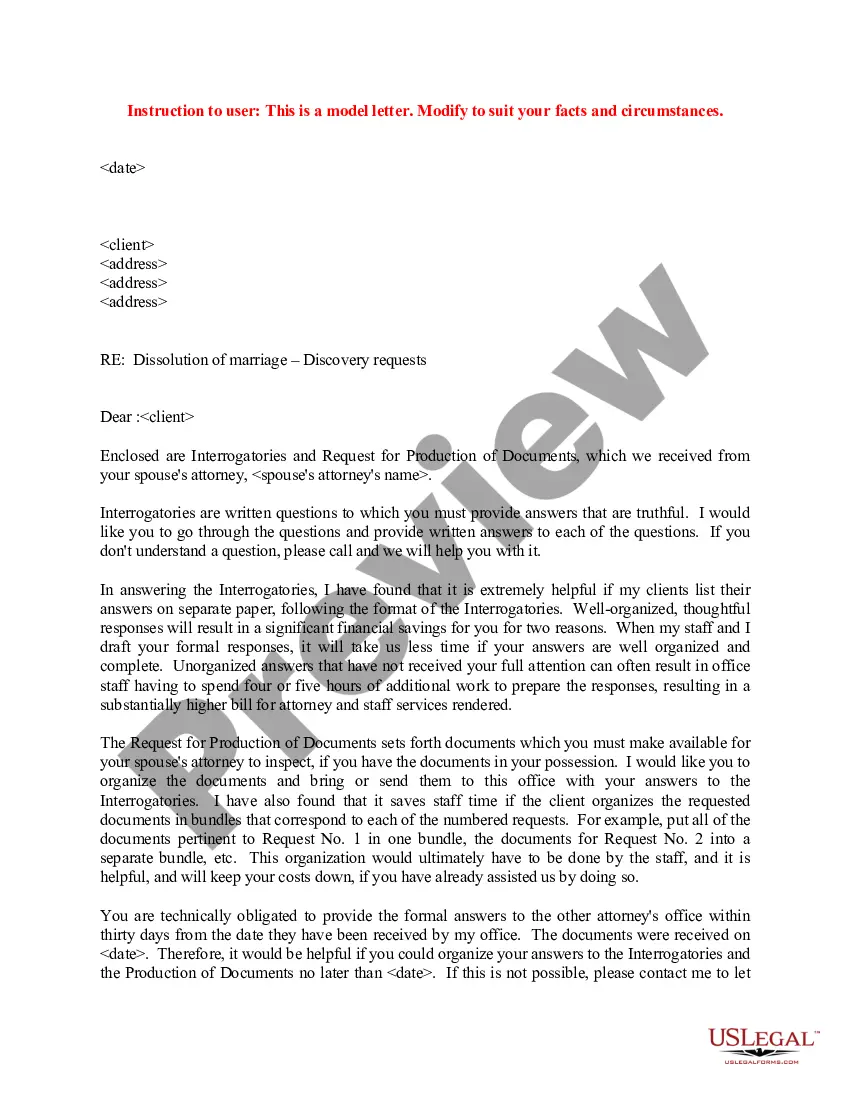
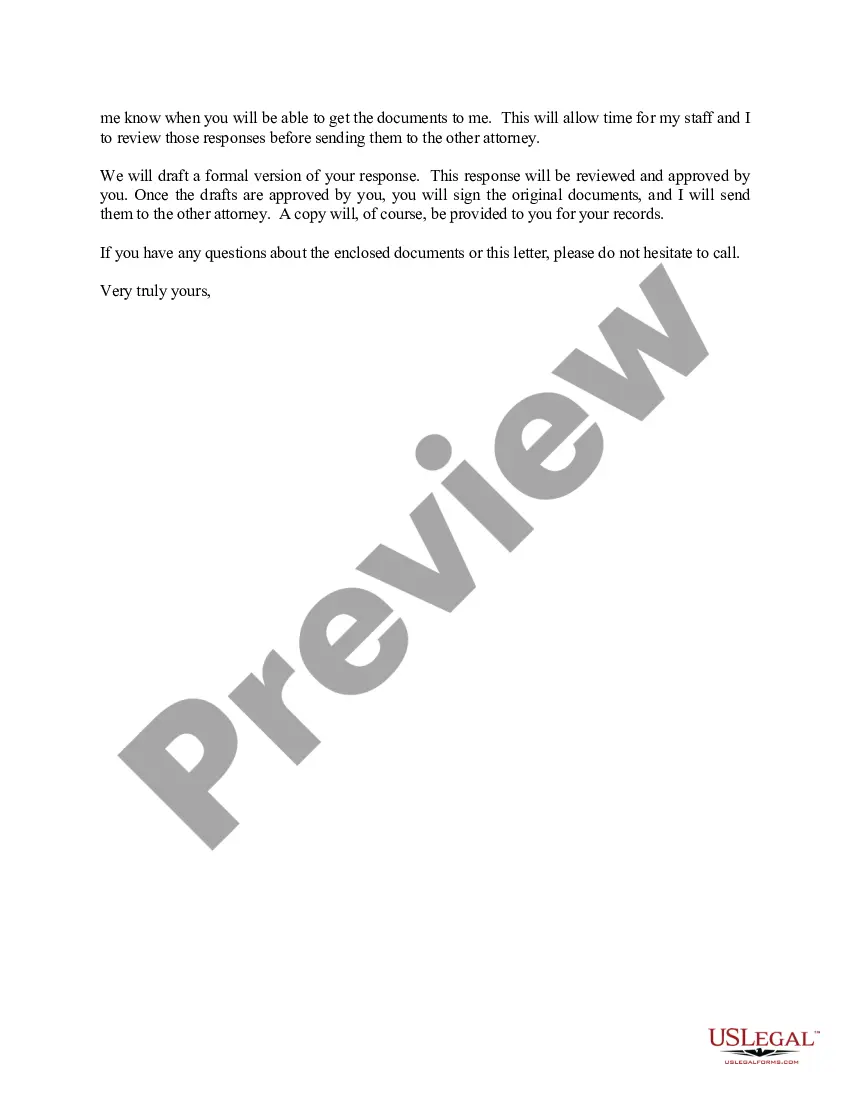

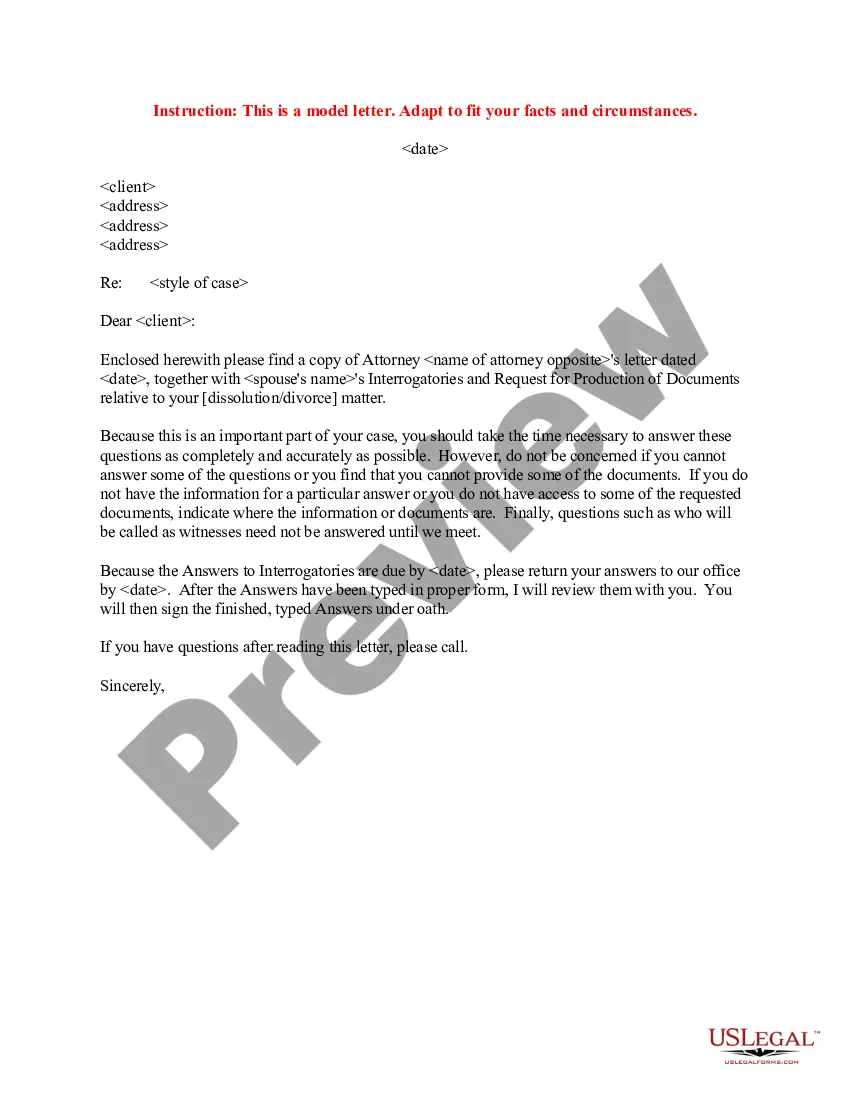
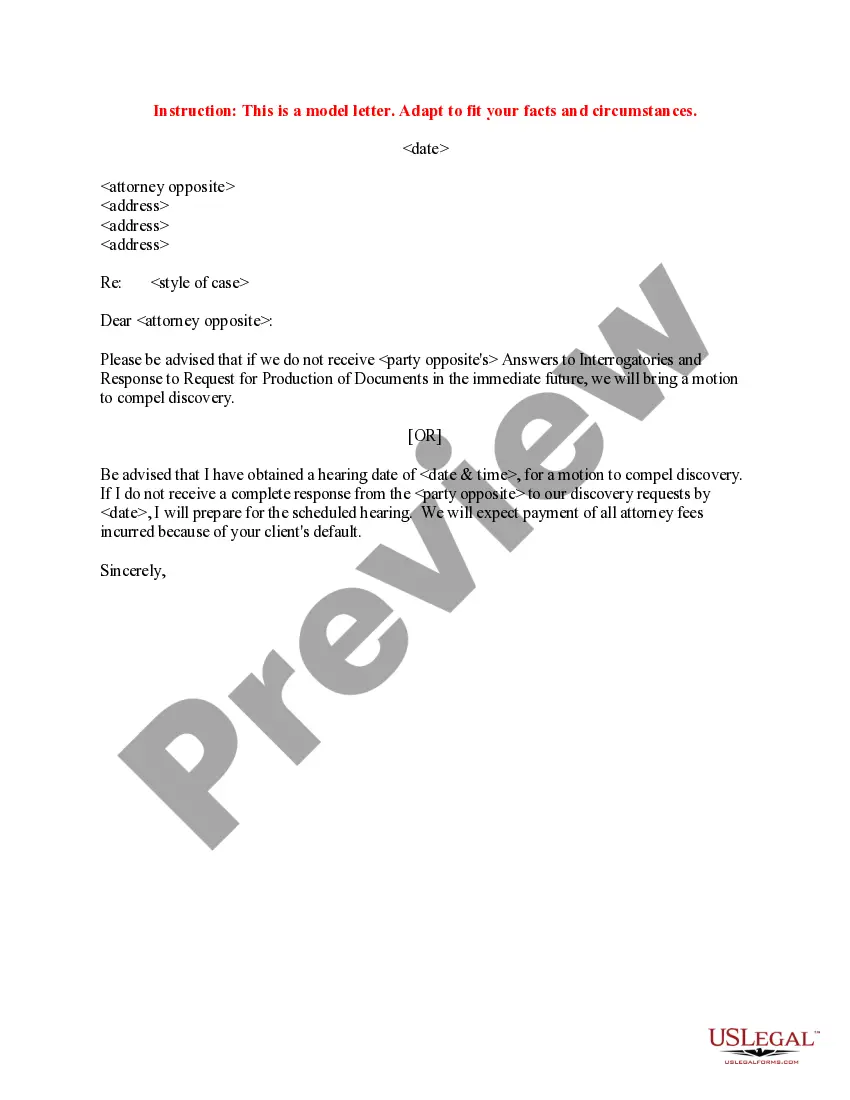
Get your form ready online
Our built-in tools help you complete, sign, share, and store your documents in one place.
Make edits, fill in missing information, and update formatting in US Legal Forms—just like you would in MS Word.
Download a copy, print it, send it by email, or mail it via USPS—whatever works best for your next step.
Sign and collect signatures with our SignNow integration. Send to multiple recipients, set reminders, and more. Go Premium to unlock E-Sign.
If this form requires notarization, complete it online through a secure video call—no need to meet a notary in person or wait for an appointment.
We protect your documents and personal data by following strict security and privacy standards.

Make edits, fill in missing information, and update formatting in US Legal Forms—just like you would in MS Word.

Download a copy, print it, send it by email, or mail it via USPS—whatever works best for your next step.

Sign and collect signatures with our SignNow integration. Send to multiple recipients, set reminders, and more. Go Premium to unlock E-Sign.

If this form requires notarization, complete it online through a secure video call—no need to meet a notary in person or wait for an appointment.

We protect your documents and personal data by following strict security and privacy standards.
Looking for another form?


How to fill out Sample Letter To Client Instructing On Answering Discovery?
The Discovery Letter To Defense displayed on this page is a reusable legal framework prepared by skilled attorneys in accordance with federal and local laws.
For over 25 years, US Legal Forms has supplied individuals, entities, and lawyers with more than 85,000 verified, state-specific documents for any business and personal event. It is the fastest, simplest, and most reliable method to acquire the documentation you require, as the service ensures bank-grade data security and anti-malware safeguards.
Subscribe to US Legal Forms to have verified legal templates for every aspect of life readily available.
- Search for the document you need and review it.
- Examine the file you searched and preview it or review the form description to confirm it meets your needs. If it does not, utilize the search feature to find the suitable one. Click Buy Now once you have located the template you require.
- Register and Log In.
- Select the pricing plan that fits you and create an account. Use PayPal or a credit card for a swift payment. If you already possess an account, Log In and confirm your subscription to proceed.
- Obtain the editable template.
- Choose the format you wish for your Discovery Letter To Defense (PDF, Word, RTF) and download the example to your device.
- Fill out and sign the documentation.
- Print the template to fill it out manually. Alternatively, use an online multifunctional PDF editor to quickly and accurately complete and sign your form with an electronic signature.
- Download your documentation once again.
- Utilize the same document again anytime required. Access the My documents tab in your profile to redownload any previously saved documents.
Form popularity
FAQ
Write out each fact you wish the other party to admit is true. When writing these facts, be as clear and concise as possible. Each request must be for a single fact; do not include multiple facts, compound questions, or subparts.
Discovery requests typically follow a common format that you can mirror. First, list instructions detailing the request for production. Be sure to mention Rule 34 and Rule 26(b), which outline the scope of the discovery request. It's also necessary to include a section with definitions.
Discovery may be carried out by directly asking a person questions (oral depositions), by sending a person written questions (interrogatories and depositions on written questions), and by requesting that the person provide documents (motions for production, subpoenas duces tecum).
Follow these steps to begin discovery in justice court: Step 1: Prepare and exchange your initial disclosures. Within thirty days after the defendant files his answer, the plaintiff and defendant must exchange: ... Step 2: File the early case conference report. ... Step 3: Ask the court to allow more discovery if you want it.
You should respond to each interrogatory in the order received. Start by retyping each interrogatory and then follow each question with your answer. If an answer comes from information you received from other people, you should write that as part of your response. Your answers must be signed under oath.