Residue In Estate
Description


Get your form ready online
Our built-in tools help you complete, sign, share, and store your documents in one place.
Make edits, fill in missing information, and update formatting in US Legal Forms—just like you would in MS Word.
Download a copy, print it, send it by email, or mail it via USPS—whatever works best for your next step.
Sign and collect signatures with our SignNow integration. Send to multiple recipients, set reminders, and more. Go Premium to unlock E-Sign.
If this form requires notarization, complete it online through a secure video call—no need to meet a notary in person or wait for an appointment.
We protect your documents and personal data by following strict security and privacy standards.

Make edits, fill in missing information, and update formatting in US Legal Forms—just like you would in MS Word.

Download a copy, print it, send it by email, or mail it via USPS—whatever works best for your next step.

Sign and collect signatures with our SignNow integration. Send to multiple recipients, set reminders, and more. Go Premium to unlock E-Sign.

If this form requires notarization, complete it online through a secure video call—no need to meet a notary in person or wait for an appointment.

We protect your documents and personal data by following strict security and privacy standards.
Looking for another form?







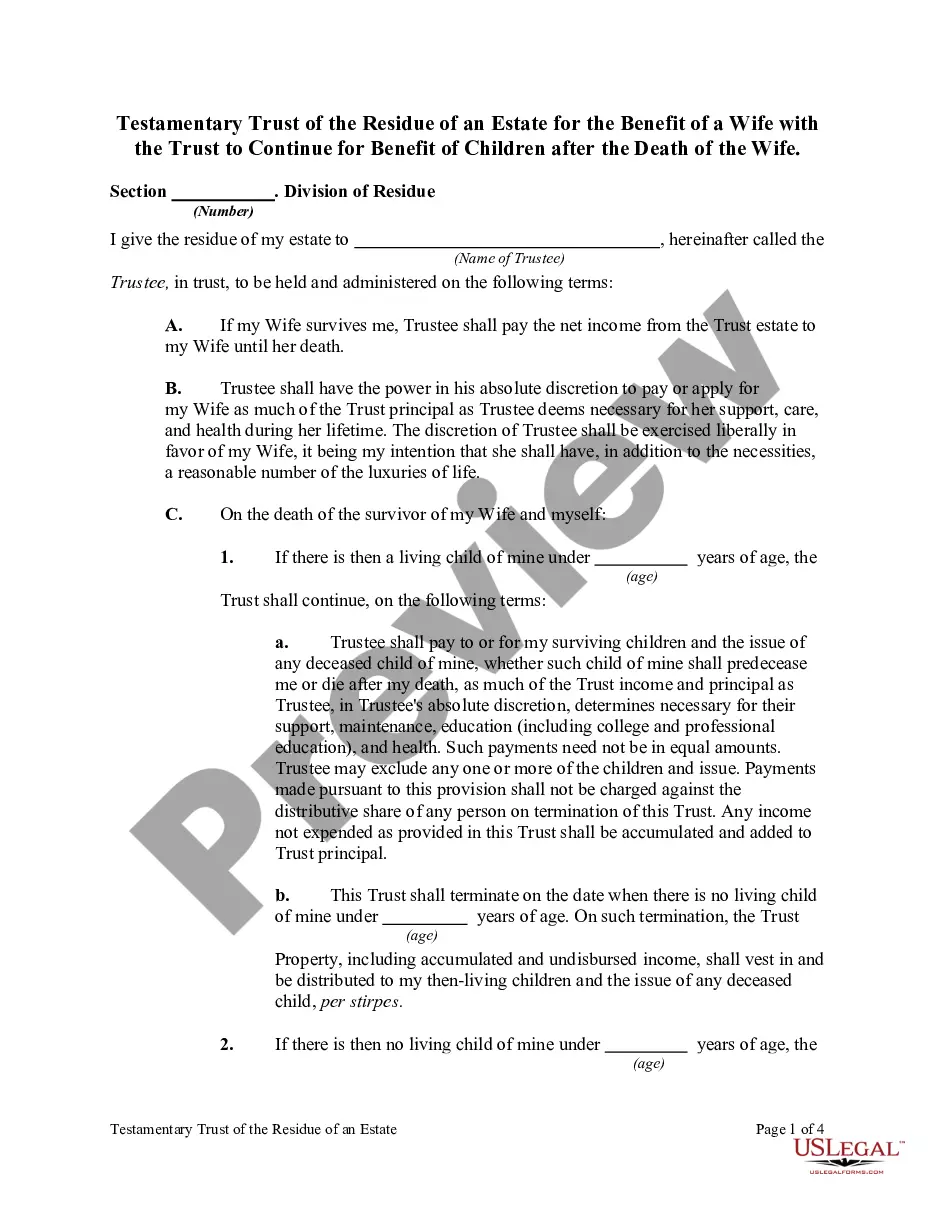
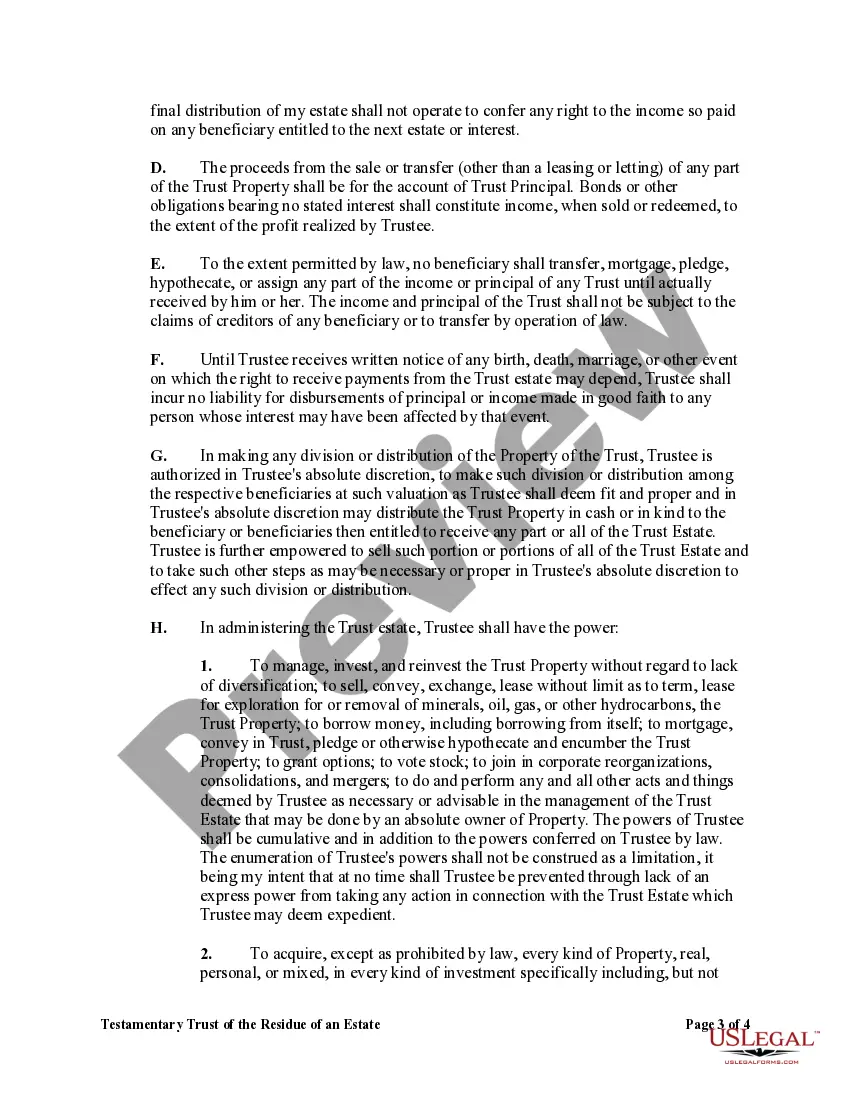
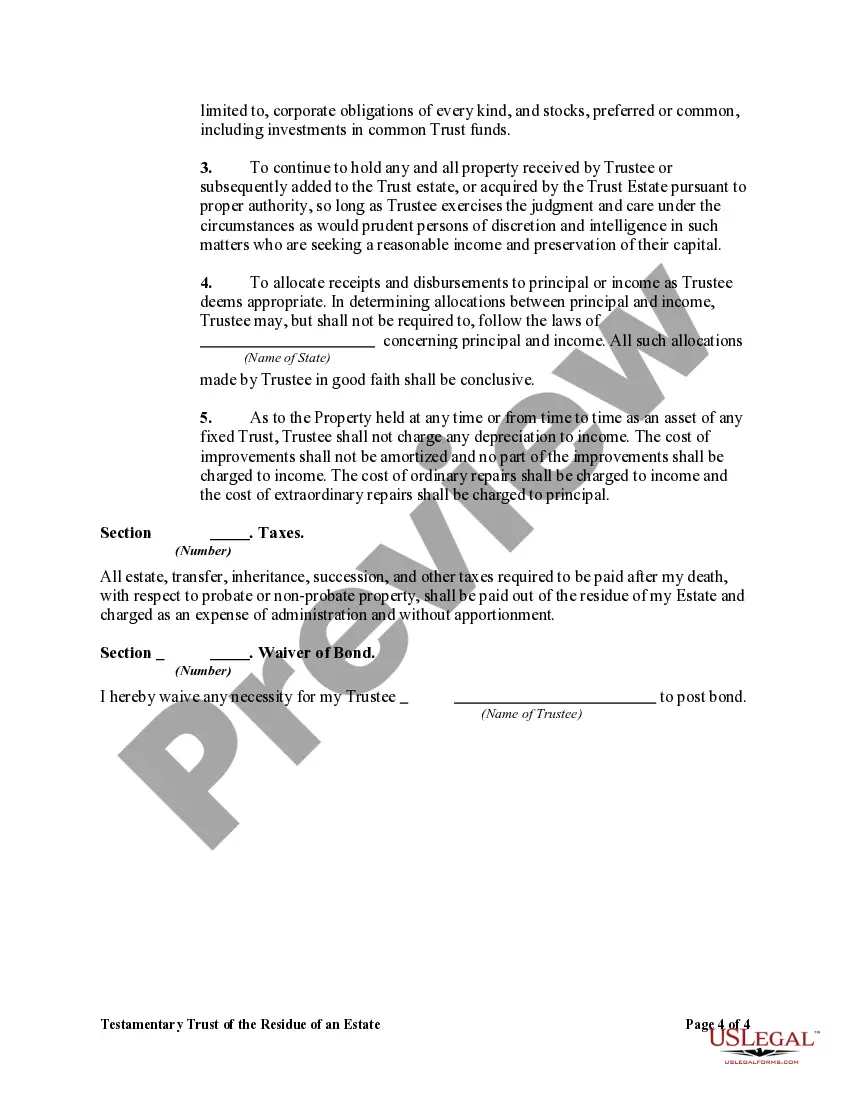
How to fill out Testamentary Trust Of The Residue Of An Estate For The Benefit Of A Wife With The Trust To Continue For Benefit Of Children After The Death Of The Wife?
Legal documentation management can be daunting, even for the most proficient professionals.
When you're in search of a Residue In Estate and lack the time to dedicate to finding the correct and current version, the processes can be stressful.
US Legal Forms meets any needs you may have, ranging from personal to business documentation, all in one location.
Utilize advanced tools to complete and manage your Residue In Estate.
Here are the steps to follow after downloading the form you require: Verify that it is the correct document by previewing it and reviewing its details. Ensure that the template is valid in your state or county. Click on Buy Now when you’re ready. Choose a subscription plan. Select the format you need, then Download, fill out, eSign, print, and send your documents. Take advantage of the US Legal Forms online library, supported by 25 years of experience and reliability. Improve your daily document management in a seamless and user-friendly manner today.
- Access a valuable resource library of articles, guides, and materials pertinent to your situation and requirements.
- Save time and effort searching for the documents you need, and utilize US Legal Forms’ sophisticated search and Preview feature to find Residue In Estate and download it.
- If you hold a monthly subscription, Log In to your US Legal Forms account, search for the form, and download it.
- Visit the My documents section to view the documents you have previously downloaded and to manage your folders as you see fit.
- If this is your first experience with US Legal Forms, create an account and enjoy unrestricted access to all the library's advantages.
- A comprehensive online form repository can be a transformative solution for anyone aiming to manage these circumstances efficiently.
- US Legal Forms is a leading provider of web legal forms, offering over 85,000 state-specific legal documents accessible at any time.
- With US Legal Forms, you can access state- or county-specific legal and business forms.
Form popularity
FAQ
Also referred to as estate residue or residual estate, it simply means assets that are left over once your will has been read, assets have been distributed to your heirs and any final expenses have been paid. Proper estate planning can help you avoid leaving residual assets behind.
A typical residuary clause says: I leave all the rest and residue of my property, both real and personal, of whatever nature and wherever situated, assets, including all real and personal property, tangible or intangible, to: _______________.
Example of residuary estate The residuary estate is the remaining assets after you've settled everything else in your will. So, when the executor has given away everything away or disposed of it for other purposes. In this case, it would be the house and its contents.
EXAMPLE: In her will, Sara, a widow, leaves many different items to many different beneficiaries: books to her daughter, jewelry to a friend, a car to her nephew and so on. She doesn't name alternate beneficiaries for these specific bequests, but she names her daughter as residuary beneficiary.
A residuary estate is the portion of a person's assets that are left over after paying off their estate's debts, taxes and expenses and after distributing any specific gifts of property or money. People often put instructions in their wills about what to do with their residuary estates.