Guardianship And Court Order
Description
Get your form ready online
Our built-in tools help you complete, sign, share, and store your documents in one place.
Make edits, fill in missing information, and update formatting in US Legal Forms—just like you would in MS Word.
Download a copy, print it, send it by email, or mail it via USPS—whatever works best for your next step.
Sign and collect signatures with our SignNow integration. Send to multiple recipients, set reminders, and more. Go Premium to unlock E-Sign.
If this form requires notarization, complete it online through a secure video call—no need to meet a notary in person or wait for an appointment.
We protect your documents and personal data by following strict security and privacy standards.

Make edits, fill in missing information, and update formatting in US Legal Forms—just like you would in MS Word.

Download a copy, print it, send it by email, or mail it via USPS—whatever works best for your next step.

Sign and collect signatures with our SignNow integration. Send to multiple recipients, set reminders, and more. Go Premium to unlock E-Sign.

If this form requires notarization, complete it online through a secure video call—no need to meet a notary in person or wait for an appointment.

We protect your documents and personal data by following strict security and privacy standards.
Looking for another form?

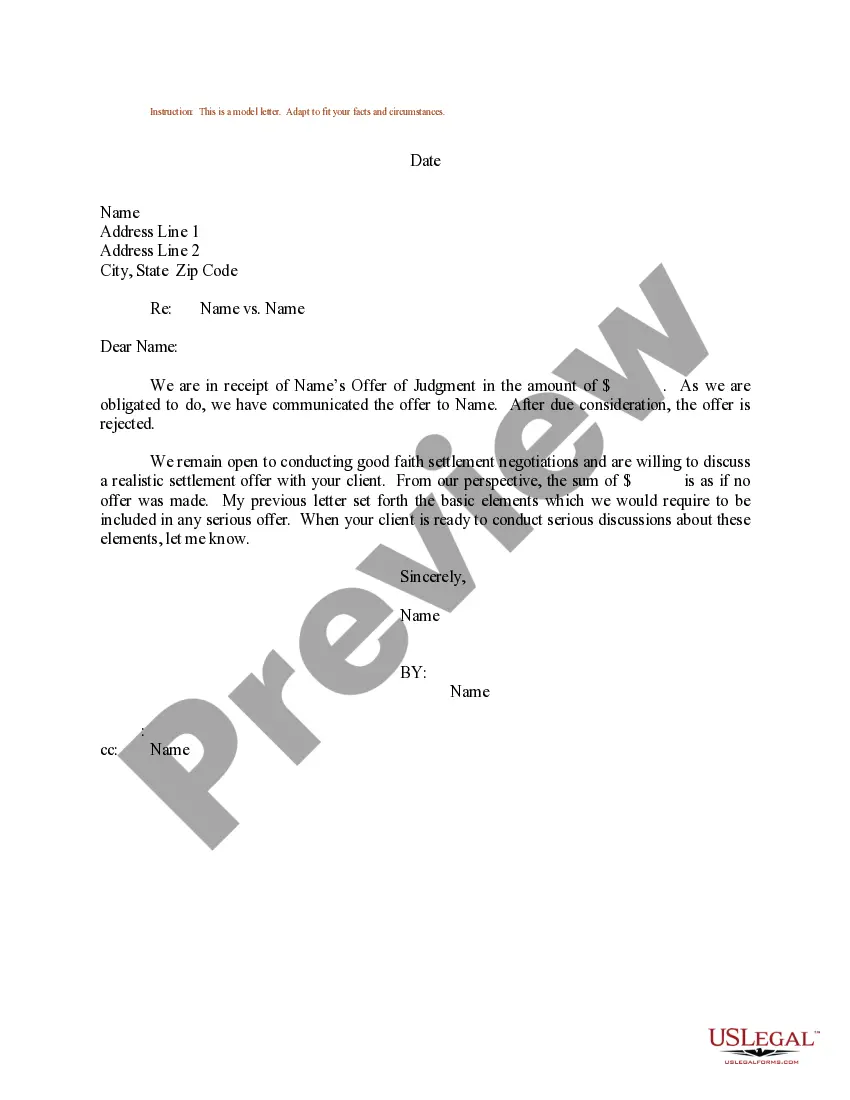
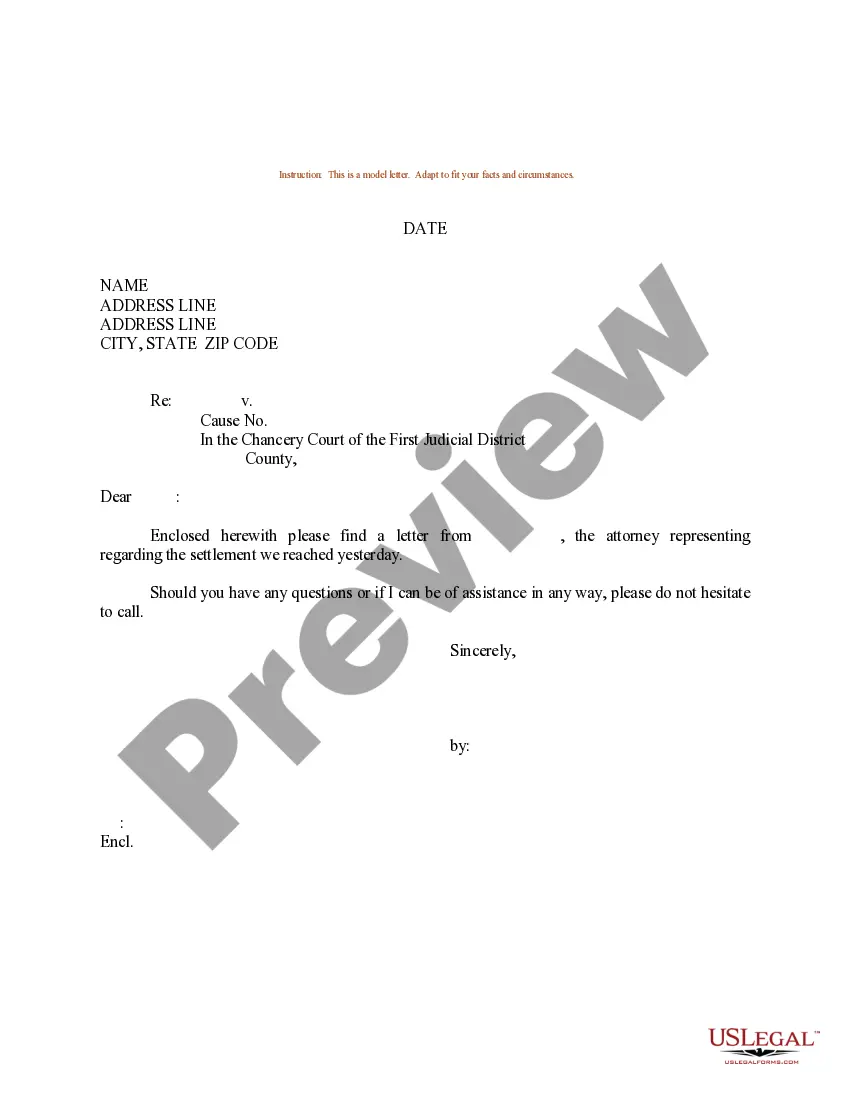

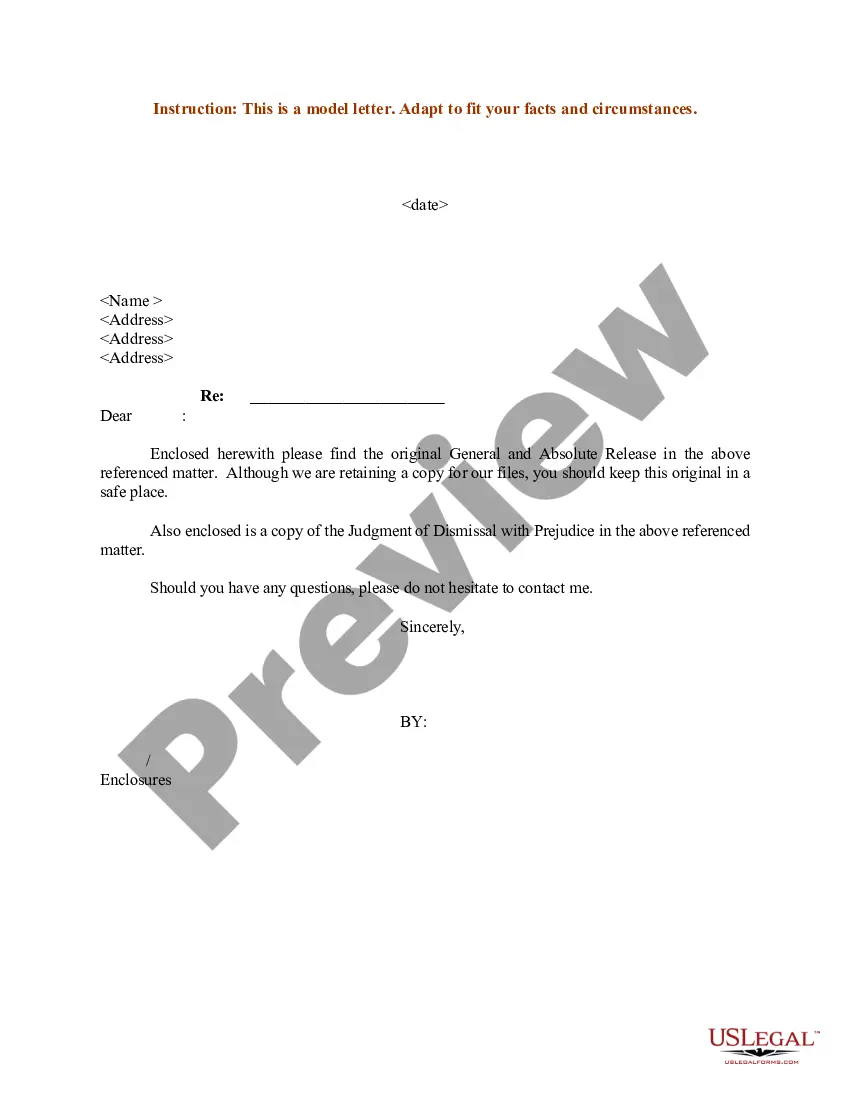
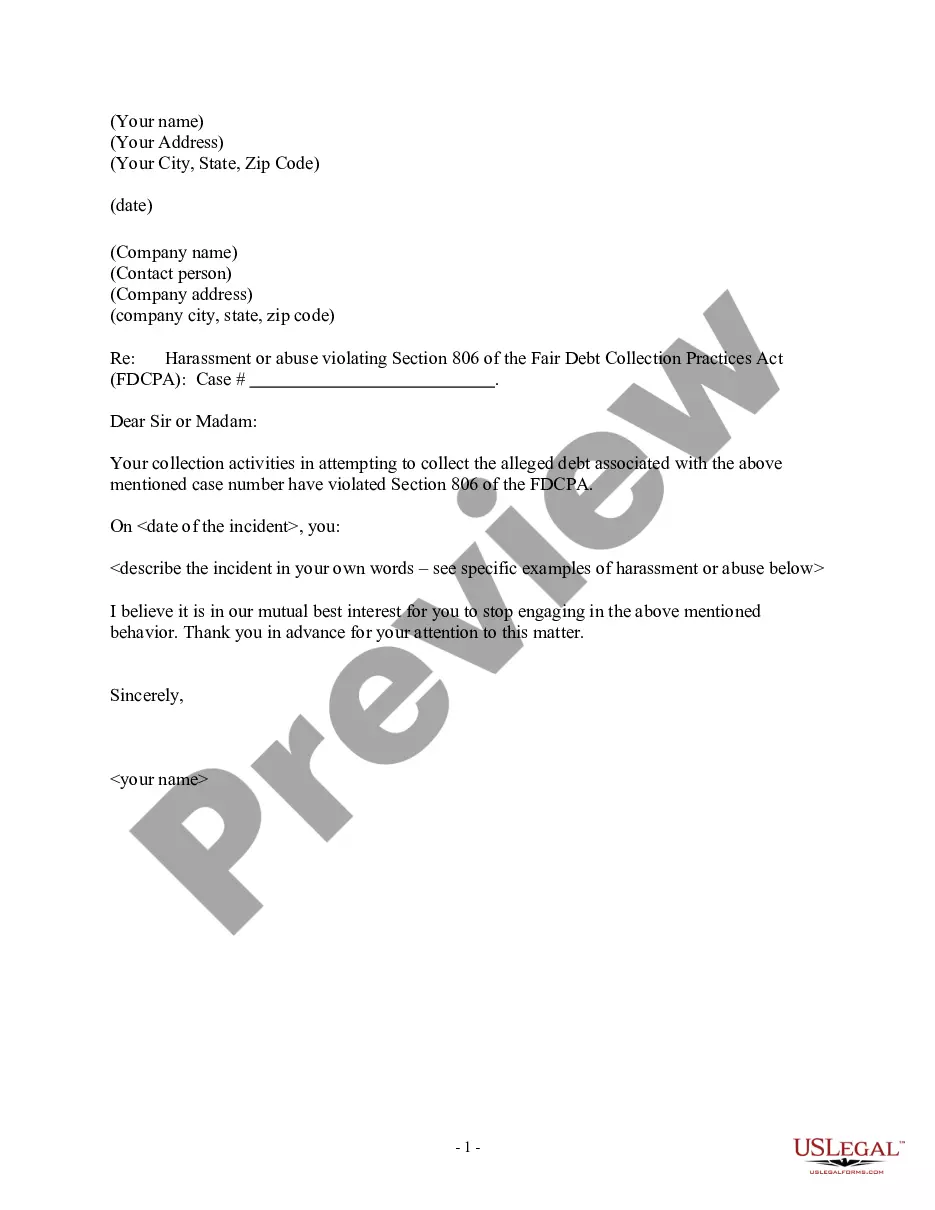
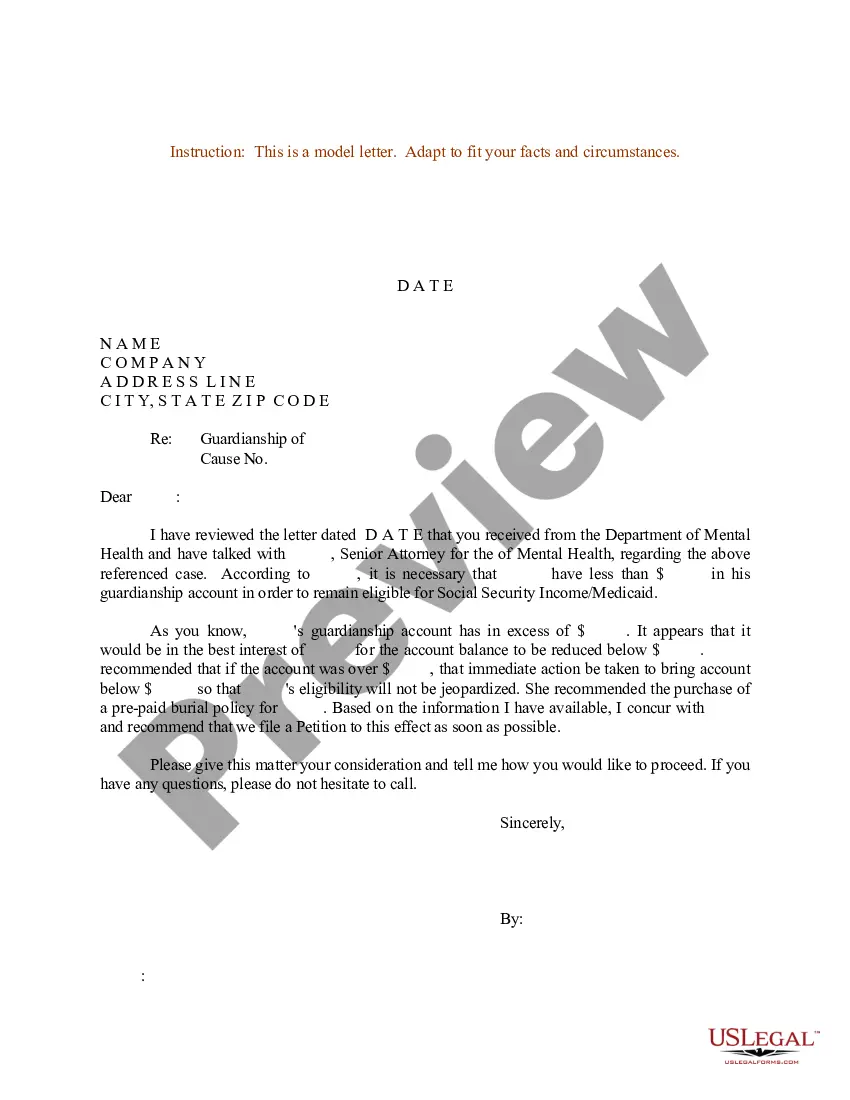
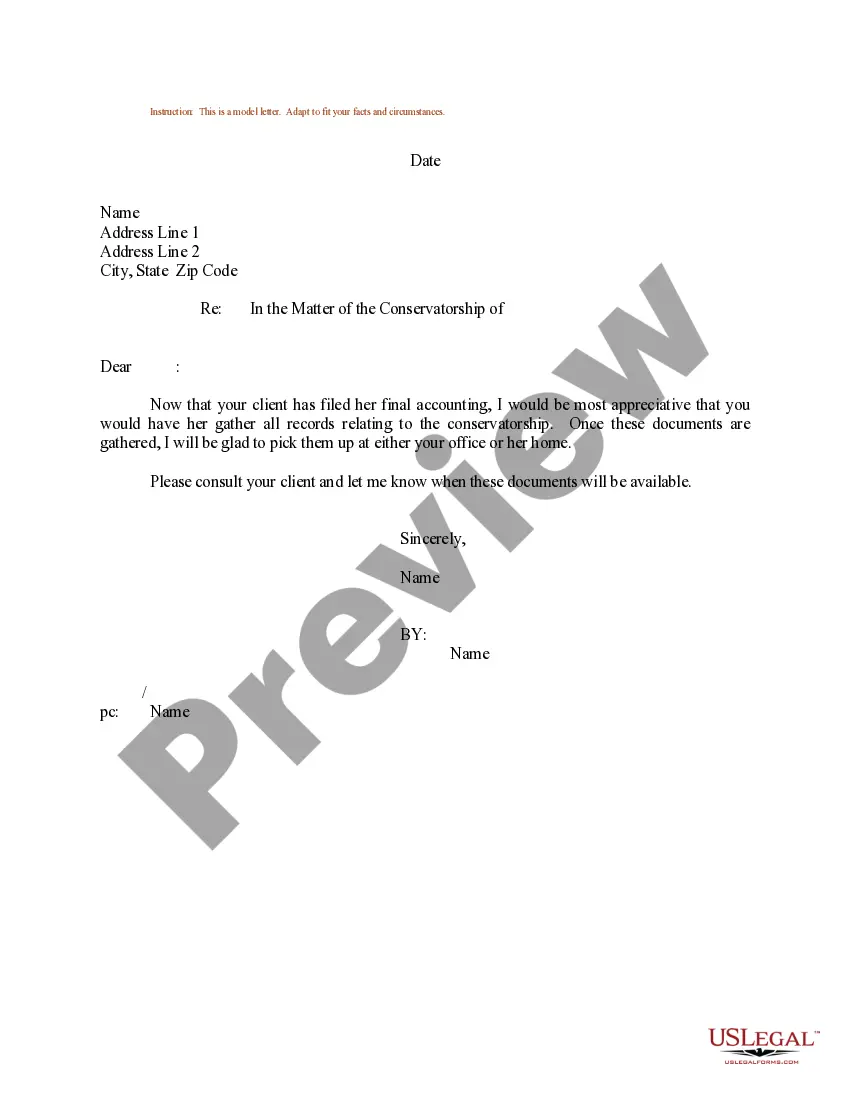
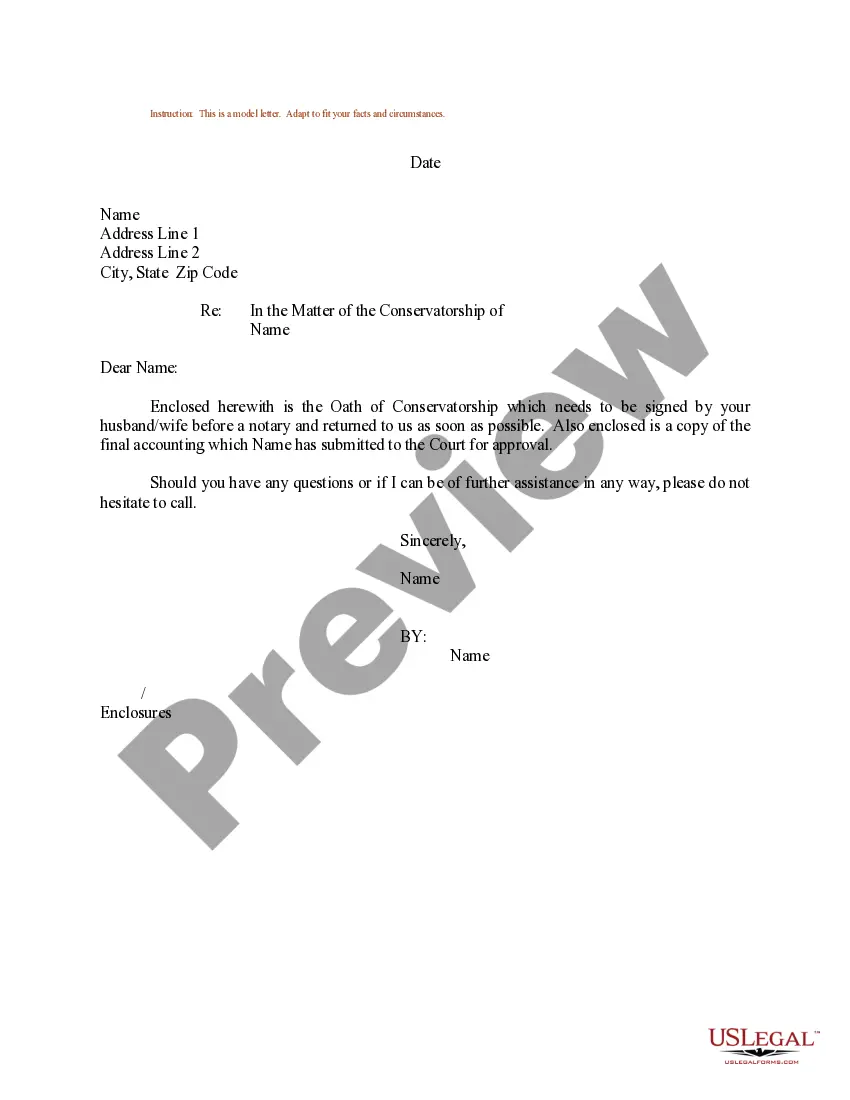
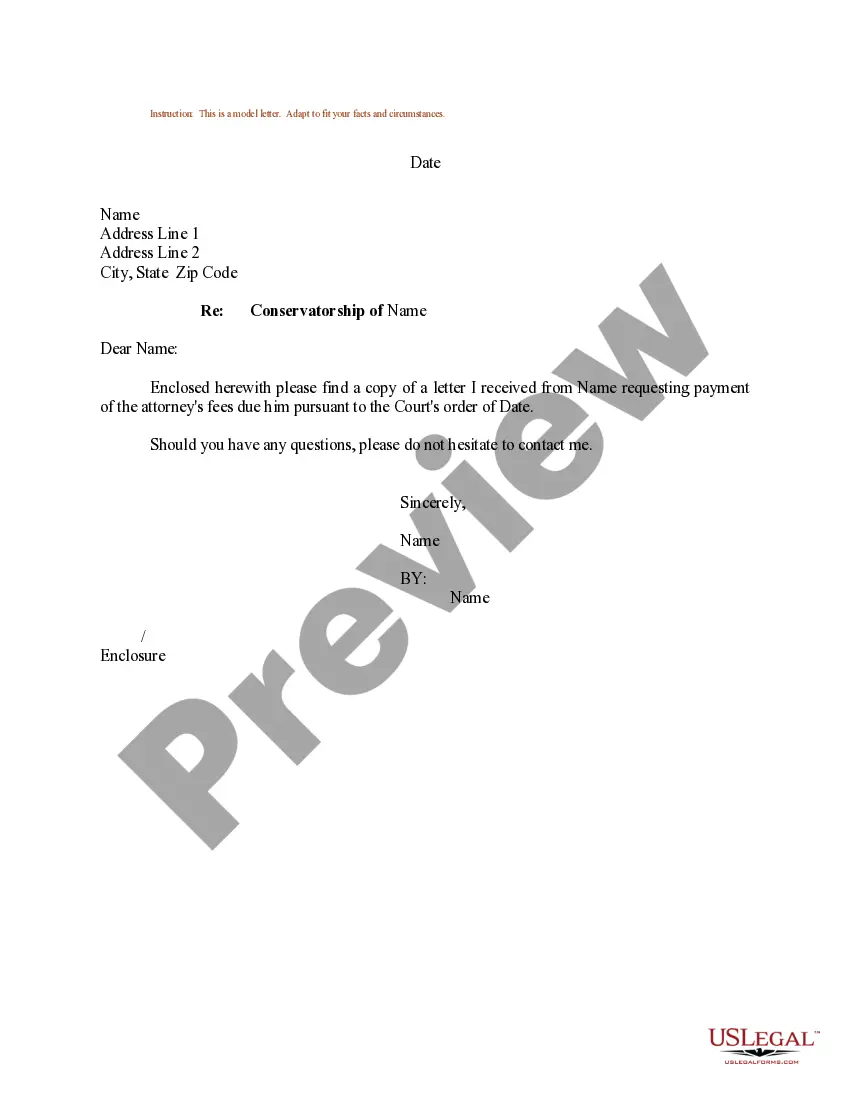
How to fill out Sample Letter For Guardianship - Funds Owed To Court?
Managing legal paperwork can be overwhelming, even for seasoned professionals.
When you're looking for a Guardianship And Court Order and don't have the opportunity to spend time finding the suitable and current version, the processes can be stressful.
Access legal and business forms specific to your state or county.
US Legal Forms caters to any requirements you might have, from personal to business documentation, all in a single place.
If this is your first experience with US Legal Forms, create an account and gain unlimited access to all the advantages of the library. Here are the steps to follow after locating the form you need: Confirm it is the correct form by previewing it and reviewing its description. Ensure that the template is approved in your state or county. Click Buy Now when you're ready. Select a subscription plan. Choose the format you prefer, and Download, complete, sign, print, and send your document. Take advantage of the US Legal Forms online library, backed by 25 years of expertise and trustworthiness. Change your routine document management into a straightforward and user-friendly process today.
- Utilize advanced tools to fill out and manage your Guardianship And Court Order.
- Access a valuable repository of articles, guides, and resources related to your situation and needs.
- Save time and energy looking for the forms you require, and use US Legal Forms’ sophisticated search and Review feature to locate Guardianship And Court Order and obtain it.
- If you hold a membership, Log In to your US Legal Forms account, search for the form, and acquire it.
- Check your My documents tab to view the documents you have previously stored and to organize your files as desired.
- A comprehensive online form library could be a breakthrough for anyone aiming to handle these matters efficiently.
- US Legal Forms is a frontrunner in online legal documents, offering over 85,000 state-specific legal forms available to you at any moment.
- With US Legal Forms, you can.
Form popularity
FAQ
Several factors can disqualify an individual from becoming a guardian, such as a criminal record, history of substance abuse, or inability to provide a stable living environment. Additionally, if the individual is under financial distress or has a conflict of interest, they may be deemed unsuitable. Understanding these disqualifications can help you make informed decisions when considering guardianship options.
A court order for legal guardianship is a formal document issued by a court that grants an individual the legal authority to care for another person. This order outlines the specific rights and responsibilities of the guardian, ensuring that the ward's best interests are prioritized. The process of obtaining this court order can be simplified with the right resources, like those offered by USLegalForms.
The requirements for guardianship in Arkansas include residency, the ability to provide a safe environment, and the capacity to fulfill the responsibilities of a guardian. You also need to submit a completed petition and undergo a background check. Following these requirements, obtaining a court order for legal guardianship is the next step to ensure proper care.
In Arkansas, establishing guardianship requires filing a petition in court, demonstrating the need for guardianship, and providing evidence regarding the individual's incapacity. The court will evaluate the petition and may appoint a guardian if it finds the need justified. Additionally, a court order will be issued to formalize the guardianship arrangement.
To prove guardianship, you typically need to provide evidence showing that the individual in question is unable to care for themselves due to disability or incapacity. This often includes medical documentation, witness statements, and sometimes a court order. A well-prepared application, such as those available through USLegalForms, can streamline the process of establishing guardianship.
The three types of guardians include guardians of the person, guardians of the estate, and limited guardians. A guardian of the person is responsible for the welfare and care of an individual, while a guardian of the estate manages financial matters. Limited guardianship allows for specific responsibilities to be assigned, often beneficial when a person needs assistance in certain areas but can still manage others.
They can only be appointed by someone who has parental responsibility for the children. A Legal Guardian cannot be appointed by a parent who is alive, as it is not possible to transfer parental responsibility to another person. For this reason, Legal Guardians are usually appointed in a parent's will.
There are two routes to becoming a special guardian: private law and public law. Private law is an arrangement between individuals, such as family members, and public law is when children's services apply to the court for an order to safeguard the welfare of a child in care.
A Guardianship Order is a court appointment which authorises a authorising someone to take action or make decisions on behalf of an individual who lacks capacity.
At this hearing the court will decide whether to make the special guardianship order, having read all the reports and statements and heard evidence from everyone involved and any other witnesses. The court will send a copy of the final order to everyone involved.
