Articles Non Profit Organization With A Non-governmental
Description
Get your form ready online
Our built-in tools help you complete, sign, share, and store your documents in one place.
Make edits, fill in missing information, and update formatting in US Legal Forms—just like you would in MS Word.
Download a copy, print it, send it by email, or mail it via USPS—whatever works best for your next step.
Sign and collect signatures with our SignNow integration. Send to multiple recipients, set reminders, and more. Go Premium to unlock E-Sign.
If this form requires notarization, complete it online through a secure video call—no need to meet a notary in person or wait for an appointment.
We protect your documents and personal data by following strict security and privacy standards.

Make edits, fill in missing information, and update formatting in US Legal Forms—just like you would in MS Word.

Download a copy, print it, send it by email, or mail it via USPS—whatever works best for your next step.

Sign and collect signatures with our SignNow integration. Send to multiple recipients, set reminders, and more. Go Premium to unlock E-Sign.

If this form requires notarization, complete it online through a secure video call—no need to meet a notary in person or wait for an appointment.

We protect your documents and personal data by following strict security and privacy standards.
Looking for another form?




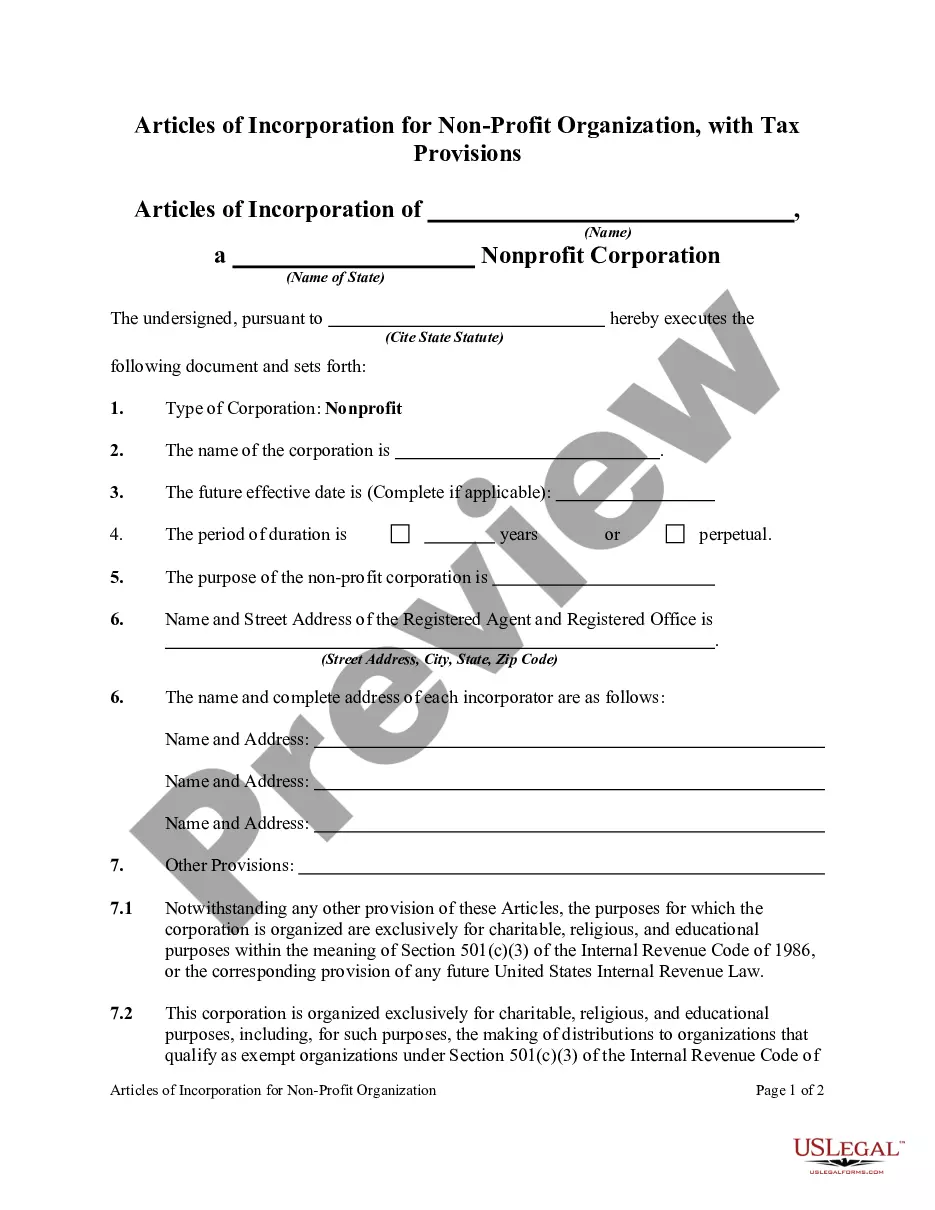
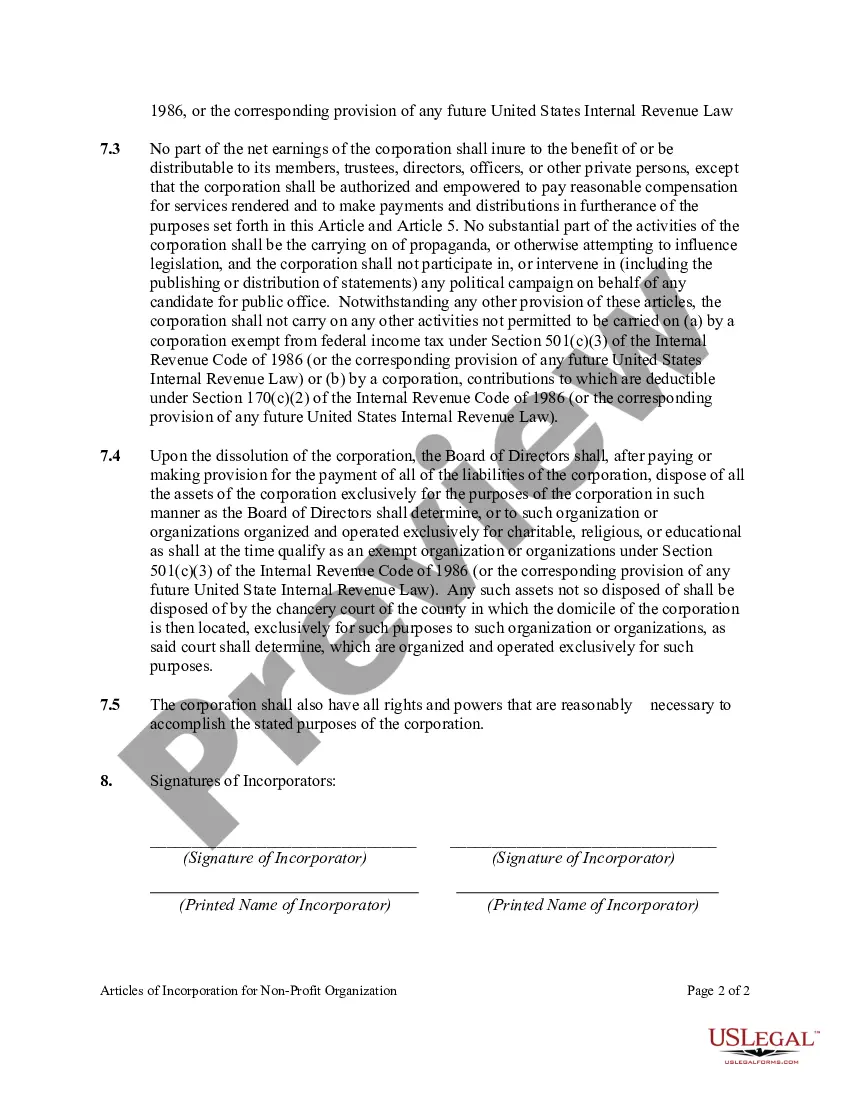
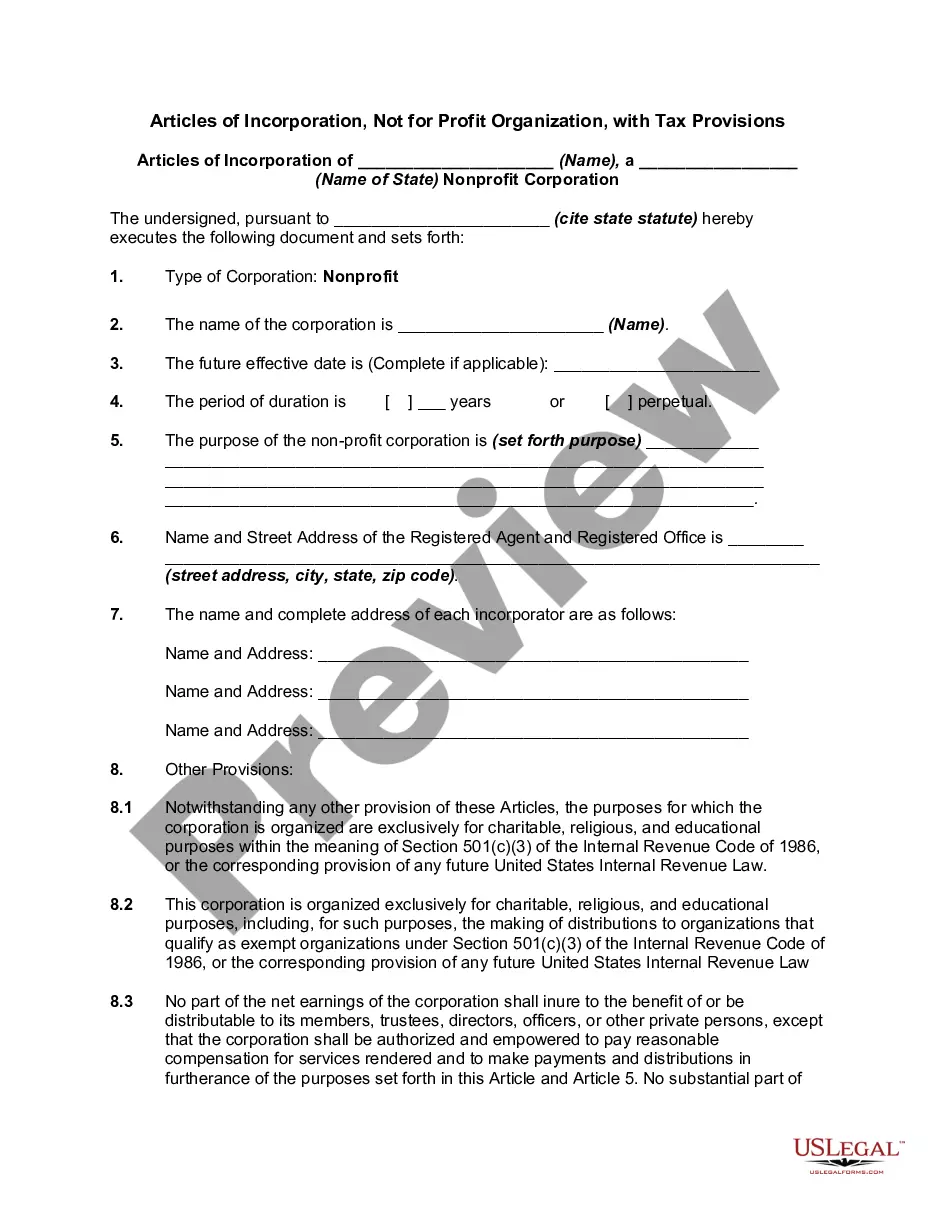
How to fill out Articles Of Incorporation For Non-Profit Organization, With Tax Provisions?
Creating legal documents from the ground up can frequently feel daunting.
Certain situations may entail extensive research and substantial financial investment.
If you’re looking for a simpler and more economical method for drafting Articles Non Profit Organization With A Non-governmental or other paperwork without unnecessary complications, US Legal Forms is always accessible to you.
Our online collection of more than 85,000 current legal forms covers nearly every aspect of your financial, legal, and personal concerns.
Review the document preview and descriptions to ensure you’ve identified the correct form. Confirm that the template you choose adheres to your state and county laws and regulations. Select the appropriate subscription plan to procure the Articles Non Profit Organization With A Non-governmental. Download the document, then complete, validate, and print it out. US Legal Forms has established a reputable name and brings over 25 years of experience. Join us today and make form filling a seamless and efficient process!
- With just a few clicks, you can readily obtain state- and county-specific templates meticulously prepared by our legal experts.
- Utilize our platform whenever you require reliable and dependable services to swiftly find and download the Articles Non Profit Organization With A Non-governmental.
- If you've previously registered with us, simply Log In to your account, find the form, and download it or retrieve it again anytime later in the My documents section.
- Is this your first time? No worries. Setting up an account is quick and easy, allowing you to browse the catalog.
- Before you proceed to download Articles Non Profit Organization With A Non-governmental, remember these guidelines.
Form popularity
FAQ
Writing articles of incorporation for a non-profit organization involves outlining the organization’s purpose, structure, and governance. You should include essential information such as the organization's name, mission statement, registered agent, and nonprofit nature. Using platforms like USLegalForms can simplify this process by providing templates and guidance tailored for drafting articles of non profit organization with a non-governmental objective.
The 33 percent rule is similar to the 33% rule and emphasizes the need for diverse income sources in nonprofit operations. By generating at least a third of its funding from multiple streams, a nonprofit can build a solid financial foundation and foster long-term growth. This consideration is vital when drafting articles of non profit organization with a non-governmental purpose.
The 33% rule suggests that non-profit organizations should aim for at least one-third of their funding to come from diverse revenue streams, ensuring sustainability. This approach minimizes risks associated with funding fluctuations and enhances organizational resilience. As you consider your non-profit structure, remember to reflect on this rule in your articles of non profit organization with a non-governmental focus.
The 33 rule indicates that 33% of a nonprofit organization's funding should ideally come from earned income, with the remaining from donations and grants. This balance can provide financial stability and reduce dependence on a single revenue source. Organizations can benefit greatly from this insight while structuring their financial plans or drafting articles of non profit organization with a non-governmental objective.
The 80 20 rule, also known as the Pareto principle, suggests that 80% of a non-profit's outcomes often come from just 20% of its efforts. This means that focusing on the most impactful programs can yield better results in fulfilling the organization’s mission. Understanding this principle can guide boards and staff in making strategic decisions. It is important to incorporate such insights when considering the articles of non profit organization with a non-governmental mission.
The 5 rule refers to the guidelines established by the IRS for 501(c)(3) organizations to ensure compliance and maintain their tax-exempt status. These organizations must spend at least 5% of their revenues each year on charitable purposes, and no more than 5% on lobbying activities. Following this rule helps ensure accountability and transparency, making it essential when drafting articles of non profit organization with a non-governmental emphasis.
The IRS has specific guidelines that non-profit organizations must follow to maintain tax-exempt status. These rules require that the organization operates exclusively for exempt purposes, such as charitable, educational, or scientific. Additionally, they must comply with annual filing requirements, including submitting Form 990, which provides financial information. Understanding these IRS rules is crucial when drafting articles of non profit organization with a non-governmental focus.
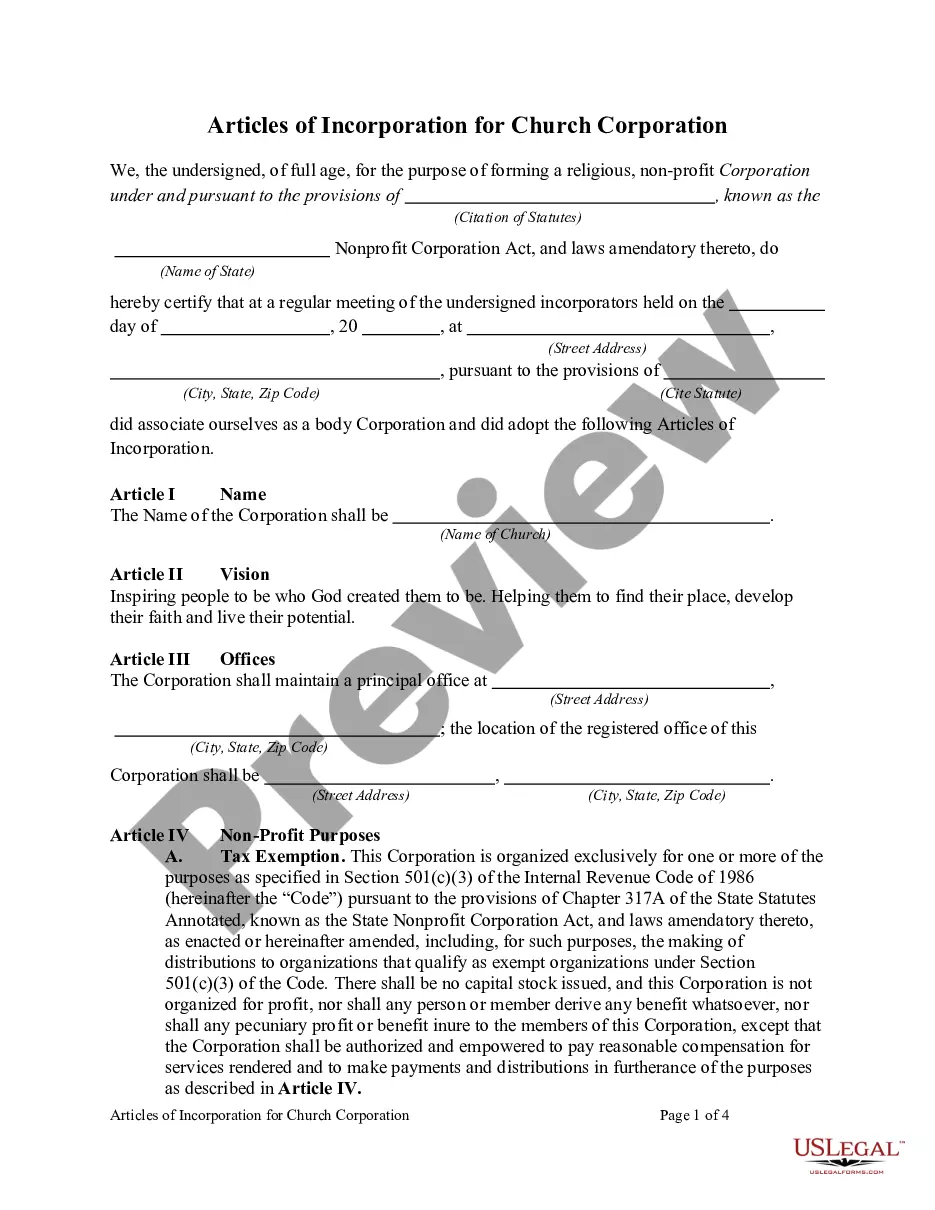
Typically, the articles of incorporation are prepared by the founding members of the non-profit organization, often with the assistance of legal professionals. It is crucial to ensure that these articles meet state requirements and accurately reflect the intent of the organization. Using platforms like US Legal Forms can simplify this process, providing templates and guidance tailored for articles non profit organization with a non-governmental framework.
Yes, a 501(c)(3) organization must have articles of incorporation filed with the state to obtain federal tax-exempt status. These articles serve as the foundation of a non-profit organization with a non-governmental focus, laying out its purpose, structure, and governance policies. Without these documents, your organization cannot fulfill the legal requirements to operate under 501(c)(3) regulations effectively.
An example of the articles of incorporation purpose statement for a non-profit organization might be, 'The purpose of this organization is to promote education and provide resources for underprivileged communities.' This statement clearly defines the organization's specific goals, illustrating its mission to serve the public good. Articles non profit organization with a non-governmental scope typically include such purpose statements to establish their intent and enable eligibility for tax-exempt status.