Articles Non Profit Organization For Education
Description
Get your form ready online
Our built-in tools help you complete, sign, share, and store your documents in one place.
Make edits, fill in missing information, and update formatting in US Legal Forms—just like you would in MS Word.
Download a copy, print it, send it by email, or mail it via USPS—whatever works best for your next step.
Sign and collect signatures with our SignNow integration. Send to multiple recipients, set reminders, and more. Go Premium to unlock E-Sign.
If this form requires notarization, complete it online through a secure video call—no need to meet a notary in person or wait for an appointment.
We protect your documents and personal data by following strict security and privacy standards.

Make edits, fill in missing information, and update formatting in US Legal Forms—just like you would in MS Word.

Download a copy, print it, send it by email, or mail it via USPS—whatever works best for your next step.

Sign and collect signatures with our SignNow integration. Send to multiple recipients, set reminders, and more. Go Premium to unlock E-Sign.

If this form requires notarization, complete it online through a secure video call—no need to meet a notary in person or wait for an appointment.

We protect your documents and personal data by following strict security and privacy standards.
Looking for another form?


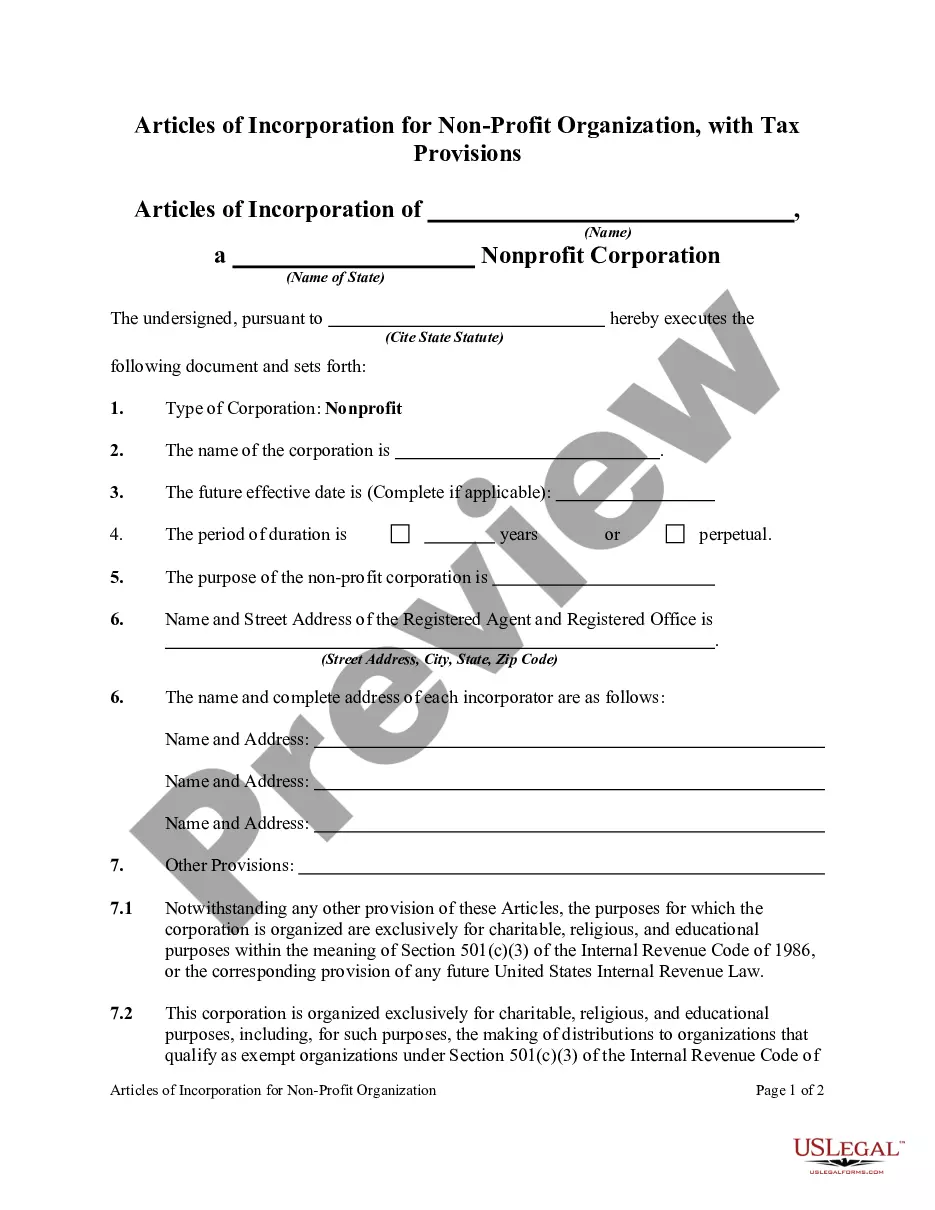
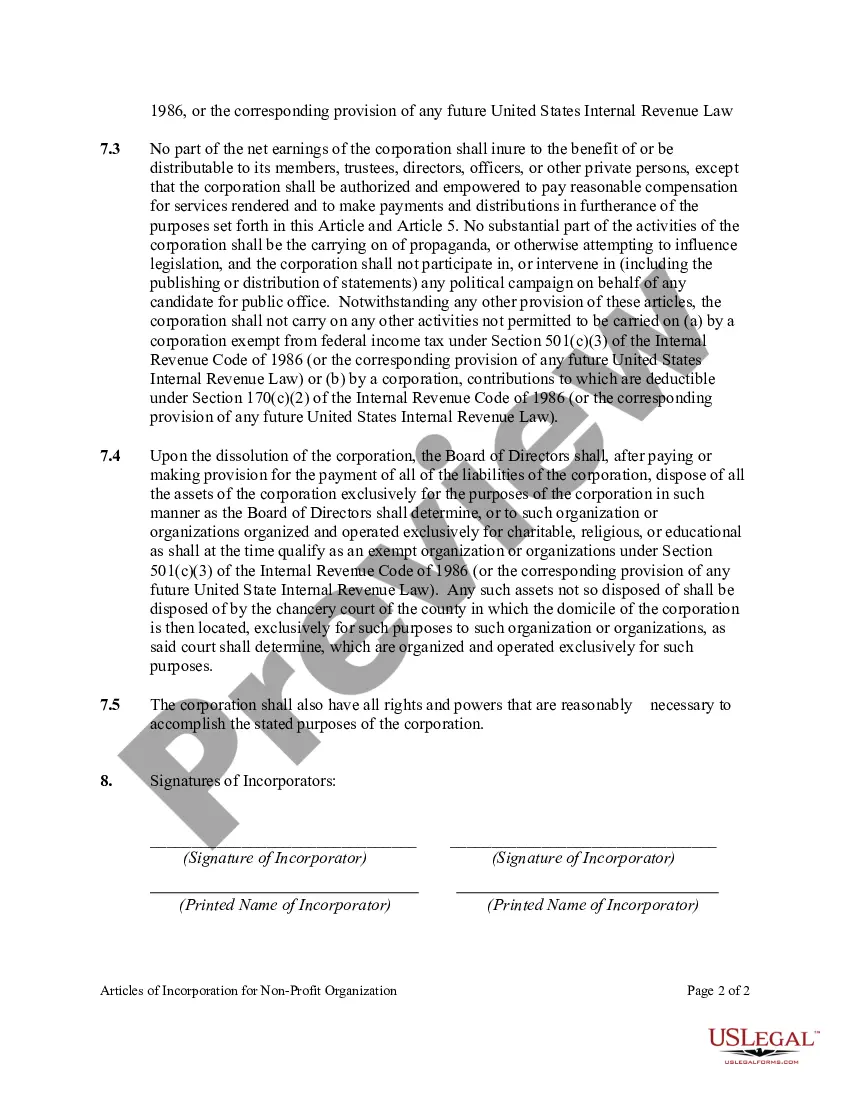
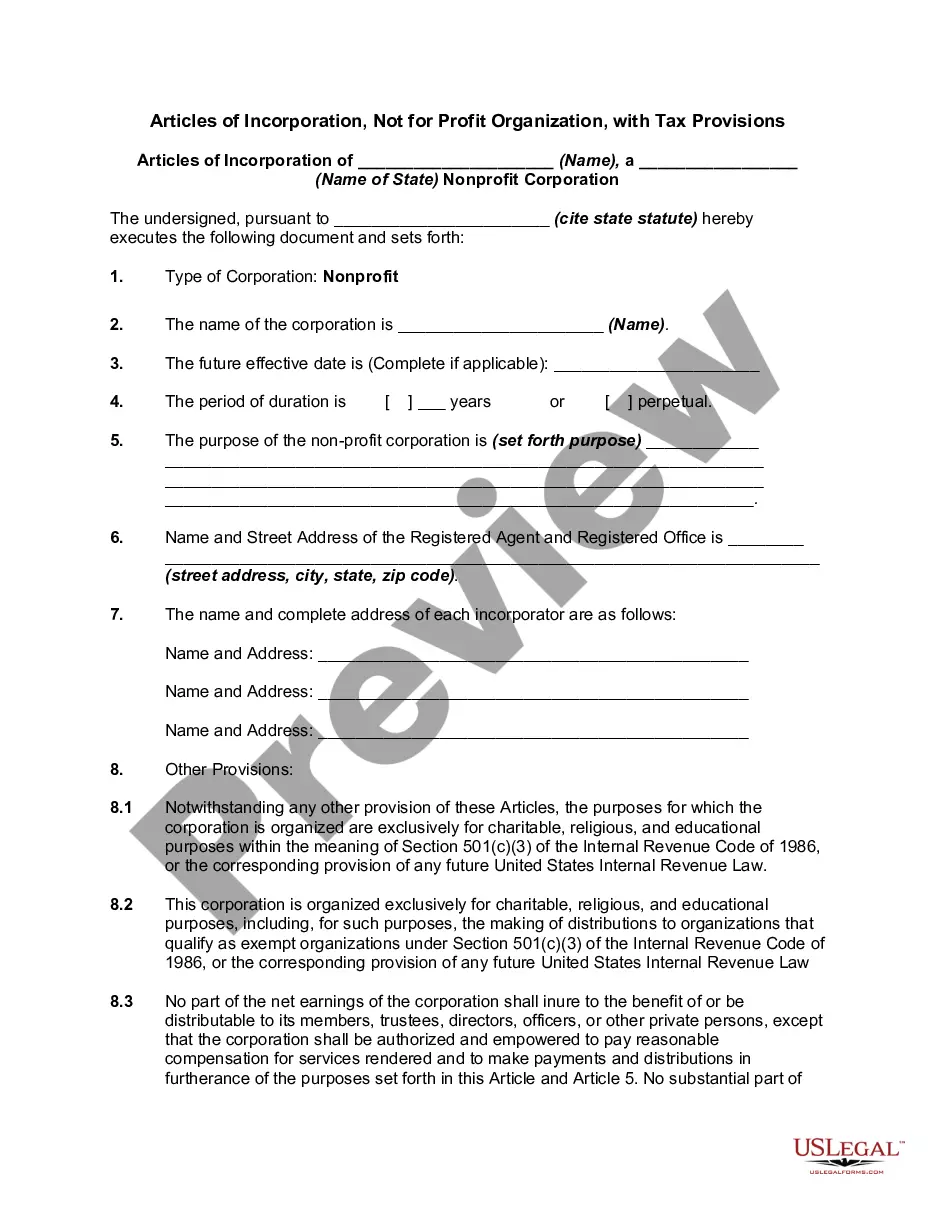
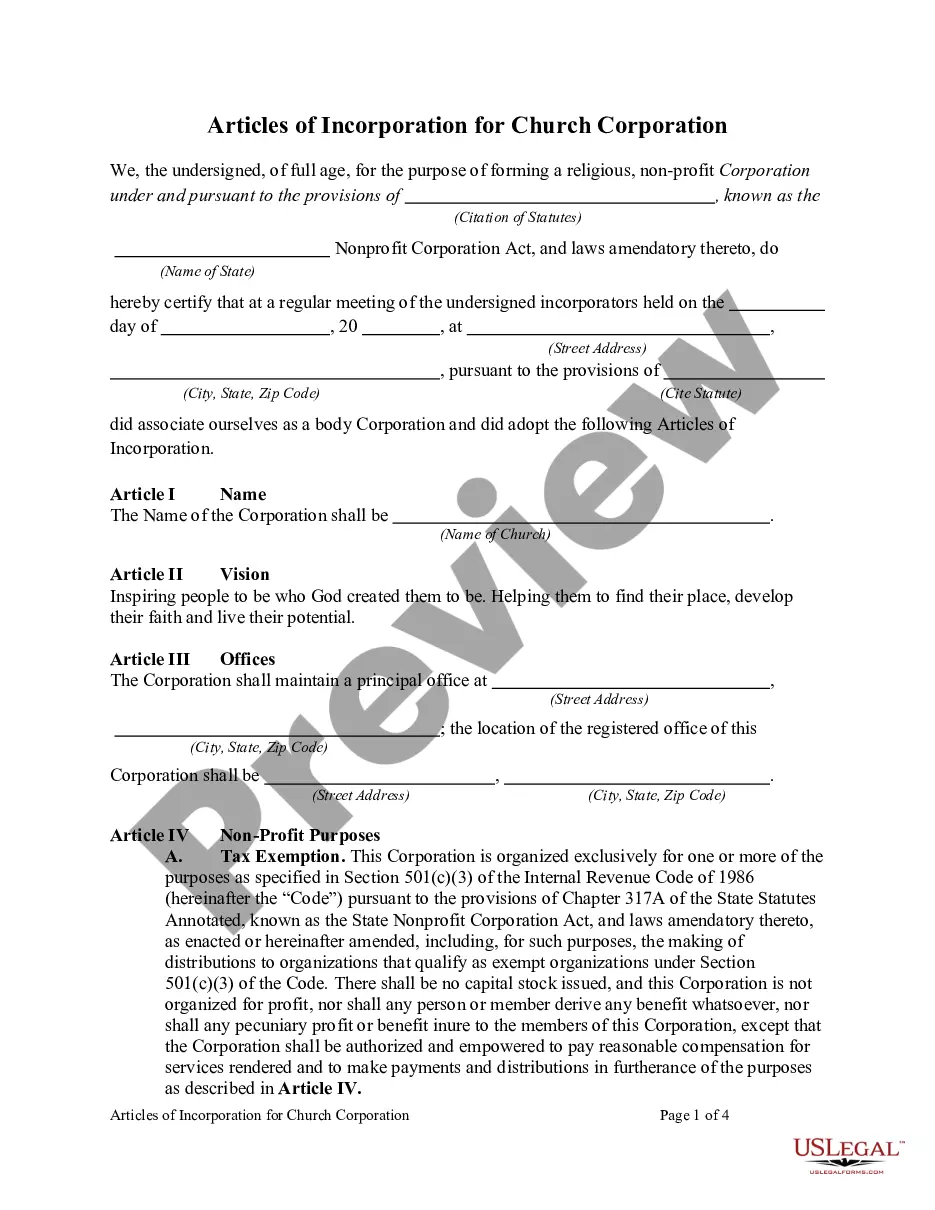
How to fill out Articles Of Incorporation For Non-Profit Organization, With Tax Provisions?
Managing legal documents can be daunting, even for seasoned experts.
If you are looking for Articles Non Profit Organization For Education and lack the time to find the right and current version, the tasks may become arduous.
- A comprehensive web form directory could be transformative for anyone aiming to address these challenges efficiently.
- US Legal Forms is a frontrunner in online legal documentation, offering over 85,000 state-specific legal forms available to you at any time.
- With US Legal Forms, you can access localized legal and business documents.
Form popularity
FAQ
An educational nonprofit organization primarily aims to promote learning and knowledge sharing within the community. These groups offer various programs, classes, and resources to enhance educational opportunities for people of all ages. They often rely on grants and donations to support their missions. If you're interested in starting one, check out Articles non profit organization for education for essential guidelines and resources.
The 80/20 rule, often applied in nonprofits, suggests that 80% of the results come from 20% of the efforts. This means that a small portion of your activities will likely produce the majority of your impact. For organizations focused on education, understanding this rule can help allocate resources efficiently. You can explore Articles non profit organization for education to learn how best practices can maximize your effectiveness.
An example of a 501(c)(3) educational organization could be a charity that offers scholarships to students pursuing higher education. These organizations not only promote learning but also empower individuals from diverse backgrounds to achieve their academic goals. Such organizations benefit greatly from having well-drafted articles of incorporation to sustain their mission.
An example of a purpose statement in the articles of incorporation for an educational non-profit could be: 'The organization aims to provide accessible educational resources and programs to underprivileged communities.' This statement clearly expresses the organization's mission and should comply with state laws, ensuring alignment with tax-exempt requirements.
The 33% rule typically applies to non-profits regarding the allocation of funds towards charitable activities. It suggests that at least one-third of a non-profit's resources should be directed towards its core educational mission. Adhering to this guideline can strengthen the organization's credibility and help in gaining donor trust.
The 5% rule refers to the threshold at which non-profits must spend a certain percentage of their revenue on program activities, rather than administrative expenses. This ensures that funds primarily support the organization's mission. Understanding this rule is crucial for non-profits, especially educational organizations, as it impacts financial planning and reporting.
Yes, a 501(c)(3) organization must have articles of incorporation to receive tax-exempt status. These articles legally establish the organization and define its purpose, which in this case, should align with educational objectives. Without properly filed articles, your non-profit may face challenges in obtaining and maintaining its tax-exempt status.
Typically, the founder or a designated member of the non-profit organization prepares the articles of incorporation. It is essential that the person understands the organization's mission and legal requirements. For added convenience, consider utilizing services from US Legal Forms, which can guide you through the necessary steps.
To write articles of incorporation for a non-profit organization for education, you need to outline the organization's name, purpose, and address. Additionally, you should include details about the board of directors and the registered agent. Make sure your articles comply with state requirements, which can vary, and consider using a platform like US Legal Forms to simplify the process.
You can request donations for schools through various channels such as community events, social media campaigns, and alumni networks. Engaging local businesses and hosting fundraising activities also proves effective in gathering support. Make sure to communicate your school's mission clearly to inspire potential donors. For guidance on crafting persuasive donation requests, our platform provides comprehensive articles non-profit organizations for education that help strengthen your outreach efforts.