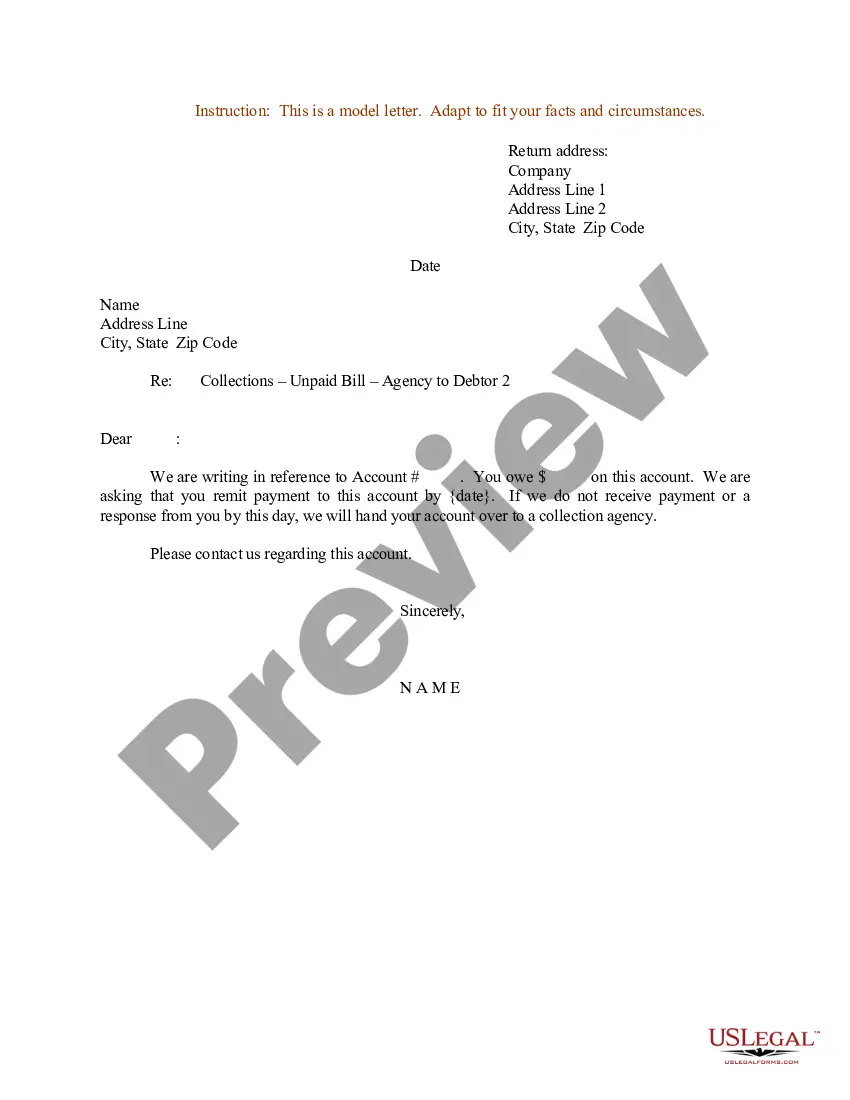
Bill For Collection
Description
Get your form ready online
Our built-in tools help you complete, sign, share, and store your documents in one place.
Make edits, fill in missing information, and update formatting in US Legal Forms—just like you would in MS Word.
Download a copy, print it, send it by email, or mail it via USPS—whatever works best for your next step.
Sign and collect signatures with our SignNow integration. Send to multiple recipients, set reminders, and more. Go Premium to unlock E-Sign.
If this form requires notarization, complete it online through a secure video call—no need to meet a notary in person or wait for an appointment.
We protect your documents and personal data by following strict security and privacy standards.

Make edits, fill in missing information, and update formatting in US Legal Forms—just like you would in MS Word.

Download a copy, print it, send it by email, or mail it via USPS—whatever works best for your next step.

Sign and collect signatures with our SignNow integration. Send to multiple recipients, set reminders, and more. Go Premium to unlock E-Sign.

If this form requires notarization, complete it online through a secure video call—no need to meet a notary in person or wait for an appointment.

We protect your documents and personal data by following strict security and privacy standards.
Looking for another form?
How to fill out Sample Letter For Collection Notice For Unpaid Bill?
- Visit the US Legal Forms website and log into your account if you’re a returning user. Ensure your subscription is active; renew it if necessary.
- For first-time users, browse the extensive library. Check the Preview mode and ensure the form meets your state’s requirements before proceeding.
- If the desired form isn’t suitable, utilize the Search tab to find an appropriate template that aligns with your billing needs.
- Once you find the correct document, click on the Buy Now button and select your preferred subscription plan. You’ll need to create an account if you’re new.
- Complete your purchase by entering your payment details. You can use a credit card or PayPal to finalize your transaction.
- Finally, download your document to your device. Access it anytime from the My Forms section in your profile.
By harnessing the power of US Legal Forms, you can easily navigate your legal form requirements. With over 85,000 user-friendly templates, you ensure that your documents are both comprehensive and compliant.
Ready to simplify your legal documentation process? Visit US Legal Forms today!
Form popularity
FAQ
The 7 7 7 rule suggests that debt collectors should attempt to contact the debtor seven times within the first seven days of collection efforts. Afterward, they should wait for seven days before trying again if there is no response. This systematic approach allows for an organized method in handling a bill for collection.
The 11-word phrase to stop debt collectors is, 'I do not wish to be contacted by you again.' By stating this clearly, you can assert your rights effectively. Remember, knowing your rights can empower you while dealing with these situations.
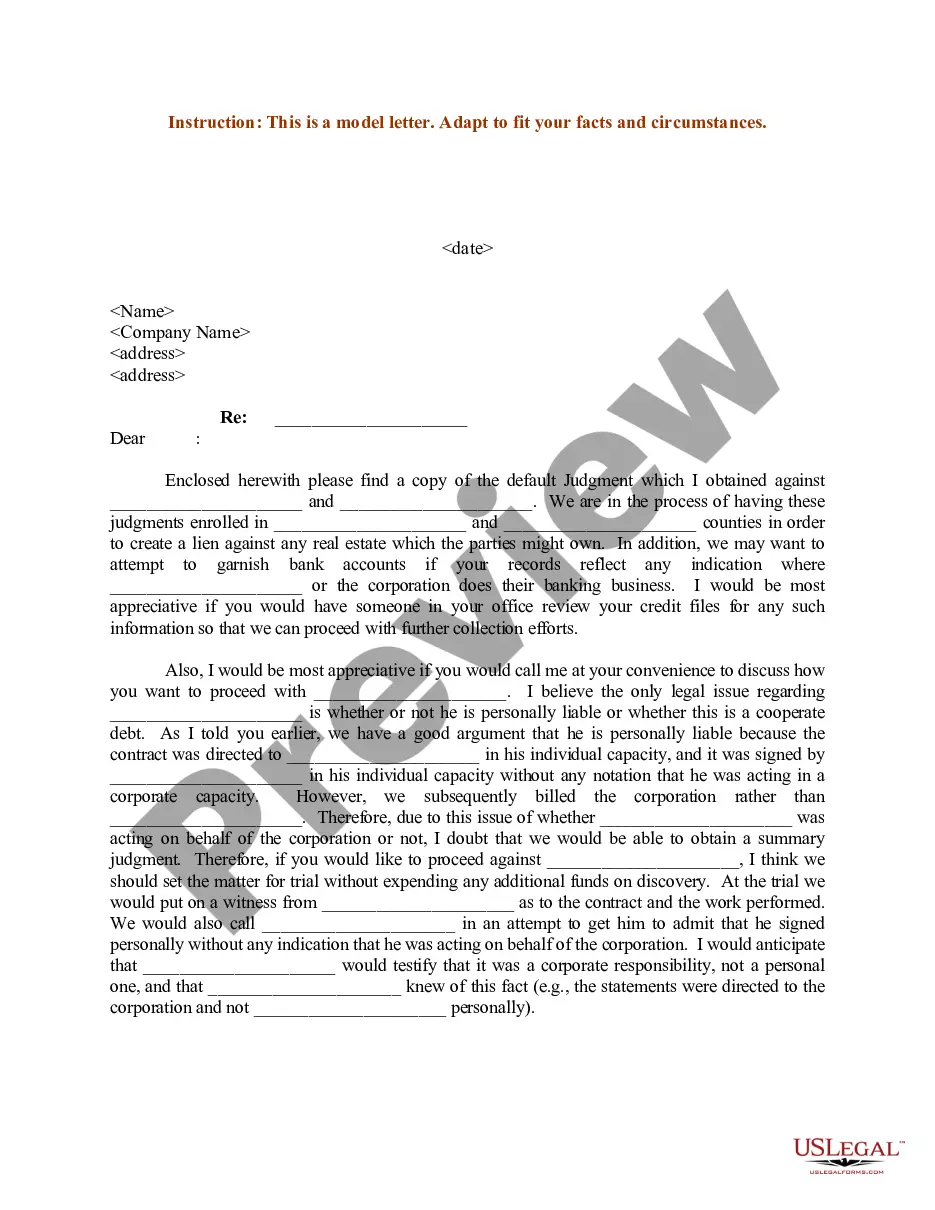
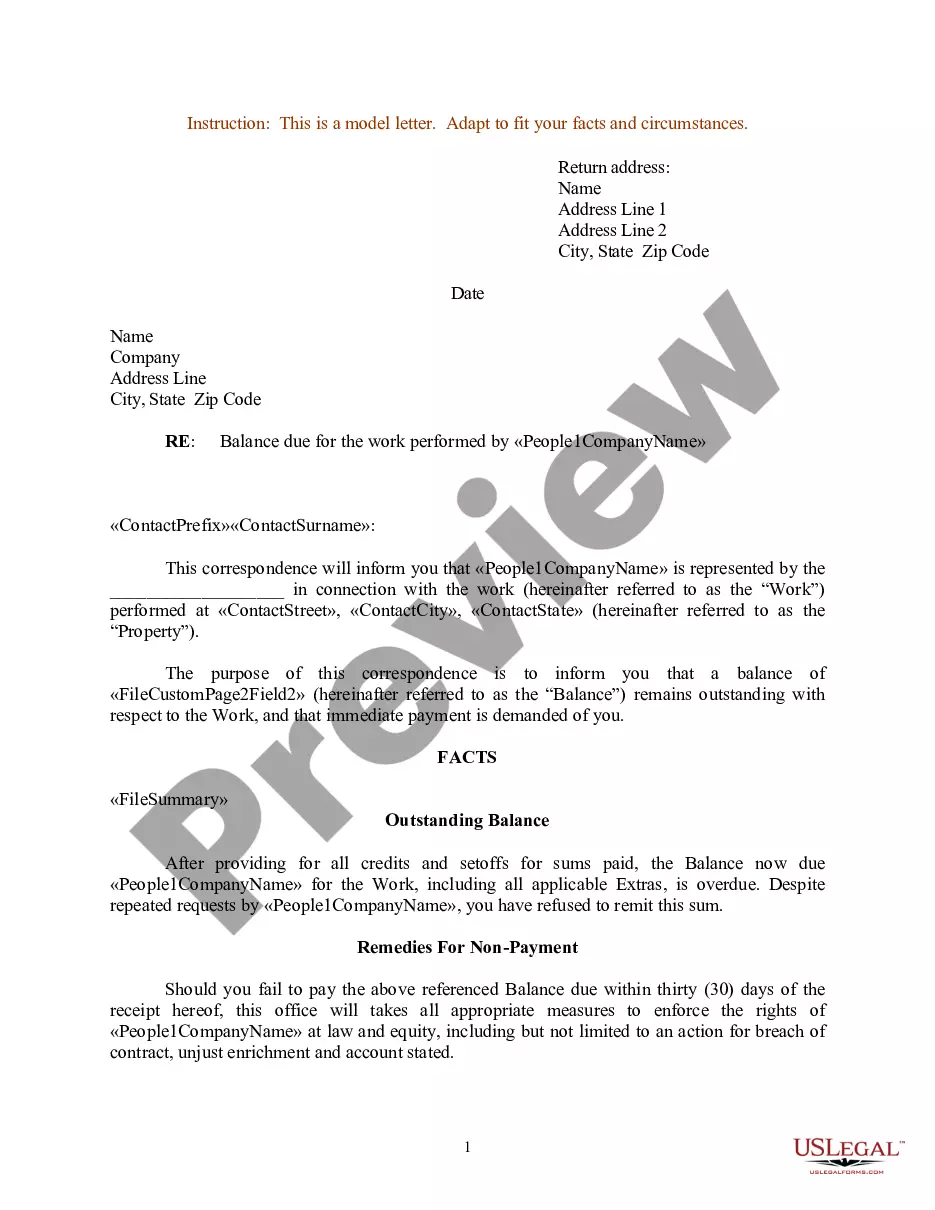
To turn a bill over to collections, you should first document all communication attempts with the debtor. Once you've exhausted your efforts, send a written notice to inform the debtor that you are sending their account for collection. Platforms like US Legal Forms can help you with templates to draft the necessary documentation efficiently.
The 7 and 7 rule refers to a guideline where a collector should wait seven days before making a follow-up contact after an initial communication regarding a bill for collection. This allows the debtor time to consider their financial situation. Following this rule helps maintain a respectful collection process, reducing the likelihood of complaints.
To write a payment collection letter, start by clearly stating the purpose of the letter regarding the bill for collection. Include essential details such as the amount owed, the due date, and any applicable fees. Make sure to provide your contact information for the debtor to reach out with questions or payment arrangements.
Debt collectors cannot use threats or intimidation tactics to collect a bill for collection. They also cannot contact you at unreasonable times, such as early in the morning or late at night, unless you agree to it. It's important to understand your rights when dealing with debt collectors to avoid harassment.
Yes, allowing bills to go to collections can have severe repercussions on your credit rating. Once a bill for collection is reported, it can impact your ability to secure loans or obtain favorable interest rates. To maintain your financial health, it’s wise to address unpaid bills before they escalate.
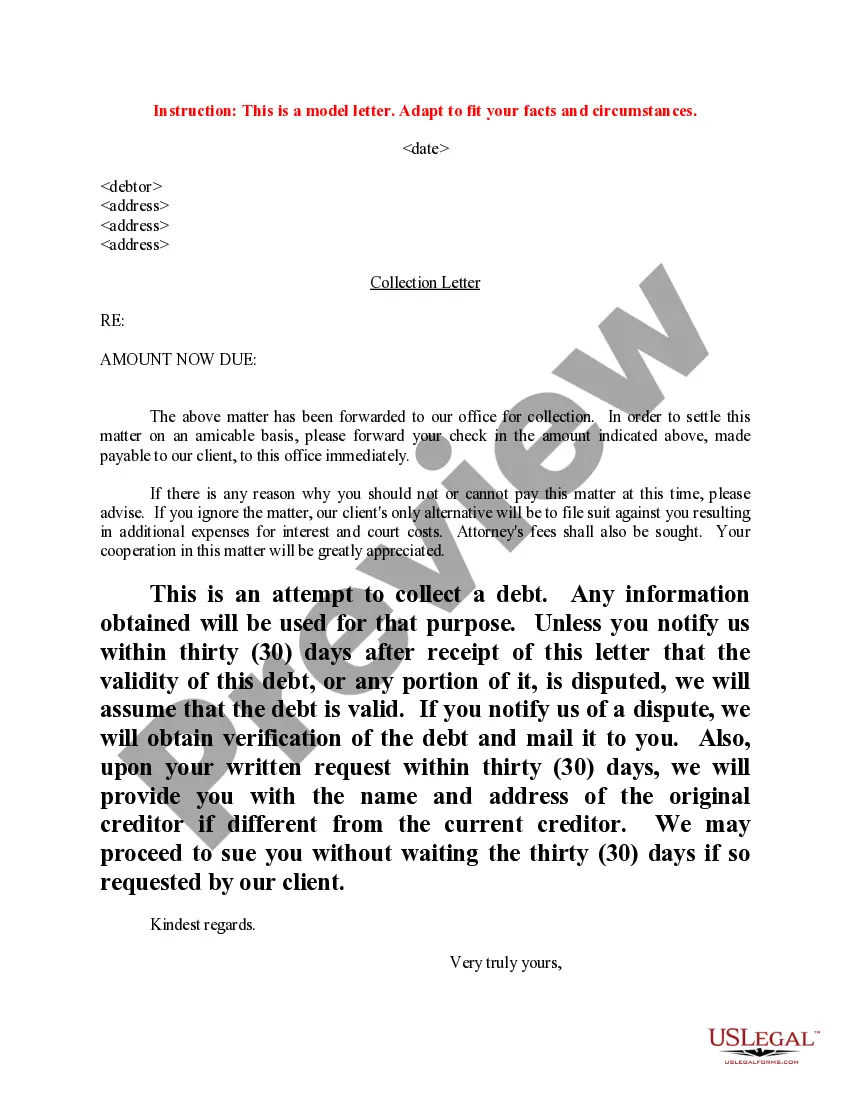
A bill of collections refers to a document that outlines the amount owed and the terms of the debt. It serves as a formal demand for payment from the debtor. Understanding a bill for collection is vital, as it highlights your financial obligations and informs you of potential consequences if the debt remains unpaid.
When your bill goes to collections, a third-party agency takes over the responsibility of recovering the unpaid amount. This can affect your credit score and lead to persistent calls or letters demanding payment. It's crucial to act promptly to resolve the debt, as a bill for collection can remain on your credit report for years.
A bill typically gets sent to collections after it remains unpaid for a specified period, usually 30 to 90 days. The original creditor usually tries to contact you multiple times before taking this step. Once a bill for collection is determined to be a lost cause, the creditor may sell it to a collections agency. Staying aware of your bills can help prevent them from reaching this stage.