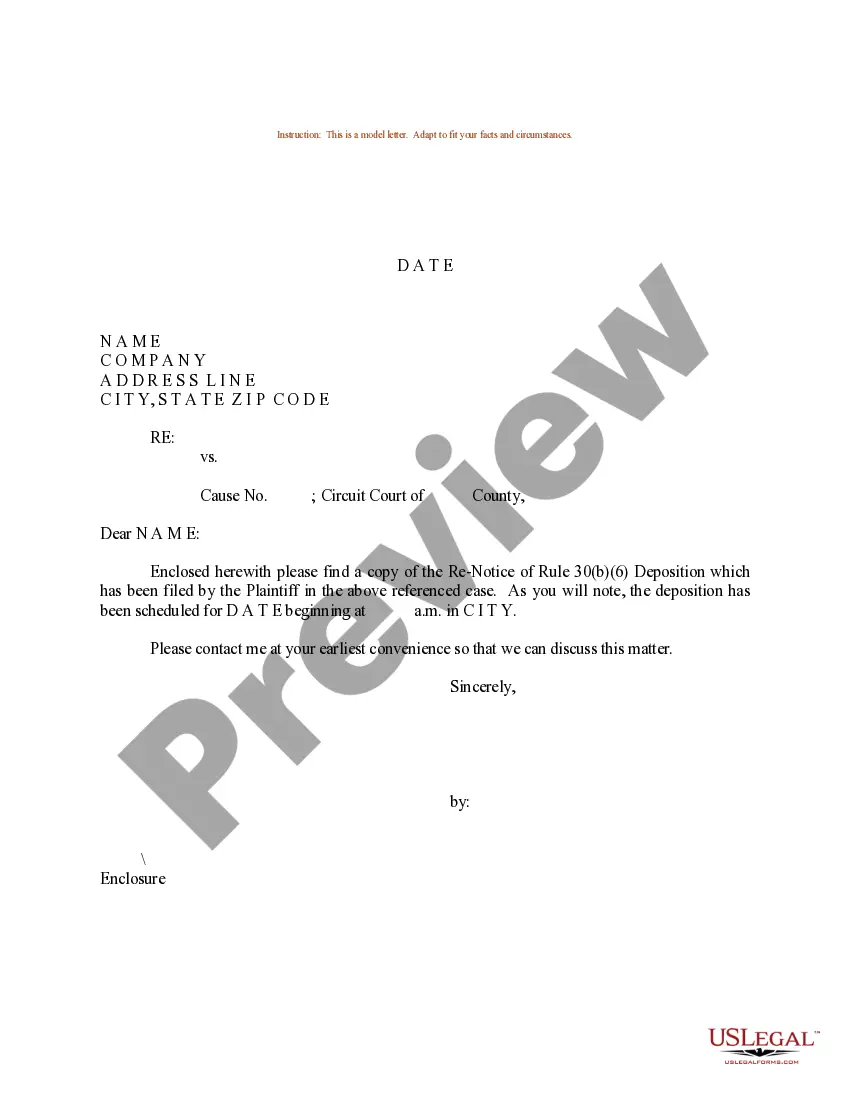
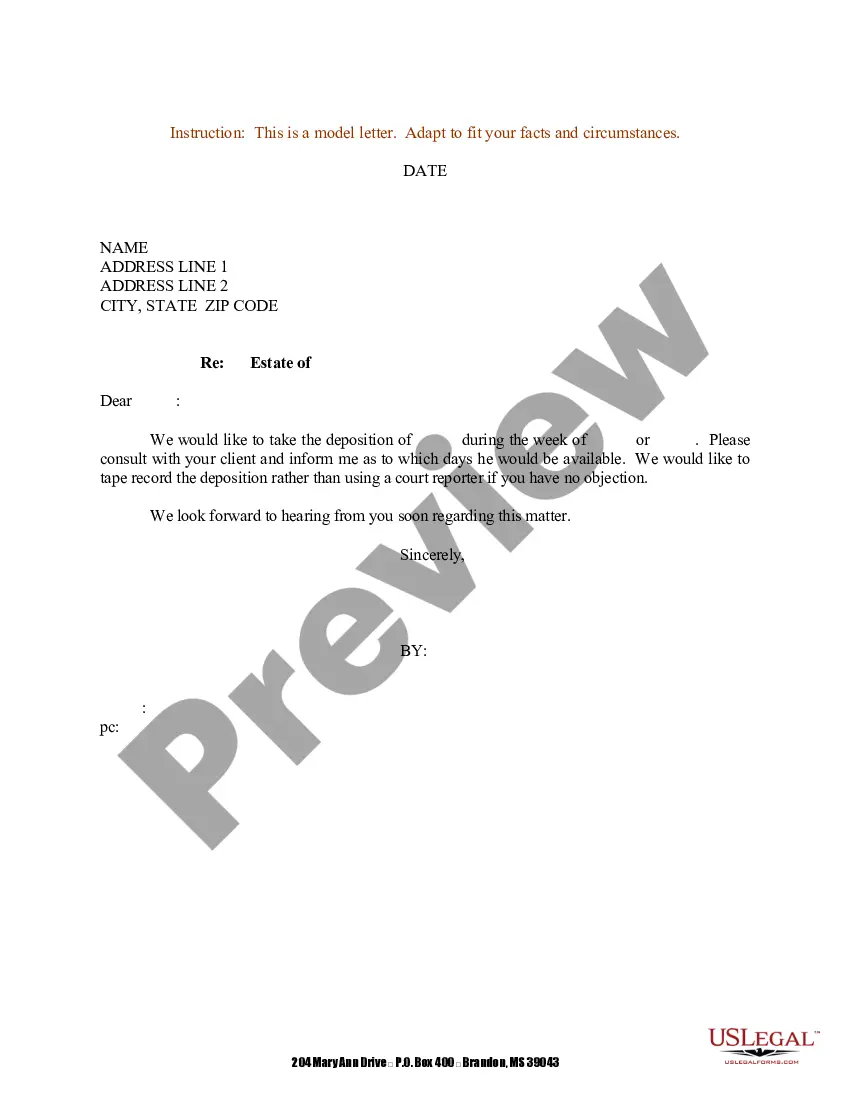
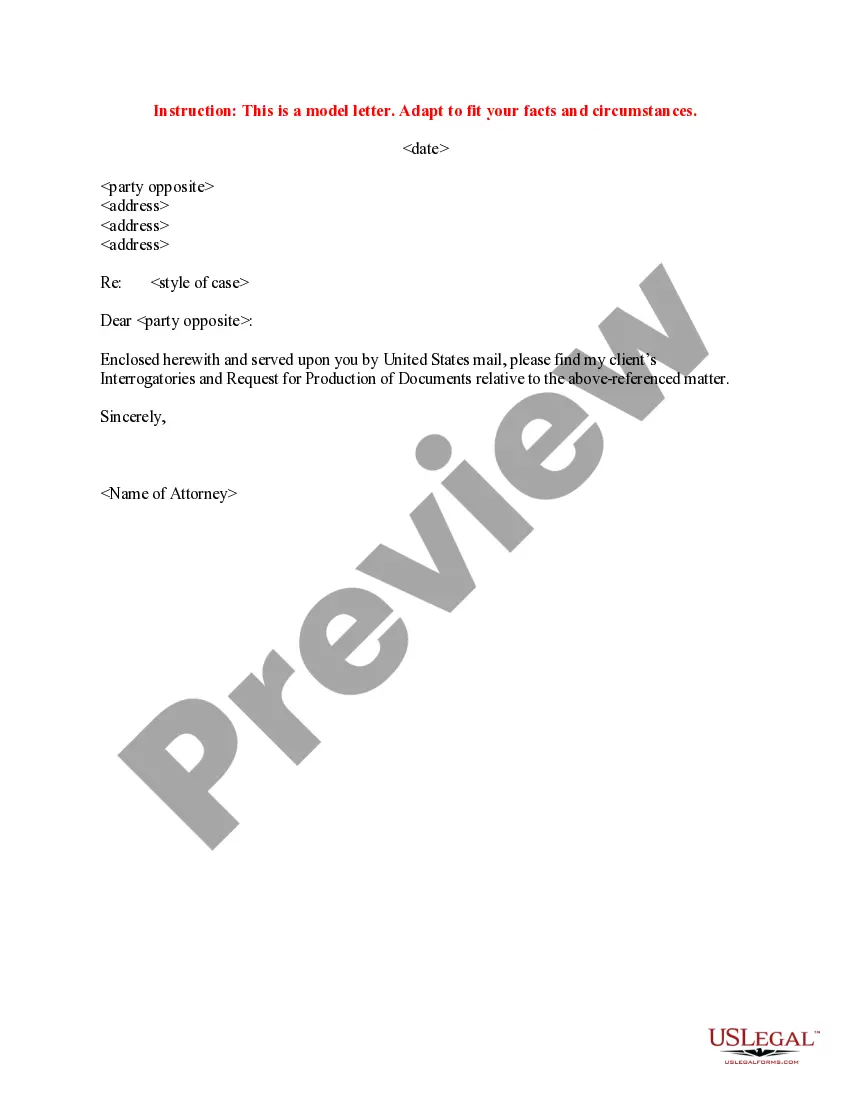
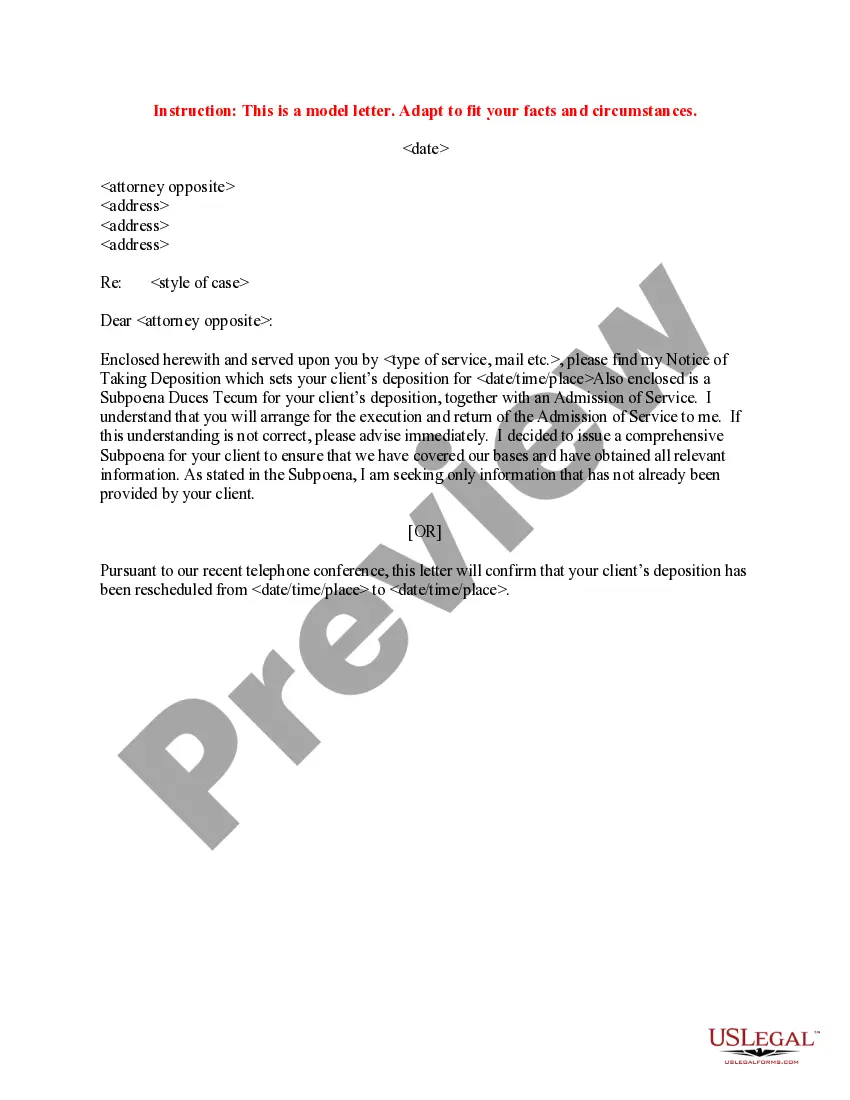
Sample Disposition Letter Without Name
Description
Get your form ready online
Our built-in tools help you complete, sign, share, and store your documents in one place.
Make edits, fill in missing information, and update formatting in US Legal Forms—just like you would in MS Word.
Download a copy, print it, send it by email, or mail it via USPS—whatever works best for your next step.
Sign and collect signatures with our SignNow integration. Send to multiple recipients, set reminders, and more. Go Premium to unlock E-Sign.
If this form requires notarization, complete it online through a secure video call—no need to meet a notary in person or wait for an appointment.
We protect your documents and personal data by following strict security and privacy standards.

Make edits, fill in missing information, and update formatting in US Legal Forms—just like you would in MS Word.

Download a copy, print it, send it by email, or mail it via USPS—whatever works best for your next step.

Sign and collect signatures with our SignNow integration. Send to multiple recipients, set reminders, and more. Go Premium to unlock E-Sign.

If this form requires notarization, complete it online through a secure video call—no need to meet a notary in person or wait for an appointment.

We protect your documents and personal data by following strict security and privacy standards.
Looking for another form?
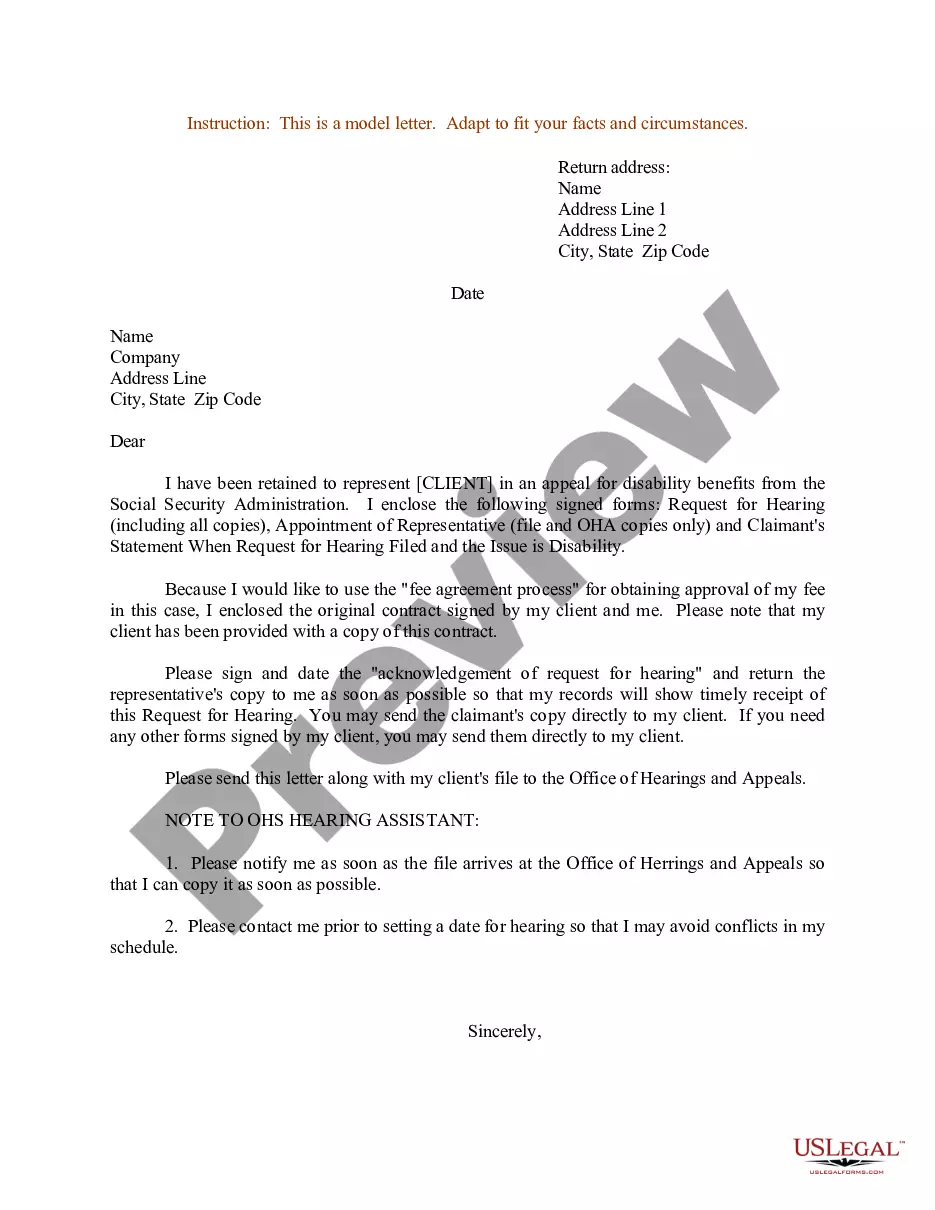
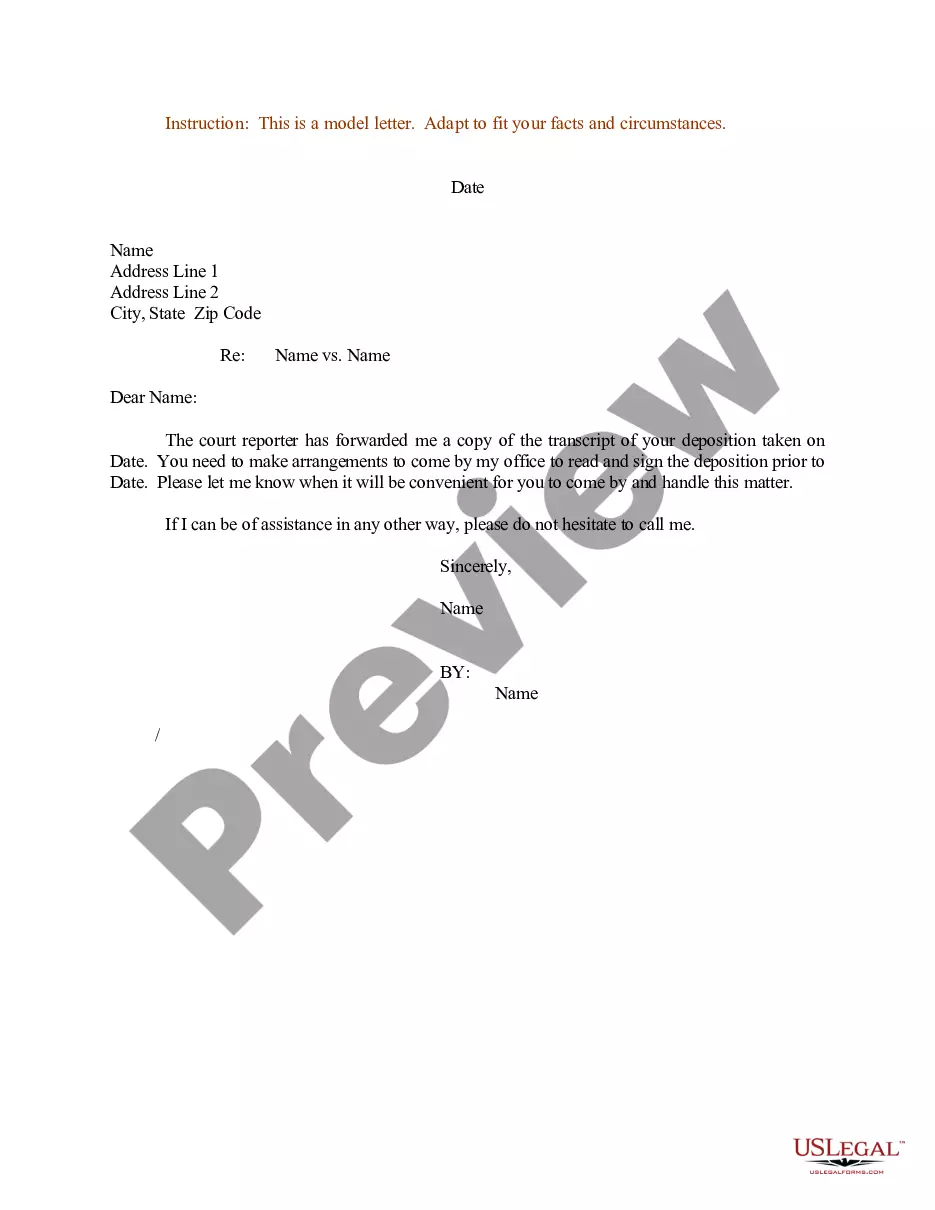
How to fill out Sample Letter Regarding Notice Of Deposition - Discovery?
Creating legal documents from the ground up can occasionally be daunting.
Certain situations may require extensive research and significant financial investment.
If you’re seeking a simpler and more cost-effective method of crafting Sample Disposition Letter Without Name or any other documents without unnecessary complications, US Legal Forms is always available to assist you.
Our online database of over 85,000 current legal forms covers nearly every facet of your financial, legal, and personal needs.
Before diving into downloading the Sample Disposition Letter Without Name, consider these suggestions: Review the form preview and descriptions to ensure it matches what you need. Verify that the template you select meets your state and county requirements. Choose the appropriate subscription plan to purchase the Sample Disposition Letter Without Name. Download the document, then complete, sign, and print it. US Legal Forms has a solid reputation and over 25 years of experience. Join us today and make form completion effortless and efficient!
- With a few simple clicks, you can swiftly access state- and county-specific templates meticulously created by our legal experts.
- Utilize our platform whenever you require dependable and trustworthy services to quickly locate and download the Sample Disposition Letter Without Name.
- If you’re familiar with our website and have previously created an account, just Log In, select the form, and download it or access it later in the My documents section.
- Not registered? No problem.
- Setting up an account takes minimal time, allowing you to explore the library.
Form popularity
FAQ
To obtain a disposition letter, you can contact the court that handled your case. Typically, you will need to provide details like your case number and personal information for verification. Alternatively, platforms like USLegalForms offer templates and guidance for creating a sample disposition letter without name, making the process easier for you. This can save you time and ensure you have the correct format for your needs.
When writing a letter to a judge without a specific name, use a formal greeting such as 'Dear Honorable Judge' followed by their title or position. This approach shows respect and maintains the appropriate level of formality. If you are unsure about the judge's title, you can always refer to them as 'The Honorable Court.' Using a sample disposition letter without name can also guide you in structuring your letter correctly.
When addressing a legal letter without a name, you can use a generic salutation such as 'To Whom It May Concern' or 'Dear Sir or Madam.' This maintains professionalism while still allowing you to communicate your message. If addressing a specific legal matter, ensure that the content is clear and precise. Using a sample disposition letter without name can provide you with a helpful structure for your correspondence.
To address a letter to a judge, begin with the appropriate title, 'The Honorable Judge's Last Name.' If you do not have the judge's name, simply use 'Your Honor' as a respectful alternative. Ensure that you follow with the court's address, maintaining a professional tone throughout. A sample disposition letter without name can showcase how to format such letters correctly.
When addressing a letter to a judge without a name, use 'Your Honor' as a salutation. This approach is widely accepted and conveys respect. If necessary, you can also start with 'To Whom It May Concern' if you are unsure about the judge's identity. A sample disposition letter without name can help demonstrate this format effectively.
Writing a letter of disposition involves clearly outlining the facts related to the case and the specific disposition you are requesting. Begin with a formal greeting, followed by a detailed explanation of the circumstances. End the letter with a respectful closing. To simplify the process, you can use a sample disposition letter without name as a template.
The most respectful way to address a judge is by using their title, such as 'Your Honor.' If you are unsure about the judge's name, simply use 'Your Honor' throughout the letter. This maintains professionalism and respect in your correspondence. Consider consulting a sample disposition letter without name for examples of respectful address.
To write a letter to a judge on behalf of someone, start by introducing yourself and your relationship with the individual. Clearly state the purpose of the letter and provide relevant details, ensuring the tone remains respectful and formal. Conclude by expressing your hope for the desired outcome. For a structured approach, you can refer to a sample disposition letter without name for guidance.