Liability Release Form For Horseback Riding
Description
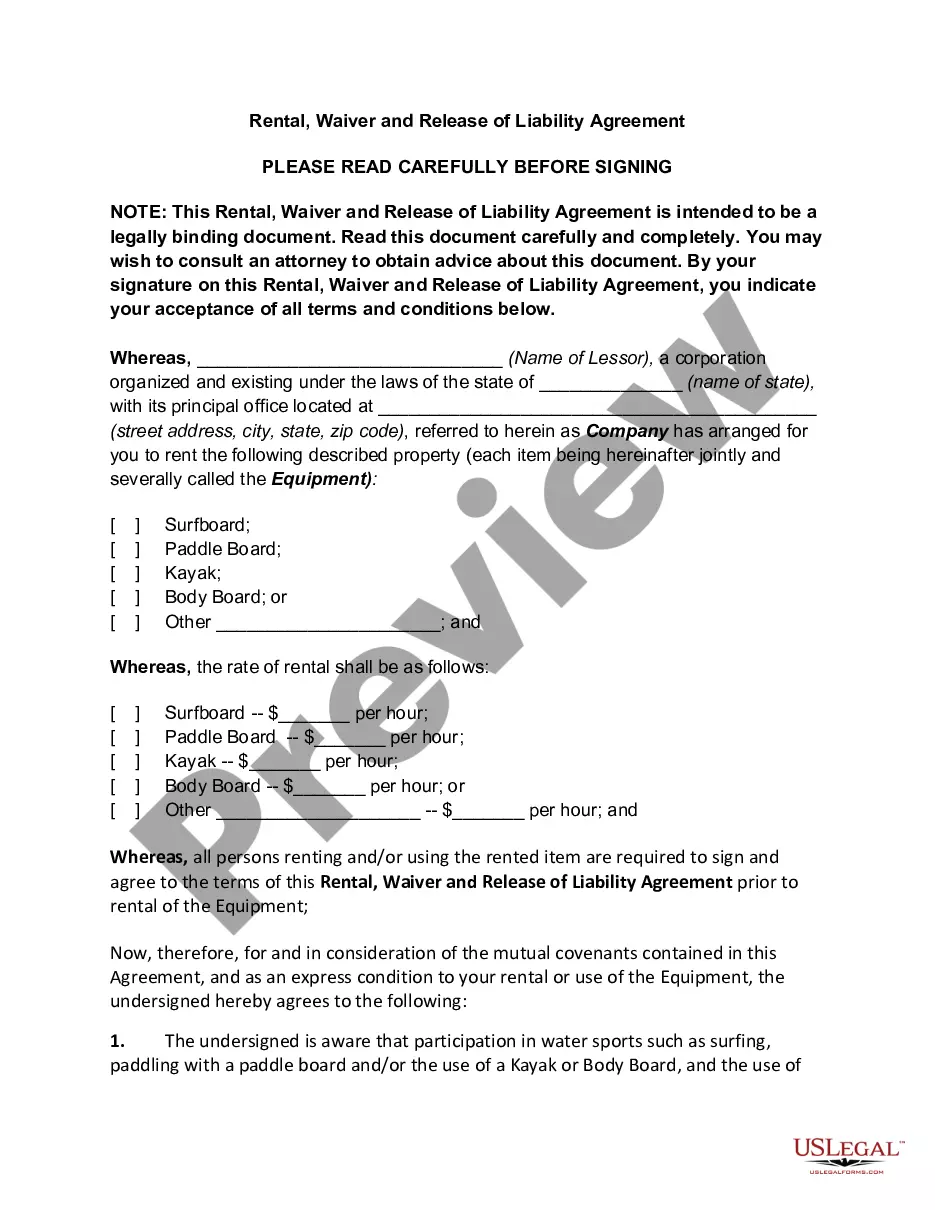
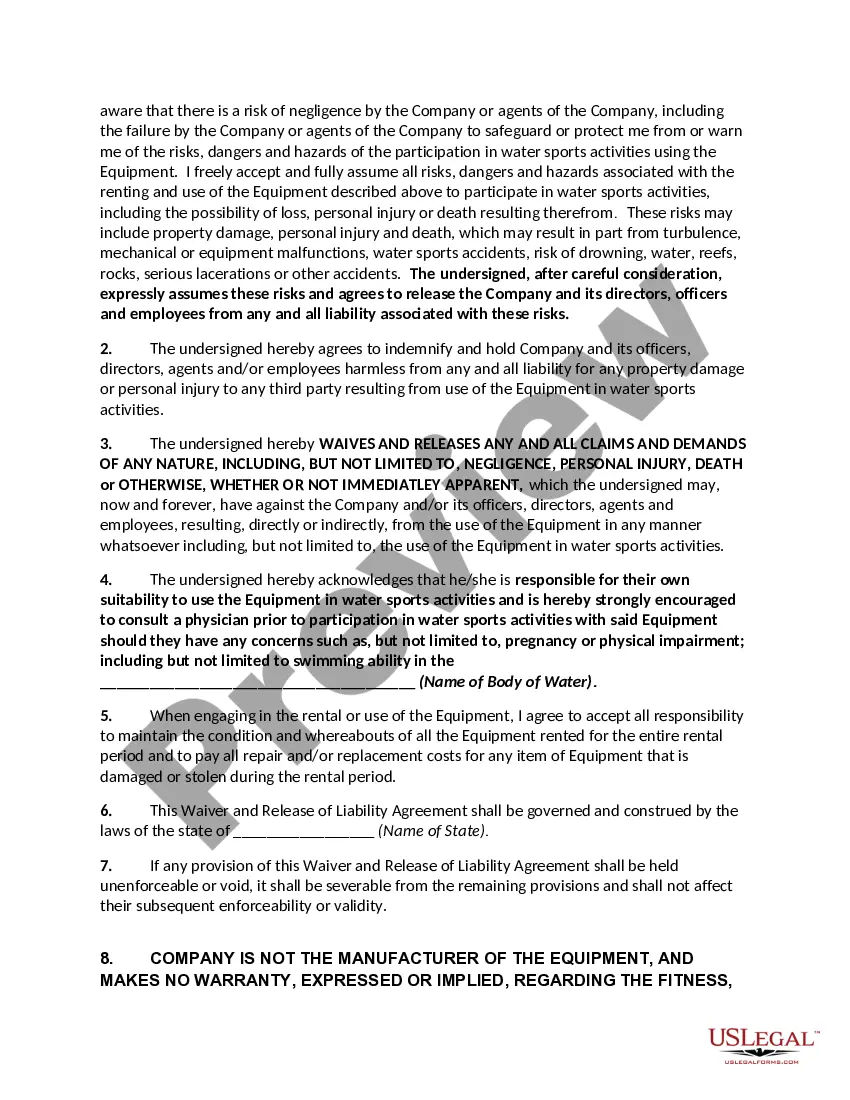


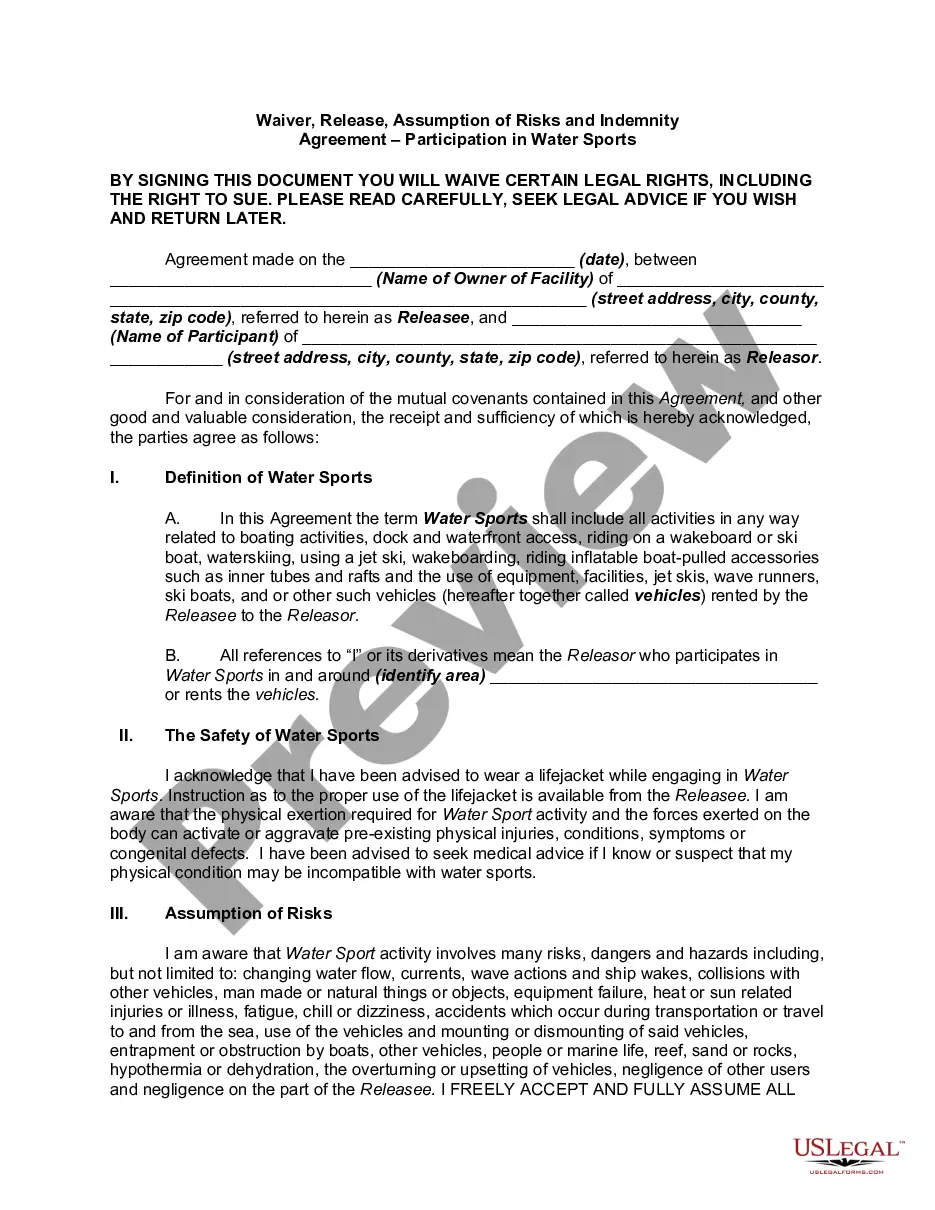

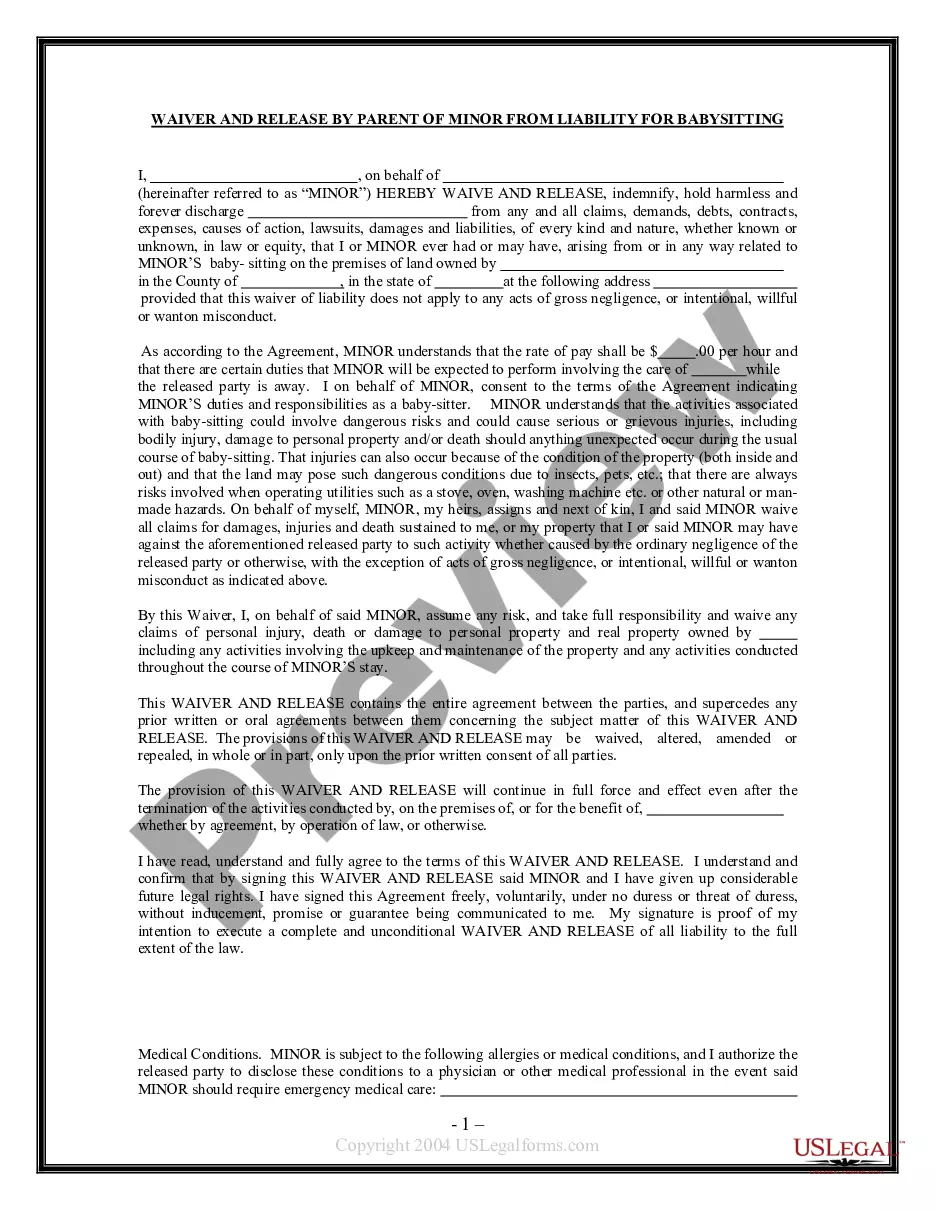
How to fill out Rental, Waiver And Release Of Liability Agreement - Water Sports Or Beach Rentals?
- Login to your existing US Legal Forms account to access your documents. Make sure your subscription is active; if not, renew it as necessary.
- If you're new to the service, start by browsing the form library. Check the preview mode and ensure that the Release Form matches your local requirements.
- If you need a different template, utilize the search function to find the appropriate form that addresses your specific needs.
- Select the document you wish to purchase by clicking the Buy Now button and choosing a subscription plan that works for you.
- Complete the payment process by entering your payment information or using a PayPal account.
- Download your liability release form and save it to your device. You can also access it later in the My Forms section of your profile.
Following these steps will ensure you have the right liability release form for horseback riding, ultimately providing peace of mind for both riders and horse owners.
Start your journey with US Legal Forms today and experience the benefits of a comprehensive legal document library at your fingertips!
Form popularity
FAQ
Creating a liability release form involves drafting a document that outlines the risks associated with horseback riding while requiring participants to acknowledge these risks. You can use platforms like USLegalForms, which provide templates for liability release forms for horseback riding. Utilizing a well-structured liability release form enhances safety and protects you from potential legal issues.
The 10% rule for horses indicates that a rider should only increase their horse's workload by 10% at a time to avoid injuries. This gradual increase allows horses to build their strength and stamina safely. Creating a liability release form for horseback riding can help ensure riders acknowledge these important safety guidelines before engaging in activities.
To calculate 20% of a horse's body weight, first determine the horse's weight in pounds, and then multiply that number by 0.20. For example, if a horse weighs 1,000 pounds, 20% would be 200 pounds. Always remember, when participating in horseback riding activities, having a liability release form for horseback riding provides added protection for both riders and horse owners.
The 80/20 rule in horse riding suggests that 80% of a horse rider's success comes from 20% of their efforts, focusing mainly on proper form and effective communication with the horse. Emphasizing these key areas contributes to a more enjoyable riding experience. It's essential to ensure that a liability release form for horseback riding is in place to reinforce safety as you focus on improving your skills.
The 20% rule in horse riding refers to the recommendation that a rider should not exceed 20% of their horse's body weight when riding. This ensures the horse remains balanced and healthy, making for a safer riding experience. Using a liability release form for horseback riding can help clarify the responsibilities of both parties, ensuring that safety measures are taken seriously.
The most common injury in horseback riding is soft tissue injuries, such as sprains and strains. Riders may experience falls or unexpected movements from the horse, leading to these injuries. Having a liability release form for horseback riding can protect both riders and stables from legal claims arising from such incidents.
The proper horse riding form includes using a liability release form for horseback riding. This form protects both the rider and the stable or instructor by outlining the inherent risks associated with horseback riding. It ensures that riders acknowledge these risks and agree to release the provider from liability in case of accidents. By utilizing a well-crafted liability release form for horseback riding, you not only comply with legal requirements but also promote a safer riding environment.
A simple liability release form for horseback riding might start with a title and an introduction stating the purpose. For instance, it could say, 'I, Participant's Name, understand the risks of horseback riding and agree to release Organizer's Name from liability for any injuries I may sustain.' Including basic information about the activity and a space for the participant’s signature can complete the form. US Legal Forms provides examples and templates to make this process easier.
A liability release form for horseback riding should clearly outline the risks associated with the activity and indicate that the participant understands and accepts those risks. Additionally, it should include a statement that releases the organizer from liability for any injuries or damages. Furthermore, it’s crucial to have the participant’s signature to confirm their agreement. Using a template from resources like US Legal Forms can help you craft a comprehensive waiver.
Filling out a liability release form for horseback riding involves providing information such as participant details, the nature of the activity, and an acknowledgment of risks. Start by carefully reading each section of the waiver, then complete the necessary fields. Be sure to have all parties involved sign the document to validate it. Platforms like US Legal Forms can guide you through this process efficiently with user-friendly templates.