Domestic Partner
Description
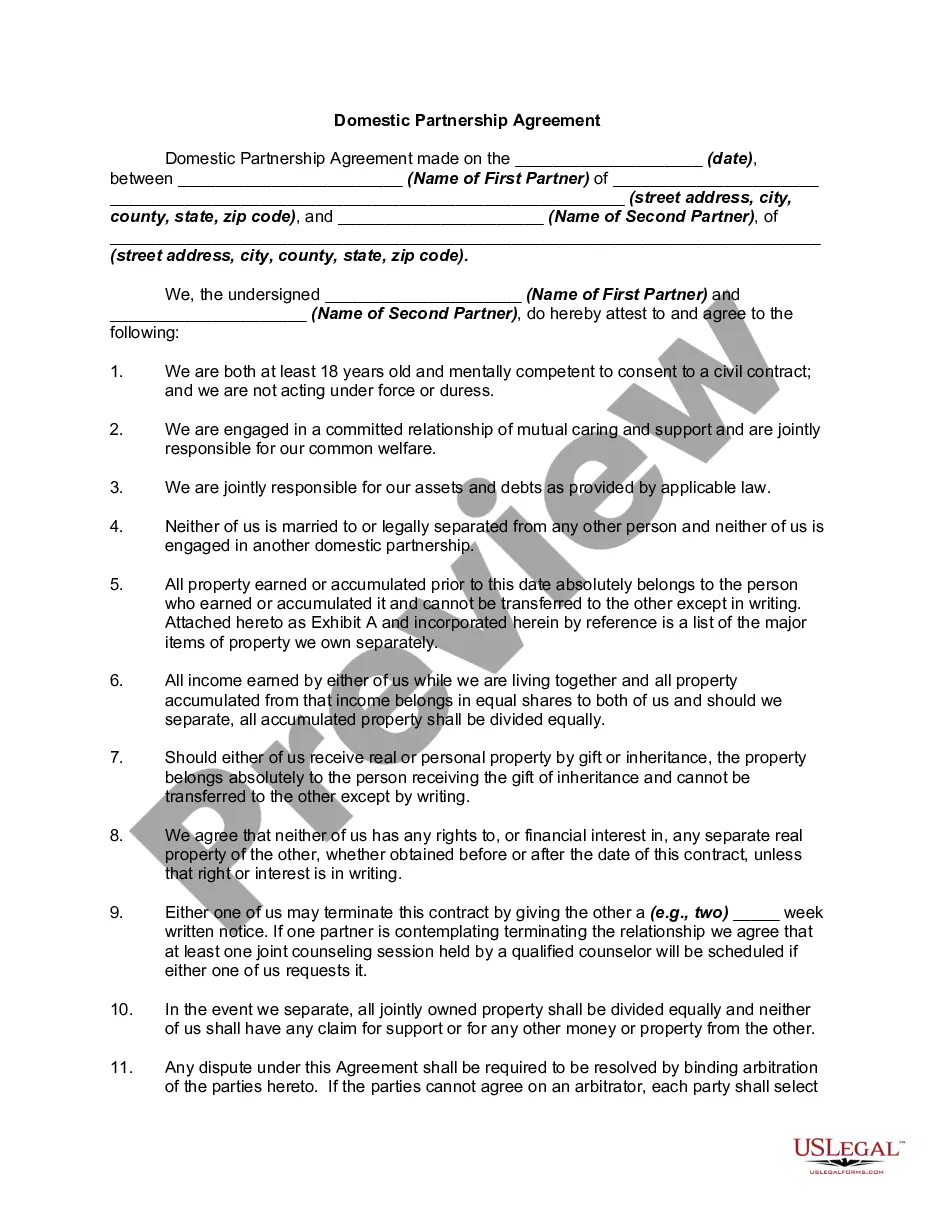
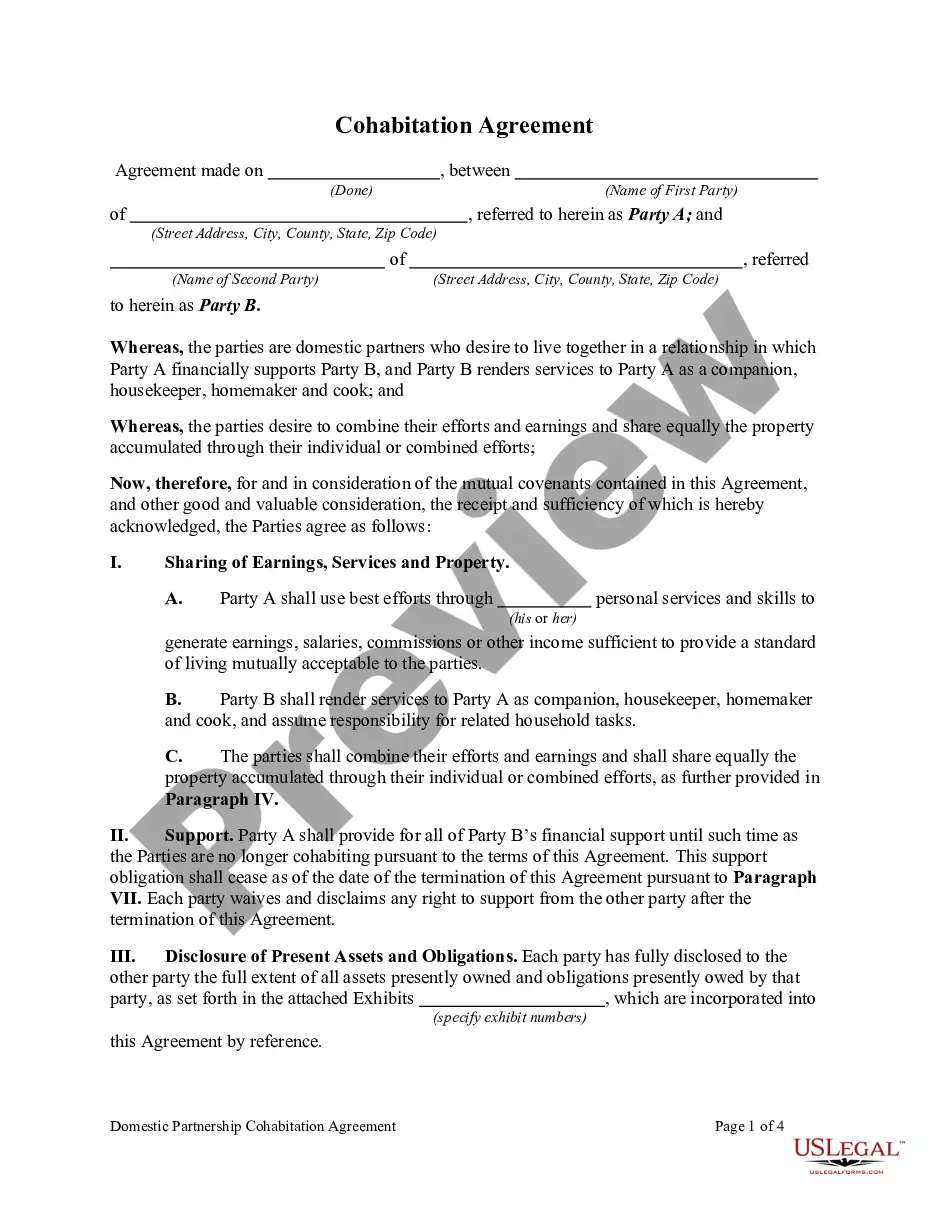
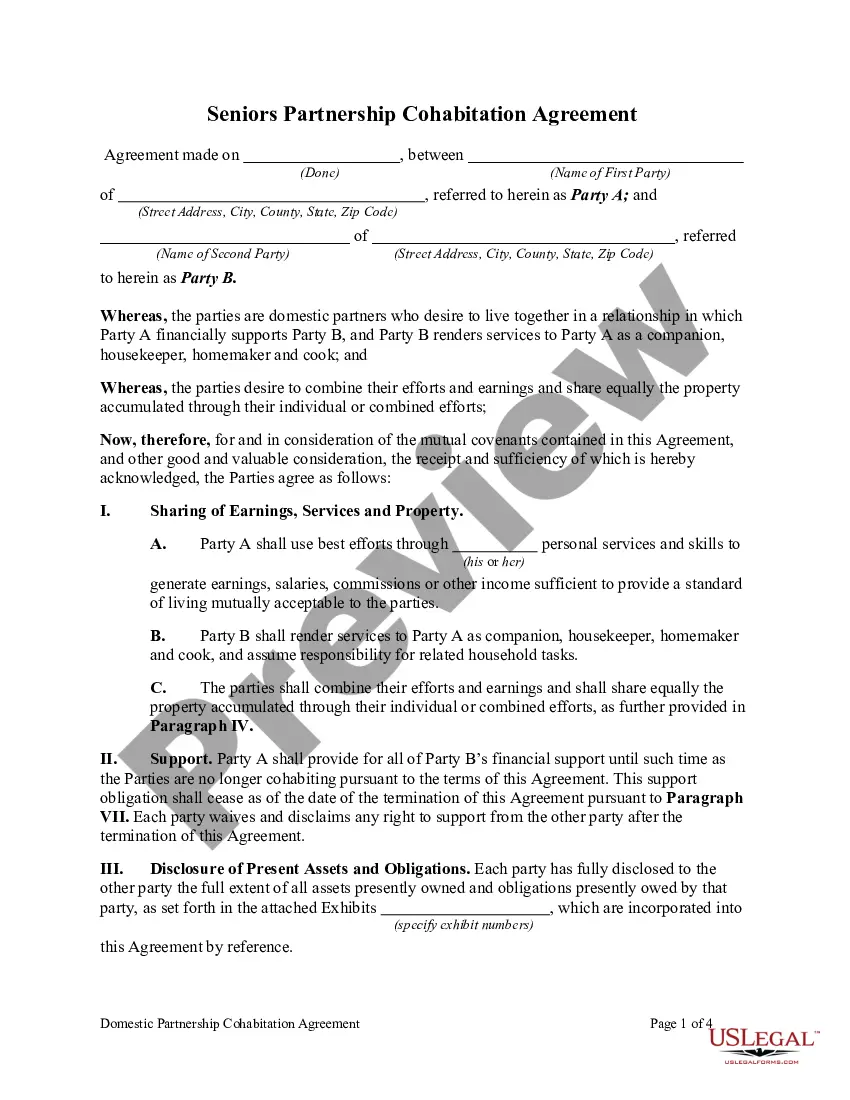
Get your form ready online
Our built-in tools help you complete, sign, share, and store your documents in one place.
Make edits, fill in missing information, and update formatting in US Legal Forms—just like you would in MS Word.
Download a copy, print it, send it by email, or mail it via USPS—whatever works best for your next step.
Sign and collect signatures with our SignNow integration. Send to multiple recipients, set reminders, and more. Go Premium to unlock E-Sign.
If this form requires notarization, complete it online through a secure video call—no need to meet a notary in person or wait for an appointment.
We protect your documents and personal data by following strict security and privacy standards.

Make edits, fill in missing information, and update formatting in US Legal Forms—just like you would in MS Word.

Download a copy, print it, send it by email, or mail it via USPS—whatever works best for your next step.

Sign and collect signatures with our SignNow integration. Send to multiple recipients, set reminders, and more. Go Premium to unlock E-Sign.

If this form requires notarization, complete it online through a secure video call—no need to meet a notary in person or wait for an appointment.

We protect your documents and personal data by following strict security and privacy standards.
Looking for another form?







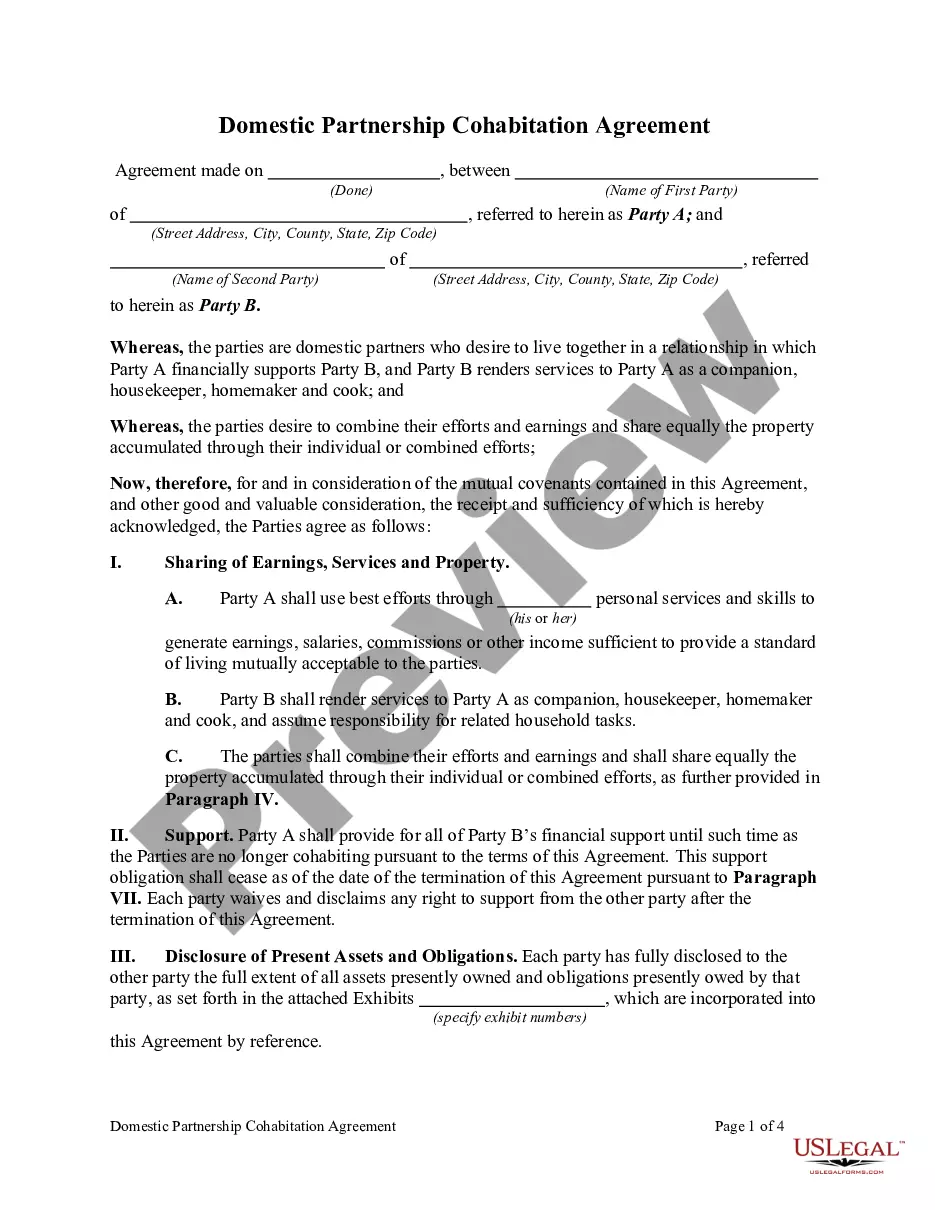
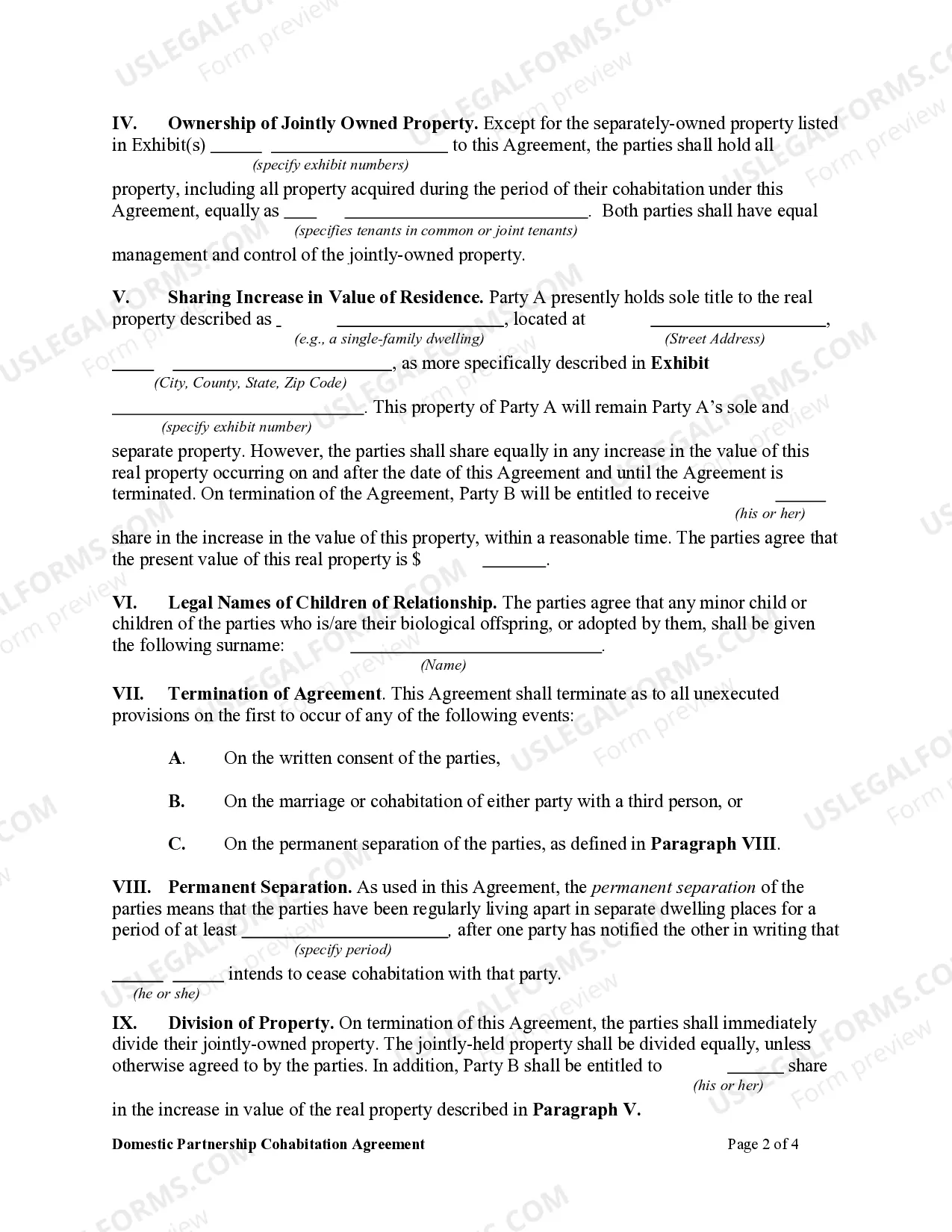
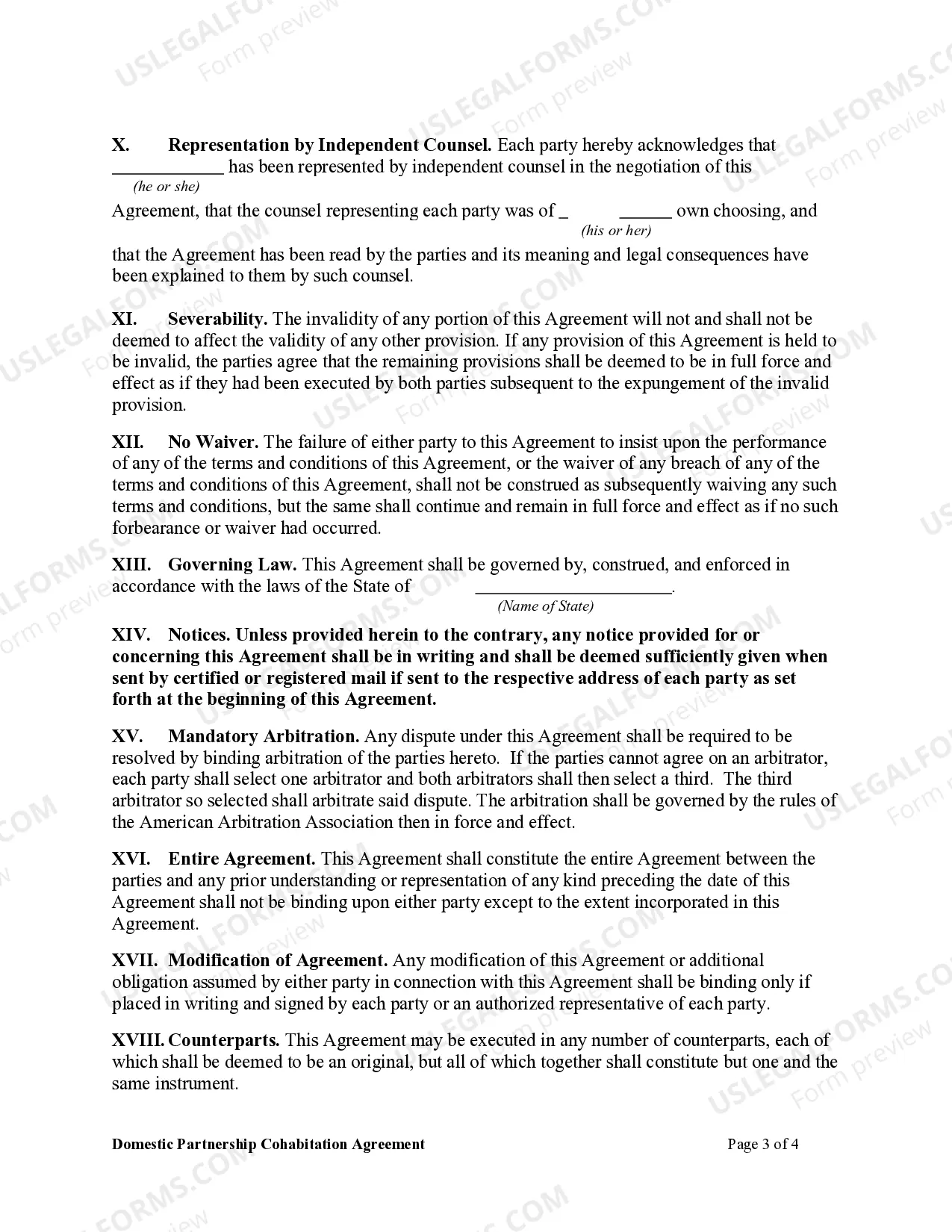
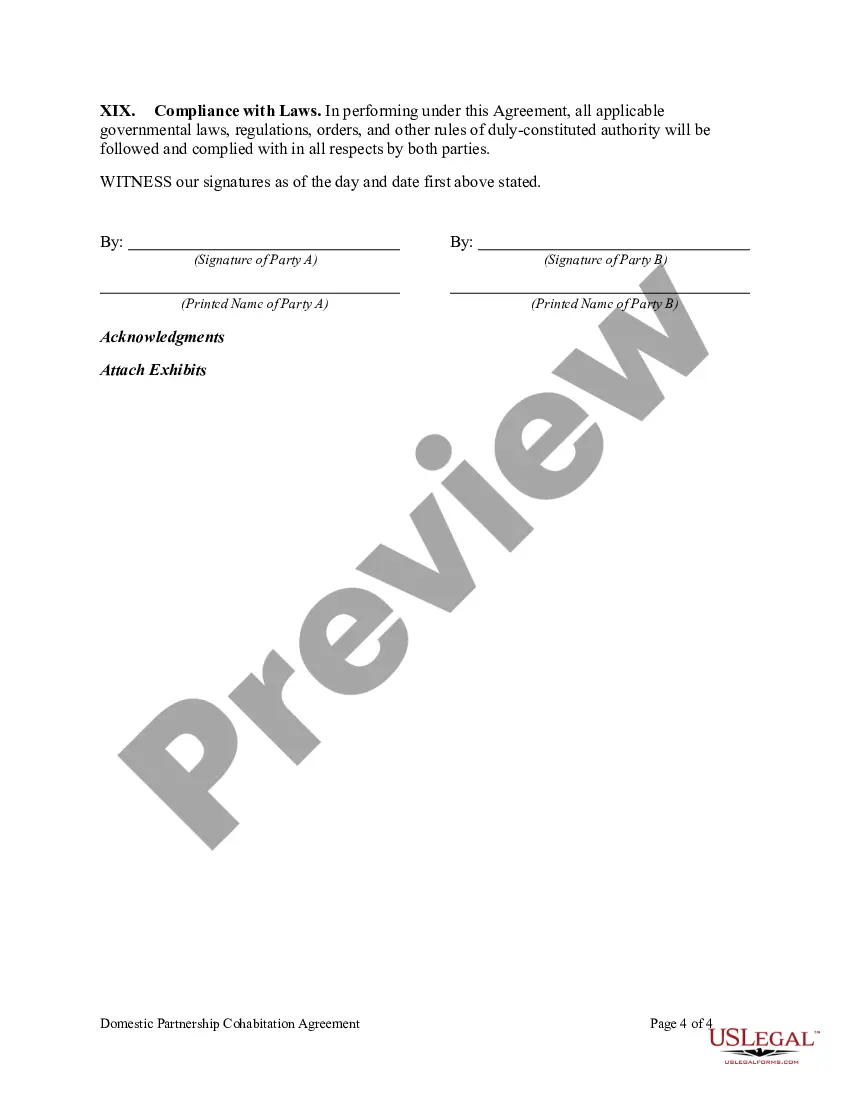
How to fill out Domestic Partnership Cohabitation Agreement?
- If you are a returning user, log into your account to access your previously purchased forms. Verify that your subscription is still active; if needed, renew it according to your chosen payment plan.
- If you are new to our service, begin by reviewing the form preview and description to confirm you selected the correct document that meets your local jurisdiction's requirements.
- Should you need a different form, utilize the Search tab to find the best fit for your situation before proceeding to the next step.
- Purchase the required document by clicking the Buy Now button. Choose a subscription plan that suits your needs, and create an account for full access to our legal library.
- Complete your transaction by entering your payment information through credit card or PayPal, ensuring a smooth purchase process.
- Lastly, download your form and save it on your device. You can access it anytime from My Forms section in your profile.
US Legal Forms offers a robust collection of legal documents, surpassing competitors with more options at an affordable cost. With over 85,000 fillable forms and access to premium experts, you can trust your documents will be accurate and comprehensive.
Start streamlining your legal document process today. Visit US Legal Forms and empower yourself with the right legal tools for your domestic partnership.
Form popularity
FAQ
To add a domestic partner to your health insurance, start by checking your employer’s policies regarding domestic partnerships. Generally, you will need to fill out a form and provide policy-required documentation, such as proof of the domestic partnership. Timely submission during open enrollment or qualifying life events is also crucial to ensure coverage begins without any issues.
Unfortunately, domestic partners are typically not recognized for coverage under federal health insurance programs. However, you may have options through private insurance plans or state benefit programs. If you are exploring coverage options, consider the information available on platforms like US Legal Forms to assist with necessary documentation.
If your girlfriend qualifies as your domestic partner, she may be eligible for inclusion in your health insurance plan. Most insurance companies require proof of your domestic partnership, along with specific documents. Before adding your girlfriend to your plan, check the regulations and eligibility criteria set by your insurer and your employer.
Yes, your domestic partner can often be added to your insurance plan, provided that your employer's policy allows it. Many companies recognize domestic partners as eligible dependents, allowing you to extend coverage. It’s best to review your employer's policies regarding domestic partners to ensure you understand the process and any documentation needed.
To file for a domestic partnership, you typically need to live together for a specified period. This duration varies by state, so it is essential to check your local laws. Generally, states require couples to live together for a minimum of 6 to 12 months. Understanding the criteria in your state can help ensure you meet the requirements for a domestic partner application.
In Illinois, domestic partners must meet specific requirements to qualify. You must be at least 18 years old, unmarried, and share a domestic life. Once registered, both partners gain certain rights, including healthcare decision-making and inheritance rights. It's important to stay informed about any changes to regulations that may affect your status as a domestic partner.
Yes, Illinois allows domestic partners to access health insurance benefits. Many employers recognize registered domestic partners in the same way they recognize spouses, which can include health coverage and other employment benefits. This acknowledgment helps domestic partners receive the necessary healthcare without facing discrimination. Make sure to check with your employer for specific policies related to domestic partnerships.
To make your boyfriend your domestic partner in Illinois, you must meet specific criteria and complete the registration process. Both of you need to be over 18, unmarried, and share a common residence. You should complete a domestic partnership application, which is available through your local government offices, then submit it along with any required fees. Once registered, you'll enjoy the benefits that come with being a domestic partner.
Yes, Illinois recognizes domestic partners. This status gives couples access to certain legal rights and responsibilities, similar to married couples. By registering as domestic partners, you and your partner can make important decisions regarding healthcare, inheritance, and other matters. This recognition is a positive step towards equality for all couples in Illinois.
Whether a boyfriend qualifies as a domestic partner depends on the nature of your relationship and local laws. If you share a committed, long-term partnership and potentially live together, he may be considered your domestic partner. Remember, legal definitions can vary by state, so it’s important to review the requirements in your area. Understanding this can help solidify your status as domestic partners.