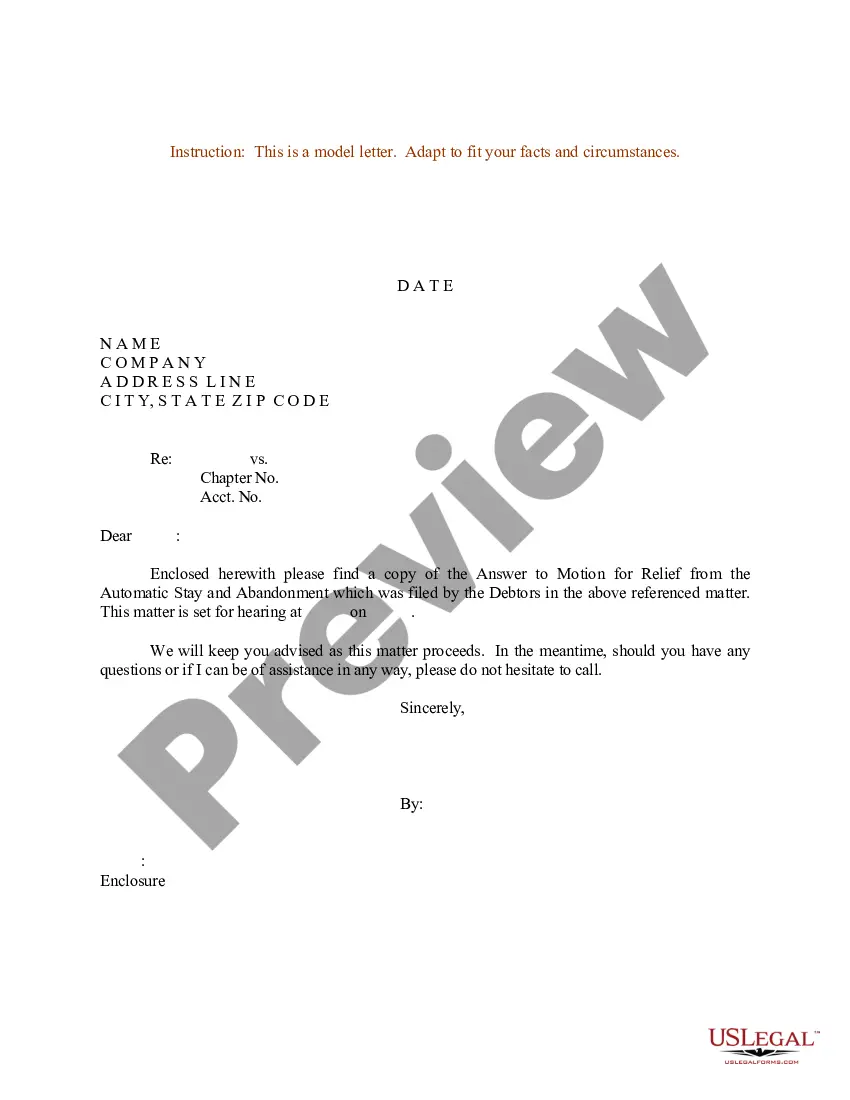
Motion For Relief From Stay With A Chapter 7
Description
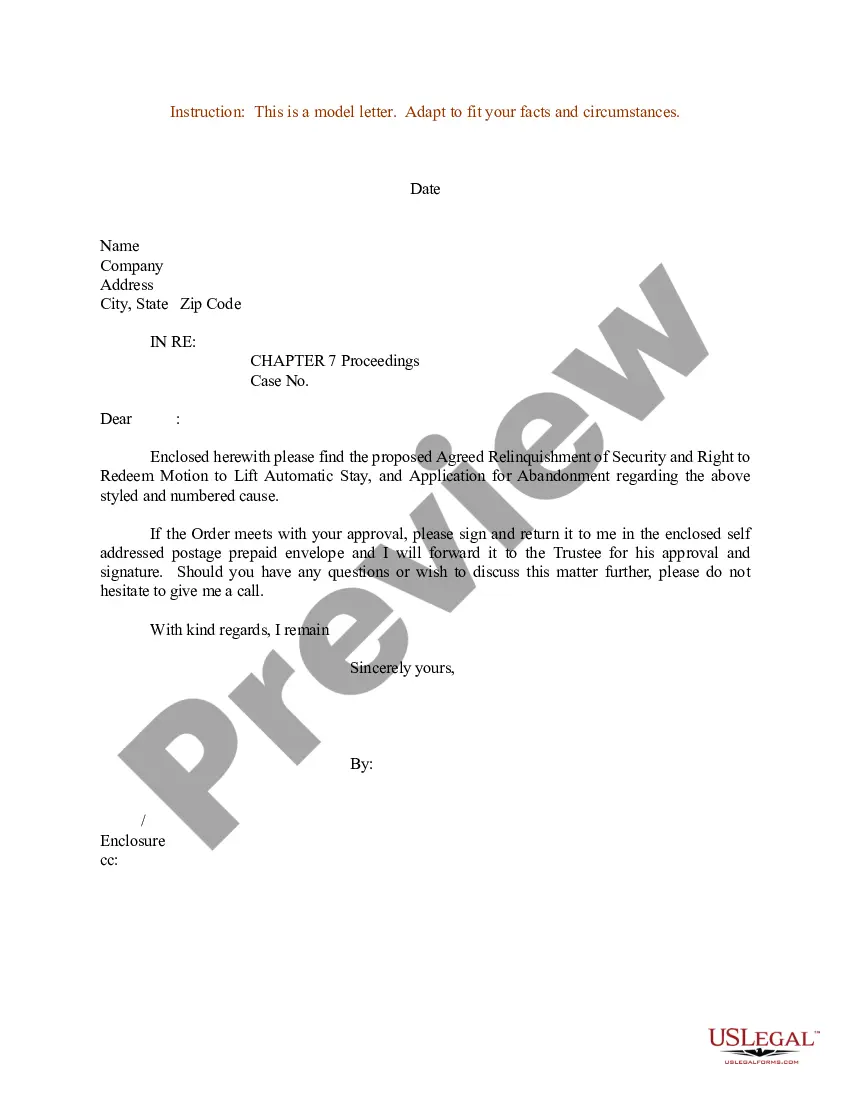
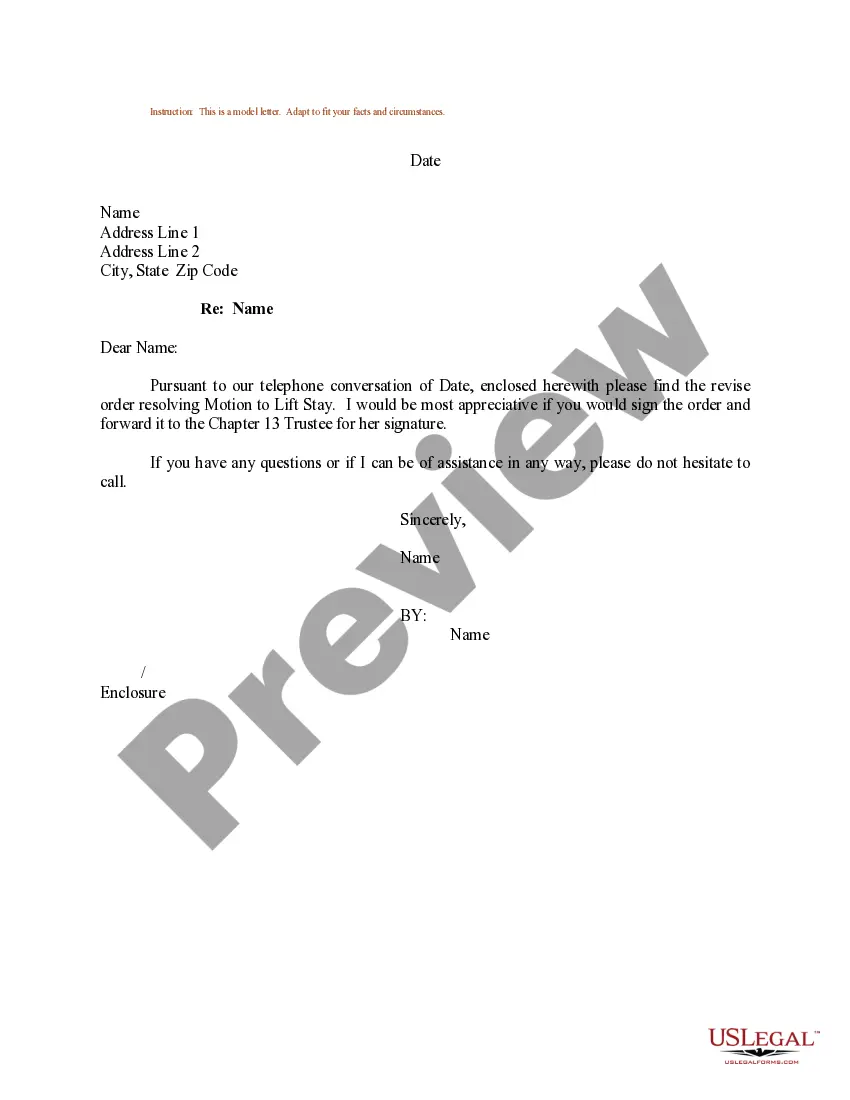
Get your form ready online
Our built-in tools help you complete, sign, share, and store your documents in one place.
Make edits, fill in missing information, and update formatting in US Legal Forms—just like you would in MS Word.
Download a copy, print it, send it by email, or mail it via USPS—whatever works best for your next step.
Sign and collect signatures with our SignNow integration. Send to multiple recipients, set reminders, and more. Go Premium to unlock E-Sign.
If this form requires notarization, complete it online through a secure video call—no need to meet a notary in person or wait for an appointment.
We protect your documents and personal data by following strict security and privacy standards.

Make edits, fill in missing information, and update formatting in US Legal Forms—just like you would in MS Word.

Download a copy, print it, send it by email, or mail it via USPS—whatever works best for your next step.

Sign and collect signatures with our SignNow integration. Send to multiple recipients, set reminders, and more. Go Premium to unlock E-Sign.

If this form requires notarization, complete it online through a secure video call—no need to meet a notary in person or wait for an appointment.

We protect your documents and personal data by following strict security and privacy standards.
Looking for another form?
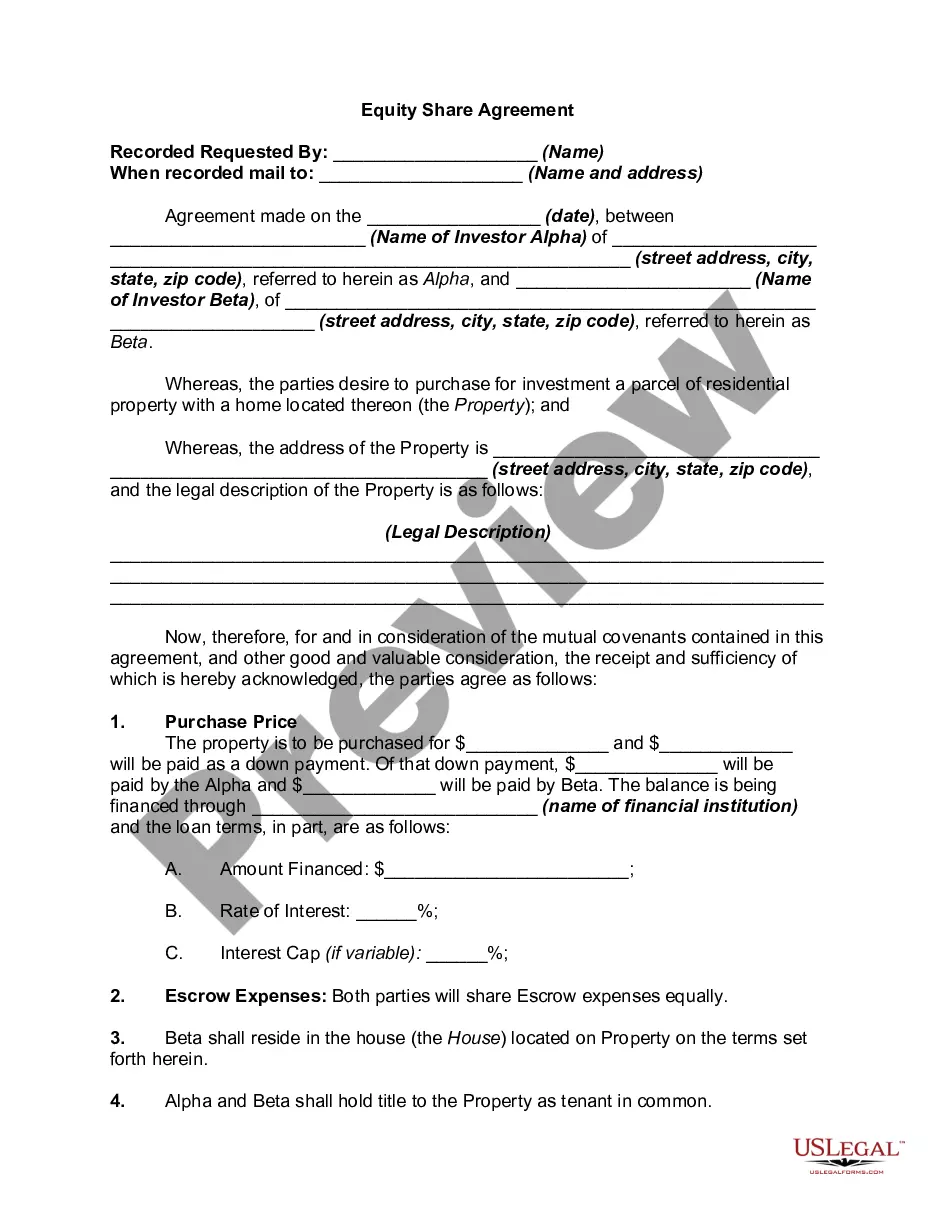
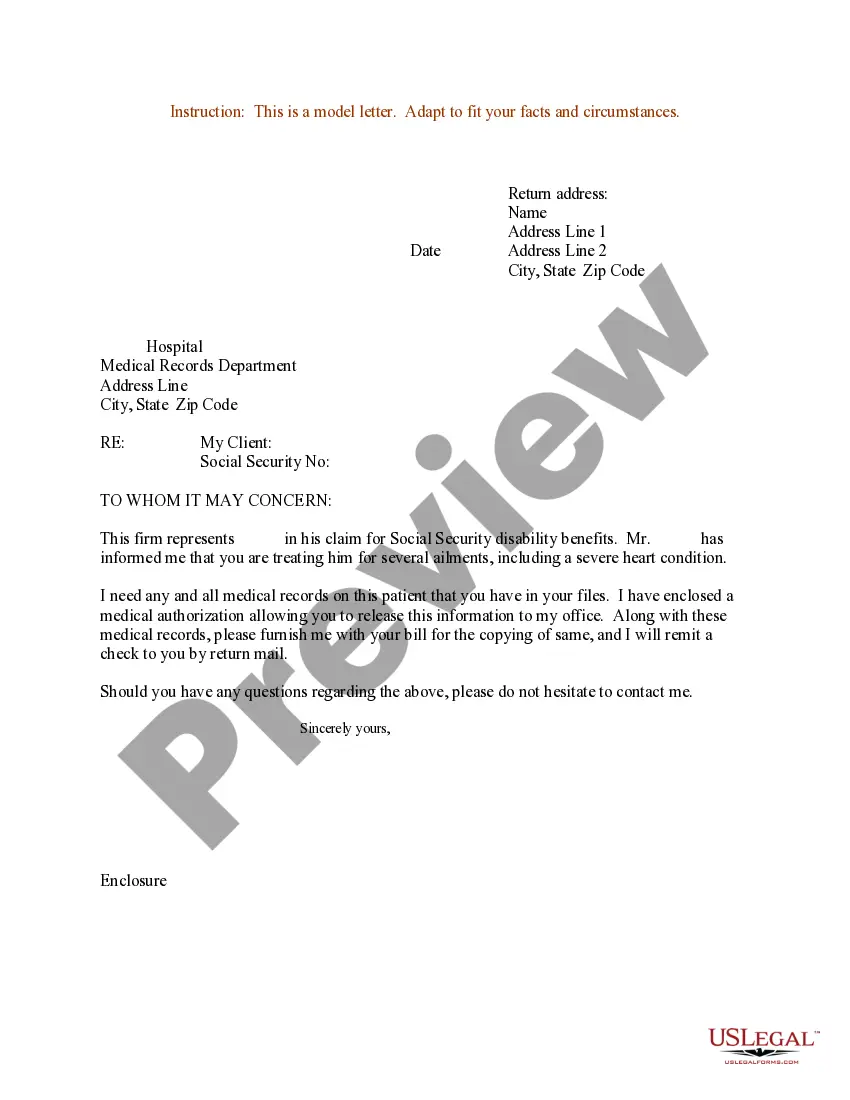
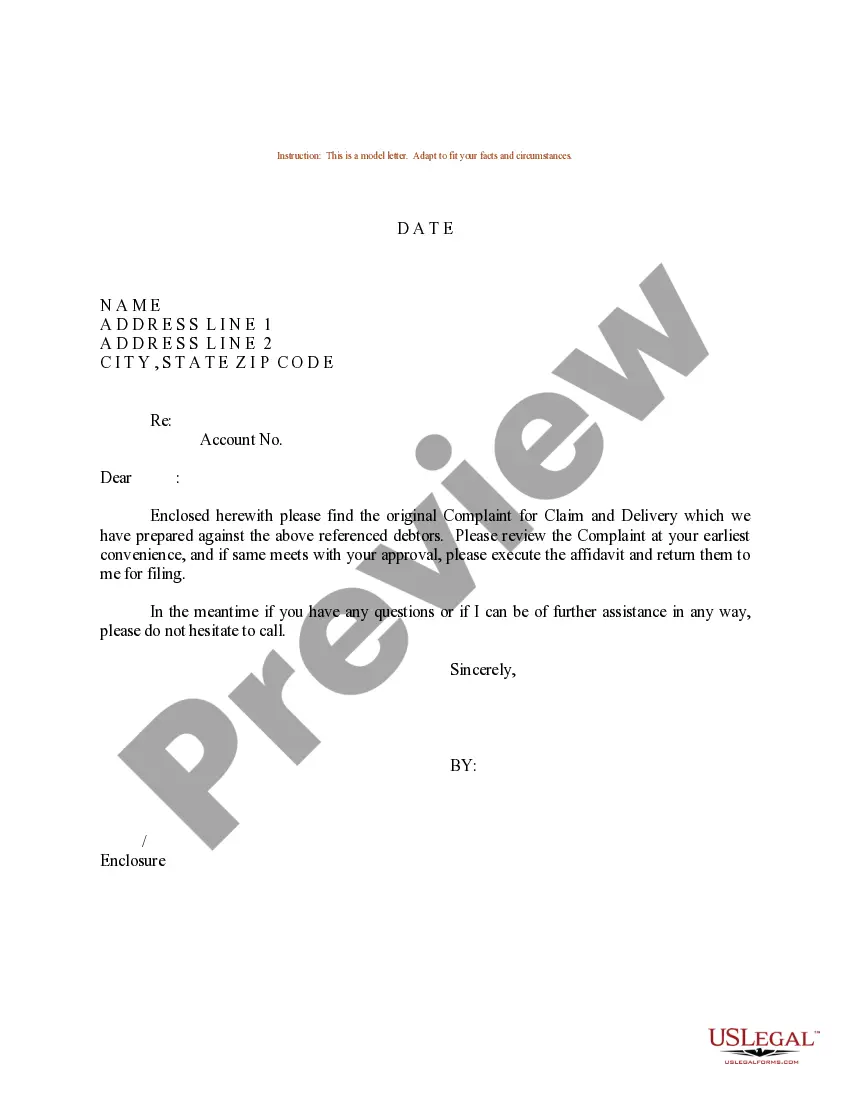
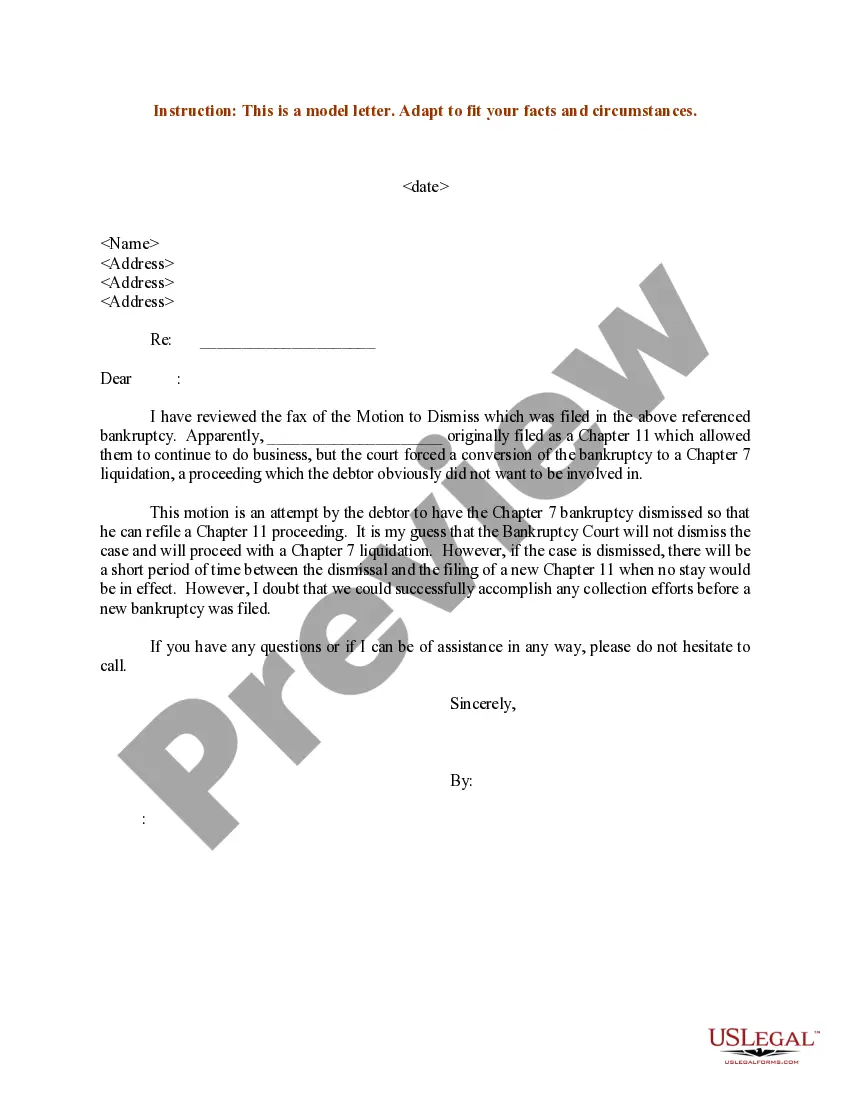
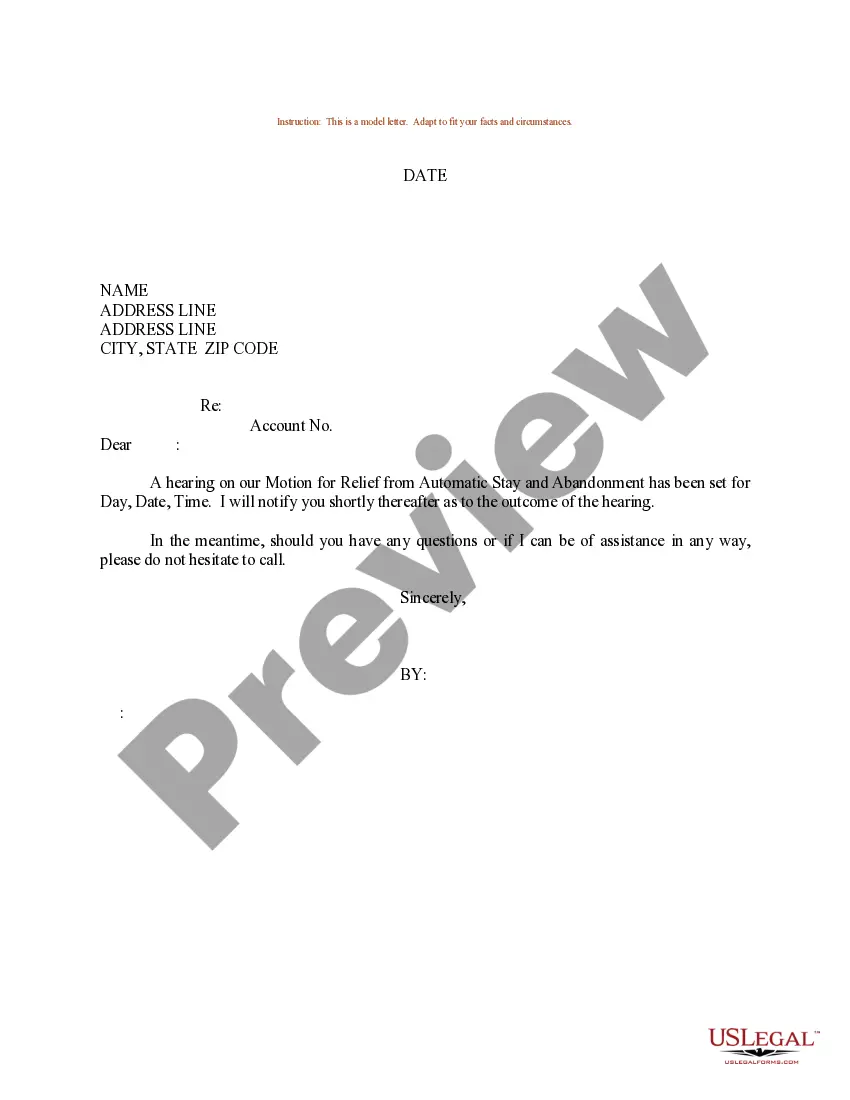
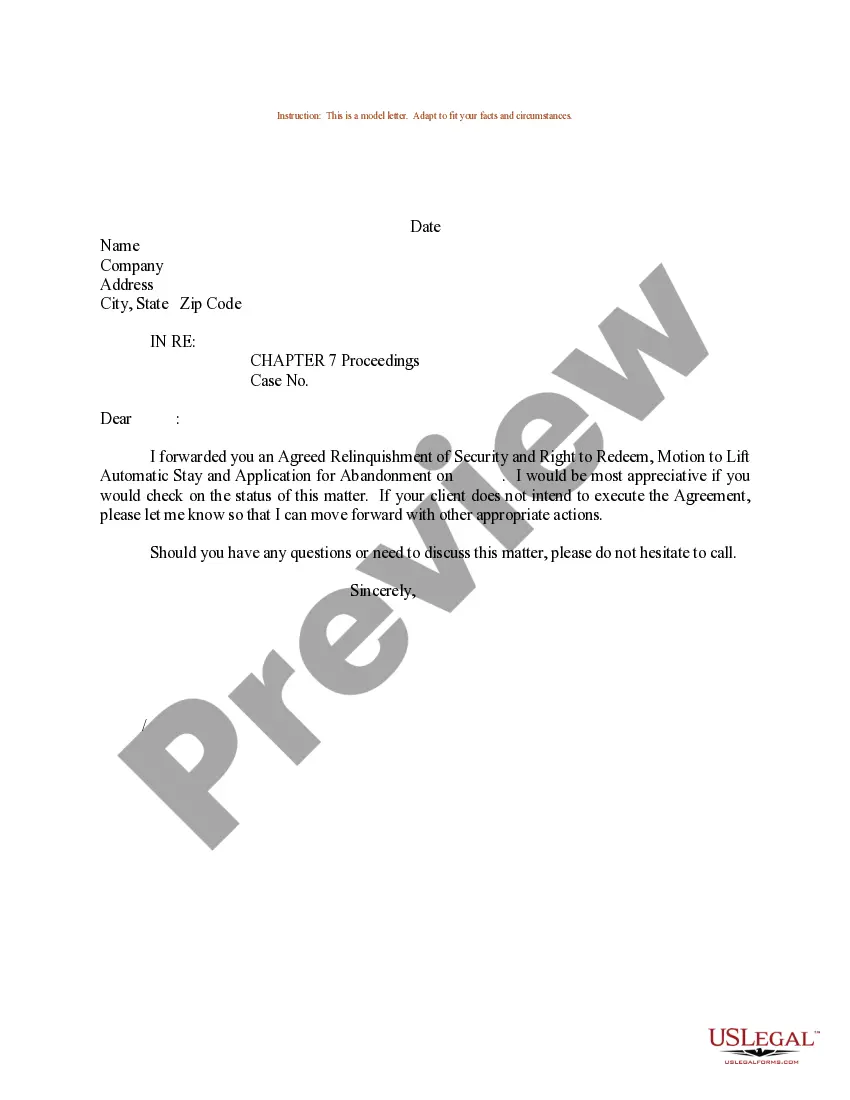
How to fill out Sample Letter Regarding Answer To Motion For Relief From The Automatic Stay And Abandonment?
Acquiring legal documents that adhere to federal and local regulations is essential, and the web provides numerous alternatives to select from.
However, what's the benefit of spending time searching for the properly drafted Motion For Relief From Stay With A Chapter 7 example online when the US Legal Forms digital library already has such documents gathered in one location.
US Legal Forms is the largest online legal repository featuring over 85,000 editable templates created by attorneys for any business and personal situation.
Review the template using the Preview feature or through the text description to ensure it meets your needs.
- They are simple to navigate with all documents organized by state and intended use.
- Our experts stay updated with legislative modifications, ensuring your form is always current and compliant when obtaining a Motion For Relief From Stay With A Chapter 7 from our platform.
- Acquiring a Motion For Relief From Stay With A Chapter 7 is straightforward and swift for both existing and new users.
- If you already possess an account with an active subscription, Log In and store the document sample you require in your preferred format.
- If you are new to our site, follow the steps below.
Form popularity
FAQ
The order for relief in Chapter 7 refers to the court's authorization allowing a debtor to proceed with bankruptcy. When you file a Motion for relief from stay with a Chapter 7, it seeks to lift the automatic stay that halts collection actions against you. This motion is essential if creditors wish to reclaim property or pursue claims against you. US Legal Forms provides the necessary documents and guidance to help you navigate this process effectively.
To fight a motion for relief from automatic stay, you need to prepare a strong objection demonstrating why the creditor should not be allowed to proceed. This may include showing that you have a valid defense or that the relief would cause undue hardship. Utilizing resources like USLegalForms can help you draft the necessary documents and provide guidance to effectively contest the motion.
An order on motion for relief from stay is a court decision that either grants or denies a creditor's request to lift the automatic stay. If the motion is granted, the creditor may regain the right to pursue collection activities. Understanding this order is vital, as it can significantly affect your financial situation during and after your Chapter 7 bankruptcy.
A motion for relief from stay in Chapter 7 is a request made by a creditor to lift the automatic stay imposed by the bankruptcy filing. This stay temporarily halts all collection efforts against you while your Chapter 7 case is active. If granted, the creditor can proceed with actions like foreclosure or repossession, which is why understanding this motion is crucial in your bankruptcy journey.
Chapter 7 relief refers to a legal process that allows individuals to eliminate most of their unsecured debts. This type of bankruptcy offers a fresh financial start by discharging debts such as credit card bills and medical expenses. By filing for Chapter 7 relief, you can stop creditor harassment and gain immediate protection from collection actions.
In Rem Relief from Stay affects the mortgaged property (In Rem from Latin means ?against a thing?). It prospectively eliminates the automatic stay from entering as to claims against the mortgaged property in future bankruptcy cases for two years, regardless of who files the bankruptcy case.
If the debtor is unable or unwilling to provide adequate protection to a secured creditor, there is sufficient cause for the court to order relief from the stay (§ 362(d)(1), Bankruptcy Code). The creditor can then foreclose on the collateral and realize an amount sufficient to recover the balance due on the debt.
The court may deny a chapter 7 discharge for any of the reasons described in section 727(a) of the Bankruptcy Code, including failure to provide requested tax documents; failure to complete a course on personal financial management; transfer or concealment of property with intent to hinder, delay, or defraud creditors; ...
Motion for Relief from the Automatic Stay is a request by a creditor to allow the creditor to take action against the debtor or the debtor's property that would otherwise be prohibited by the automatic stay.
Two main methods exist for fighting a motion for relief from automatic stay. These types are ?procedural? and ?substantive? objections. Basically, procedural objections challenge the manner in which the motion was filed, while substantive objections challenge the actual substance of the motion.