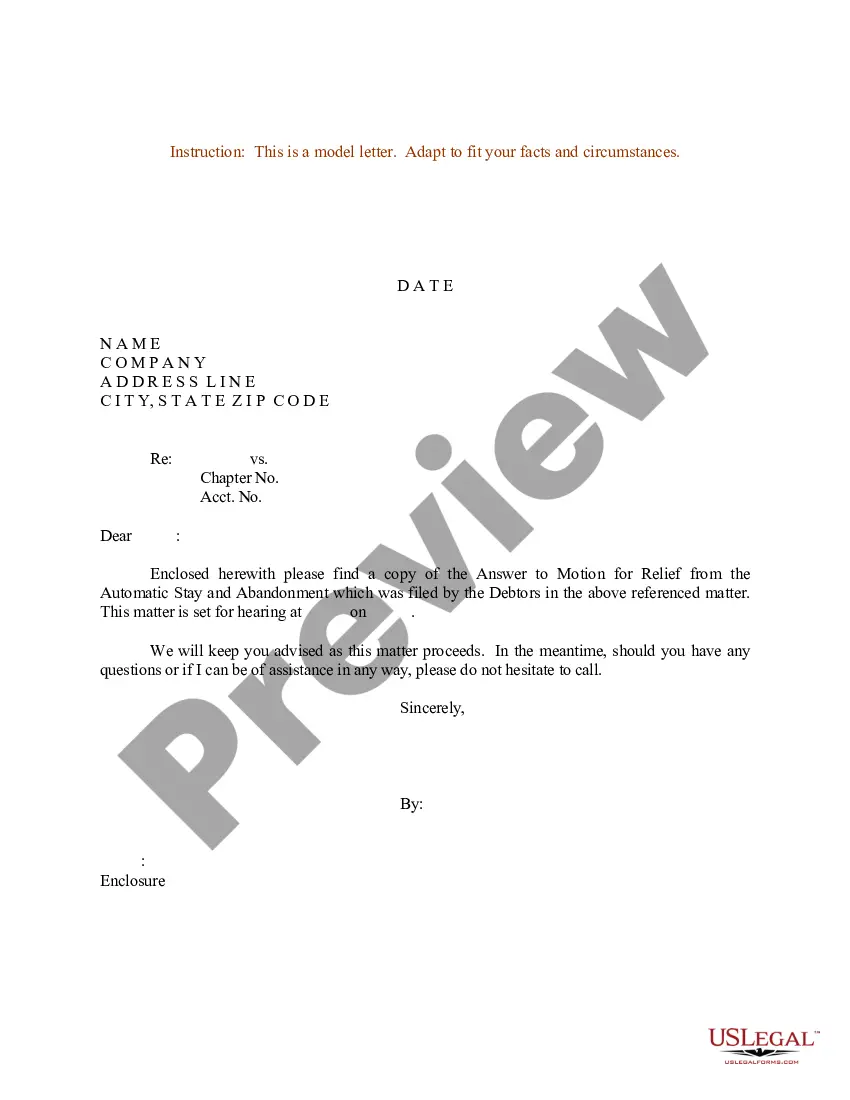
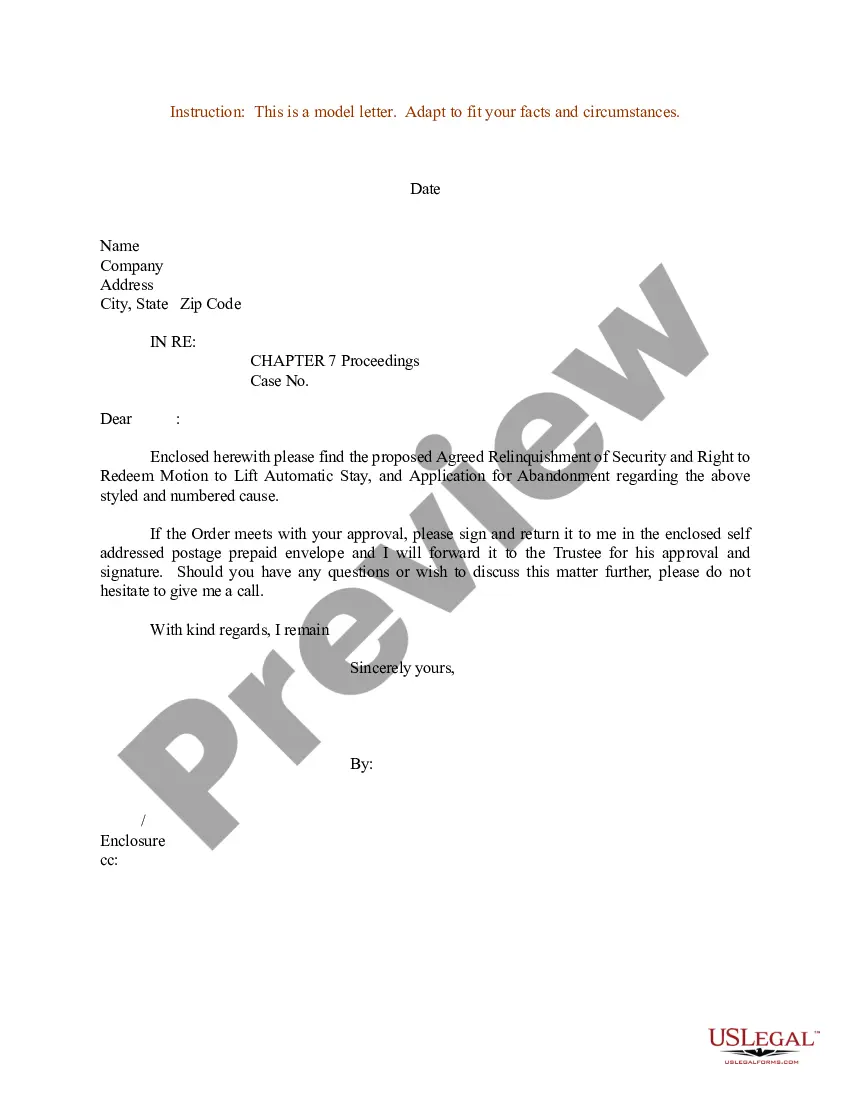
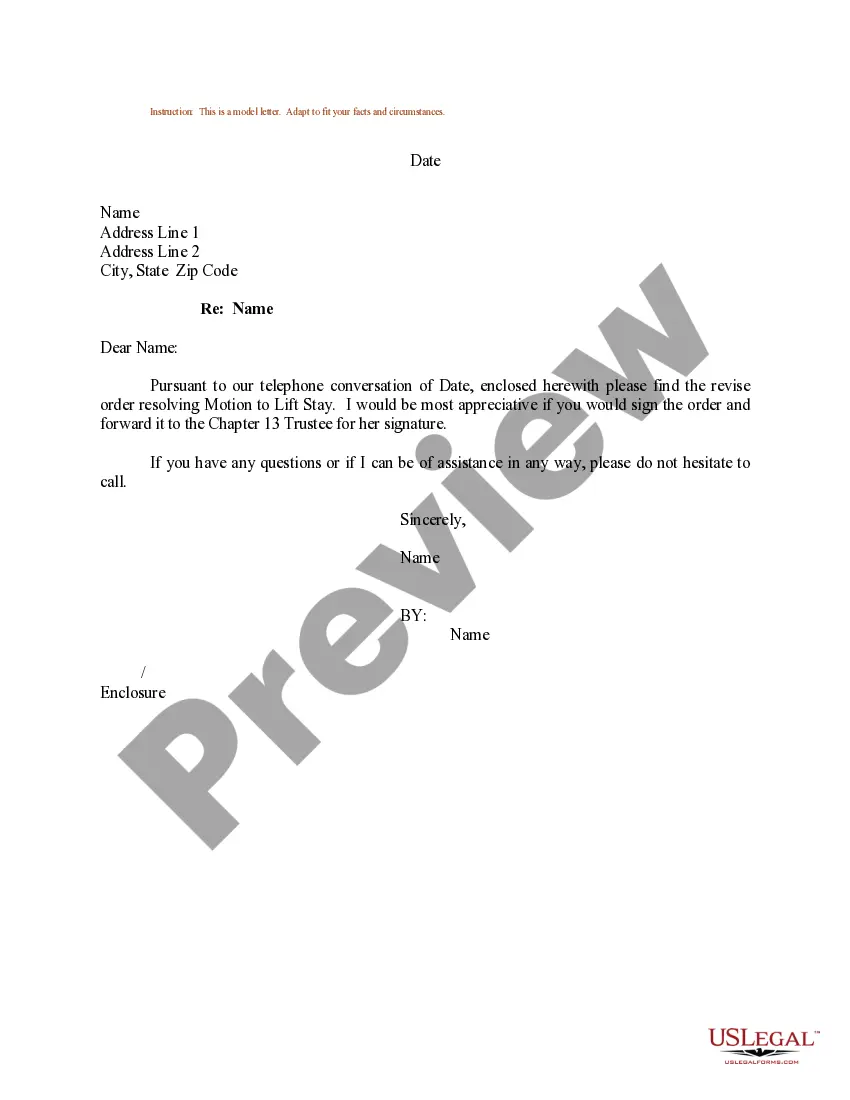
Motion For Relief From Stay With A Chapter 13
Description
Get your form ready online
Our built-in tools help you complete, sign, share, and store your documents in one place.
Make edits, fill in missing information, and update formatting in US Legal Forms—just like you would in MS Word.
Download a copy, print it, send it by email, or mail it via USPS—whatever works best for your next step.
Sign and collect signatures with our SignNow integration. Send to multiple recipients, set reminders, and more. Go Premium to unlock E-Sign.
If this form requires notarization, complete it online through a secure video call—no need to meet a notary in person or wait for an appointment.
We protect your documents and personal data by following strict security and privacy standards.

Make edits, fill in missing information, and update formatting in US Legal Forms—just like you would in MS Word.

Download a copy, print it, send it by email, or mail it via USPS—whatever works best for your next step.

Sign and collect signatures with our SignNow integration. Send to multiple recipients, set reminders, and more. Go Premium to unlock E-Sign.

If this form requires notarization, complete it online through a secure video call—no need to meet a notary in person or wait for an appointment.

We protect your documents and personal data by following strict security and privacy standards.
Looking for another form?
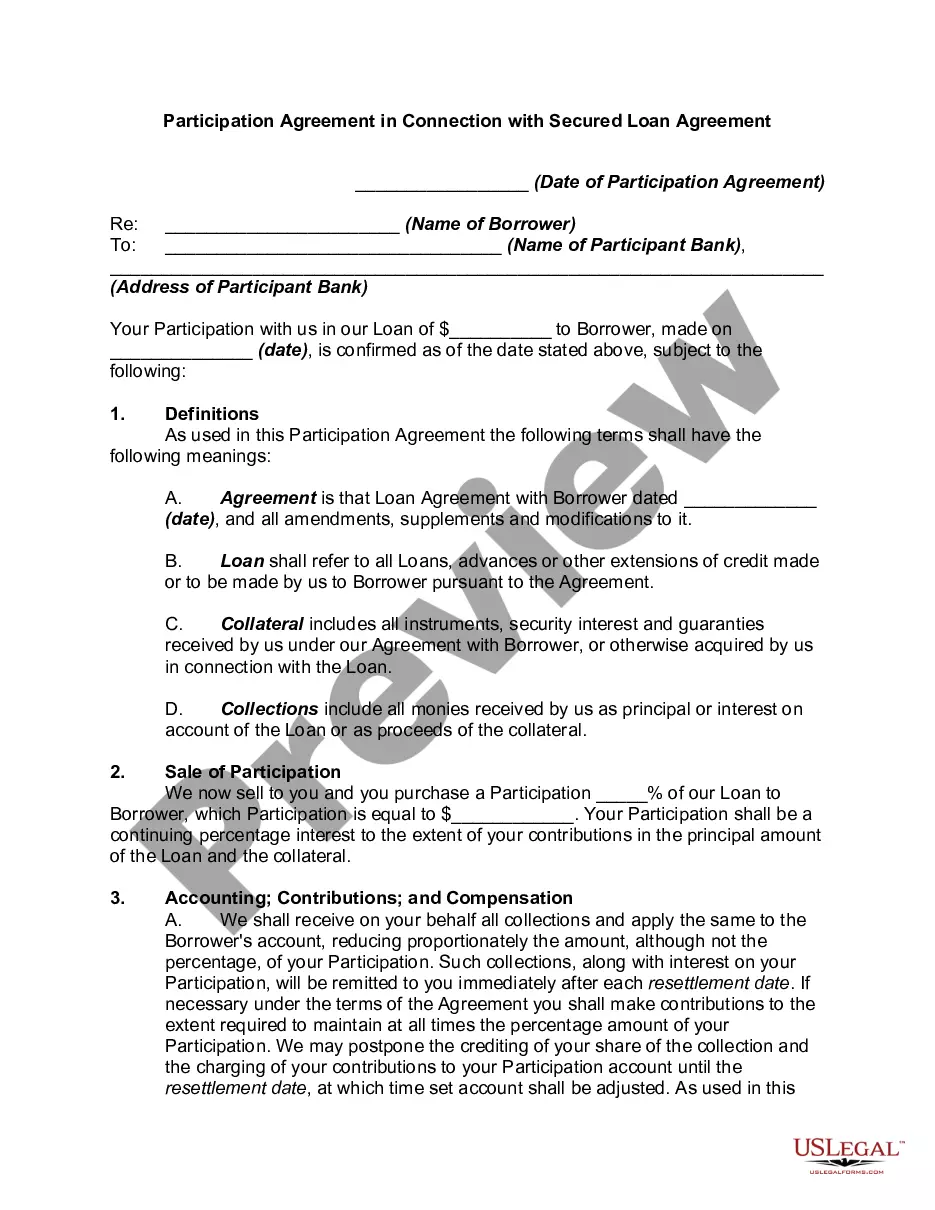
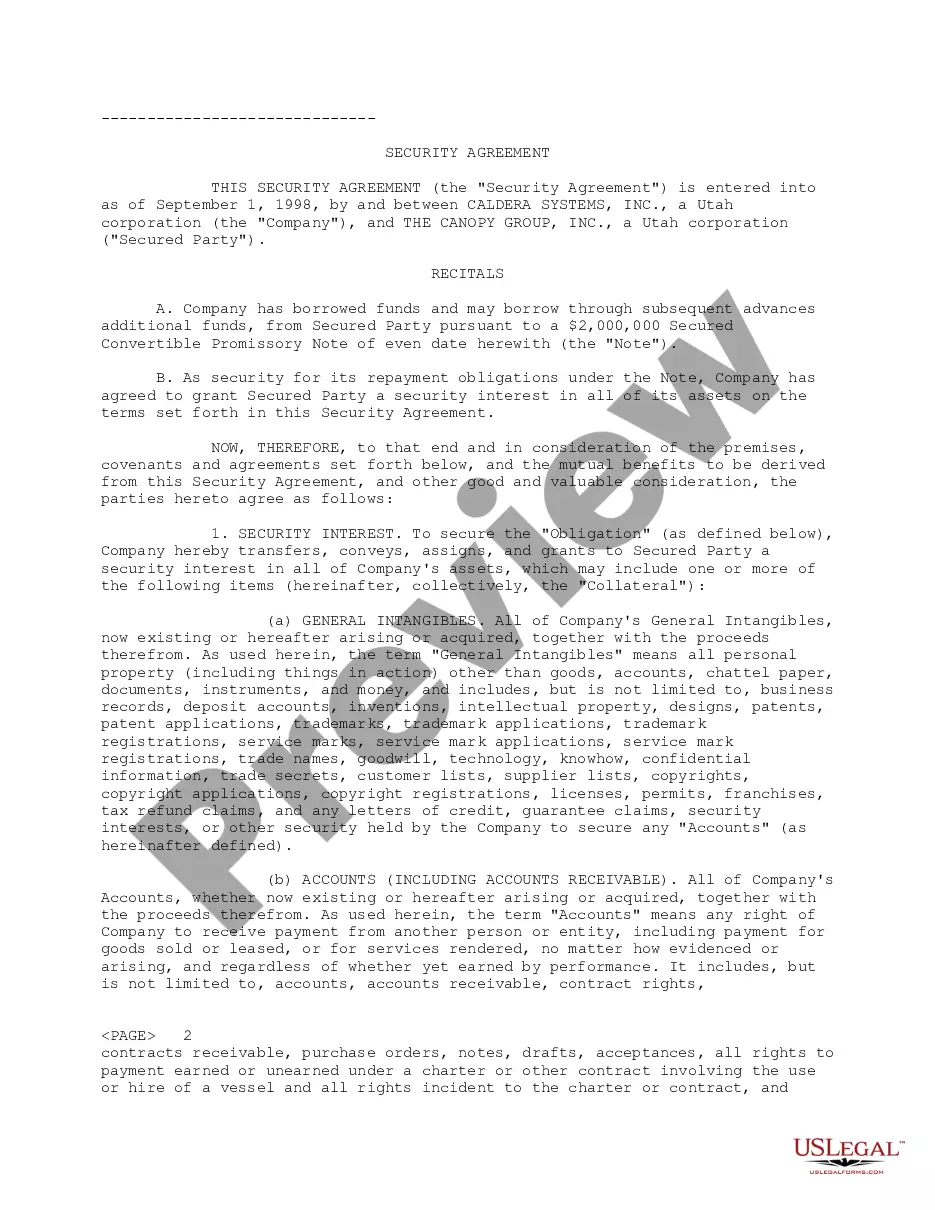
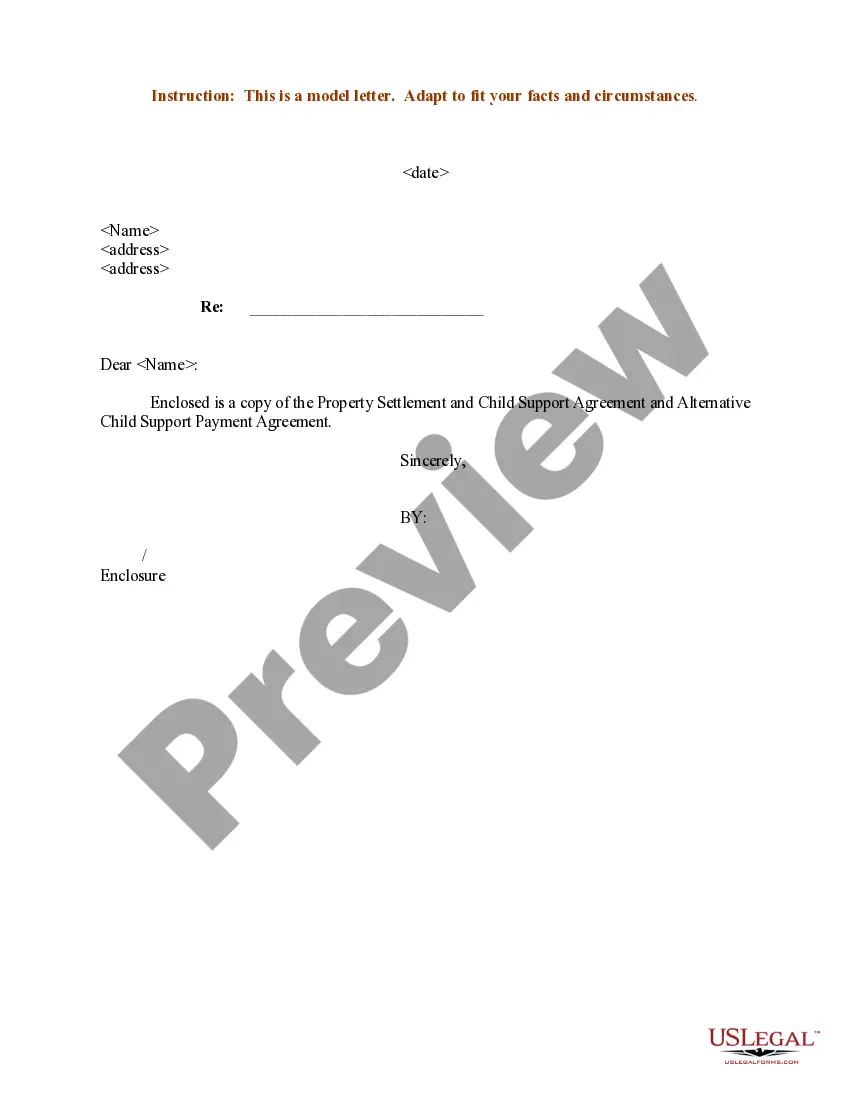
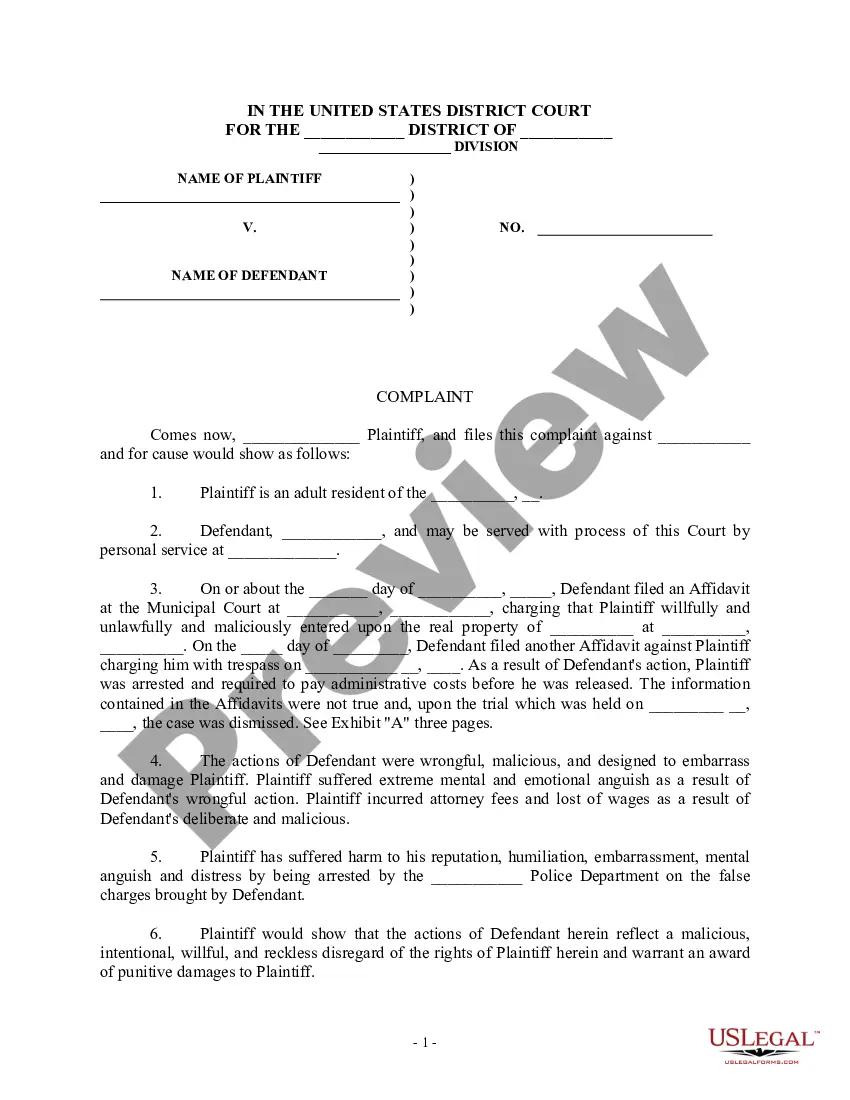
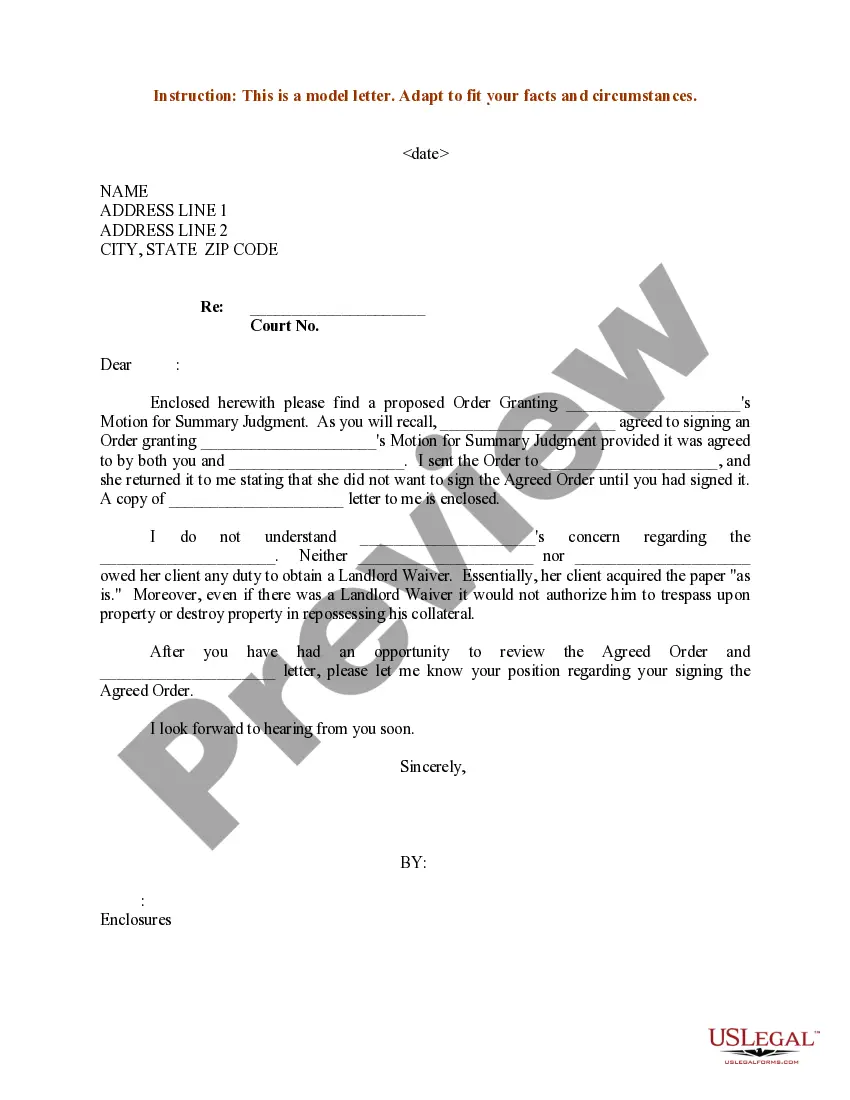
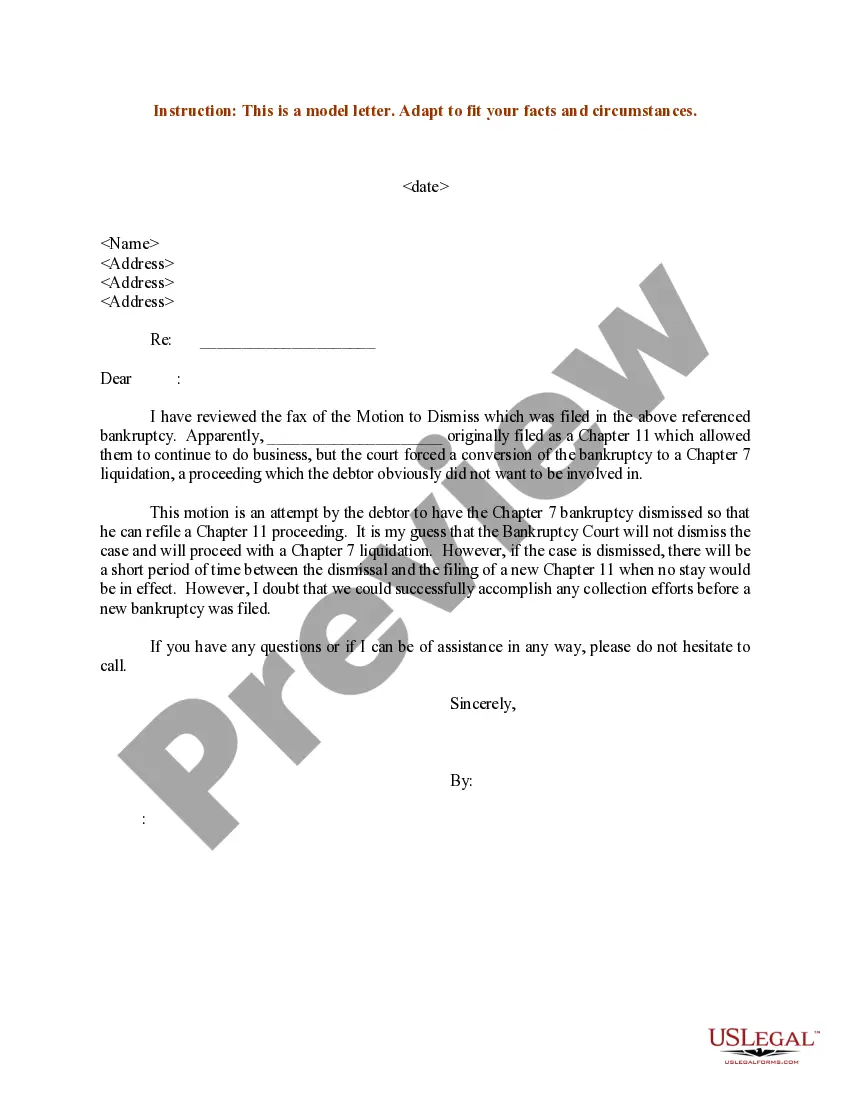
How to fill out Sample Letter Regarding Answer To Motion For Relief From The Automatic Stay And Abandonment?
Regardless of whether for commercial reasons or personal issues, everyone must confront legal matters at some stage in their life.
Filling out legal documents demands meticulous attention, beginning with choosing the appropriate form template. For example, if you choose an incorrect version of the Motion For Relief From Stay With A Chapter 13, it will be declined when you submit it. Therefore, it is essential to have a reliable source of legal documents such as US Legal Forms.
With an extensive US Legal Forms catalog available, you never have to waste time searching for the correct template online. Utilize the library’s straightforward navigation to find the right template for any circumstance.
- Locate the template you require by utilizing the search bar or catalog browsing.
- Examine the form’s description to ensure it corresponds with your case, state, and county.
- Click on the form’s preview to view it.
- If it is the wrong form, return to the search tool to find the Motion For Relief From Stay With A Chapter 13 template you need.
- Download the document once it fulfills your requirements.
- If you already possess a US Legal Forms account, simply click Log in to access previously saved documents in My documents.
- If you do not yet have an account, you can download the form by selecting Buy now.
- Choose the appropriate pricing option.
- Fill out the account registration form.
- Select your payment method: use a credit card or PayPal account.
- Choose the file format you desire and download the Motion For Relief From Stay With A Chapter 13.
- Once it is downloaded, you can complete the form using editing software or print it and finish it by hand.
Form popularity
FAQ
An order on motion for relief from stay is a court's ruling on whether to grant or deny a creditor's request to lift the automatic stay in a Chapter 13 case. If the court grants the motion, it allows the creditor to take specific actions against the debtor's property. This order can significantly impact the debtor's financial situation and their Chapter 13 plan. Understanding the implications of such orders helps you make informed decisions, and platforms like US Legal Forms can provide the necessary resources for assistance.
A motion for relief from stay in Chapter 13 is a legal request made by a creditor to lift the automatic stay that protects the debtor's property during bankruptcy. This motion allows creditors to proceed with actions, such as foreclosure or repossession, if they can demonstrate that the debtor is not making timely payments or has no equity in the property. This is a critical aspect of Chapter 13 proceedings and affects how debtors manage their assets and obligations. For more guidance, consider using the US Legal Forms platform to navigate this complex process.
A hardship discharge from Chapter 13 allows a debtor to terminate their bankruptcy plan due to unforeseen circumstances that hinder their ability to meet payment obligations. This could include significant changes in income or unexpected expenses that make it impossible to continue the plan. While this discharge relieves the debtor from further payments, it does not eliminate all debts. It's important to consider how a motion for relief from stay with a Chapter 13 may play a role in this process.
A motion to dismiss Chapter 13 refers to a request made by a creditor or sometimes the debtor to terminate the Chapter 13 bankruptcy case. This motion argues that the debtor has not complied with the bankruptcy plan or other legal requirements. If the court grants this motion, it can have serious consequences, including losing the benefits of bankruptcy protection. Understanding how this relates to a motion for relief from stay with a Chapter 13 is crucial for navigating your bankruptcy options.
Hear this out loud PauseA person whose action or proceeding is stayed may move the court for relief from the stay, and the court shall grant such relief for good cause shown. A motion for relief from stay under this subsection is deemed granted if the court does not act on the motion within 60 days after the motion is filed.
Hear this out loud PauseA motion for relief from the automatic stay is a request creditors make to the court to take certain collection actions against the bankruptcy filer. It's also called a stay reliefmotion. A secured or unsecured creditor can submit a stay relief motion to the bankruptcy court.
Hear this out loud PauseTo initiate the filing process, your attorney will submit a bankruptcy petition to the Texas district court closest to you. As soon as your forms are submitted, the court will grant you an automatic stay the prohibits your creditors from engaging in collection activities such as: Wage garnishment to collect IRS debt.
Motion for Relief from the Automatic Stay is a request by a creditor to allow the creditor to take action against the debtor or the debtor's property that would otherwise be prohibited by the automatic stay.
Hear this out loud PauseIf the debtor is unable or unwilling to provide adequate protection to a secured creditor, there is sufficient cause for the court to order relief from the stay (§ 362(d)(1), Bankruptcy Code). The creditor can then foreclose on the collateral and realize an amount sufficient to recover the balance due on the debt.