Injury Claim At Work
Description
Get your form ready online
Our built-in tools help you complete, sign, share, and store your documents in one place.
Make edits, fill in missing information, and update formatting in US Legal Forms—just like you would in MS Word.
Download a copy, print it, send it by email, or mail it via USPS—whatever works best for your next step.
Sign and collect signatures with our SignNow integration. Send to multiple recipients, set reminders, and more. Go Premium to unlock E-Sign.
If this form requires notarization, complete it online through a secure video call—no need to meet a notary in person or wait for an appointment.
We protect your documents and personal data by following strict security and privacy standards.

Make edits, fill in missing information, and update formatting in US Legal Forms—just like you would in MS Word.

Download a copy, print it, send it by email, or mail it via USPS—whatever works best for your next step.

Sign and collect signatures with our SignNow integration. Send to multiple recipients, set reminders, and more. Go Premium to unlock E-Sign.

If this form requires notarization, complete it online through a secure video call—no need to meet a notary in person or wait for an appointment.

We protect your documents and personal data by following strict security and privacy standards.
Looking for another form?


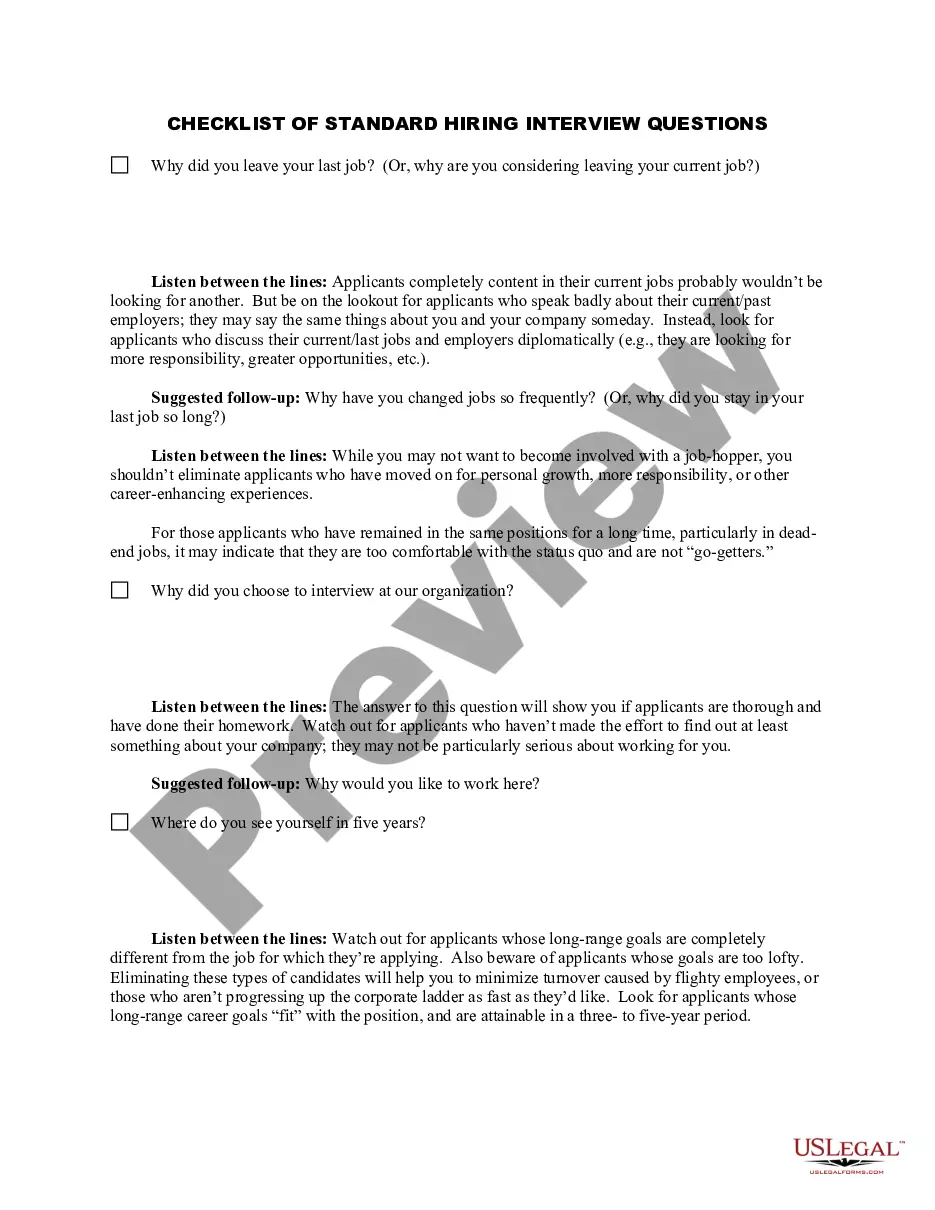

How to fill out Checklists - Worker's Compensation Claims?
Whether for commercial reasons or for personal issues, everyone must confront legal matters at some point in their lives.
Filling out legal documents mandates meticulous care, starting with choosing the appropriate form template.
After downloading, you can fill out the form using editing software or print it for manual completion. With an extensive US Legal Forms catalog available, you will never waste time searching for the right template online. Utilize the library's simple navigation to find the suitable form for any occasion.
- Obtain the example you require by using the search bar or catalog browsing.
- Review the description of the form to ensure it aligns with your circumstances, state, and locality.
- Click on the preview of the form to view it.
- If it turns out to be the incorrect document, return to the search feature to find the Injury Claim At Work template you need.
- Acquire the file once it satisfies your requirements.
- If you possess a US Legal Forms account, simply click Log in to access previously saved templates in My documents.
- If you haven’t created an account yet, you can download the document by clicking Buy now.
- Choose the appropriate pricing option.
- Fill out the account registration form.
- Select your payment method: use a credit card or PayPal account.
- Choose the desired file format and download the Injury Claim At Work.
Form popularity
FAQ
To properly handle a workplace injury, begin by reporting the incident to your supervisor immediately. This ensures that your injury is documented, which is vital for your injury claim at work. Next, seek medical care and follow the treatment plan prescribed by professionals. For further assistance, consider US Legal Forms to obtain the necessary legal documents needed to support your claim.
In most cases, you cannot lose your job solely due to a work-related injury. Laws protect employees from discrimination as a result of injuries sustained on the job. However, keep in mind that job security can sometimes depend on your employer's policies and the state laws surrounding your injury claim at work. It's wise to consult resources and legal forms that outline your rights and provide clarity.
When you experience a work-related injury, it's essential to prioritize your health first. Seek medical attention immediately and inform your employer about the incident. Keeping detailed records of your injury and the treatment you receive is crucial, especially for your injury claim at work. Additionally, consider visiting US Legal Forms to access resources that guide you through the claims process.
For an injury, the first thing to do is to ensure the safety of the injured person and others nearby. Then, administer first aid or call for emergency assistance depending on the injury's severity. It is essential to report the injury to management as this is a vital step in supporting an injury claim at work. Having a comprehensive approach to such incidents guarantees that the injured worker receives the help they need.
When a worker is injured, the very first action that must be taken is to evaluate the situation for safety. After confirming that it is safe, provide immediate medical help if needed. Document the incident and inform the employer promptly, as these actions are crucial for any subsequent injury claim at work. This process ensures that all parties are informed and can act accordingly.
The first thing to do when someone is injured is to check if the scene of the incident is safe. Once safety is ensured, provide the injured individual with any required first aid and seek professional medical assistance if necessary. It is also important to report the injury to a supervisor, which is essential for initiating an injury claim at work. Accurate records of the incident play a key role in the claims process later.
Immediately after an injury in the workplace, it is vital to secure the safety of the injured worker and others around them. Administer first aid if appropriate and call emergency services if the injury is serious. Ensure that the incident is reported to the employer or supervisor, as this initiates the process for filing an injury claim at work. Proper documentation of the event can greatly support the injured worker's claim.
When a worker is injured, the first step is to assess the situation and ensure that the area is safe. Next, provide immediate medical attention if necessary. After that, document the incident thoroughly, as this is crucial for any injury claim at work. Finally, notify the employer to begin any necessary reporting and paperwork.
When an injury is reported, a supervisor should first ensure that the injured employee receives immediate care. Addressing any medical needs is the priority, followed by documenting the incident accurately to support any future injury claim at work. Quick action demonstrates care for employee safety and facilitates the reporting process. For effective reporting, consider using resources from uslegalforms.
When discussing your injury with a workers' comp doctor, avoid making statements that could undermine your injury claim at work. Refrain from downplaying your pain or suggesting you can return to work too soon. Be honest about your symptoms and avoid exaggerating your issues, as this can lead to complications in your claims process. Focus on clear communication for the best outcome.
