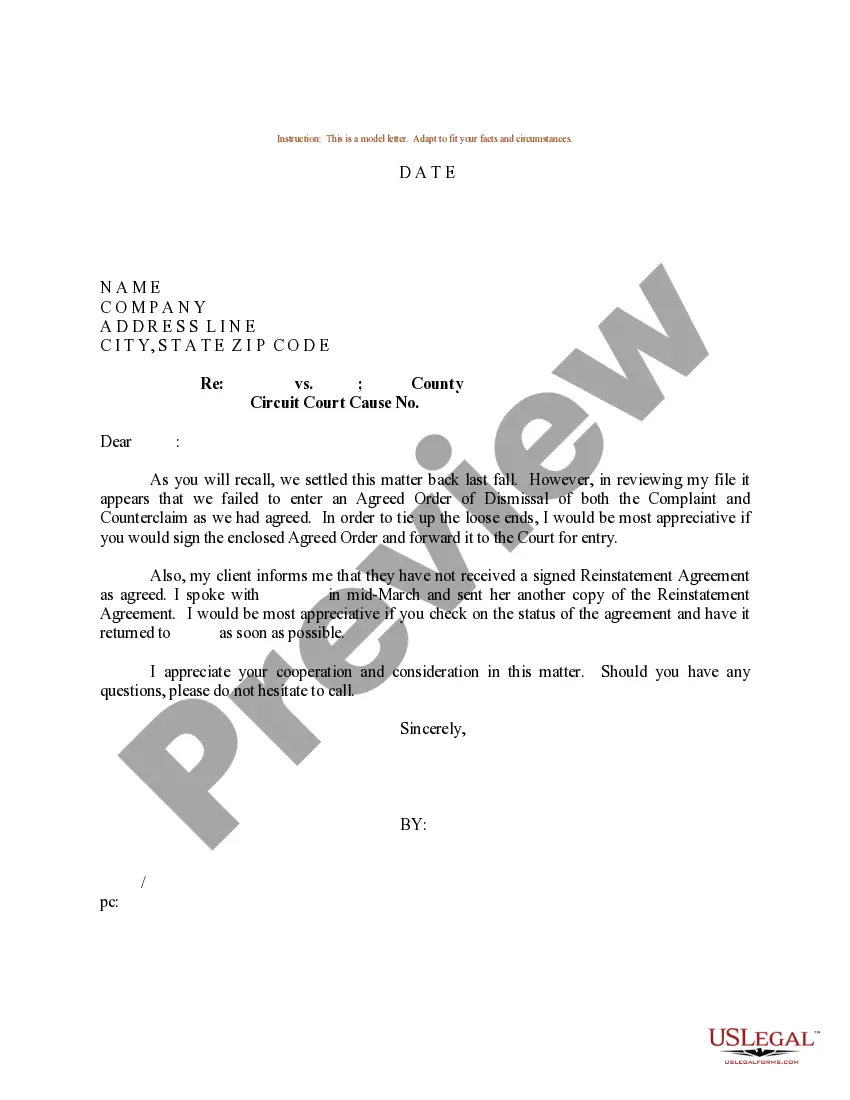
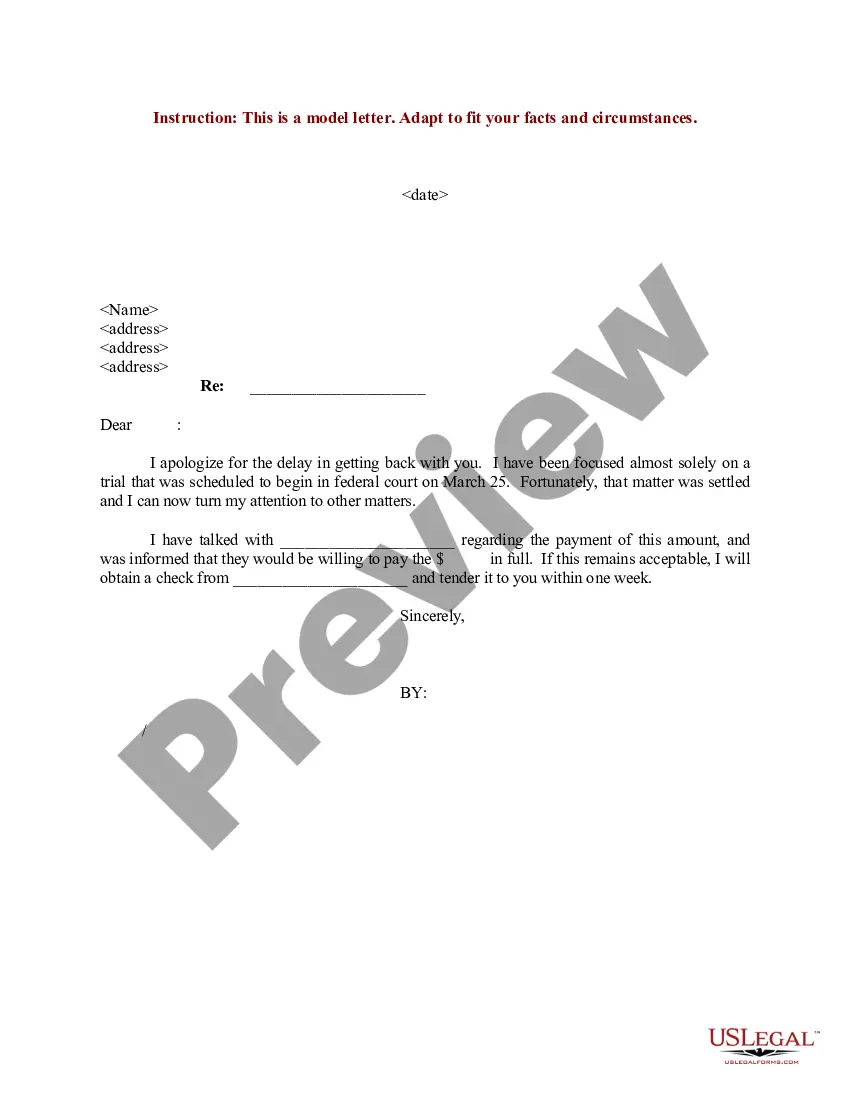
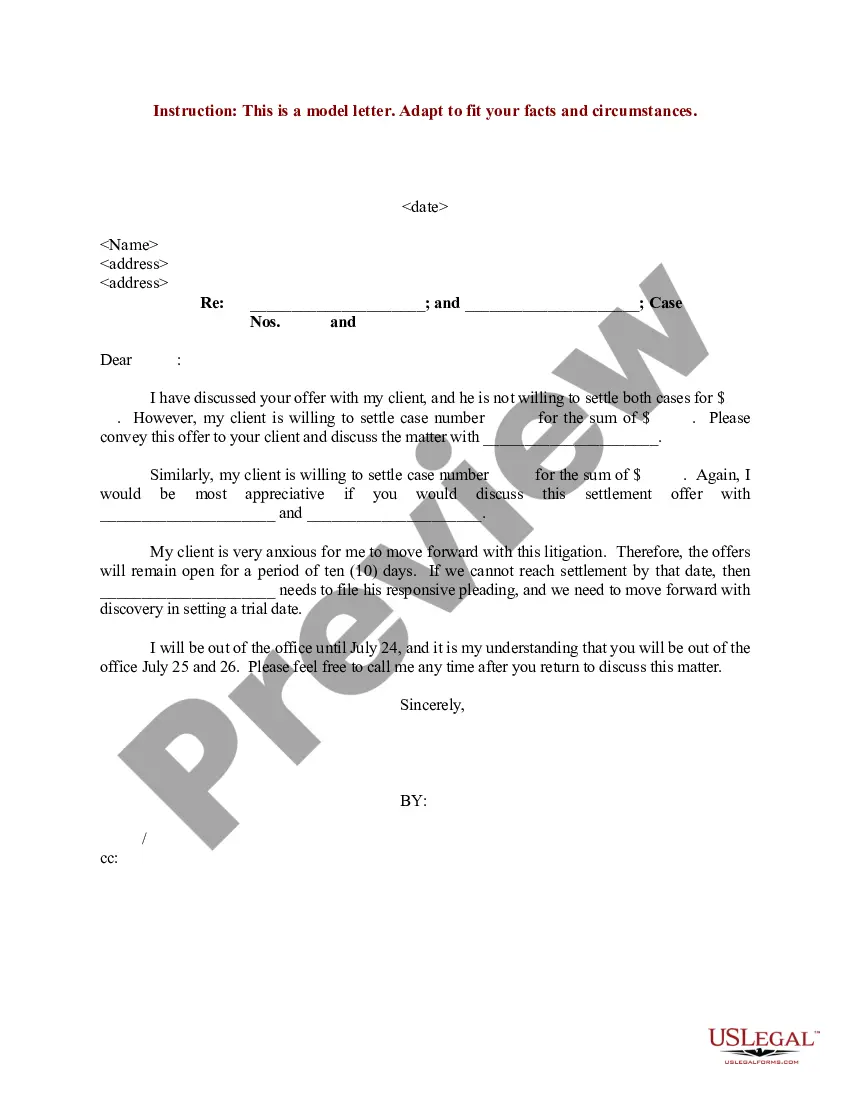
Sample Letter To Opposing Counsel With Settlement Offer For Damages
Description
Get your form ready online
Our built-in tools help you complete, sign, share, and store your documents in one place.
Make edits, fill in missing information, and update formatting in US Legal Forms—just like you would in MS Word.
Download a copy, print it, send it by email, or mail it via USPS—whatever works best for your next step.
Sign and collect signatures with our SignNow integration. Send to multiple recipients, set reminders, and more. Go Premium to unlock E-Sign.
If this form requires notarization, complete it online through a secure video call—no need to meet a notary in person or wait for an appointment.
We protect your documents and personal data by following strict security and privacy standards.

Make edits, fill in missing information, and update formatting in US Legal Forms—just like you would in MS Word.

Download a copy, print it, send it by email, or mail it via USPS—whatever works best for your next step.

Sign and collect signatures with our SignNow integration. Send to multiple recipients, set reminders, and more. Go Premium to unlock E-Sign.

If this form requires notarization, complete it online through a secure video call—no need to meet a notary in person or wait for an appointment.

We protect your documents and personal data by following strict security and privacy standards.
Looking for another form?
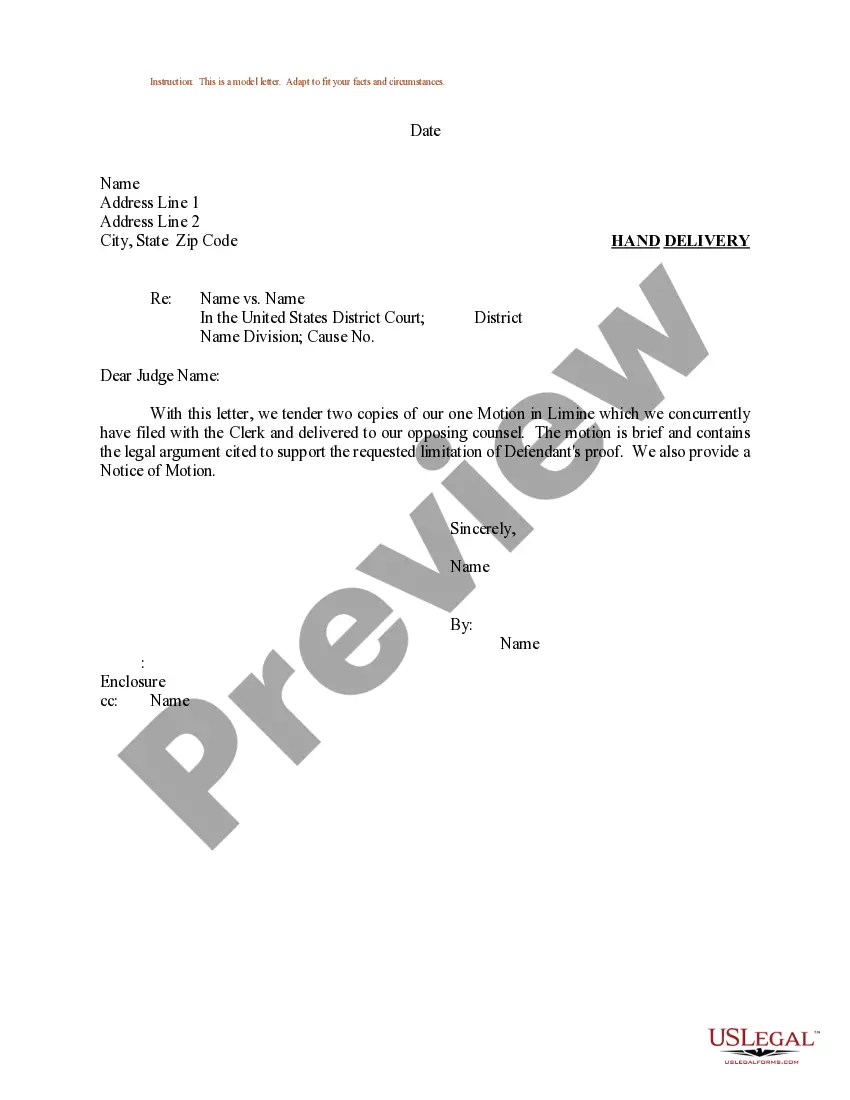
How to fill out Sample Letter To Opposing Counsel Concerning Settlement Of Litigation?
Whether for professional objectives or personal affairs, everyone inevitably encounters legal matters at some point in their lives.
Completing legal paperwork requires meticulous attention, starting from choosing the correct form type.
With a comprehensive US Legal Forms catalog available, you never have to waste time looking for the correct template on the internet. Utilize the library’s easy navigation to find the suitable template for any circumstance.
- For instance, if you select an incorrect version of the Sample Letter To Opposing Counsel With Settlement Offer For Damages, it will be denied upon submission.
- Thus, it's crucial to find a reliable source of legal documents such as US Legal Forms.
- If you wish to obtain a Sample Letter To Opposing Counsel With Settlement Offer For Damages template, follow these straightforward steps.
- 1. Acquire the template you require via the search bar or catalog browsing.
- 2. Review the form’s details to confirm it aligns with your situation, state, and county.
- 3. Click on the form’s preview to view it.
- 4. If it is the wrong document, return to the search tool to locate the required Sample Letter To Opposing Counsel With Settlement Offer For Damages template.
- 5. Download the template once it suits your requirements.
- 6. If you already possess a US Legal Forms profile, simply click Log in to access your previously saved documents in My documents.
- 7. If you do not yet have an account, you can download the form by clicking Buy now.
- 8. Choose the suitable pricing option.
- 9. Fill out the profile registration form.
- 10. Choose your payment option: you can use a credit card or PayPal account.
- 11. Select the document format you prefer and download the Sample Letter To Opposing Counsel With Settlement Offer For Damages.
- 12. After saving it, you can complete the form using editing software or print it to fill it out manually.
Form popularity
FAQ
Writing an email to opposing counsel requires a courteous and professional approach. Start with a formal greeting and clearly state your purpose. Be concise in your message, and ensure you provide all necessary information. Ending the email with an invitation for further discussion can foster collaboration.
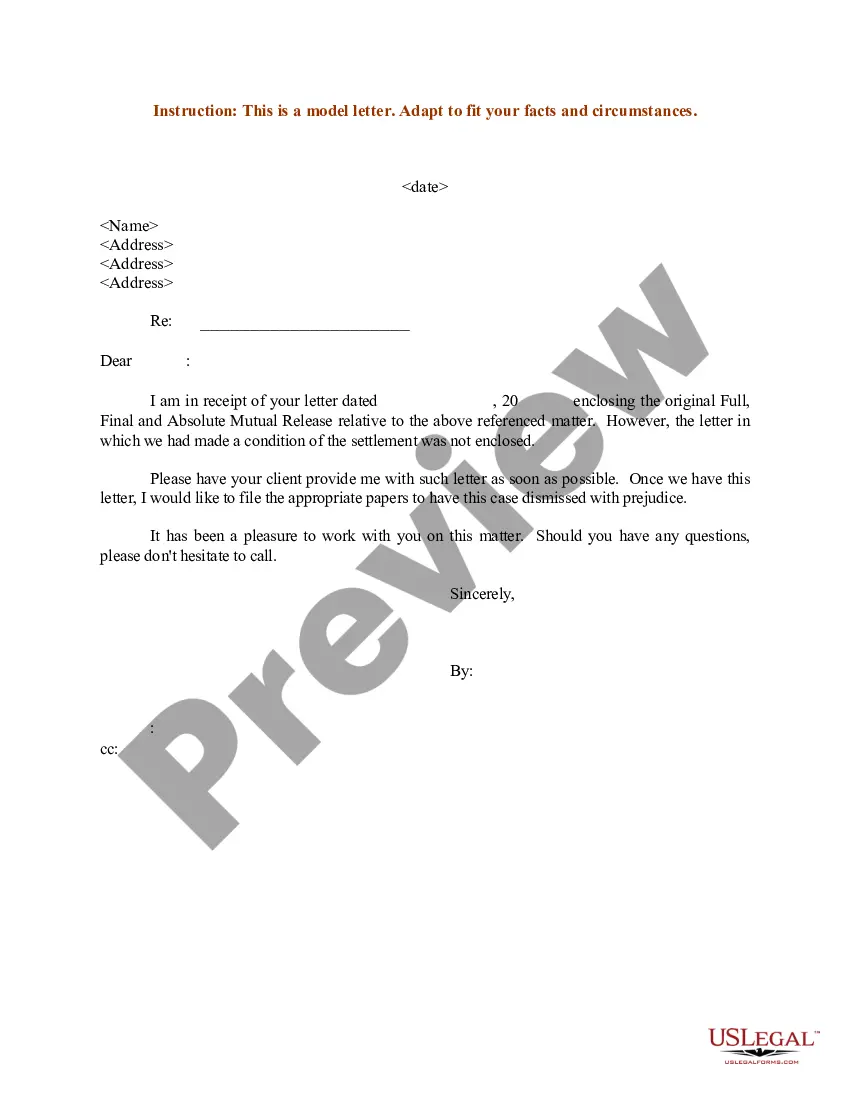
Requesting a letter for final settlement should be direct and concise. Explain that you wish to finalize the terms of the settlement and ask for the necessary documentation. Make sure to include any relevant details that can facilitate a smooth process.
To write a settlement offer to an attorney, begin with your contact information and a clear statement of the letter's purpose. Include details about your claim, the damages incurred, and your proposed settlement amount. Ensure that you maintain a professional tone throughout the letter.
An example of a claim settlement letter outlines the incident, details the injuries or damages, and states the desired settlement amount. It should be formal yet clear, ensuring that all relevant information is easily accessible. Utilizing templates can help streamline the writing process.
A reasonable settlement offer takes into account the specifics of the case, including the extent of damages and related expenses. It's essential to balance your request with the likelihood of acceptance by the other party. Evaluating similar cases can also provide insight into what might be considered fair.
Writing a demand letter for a settlement requires a structured approach. Start with your details and clearly outline the incident that caused the damages. Specify the amount you are seeking and provide justification for this figure. A well-crafted letter serves as a strong foundation for your negotiation.
When writing a letter asking for a settlement, begin with a clear statement of your intention. Detail the facts of the case and any supporting evidence. Conclude the letter with a proposed amount, ensuring it reflects the damages incurred. Always maintain a respectful tone throughout.
Negotiating a settlement with a lawyer involves open communication and mutual respect. Start by presenting your case clearly, explaining your position. Listen carefully to opposing points, and be willing to find common ground. Remember, drafting a solid settlement letter can help streamline this process.
A sample letter for a settlement offer typically includes an introduction, a description of the incident, a summary of damages, and your proposed settlement amount. Additionally, it should mention any supporting documents enclosed. Using a clear layout can enhance its readability.
To write a good settlement offer, start by clearly stating the purpose of the letter. Include details about the damages and the basis for your claim. Use a friendly tone and be respectful in your approach. Conclude with a specific proposal, making sure it is reasonable and well-explained.