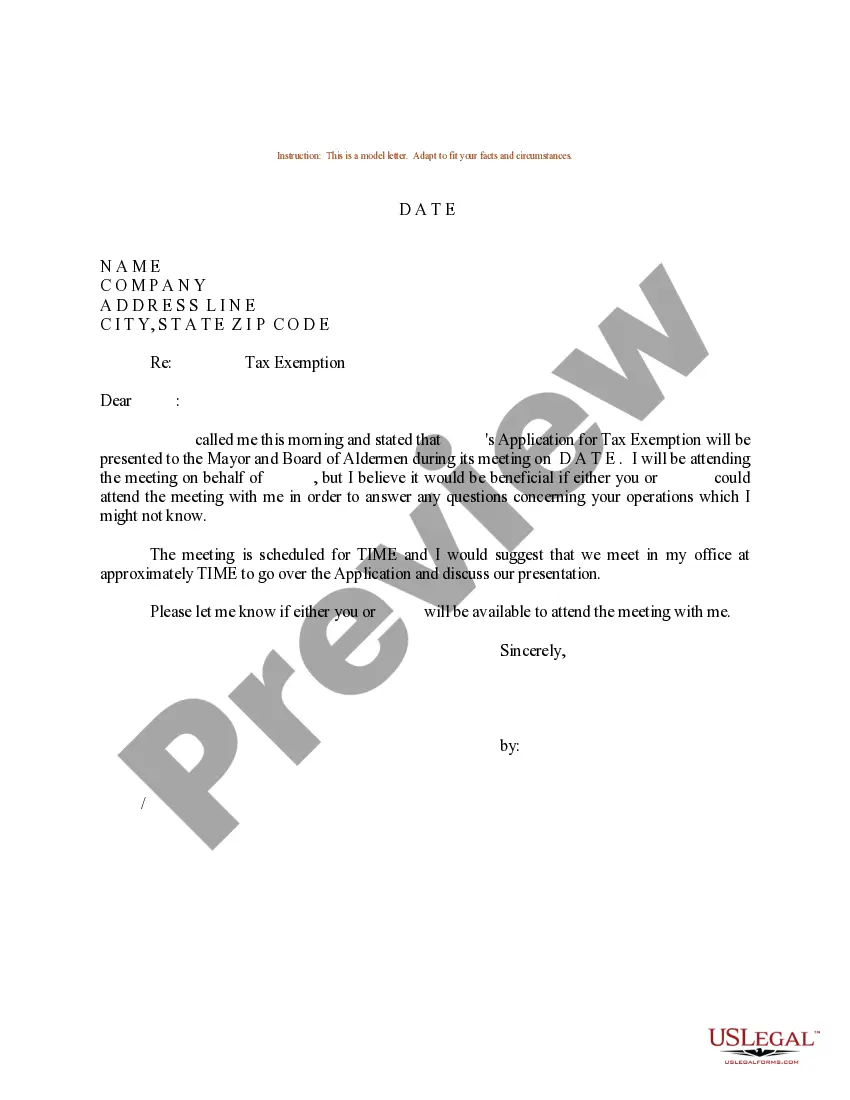
Tax Exempt Form For Texas
Description
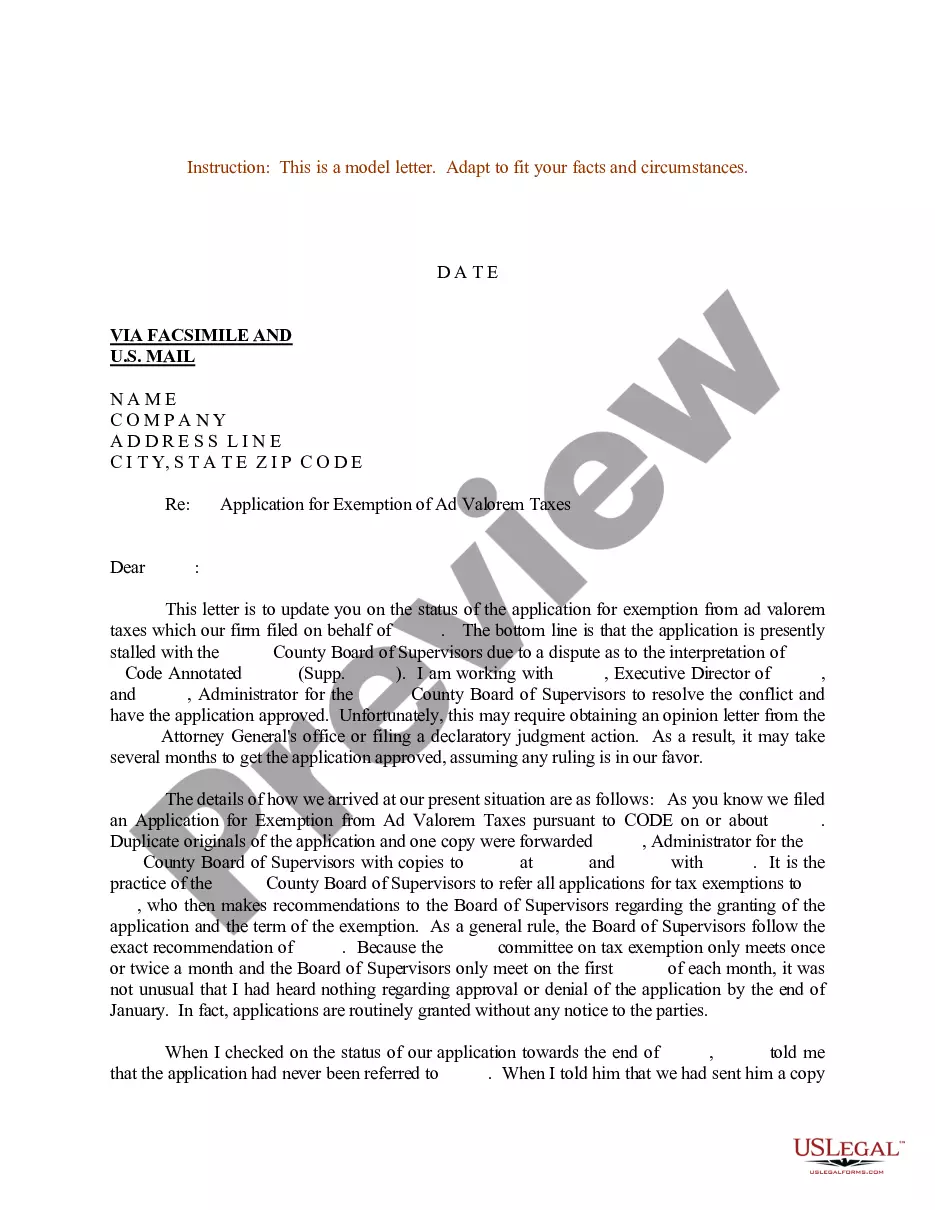
Get your form ready online
Our built-in tools help you complete, sign, share, and store your documents in one place.
Make edits, fill in missing information, and update formatting in US Legal Forms—just like you would in MS Word.
Download a copy, print it, send it by email, or mail it via USPS—whatever works best for your next step.
Sign and collect signatures with our SignNow integration. Send to multiple recipients, set reminders, and more. Go Premium to unlock E-Sign.
If this form requires notarization, complete it online through a secure video call—no need to meet a notary in person or wait for an appointment.
We protect your documents and personal data by following strict security and privacy standards.
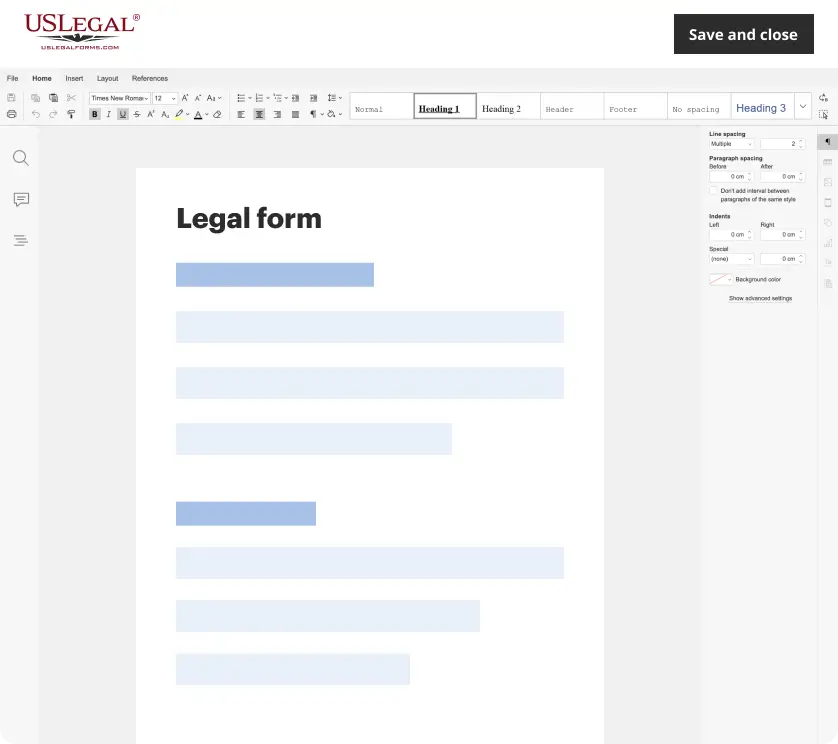
Make edits, fill in missing information, and update formatting in US Legal Forms—just like you would in MS Word.
Download a copy, print it, send it by email, or mail it via USPS—whatever works best for your next step.
Sign and collect signatures with our SignNow integration. Send to multiple recipients, set reminders, and more. Go Premium to unlock E-Sign.

If this form requires notarization, complete it online through a secure video call—no need to meet a notary in person or wait for an appointment.
We protect your documents and personal data by following strict security and privacy standards.
Looking for another form?





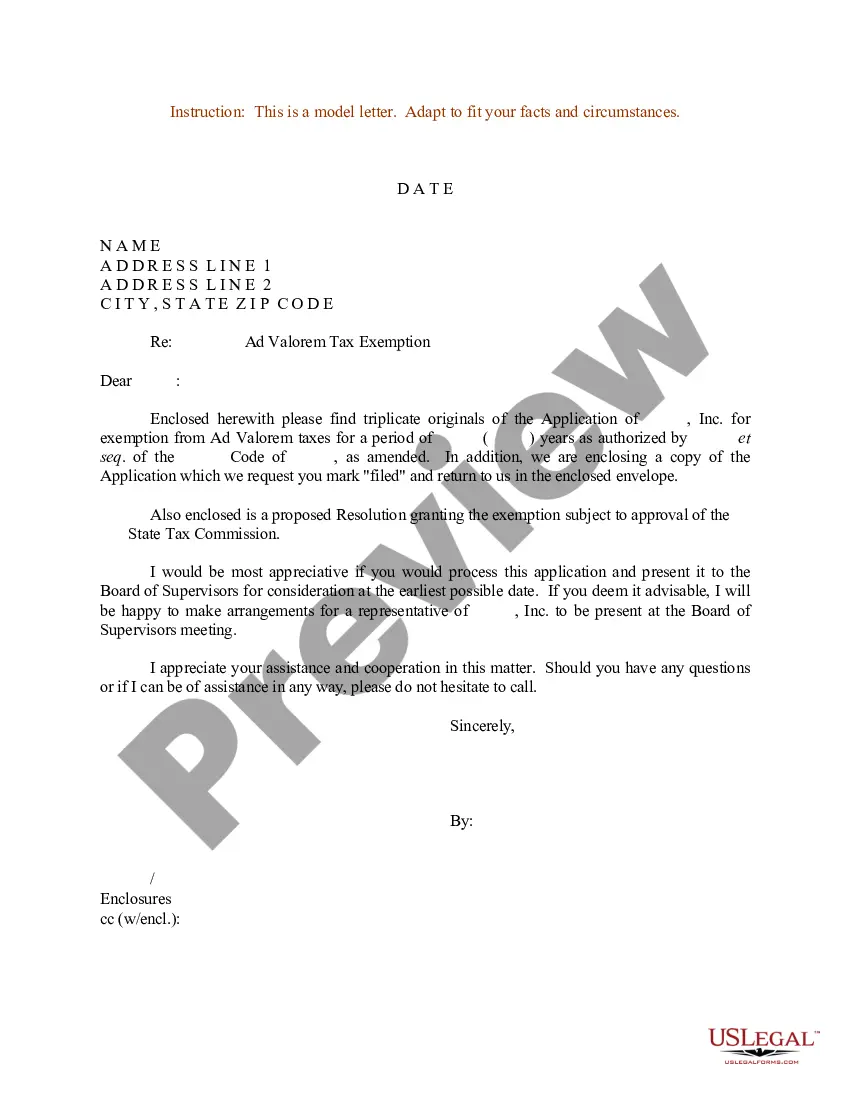
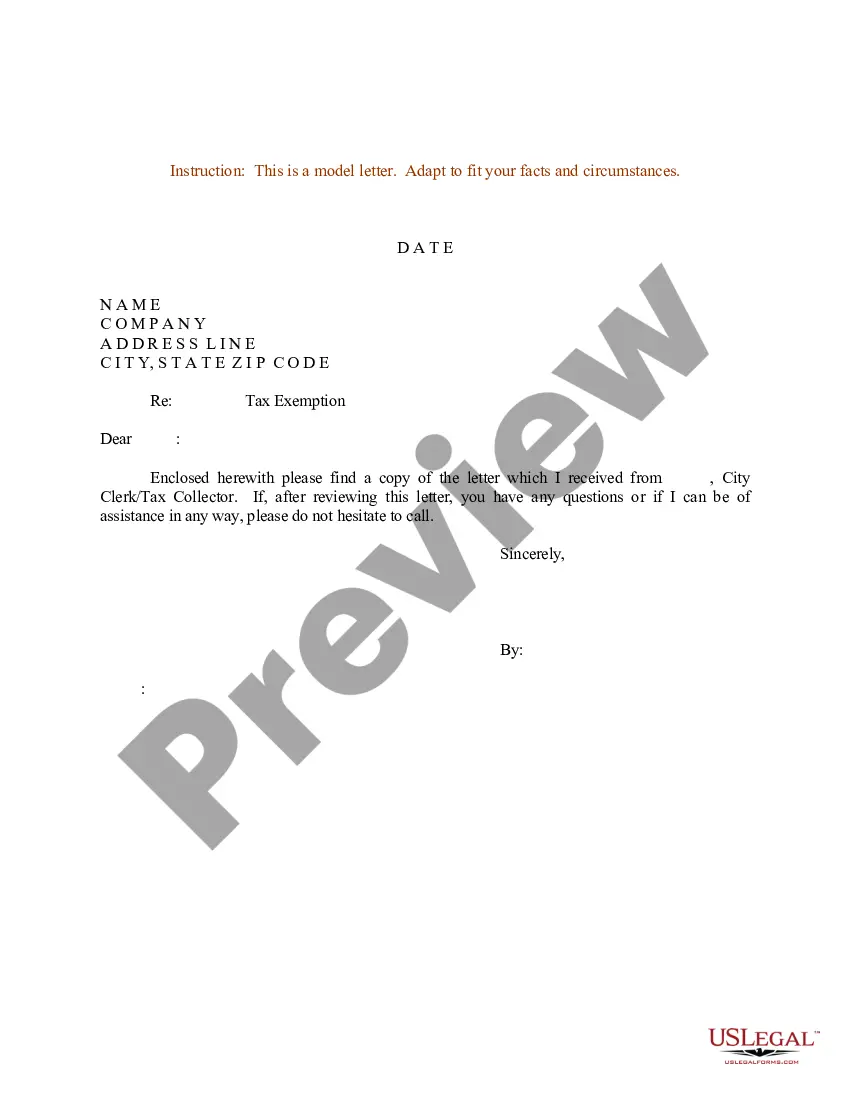
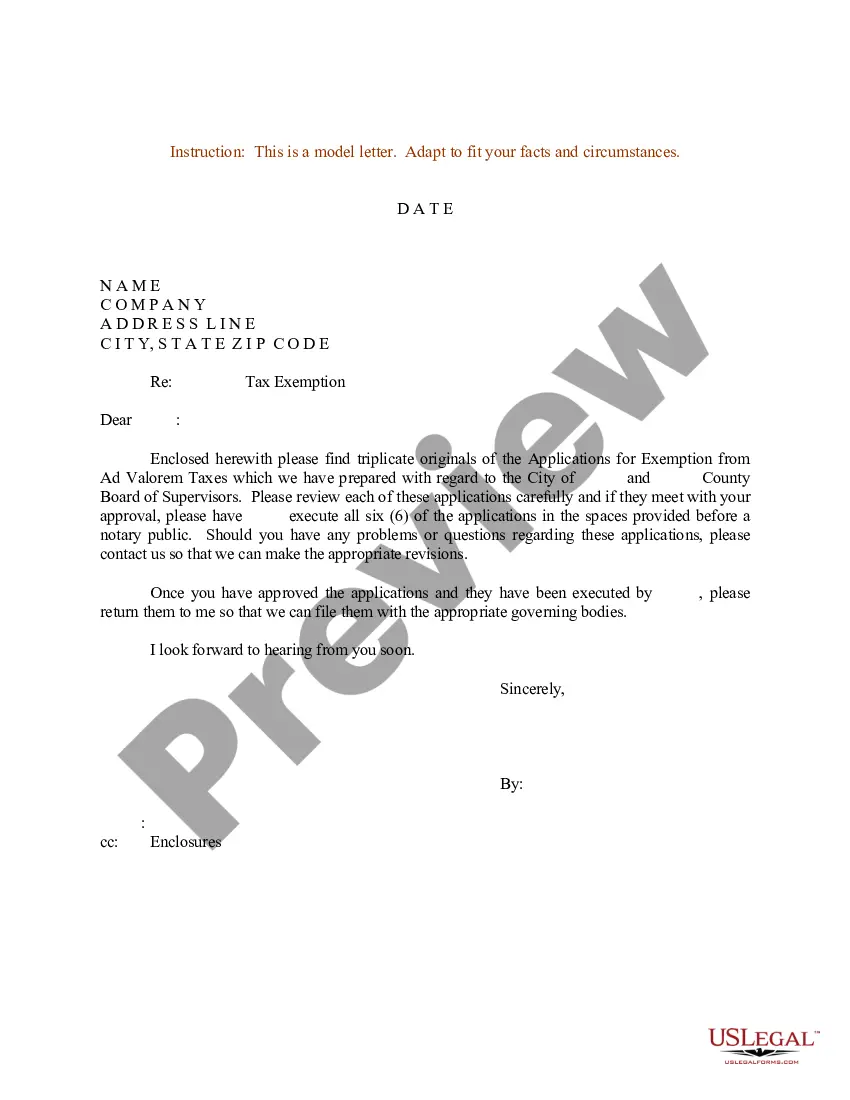
How to fill out Sample Letter For Tax Exemption - Scheduled Meeting?
The Tax Exempt Form For Texas presented on this page is a reusable official template created by expert attorneys in accordance with federal and local laws.
For over 25 years, US Legal Forms has supplied individuals, companies, and lawyers with more than 85,000 authenticated, state-specific documents for various business and personal circumstances. It’s the fastest, simplest, and most dependable method to acquire the forms you require, as the service assures bank-level data security and anti-malware safeguards.
Select the format you desire for your Tax Exempt Form For Texas (PDF, Word, RTF) and download the sample to your device.
- Search for the document you require and examine it.
- Browse through the sample you searched for and preview it or review the form description to verify it meets your needs. If it does not, use the search bar to find the correct one. Click Buy Now when you have located the template you require.
- Register and Log In.
- Choose the payment plan that fits you and establish an account. Use PayPal or a credit card for a swift payment. If you already have an account, Log In and check your subscription to proceed.
- Obtain the fillable template.
Form popularity
FAQ
In general, you can claim exempt for an entire calendar year if you expect to owe no tax. The key is to correctly fill out the tax exempt form for Texas and submit it at the start of your employment or when your financial situation changes. If your circumstances allow, you can change your status at any time during the year. Monitoring your income and tax status is essential to avoid any issues with your claims.
To file exempt legally, you must submit the correct tax exempt form for Texas, typically the W-4 form, to your employer. It is vital to declare that you qualify for exempt status and review the IRS guidelines to ensure compliance. Keep records of your exemption claims for reference. By following these steps carefully, you can manage your tax obligations in accordance with the law.
Claiming exempt on your taxes without qualifying can lead to penalties from the IRS. If you incorrectly claim exempt using the tax exempt form for Texas, you may end up with a tax bill when taxes are due. Additionally, you could face interest charges and penalties for unpaid taxes. Therefore, it is crucial to ensure that you meet the necessary requirements before submitting your claim.
Yes, using your Employer Identification Number (EIN) can support your application for tax-exempt status. If your organization qualifies, you can submit the tax exempt form for Texas using your EIN. This number serves as a unique identifier for businesses and nonprofits, streamlining the process of establishing your tax-exempt status. Make sure to keep your EIN information secure and up to date.
To qualify for tax-exempt status in Texas, you must meet specific criteria set by the IRS. Generally, you need to demonstrate that you expect to owe no federal tax or that your income falls below the taxable threshold. Additionally, you might be required to provide proof of your qualifying status on the tax exempt form for Texas. Consulting with a tax professional can clarify your eligibility.
To change your tax withholding to exempt, you must complete the appropriate tax exempt form for Texas. This typically includes submitting a W-4 form to your employer, marking your exemption status clearly. Be sure to provide accurate information to avoid complications and ensure correct processing. Regularly review your withholding status to align with any changes in your financial situation.
Claiming exempt on your tax form in Texas requires careful attention to detail. You must fill out the applicable tax exempt form for Texas correctly and submit it by the deadline indicated by your local tax authority. Ensure that you provide all necessary documentation to support your claim. If you find the paperwork daunting, platforms like USLegalForms offer templates and guidance to help simplify the process.
The timeline for obtaining property tax exemption in Texas can vary. Typically, once you submit your tax exempt form for Texas, the review process may take anywhere from a few weeks to a few months, depending on the local appraisal district's workload. It is essential to follow up if you do not receive a timely confirmation. Understanding this process helps you prepare better for any financial implications.
Getting property tax exempt in Texas involves submitting a dedicated application to your local appraisal district. This application typically requires you to provide proof of eligibility, such as age, disability, or organizational status. Completing the tax exempt form for Texas thoroughly and accurately can facilitate a smoother approval process. For clarity and assistance, consider using resources like USLegalForms, which guide you through the requirements.
To stop paying property taxes in Texas, individuals often need to apply for a tax exemption based on age or disability. Senior citizens and disabled individuals can benefit from specific exemptions available under Texas law. Submitting the appropriate tax exempt form for Texas is essential in this process, as it registers your claim for the exemption. Stay informed about local regulations to ensure you meet all requirements.