Attempt Unclaimed Property With No Title
Description
Get your form ready online
Our built-in tools help you complete, sign, share, and store your documents in one place.
Make edits, fill in missing information, and update formatting in US Legal Forms—just like you would in MS Word.
Download a copy, print it, send it by email, or mail it via USPS—whatever works best for your next step.
Sign and collect signatures with our SignNow integration. Send to multiple recipients, set reminders, and more. Go Premium to unlock E-Sign.
If this form requires notarization, complete it online through a secure video call—no need to meet a notary in person or wait for an appointment.
We protect your documents and personal data by following strict security and privacy standards.

Make edits, fill in missing information, and update formatting in US Legal Forms—just like you would in MS Word.

Download a copy, print it, send it by email, or mail it via USPS—whatever works best for your next step.

Sign and collect signatures with our SignNow integration. Send to multiple recipients, set reminders, and more. Go Premium to unlock E-Sign.

If this form requires notarization, complete it online through a secure video call—no need to meet a notary in person or wait for an appointment.

We protect your documents and personal data by following strict security and privacy standards.
Looking for another form?







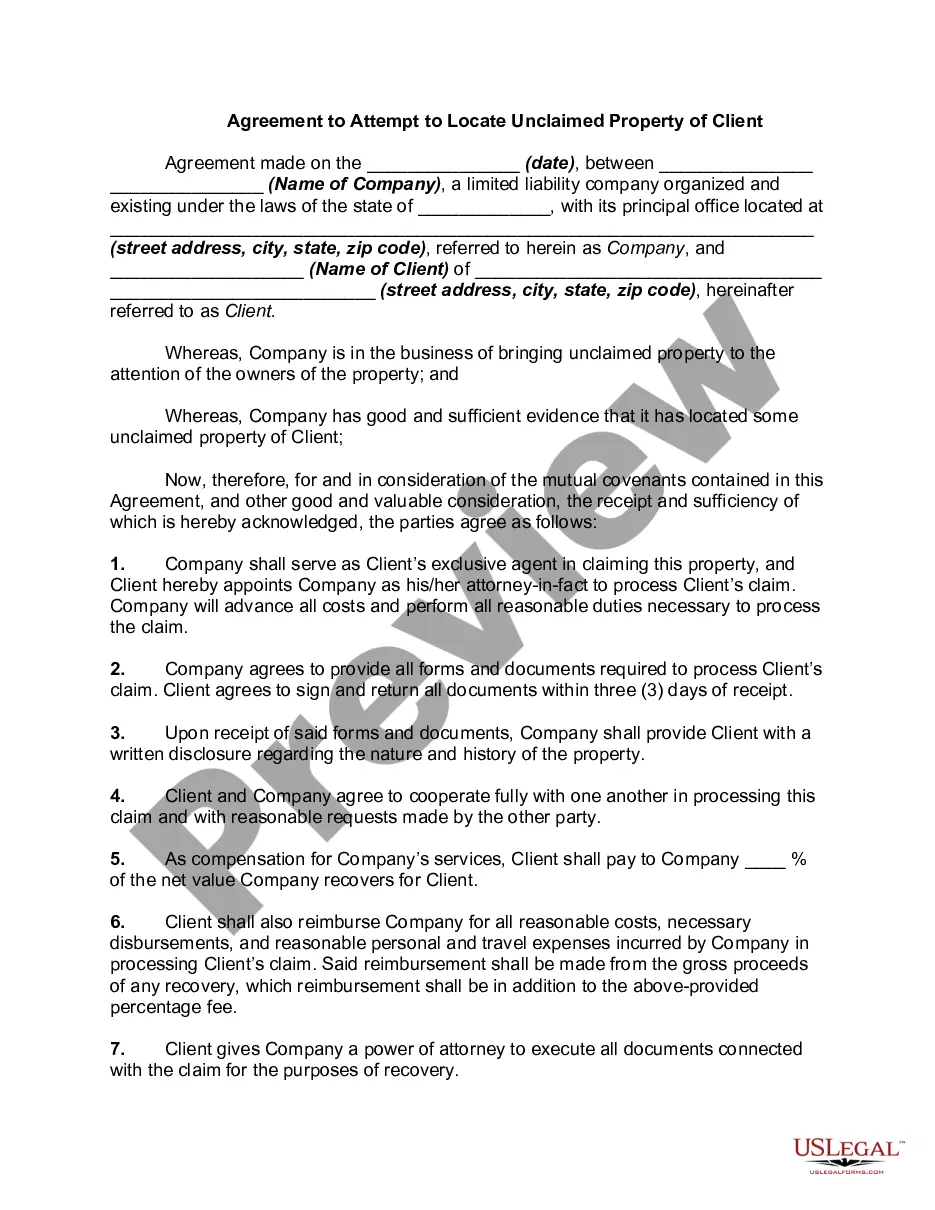
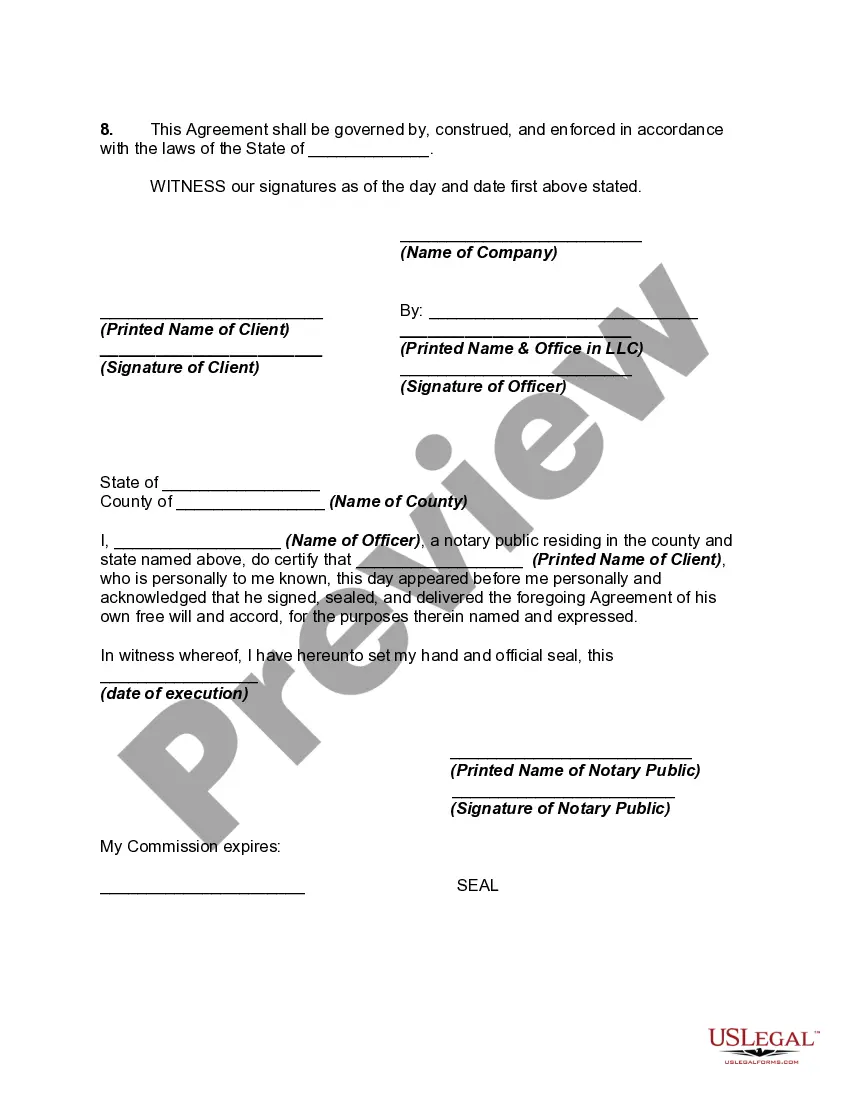
How to fill out Agreement To Attempt To Locate Unclaimed Property Of Client?
- Visit US Legal Forms and log in to your account if you are a returning user. Ensure your subscription is active to proceed smoothly.
- If you are new, browse the extensive library of over 85,000 legal forms. Use the Search feature to find the appropriate forms related to unclaimed property.
- Once you locate the correct form, preview its details to confirm it meets your specific needs and jurisdiction requirements.
- Select the document and choose your preferred subscription plan by clicking the Buy Now button. Create an account for full access to all forms.
- Complete the purchase by providing your payment information through credit card or PayPal.
- Download the form to your device. You can also access it later through the My Forms section in your profile.
By utilizing US Legal Forms, you gain access to a vast collection of legal documents and expert guidance, ensuring that your unclaimed property claim is handled correctly.
Take control of your unclaimed property journey today! Visit US Legal Forms to get started.
Form popularity
FAQ
To claim an abandoned house in Texas, start by researching the property's title history and confirming it is indeed unclaimed. You will want to gather the necessary documentation and possibly attempt unclaimed property with no title. Engaging with US Legal Forms can provide you with templates and resources to guide you through this process seamlessly. Always consult legal professionals to ensure you complete the steps correctly.
Yes, you can take ownership of an abandoned house in Texas, but it involves more than just moving in. You will need to follow the legal processes and possibly attempt unclaimed property with no title to establish yourself as the rightful owner. Securing legal advice can help you understand your options and the necessary steps to take ownership effectively. Always ensure you are compliant with local laws.
In Texas, the waiting period for a property to become yours through adverse possession can vary, typically ranging from 5 to 10 years of continuous occupancy. However, you must meet specific criteria and undertake proper legal actions to claim it. Attempt unclaimed property with no title by documenting your residency and maintaining the home. Consulting with a real estate attorney can provide clarity on your journey.
You cannot simply claim an abandoned house as your own without following legal procedures. Attempting unclaimed property with no title takes time and proper documentation to establish ownership. Each state, including Texas, has specific laws regarding squatters' rights and property claims. Ensure you consult legal resources or assistance to navigate the process correctly.
Living in an abandoned house in Texas without ownership can lead to legal trouble. You cannot legally occupy a property that does not belong to you, as this could be considered trespassing. If you have your heart set on a property, you may want to consider attempting unclaimed property with no title, following the proper legal channels. Explore the necessary steps to claim ownership legally.
Yes, it is illegal to attempt unclaimed property with no title that does not belong to you. Claiming property that you do not have ownership of can lead to legal consequences. It is essential to research and ensure the property is actually unclaimed before taking any steps. If you are interested in unclaimed property, consider checking the legal guidelines in your state.
Processing unclaimed property in California can vary, but it typically takes several weeks to a few months. After you submit the necessary documentation to attempt unclaimed property with no title, the state reviews your claim for accuracy and legitimacy. Timely response and complete documents can expedite this process. Make sure to follow up on your claim status to stay informed.
If unclaimed property remains unclaimed, it often becomes the possession of the state. The state holds it temporarily until the rightful owner attempts unclaimed property with no title. In some cases, the state may sell the property after a specific period. It's essential to stay aware of your rights as an owner and check regularly for any unclaimed assets.
In California, abandoned property laws dictate that property left unclaimed for a certain period can be considered abandoned. To attempt unclaimed property with no title, you need to follow specific procedures set by the state. Typically, you must report the property to the state and provide necessary information about its ownership. Understanding these laws can help you navigate the claim process more effectively.
You cannot claim unclaimed property that does not belong to you. Each individual must personally attempt unclaimed property with no title that's rightfully theirs. Claiming someone else's property could lead to legal issues. If you believe you have a rightful claim, consult legal resources or a professional to guide you through the process.