Executor Of Estate For Dummies
Description
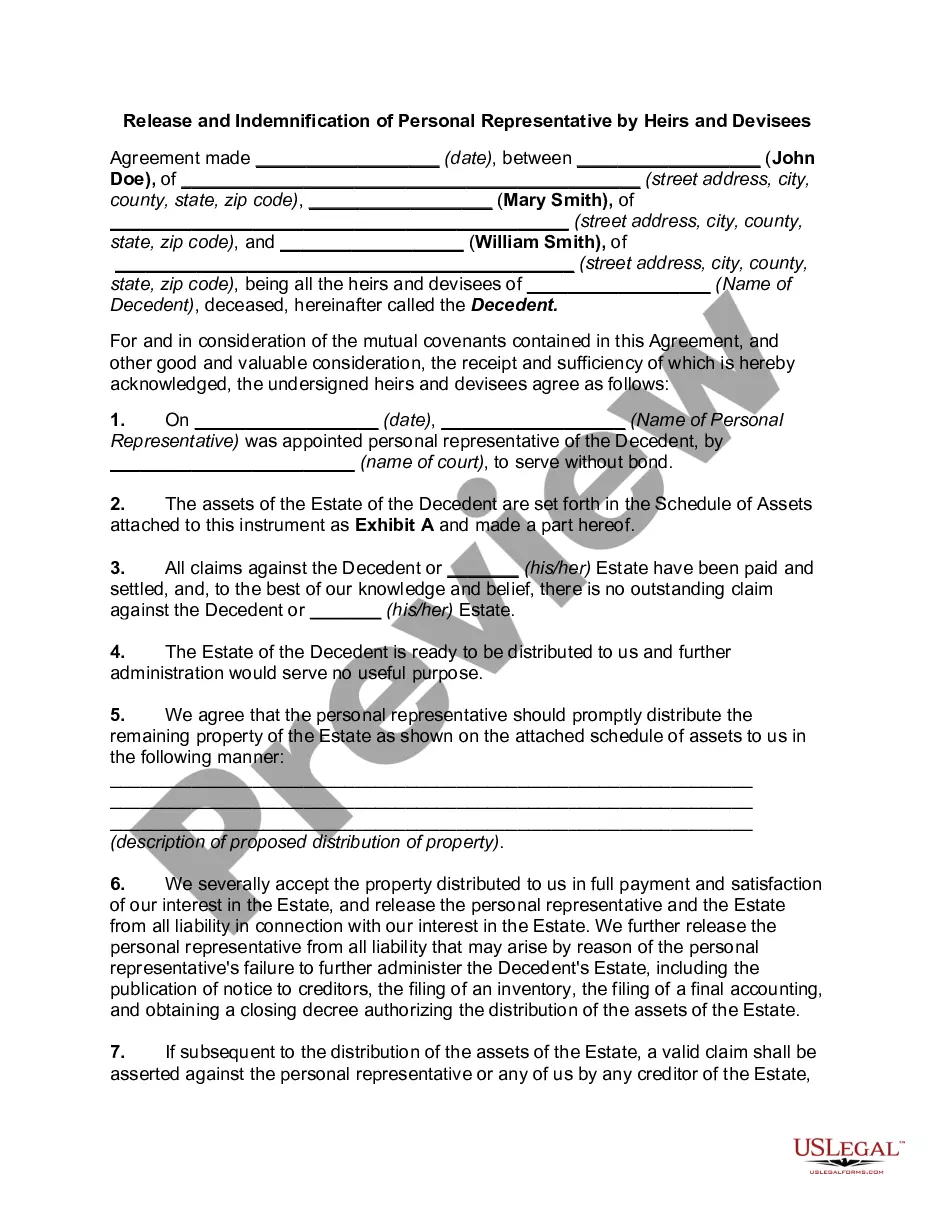
Get your form ready online
Our built-in tools help you complete, sign, share, and store your documents in one place.
Make edits, fill in missing information, and update formatting in US Legal Forms—just like you would in MS Word.
Download a copy, print it, send it by email, or mail it via USPS—whatever works best for your next step.
Sign and collect signatures with our SignNow integration. Send to multiple recipients, set reminders, and more. Go Premium to unlock E-Sign.
If this form requires notarization, complete it online through a secure video call—no need to meet a notary in person or wait for an appointment.
We protect your documents and personal data by following strict security and privacy standards.

Make edits, fill in missing information, and update formatting in US Legal Forms—just like you would in MS Word.

Download a copy, print it, send it by email, or mail it via USPS—whatever works best for your next step.

Sign and collect signatures with our SignNow integration. Send to multiple recipients, set reminders, and more. Go Premium to unlock E-Sign.

If this form requires notarization, complete it online through a secure video call—no need to meet a notary in person or wait for an appointment.

We protect your documents and personal data by following strict security and privacy standards.
Looking for another form?



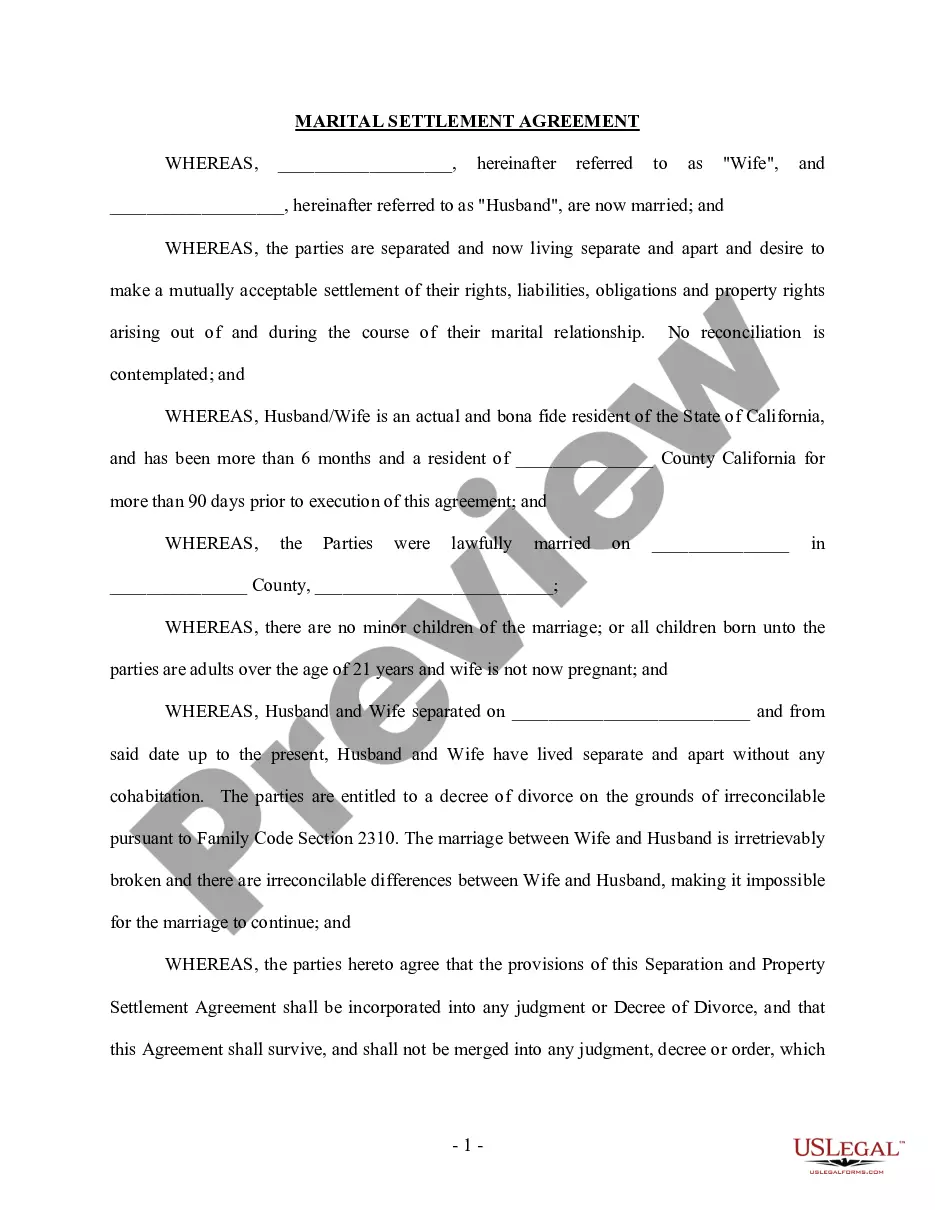

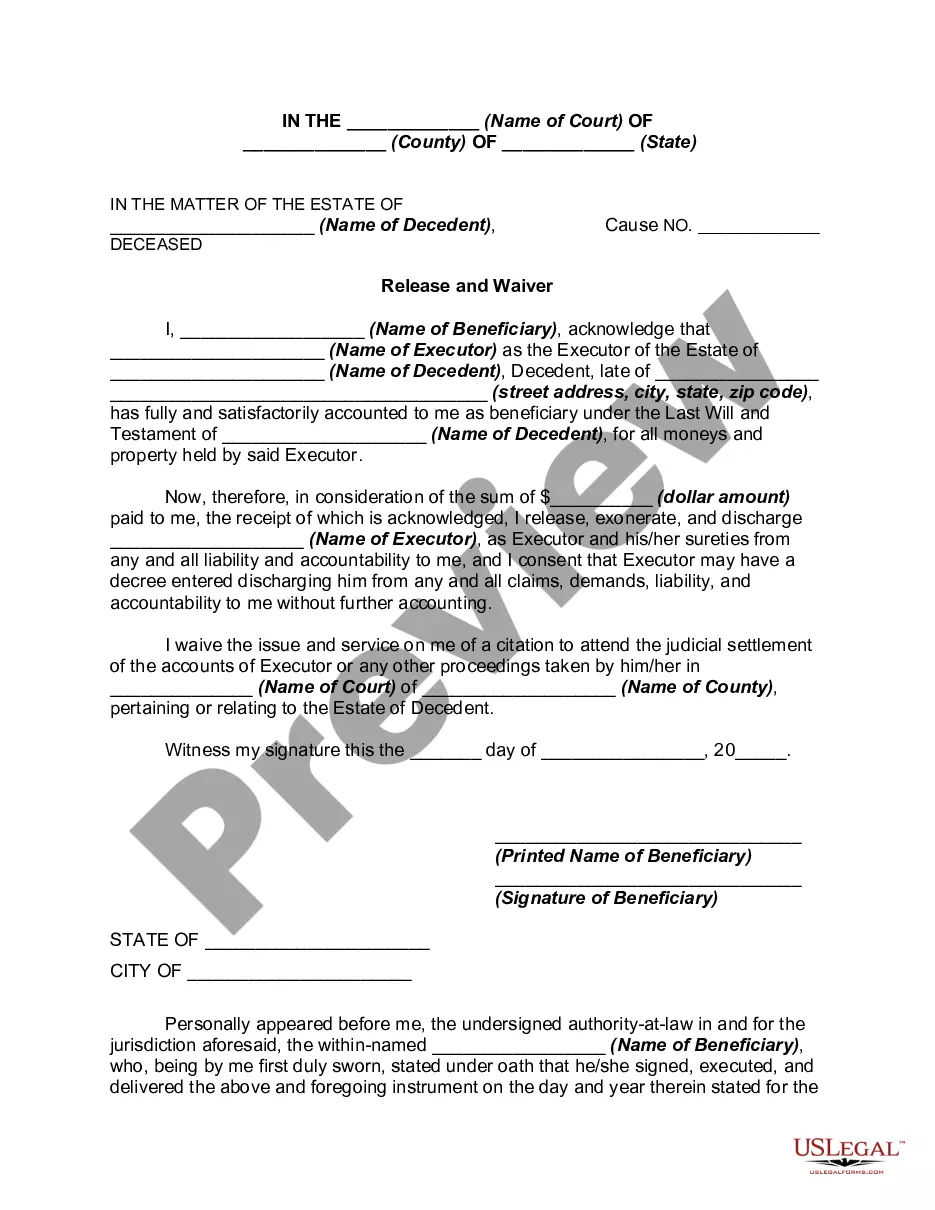
How to fill out Release And Exoneration Of Executor On Distribution To Beneficiary Of Will And Waiver Of Citation Of Final Settlement?
- If you are a returning user, log in to access your account and download the required form from your library. Verify that your subscription is current; if not, renew it as per your plan.
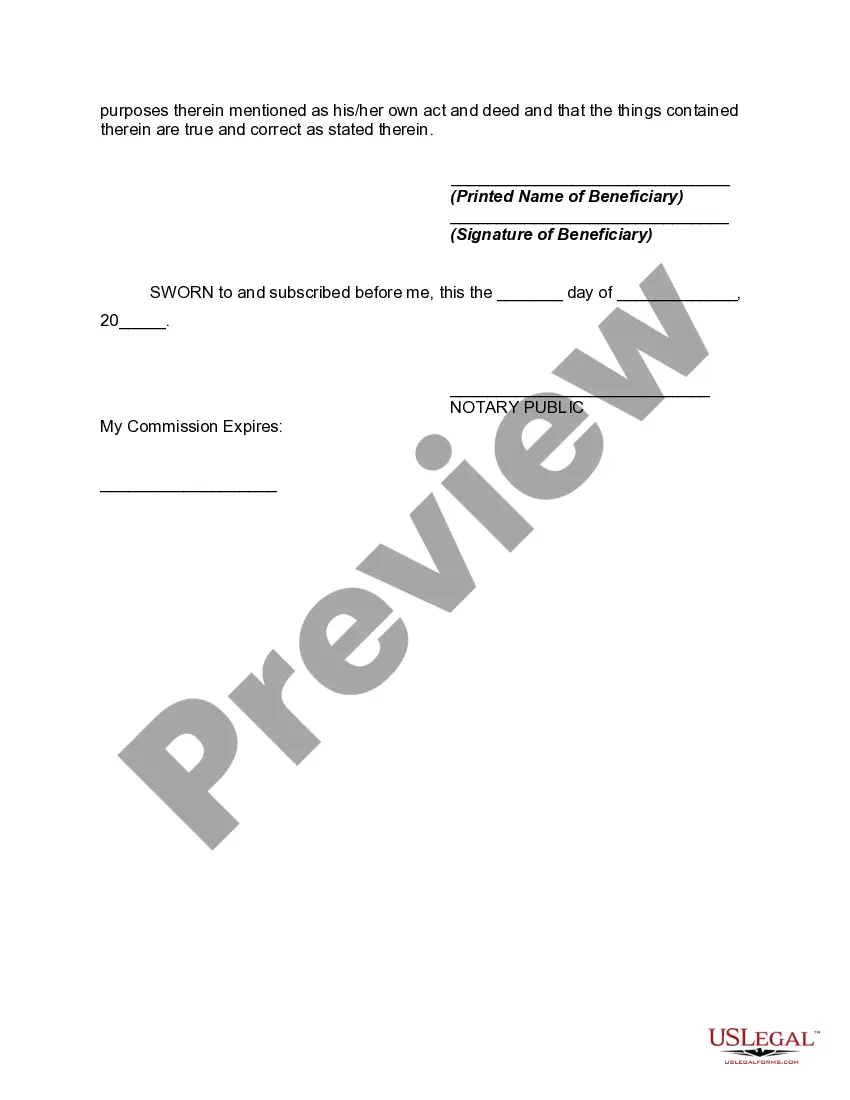
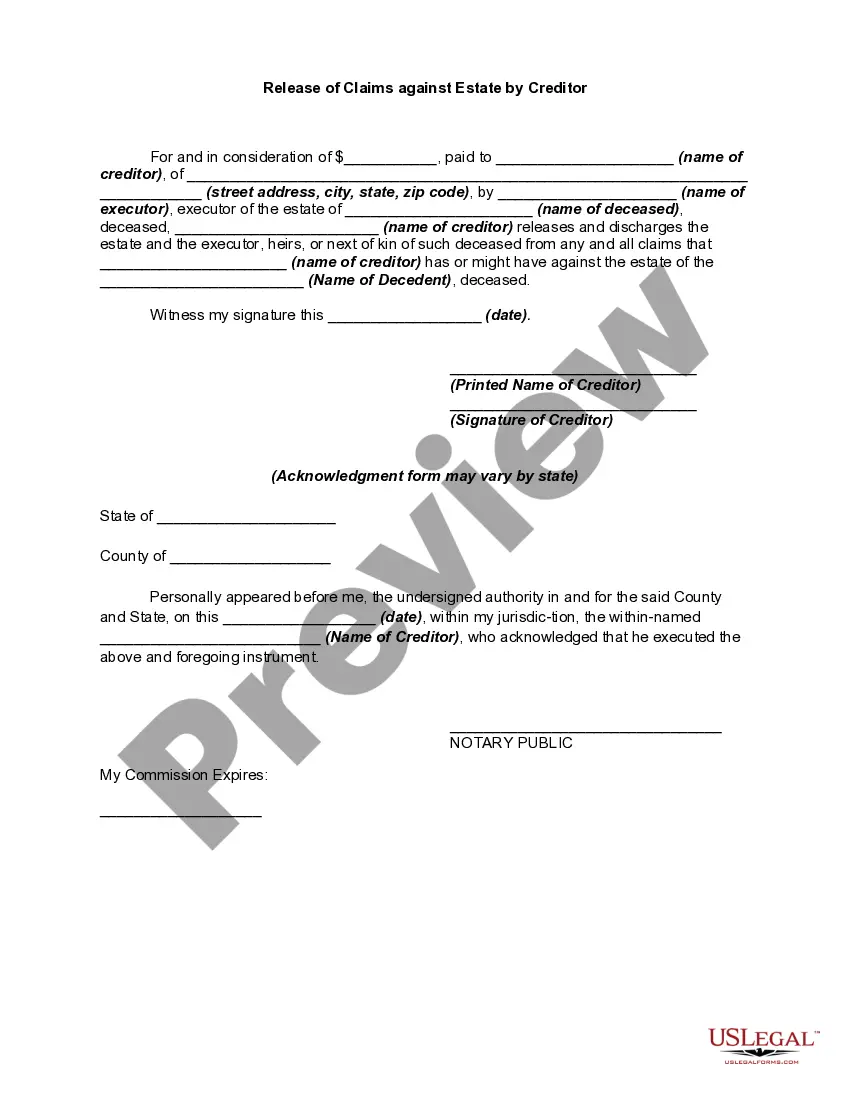
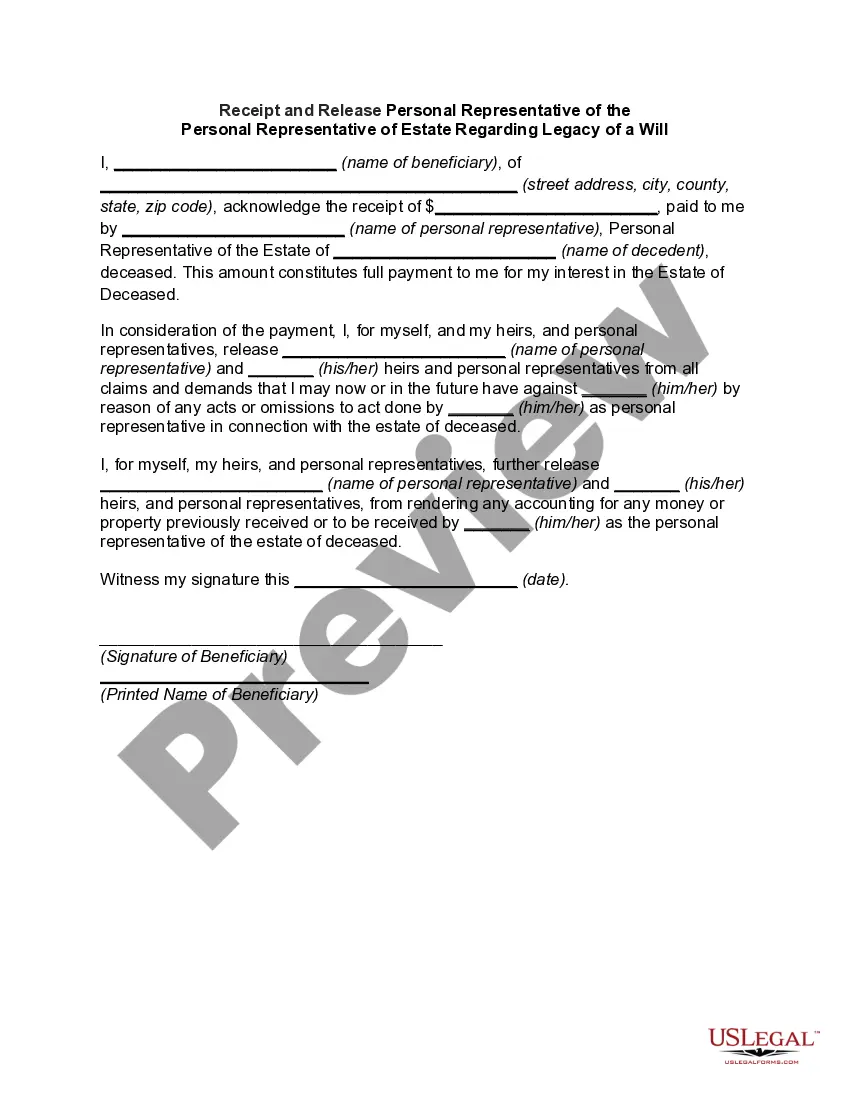
- In case you are a first-time visitor, start by reviewing the Preview mode and descriptions of available templates. Confirm that you select the form suitable for your needs and compliant with local laws.
- If necessary, utilize the Search tab to find an alternate template that addresses any discrepancies you noticed in your preferred selection.
- Proceed to purchase the form by clicking the Buy Now button and selecting your desired subscription plan. Create an account to gain access to a wealth of resources.
- Complete your purchase by entering your payment details, either via credit card or your PayPal account, to activate your subscription.
- Finally, download the template to your device for completion and access it later in your My Forms section.
US Legal Forms enables individuals and attorneys to swiftly create legal documents with an extensive library of over 85,000 forms. This vast collection surpasses competitors, and users can also seek assistance from premium experts to ensure their documents are accurate and legally valid.
Take control of your estate matters today! Start using US Legal Forms to simplify your document preparation and ensure compliance. Sign up or log in now!
Form popularity
FAQ
While you are not required to hire a lawyer to become the executor of an estate, consulting one can simplify the process. A lawyer can guide you through the legal responsibilities and paperwork involved in managing an estate. This can be particularly beneficial if disputes arise among beneficiaries. For more detailed assistance, USLegalForms offers resources that can clarify the executor of estate for dummies.
Selecting the right executor is crucial, and it often depends on your unique circumstance. Many people choose a close family member or a trusted friend who can manage the duties compassionately. Others may opt for a professional, such as an attorney or a financial advisor, especially if the estate is complex. This understanding helps support those learning about the executor of estate for dummies.
The best person to appoint as the executor of a will is usually someone who is trustworthy, organized, and familiar with financial matters. This individual should also have a clear understanding of your wishes and be willing to fulfill them. Additionally, consider their ability to handle potential family dynamics and conflicts. This advice serves individuals seeking clarity in the executor of estate for dummies.
To make yourself the executor of an estate, you need to be named in the will by the deceased person. If you are not named, you can still apply to be the executor by petitioning the probate court. During this process, the court will evaluate the will and your qualifications. This straightforward approach is essential for those seeking guidance through the executor of estate for dummies.
Executors are held accountable through the probate court, which oversees the management of the estate. If beneficiaries believe the executor is not fulfilling their duties or mismanaging assets, they can challenge their actions legally. Understanding these accountability measures and utilizing guidance from US Legal can help ensure a more straightforward experience as an executor of estate for dummies.
Being an executor can lead to significant personal stress, particularly if there are family disputes or complex estate matters to handle. Additionally, executors may face legal liabilities if they fail to fulfill their duties accurately. By familiarizing yourself with tools from US Legal, you can navigate these challenges more effectively, making the role of an executor of estate for dummies less daunting.
Choosing your child as an executor can be a good idea if they are responsible and can handle the emotional weight of the role. However, consider their ability to manage financial matters and family dynamics before making a decision. Resources available on US Legal can also support your child's understanding of their responsibilities, simplifying their journey as an executor of estate for dummies.
Executors often overlook the importance of being transparent with beneficiaries and mismanage timelines for asset distribution. They may also neglect seeking professional help when necessary, which can complicate matters later. Proper planning and using helpful tools like those available on US Legal can help prevent these mistakes, streamlining your experience as an executor of estate for dummies.
Common mistakes made by executors include failing to communicate with beneficiaries and mishandling estate assets. Additionally, executors may forget to properly account for debts and taxes, which can lead to complications down the line. By utilizing resources like US Legal, you can avoid these pitfalls, making the role of executor of estate for dummies much more manageable.
The first step as an executor is to secure the will and locate important estate documents. You should also file the will with the probate court to begin the legal process. Addressing these initial tasks properly sets a solid foundation for fulfilling your role as an executor of estate for dummies.