Spouse Elective Shares With The Government
Description

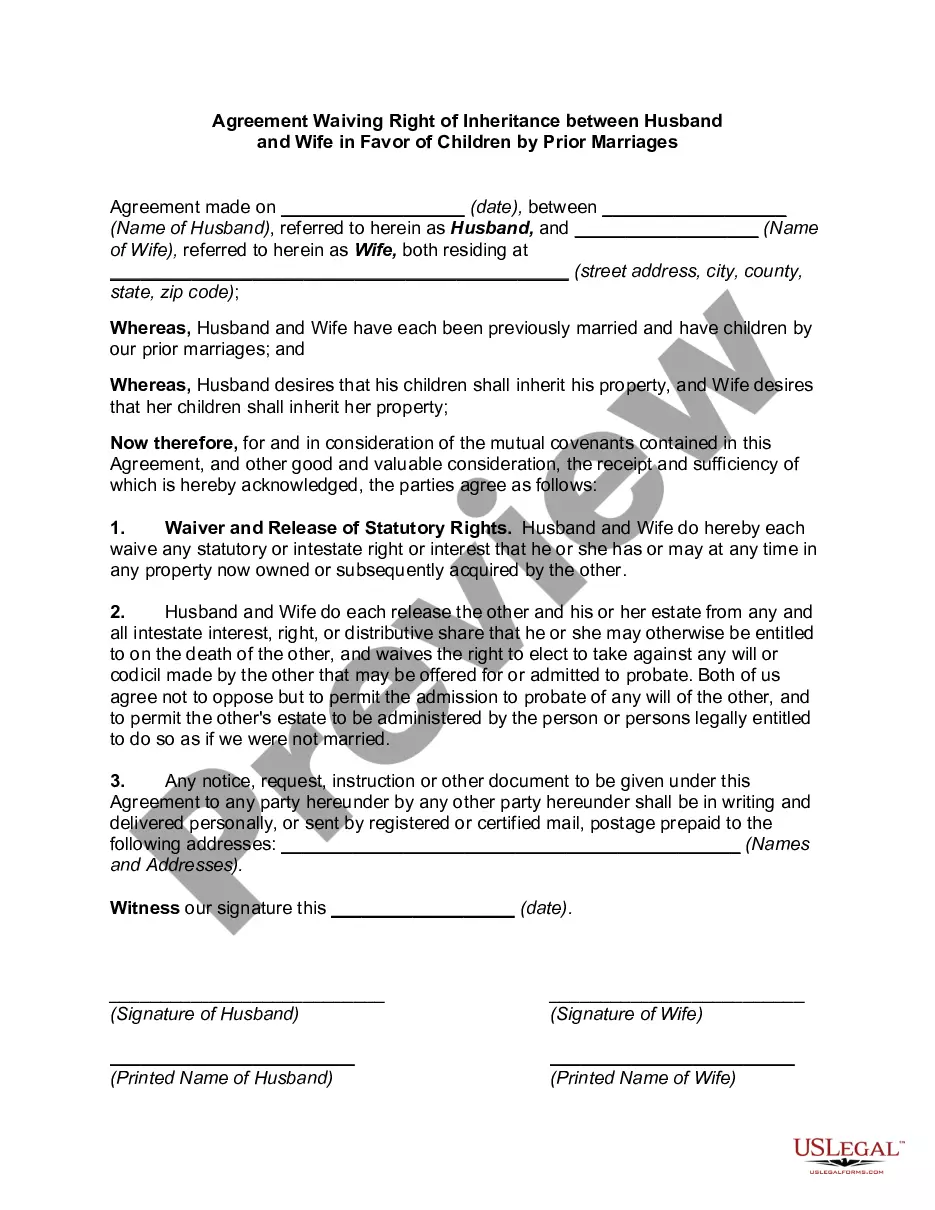
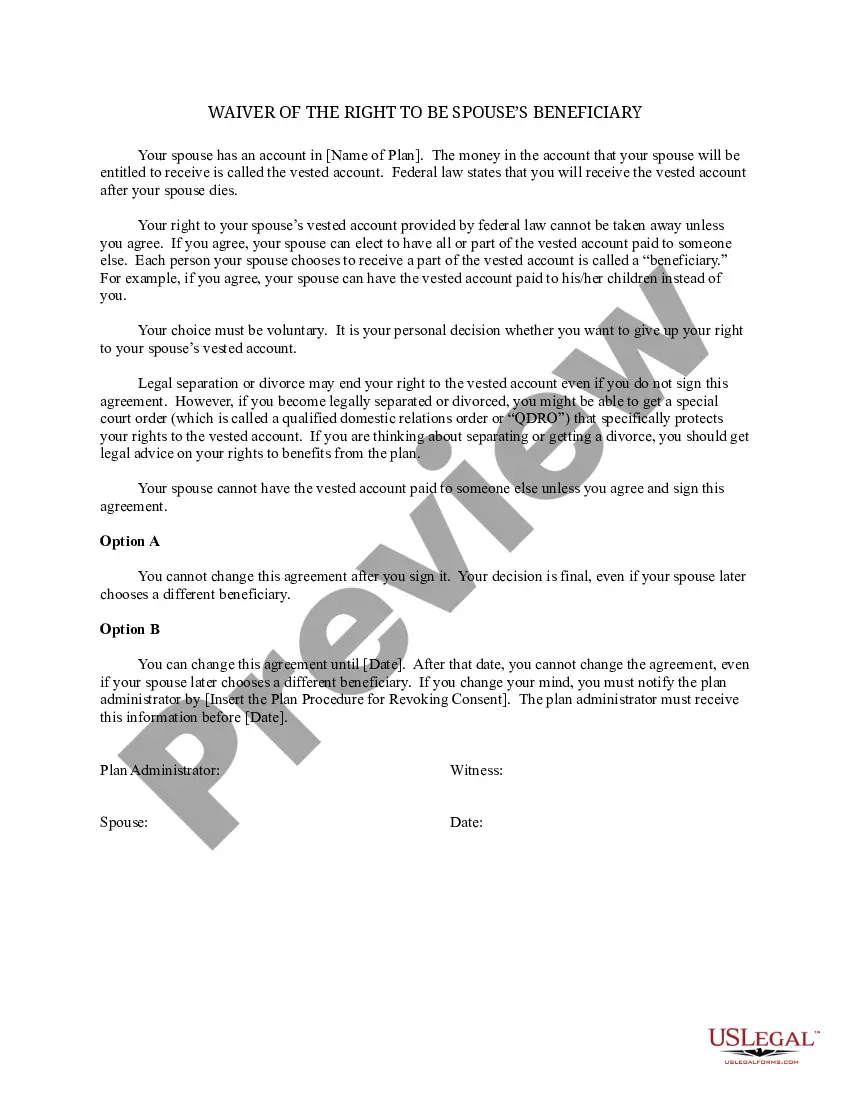
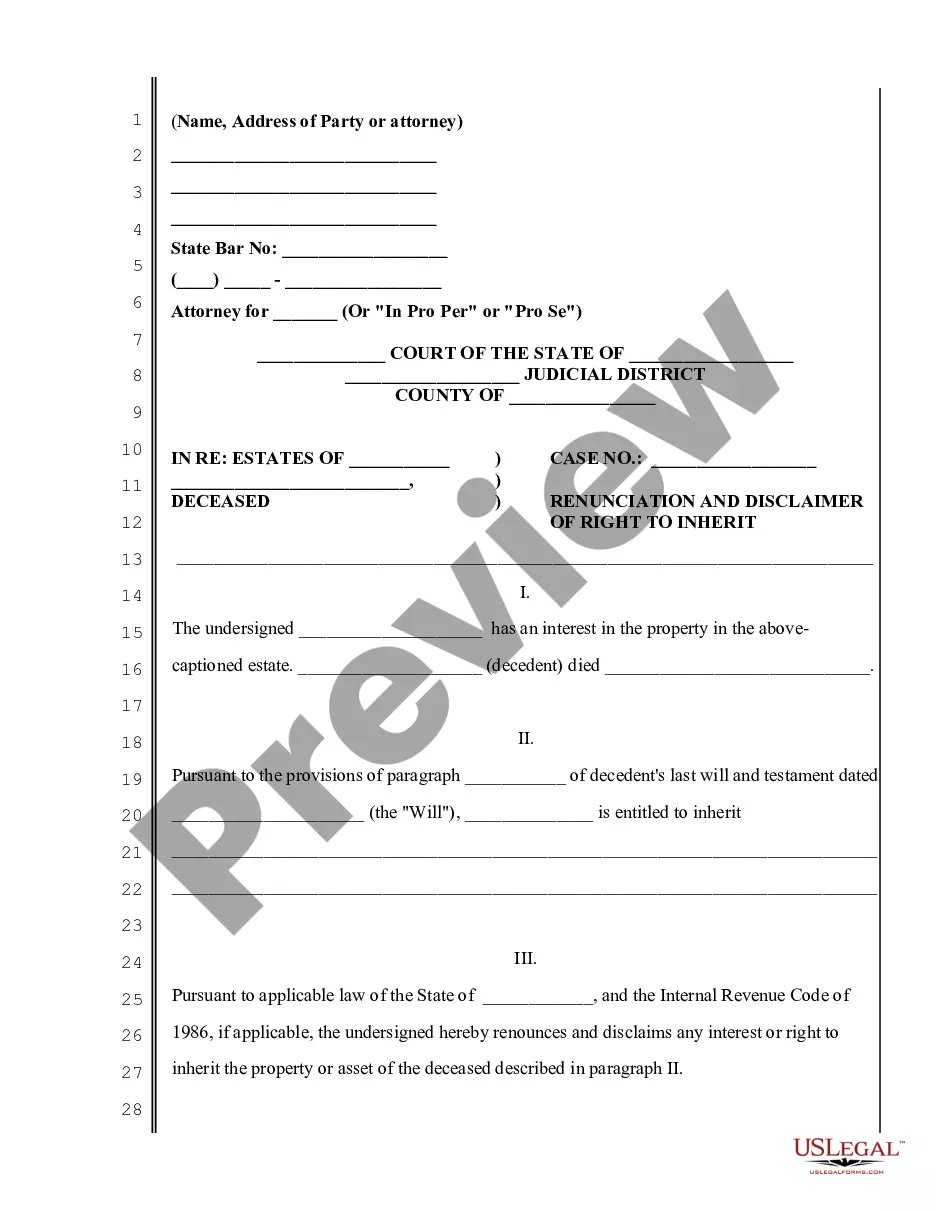
Get your form ready online
Our built-in tools help you complete, sign, share, and store your documents in one place.
Make edits, fill in missing information, and update formatting in US Legal Forms—just like you would in MS Word.
Download a copy, print it, send it by email, or mail it via USPS—whatever works best for your next step.
Sign and collect signatures with our SignNow integration. Send to multiple recipients, set reminders, and more. Go Premium to unlock E-Sign.
If this form requires notarization, complete it online through a secure video call—no need to meet a notary in person or wait for an appointment.
We protect your documents and personal data by following strict security and privacy standards.

Make edits, fill in missing information, and update formatting in US Legal Forms—just like you would in MS Word.

Download a copy, print it, send it by email, or mail it via USPS—whatever works best for your next step.

Sign and collect signatures with our SignNow integration. Send to multiple recipients, set reminders, and more. Go Premium to unlock E-Sign.

If this form requires notarization, complete it online through a secure video call—no need to meet a notary in person or wait for an appointment.

We protect your documents and personal data by following strict security and privacy standards.
Looking for another form?



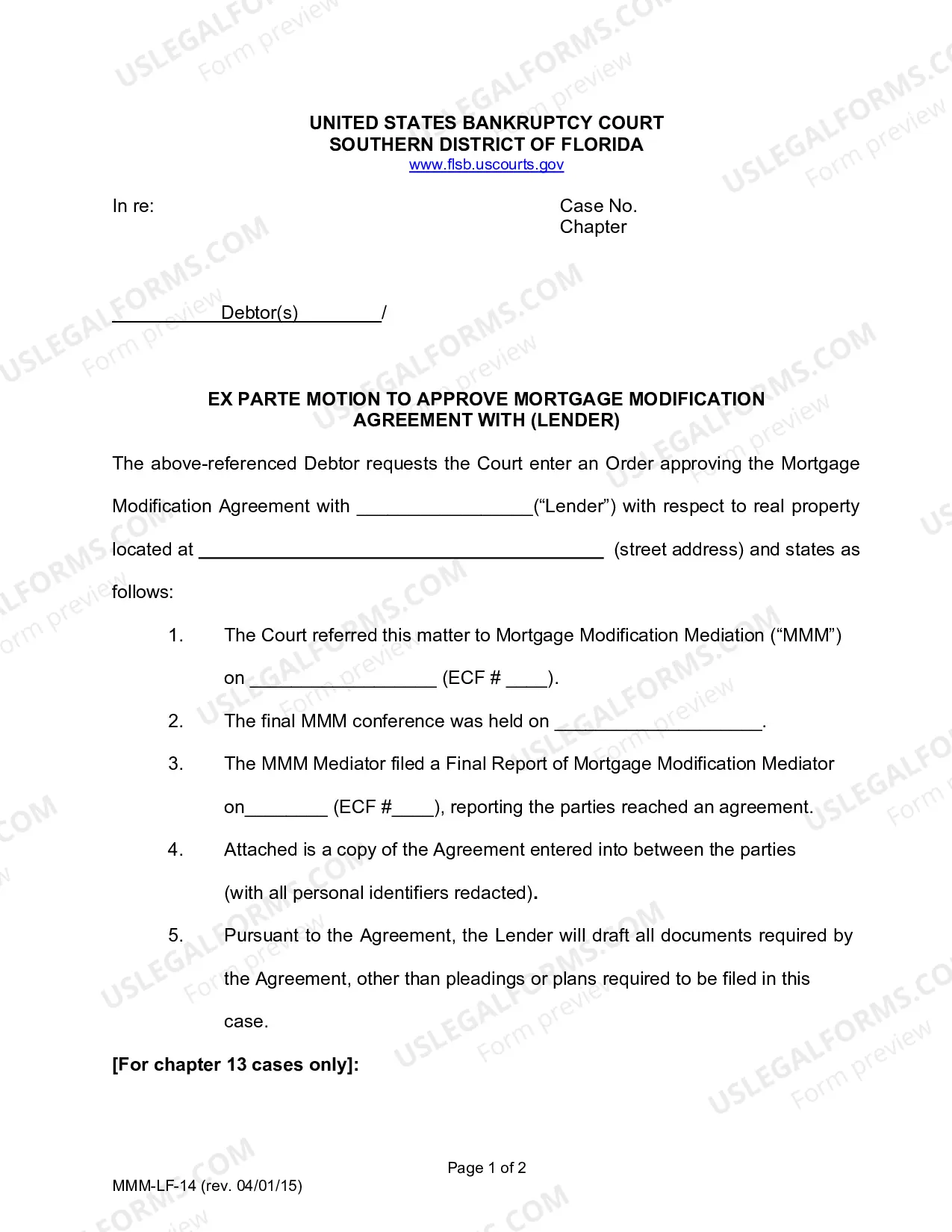
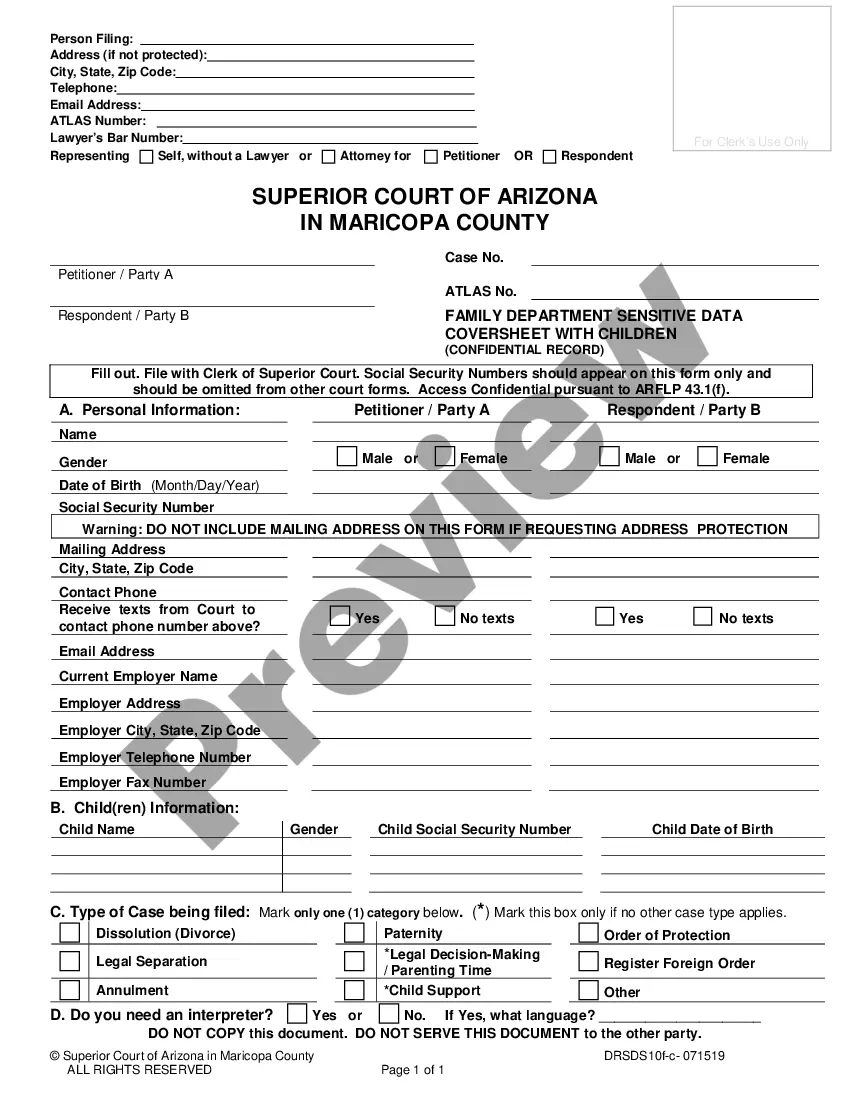

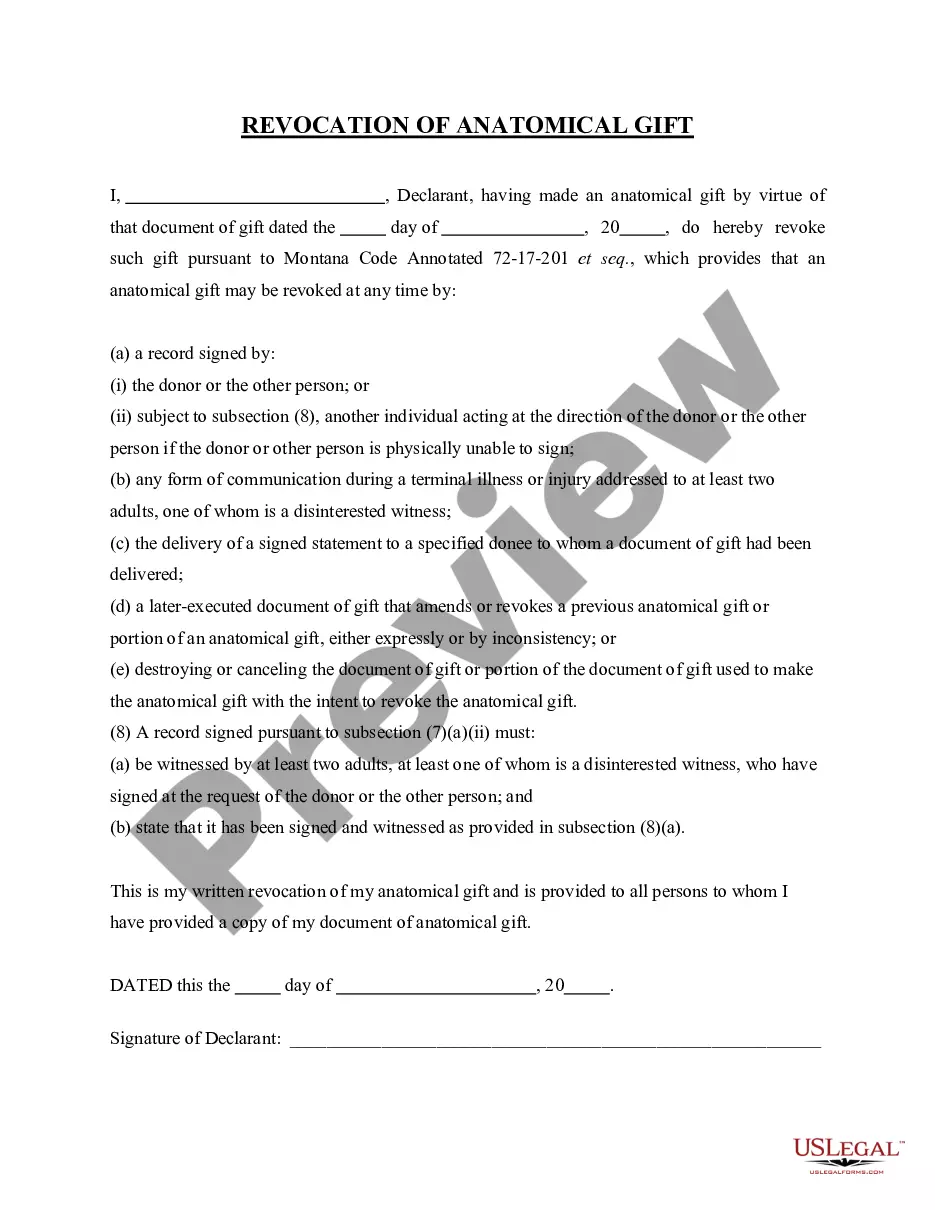


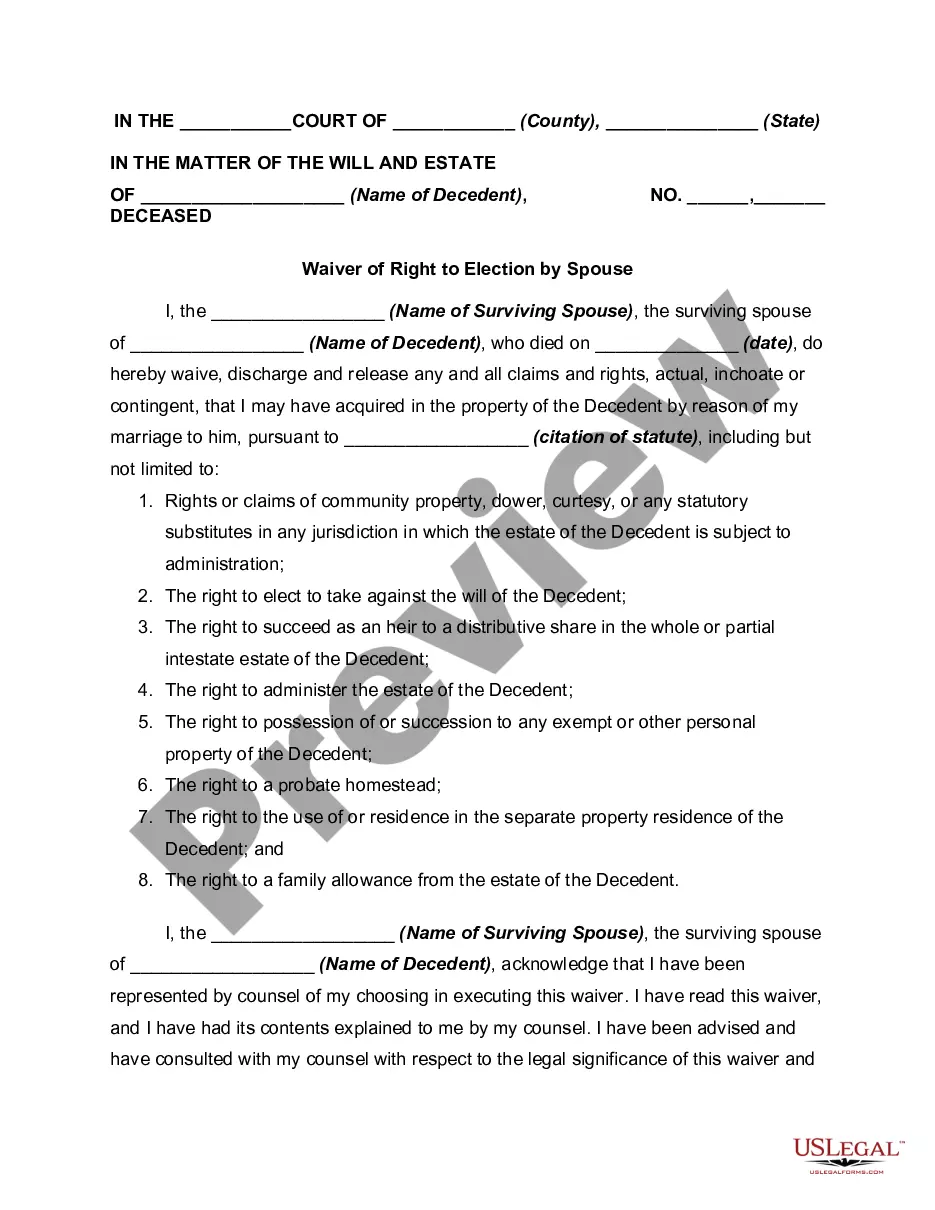
How to fill out Waiver Of Right To Election By Spouse?
- If you're a returning user, log into your account and download the required form template. Ensure your subscription is active—renew if necessary.
- For first-time users, begin by checking the Preview mode and the form description. Confirm that the selected form meets your specific legal needs.
- If you find any discrepancies, utilize the Search tab to look for the appropriate template.
- Once you locate the correct document, click the Buy Now button and select your desired subscription plan, creating an account if prompted.
- Complete your purchase by entering your credit card information or using your PayPal account for payment.
- Finally, download the form and save it to your device. You can always access it later in the My Forms section.
By following these steps, you can easily navigate the process of obtaining spouse elective shares forms. US Legal Forms provides more than just a document—it's a resource for legal empowerment.
Start streamlining your legal needs today by exploring the extensive legal form library at US Legal Forms!
Form popularity
FAQ
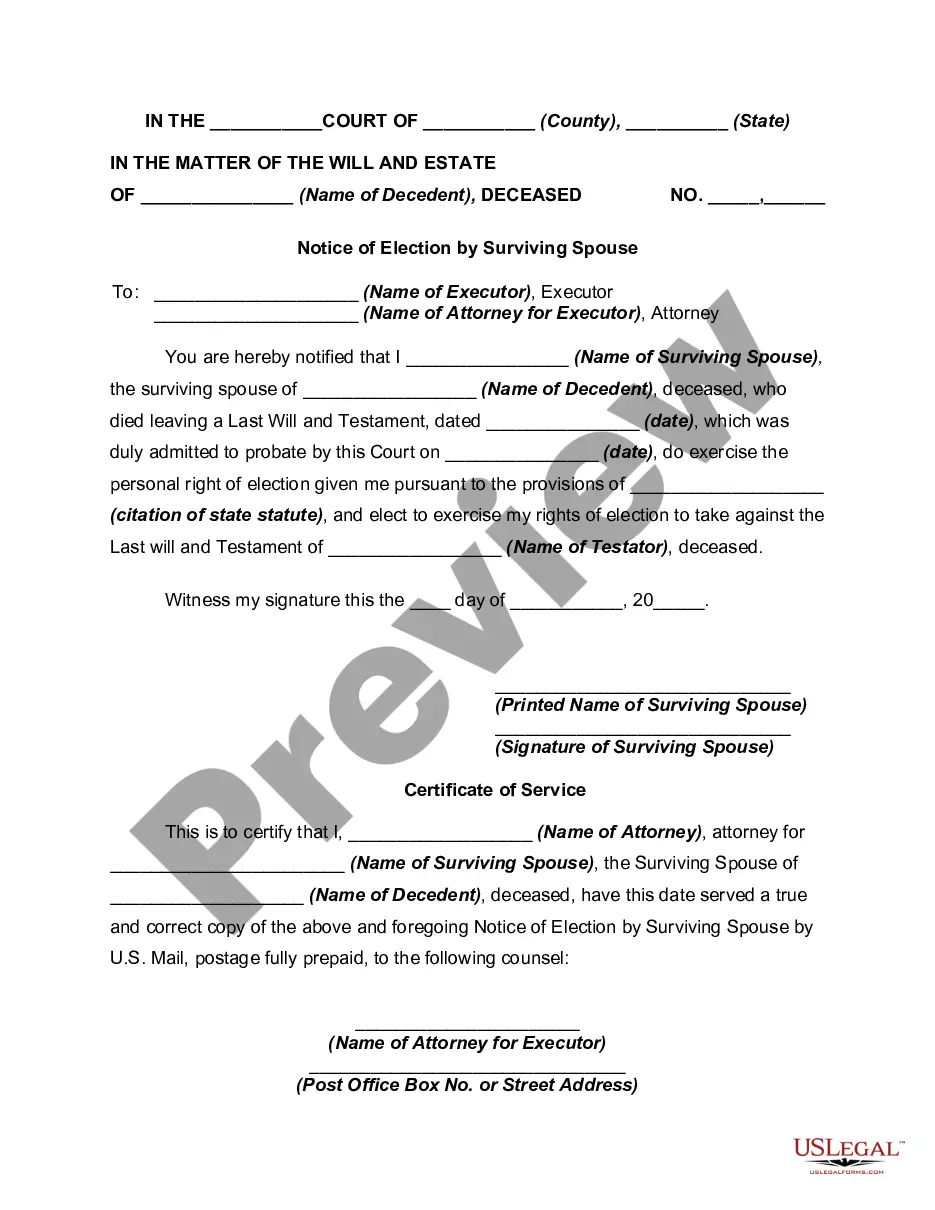
The legal concept of elective share ensures that a surviving spouse receives a fair portion of their deceased partner's estate, protecting them from disinheritance. This concept plays a crucial role in spouse elective shares with the government, as it highlights the balance between individual rights and spousal protections. Understanding this concept can guide you in estate planning and financial security.
An elective share represents a legal right allowing a spouse to claim a portion of the deceased spouse’s estate, regardless of what the will states. Yes, this share can be waived through a legal agreement. It's essential to recognize how such a waiver can affect spouse elective shares with the government, as it may lead to unforeseen financial consequences.
In Florida, the statute governing elective shares is found in Section 732.201 of the Florida Statutes. This section outlines a surviving spouse's right to claim a percentage of the deceased spouse's estate, which can be vital in matters of spouse elective shares with the government. Understanding this statute can help you navigate estate planning effectively.
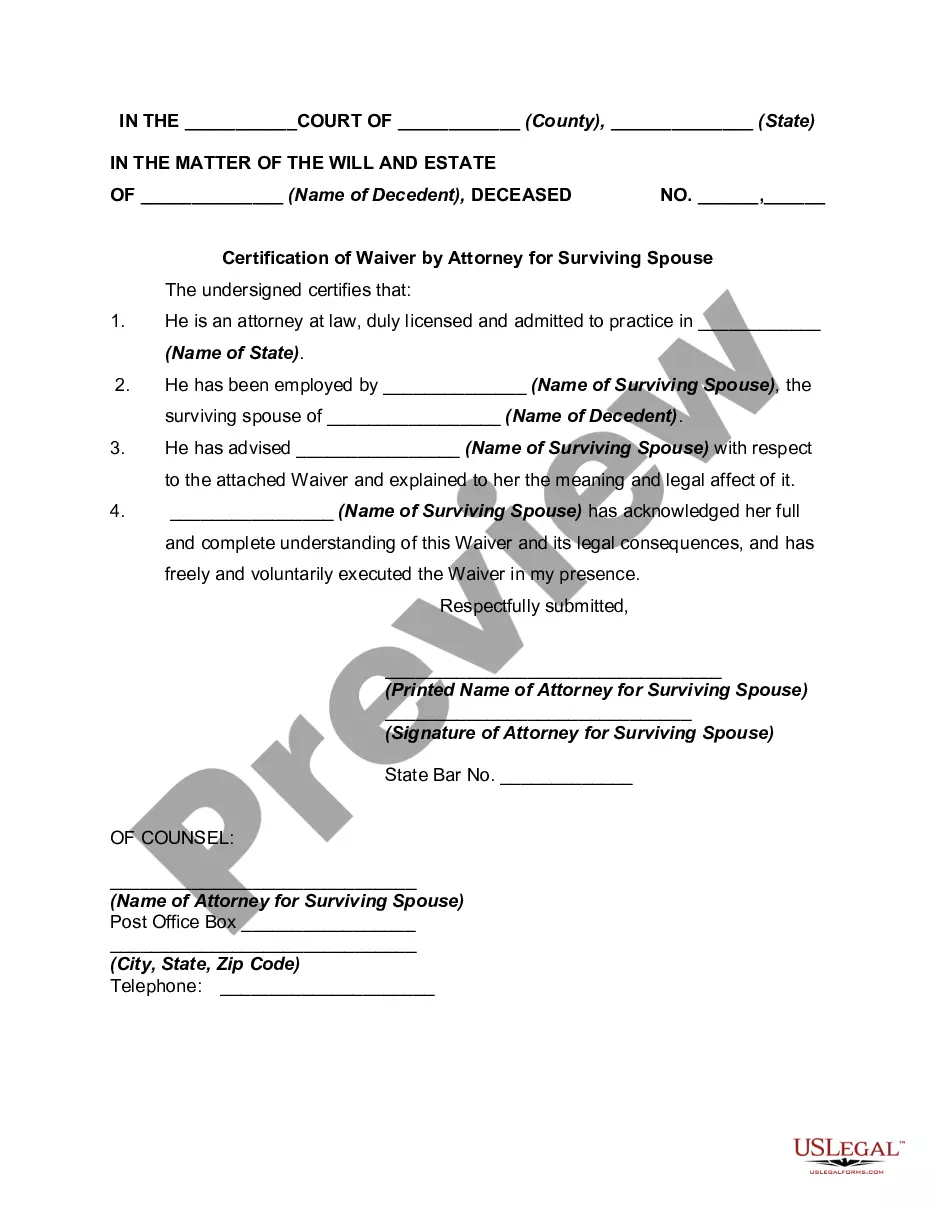
An elective share can indeed be waived, but it usually requires a written agreement between both spouses. Such waivers should be thoughtfully considered, as they can significantly affect one's inheritance rights. Consulting with a legal expert can ensure that you understand how waiving elective shares with the government may impact future claims.
Yes, a spouse can waive homestead rights in Florida; however, it must be done in writing and signed by both parties. This waiver is often included in a prenuptial or postnuptial agreement. However, be mindful that this action may impact the spouse's elective shares with the government, particularly in inheritance scenarios.
When a spouse passes away, community property typically divides according to state laws, which often recognize the surviving spouse's rights. In many cases, the surviving spouse may claim an elective share, which is a portion of the deceased partner's estate. This share serves to ensure that the surviving spouse receives fair compensation from the estate, even if the deceased spouse's will indicates otherwise. To navigate these complexities, consider using US Legal Forms, where you can find resources and forms that clarify your rights regarding spouse elective shares with the government.
An elective share is a legal provision that allows a surviving spouse to claim a specified portion of the deceased spouse's estate, regardless of what the will states. Its primary purpose is to protect the surviving spouse from being disinherited and to ensure they receive fair compensation within the estate. By understanding spouse elective shares with the government, you empower yourself to navigate estate matters more effectively.
No, not everything automatically goes to a spouse after death. Each state has laws governing how assets are distributed, and these laws vary widely. In many situations, spouses may be entitled to a portion of the estate through spouse elective shares with the government. Therefore, understanding these laws is crucial for estate planning.
To calculate spousal elective share, begin by determining the total value of the deceased spouse's estate. Next, apply the designated percentage for the elective share as defined by state law. You may also need to subtract allowable debts and expenses from the estate's total value. By utilizing tools and resources from platforms like uslegalforms, you can effectively navigate the complexities of calculating spouse elective shares with the government.
Consider a situation where a deceased spouse had an estate valued at $600,000. If the state law entitles the surviving spouse to a one-third elective share, the survivor would be entitled to $200,000. This example illustrates how spouse elective shares with the government ensure that surviving partners receive a fair and legally recognized portion of the estate. Such protections are vital for financial security in the aftermath of loss.