Rights Spouse Surviving With Kentucky
Description

Get your form ready online
Our built-in tools help you complete, sign, share, and store your documents in one place.
Make edits, fill in missing information, and update formatting in US Legal Forms—just like you would in MS Word.
Download a copy, print it, send it by email, or mail it via USPS—whatever works best for your next step.
Sign and collect signatures with our SignNow integration. Send to multiple recipients, set reminders, and more. Go Premium to unlock E-Sign.
If this form requires notarization, complete it online through a secure video call—no need to meet a notary in person or wait for an appointment.
We protect your documents and personal data by following strict security and privacy standards.

Make edits, fill in missing information, and update formatting in US Legal Forms—just like you would in MS Word.

Download a copy, print it, send it by email, or mail it via USPS—whatever works best for your next step.

Sign and collect signatures with our SignNow integration. Send to multiple recipients, set reminders, and more. Go Premium to unlock E-Sign.

If this form requires notarization, complete it online through a secure video call—no need to meet a notary in person or wait for an appointment.

We protect your documents and personal data by following strict security and privacy standards.
Looking for another form?







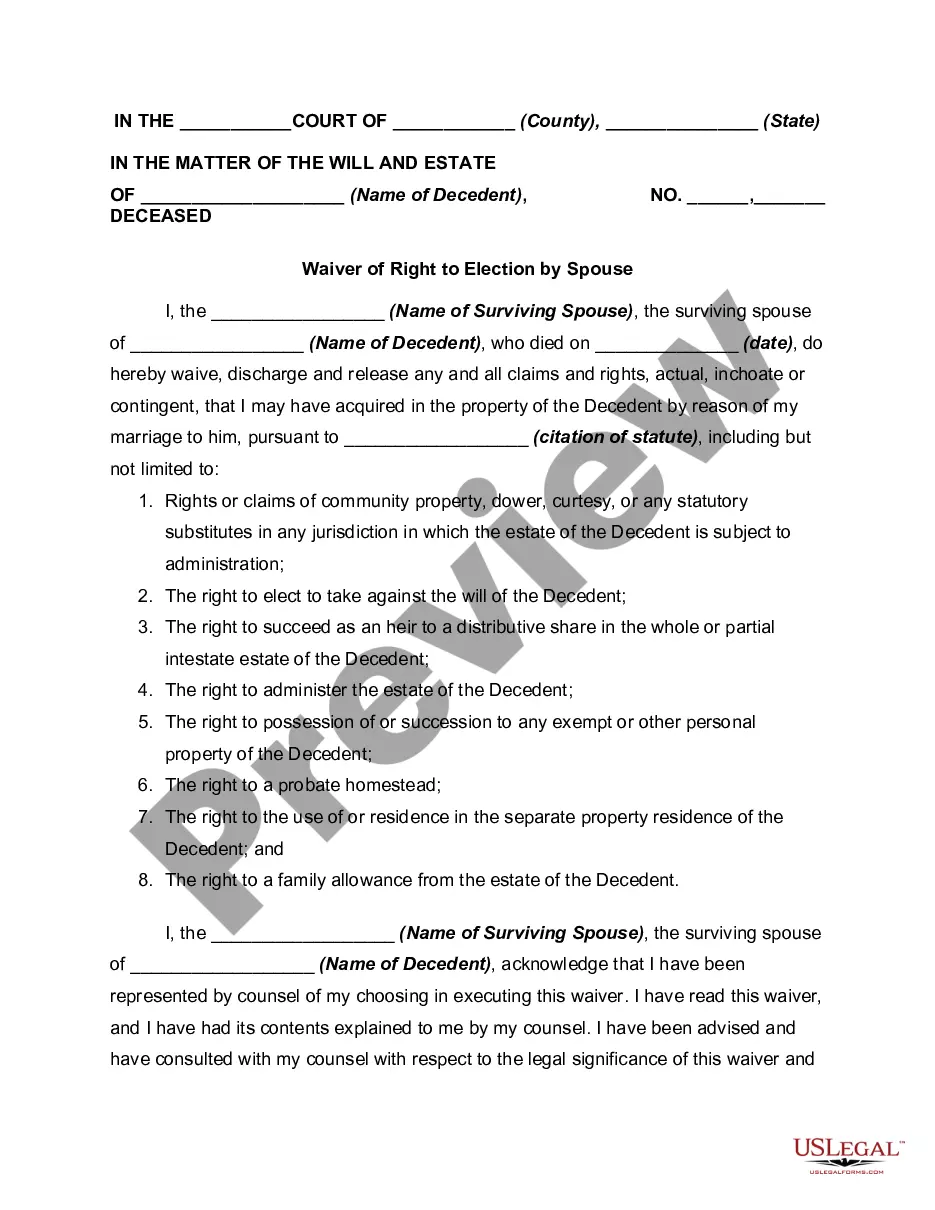
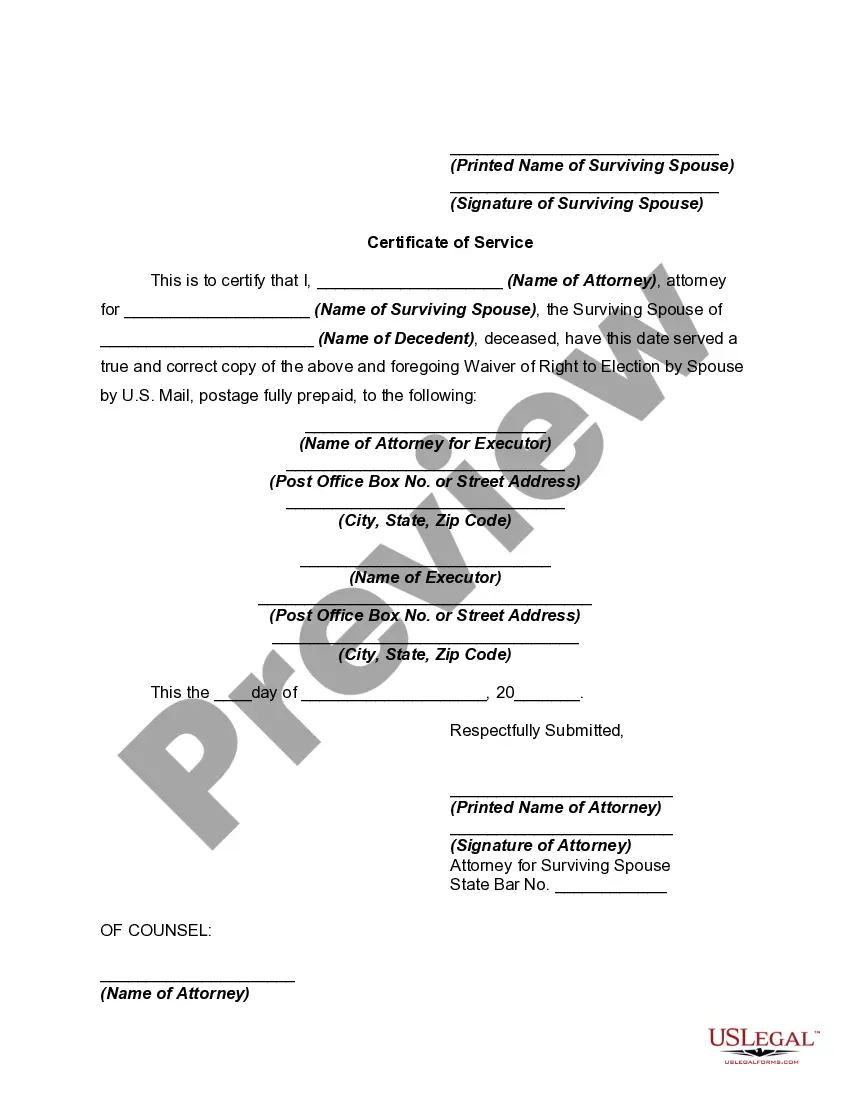
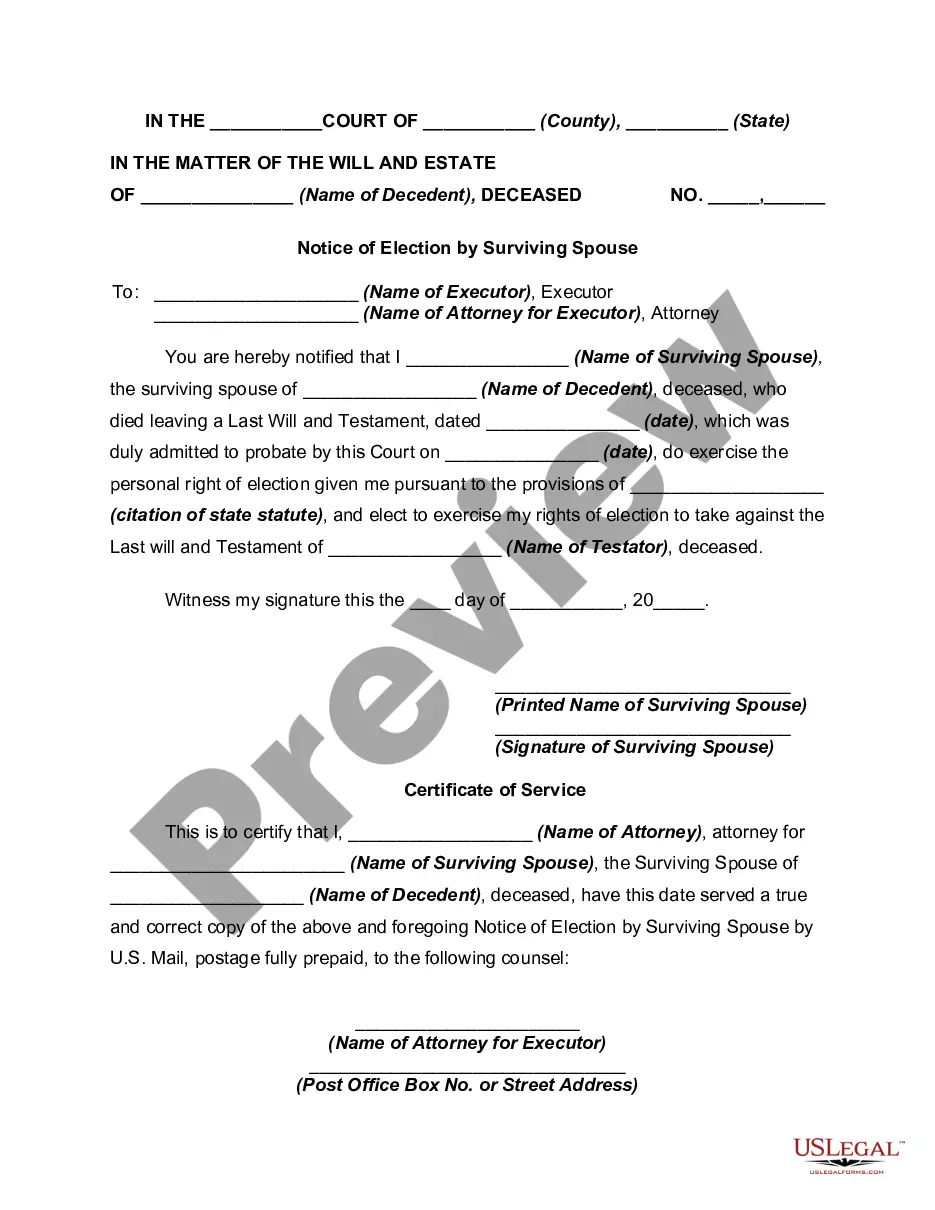
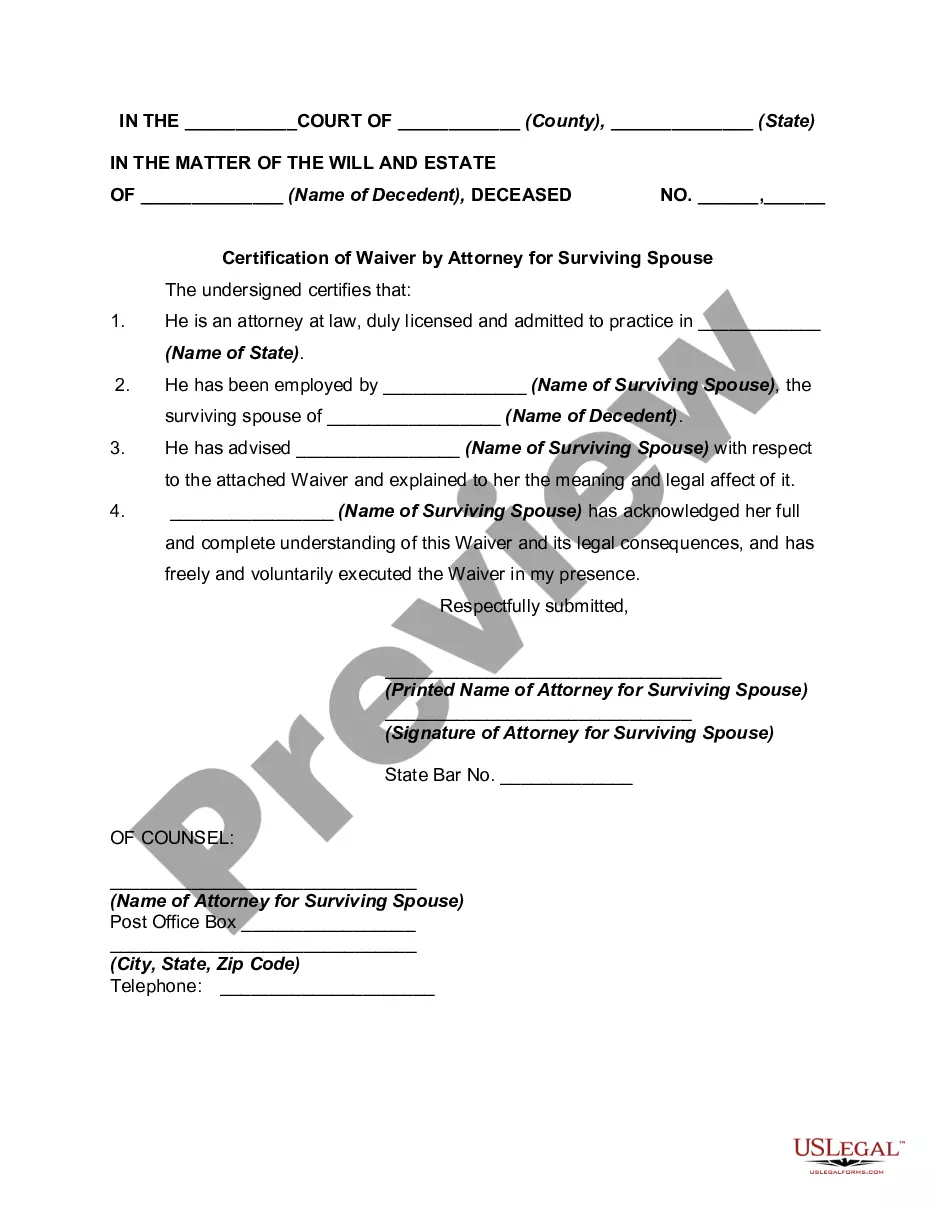
How to fill out Waiver Of Right To Election By Spouse?
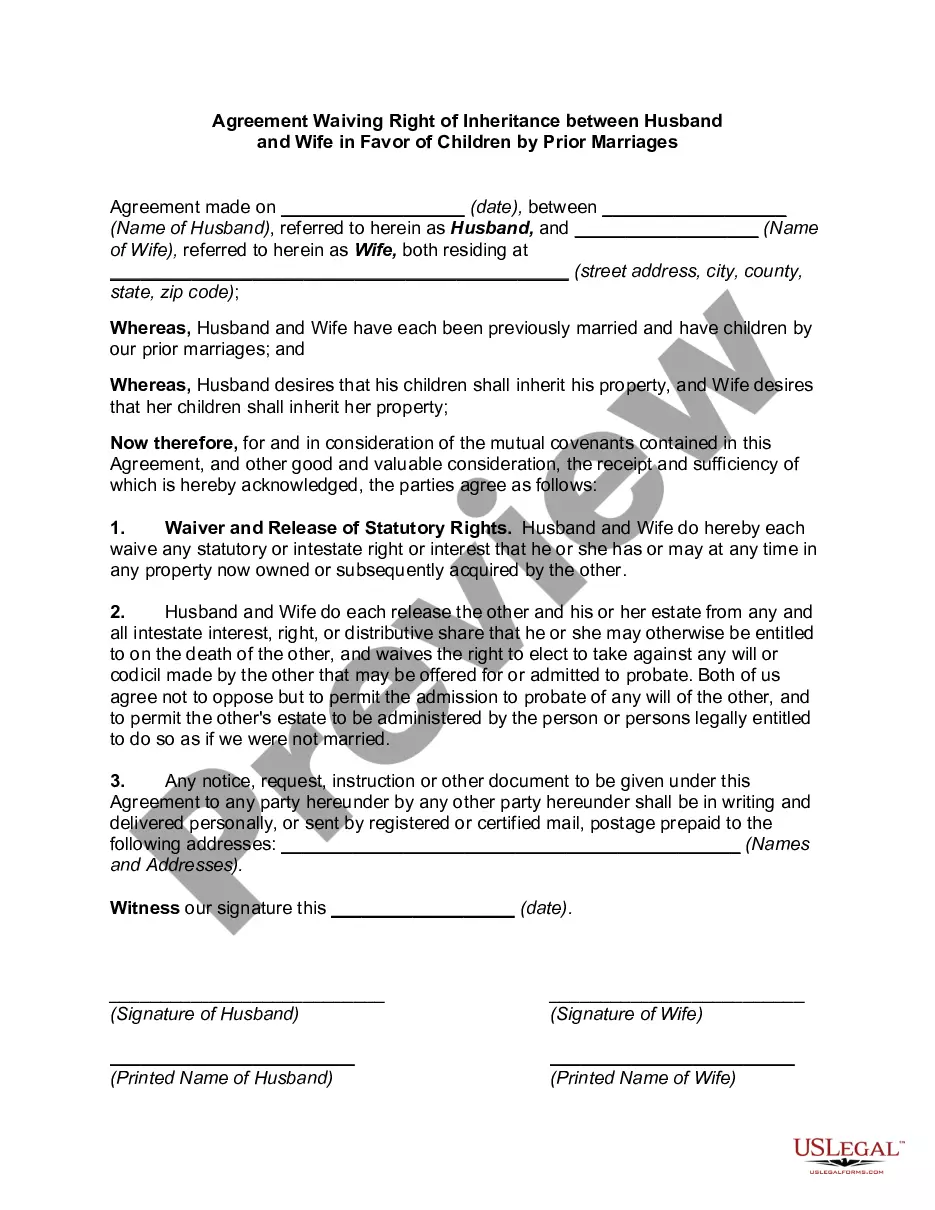
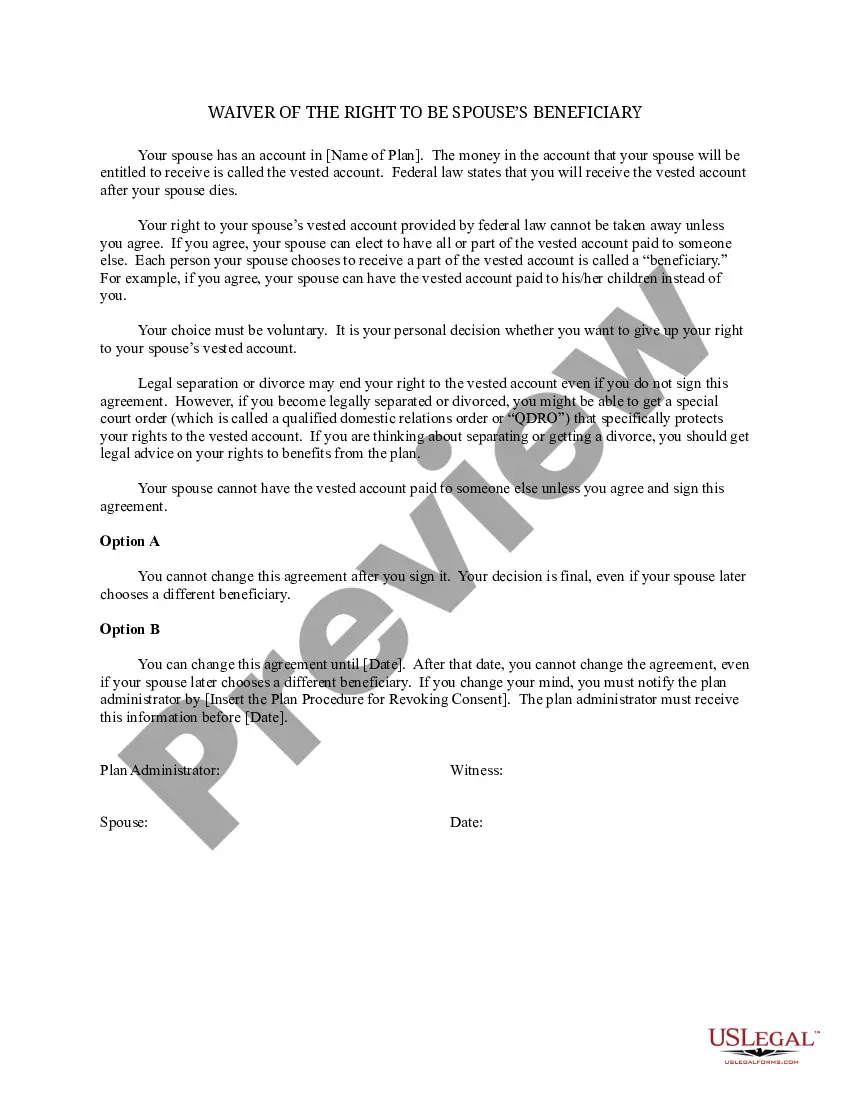
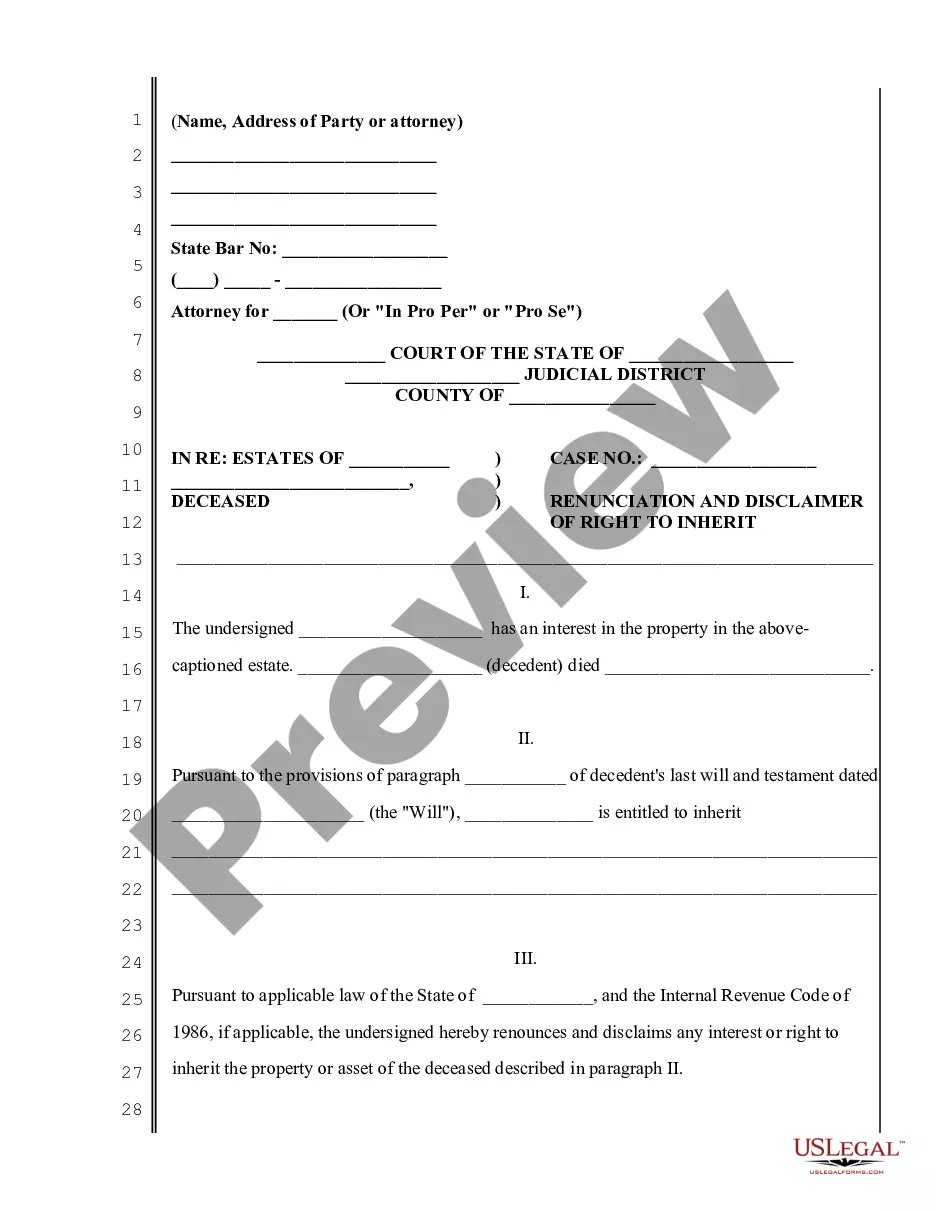
The Rights Spouse Surviving With Kentucky that you observe on this page is a reusable legal template formulated by expert lawyers in compliance with federal and regional regulations.
For over 25 years, US Legal Forms has supplied individuals, businesses, and lawyers with more than 85,000 validated, state-specific documents for any commercial and personal needs. It’s the quickest, most uncomplicated, and most dependable way to secure the paperwork you require, as the service assures the utmost level of data security and malware prevention.
Utilize the same document again whenever necessary. Access the My documents tab in your profile to download any previously acquired documents again. Enroll in US Legal Forms to have verified legal templates for every life situation at your fingertips.
- Search for the document you require and examine it.
- Browse through the sample you looked for and preview it or review the form description to confirm it meets your requirements. If it doesn't, utilize the search option to find the appropriate one. Click Buy Now when you have identified the template you are looking for.
- Choose a pricing plan that fits your needs and create an account. Use PayPal or a credit card for a swift payment. If you already have an account, Log In and check your subscription to proceed.
- Select the format you desire for your Rights Spouse Surviving With Kentucky (PDF, DOCX, RTF) and store the sample on your device.
- Print the template to fill it out manually. Alternatively, leverage an online multifunctional PDF editor to quickly and accurately complete and sign your form with an electronic signature.
Form popularity
FAQ
The survivorship law in Kentucky governs how property is distributed when one spouse passes away. This law ensures that the surviving spouse retains rights to certain assets, providing financial stability during a difficult time. By understanding the rights of a spouse surviving with Kentucky laws, you can better prepare for estate planning and asset distribution.
When a husband dies in Kentucky, the wife is typically entitled to a portion of his estate, which may include personal property and real estate. Depending on whether there is a will or not, the distribution can vary. Knowing the rights of a spouse surviving with Kentucky guidelines can empower you to claim what you are entitled to without unnecessary complications.
The spousal exemption works by allowing the surviving spouse to claim a designated share of the deceased spouse's estate. This claim can include various forms of property, ensuring that the surviving partner is supported after the loss. It is important to understand the spousal exemption process, as it directly impacts the rights of a spouse surviving with Kentucky laws.
A surviving spouse exemption is a legal provision that protects the rights of a spouse who remains after their partner's death. This exemption typically allows the surviving spouse to inherit property and assets without incurring heavy taxes. Familiarizing yourself with the rights of a spouse surviving with Kentucky regulations can ensure you are prepared for the future.
The spousal exemption in Kentucky refers to the legal provisions that protect a surviving spouse's rights to inherit property. This exemption allows the surviving spouse to receive a portion of the deceased spouse's estate, which can include both tangible and intangible assets. Knowing the spousal exemption can provide peace of mind for those navigating the complexities of estate planning and inheritance laws in Kentucky.
The surviving spouse exemption in Kentucky allows the surviving spouse to inherit certain property and assets without facing significant tax burdens. This exemption typically applies to real estate and personal property, ensuring that the surviving partner can maintain their standard of living. Understanding the rights of a spouse surviving with Kentucky laws can help navigate these benefits effectively.
Surviving spouses may be entitled to a share of property, possessions, and estate funds, even if they were not included in the decedent's will. Here are the most common entitlements a surviving spouse may receive: Elective Shares - Surviving spouses may be entitled to a portion of probatable and non-probatable assets.
If you are married, childless, and your parents are living, your spouse gets one-half of your property and your parents get the other half. If you are unmarried and have no children, your parents inherit everything.
The right of survivorship gives a surviving co-owner complete title to the property when the other co-owner dies. A Kentucky property owner can keep property out of probate by creating a survivorship deed in favor of the owner and the owner's child, spouse, or other potential heir.
(c) Personal property or money on hand or in a bank or other depository to the amount of thirty thousand dollars ($30,000) shall be exempt from distribution and sale and shall be set apart by the District Court having jurisdiction over the estate on application to the surviving spouse, or, if there is no surviving ...