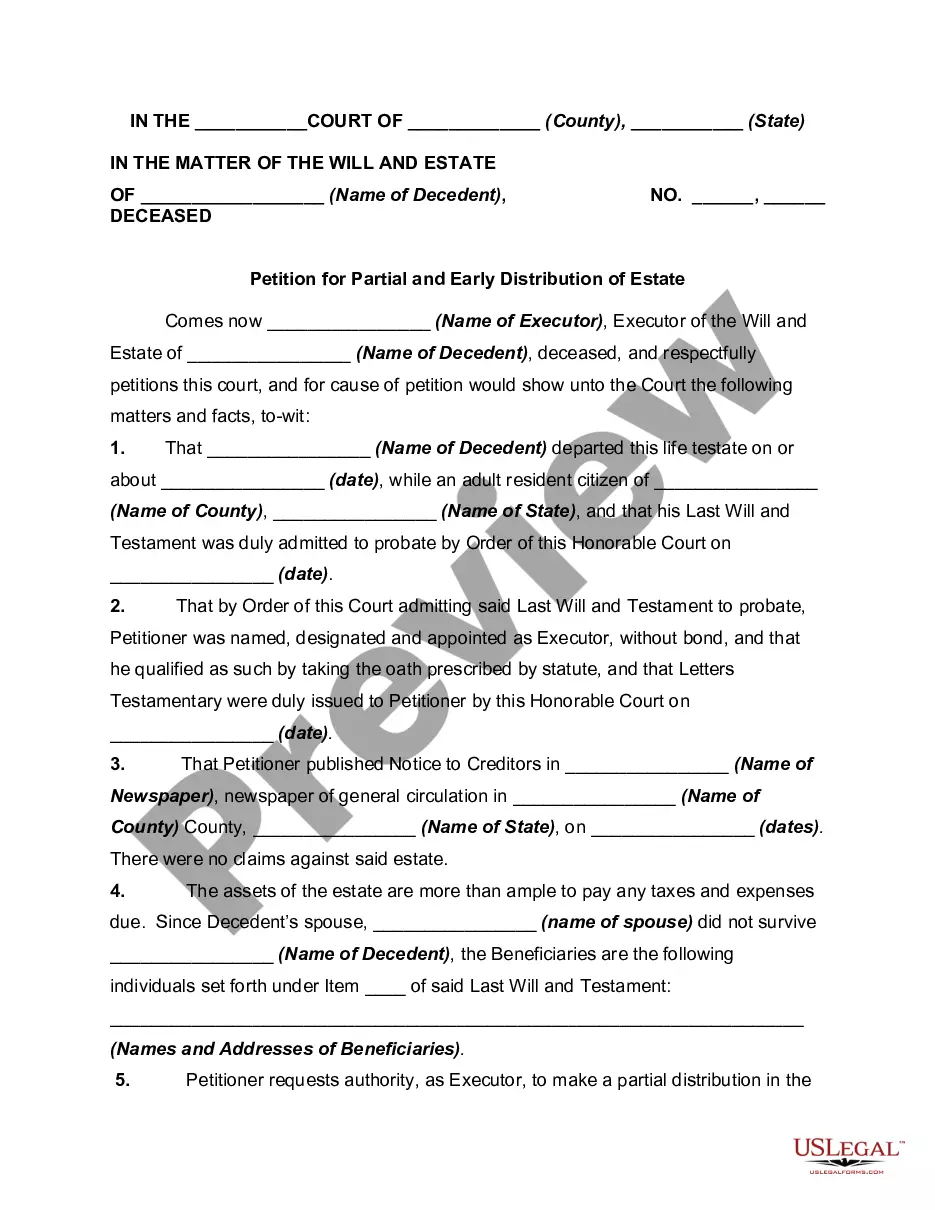
Estate Distribution Form For A Trust
Description
Get your form ready online
Our built-in tools help you complete, sign, share, and store your documents in one place.
Make edits, fill in missing information, and update formatting in US Legal Forms—just like you would in MS Word.
Download a copy, print it, send it by email, or mail it via USPS—whatever works best for your next step.
Sign and collect signatures with our SignNow integration. Send to multiple recipients, set reminders, and more. Go Premium to unlock E-Sign.
If this form requires notarization, complete it online through a secure video call—no need to meet a notary in person or wait for an appointment.
We protect your documents and personal data by following strict security and privacy standards.

Make edits, fill in missing information, and update formatting in US Legal Forms—just like you would in MS Word.

Download a copy, print it, send it by email, or mail it via USPS—whatever works best for your next step.

Sign and collect signatures with our SignNow integration. Send to multiple recipients, set reminders, and more. Go Premium to unlock E-Sign.

If this form requires notarization, complete it online through a secure video call—no need to meet a notary in person or wait for an appointment.

We protect your documents and personal data by following strict security and privacy standards.
Looking for another form?
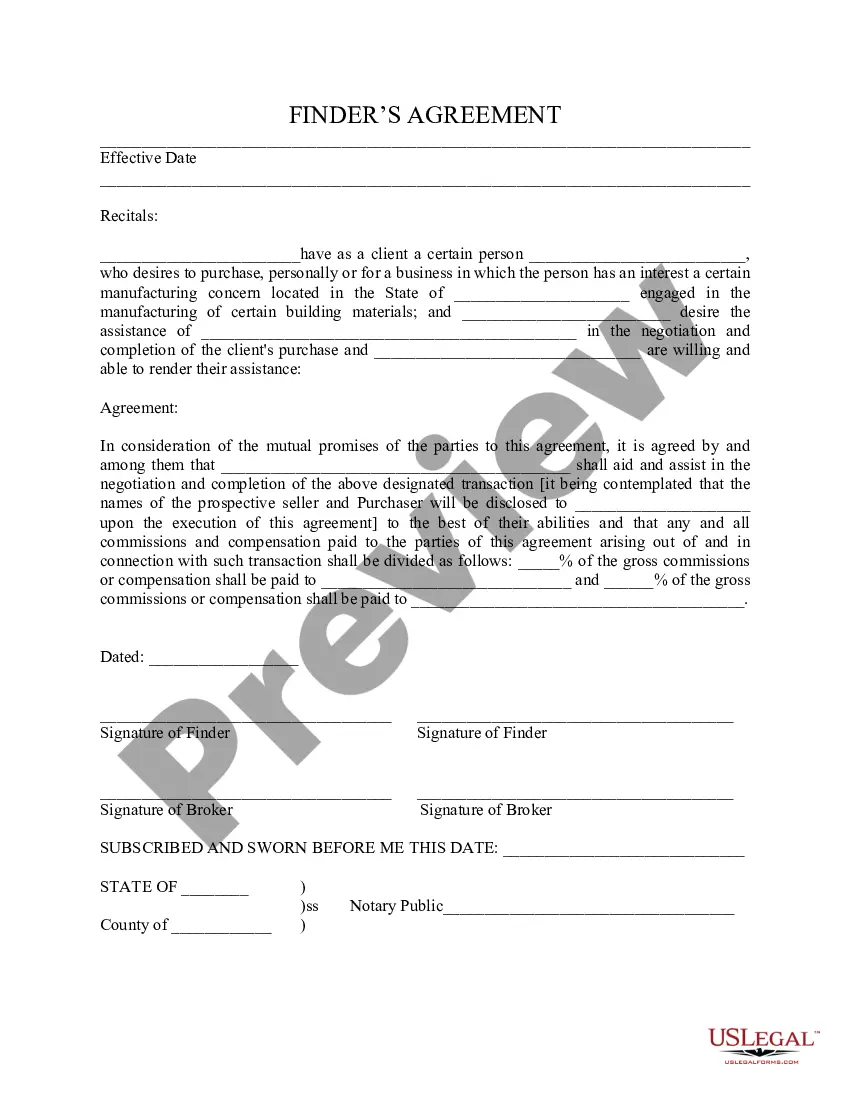



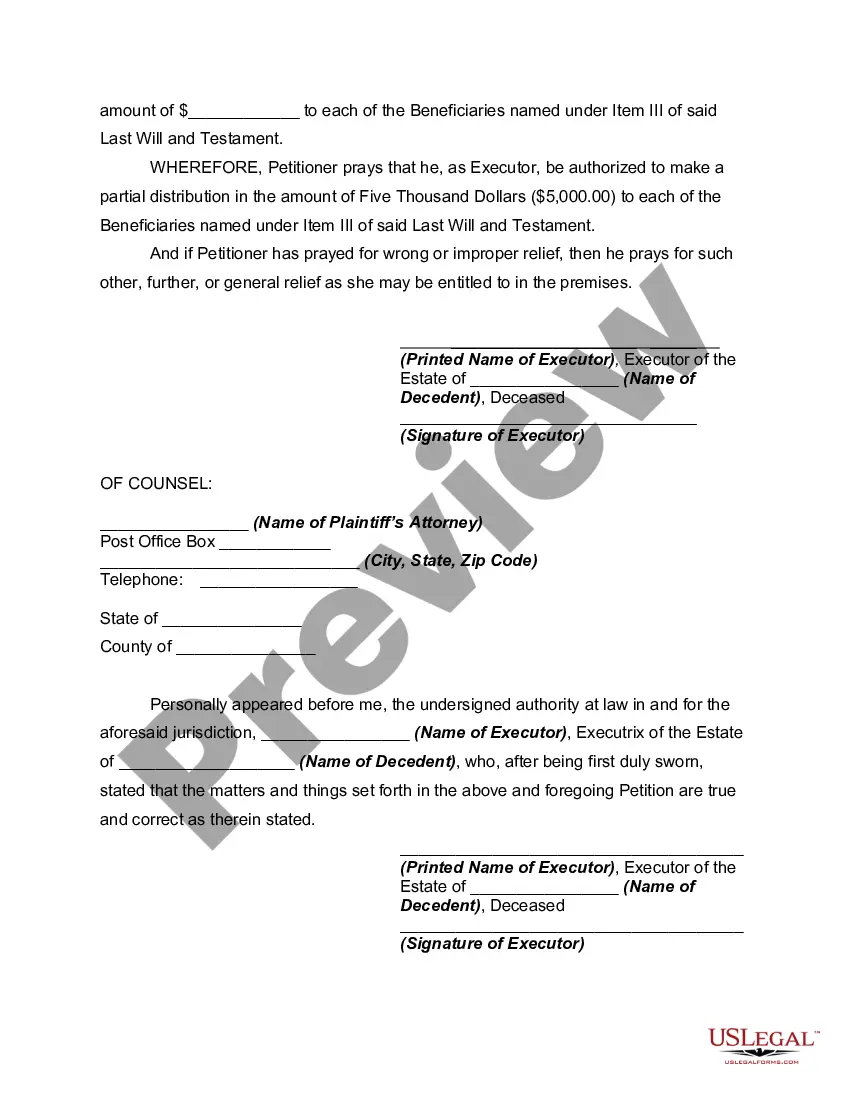
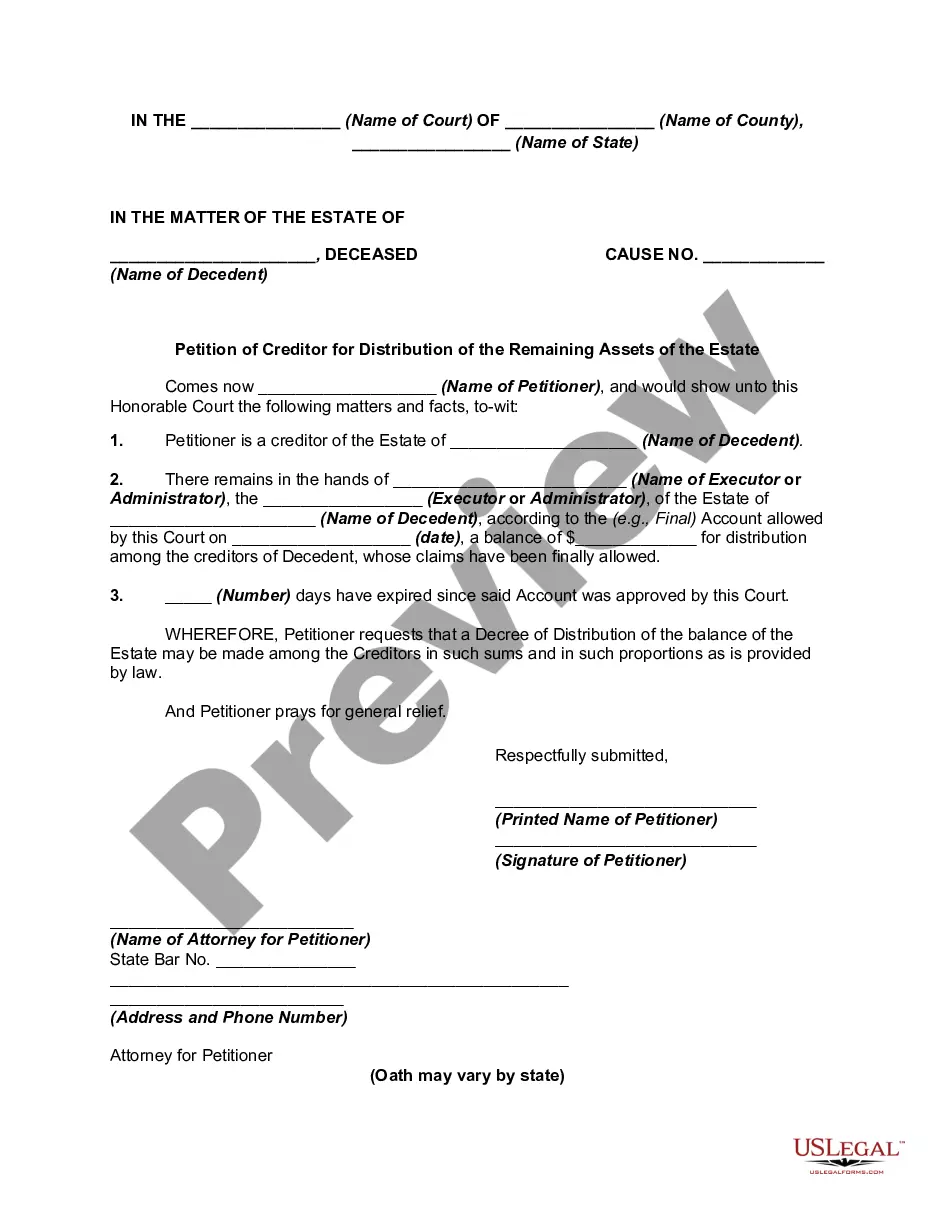
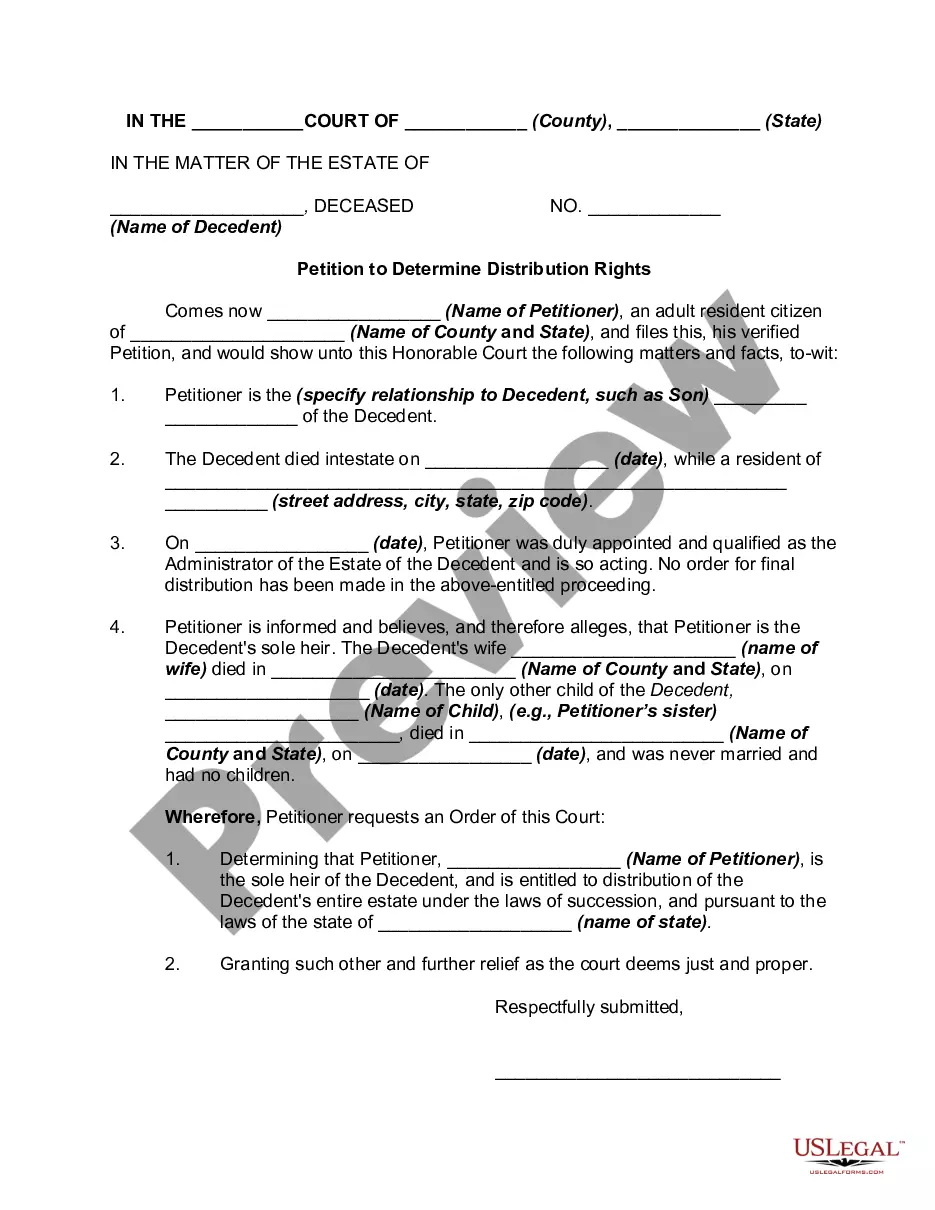
How to fill out Petition For Partial And Early Distribution Of Estate?
- If you're a returning user, log in to your account and download the estate distribution form directly to your device by selecting the Download button. Ensure your subscription is active; otherwise, renew it based on your chosen plan.
- For first-time users, start by browsing the extensive collection of forms. Check the Preview mode and read the form description to verify it's suitable for your needs and complies with local regulations.
- In case you need a different form, utilize the Search feature to find the one that fits your requirements precisely.
- Proceed to purchase the selected document. Click on Buy Now and choose your preferred subscription plan. You'll need to create an account for access to the full library.
- Complete your purchase by entering your payment details via credit card or PayPal.
- Download your estate distribution form. Save the template on your device, and remember you can always access it later from the My Forms section of your profile.
In conclusion, US Legal Forms offers an efficient method to obtain essential legal forms, empowering users with an extensive library and access to premium expert assistance. This ensures that your estate distribution processes are handled smoothly and accurately.
Don’t wait any longer—visit US Legal Forms to find the right documents for your needs today!
Form popularity
FAQ
Typically, a trust distribution is not classified as earned income. Instead, it is seen as income from investments or savings, which may be taxable depending on the source. Using the estate distribution form for a trust can help clarify how these distributions affect your overall tax situation.
Yes, trust distributions must be reported to the IRS, especially if they include income or taxable amounts. When you receive distributions, you should utilize an estate distribution form for a trust to record and report these amounts accurately. Failing to report these distributions may lead to penalties or complications with your tax filings.
Reporting a trust distribution involves including it in your income when you file your taxes. As beneficiaries, it is crucial to correctly complete the estate distribution form for a trust to document the amount received and its tax implications. This process aids in maintaining proper records for your financial future.
To report inheritance from a trust, you should use IRS Form 1040, along with any relevant documentation about the trust and its distributions. It is essential to familiarize yourself with the estate distribution form for a trust, as it helps ensure you accurately capture the details of the inheritance. Proper reporting helps avoid penalties and ensures compliance with tax laws.
A distribution of property from a trust may or may not be taxable, depending on several factors. Generally, if the trust distributes its earnings, those earnings are taxable to the beneficiaries. You may need to fill out an estate distribution form for a trust to ensure proper reporting and compliance with tax regulations.
Assets not deemed part of an estate typically include those held in a trust, life insurance proceeds, and retirement accounts with designated beneficiaries. These assets pass directly to beneficiaries and avoid probate. Understanding what assets fall outside your estate is vital for effective planning. An estate distribution form for a trust can assist in organizing and documenting these assets.
A trust cannot distribute assets to a deceased person because they are no longer eligible to receive benefits. Any distribution intended for a deceased individual typically gets redirected to their estate or other designated beneficiaries. It's important to review your trust terms regularly to ensure compliance. Using an estate distribution form for a trust can help clarify beneficiary designations.
Form 709 is used for reporting gifts made during your lifetime, while Form 706 deals with estate tax returns after death. Each form has specific requirements and implications for taxes. Understanding both forms is crucial for effective estate planning. An estate distribution form for a trust can aid in making informed choices regarding these forms.
A distribution agreement outlines how and when assets will be distributed from a trust. This legal document details the rights and responsibilities of the trustee and beneficiaries. Having a clear distribution agreement prevents misunderstandings and disputes. Utilizing an estate distribution form for a trust aids in setting these terms effectively.
Assets within a trust are generally not considered part of the estate during probate. However, the trust's value may affect overall estate taxes. It's important to understand how this classification works when planning your estate. An estate distribution form for a trust can help clarify these assets for your heirs.