Estate Distribution Account With Two Executors
Description
Get your form ready online
Our built-in tools help you complete, sign, share, and store your documents in one place.
Make edits, fill in missing information, and update formatting in US Legal Forms—just like you would in MS Word.
Download a copy, print it, send it by email, or mail it via USPS—whatever works best for your next step.
Sign and collect signatures with our SignNow integration. Send to multiple recipients, set reminders, and more. Go Premium to unlock E-Sign.
If this form requires notarization, complete it online through a secure video call—no need to meet a notary in person or wait for an appointment.
We protect your documents and personal data by following strict security and privacy standards.

Make edits, fill in missing information, and update formatting in US Legal Forms—just like you would in MS Word.

Download a copy, print it, send it by email, or mail it via USPS—whatever works best for your next step.

Sign and collect signatures with our SignNow integration. Send to multiple recipients, set reminders, and more. Go Premium to unlock E-Sign.

If this form requires notarization, complete it online through a secure video call—no need to meet a notary in person or wait for an appointment.

We protect your documents and personal data by following strict security and privacy standards.
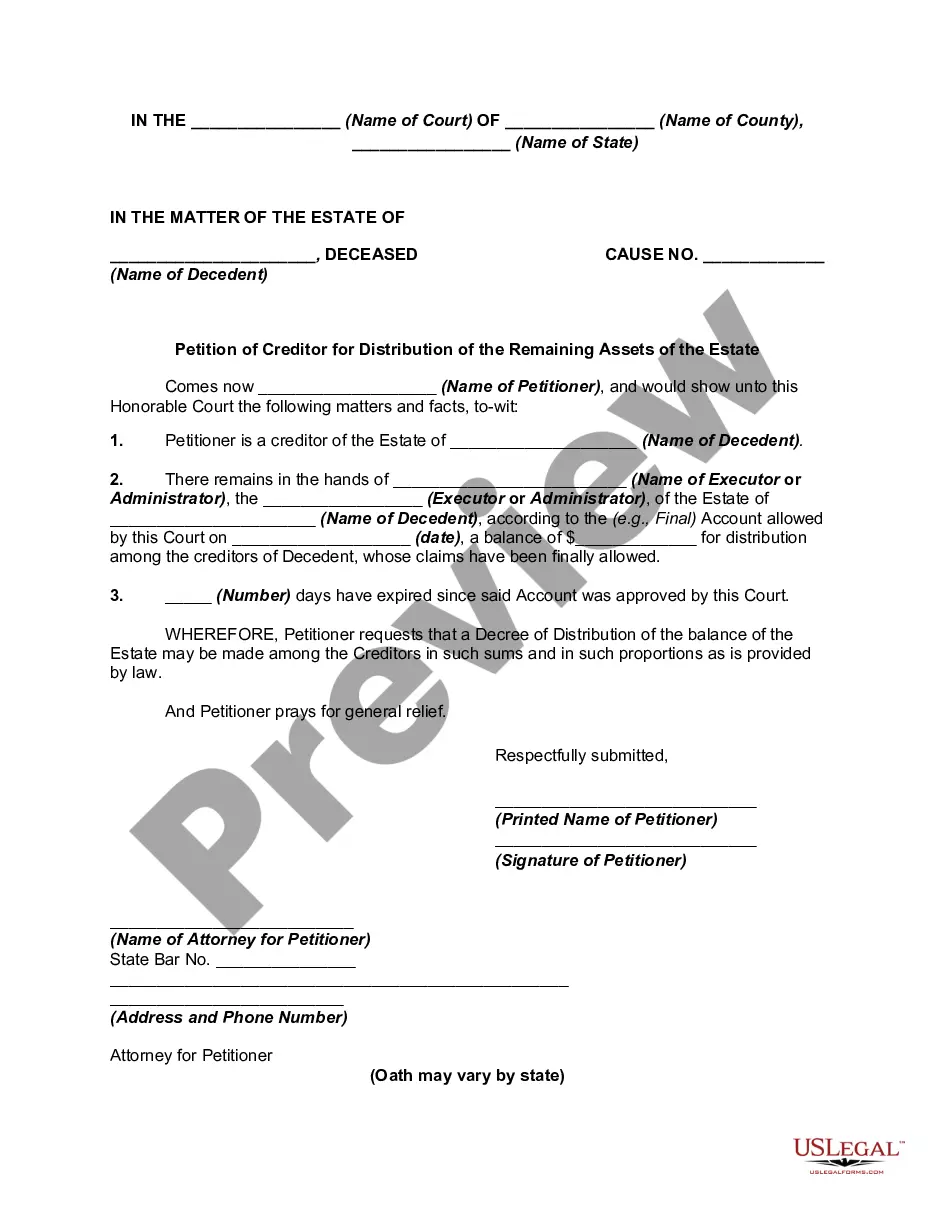
Looking for another form?

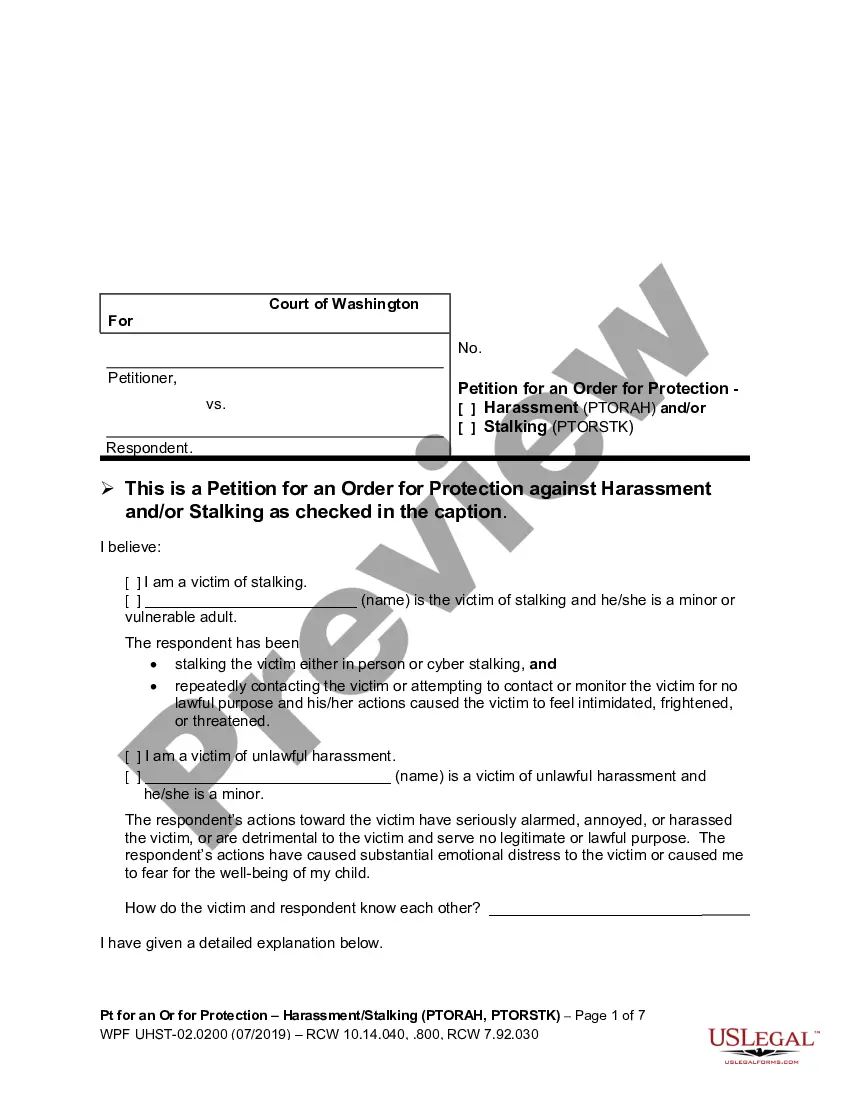





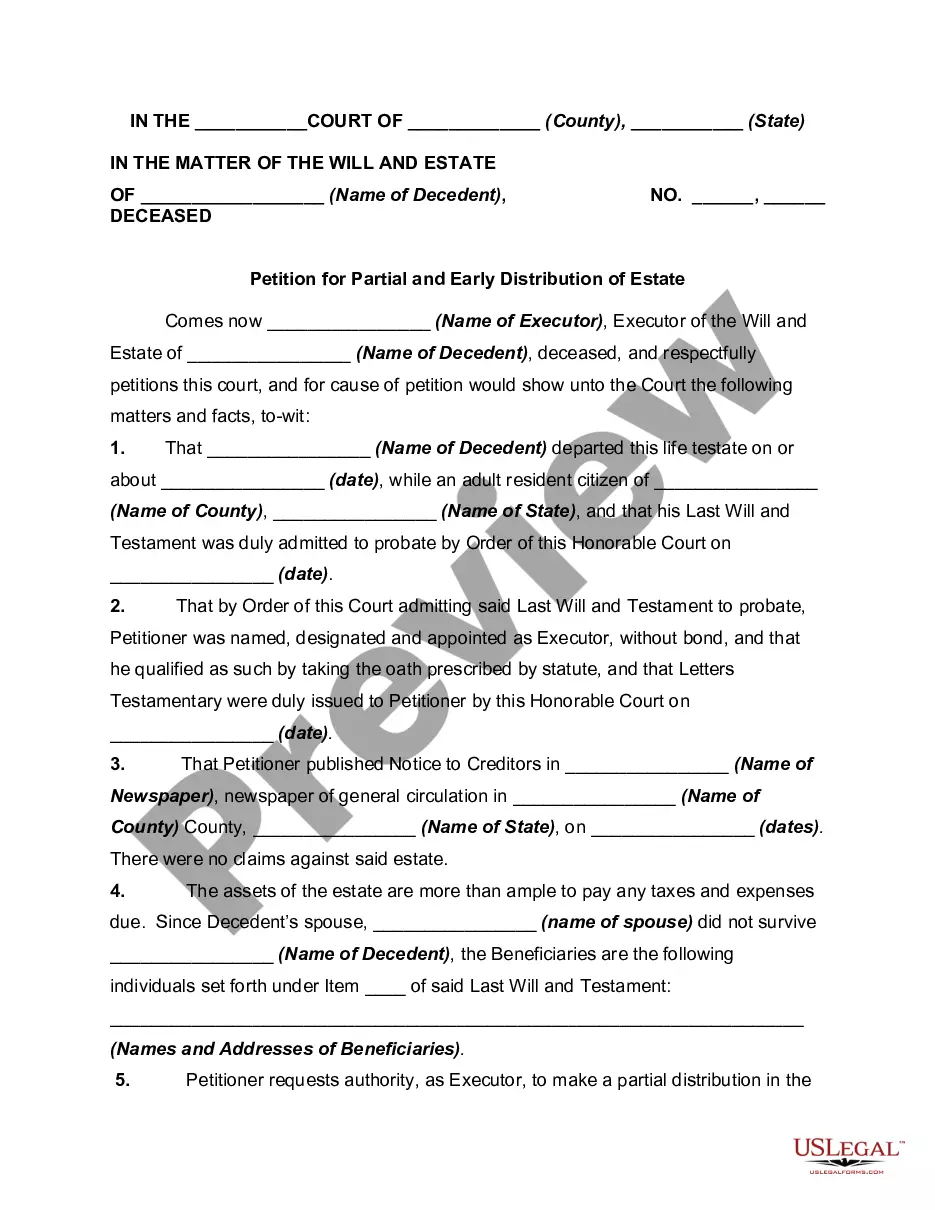
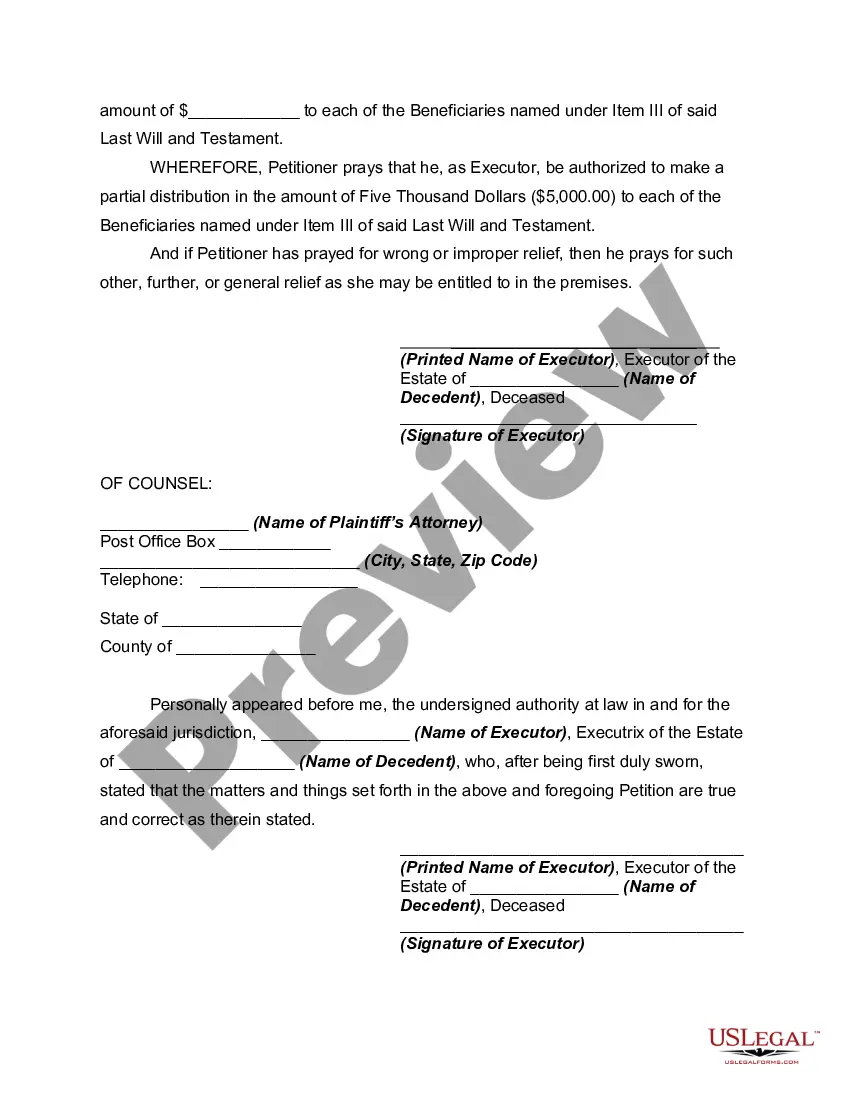
How to fill out Petition For Partial And Early Distribution Of Estate?
The Estate Distribution Account With Two Executors that appears on this page is a versatile official template developed by experienced attorneys in accordance with federal and local statutes and regulations.
For over 25 years, US Legal Forms has supplied individuals, businesses, and legal experts with more than 85,000 validated, state-specific documents for any commercial and personal situation. It is the quickest, easiest, and most reliable method to acquire the files you require, as the service ensures bank-grade data security and anti-malware safeguards.
Register with US Legal Forms to have authenticated legal templates for all of life's situations readily accessible.
- Search for the form you require and review it.
- Examine the file you searched and either preview it or check the form description to confirm it meets your needs. If it doesn't, use the search function to locate the correct one. Click Buy Now when you have identified the template you require.
- Register and sign in.
- Choose the pricing plan that works for you and set up an account. Utilize PayPal or a credit card for a swift payment. If you have an existing account, Log In and verify your subscription to continue.
- Acquire the editable template.
- Pick the format you desire for your Estate Distribution Account With Two Executors (PDF, Word, RTF) and save the copy on your device.
- Fill out and sign the document.
- Print the template to complete it by hand. Alternatively, use an online multifunctional PDF editor to swiftly and accurately complete and sign your form with a legally-binding electronic signature.
- Download your documents once more.
- Reuse the same document whenever necessary. Access the My documents tab in your profile to redownload any previously acquired forms.
Form popularity
FAQ
People have the option of appointing more than one executor or personal representative. This can have benefits but, as with most things, there can be a downside as well.
Most lawyers advise that one executor is best, as it avoids potential disputes, but there are situations where it may make sense to appoint co-executors.
Carrying out the terms of your Will may be a short-term or a long-term job. If you like, you can name more than one Executor to act together as joint Executors. Naming too many joint Executors, however, can make the Executors' duties difficult to carry out. You can also name one or more alternate Executors.
Where more than one executor will be acting, then they need to work together throughout the estate administration process. This can slow matters down slightly as they will need to make decisions together, each sign forms and give consent where necessary, for example, to complete a property sale.
If an executor of a Will dies before the person who made the Will, then it is down to any other named executors to take on the responsibility of administering the estate.