Estate Distribution Account Format
Description
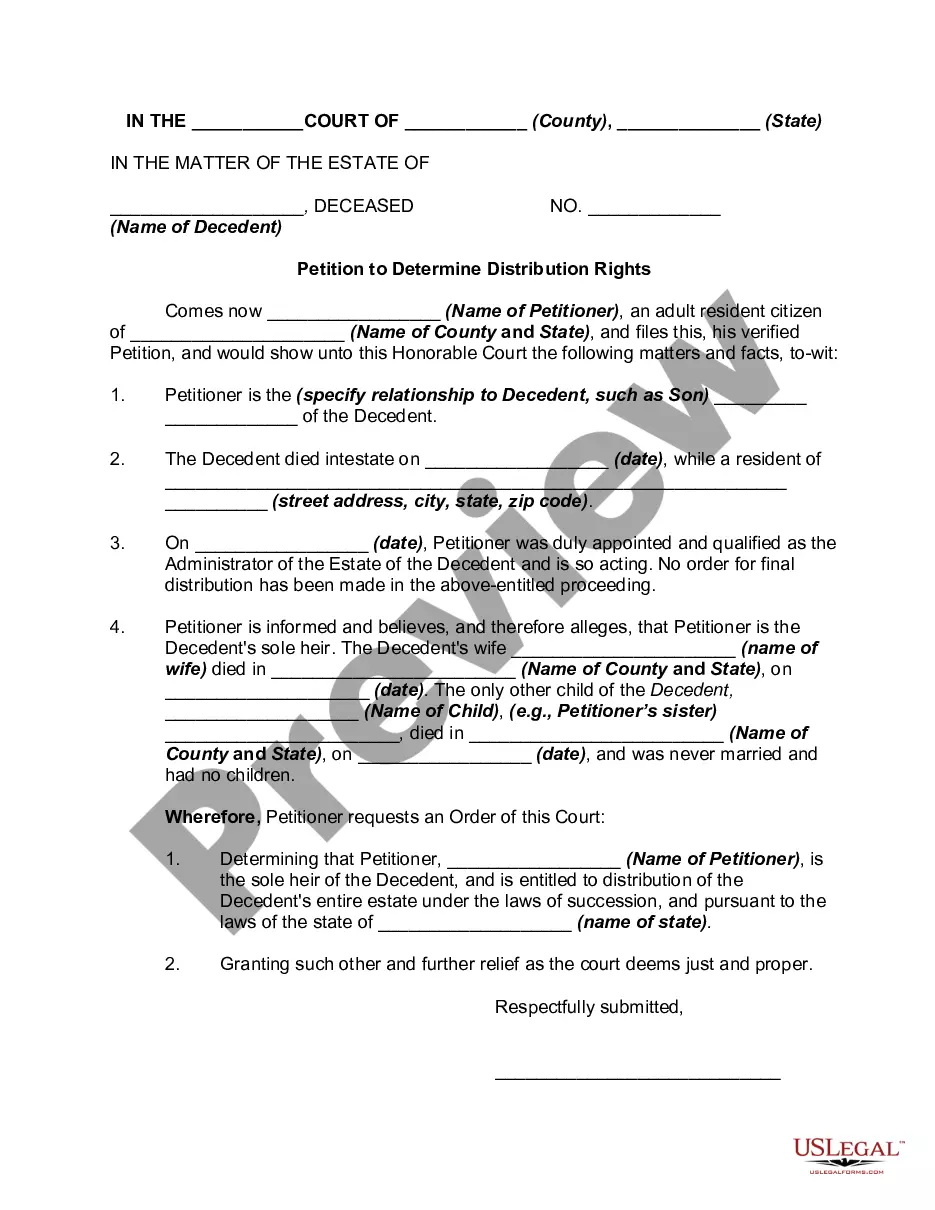
Get your form ready online
Our built-in tools help you complete, sign, share, and store your documents in one place.
Make edits, fill in missing information, and update formatting in US Legal Forms—just like you would in MS Word.
Download a copy, print it, send it by email, or mail it via USPS—whatever works best for your next step.
Sign and collect signatures with our SignNow integration. Send to multiple recipients, set reminders, and more. Go Premium to unlock E-Sign.
If this form requires notarization, complete it online through a secure video call—no need to meet a notary in person or wait for an appointment.
We protect your documents and personal data by following strict security and privacy standards.

Make edits, fill in missing information, and update formatting in US Legal Forms—just like you would in MS Word.

Download a copy, print it, send it by email, or mail it via USPS—whatever works best for your next step.

Sign and collect signatures with our SignNow integration. Send to multiple recipients, set reminders, and more. Go Premium to unlock E-Sign.

If this form requires notarization, complete it online through a secure video call—no need to meet a notary in person or wait for an appointment.

We protect your documents and personal data by following strict security and privacy standards.
Looking for another form?




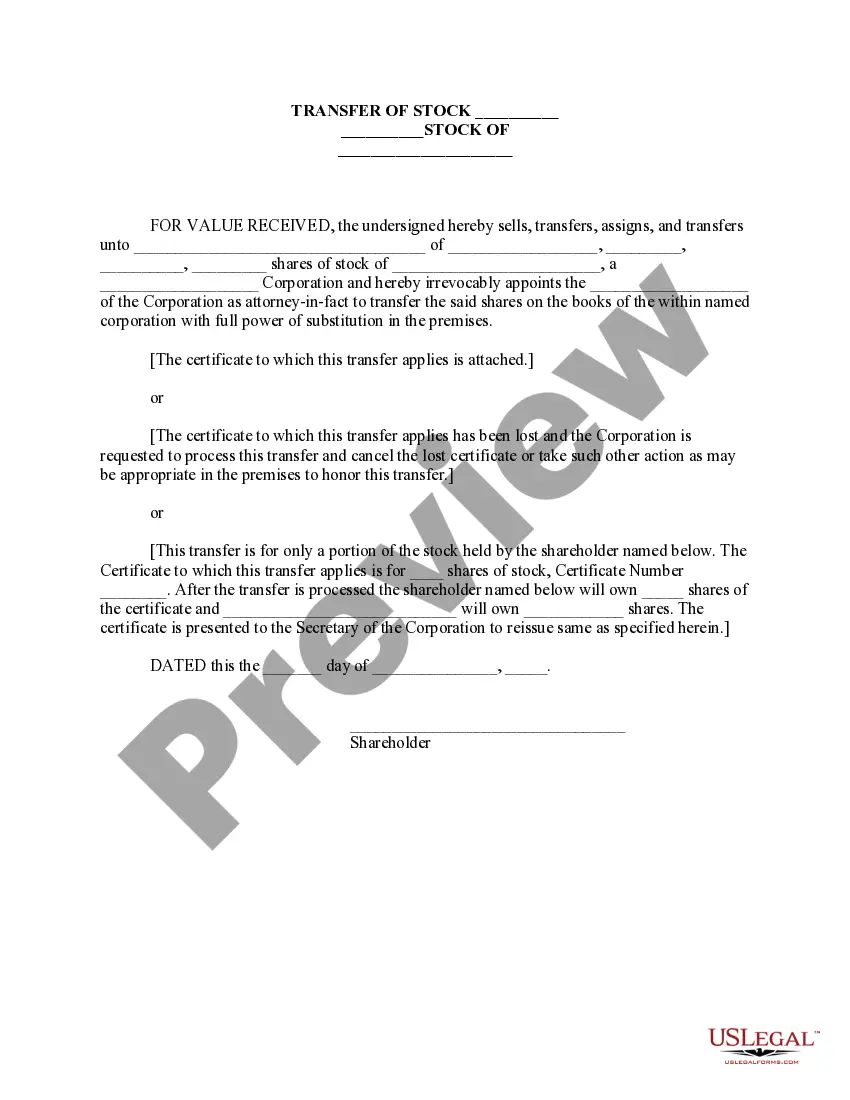





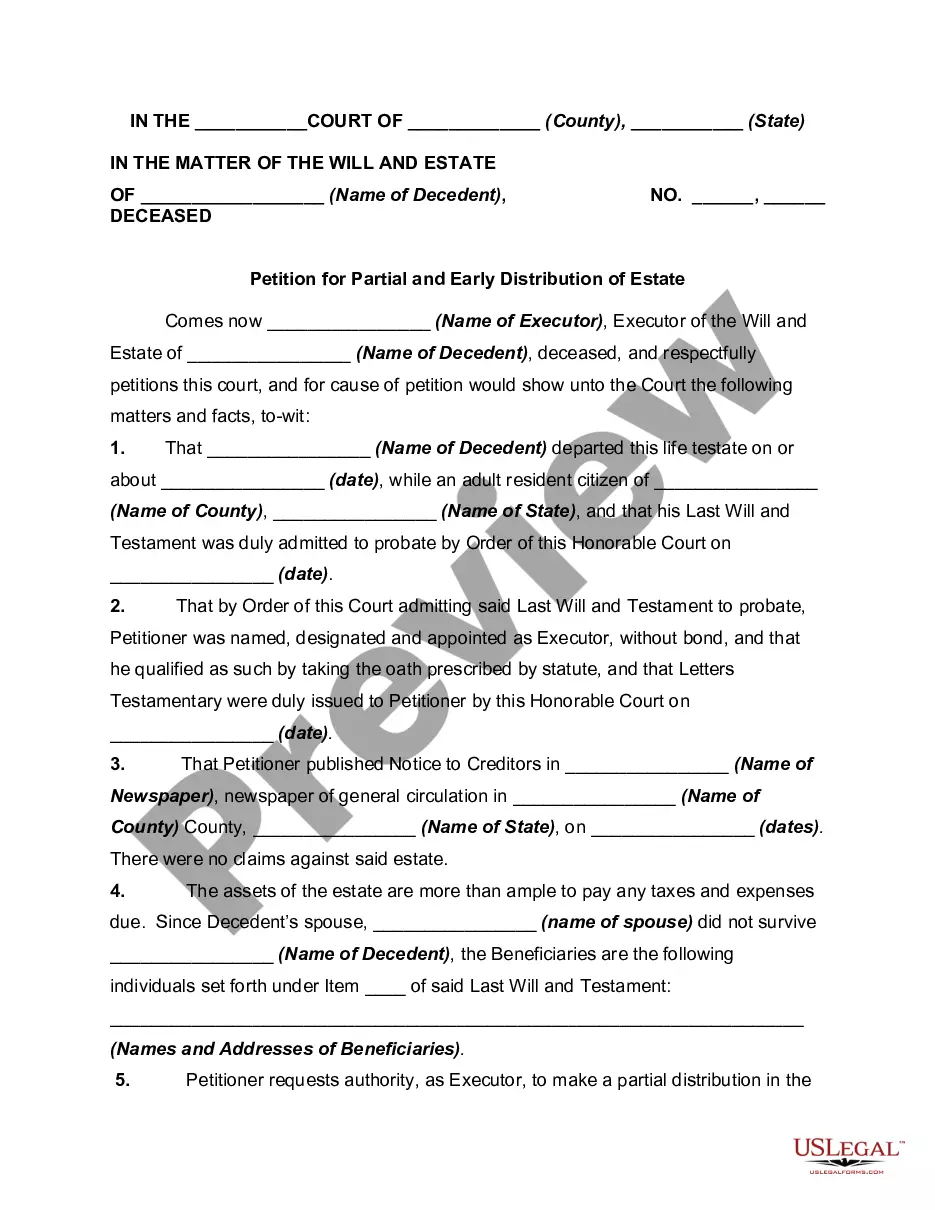
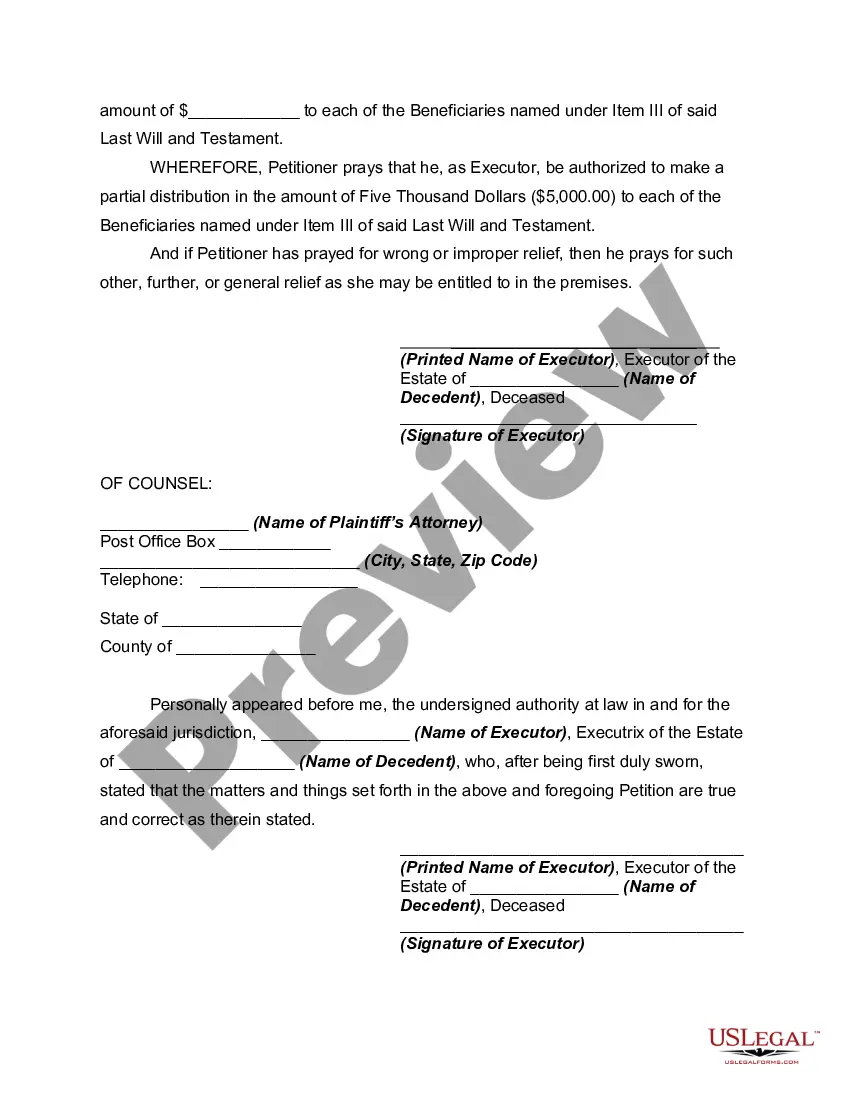
How to fill out Petition For Partial And Early Distribution Of Estate?
Employing legal templates that comply with federal and state regulations is essential, and the internet provides a multitude of selections to consider.
However, what’s the advantage in squandering time searching for the suitable Estate Distribution Account Format example online if the US Legal Forms digital library already consolidates such templates in one location.
US Legal Forms boasts the most comprehensive online legal directory with over 85,000 editable templates created by attorneys for any business and personal situation.
Review the template using the Preview feature or the text outline to ensure it fits your needs.
- They are easy to navigate, with all documents categorized by state and intended usage.
- Our specialists keep abreast of legislative updates so you can be assured your documents are always current and compliant when acquiring an Estate Distribution Account Format from our site.
- Acquiring an Estate Distribution Account Format is straightforward and quick for both existing and new users.
- If you possess an account with an active subscription, Log In and download the document sample you need in the correct format.
- If you are new to our site, follow the steps outlined below.
Form popularity
FAQ
Completing an estate account requires gathering all financial records, including income, expenses, and distributions. You should document every transaction clearly and ensure everything is reconciled. Using an estate distribution account format helps maintain organization and clarity, ultimately easing the process for you and the beneficiaries.
There is no set format for estate accounts, however they should as a minimum detail all estate assets as they were at the date of death, all liabilities and any increases/ decreases in the value of estate assets once they have been liquidated.
Most assets can be distributed by preparing a new deed, changing the account title, or by giving the person a deed of distribution. For example: To transfer a bank account to a beneficiary, you will need to provide the bank with a death certificate and letters of administration.
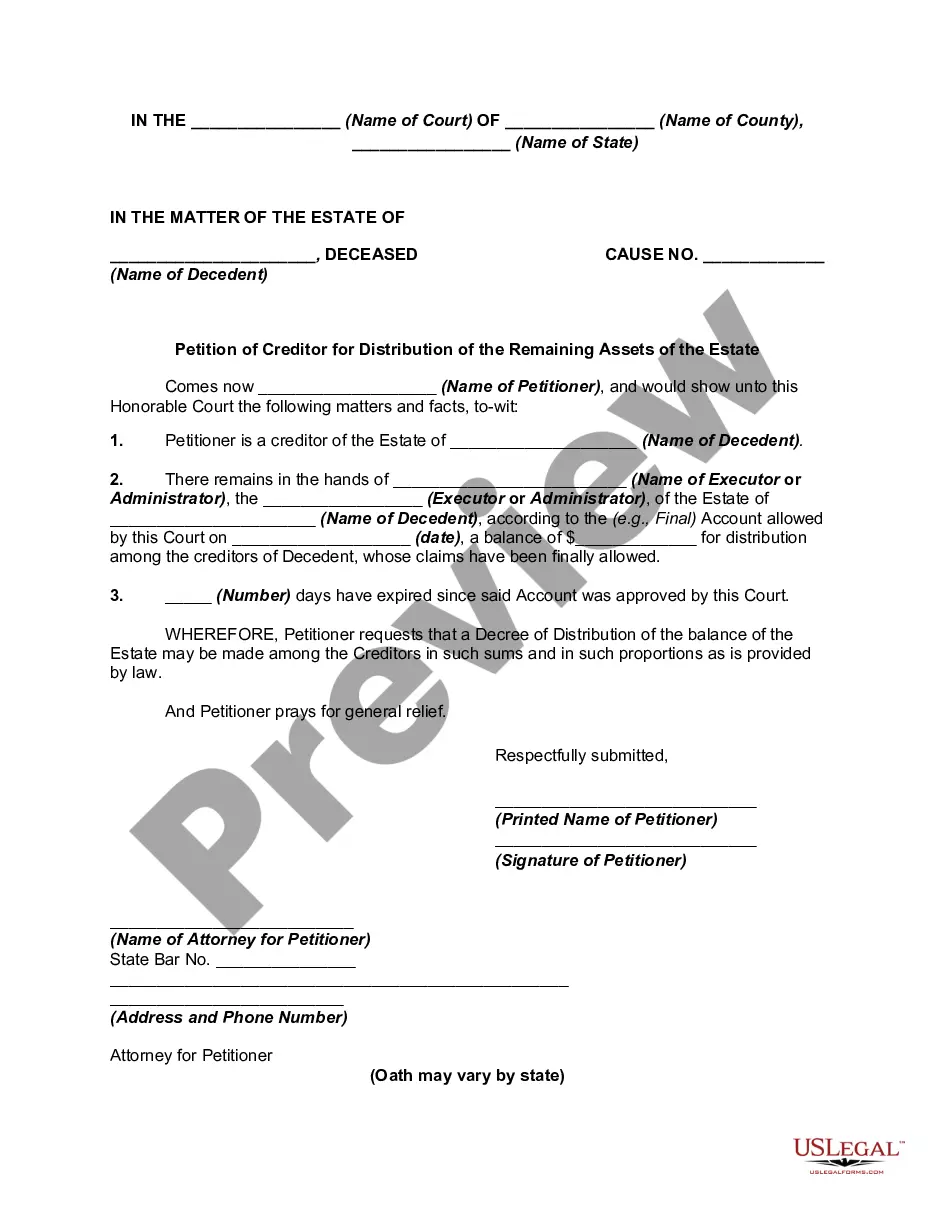
The Personal Representative must file a final account, report and petition for final distribution, have the petition set for hearing, give notice of the hearing to interested persons, and obtain a court order approving the final distribution.
An informal accounting for an estate is a document that outlines the financial activities of the estate. This type of accounting is often used to prepare financial statements of affairs. It includes details about assets and liabilities, income and expenses, donations or transfers from the estate, and tax information.
Every state sets the priority ing to which claims must be paid. The estate's beneficiaries only get paid once all the creditor claims have been satisfied. Usually, estate administration fees, funeral expenses, support payments, and taxes have priority over other claims.