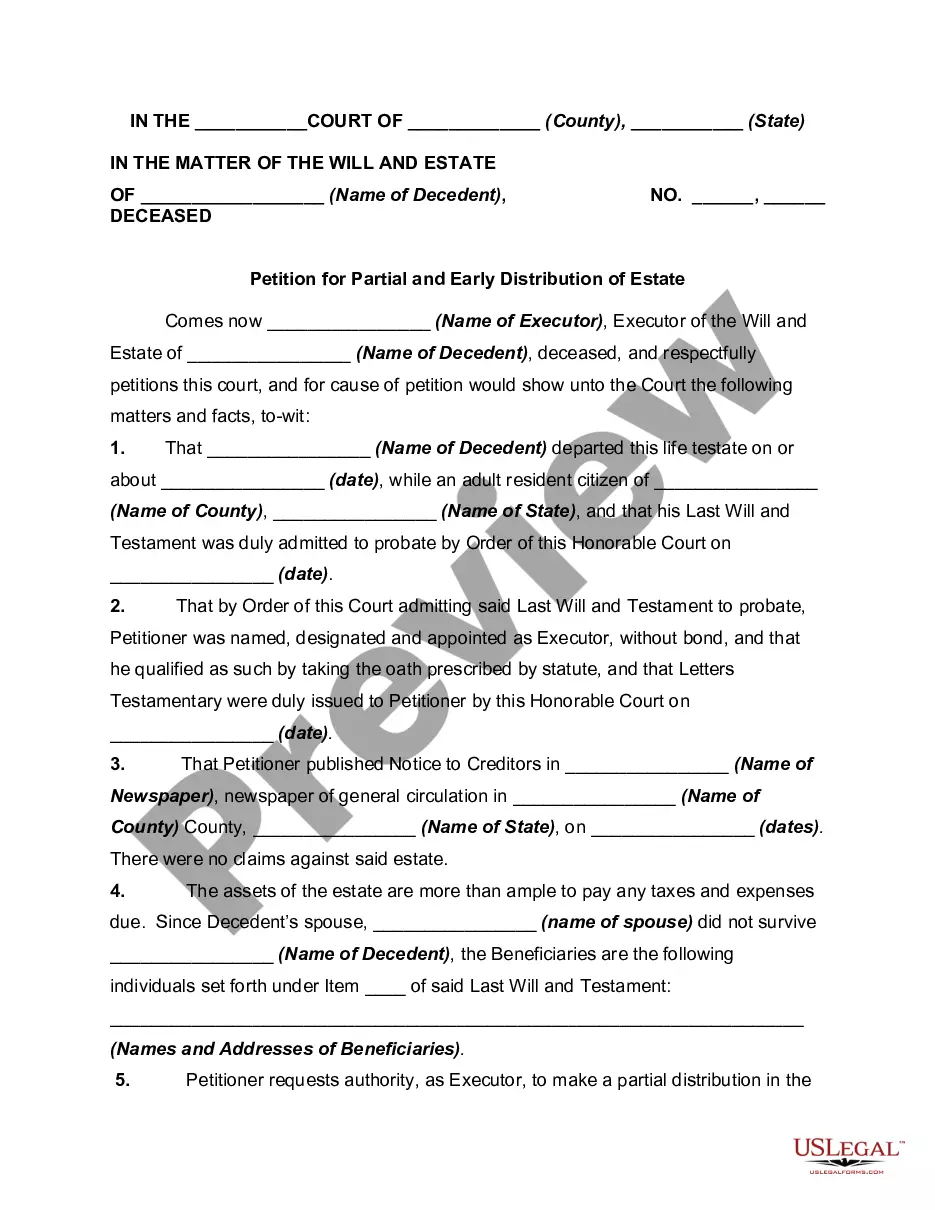
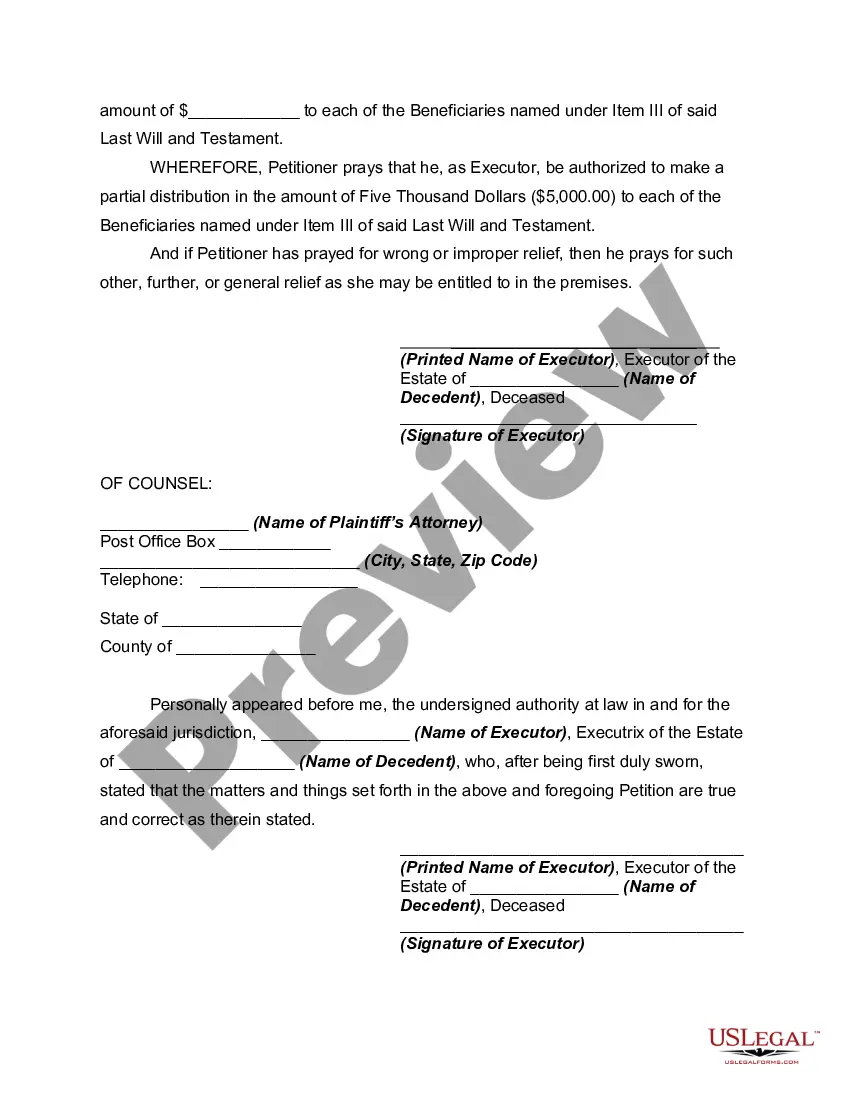
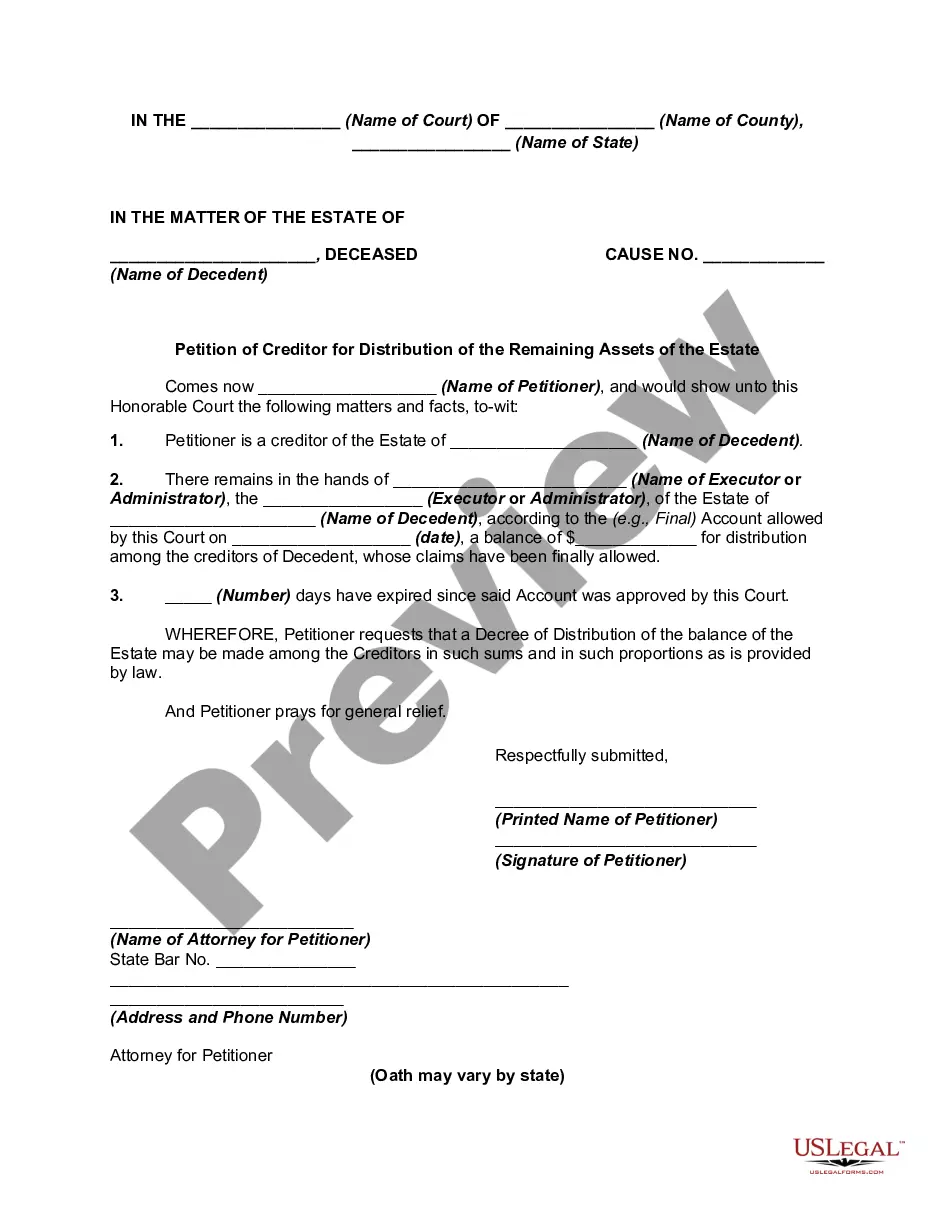
Distribution Estate Form Document Format
Description
Get your form ready online
Our built-in tools help you complete, sign, share, and store your documents in one place.
Make edits, fill in missing information, and update formatting in US Legal Forms—just like you would in MS Word.
Download a copy, print it, send it by email, or mail it via USPS—whatever works best for your next step.
Sign and collect signatures with our SignNow integration. Send to multiple recipients, set reminders, and more. Go Premium to unlock E-Sign.
If this form requires notarization, complete it online through a secure video call—no need to meet a notary in person or wait for an appointment.
We protect your documents and personal data by following strict security and privacy standards.

Make edits, fill in missing information, and update formatting in US Legal Forms—just like you would in MS Word.

Download a copy, print it, send it by email, or mail it via USPS—whatever works best for your next step.

Sign and collect signatures with our SignNow integration. Send to multiple recipients, set reminders, and more. Go Premium to unlock E-Sign.

If this form requires notarization, complete it online through a secure video call—no need to meet a notary in person or wait for an appointment.

We protect your documents and personal data by following strict security and privacy standards.
Looking for another form?




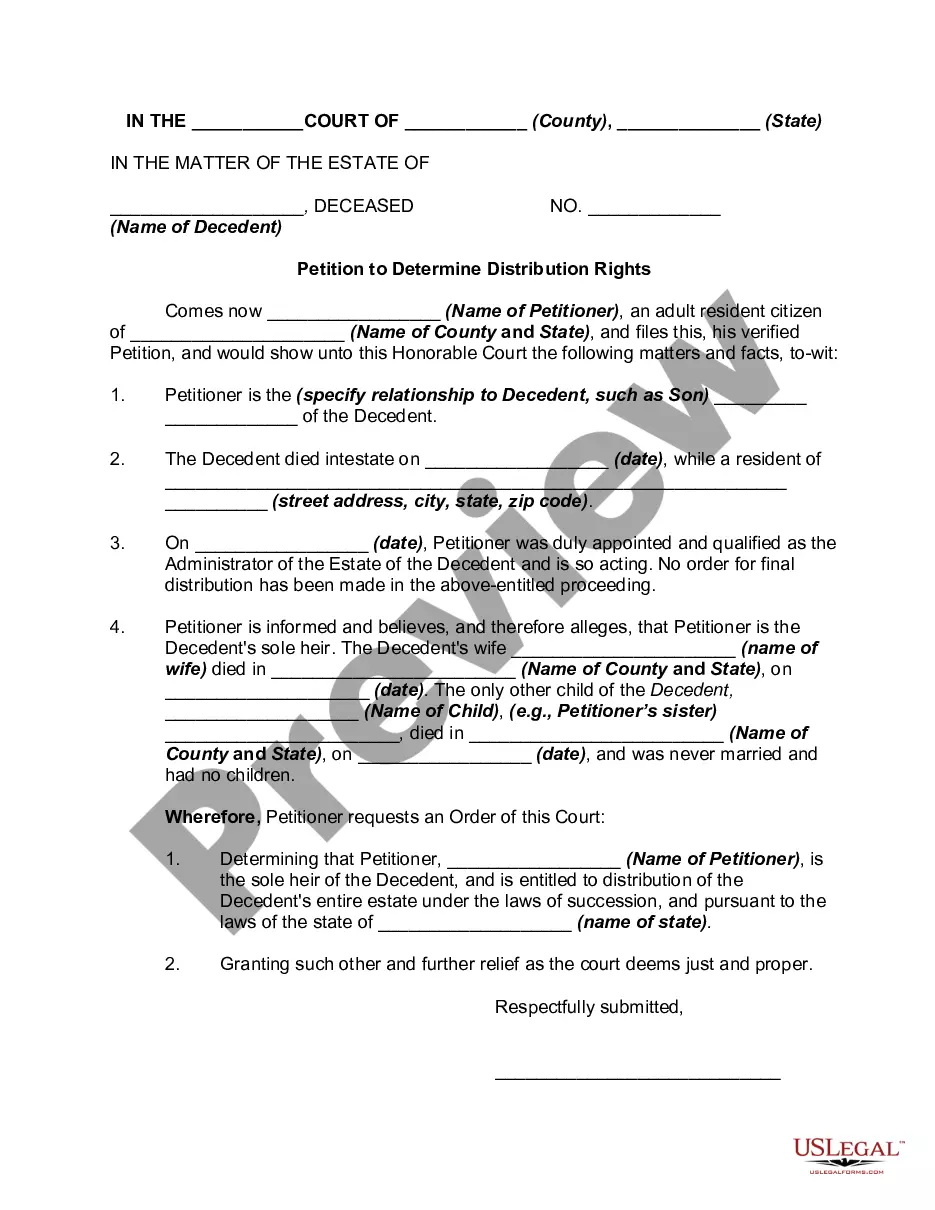
How to fill out Petition For Partial And Early Distribution Of Estate?
Managing legal documents can be daunting, even for experienced professionals.
When you're seeking a Distribution Estate Form Document Format and lack the time to search for the correct and current version, the tasks can be stressful.
US Legal Forms addresses all your needs, from personal to business documents, in a single location.
Utilize advanced tools to complete and manage your Distribution Estate Form Document Format.
Here are the steps to follow after downloading the form you want: Ensure it is the correct form by previewing it and reviewing its details. Confirm that the sample is accepted in your state or county. Click Buy Now when you're ready. Select a monthly subscription plan. Choose the format you desire, and Download, complete, eSign, print, and send your document. Benefit from the US Legal Forms online library, backed by 25 years of experience and reliability. Transform your routine document management into a simple and user-friendly process today.
- Access a valuable resource hub of articles, guides, and manuals pertinent to your situation and requirements.
- Save time and energy searching for the documents you need, and use US Legal Forms’ advanced search and Preview feature to find Distribution Estate Form Document Format and obtain it.
- If you have a membership, Log In to your US Legal Forms account, search for the form, and download it.
- Visit the My documents tab to view the documents you have previously saved and manage your folders as desired.
- If this is your first experience with US Legal Forms, create a free account and gain unlimited access to all the platform's benefits.
- A robust online form repository could revolutionize the way anyone handles these situations effectively.
- US Legal Forms is a frontrunner in online legal documents, offering over 85,000 state-specific legal forms available to you at any time.
- With US Legal Forms, you can access legal and organizational forms tailored to your state or county.
Form popularity
FAQ
Every state sets the priority ing to which claims must be paid. The estate's beneficiaries only get paid once all the creditor claims have been satisfied. Usually, estate administration fees, funeral expenses, support payments, and taxes have priority over other claims.
Once the executor of the estate has divided up the assets and distributed them to the beneficiaries, the inheritance tax can come into play. The amount of tax is calculated separately for each individual beneficiary, and the beneficiary has to pay the tax.
This is when courts transfer the ownership of assets to beneficiaries or heirs. The final distribution only occurs when the estate is settled, meaning all creditors and taxes have been paid, all disputes have been resolved, and the judge gives final approval.
Per stirpes. One of the simplest strategies for asset distribution among heirs, this method requires that the estate be divided equally among each branch of the family. So, if an heir (a child) should pass away before the parents, their share would be passed along in equal shares to their heirs (the grandchildren).
Phase Five, the distribution phase, involves distributing the assets to beneficiaries ing to the terms of the will or pursuant to state intestacy laws if there is no will. This phase may also include preparing and executing any necessary deeds or documents to transfer assets to the beneficiaries.