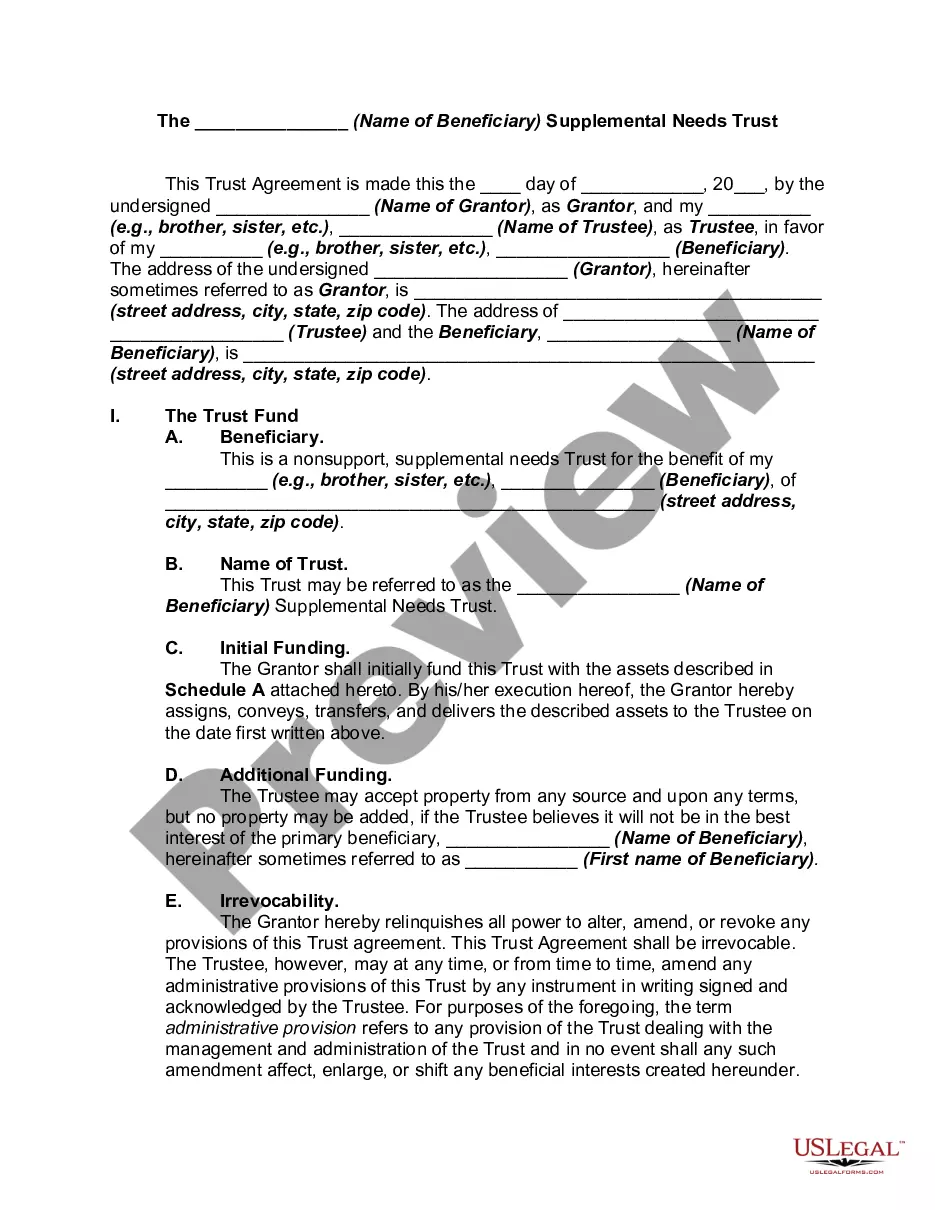
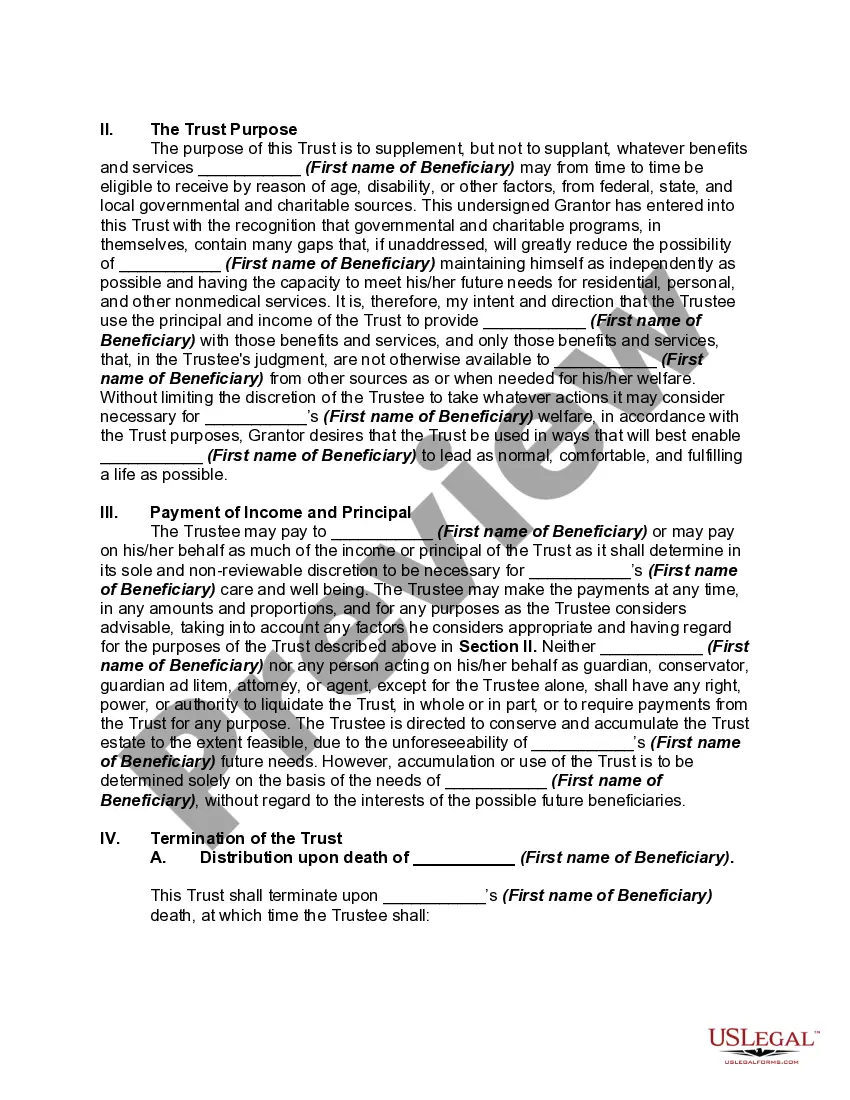
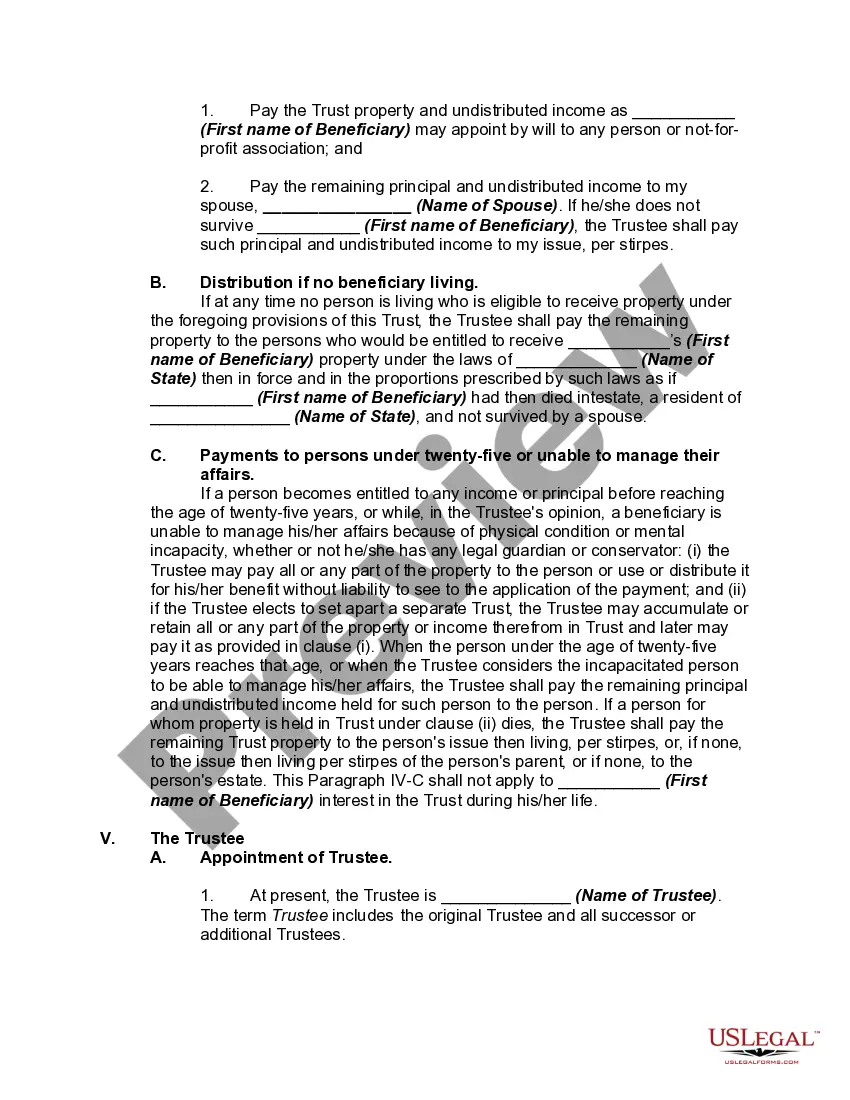
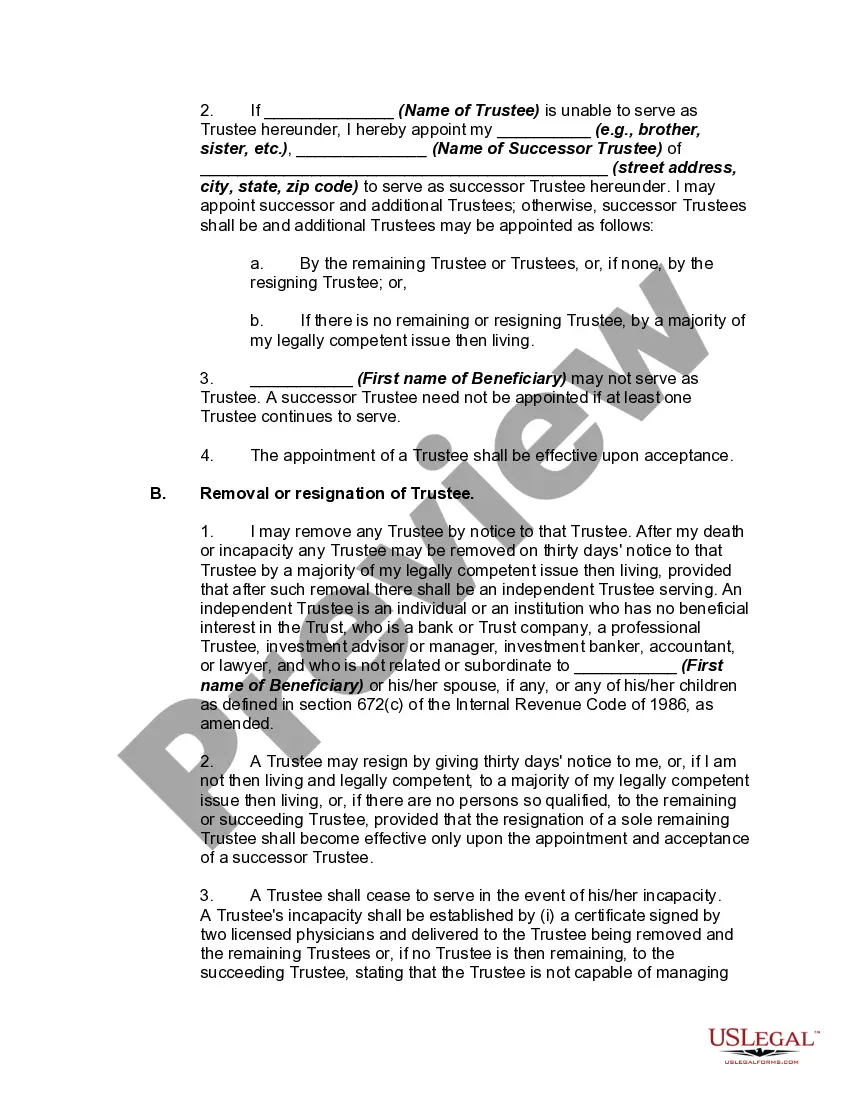
Special Needs Trust Tax Rules For 2018
Description
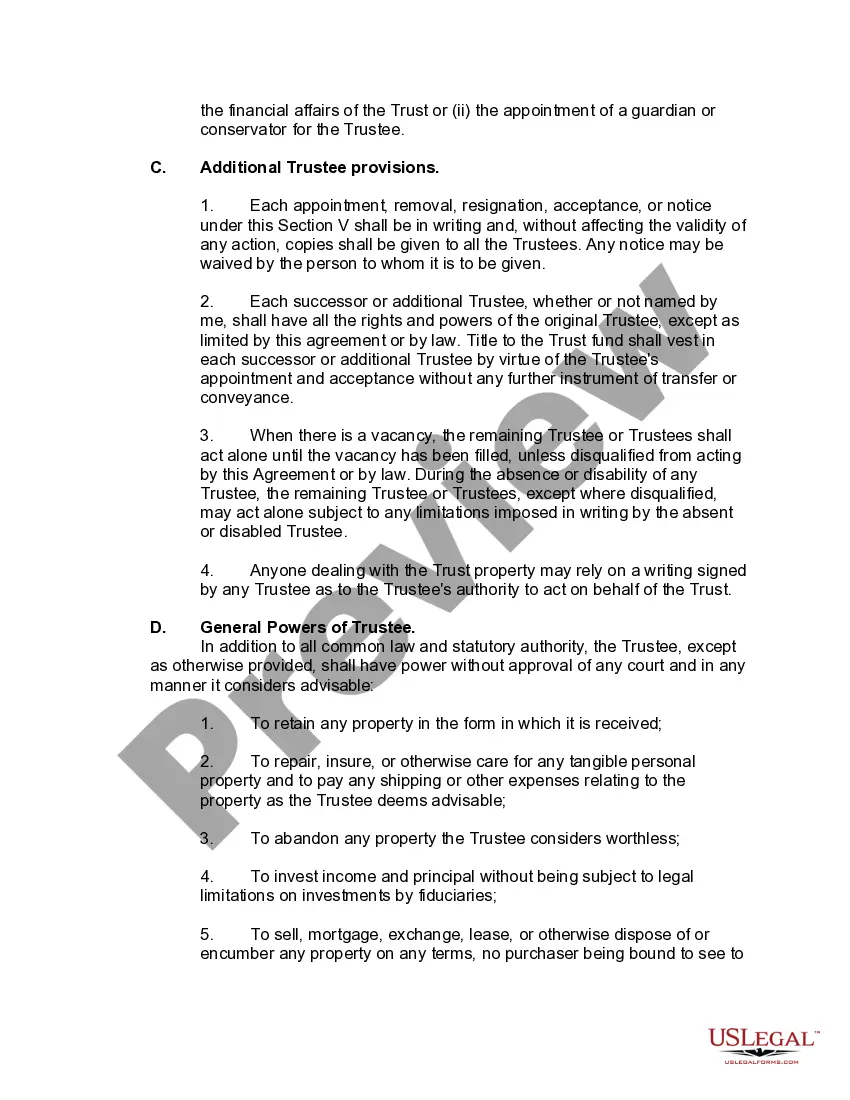
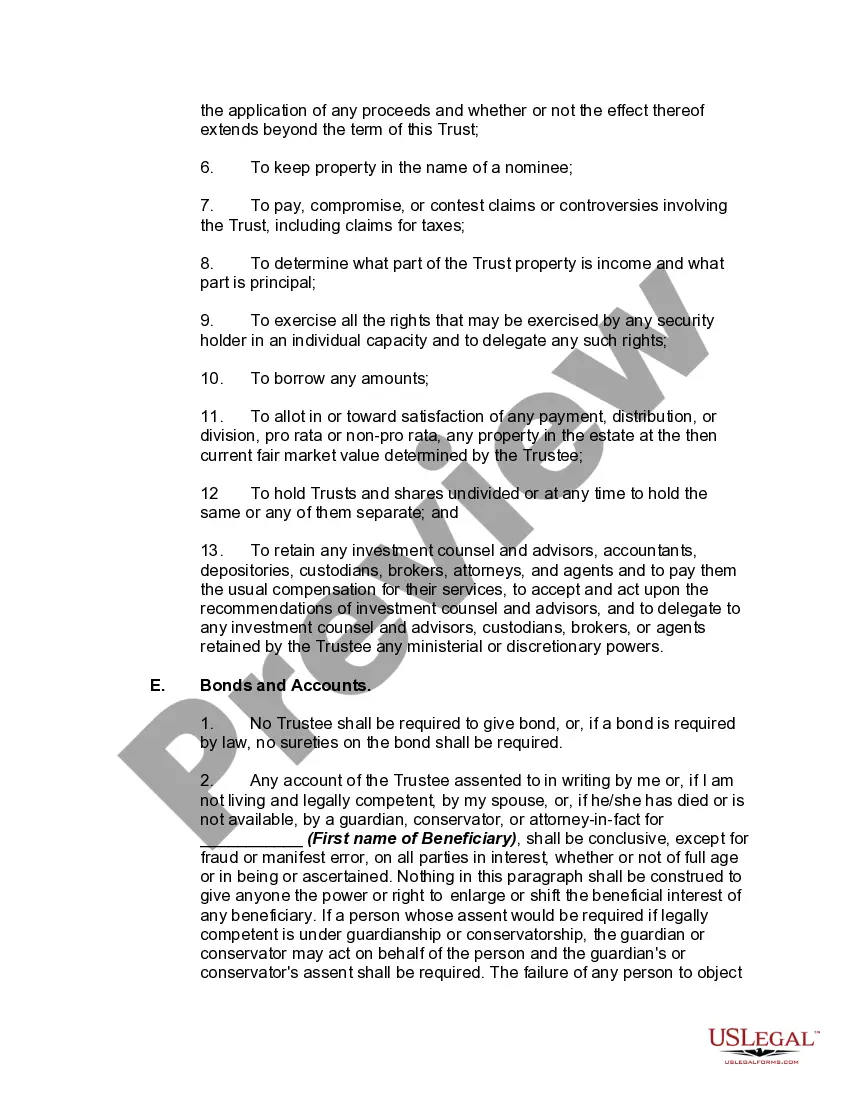
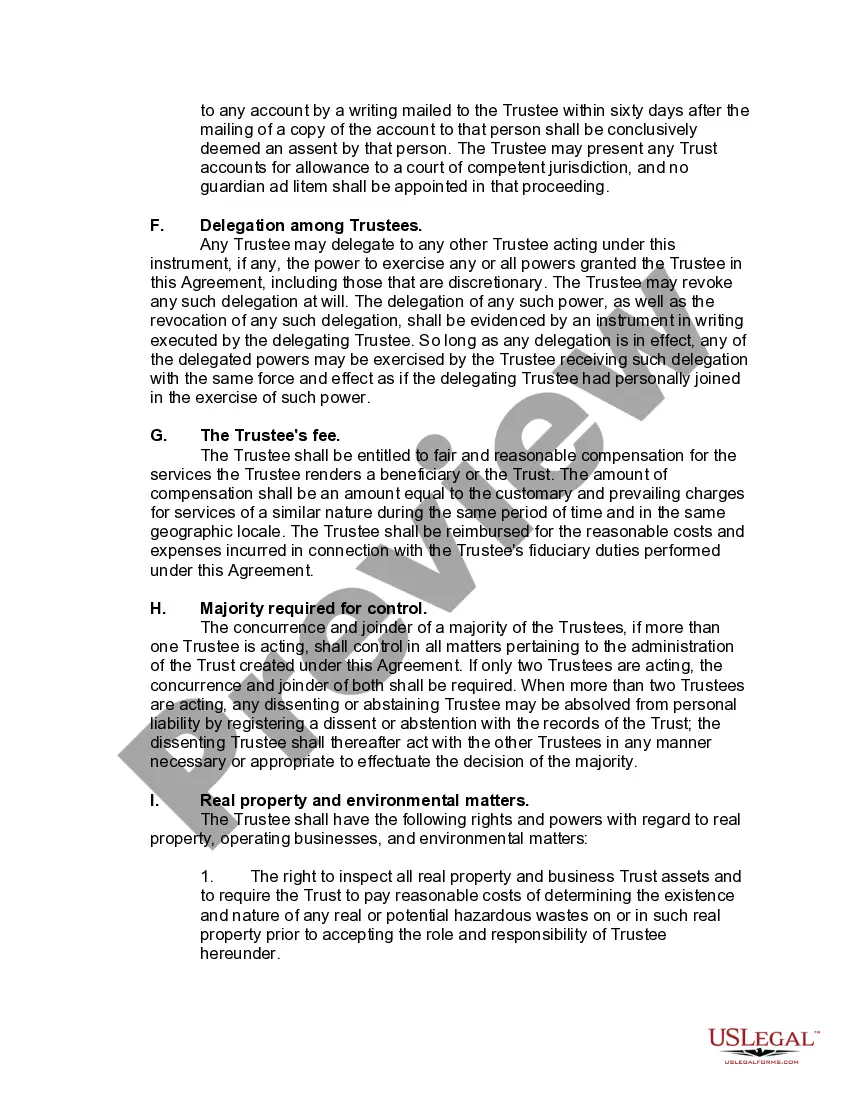
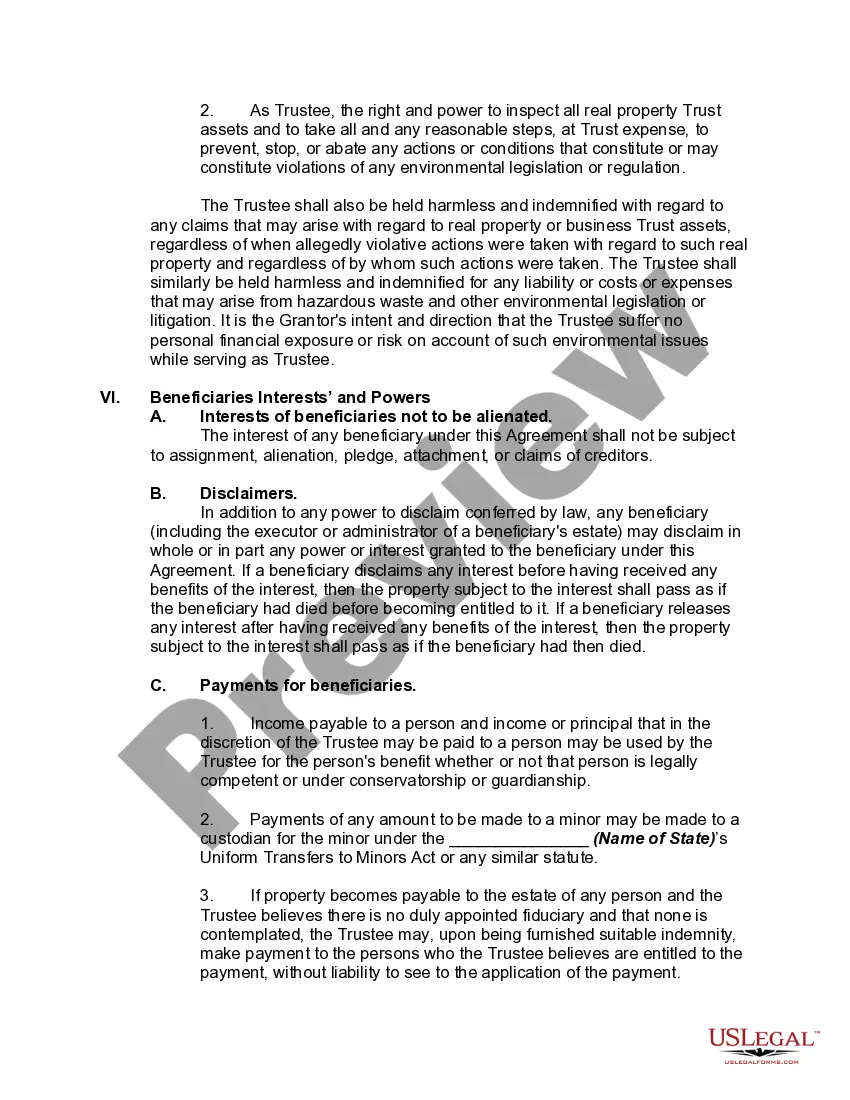
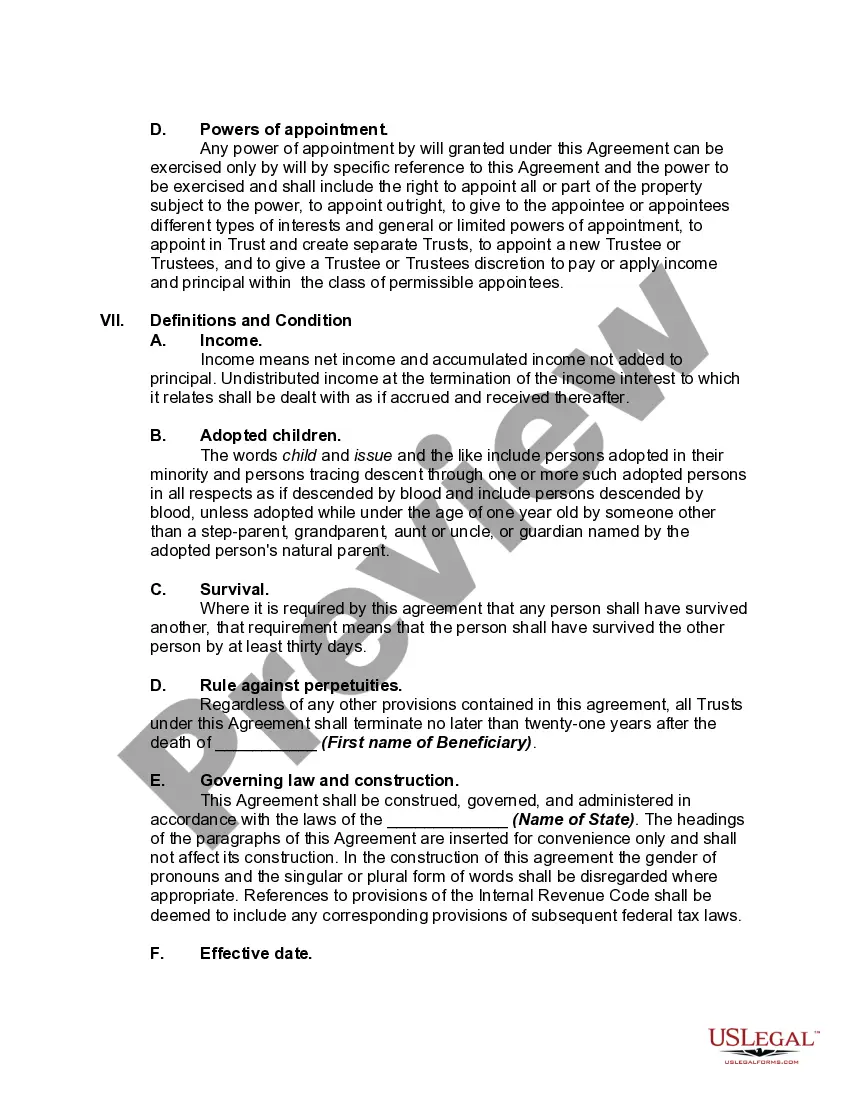
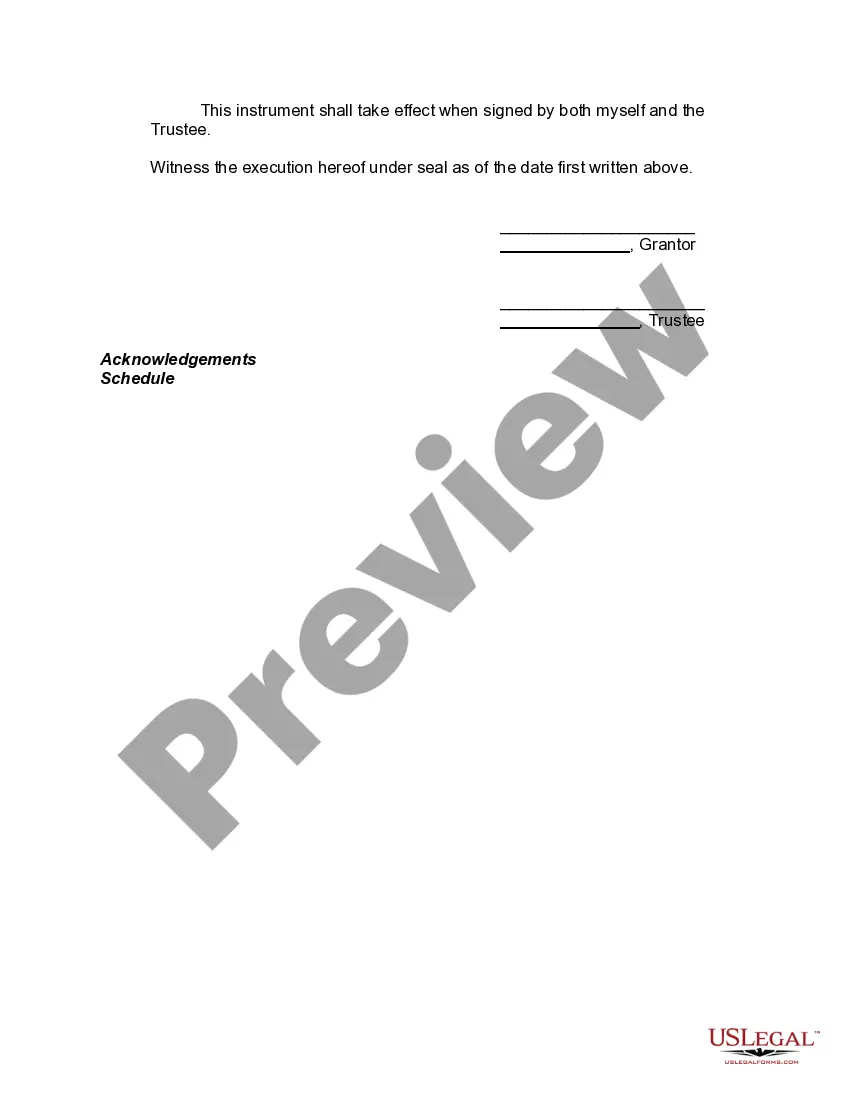

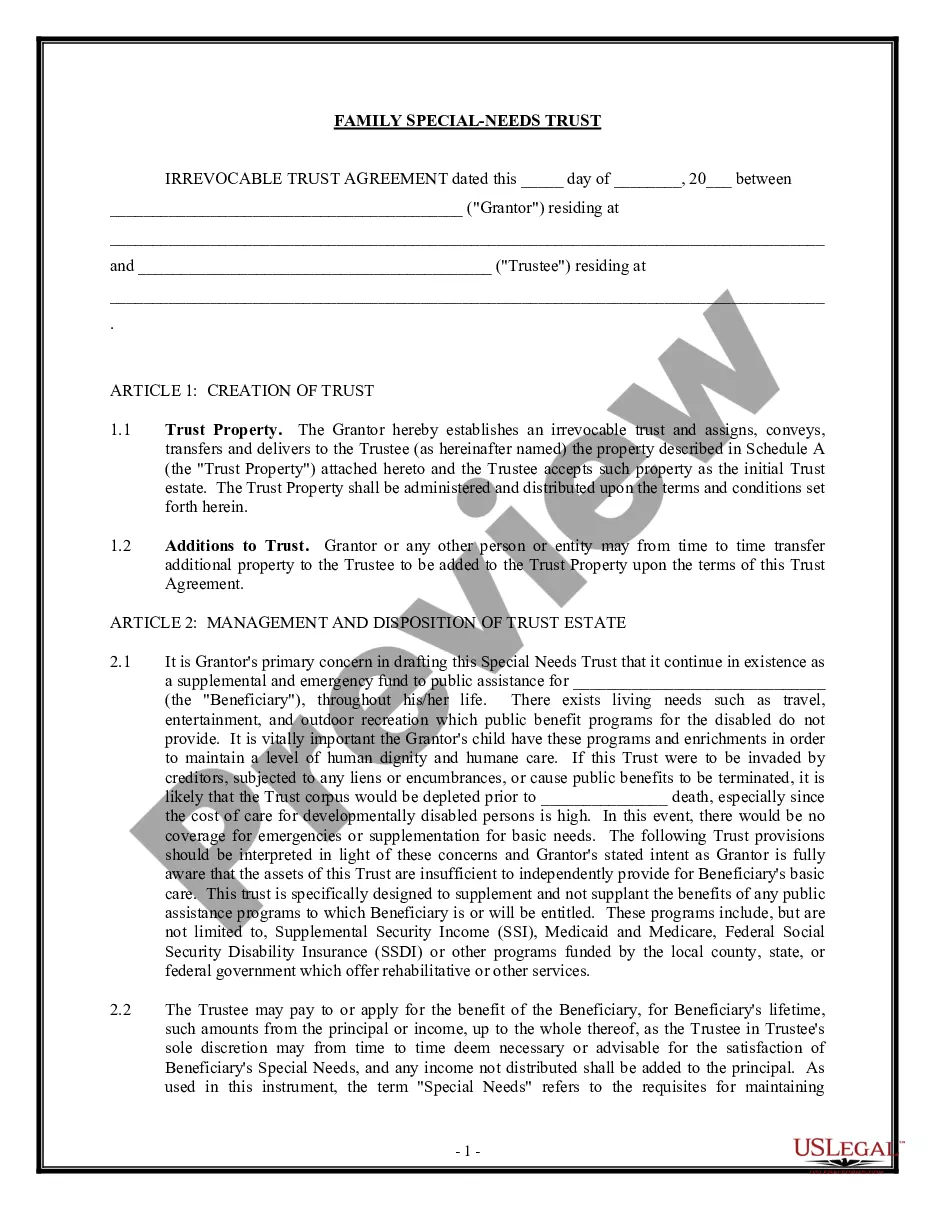
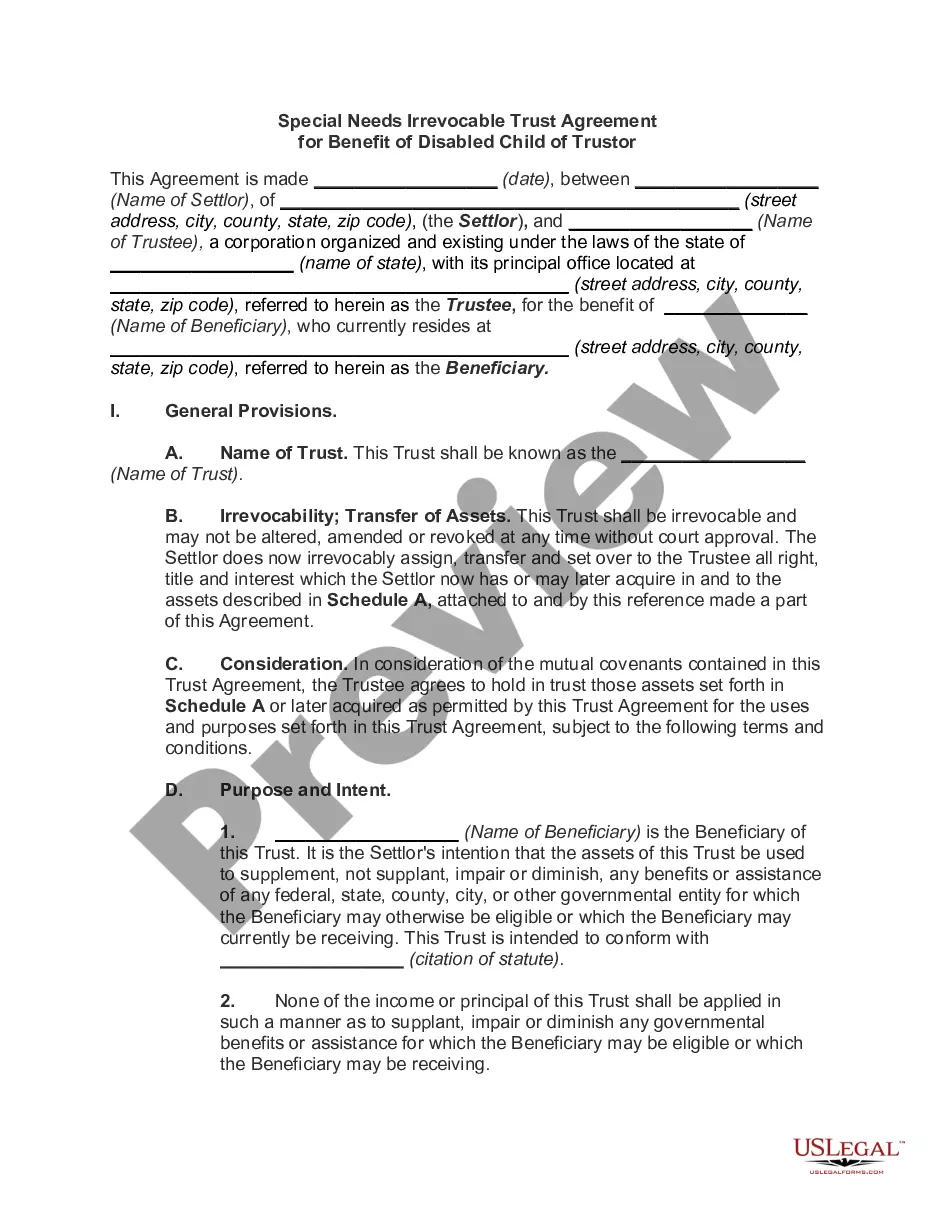
Get your form ready online
Our built-in tools help you complete, sign, share, and store your documents in one place.
Make edits, fill in missing information, and update formatting in US Legal Forms—just like you would in MS Word.
Download a copy, print it, send it by email, or mail it via USPS—whatever works best for your next step.
Sign and collect signatures with our SignNow integration. Send to multiple recipients, set reminders, and more. Go Premium to unlock E-Sign.
If this form requires notarization, complete it online through a secure video call—no need to meet a notary in person or wait for an appointment.
We protect your documents and personal data by following strict security and privacy standards.

Make edits, fill in missing information, and update formatting in US Legal Forms—just like you would in MS Word.

Download a copy, print it, send it by email, or mail it via USPS—whatever works best for your next step.

Sign and collect signatures with our SignNow integration. Send to multiple recipients, set reminders, and more. Go Premium to unlock E-Sign.

If this form requires notarization, complete it online through a secure video call—no need to meet a notary in person or wait for an appointment.

We protect your documents and personal data by following strict security and privacy standards.
Looking for another form?







How to fill out Supplemental Needs Trust For Third Party - Disabled Beneficiary?
Whether for business purposes or for personal affairs, everyone has to manage legal situations sooner or later in their life. Filling out legal documents requires careful attention, beginning from picking the proper form template. For example, when you choose a wrong version of the Special Needs Trust Tax Rules For 2018, it will be rejected when you submit it. It is therefore essential to have a reliable source of legal documents like US Legal Forms.
If you have to get a Special Needs Trust Tax Rules For 2018 template, stick to these simple steps:
- Get the template you need by using the search field or catalog navigation.
- Check out the form’s information to make sure it suits your case, state, and region.
- Click on the form’s preview to see it.
- If it is the wrong document, go back to the search function to find the Special Needs Trust Tax Rules For 2018 sample you need.
- Get the template when it meets your needs.
- If you have a US Legal Forms profile, just click Log in to access previously saved documents in My Forms.
- If you don’t have an account yet, you can obtain the form by clicking Buy now.
- Pick the proper pricing option.
- Finish the profile registration form.
- Choose your transaction method: you can use a credit card or PayPal account.
- Pick the file format you want and download the Special Needs Trust Tax Rules For 2018.
- After it is saved, you can fill out the form by using editing software or print it and complete it manually.
With a large US Legal Forms catalog at hand, you never have to spend time looking for the right template across the internet. Utilize the library’s straightforward navigation to get the correct form for any situation.
Form popularity
FAQ
A trust will have to file a new schedule with its T3 return to report the additional information regarding its beneficial owners, that is, the identity of all trustees, beneficiaries and the settlors of the trust, along with each person who has the ability (through the trust terms or a related agreement), to exert ...
A trust is not a separate taxable entity, but the trustee must lodge a tax return for the trust. Generally, the beneficiaries of the trust declare the amount of their entitlement to the trust's income in their own tax return. Then they pay tax on it, even if they didn't actually receive the income.
The fiduciary of a domestic decedent's estate, trust, or bankruptcy estate files Form 1041 to report: The income, deductions, gains, losses, etc. of the estate or trust. The income that is either accumulated or held for future distribution or distributed currently to the beneficiaries.
A T3 return must be filed when a trust does not have tax payable, however the trust holds property that is subject to subsection 75(2) and from which the trust received income, gains or profits during the year.
What is the 21-year rule? Family trusts created during someone's lifetime are deemed to dispose of their property every 21 years. Although the trust is deemed to have disposed of property for tax purposes, an actual disposition typically does not occur.