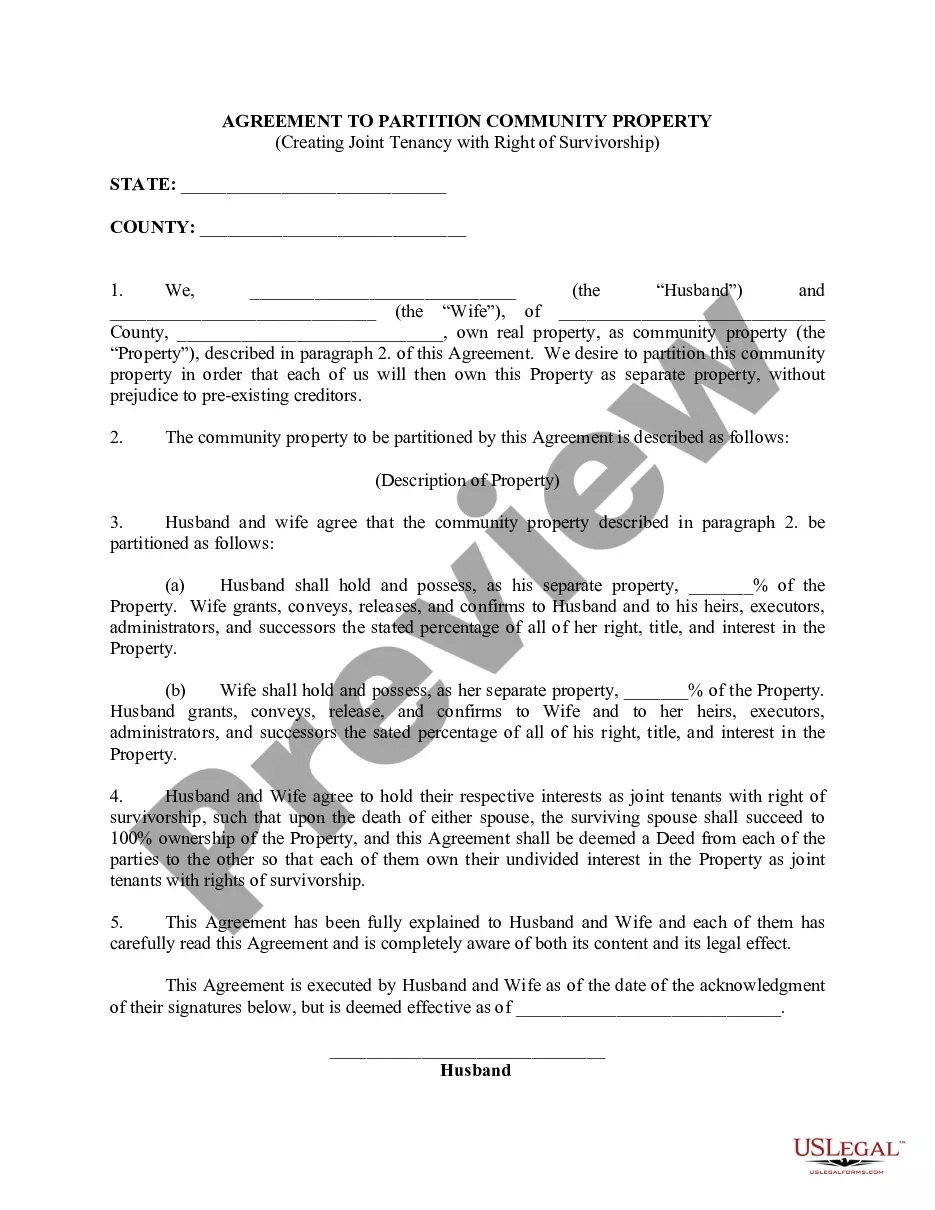
Joint Tenants With Survivorship
Description

Get your form ready online
Our built-in tools help you complete, sign, share, and store your documents in one place.
Make edits, fill in missing information, and update formatting in US Legal Forms—just like you would in MS Word.
Download a copy, print it, send it by email, or mail it via USPS—whatever works best for your next step.
Sign and collect signatures with our SignNow integration. Send to multiple recipients, set reminders, and more. Go Premium to unlock E-Sign.
If this form requires notarization, complete it online through a secure video call—no need to meet a notary in person or wait for an appointment.
We protect your documents and personal data by following strict security and privacy standards.

Make edits, fill in missing information, and update formatting in US Legal Forms—just like you would in MS Word.

Download a copy, print it, send it by email, or mail it via USPS—whatever works best for your next step.

Sign and collect signatures with our SignNow integration. Send to multiple recipients, set reminders, and more. Go Premium to unlock E-Sign.

If this form requires notarization, complete it online through a secure video call—no need to meet a notary in person or wait for an appointment.

We protect your documents and personal data by following strict security and privacy standards.
Looking for another form?
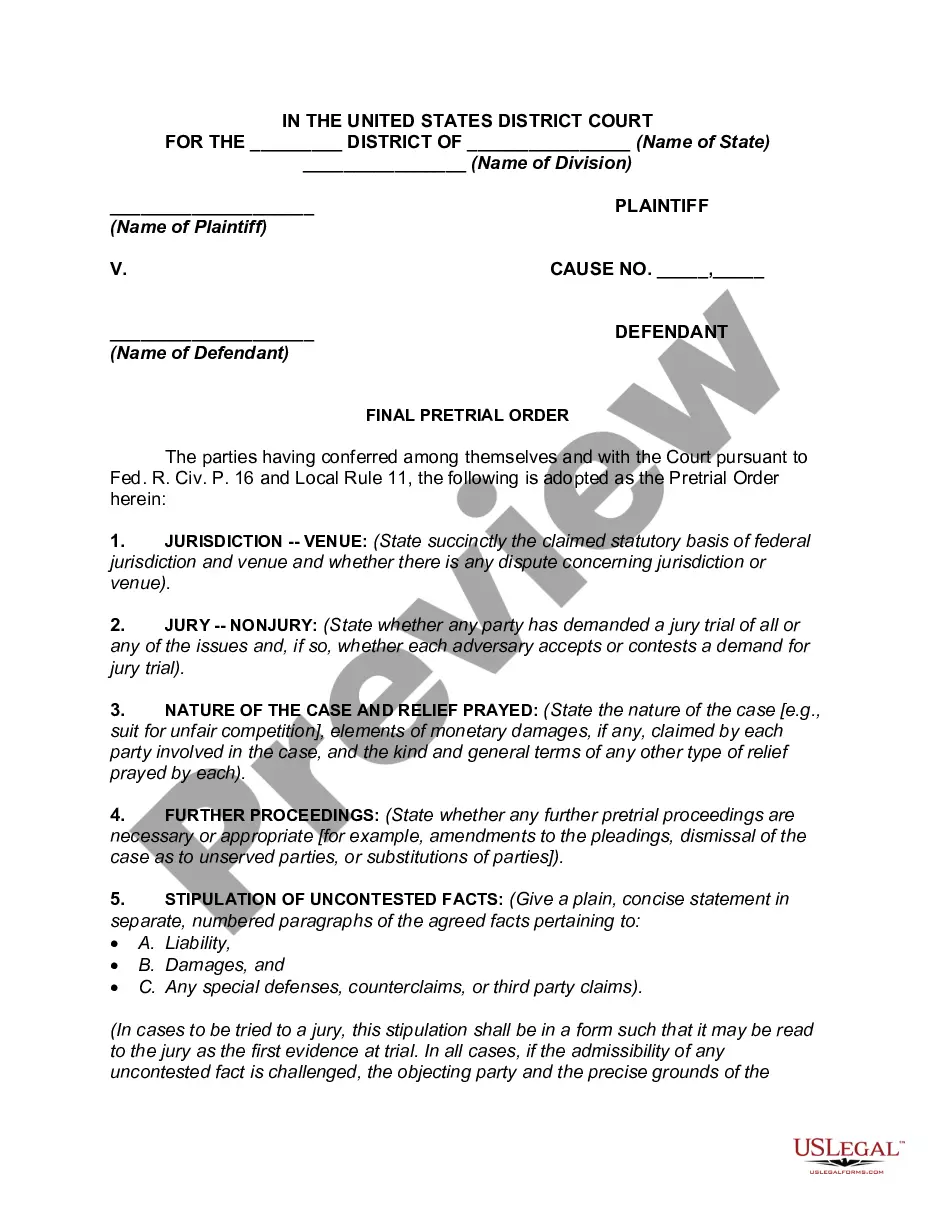
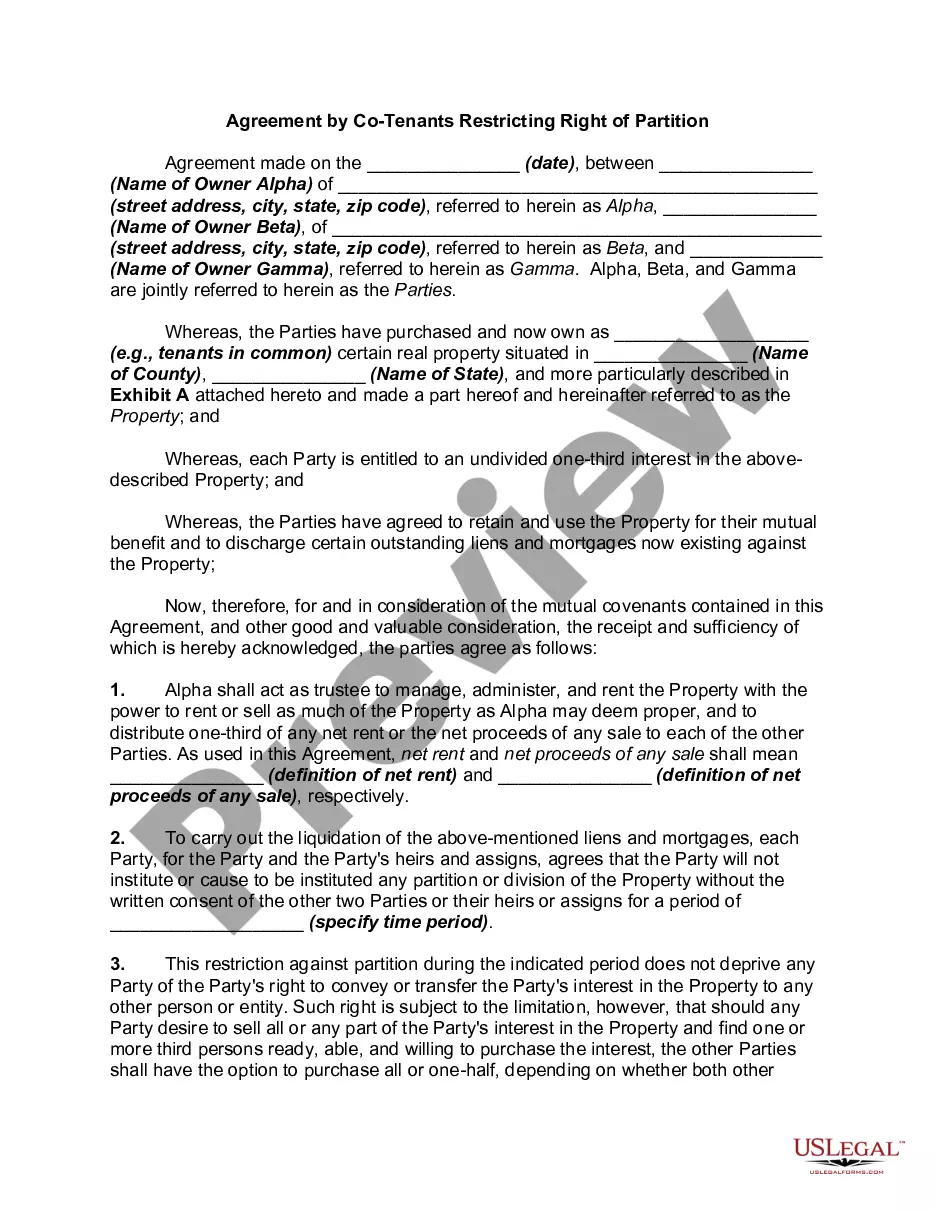
How to fill out Agreement By Co-Tenants Restricting Right Of Partition?
Whether for corporate reasons or for personal matters, everyone must deal with legal circumstances at some time in their lives.
Filling out legal documents requires meticulous care, beginning with selecting the right form template.
With an extensive US Legal Forms library available, you will never have to waste time searching for the right template online. Utilize the library's straightforward navigation to find the suitable form for any occasion.
- Obtain the template you require using the search box or catalog browsing.
- Review the form's description to confirm it aligns with your situation, state, and county.
- Click on the form's preview to inspect it.
- If it is the wrong document, return to the search tool to locate the Joint Tenants With Survivorship template you need.
- Download the template if it satisfies your needs.
- If you have a US Legal Forms account, simply click Log in to access previously saved documents in My documents.
- If you do not have an account yet, you can acquire the form by clicking Buy now.
- Select the suitable pricing option.
- Complete the account registration form.
- Choose your payment method: utilize a credit card or PayPal account.
- Select the file format you desire and download the Joint Tenants With Survivorship.
- Once it is downloaded, you can complete the form using editing software or print it and finish it manually.
Form popularity
FAQ
The step up basis refers to the revaluation of a property’s value to its fair market rate upon the death of a joint tenant. Joint tenants with survivorship benefit from this rule, as it can potentially reduce capital gains taxes when the property is sold. Understanding this concept is vital for effective estate planning, and platforms like USLegalForms can help you navigate the nuanced tax implications of joint tenancy.
While joint tenancy with a right of survivorship offers benefits, it also has drawbacks. For instance, it may limit control over the property's share, as both tenants must agree on major decisions. Additionally, creditors of a deceased joint tenant could seek claims against the property, and tax implications might arise that can affect the financial benefits of joint ownership.
The rule of survivorship ensures that, upon the death of one joint tenant, their interest in the property directly transfers to the surviving joint tenant. This arrangement removes the property from the deceased's estate, preventing probate proceedings. Thus, joint tenants with survivorship provide both quick transfer of ownership and ease in managing property during personal transitions.
Setting up joint tenants with rights of survivorship involves drafting a deed that identifies all owners as joint tenants. It is vital that the deed includes specific wording to confirm the survivorship rights. Utilizing a platform like USLegalForms can provide you with the necessary templates and guidance, making the setup process straightforward and compliant with your state’s regulations.
To create joint tenants with survivorship, you must clearly state this intention in a property's deed. Typically, all owners’ names should appear on the deed, with language indicating that they hold the property as joint tenants with rights of survivorship. This establishes that if one owner passes away, their share automatically transfers to the surviving owner, ensuring seamless ownership.
Joint accounts are often referred to as a ?poor man's Will? because they allow an individual to give assets to another upon death without going through the probate process. Some people have the perception from hearing horror stories that probate will consume the entire estate.
For spouses: Assets in JTWROS accounts may get a step-up on cost basis when either spouse passes away. This can help reduce capital gains taxes when selling a property, but you can only step-up half of the full value of the asset. This 50% step-up represents the portion owned by the joint owner who died.
For example, if two people, Mark and Amanda, own a property together and Mark dies, then Amanda will become to sole owner of the property even if this is not detailed in the will because the two of them purchased the property together.
Under the right of survivorship, each tenant possesses an undivided interest in the whole estate. When one tenant dies, the tenant's interest disappears and the others tenants' shares increase proportionally and obtain the rights to the entire estate.