Joint Tenants With Equal Shares
Description

Get your form ready online
Our built-in tools help you complete, sign, share, and store your documents in one place.
Make edits, fill in missing information, and update formatting in US Legal Forms—just like you would in MS Word.
Download a copy, print it, send it by email, or mail it via USPS—whatever works best for your next step.
Sign and collect signatures with our SignNow integration. Send to multiple recipients, set reminders, and more. Go Premium to unlock E-Sign.
If this form requires notarization, complete it online through a secure video call—no need to meet a notary in person or wait for an appointment.
We protect your documents and personal data by following strict security and privacy standards.

Make edits, fill in missing information, and update formatting in US Legal Forms—just like you would in MS Word.

Download a copy, print it, send it by email, or mail it via USPS—whatever works best for your next step.

Sign and collect signatures with our SignNow integration. Send to multiple recipients, set reminders, and more. Go Premium to unlock E-Sign.

If this form requires notarization, complete it online through a secure video call—no need to meet a notary in person or wait for an appointment.

We protect your documents and personal data by following strict security and privacy standards.
Looking for another form?



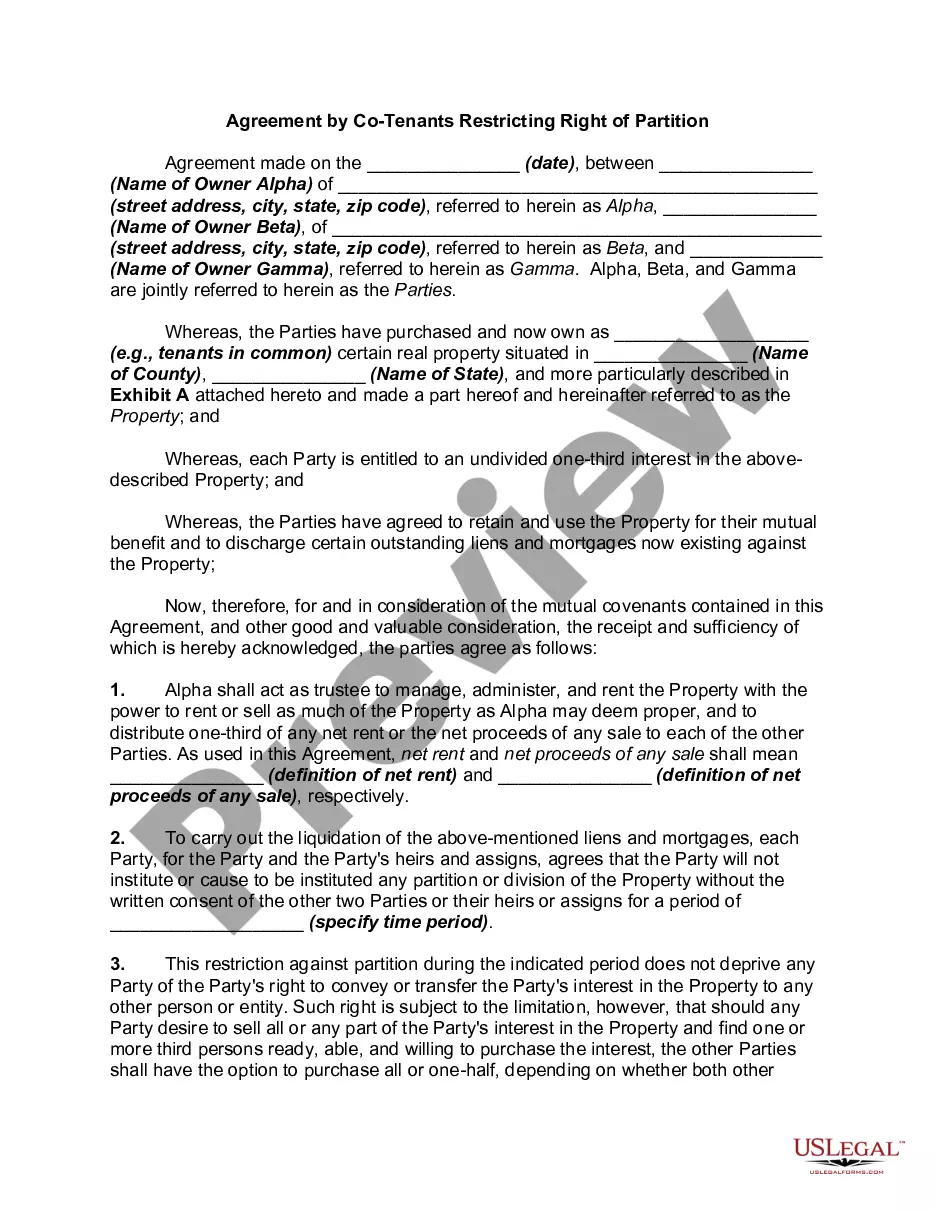
How to fill out Agreement By Co-Tenants Restricting Right Of Partition?
It’s well known that you cannot transform into a legal expert overnight, nor can you learn to swiftly create Joint Tenants With Equal Shares without possessing a unique skill set.
Drafting legal documents is a lengthy procedure that necessitates specific education and abilities.
So why not entrust the creation of the Joint Tenants With Equal Shares to the experts.
You can access your files again from the My documents section whenever needed. If you are a current customer, you can simply Log In, and locate and download the template from the same area.
Regardless of your documents' intent—be it fiscal, legal, or personal—our website has you covered. Experience US Legal Forms now!
- Locate the document you require by utilizing the search feature at the upper section of the site.
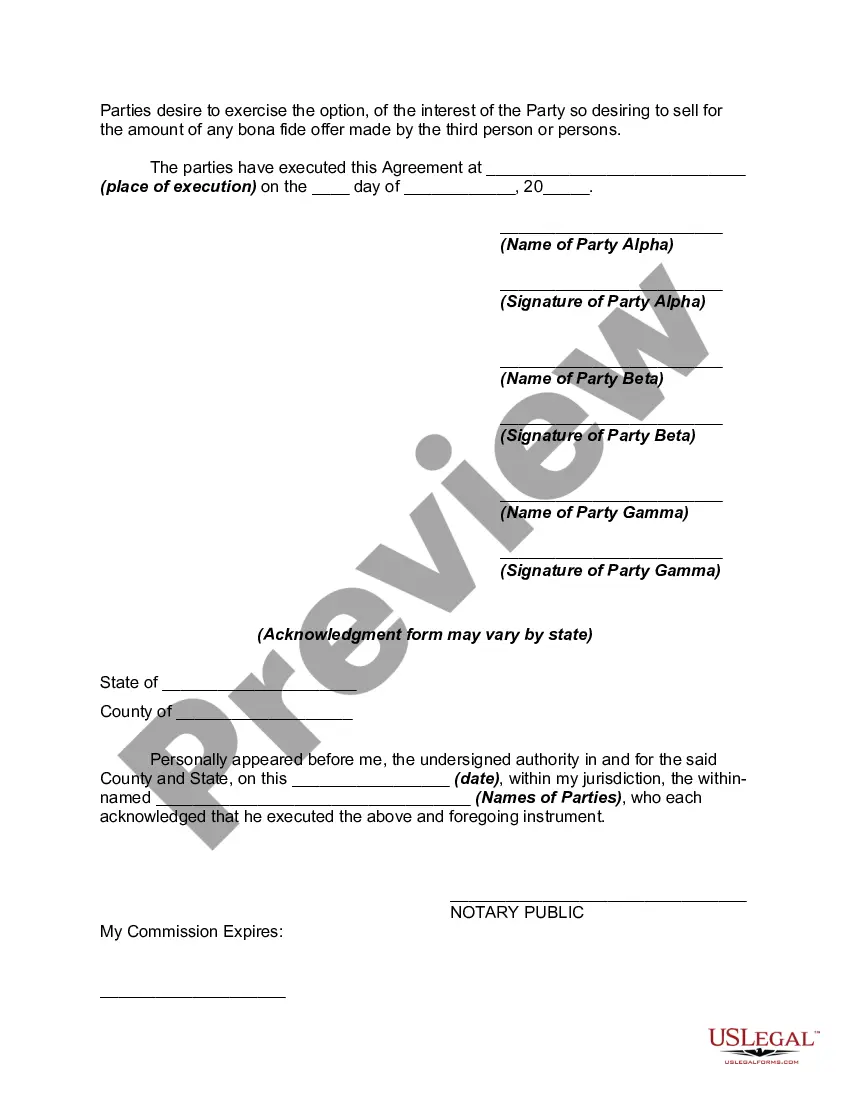
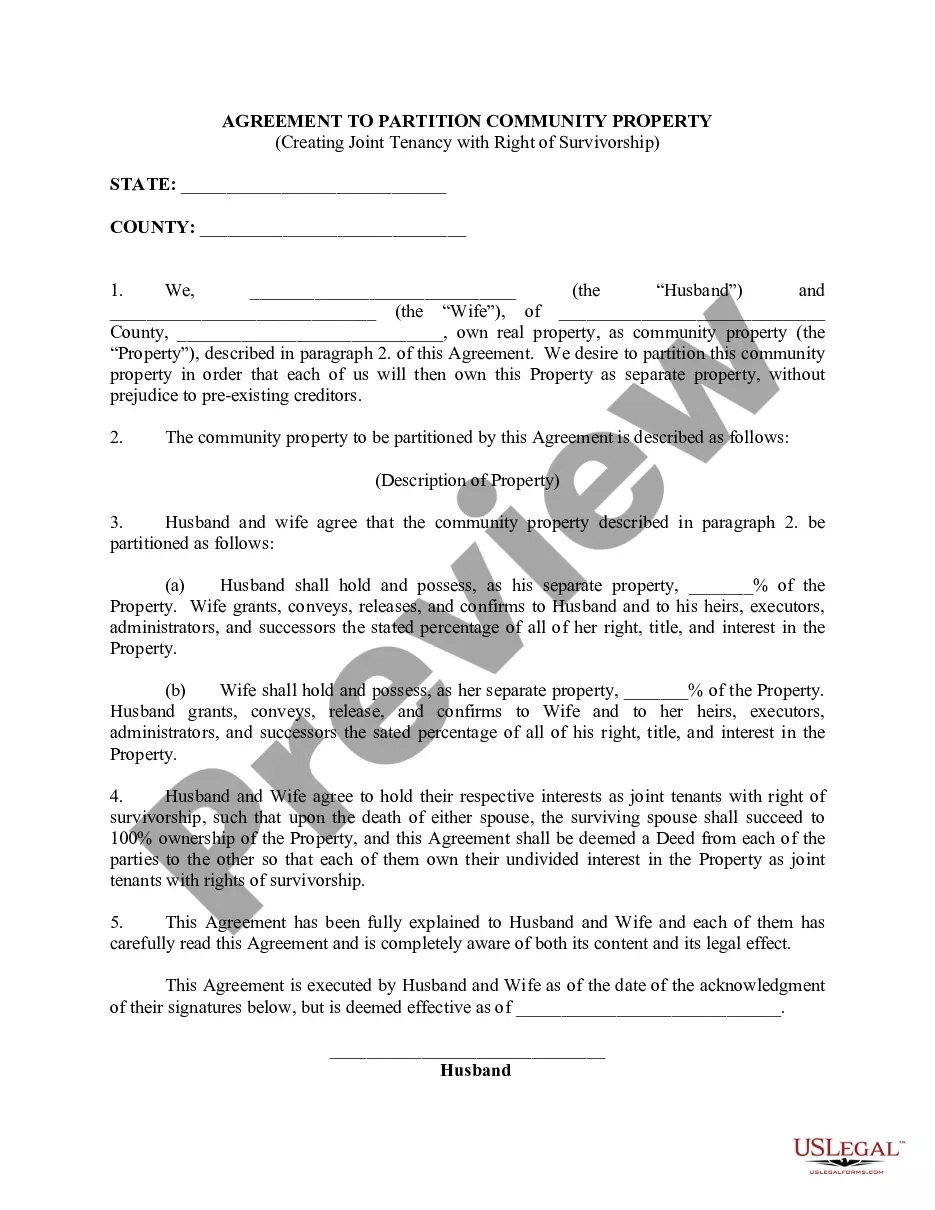
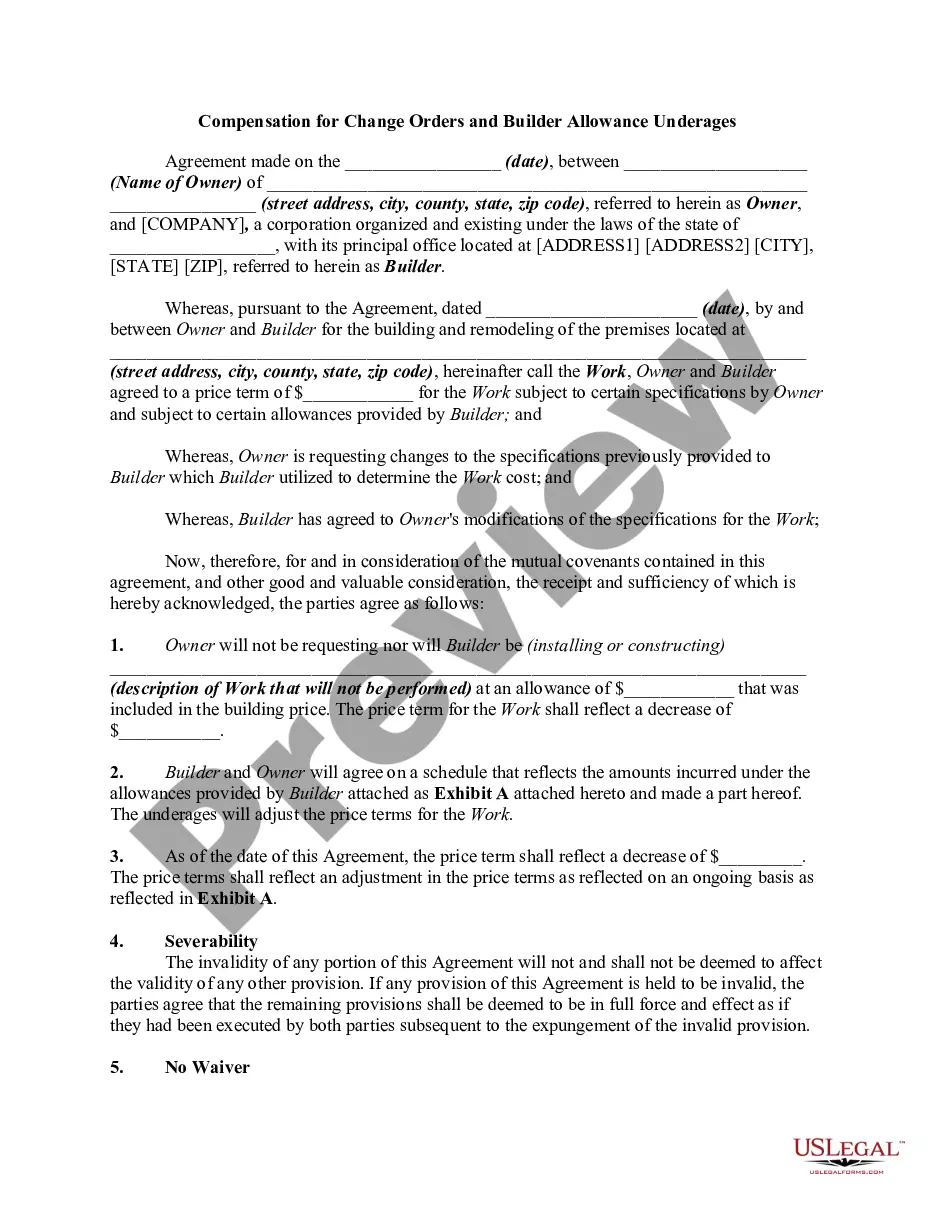
- Preview it (if this feature is available) and examine the accompanying description to see if Joint Tenants With Equal Shares meets your needs.
- Begin your search anew if you seek a different template.
- Create a free account and choose a subscription plan to acquire the template.
- Click Buy now. Once the payment is processed, you can obtain the Joint Tenants With Equal Shares, fill it out, print it, and deliver or mail it to the relevant parties or organizations.
Form popularity
FAQ
Any form of ownership that allows for unequal shares is incompatible with joint tenancy. For instance, tenancy in common permits owners to hold different percentages of the property. This aspect makes joint tenancy a less flexible choice for those seeking varied ownership interests. If you are looking for a clear ownership structure, it is important to understand these limitations.
Only joint tenancy requires owners to hold equal shares. Tenancy in common, on the other hand, permits unequal shares, enabling flexibility among owners. This distinction is crucial for individuals assessing their co-ownership options, especially when considering investment opportunities. By knowing these terms, you can choose the best ownership structure for your needs.
Joint tenants cannot have unequal shares, as this contradicts the principle of joint tenancy. In this arrangement, all owners hold identical interests in the property, both in size and value. If unequal ownership is desired, parties should consider forming a tenancy in common instead. Clarity in ownership structure is essential for smooth co-ownership.
No, joint tenants must hold equal shares in the property. This is a defining characteristic of joint tenancy, where ownership is divided equally among all owners. Each joint tenant benefits from rights of survivorship, meaning if one owner passes away, their share automatically goes to the remaining owners. This ensures stability and equal benefit among joint tenants.
Tenancy in common allows for unequal shares of ownership, unlike joint tenants with equal shares. In this arrangement, each owner can hold a different percentage of property interest. This flexibility is beneficial for groups of investors or family members who may want to contribute different amounts. Understanding these differences is important for making informed ownership decisions.
'Joint tenants in equal shares' is a legal term describing co-owners of a property who share identical interests. Each individual has an equal right to the whole property and, in the event of one partner's death, their share directly passes to the surviving tenant. This setup not only promotes equal ownership but also simplifies the transfer of property interests. Legal platforms like uslegalforms can assist in establishing and understanding joint tenants with equal shares.
If one partner wants to sell the property while the other does not, joint tenants with equal shares can face a challenging situation. Typically, the partner who wishes to sell may initiate a legal process to compel the sale, known as a partition action. This legal recourse allows the court to decide on the sale of the property if an agreement cannot be reached. Seeking legal guidance can help navigate these issues effectively.
When one joint tenant goes into care, the property ownership usually remains intact, as joint tenants with equal shares retain their rights despite individual circumstances. The surviving owner continues to hold their equal share and can manage the property as before. However, if financial assistance for care is needed, consulting with a legal expert can clarify how this affects ownership and property usage. This understanding can help ensure that both parties' interests are managed effectively.
A joint tenant in equal shares refers to co-owners who hold the property equally, with each individual receiving an identical interest. This means if the property is sold, any proceeds would be split equally among all owners. The key feature here is the right of survivorship, which allows the ownership to automatically pass to the surviving joint tenant. This arrangement can simplify estate transfers and minimize probate complications.
The choice between being joint tenants or tenants in common depends on individual circumstances. Joint tenants with equal shares provide rights of survivorship, which means if one owner passes away, their share automatically transfers to the survivor. In contrast, tenants in common can specify inheritance of their portion, allowing for greater control over one’s estate. Weighing the pros and cons with a legal expert can help you make an informed decision.