Joint Tenants With Entirety
Description

Get your form ready online
Our built-in tools help you complete, sign, share, and store your documents in one place.
Make edits, fill in missing information, and update formatting in US Legal Forms—just like you would in MS Word.
Download a copy, print it, send it by email, or mail it via USPS—whatever works best for your next step.
Sign and collect signatures with our SignNow integration. Send to multiple recipients, set reminders, and more. Go Premium to unlock E-Sign.
If this form requires notarization, complete it online through a secure video call—no need to meet a notary in person or wait for an appointment.
We protect your documents and personal data by following strict security and privacy standards.

Make edits, fill in missing information, and update formatting in US Legal Forms—just like you would in MS Word.

Download a copy, print it, send it by email, or mail it via USPS—whatever works best for your next step.

Sign and collect signatures with our SignNow integration. Send to multiple recipients, set reminders, and more. Go Premium to unlock E-Sign.

If this form requires notarization, complete it online through a secure video call—no need to meet a notary in person or wait for an appointment.

We protect your documents and personal data by following strict security and privacy standards.
Looking for another form?
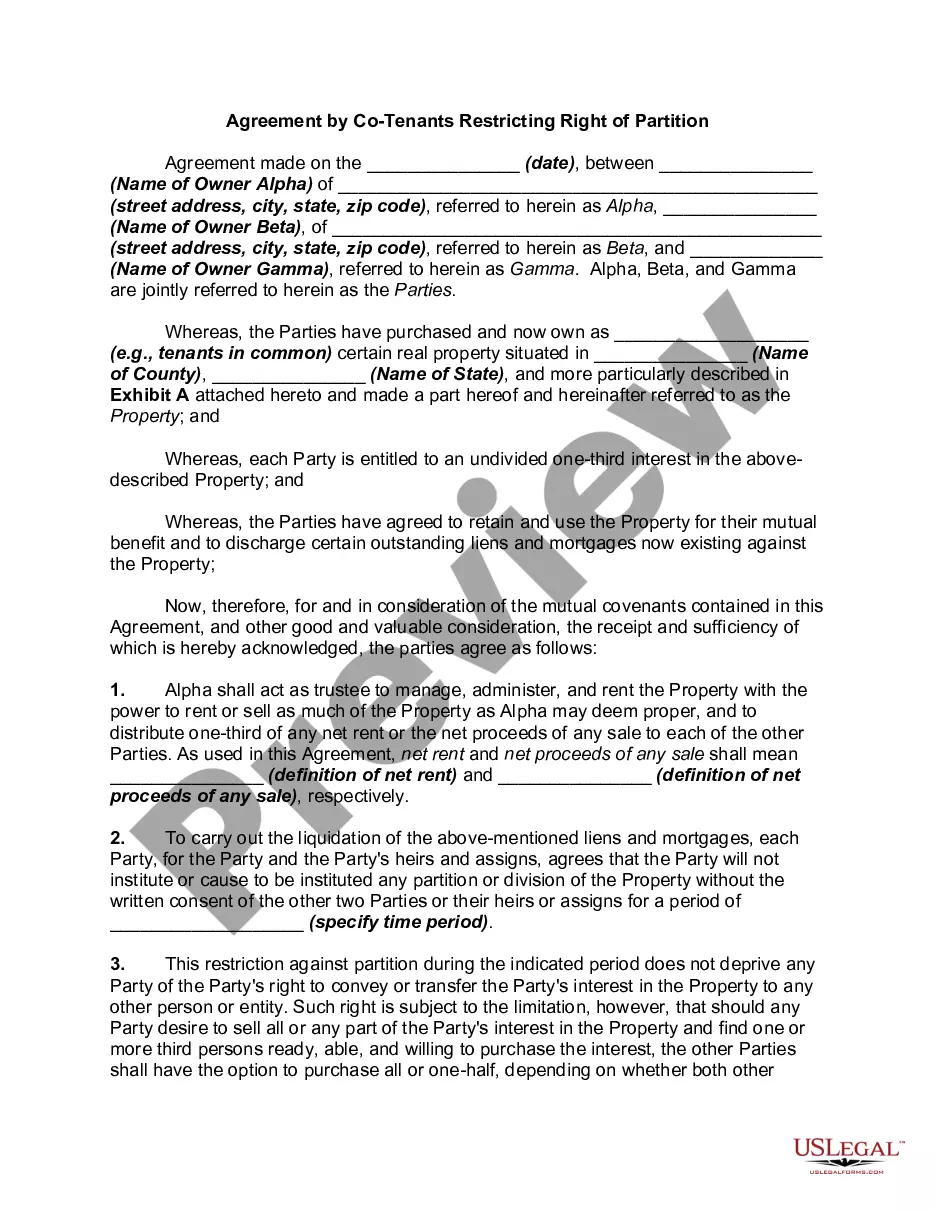
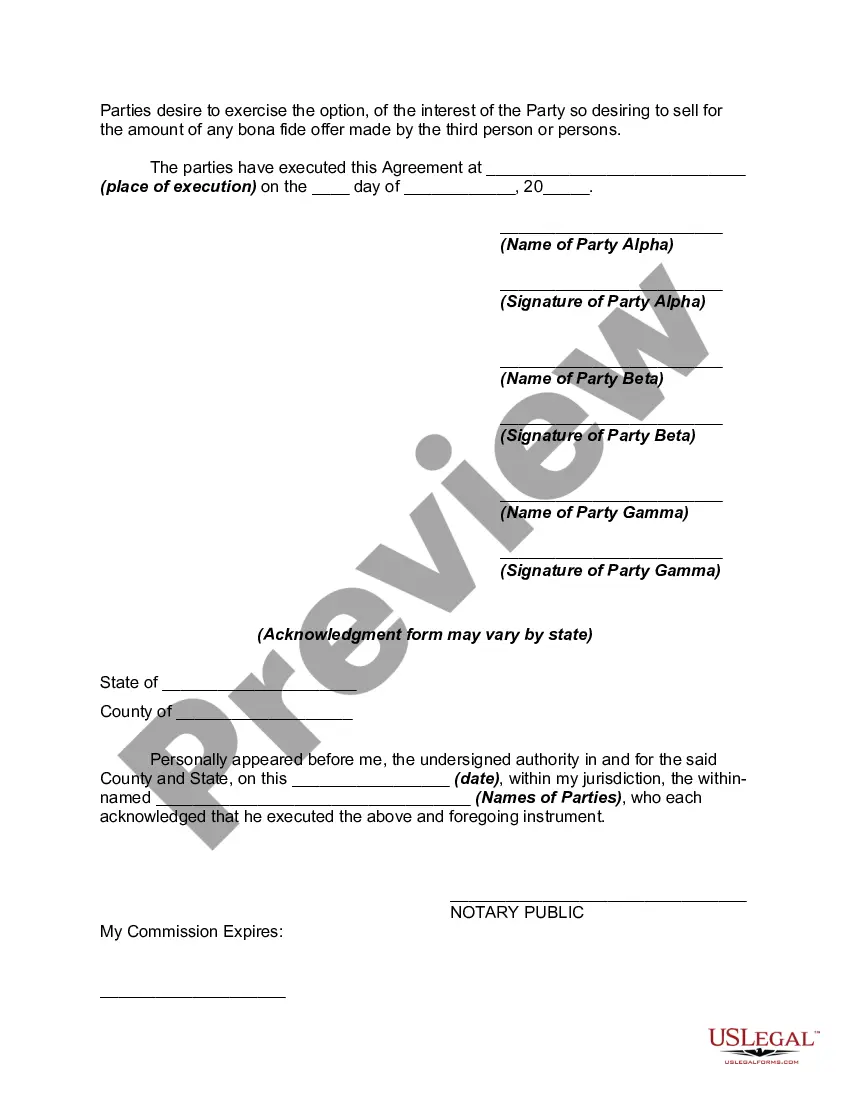
How to fill out Agreement By Co-Tenants Restricting Right Of Partition?
The Joint Tenants With Entirety visible on this page is a versatile legal template created by experienced attorneys in compliance with federal and local regulations.
For over 25 years, US Legal Forms has offered individuals, businesses, and legal experts more than 85,000 validated, state-specific documents for any professional and personal scenario.
Subscribe to US Legal Forms to have authenticated legal templates for all of life's circumstances readily available.
- Search for the document you require and examine it.
- Browse through the file you searched and preview it or review the form description to confirm it meets your needs. If it doesn’t, utilize the search bar to find the correct one. Select Buy Now when you have found the template you need.
- Register and Log In.
- Select the subscription plan that works for you and create an account. Use PayPal or a credit card for a quick transaction. If you already have an account, Log In and verify your subscription to continue.
- Acquire the editable template.
- Choose the format you prefer for your Joint Tenants With Entirety (PDF, DOCX, RTF) and store the sample on your device.
- Complete and sign the document.
- Print the template to fill it out manually. Alternatively, use an online multi-functional PDF editor to swiftly and accurately complete and sign your form with an eSignature.
- Redownload your documents as needed.
- Access the same document again whenever required. Go to the My documents tab in your profile to retrieve any previously downloaded forms.
Form popularity
FAQ
Tenancy by entirety applies specifically to married couples and requires that both spouses hold an undivided interest in the property. Similar to joint tenants with entirety, both parties must acquire the property simultaneously and share equal ownership rights. This form of ownership also protects against claims by individual creditors, ensuring that the property remains secure for both partners. Utilizing USLegalForms can help navigate these requirements and generate the necessary documents to establish this type of ownership.
To establish joint tenants with entirety, you need four essential elements: unity of time, unity of title, unity of interest, and unity of possession. All owners must acquire their shares of the property at the same time, through the same deed, with identical obligations and rights. When these factors align, the joint tenants with entirety enjoy equal rights in the property. This arrangement provides a significant legal advantage during ownership transfer as it bypasses probate.
For married couples, joint tenants with entirety is often considered the best option for property ownership. This arrangement not only offers protection against creditors but also ensures automatic transfer of property rights upon the death of one spouse. Additionally, couples share equal interest and responsibilities, promoting collaboration. US Legal Forms can assist you in navigating the complexities of setting up this ownership type.
While joint tenants with entirety provide unique protection, they come with limitations. For instance, if one spouse has significant debt, creditors may not be able to access the property directly but can impact the couple's financial stability. Moreover, both parties must agree on every action regarding the property, causing potential conflicts. Understanding these nuances can help you make better ownership decisions.
To establish a joint tenant by entirety account, both spouses must be legally married and agree on the property ownership arrangement. Each spouse must consent to all decisions involving the property, such as sales or refinancing. Additionally, this type of ownership must be specifically stated within the property deed. If you are considering this structure, check resources like US Legal Forms for guidance.
While joint tenants with entirety offer many advantages, they also have some drawbacks. One major disadvantage is that if the couple divorces, the property may need to be divided or sold, complicating matters for both parties. Moreover, if one spouse passes away, the surviving spouse automatically inherits, which can limit estate planning options. It's wise to weigh these factors when considering joint tenants with entirety.
Joint tenants with entirety provide several benefits, especially for married couples. This type of ownership protects the property from creditors of one spouse, ensuring that the other spouse retains full ownership. Additionally, it promotes unity and cooperation in property management. As joint tenants with entirety, both parties must agree on significant decisions concerning the property.
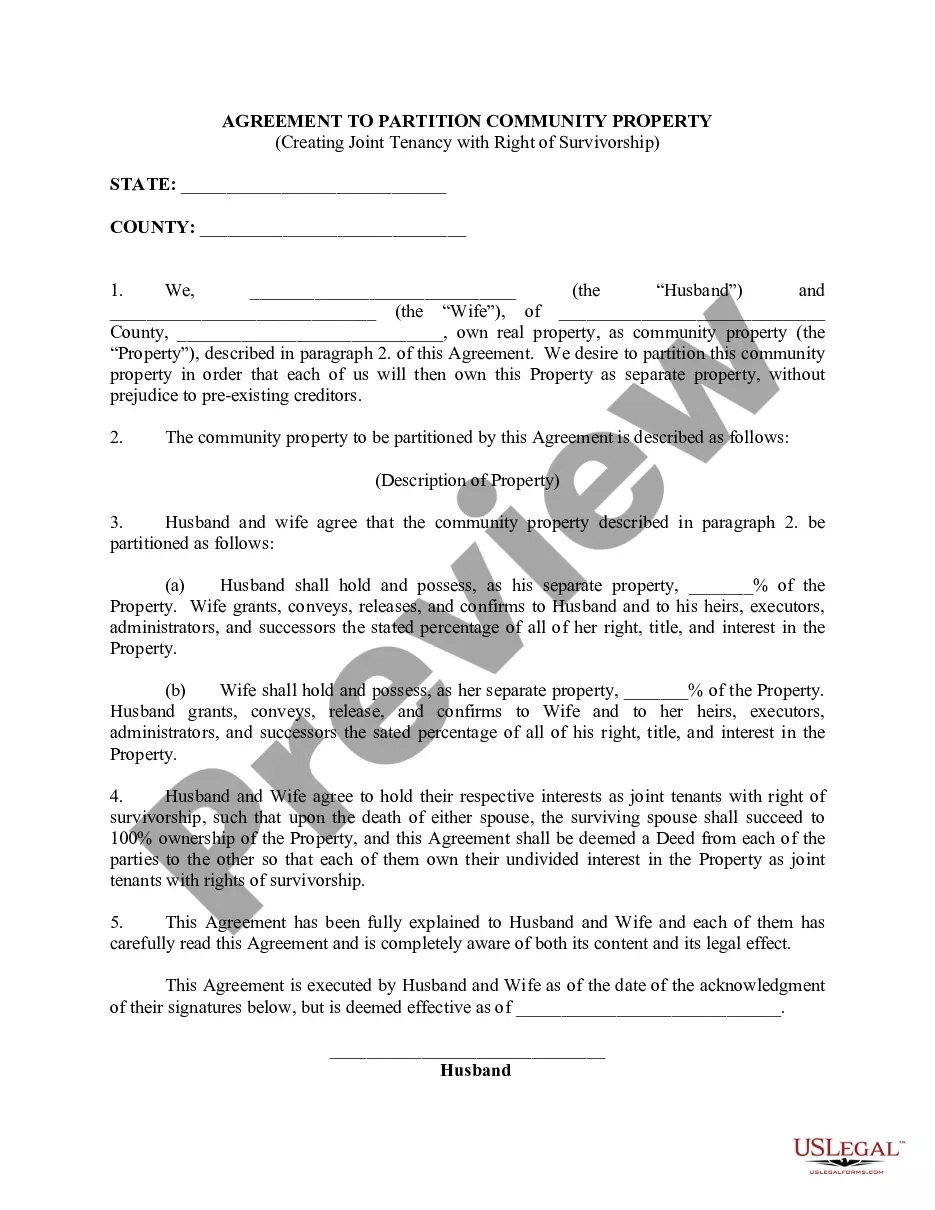
Joint tenants with entirety is a legal arrangement where a married couple owns property together. Each spouse holds an equal share, meaning neither can transfer their interest without the other's consent. This form of ownership provides protection against creditors and ensures that property automatically passes to the surviving spouse upon death. Understanding joint tenants with entirety can help you make informed decisions about property ownership and estate planning.