Sexuality Discrimination Definition
Description

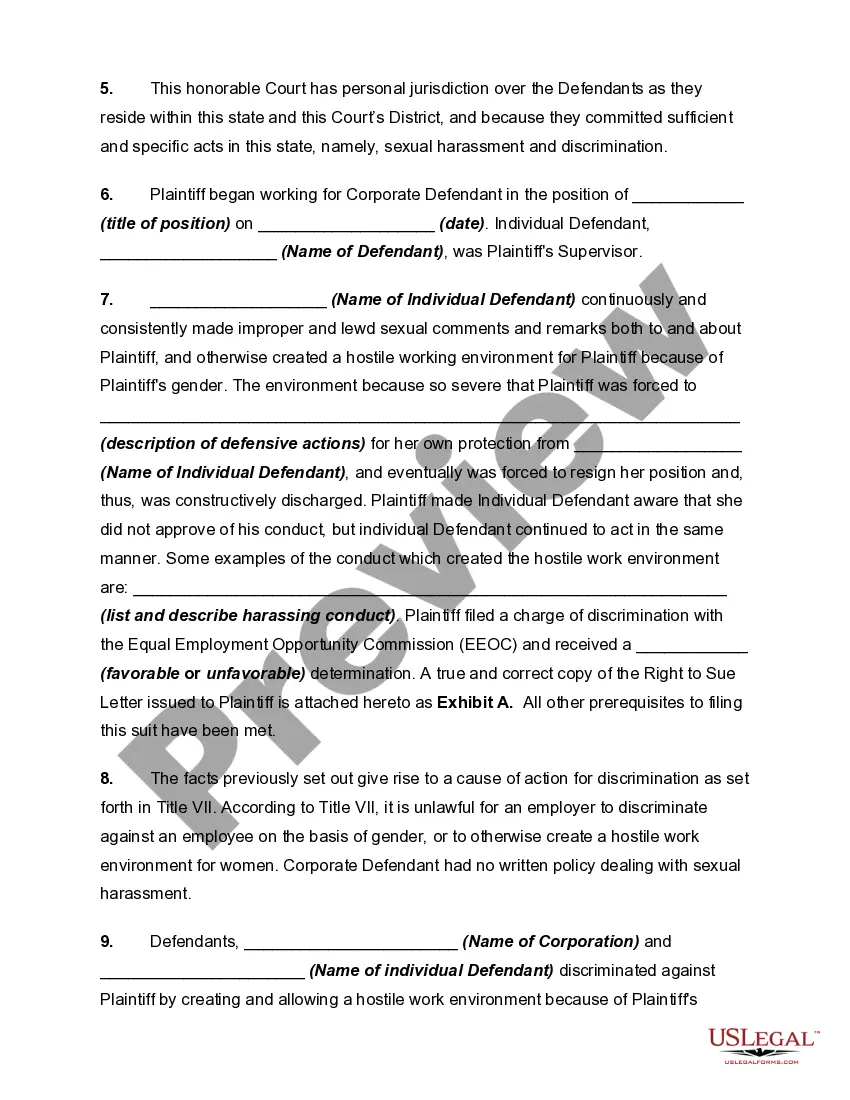
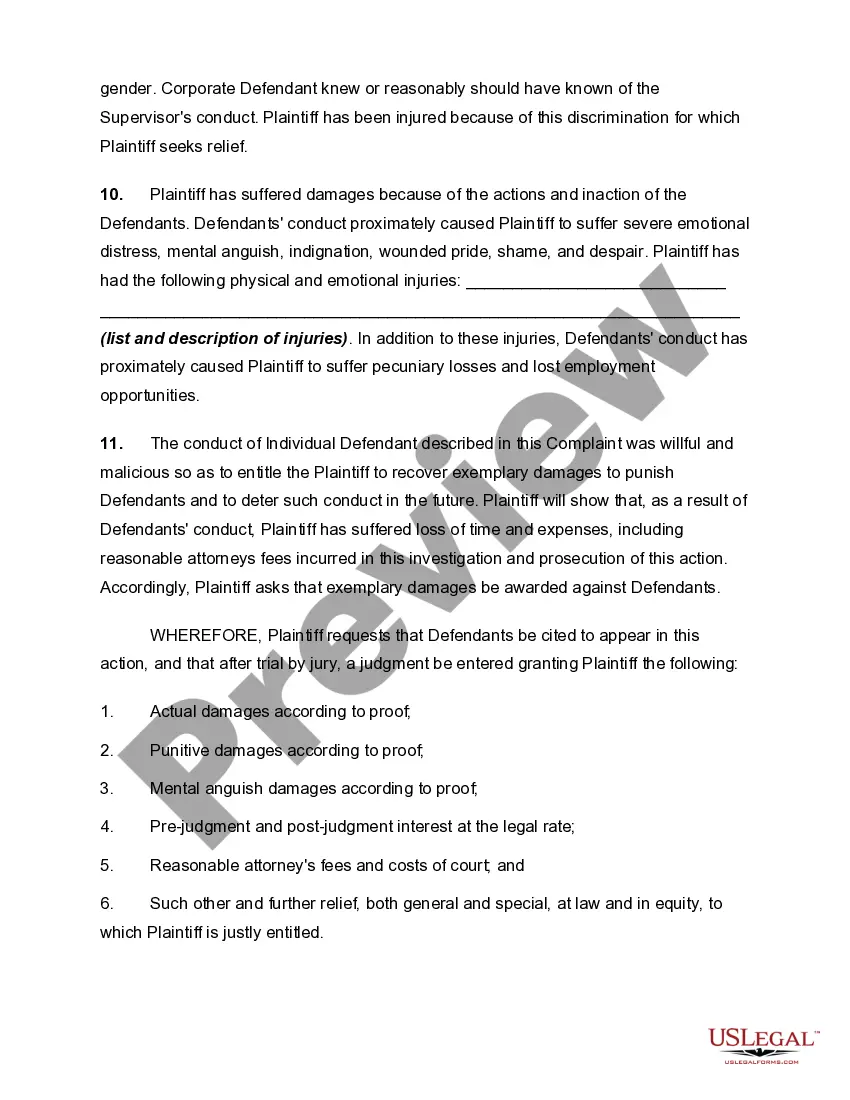
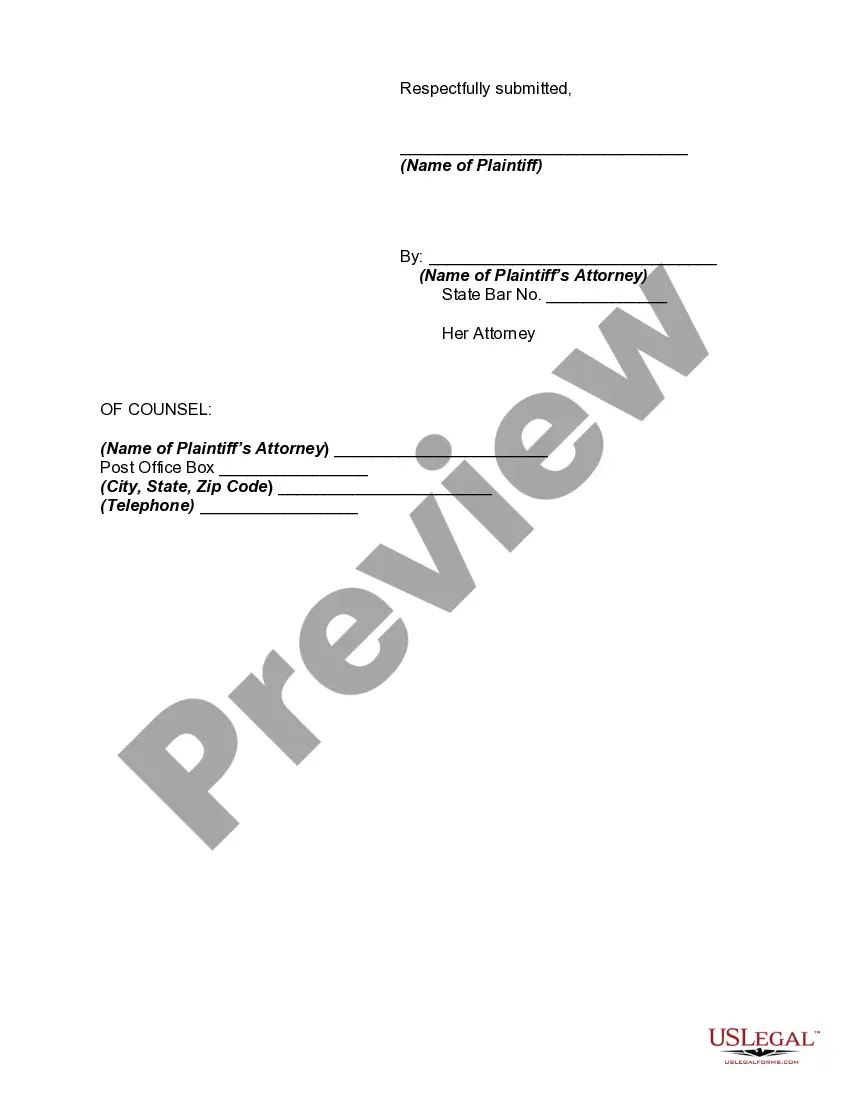


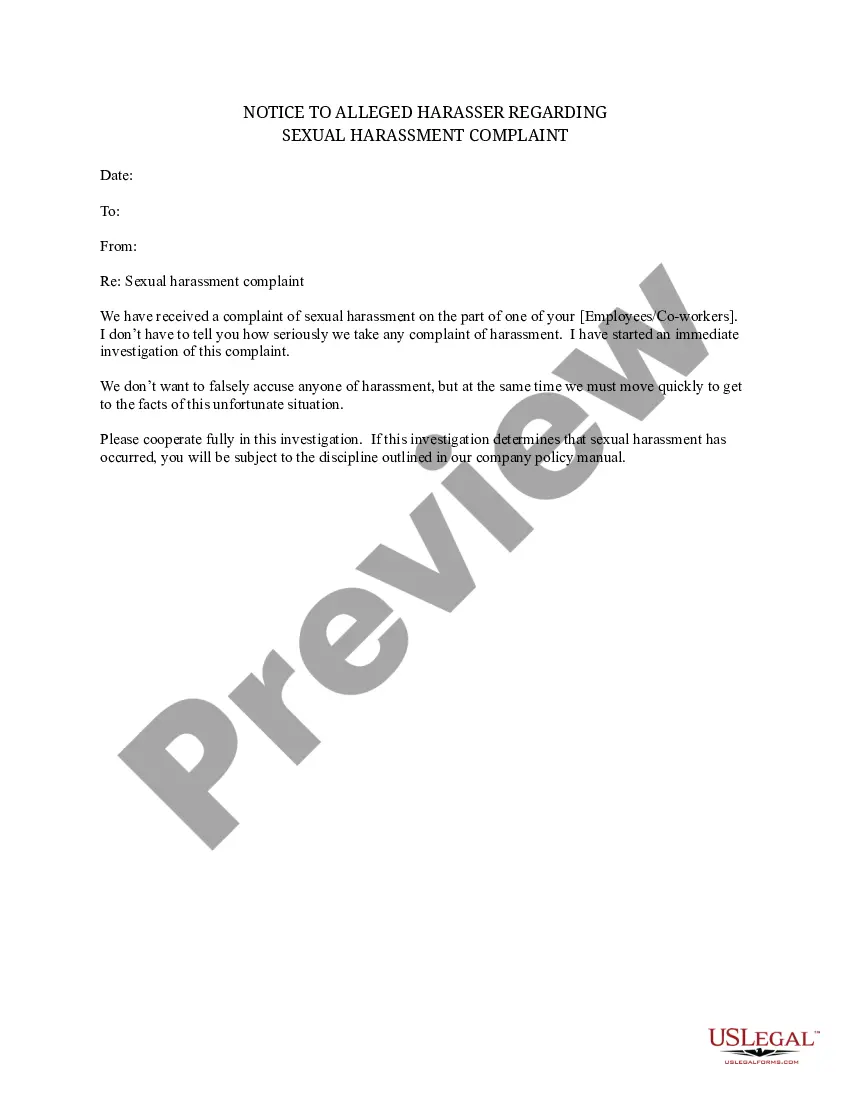
Get your form ready online
Our built-in tools help you complete, sign, share, and store your documents in one place.
Make edits, fill in missing information, and update formatting in US Legal Forms—just like you would in MS Word.
Download a copy, print it, send it by email, or mail it via USPS—whatever works best for your next step.
Sign and collect signatures with our SignNow integration. Send to multiple recipients, set reminders, and more. Go Premium to unlock E-Sign.
If this form requires notarization, complete it online through a secure video call—no need to meet a notary in person or wait for an appointment.
We protect your documents and personal data by following strict security and privacy standards.

Make edits, fill in missing information, and update formatting in US Legal Forms—just like you would in MS Word.

Download a copy, print it, send it by email, or mail it via USPS—whatever works best for your next step.

Sign and collect signatures with our SignNow integration. Send to multiple recipients, set reminders, and more. Go Premium to unlock E-Sign.

If this form requires notarization, complete it online through a secure video call—no need to meet a notary in person or wait for an appointment.

We protect your documents and personal data by following strict security and privacy standards.
Looking for another form?





How to fill out Complaint For Discrimination In Employment Based On Sex - Sexual Harassment And A Hostile Work Environment?
Securing a reliable source for the latest and most pertinent legal templates is a significant part of managing bureaucracy.
Identifying the appropriate legal documents requires precision and careful consideration, which is why it's essential to obtain samples of the Sexuality Discrimination Definition exclusively from trustworthy providers, like US Legal Forms.
Once you have the document on your device, you can modify it using the editor or print it out to complete it by hand. Eliminate the complications related to your legal paperwork. Explore the comprehensive collection at US Legal Forms, where you can discover legal templates, verify their applicability to your situation, and download them immediately.
- Use the library navigation or search box to find your template.
- Examine the description of the form to verify it meets the stipulations of your state and locality.
- Check the form preview, if available, to confirm the template is what you need.
- Return to the search to find the correct document if the Sexuality Discrimination Definition does not align with your needs.
- Once you are certain about the form's relevance, download it.
- If you are a registered user, click Log in to verify and access your selected templates in My documents.
- If you do not have an account yet, click Buy now to purchase the form.
- Select the pricing plan that suits your needs.
- Proceed with registration to complete your purchase.
- Conclude your purchase by choosing a payment method (credit card or PayPal).
- Choose the document format for downloading the Sexuality Discrimination Definition.
Form popularity
FAQ
Sexuality can lead to discrimination when individuals are judged unfairly based on their sexual orientation or identity. The sexuality discrimination definition highlights behaviors that marginalize or mistreat individuals, creating hostile environments in workplaces or communities. Such discrimination can manifest in various forms, from exclusion to derogatory remarks. Understanding these dynamics is crucial, and using platforms like USLegalForms can assist you in documenting and addressing any incidents.
Yes, it is illegal to discriminate based on sexuality in many areas, including employment, housing, and public accommodations. The sexuality discrimination definition encompasses any unfair treatment based on an individual's sexual orientation or preference. Various laws protect individuals from such discrimination, ensuring everyone has equal rights and opportunities. If you feel you have been discriminated against, consider seeking legal guidance to understand your rights.
Discrimination can take many forms, including racial discrimination, age discrimination, disability discrimination, and sexual orientation discrimination. Racial discrimination occurs when individuals are treated unfairly based on their race. Age discrimination happens when an older or younger employee faces bias in hiring or promotion. Disability discrimination affects those who may be treated differently due to physical or mental disabilities, while the sexuality discrimination definition encompasses unfair treatment based on a person's sexual orientation, highlighting its relevance across myriad scenarios.
The four types of discrimination are direct discrimination, indirect discrimination, harassment, and victimization. Each type encompasses specific behaviors and impacts that can adversely affect individuals based on their characteristics, including sexuality. Recognizing these types can help foster a more equitable environment and contribute to a greater understanding of the sexuality discrimination definition. Engaging with platforms like US Legal Forms can provide additional support in navigating these challenges.
An example of discrimination in sexuality could be a situation where an employee is denied a promotion due to their sexual orientation. Instead of evaluating their qualifications and skills, the employer focuses on personal attributes unrelated to work performance. Such instances not only infringe upon rights but also highlight the necessity of understanding the sexuality discrimination definition to create fair workplaces. Resources like US Legal Forms can guide affected individuals in seeking justice.
Yes, discrimination based on sexuality is recognized and addressed under various laws, including the Equality Act. Individuals may face unfair treatment in workplaces or social settings solely based on their sexual orientation. This type of discrimination reflects a violation of rights and underscores the importance of knowing the sexuality discrimination definition. Awareness and appropriate action can lead to a more inclusive environment.
The main four types of discrimination are direct discrimination, indirect discrimination, harassment, and victimization. Each type addresses different circumstances and behaviors that can lead to unfair treatment. For instance, direct discrimination is immediately observable, while indirect discrimination can be subtle but equally harmful. Familiarizing yourself with these types can deepen your understanding of the sexuality discrimination definition.
The four elements of discrimination include the existence of a protected characteristic, an unfavorable treatment, a comparison to a similar situation, and the establishment of a causal link between the treatment and the characteristic. Each element helps to clarify instances of discrimination, including those related to sexuality. By grasping these elements, individuals can better understand their rights and the implications of the sexuality discrimination definition.
The Equality Act identifies four main types of discrimination: direct discrimination, indirect discrimination, harassment, and victimization. Direct discrimination occurs when someone is treated less favorably due to their characteristics. Indirect discrimination involves policies affecting a particular group adversely, even if there is no intent to discriminate. Understanding these types is crucial, especially when considering the sexuality discrimination definition.