Court Appeal Process
Description
Get your form ready online
Our built-in tools help you complete, sign, share, and store your documents in one place.
Make edits, fill in missing information, and update formatting in US Legal Forms—just like you would in MS Word.
Download a copy, print it, send it by email, or mail it via USPS—whatever works best for your next step.
Sign and collect signatures with our SignNow integration. Send to multiple recipients, set reminders, and more. Go Premium to unlock E-Sign.
If this form requires notarization, complete it online through a secure video call—no need to meet a notary in person or wait for an appointment.
We protect your documents and personal data by following strict security and privacy standards.

Make edits, fill in missing information, and update formatting in US Legal Forms—just like you would in MS Word.

Download a copy, print it, send it by email, or mail it via USPS—whatever works best for your next step.

Sign and collect signatures with our SignNow integration. Send to multiple recipients, set reminders, and more. Go Premium to unlock E-Sign.

If this form requires notarization, complete it online through a secure video call—no need to meet a notary in person or wait for an appointment.

We protect your documents and personal data by following strict security and privacy standards.
Looking for another form?








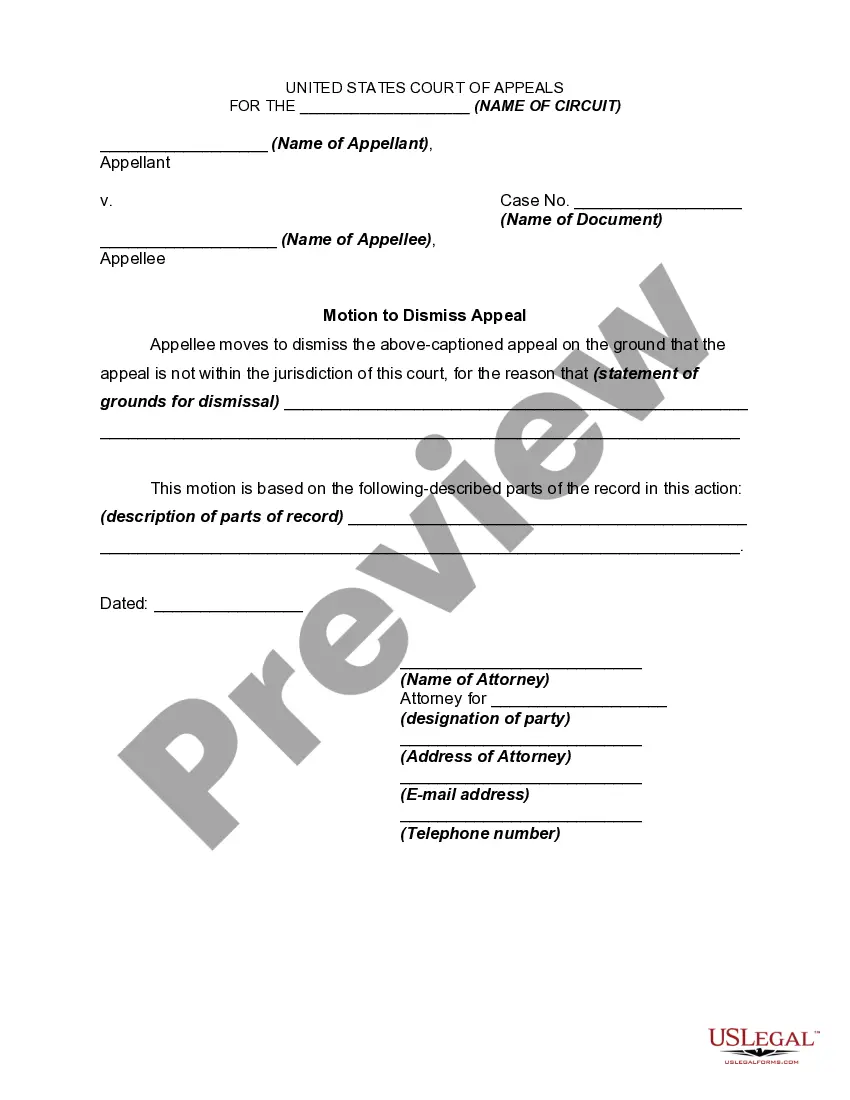
How to fill out Motion To Dismiss Appeal - Not Within Jurisdiction Of Court?
Acquiring legal document examples that comply with federal and state regulations is essential, and the internet provides a variety of choices to choose from.
However, what is the advantage of spending time searching for the correctly formulated Court Appeal Process example online if the US Legal Forms digital library already has such templates gathered in one location.
US Legal Forms is the largest online legal repository with over 85,000 fillable templates prepared by attorneys for any professional and personal situation. They are user-friendly and all documents are categorized by state and intended use. Our experts keep current with legal changes, so you can always trust that your documents are up-to-date and compliant when securing a Court Appeal Process from our platform.
- Examine the template using the Preview feature or through the text outline to confirm it suits your requirements.
- Search for additional examples using the search tool located at the top of the page if necessary.
- Click Buy Now once you’ve found the appropriate form and select a subscription plan.
- Create an account or Log In, and process the payment via PayPal or credit card.
- Choose the optimal format for your Court Appeal Process and download it.
Form popularity
FAQ
Cases won on appeal represent a minority in the broader court appeal process, with success rates ranging considerably based on various conditions. Generally, it's found that about 10-20% of cases receive favorable outcomes. This statistic underscores the necessity of presenting strong legal arguments and adequate documentation. Resources like USLegalForms can assist in preparing essential documents, increasing your likelihood of a successful appeal.
Winning an appeal in the court appeal process comes with significant challenges, primarily due to the stringent legal standards involved. The appellate courts focus on errors made during the trial, rather than reevaluating the case facts. This means that a successful appeal requires clear evidence of legal mistakes, making it sometimes difficult to achieve a reversal. Engaging with legal professionals can provide valuable insights into strengthening your case.
The success rate of appeals within the court appeal process is an essential metric to consider for anyone contemplating this route. On average, studies suggest that the overall success rate of appeals tends to hover around 20%. However, this figure is influenced by numerous factors, including the strength of the original case and the grounds for appeal. Therefore, a strategic approach is key.
In the court appeal process, it’s crucial to grasp that success rates vary by jurisdiction and case type. Research indicates that only about 15-25% of appeals are ultimately successful. This figure reflects the complexity of legal arguments and the standards required to overturn a lower court's ruling. Thus, preparing thoroughly and seeking expert advice enhances your chances.
Understanding the court appeal process can be daunting, and many wonder about its effectiveness. Typically, a lower percentage of appeals actually succeed in reversing a decision. Statistics show that in general, around 10-20% of appeals lead to a favorable outcome for the appellant. This low success rate highlights the importance of having a solid case and understanding the nuances of the appeal process.
A strong appeal is built on clear evidence and persuasive legal arguments. Focus on the mistakes made in the original trial and how they affected the verdict. Moreover, presenting your case in a structured and logical manner enhances clarity. Resources provided by US Legal Forms can be valuable in preparing your documents for a solid court appeal process.
The procedures for appeals generally begin with filing a notice of appeal in the appropriate court. After that, you will need to prepare the record on appeal and submit your written brief outlining your arguments. It's essential to adhere to strict deadlines throughout this court appeal process to ensure your case is heard.
One of the most common grounds for appeal involves legal errors that occurred during the trial. This could include wrongful admission of evidence, jury misconduct, or improper jury instructions. Identifying these issues clearly shows how they impacted the trial's outcome. Understanding these grounds is vital in the court appeal process.
To win an appeal, you must focus on presenting a well-organized case. Start by preparing solid legal arguments that highlight specific errors made during the original trial. It's also crucial to provide supporting evidence that strengthens your claims. Utilizing resources like US Legal Forms can help you navigate the court appeal process effectively.
Writing about the appeal process requires a clear structure and understanding of legal terminology. Start by outlining the grounds for the appeal and the specific legal errors made in the original ruling. Include supporting evidence and references to relevant laws or precedents. By structuring your document clearly, you aid the court in grasping your arguments during the court appeal process.