Letter Of Exception With Custom Message
Description
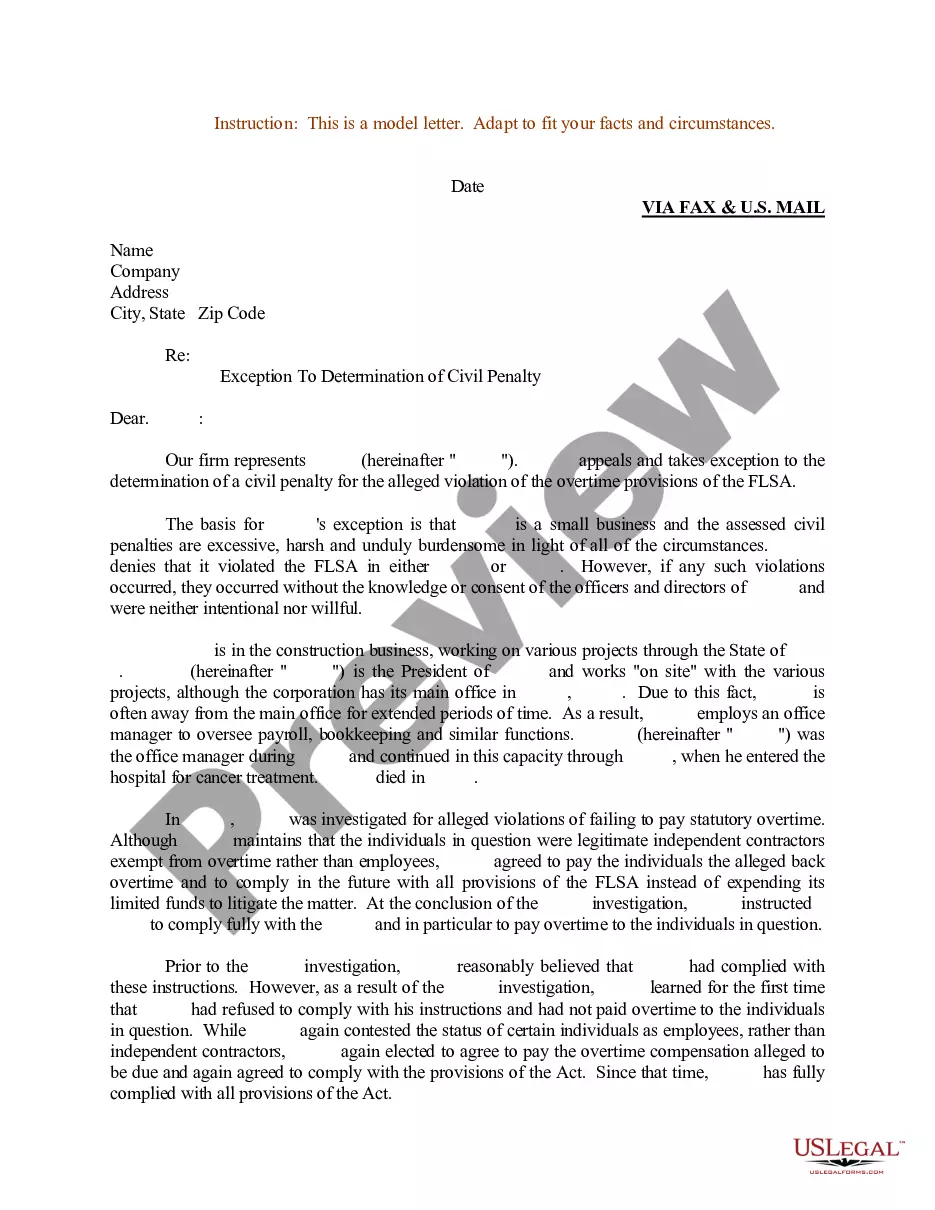
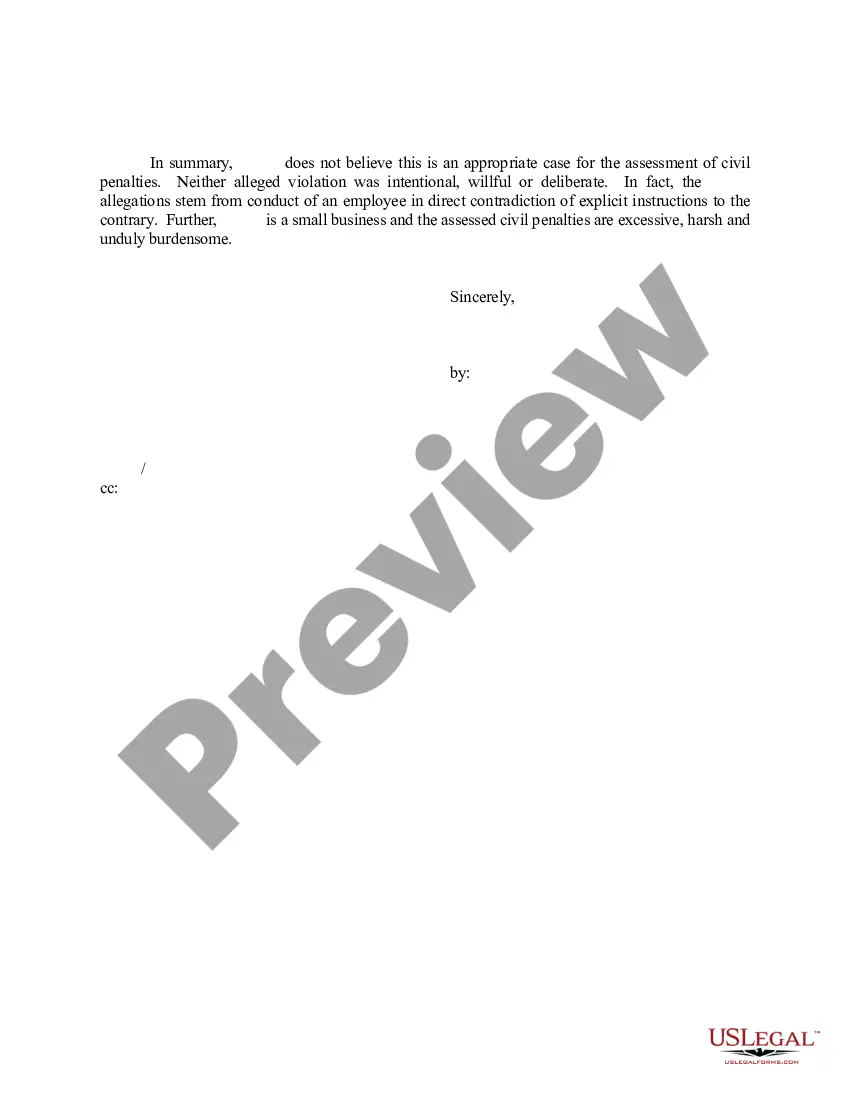
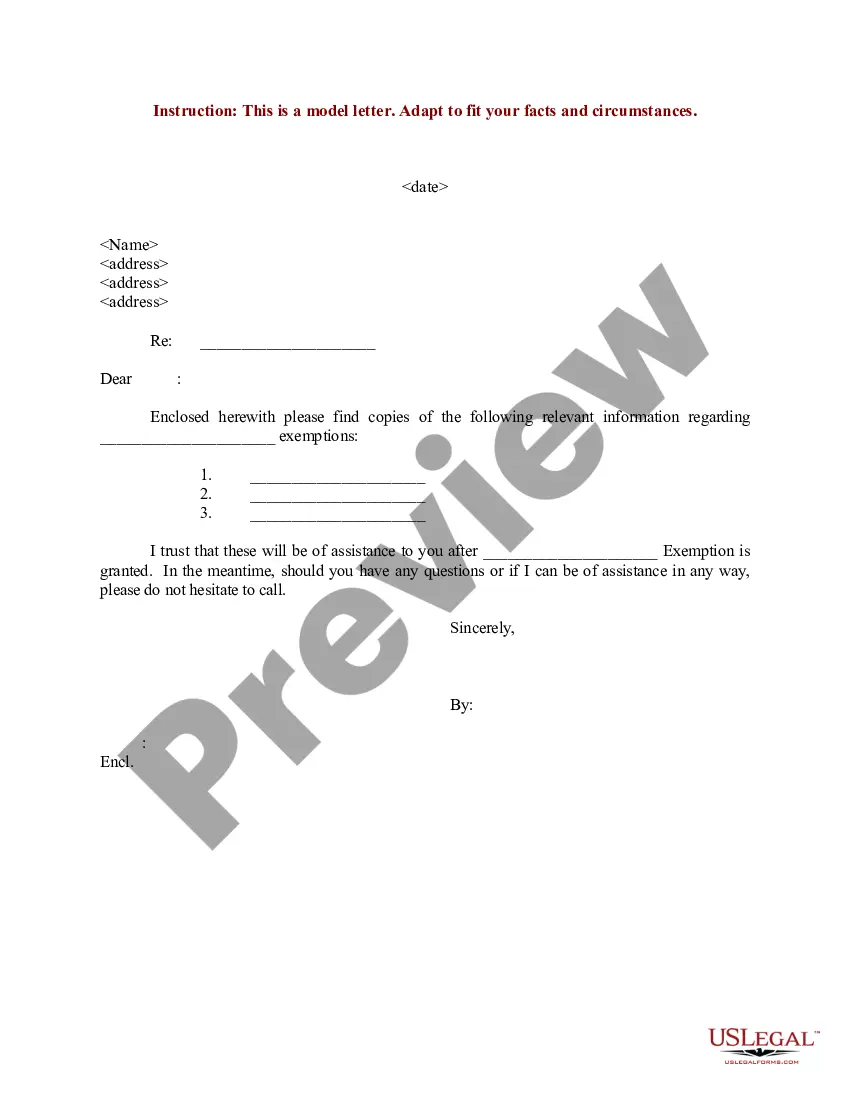
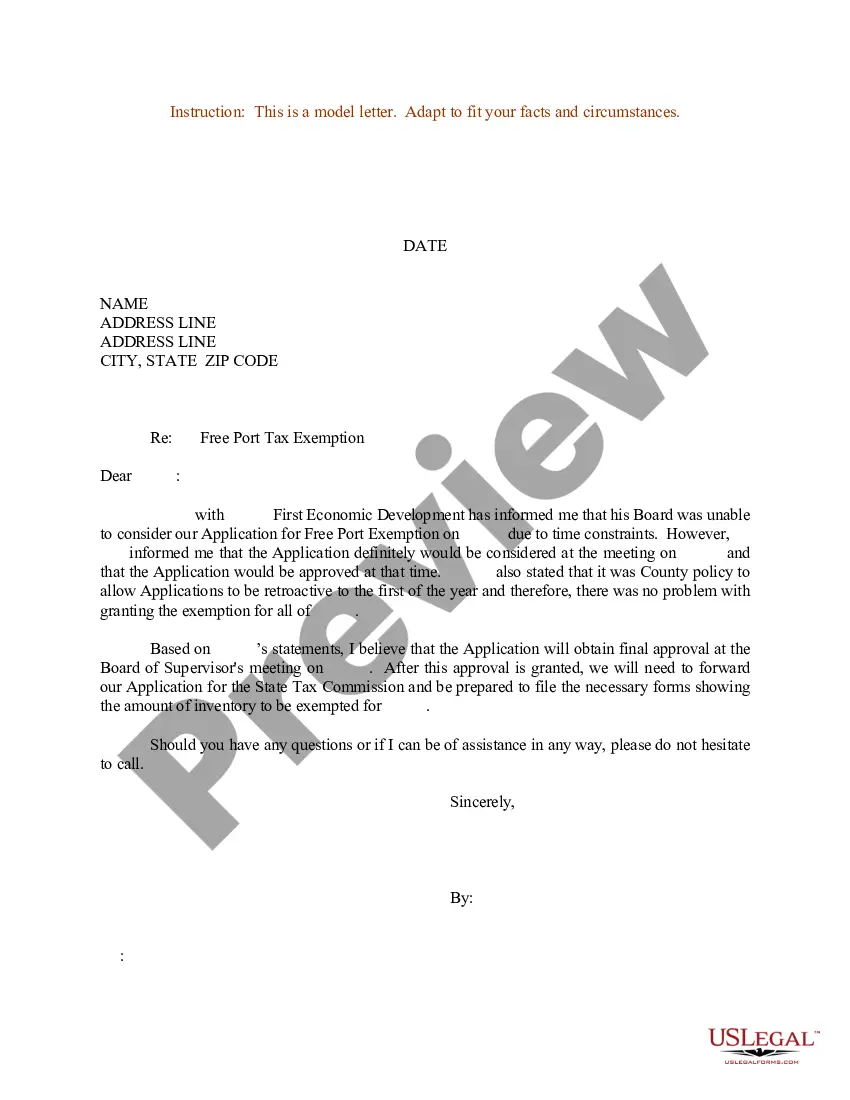
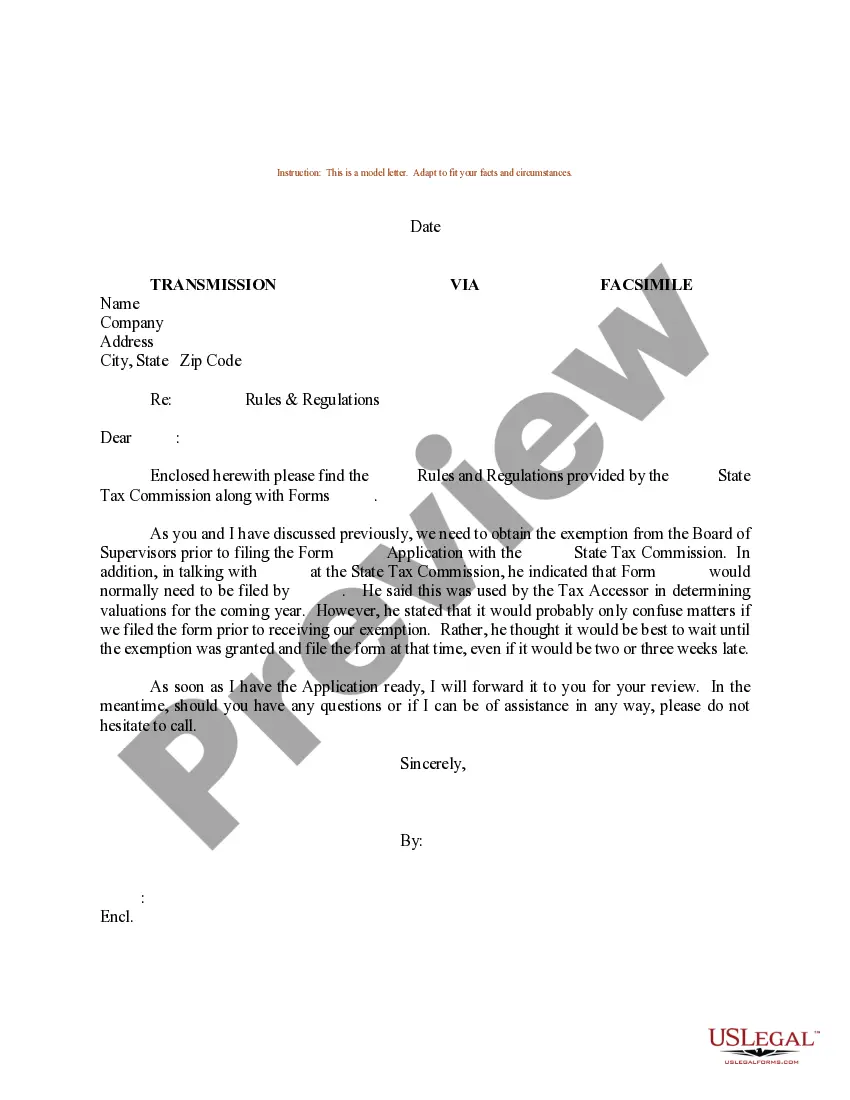
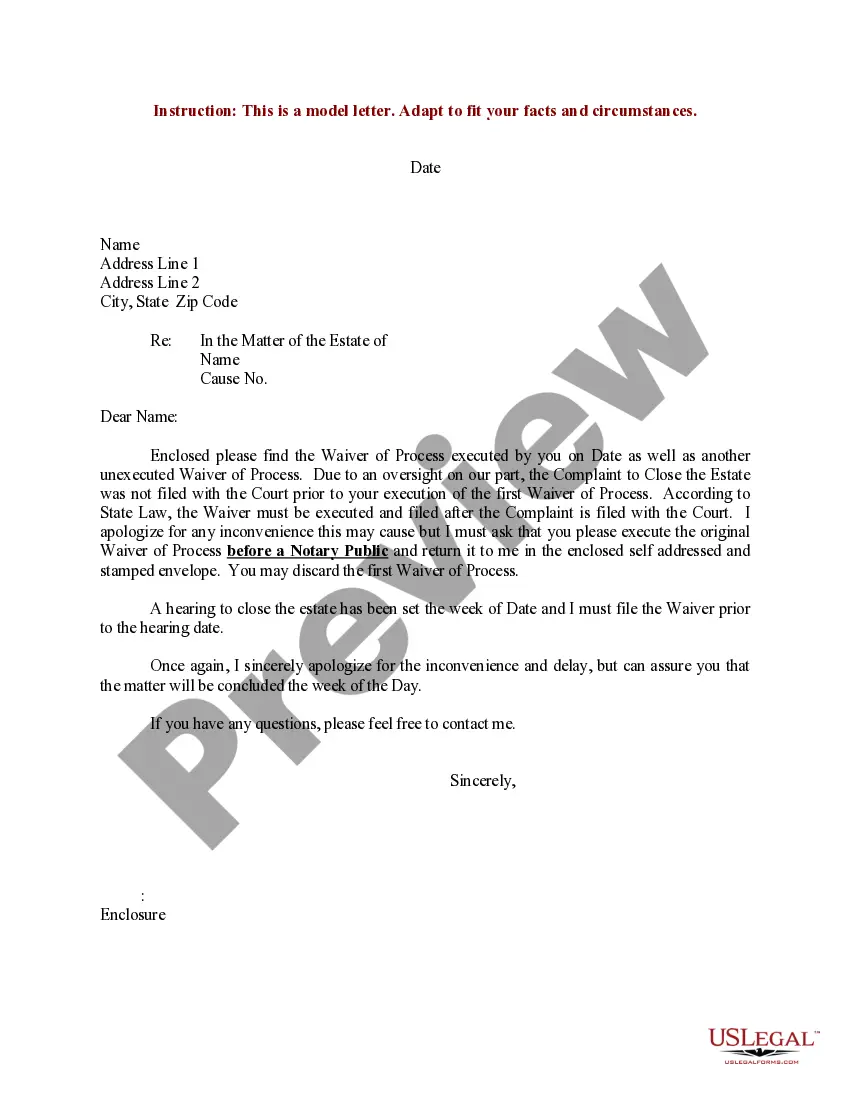
Get your form ready online
Our built-in tools help you complete, sign, share, and store your documents in one place.
Make edits, fill in missing information, and update formatting in US Legal Forms—just like you would in MS Word.
Download a copy, print it, send it by email, or mail it via USPS—whatever works best for your next step.
Sign and collect signatures with our SignNow integration. Send to multiple recipients, set reminders, and more. Go Premium to unlock E-Sign.
If this form requires notarization, complete it online through a secure video call—no need to meet a notary in person or wait for an appointment.
We protect your documents and personal data by following strict security and privacy standards.

Make edits, fill in missing information, and update formatting in US Legal Forms—just like you would in MS Word.

Download a copy, print it, send it by email, or mail it via USPS—whatever works best for your next step.

Sign and collect signatures with our SignNow integration. Send to multiple recipients, set reminders, and more. Go Premium to unlock E-Sign.

If this form requires notarization, complete it online through a secure video call—no need to meet a notary in person or wait for an appointment.

We protect your documents and personal data by following strict security and privacy standards.
Looking for another form?
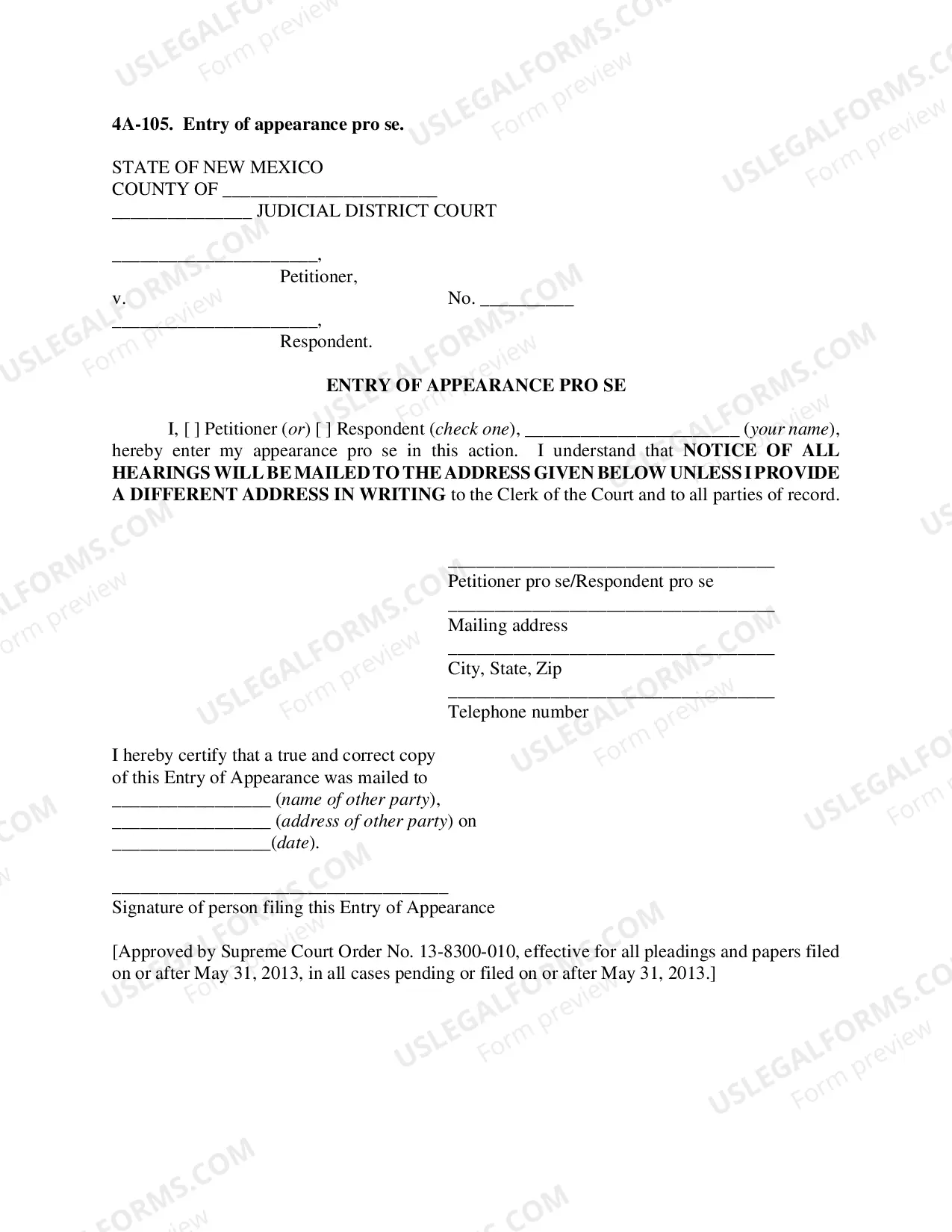

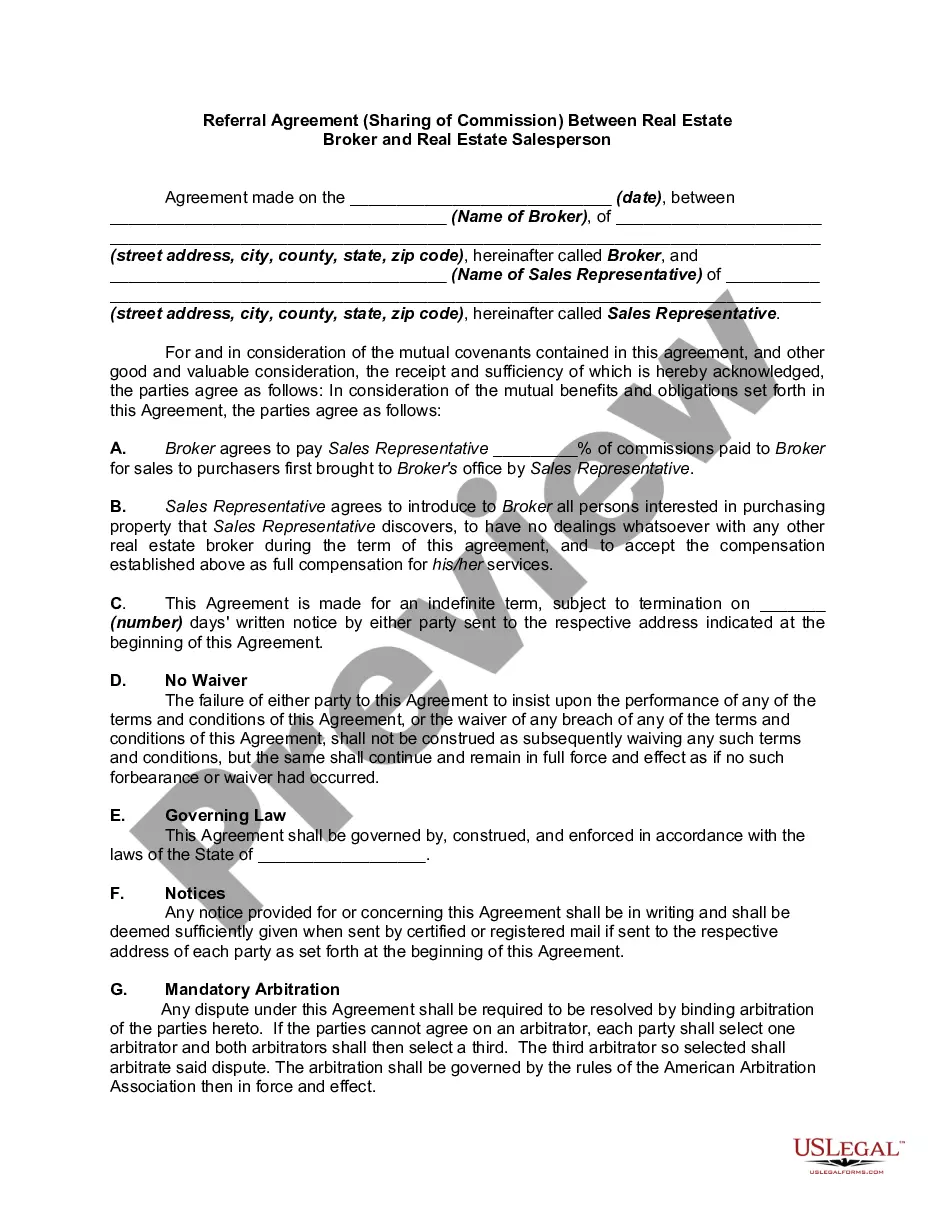
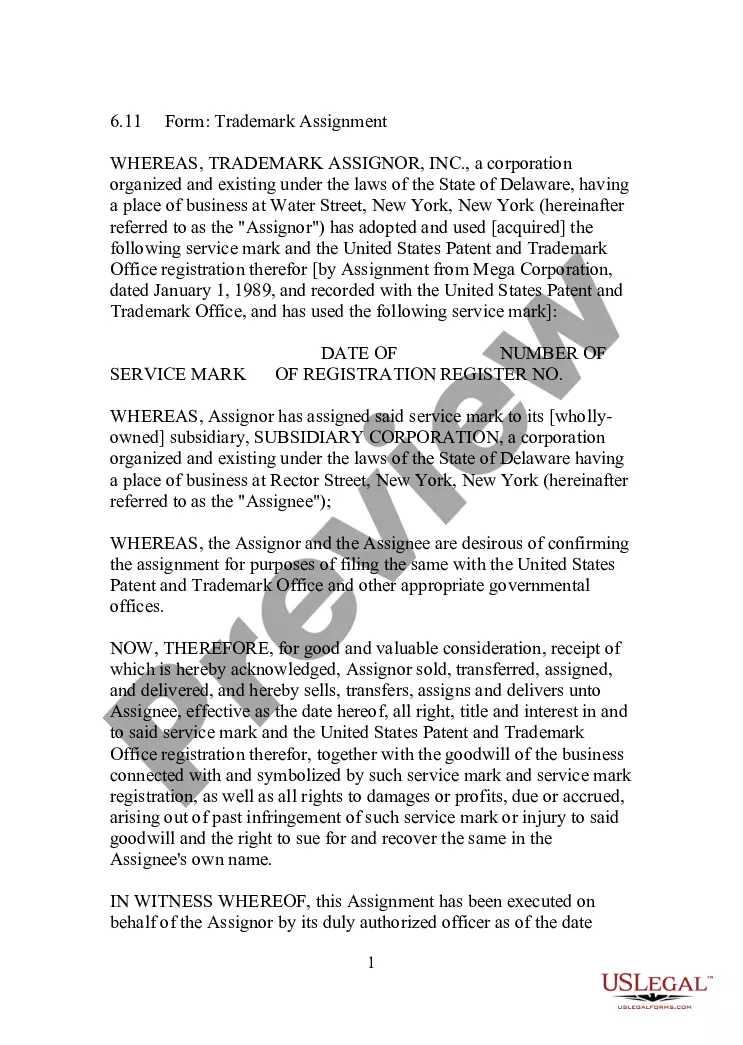

How to fill out Sample Letter For Exception To Determination Of Civil Penalty?
Creating legal documents from the ground up can often be overwhelming.
Certain situations may require extensive research and significant financial investment.
If you’re looking for a simpler and more economical method to produce a Letter Of Exception With Custom Message or any other forms without facing obstacles, US Legal Forms is readily available.
Our online repository of over 85,000 current legal documents covers nearly every facet of your financial, legal, and personal matters. With only a few clicks, you can quickly obtain state- and county-specific forms meticulously prepared by our legal professionals.
Ensure the form you choose meets your state and county's criteria. Select the most appropriate subscription plan to purchase the Letter Of Exception With Custom Message. Download the file, then complete, validate, and print it. US Legal Forms has a flawless reputation and over a quarter-century of experience. Join us today and simplify the document completion process!
- Utilize our website whenever you need reliable and trustworthy services to swiftly locate and download the Letter Of Exception With Custom Message.
- If you’re a returning user with a previous account, just Log In, choose the template, and download it now or re-download it later in the My documents section.
- Not signed up yet? No worries. It only takes a few minutes to create an account and explore the library.
- Before diving straight into downloading the Letter Of Exception With Custom Message, adhere to these suggestions.
- Check the document preview and descriptions to confirm that you have the correct form.
Form popularity
FAQ
In Java, you can pass a custom message when throwing an exception by creating a new instance of an exception class and including your message as a parameter. For example, you can write 'throw new Exception("Your custom message here");'. This approach helps signal specific issues that arise during execution, making error handling more straightforward and informative. Incorporating such strategies enhances the user experience, especially when deployed in applications that handle complex tasks.
To throw an exception with a custom message in C++, you can use the 'throw' statement followed by an instance of an exception class, such as 'std::runtime_error'. For instance, you might write 'throw std::runtime_error("Your custom message here");'. This provides a clear way to communicate the error, allowing users to understand what went wrong. Managing exceptions effectively improves your program's reliability, especially when dealing with critical operations.
To throw a custom exception in C++, first define a new exception class that inherits from std::exception. Implement a constructor that takes a message string, which you can then relay with a virtual function like what() to allow users to retrieve it. When you need to signal an error, use the throw keyword followed by an instance of your custom exception. This practice ensures your letter of exception with custom message clearly communicates the issue at hand.
In Python, you create a custom exception by defining a new class derived from the Exception class. Inside this class, you can implement the __init__ method to accept parameters that help detail your error message. Providing a clear and concise message enhances user understanding. This way, your letter of exception with custom message becomes an effective tool for communication in error handling.
To write a custom exception, start by defining a new class that extends the built-in Exception class in your programming language. Provide an appropriate name for your class that reflects the error it represents. Use the __init__ method to initialize your class, accepting parameters that detail the error. Finally, include a message that describes the specific issue; this will help create a clear letter of exception with custom message for future reference.
To show a custom exception message in Java, you can override the toString() method in your custom exception class. By doing this, you provide a way to display meaningful messages when the exception is caught. When the exception occurs, and you log or print it, the custom message will aid in understanding what went wrong. Consider referencing a Letter of Exception with Custom Message to craft your error messages.
Writing custom exceptions involves defining a new class that derives from the existing Exception class. You should also include custom messages in constructors to make exceptions informative. Ensure that your custom exception class provides meaningful context to users. For more structured approaches, explore templates like a Letter of Exception with Custom Message offered by US Legal Forms.
You can throw your own exceptions in Java by creating a class that extends the Exception or RuntimeException class. Define the error conditions and throw the exception using the 'throw' keyword whenever those conditions are met. This allows you to manage specific error scenarios effectively and helps keep your code organized. Utilizing a Letter of Exception with Custom Message is beneficial in guiding the structure of these exceptions.
To throw an exception with a custom message, you need to create a suitable exception class or use built-in exceptions that allow for message input. By providing a well-defined message when throwing the exception, you enhance error reporting, making your code easier to maintain and debug. Always think about how precise and clear your messages are; for examples, a Letter of Exception with Custom Message offers fantastic templates.
In Python, you can throw an exception with a message using the 'raise' statement followed by the exception class along with your custom message. For instance, raise ValueError('Your message here') will prompt Python to throw an error with your specified message. This method increases the readability of your code and makes troubleshooting easier. Always consider using a Letter of Exception with Custom Message to ensure coherence in messaging.