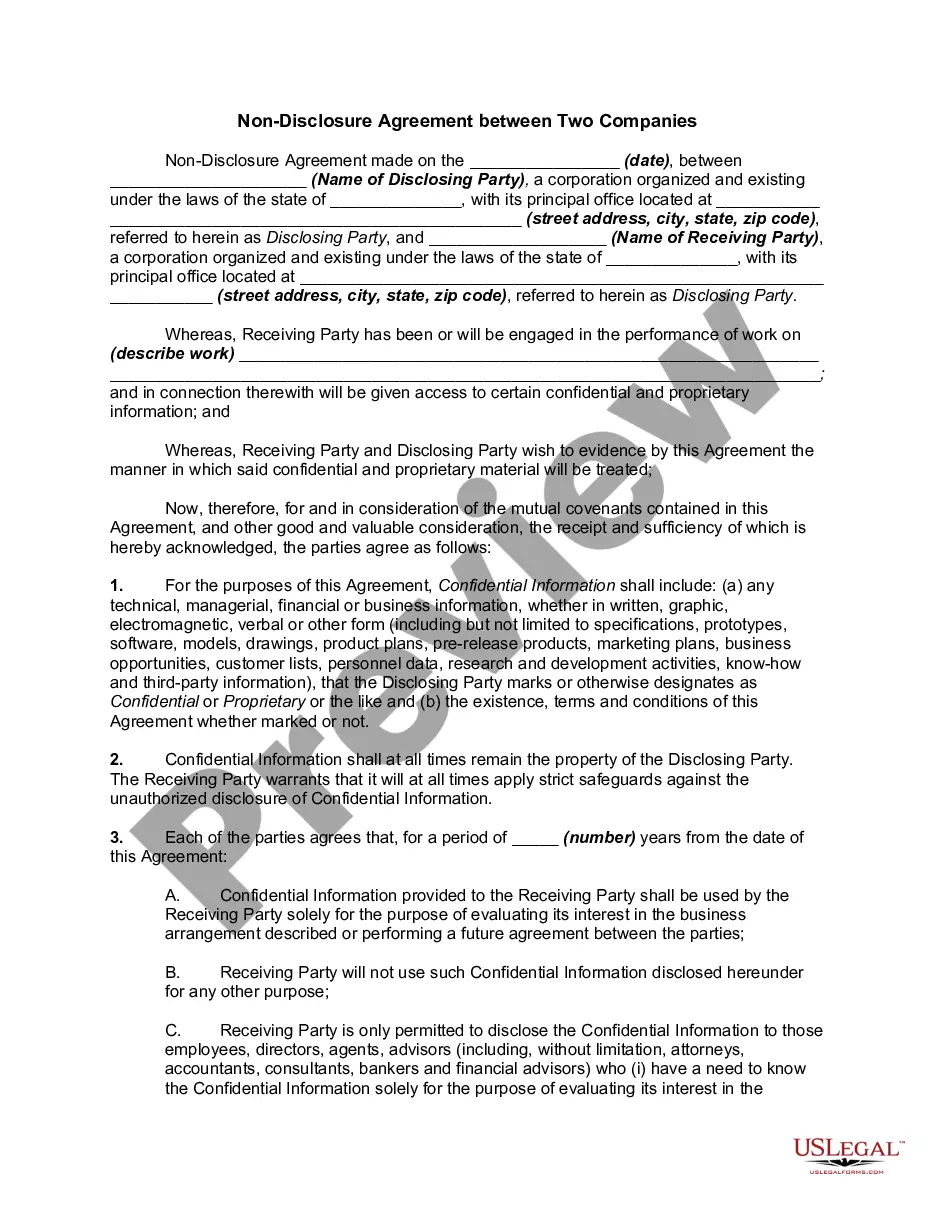
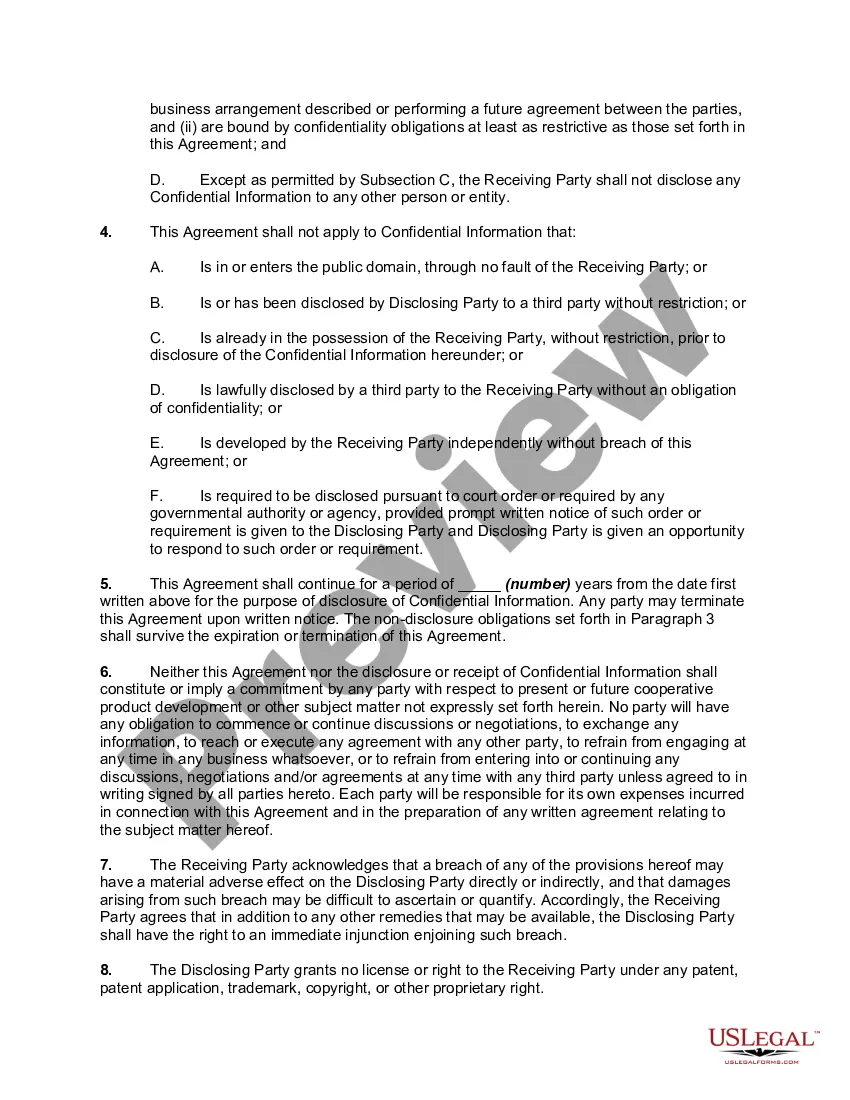
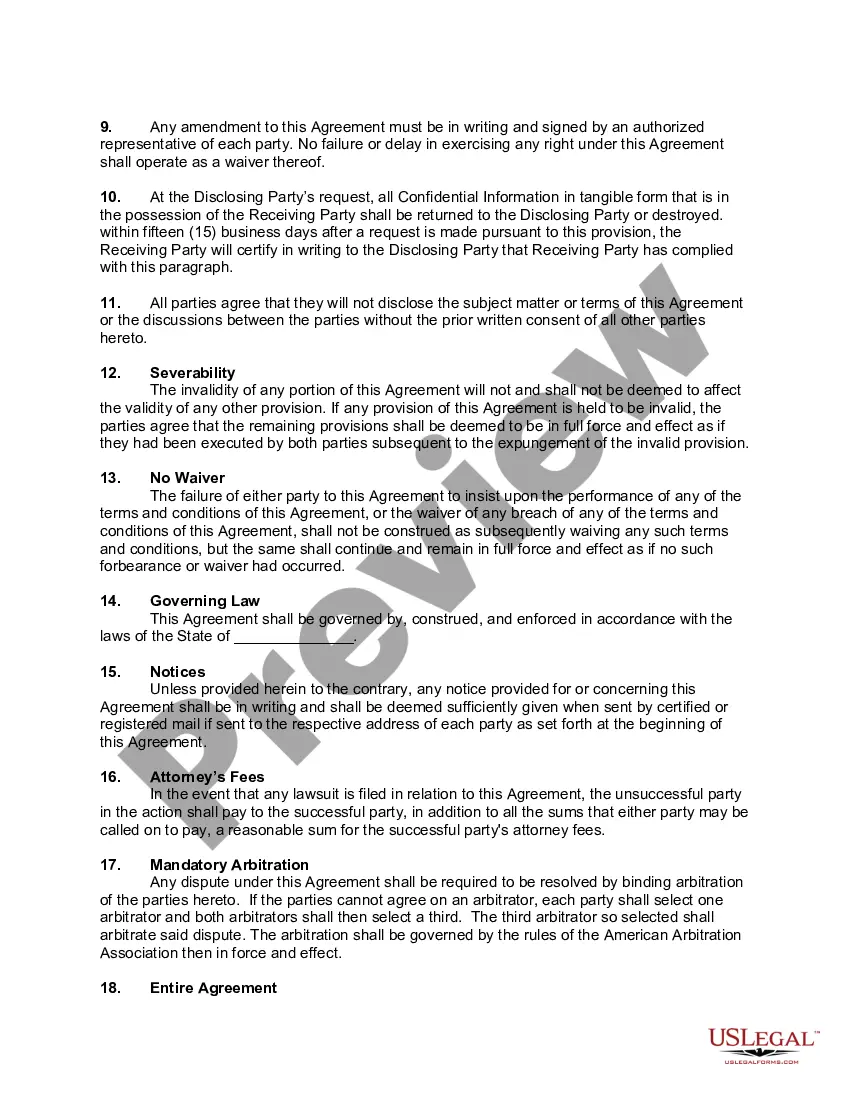
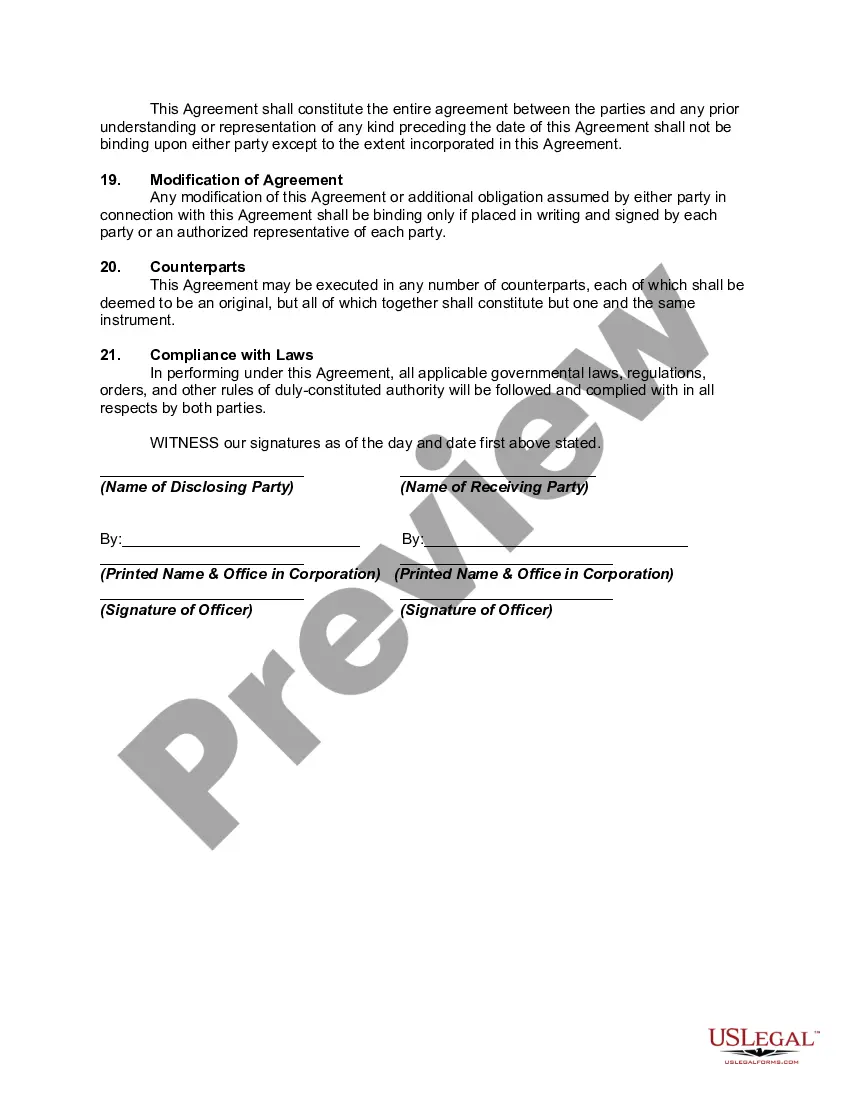
Non Disclosure Agreement For Photography
Description
Get your form ready online
Our built-in tools help you complete, sign, share, and store your documents in one place.
Make edits, fill in missing information, and update formatting in US Legal Forms—just like you would in MS Word.
Download a copy, print it, send it by email, or mail it via USPS—whatever works best for your next step.
Sign and collect signatures with our SignNow integration. Send to multiple recipients, set reminders, and more. Go Premium to unlock E-Sign.
If this form requires notarization, complete it online through a secure video call—no need to meet a notary in person or wait for an appointment.
We protect your documents and personal data by following strict security and privacy standards.

Make edits, fill in missing information, and update formatting in US Legal Forms—just like you would in MS Word.

Download a copy, print it, send it by email, or mail it via USPS—whatever works best for your next step.

Sign and collect signatures with our SignNow integration. Send to multiple recipients, set reminders, and more. Go Premium to unlock E-Sign.

If this form requires notarization, complete it online through a secure video call—no need to meet a notary in person or wait for an appointment.

We protect your documents and personal data by following strict security and privacy standards.
Looking for another form?
How to fill out Non-Disclosure Agreement Between Two Companies?
Managing legal documents can be exasperating, even for the most seasoned professionals.
When you are looking for a Confidentiality Agreement For Photography and lack the time to hunt for the suitable and current version, the process can be anxiety-inducing.
Gain access to a valuable resource hub of articles, guides, and manuals related to your situation and needs.
Save time and energy searching for the documents you require, and use US Legal Forms’ sophisticated search and Review tool to find the Confidentiality Agreement For Photography and obtain it.
Ensure that the sample is recognized in your state or county.
- If you have a monthly subscription, Log In to your US Legal Forms account, search for the form, and obtain it.
- Visit your My documents tab to see the documents you have previously stored and manage your folders as desired.
- If this is your first experience with US Legal Forms, establish a free account and gain unlimited access to all platform benefits.
- Here are the steps to follow after downloading the form you need.
- Confirm it is the correct form by previewing it and reviewing its details.
- Access state- or county-specific legal and business templates.
- US Legal Forms addresses any requirements you may have, ranging from personal to business documents, all in one location.
- Utilize innovative tools to complete and manage your Confidentiality Agreement For Photography.
Form popularity
FAQ
Yes, you can write your own Non Disclosure Agreement for photography, but it's essential to ensure it covers all necessary legal requirements. While templates are available online, consulting with a legal expert can help tailor the agreement to your specific needs. This approach guarantees that sensitive information remains protected and reinforces professionalism in your photography business.
At a minimum, a photography business will need service contracts and Non Disclosure Agreements for photography. Service contracts outline the specifics of the services offered, while NDAs safeguard sensitive information shared with clients or collaborators. This ensures that photographers maintain control over their creative process and the confidentiality of their projects.
A photography business typically requires several agreements, including service contracts, model releases, and Non Disclosure Agreements for photography. These documents help to clarify expectations, protect intellectual property, and ensure that all parties involved are on the same page. By having well-structured agreements, photographers can avoid disputes and focus on their creative work.
Establishing a photography business as an LLC, or limited liability company, is a strategic decision for many photographers. An LLC protects personal assets from business liabilities and offers flexibility in tax treatment. Additionally, having a structured business entity can enhance credibility with clients when using a Non Disclosure Agreement for photography.
A legal contract for photographers outlines the terms and conditions of the services they provide. This agreement typically includes details such as payment terms, the scope of work, and rights to the images created. Incorporating a Non Disclosure Agreement for photography into the contract enhances the protection of both parties by ensuring confidential information remains secure.
A Non Disclosure Agreement for photography, commonly known as an NDA, is a legal document that protects sensitive information shared between parties. Photographers often use NDAs to ensure that their creative ideas, client information, and project details remain confidential. By signing an NDA, both the photographer and client establish trust and clarity, which is vital for successful collaboration.
The purpose of an NDA, especially in photography, is to protect the confidentiality of shared information. An example could involve a photographer signing an NDA that restricts them from disclosing any details about a celebrity's photo shoot. This creates a secure environment for creative work, allowing both parties to engage freely without fear of information leaks. Using uslegalforms, you can easily access templates and guidance to create a tailored NDA for your photography needs.
NDA stands for non-disclosure agreement. This is a legal contract that establishes a confidential relationship between parties regarding specific information. In the context of photography, an NDA is crucial for ensuring that sensitive information and images remain private and secure. This agreement fosters trust and encourages collaboration between photographers and their clients.
Celebrities often use non-disclosure agreements for photography to protect their privacy and sensitive information. These agreements help prevent unauthorized sharing of personal images or details, safeguarding their reputation. By enforcing an NDA, celebrities can work with photographers while minimizing the risk of leaks that could harm their public image. This practice underscores the importance of confidentiality in the photography industry.
Filling out a non-disclosure agreement for photography involves several key steps. First, identify the parties involved, including the photographer and the client. Next, clearly outline the confidential information that will be protected, such as photos and business strategies. Finally, both parties should review the document, sign it, and keep a copy for their records to ensure everyone's understanding and compliance.