Second Motion Examination With Derivation
Description

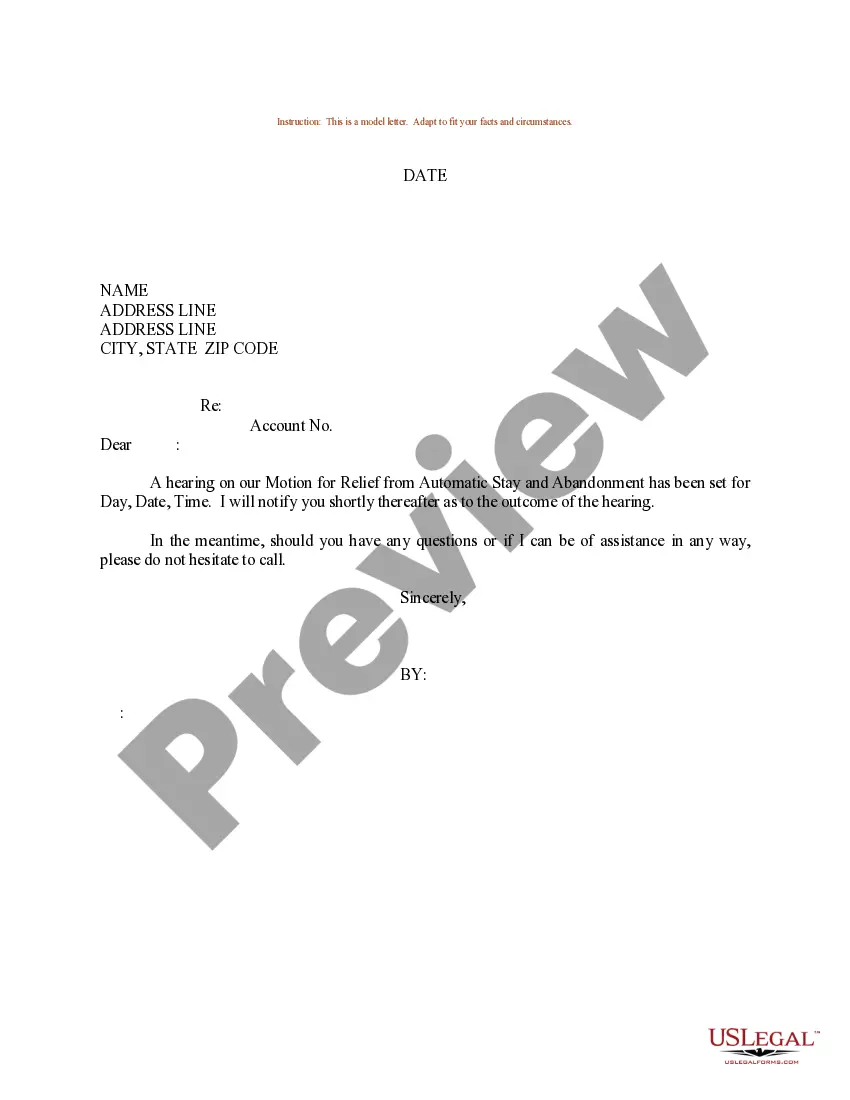

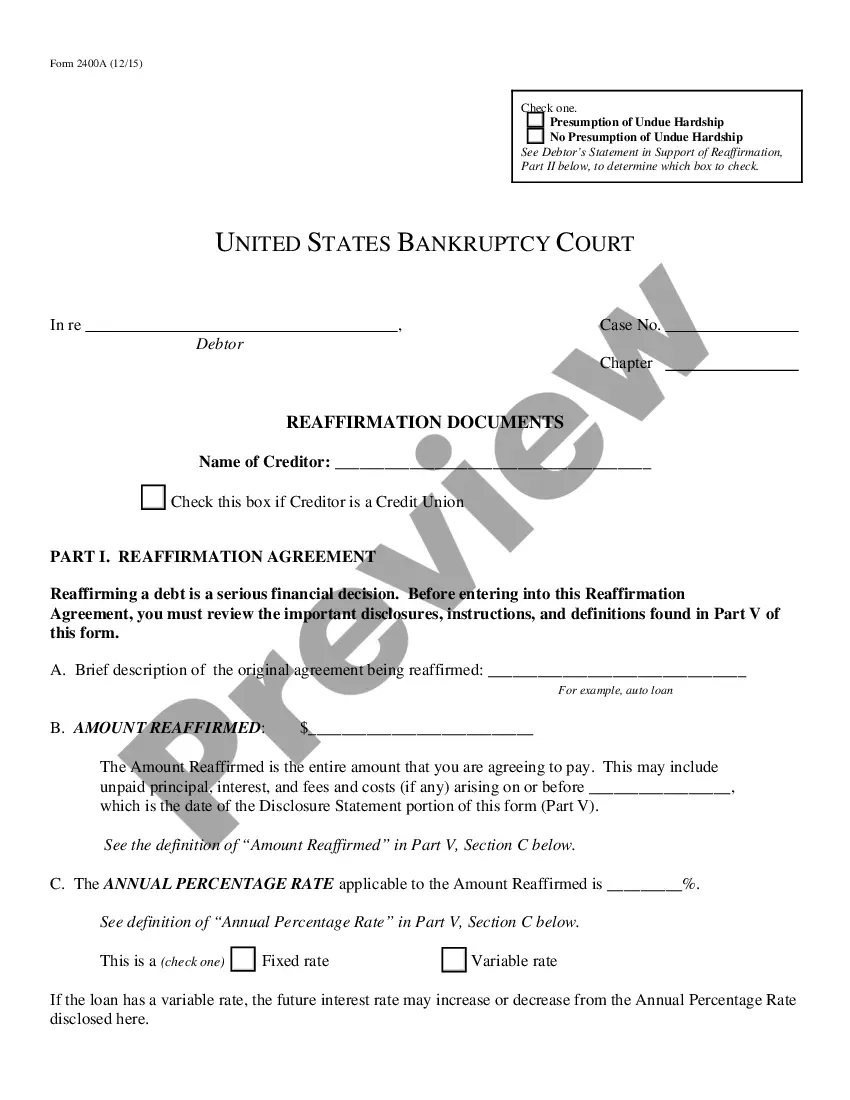
How to fill out Sample Letter For Second Motion For Examination Of Judgment - Debtor?
Locating a reliable source for the most up-to-date and pertinent legal templates is a significant part of navigating bureaucracy.
Identifying the appropriate legal documentation demands accuracy and careful consideration, which is why it is crucial to acquire samples of Second Motion Examination With Derivation only from trustworthy providers, such as US Legal Forms. An incorrect form can squander your time and delay your current situation.
Once you have the form on your device, you can modify it with the editor or print it to fill out manually. Remove the stress associated with your legal paperwork. Explore the comprehensive US Legal Forms catalog to find legal templates, evaluate their relevance to your circumstances, and download them immediately.
- Use the directory navigation or search function to find your template.
- Review the form’s details to determine if it aligns with the regulations of your state and locality.
- Check the form preview, if available, to confirm that the document is indeed what you need.
- Return to the search to find the suitable template if the Second Motion Examination With Derivation does not meet your requirements.
- Once you are confident about the form’s applicability, download it.
- If you are a registered user, click Log in to verify and access your selected templates in My documents.
- If you do not have an account yet, click Buy now to purchase the form.
- Choose the pricing plan that meets your needs.
- Proceed to the registration to complete your order.
- Finalize your purchase by selecting a payment method (credit card or PayPal).
- Choose the document format to download the Second Motion Examination With Derivation.
Form popularity
FAQ
To derive the equation s = ut + 1/2at², you can start from the definitions of average velocity and acceleration. By rearranging the terms and applying the concept of uniform acceleration, the equation can be formulated step-by-step. This detailed process is fundamental in a second motion examination with derivation.
To derive v² = u² + 2as, start with the definitions of initial velocity (u), final velocity (v), and constant acceleration (a). This equation illustrates how the change in velocity relates to the distance traveled through acceleration. This derivation encapsulates important principles in the second motion examination with derivation.
To derive the equation s = ut + 1/2 at², start with the definitions of displacement (s), initial velocity (u), and acceleration (a). Recognize that displacement can be represented as the sum of initial velocity multiplied by time plus the additional distance from acceleration over time. This derivation illustrates key principles in the second motion examination with derivation.
BC = BD + DC. Therefore, v = BD + DC. v = BD + OA (since DC = OA) Finally, v = BD + u (since OA = u) (Equation 1) Now, since the slope of a velocity-time graph is equal to acceleration a. ... a = slope of line AB. a = BD/AD. Since AD = AC = t, the above equation becomes: BD = at (Equation 2)
Distance covered in nth second : S = ut + 1/2 at 2 is the distance covered by a body in t s. [distance covered by a body along a straight line in n second.
We know that: v = u + at. substituting this value of ?v? in eq.(1), we get. s=(u+u+at)2×t. Or, ?s=(2u+at)2×t. Or, ?s=(2ut+at2)2.
EXPLANATION:? The second equation of motion gives the position-time relation, i.e. s = ut + (1/2) at2. Here, v is the final velocity, u is the initial velocity, a is the acceleration and t is the time.
Hence, the formula for distance travelled in nth second is given by, Sn = u + a (n ? ½).