About My Parents
Description
Get your form ready online
Our built-in tools help you complete, sign, share, and store your documents in one place.
Make edits, fill in missing information, and update formatting in US Legal Forms—just like you would in MS Word.
Download a copy, print it, send it by email, or mail it via USPS—whatever works best for your next step.
Sign and collect signatures with our SignNow integration. Send to multiple recipients, set reminders, and more. Go Premium to unlock E-Sign.
If this form requires notarization, complete it online through a secure video call—no need to meet a notary in person or wait for an appointment.
We protect your documents and personal data by following strict security and privacy standards.

Make edits, fill in missing information, and update formatting in US Legal Forms—just like you would in MS Word.

Download a copy, print it, send it by email, or mail it via USPS—whatever works best for your next step.

Sign and collect signatures with our SignNow integration. Send to multiple recipients, set reminders, and more. Go Premium to unlock E-Sign.

If this form requires notarization, complete it online through a secure video call—no need to meet a notary in person or wait for an appointment.

We protect your documents and personal data by following strict security and privacy standards.
Looking for another form?






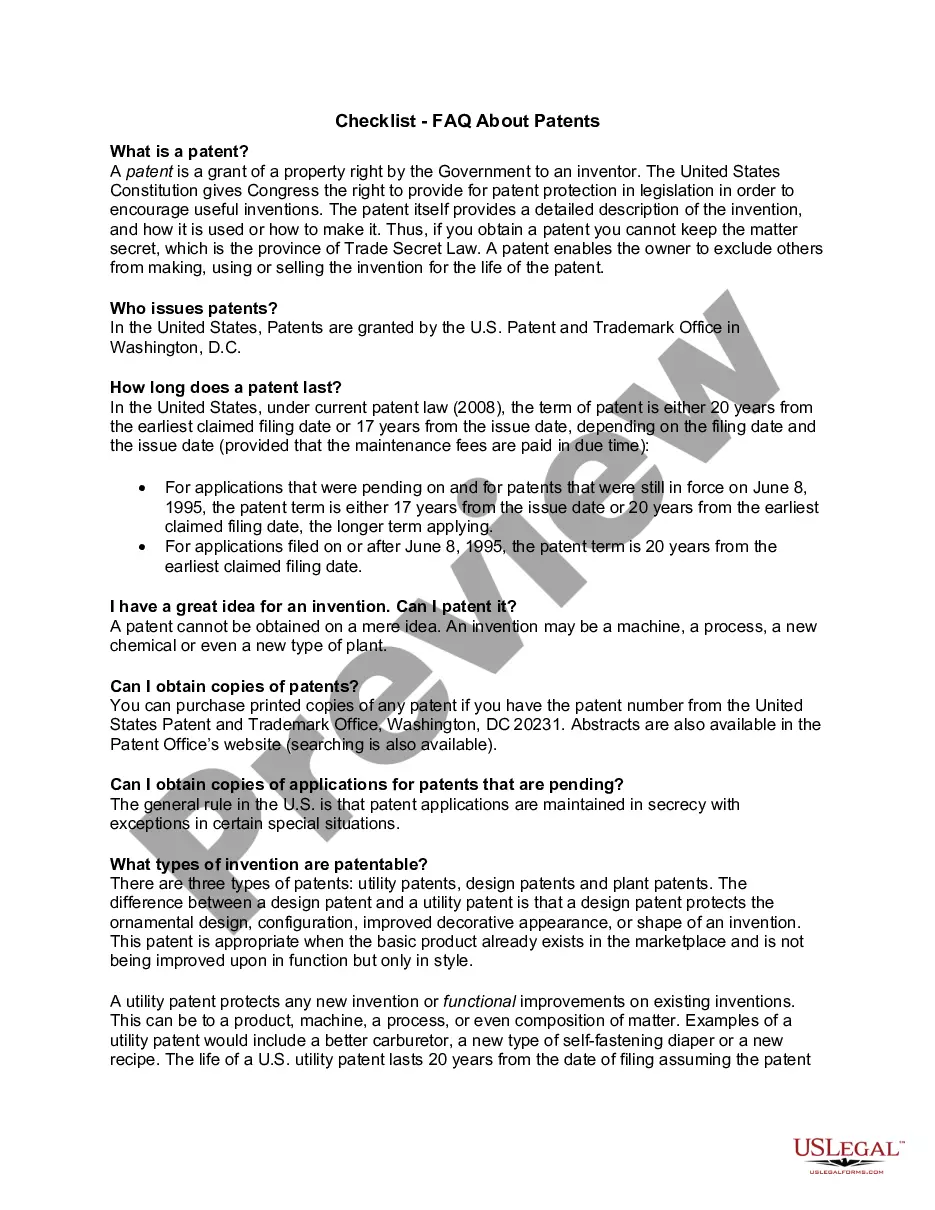
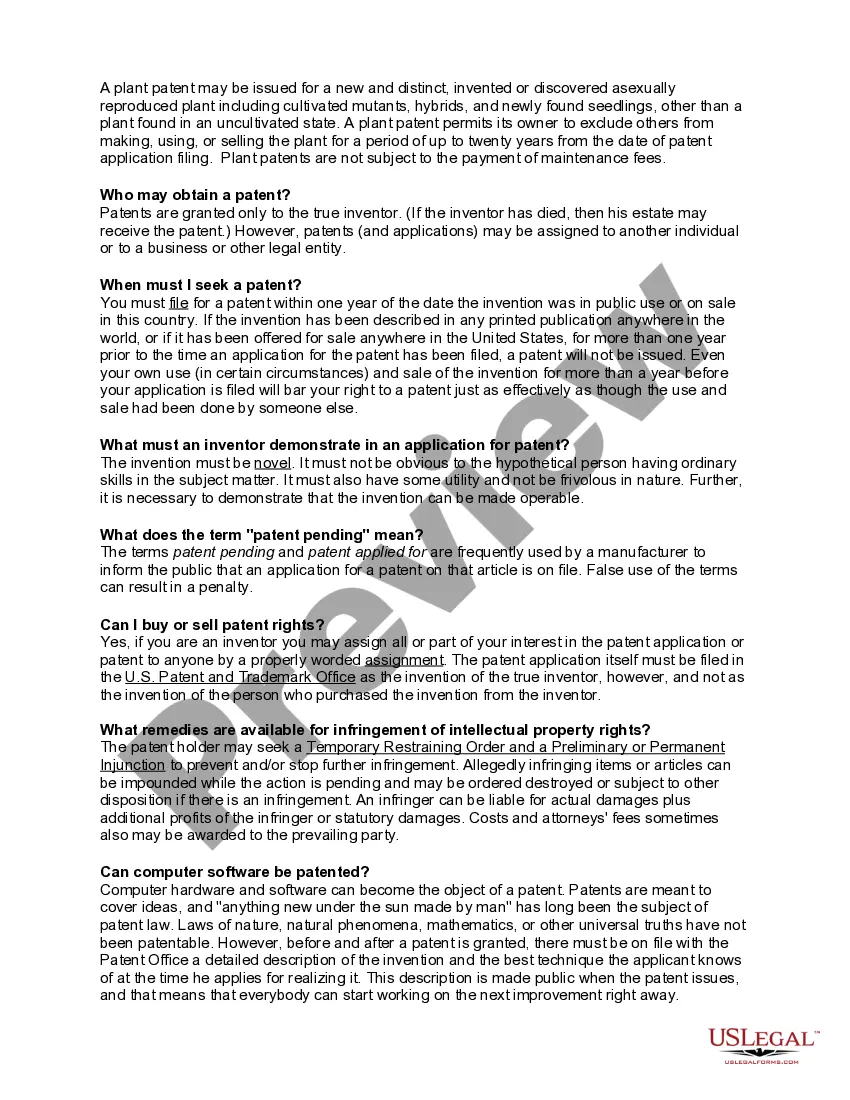
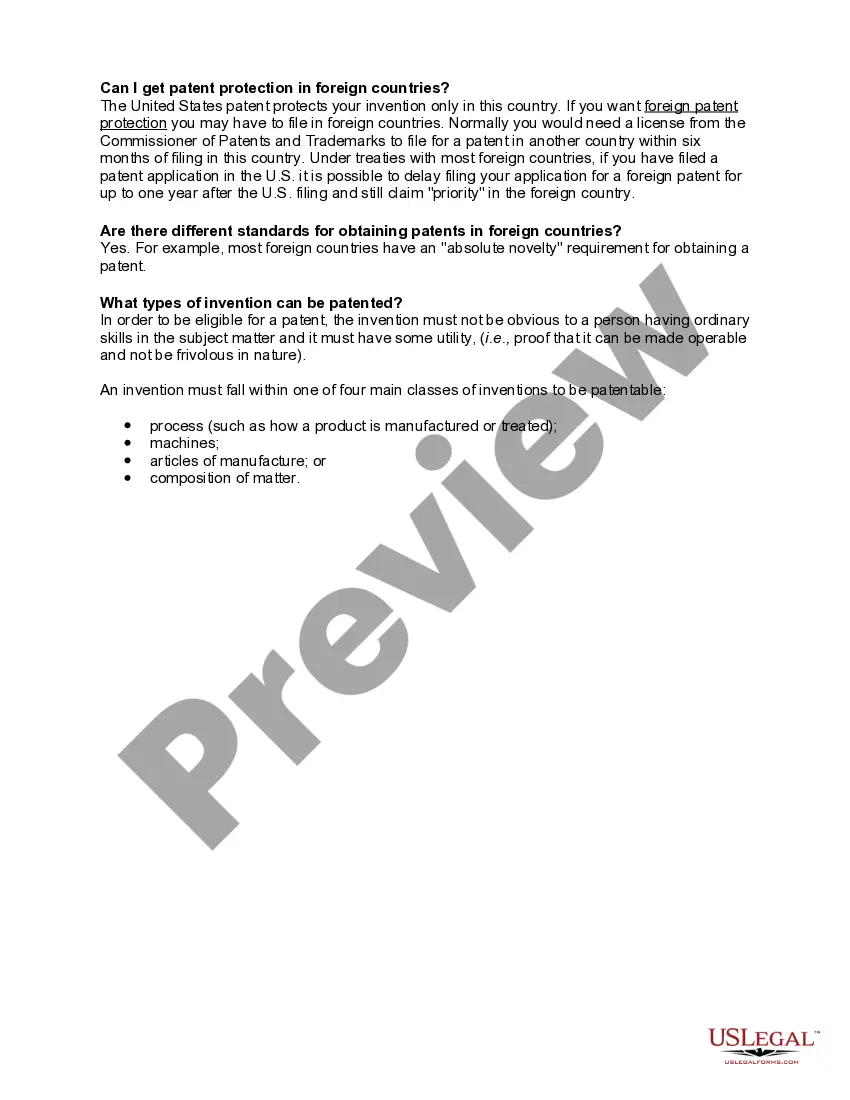
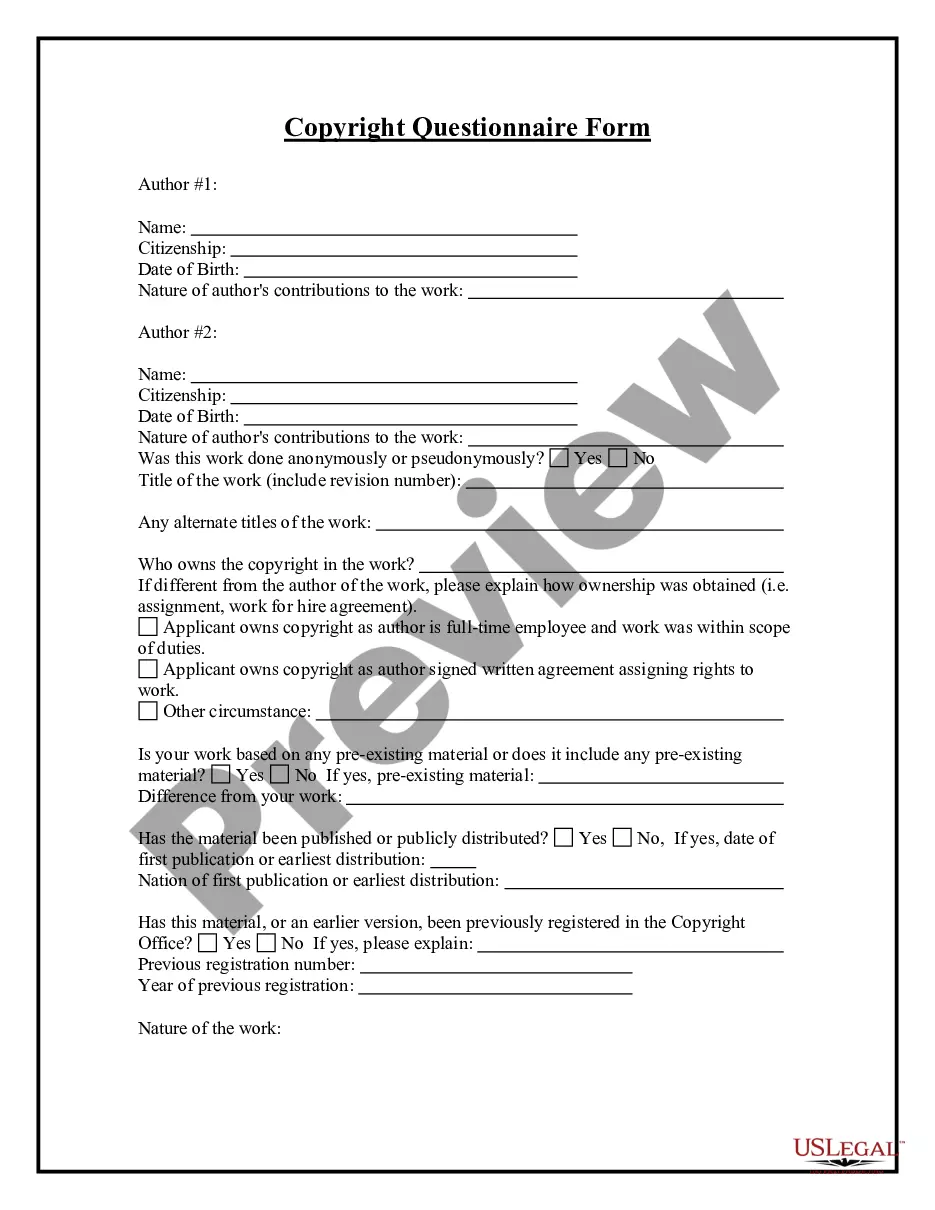
How to fill out Checklist - FAQ About Patents?
- If you have previously used US Legal Forms, first log in to access your account and download the necessary form template by clicking the Download button. Verify that your subscription is still active and renew if needed.
- For new users, start by checking the Preview mode and the form description to choose the right document that fits your needs.
- If you need a different template, utilize the Search tab to find the appropriate one that meets your requirements.
- To proceed with your chosen document, click on the Buy Now button, select your preferred subscription plan, and create an account for complete access.
- Complete your purchase by entering your credit card information or connecting your PayPal account to finalize your subscription.
- Once your payment is confirmed, download the form to your device for completion, and access it anytime later in the My Forms section of your profile.
In conclusion, US Legal Forms offers a convenient platform for obtaining legal documents efficiently. With a wide selection of forms and expert guidance, you can ensure that your legal papers are not only completed correctly but also tailored to meet local requirements. Experience the ease of legal form preparation by starting your journey with US Legal Forms today!
Don't wait any longer; explore the vast library of forms and get started on your legal journey now!
Form popularity
FAQ
The 7 7 7 rule for parenting is a guideline encouraging parents to spend at least seven minutes daily talking, playing, and being fully present with their child. This consistent engagement fosters a strong bond and open lines of communication. By prioritizing quality interactions about my parents, you contribute to building trust and understanding.
The 7 rules for parents typically focus on trust, respect, consistency, and love, among other principles. These rules remind parents of their role in shaping their children's lives. As you explore the concept about my parents, applying these rules can help create a supportive environment that nurtures healthy development in your children.
The golden rules of parenting often include nurturing unconditional love, setting clear boundaries, and fostering open communication. These principles guide parents as they navigate the complexities of raising children. Remember, every situation about my parents is unique, so adapting these rules to fit your family dynamics can lead to a more harmonious relationship.
Learning more about your parents is a rewarding journey that can deepen your relationship with them. Start by asking them about their childhood, interests, and significant life experiences. Engaging in open conversations about your family's history gives you insights about my parents, which can bring you closer together and enhance your understanding of their values.
The experience of losing a parent can be challenging at any age, but many people find that the teenage years and early adulthood are particularly difficult. During these stages, individuals often rely heavily on their parents for emotional and financial support. If you are reflecting on your journey about my parents, it may help to speak with a counselor or join a support group to process your feelings.
Honoring a difficult parent means recognizing their challenges while safeguarding your own mental health. Identify valuable life lessons they taught you, even if the delivery was flawed. Practicing gratitude for what you’ve learned can reshape your view about my parents. Ultimately, the goal is to find peace within yourself.
Grieving toxic parents involves accepting the complicated emotions attached to them. Allow yourself to feel sorrow, anger, or relief as you process your relationship. Support groups or journals can provide helpful outlets. Remember, this process can lead toward growth and better understanding about my parents.
To honor your parents amid toxicity, recognize their humanity and the struggles they face. While it’s essential to protect yourself, you can acknowledge their efforts or past sacrifices. Practicing forgiveness does not mean accepting mistreatment, but it can lead to a healthier perspective about my parents. Reflect on what you can learn instead of dwelling on pain.
Honoring toxic parents can be challenging yet fulfilling. Focus on understanding their flaws without validating harmful behavior. You might consider celebrating their positive traits while maintaining your boundaries. This approach allows you to process your feelings about my parents, helping you reconcile your emotions.
Writing about your parents requires honesty and reflection. Start by expressing your feelings and experiences with them, both positive and negative. Organize your thoughts into themes that resonate with you. This activity not only helps clarify your thoughts about my parents but also provides a therapeutic outlet.