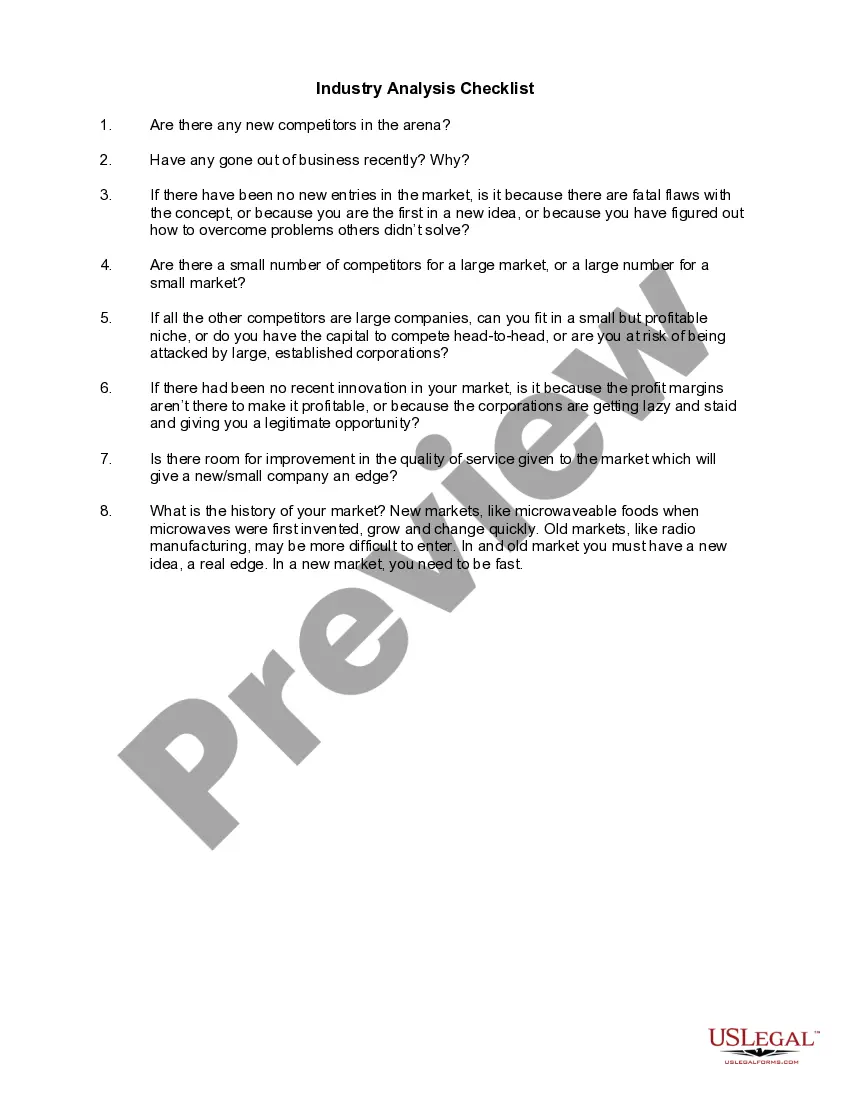
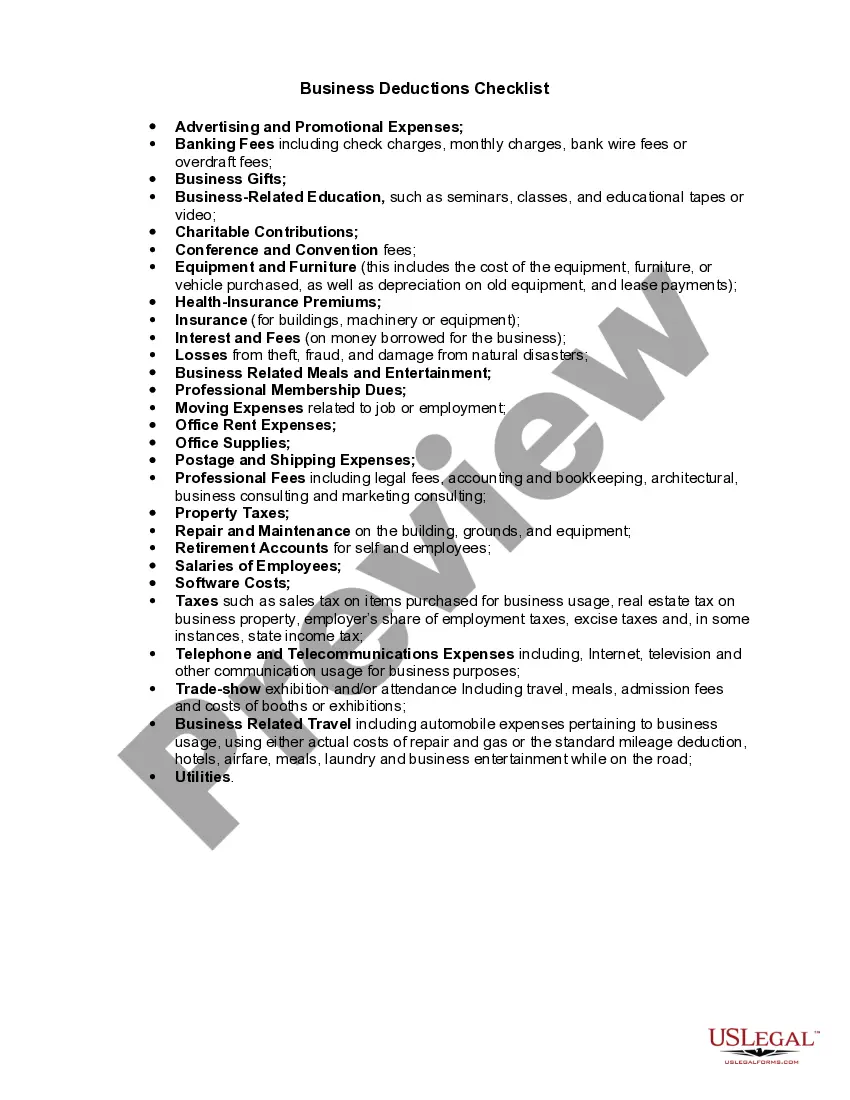
Industry Analysis Checklist For Restaurant
Description
Get your form ready online
Our built-in tools help you complete, sign, share, and store your documents in one place.
Make edits, fill in missing information, and update formatting in US Legal Forms—just like you would in MS Word.
Download a copy, print it, send it by email, or mail it via USPS—whatever works best for your next step.
Sign and collect signatures with our SignNow integration. Send to multiple recipients, set reminders, and more. Go Premium to unlock E-Sign.
If this form requires notarization, complete it online through a secure video call—no need to meet a notary in person or wait for an appointment.
We protect your documents and personal data by following strict security and privacy standards.

Make edits, fill in missing information, and update formatting in US Legal Forms—just like you would in MS Word.

Download a copy, print it, send it by email, or mail it via USPS—whatever works best for your next step.

Sign and collect signatures with our SignNow integration. Send to multiple recipients, set reminders, and more. Go Premium to unlock E-Sign.

If this form requires notarization, complete it online through a secure video call—no need to meet a notary in person or wait for an appointment.

We protect your documents and personal data by following strict security and privacy standards.
Looking for another form?







How to fill out Industry Analysis Checklist?
Legal documents handling can be daunting, even for the most adept professionals.
When you need an Industry Analysis Checklist For Restaurant and lack the time to search for the correct and current version, the process can be anxiety-inducing.
US Legal Forms meets all your needs, from personal to business documentation, all in one location.
Utilize advanced tools to complete and manage your Industry Analysis Checklist For Restaurant.
Here are the steps to follow after accessing the form you require: Confirm it is the correct form by previewing it and reviewing its description. Ensure that the template is valid in your state or county. Click Buy Now when you are ready. Choose a subscription option. Select the file format you need, and Download, complete, eSign, print, and send your document. Take advantage of the US Legal Forms online library, supported by 25 years of experience and trustworthiness. Streamline your daily document management into a seamless and user-friendly process today.
- Tap into a valuable resource hub of articles, guides, and materials related to your situation and requirements.
- Save time and effort in searching for the documents you need, and use US Legal Forms’ sophisticated search and Preview feature to find Industry Analysis Checklist For Restaurant and download it.
- If you have a monthly membership, Log In to your US Legal Forms account, locate the form, and download it.
- Check your My documents section to review the documents you have previously downloaded and to organize your folders as desired.
- If this is your first time using US Legal Forms, create a free account and gain unrestricted access to all platform benefits.
- A robust online form repository can be a transformative solution for anyone looking to navigate these issues proficiently.
- US Legal Forms is a frontrunner in online legal documents, boasting over 85,000 state-specific legal forms accessible at any time.
- With US Legal Forms, you can access state- or county-specific legal and business documents.
Form popularity
FAQ
The 30/30/30/10 rule for restaurants expands on the previous 30/30/30 rule by adding a 10% allocation for promotions and specials. This approach encourages variety and keeps the menu fresh and exciting for customers. Incorporating this rule into your industry analysis checklist for restaurant can help you design a menu that drives sales while catering to customer preferences.
To create a restaurant checklist, start by identifying the key operations and tasks that need regular attention. Include sections for inventory management, staff duties, and health and safety regulations. Utilize an industry analysis checklist for restaurant to ensure you cover all essential areas, making your checklist a valuable tool for daily operations and compliance.
The 30 30 30 rule for restaurants is a guideline that suggests allocating 30% of your menu to appetizers, 30% to main courses, and 30% to desserts, leaving 10% for specials or seasonal items. This rule helps maintain a well-balanced menu that appeals to a variety of customers. By following this rule, you can create a comprehensive industry analysis checklist for restaurant that ensures you meet diverse dining preferences.
A PESTLE analysis for the restaurant industry is a strategic tool used to evaluate external factors that can impact your business. This analysis focuses on Political, Economic, Social, Technological, Legal, and Environmental elements. By incorporating a PESTLE analysis into your industry analysis checklist for restaurant, you can identify opportunities and threats in the market. Ultimately, this helps you make informed decisions to enhance your restaurant's performance and sustainability.
An example of industry analysis can be a detailed report on the fast-casual dining sector, exploring growth trends, leading competitors, and customer preferences. This analysis might include data on consumer spending habits, health-conscious dining trends, and technological advancements in restaurant operations. You can develop your own tailored industry analysis checklist for a restaurant using platforms like USLegalForms, which offer templates and tools to guide you.
An industry analysis typically includes a comprehensive overview of market conditions, competitor analysis, and customer behavior. In the context of a restaurant, it should also evaluate economic factors, technology trends, and social influences that affect dining preferences. Utilizing an industry analysis checklist for a restaurant will ensure you cover all essential elements necessary for success.
The 5 industry analysis refers to the five forces framework developed by Michael Porter. It examines the competitive environment of an industry by analyzing factors such as the threat of new entrants, bargaining power of suppliers, bargaining power of buyers, threat of substitute products, and industry rivalry. Incorporating this model into your industry analysis checklist for a restaurant can provide valuable insights into market dynamics.
When creating an industry analysis checklist for a restaurant, include key components such as market trends, target demographics, and competitive landscape. Additionally, assess regulatory factors that may impact your business. By gathering this information, you can make informed decisions that enhance your restaurant's strategic positioning.