Different Between Mediation And Arbitration
Description



Get your form ready online
Our built-in tools help you complete, sign, share, and store your documents in one place.
Make edits, fill in missing information, and update formatting in US Legal Forms—just like you would in MS Word.
Download a copy, print it, send it by email, or mail it via USPS—whatever works best for your next step.
Sign and collect signatures with our SignNow integration. Send to multiple recipients, set reminders, and more. Go Premium to unlock E-Sign.
If this form requires notarization, complete it online through a secure video call—no need to meet a notary in person or wait for an appointment.
We protect your documents and personal data by following strict security and privacy standards.

Make edits, fill in missing information, and update formatting in US Legal Forms—just like you would in MS Word.

Download a copy, print it, send it by email, or mail it via USPS—whatever works best for your next step.

Sign and collect signatures with our SignNow integration. Send to multiple recipients, set reminders, and more. Go Premium to unlock E-Sign.

If this form requires notarization, complete it online through a secure video call—no need to meet a notary in person or wait for an appointment.

We protect your documents and personal data by following strict security and privacy standards.
Looking for another form?

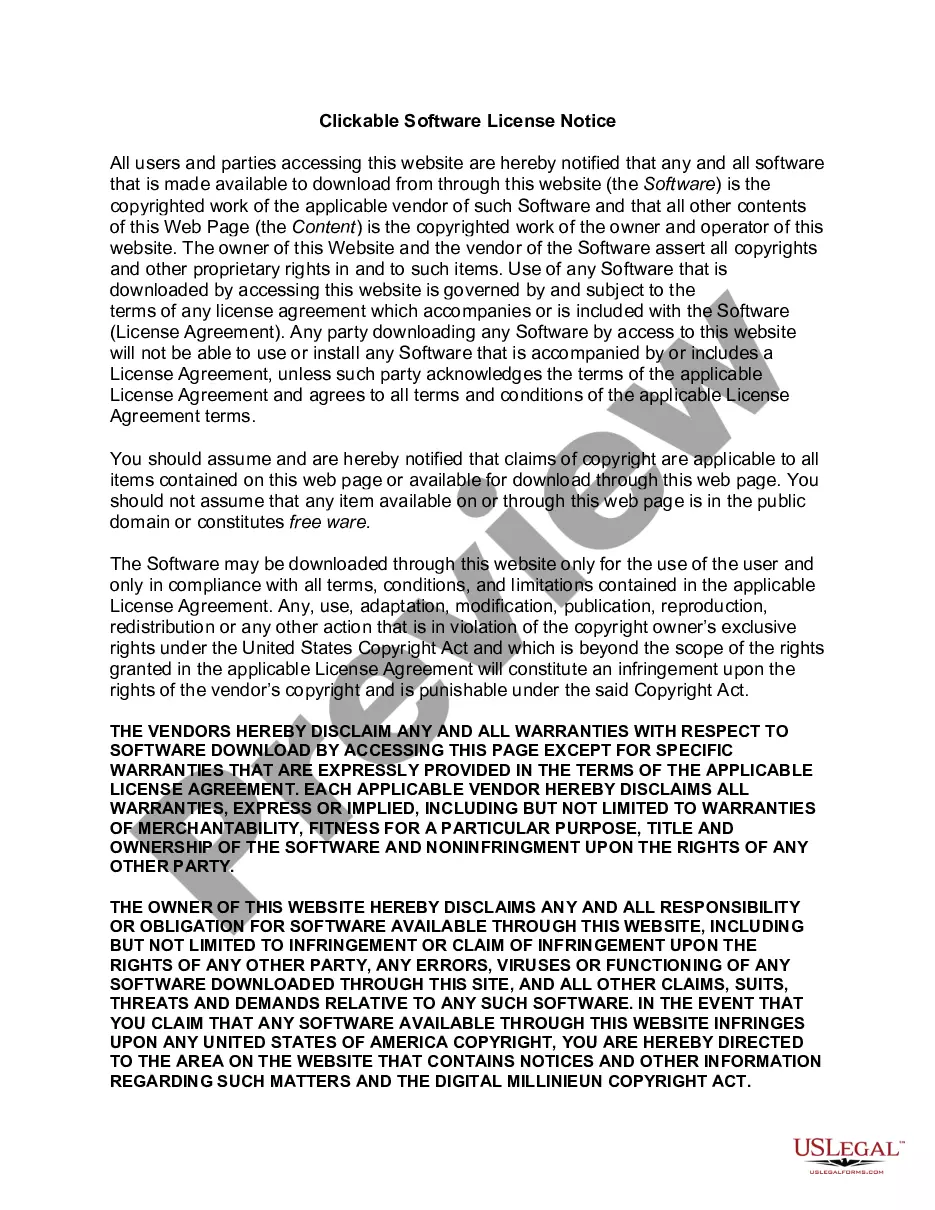






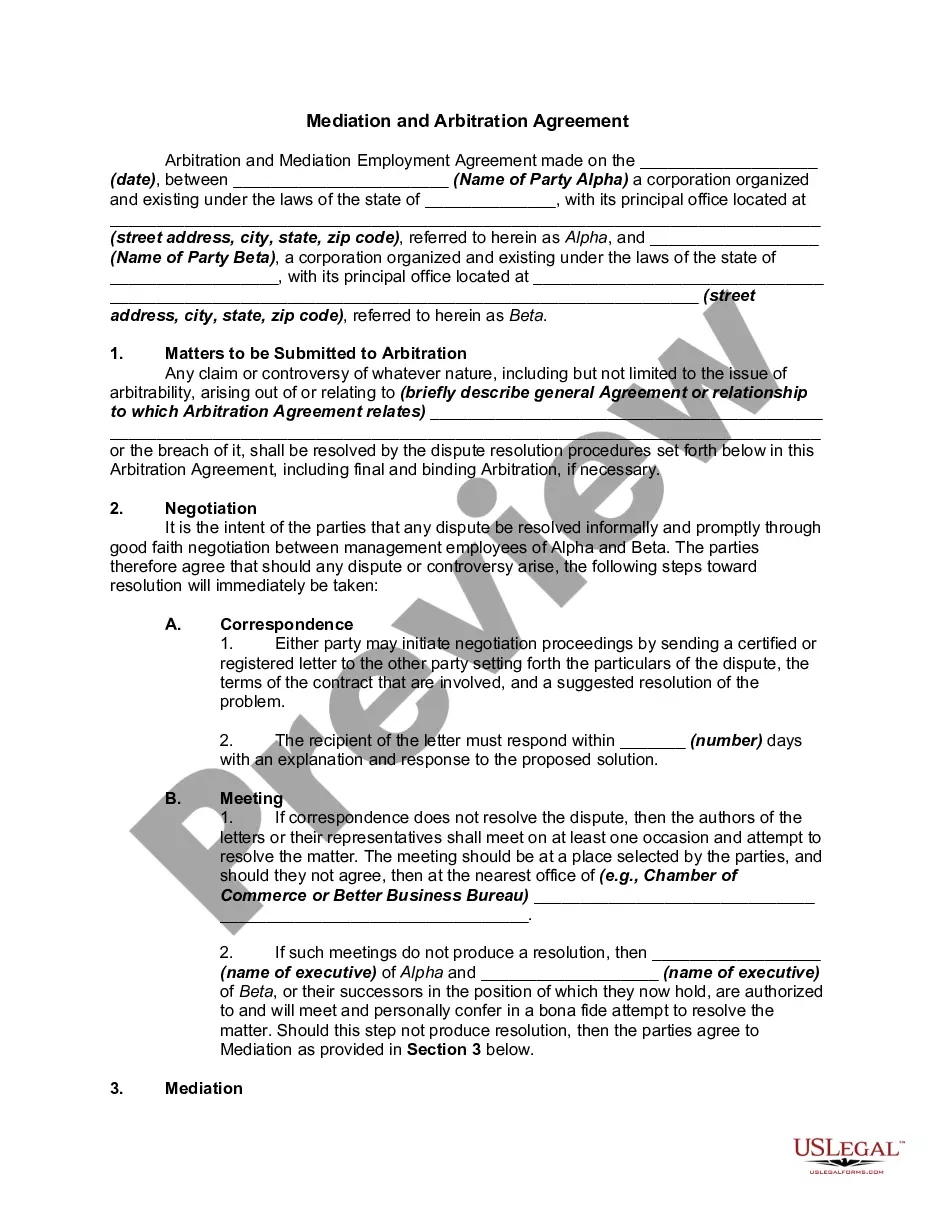
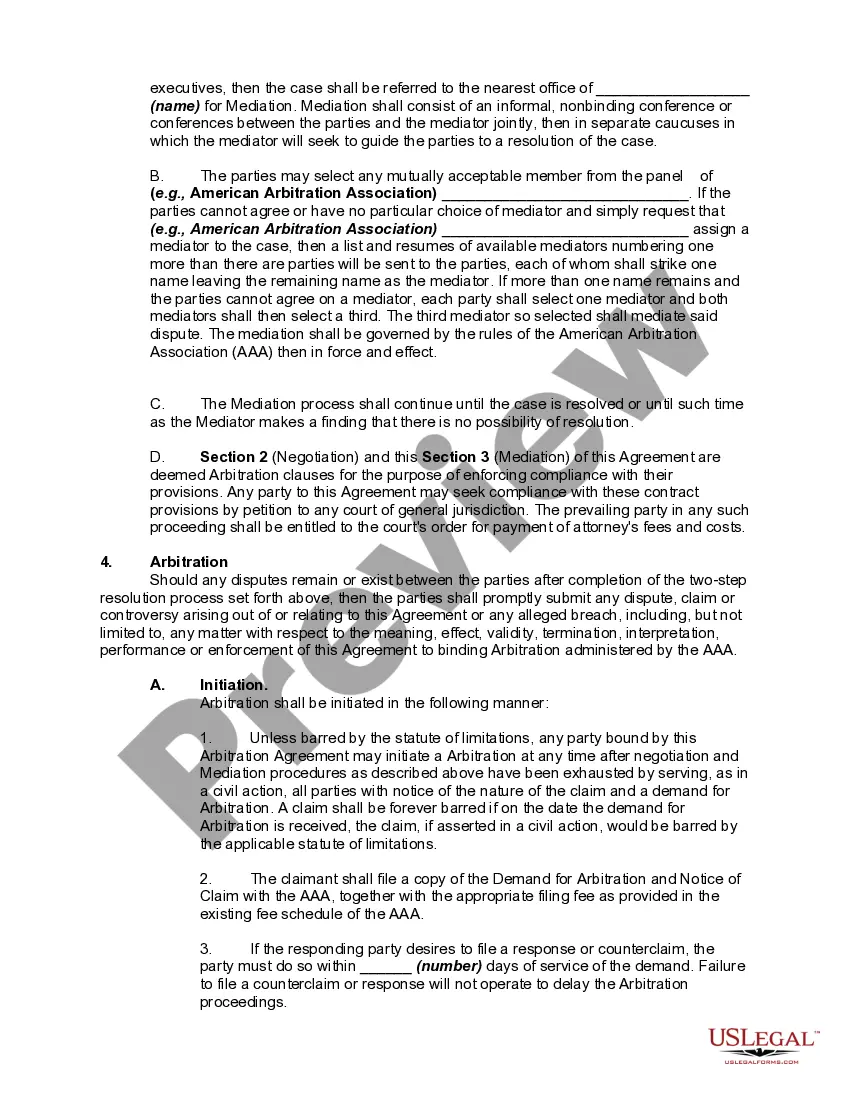
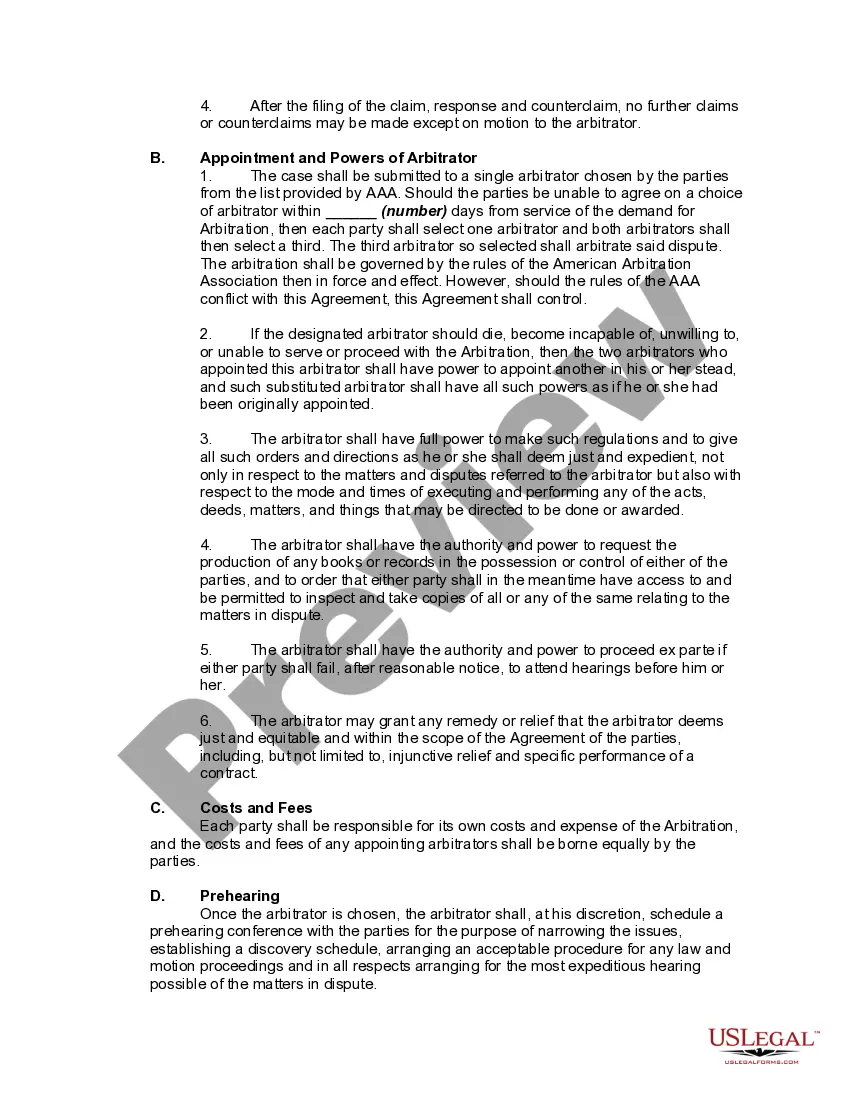
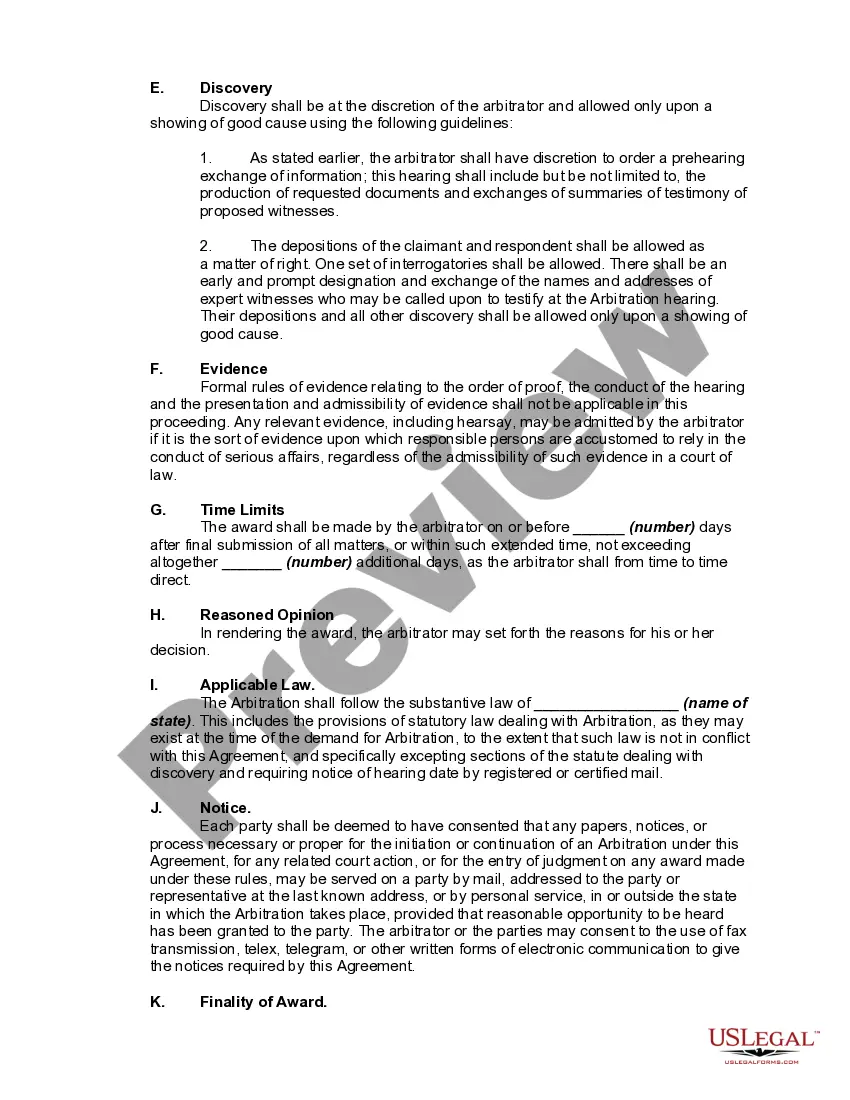
How to fill out Mediation And Arbitration Agreement?
Managing legal documents can be overwhelming, even for the most experienced professionals.
When you're searching for a Distinction Between Mediation And Arbitration and lack the time to seek out the right and current version, the processes can be challenging.
US Legal Forms addresses all requirements you might have, from personal to business paperwork, all in one place.
Utilize advanced tools to complete and manage your Distinction Between Mediation And Arbitration.
Here are the steps to follow after downloading the form you need: Verify that this is the correct form by previewing it and reading its description. Ensure that the template is recognized in your state or county. Click Buy Now when you're ready. Choose a monthly subscription plan. Select the format you desire, and Download, complete, sign, print, and send your documents. Take advantage of the US Legal Forms online catalog, supported by 25 years of experience and reliability. Transform your daily document management into a straightforward and user-friendly process today.
- Access a repository of articles, guides, and manuals pertinent to your situation and requirements.
- Save time and effort searching for the documents you need, and use US Legal Forms’ advanced search and Review feature to find Distinction Between Mediation And Arbitration and download it.
- If you have a monthly subscription, Log In to your US Legal Forms account, search for the form, and download it.
- Check your My documents tab to view the documents you've previously saved and manage your folders as you see fit.
- If this is your first time with US Legal Forms, create a free account and enjoy unlimited access to all the benefits of the library.
- A comprehensive online form library can be transformative for anyone looking to handle these matters efficiently.
- US Legal Forms is a top provider of online legal documents, with over 85,000 state-specific legal templates available to you at any time.
- With US Legal Forms, you can access state- or county-specific legal and business documents.
Form popularity
FAQ
Settling a dispute can often save time and resources compared to arbitration, which can be lengthy and costly. When you settle, you have more control over the outcome, as both parties agree to the terms. However, if a settlement is not possible, arbitration provides a structured way to resolve disagreements. Weighing the different between mediation and arbitration can help you make an informed decision, and platforms like USLegalForms can assist you in navigating these processes effectively.
An arbitrator has the authority to make a final and binding decision on the dispute, which a mediator cannot do. While a mediator facilitates dialogue and helps parties find common ground, the arbitrator listens to evidence and arguments and renders a resolution based on the law. This key difference highlights the different between mediation and arbitration, allowing you to understand which process aligns with your goals.
Choosing mediation can often provide a more flexible and less formal environment for resolving disputes. It emphasizes open communication, allowing parties to maintain control over the outcome. Unlike arbitration, where a decision is imposed, mediation encourages collaboration, which can preserve relationships. Knowing the different between mediation and arbitration can guide you to a solution that best suits your needs.
Deciding whether mediation or arbitration is better depends on your specific situation. Mediation allows both parties to discuss their issues collaboratively, often leading to mutually satisfactory solutions. On the other hand, arbitration involves a neutral third party who makes a binding decision after hearing both sides. Understanding the different between mediation and arbitration can help you choose the right approach for your case.
The major difference between arbitration and mediation lies in how disputes are resolved. In mediation, a neutral third party helps facilitate a discussion between the parties to reach a mutually acceptable agreement. In contrast, arbitration involves a third party who makes a binding decision on the dispute after hearing both sides. Knowing the different between mediation and arbitration can empower you to make informed choices regarding your conflict resolution strategy.
In most conflict resolution processes, mediation typically comes before arbitration. Parties often try to resolve their disputes through mediation, which is generally a less formal and more collaborative approach. If mediation fails to achieve a resolution, arbitration can then be pursued as a binding method to settle the disagreement. Understanding the different between mediation and arbitration can help you choose the right approach for your situation.
Hear this out loud PauseSome contracts state that the parties must ?mediate? a dispute before ?litigation? or ?arbitration.? Through mediation, the parties attempt to resolve their dispute with the assistance of a mediator. The mediator is not a decision-maker. Rather, the mediator assists the parties through facilitating a negotiation.
Hear this out loud PauseUnlike an arbitrator, the mediator is not the decision-maker and does not resolve the dispute ? but rather facilitates communication so the parties can reach a resolution that works for both of them. Mediation is especially useful when opposing parties have a relationship they want to preserve.
Hear this out loud PauseThus, in arbitration, the private judge is in control of the process and the outcome, whereas in mediation, the disputing parties maintain control. Most Arbitrators will be flexible and work around the schedules and needs of the parties.
Comparison Between Arbitration & Mediation ArbitrationMediationMore expensive than mediation, but less expensive than traditional litigation.Low cost.Private (but decisions are publicly available).Private and confidential.Learn more about arbitrationLearn more about mediation10 more rows