Real Estate Business Plan Sample
Description
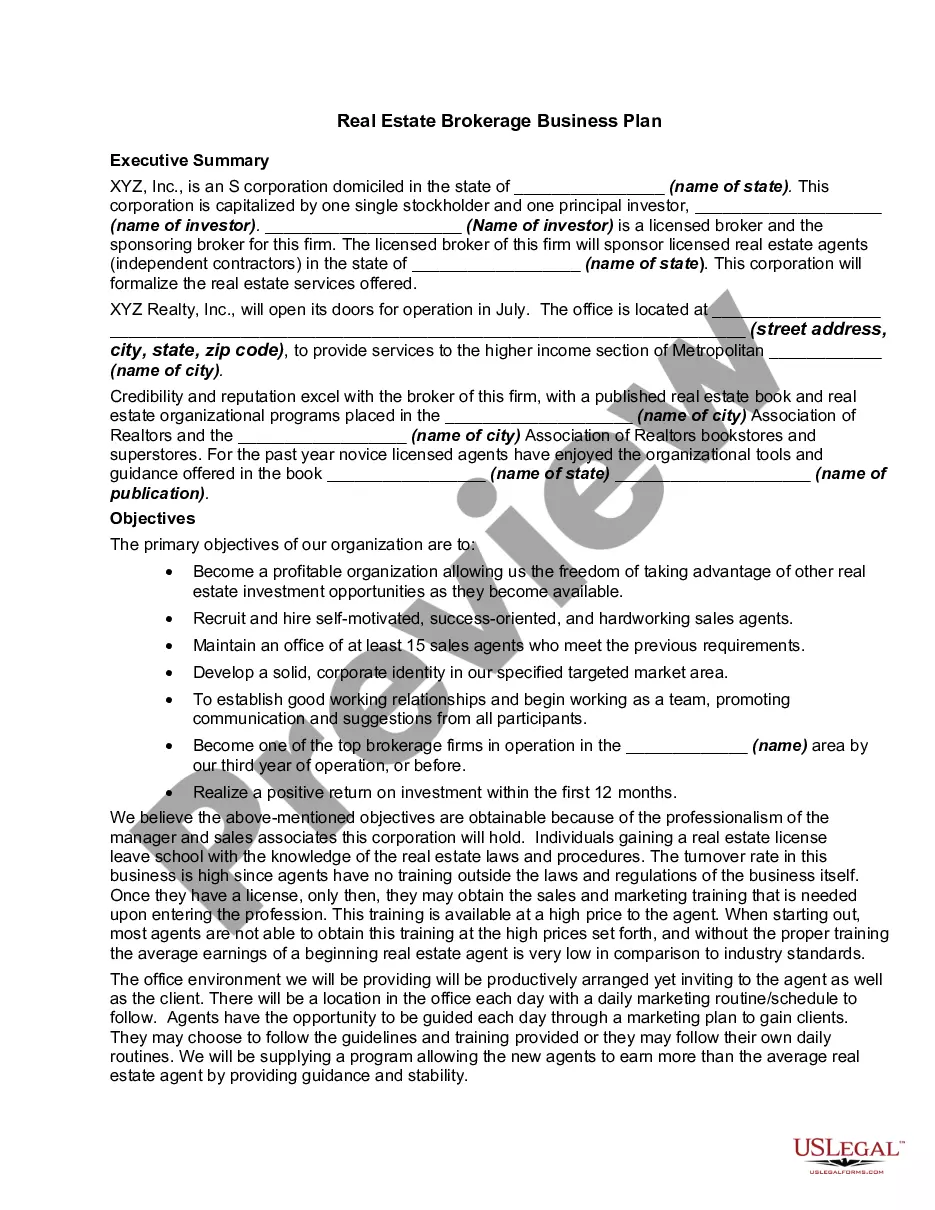
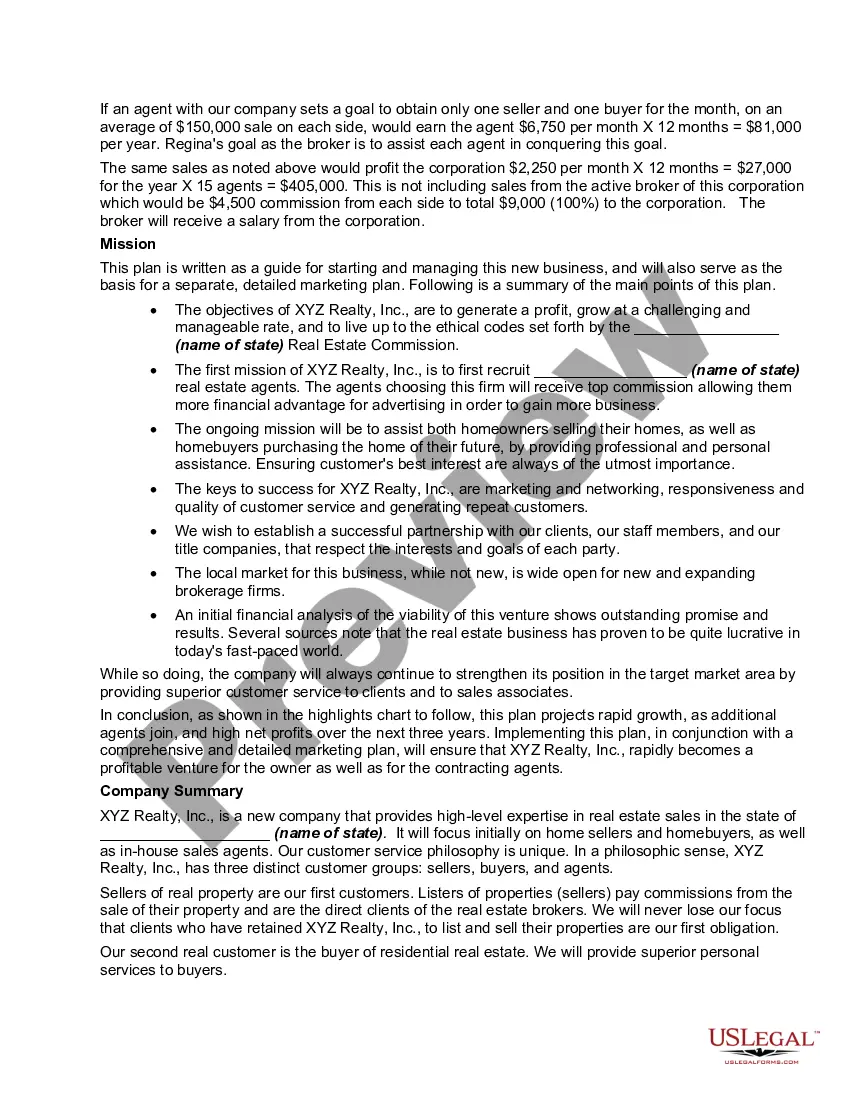
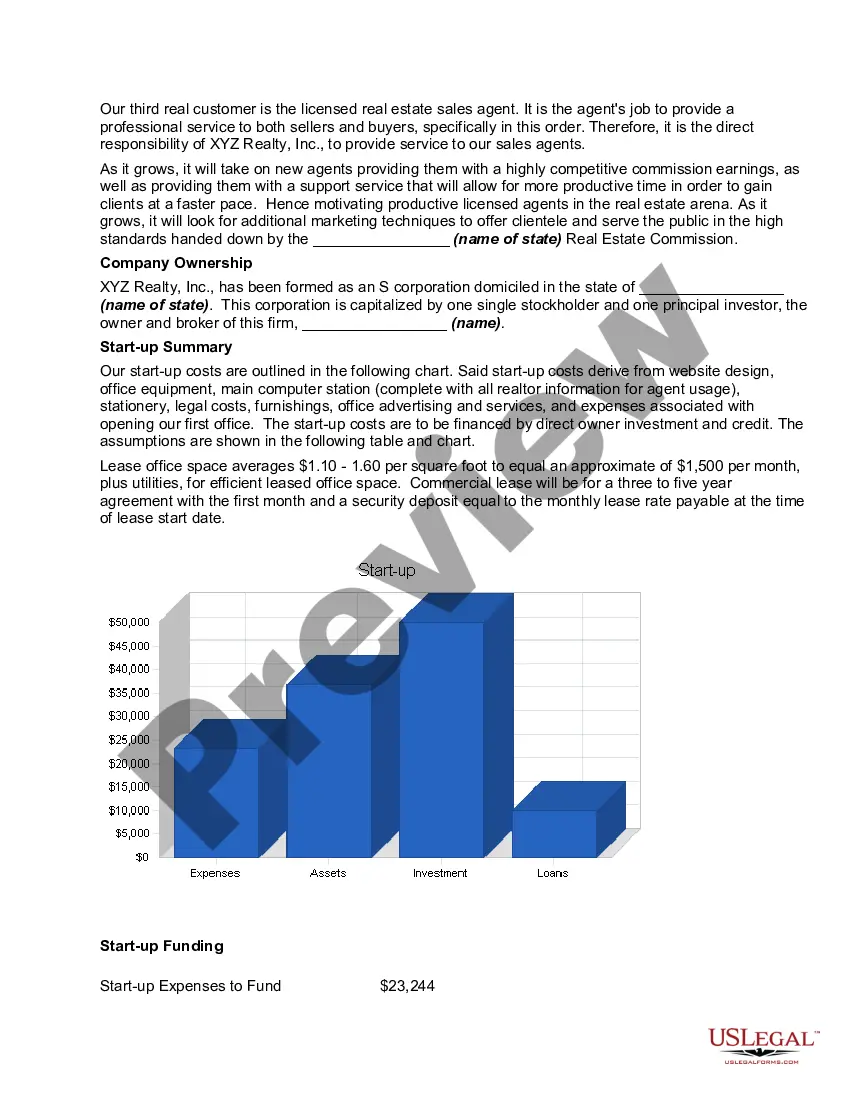
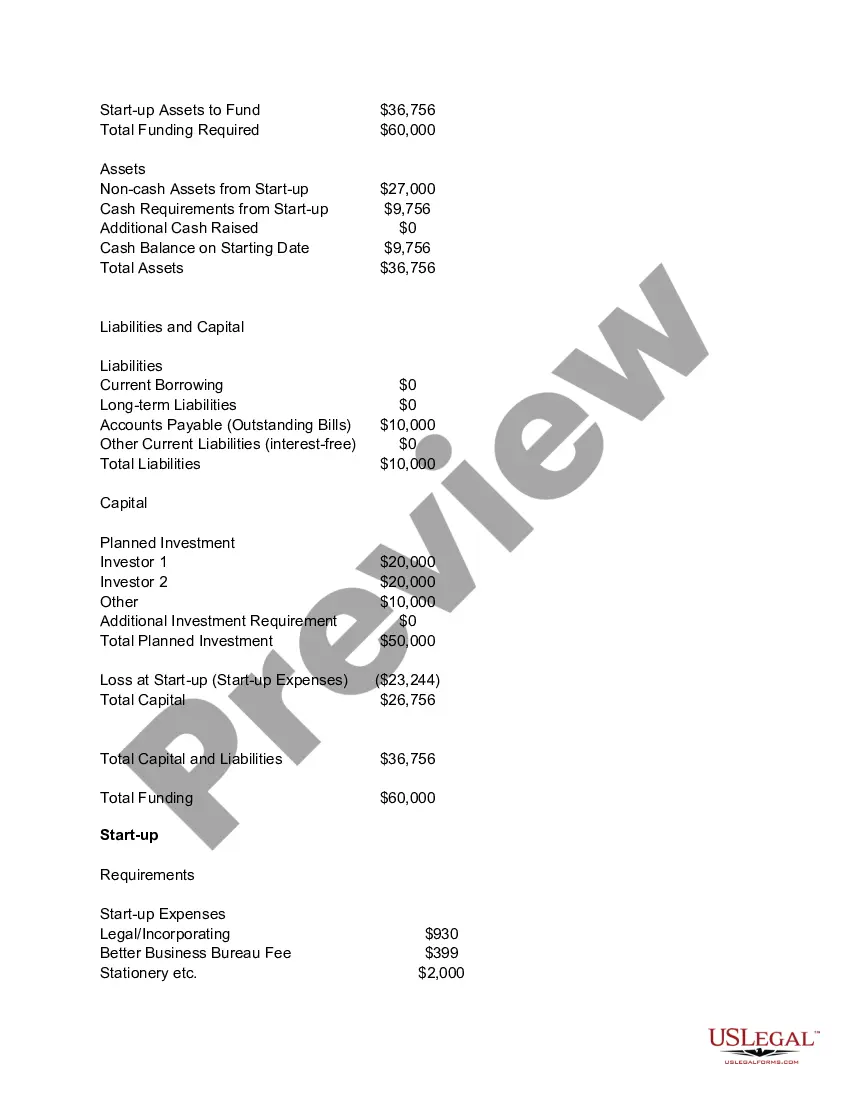
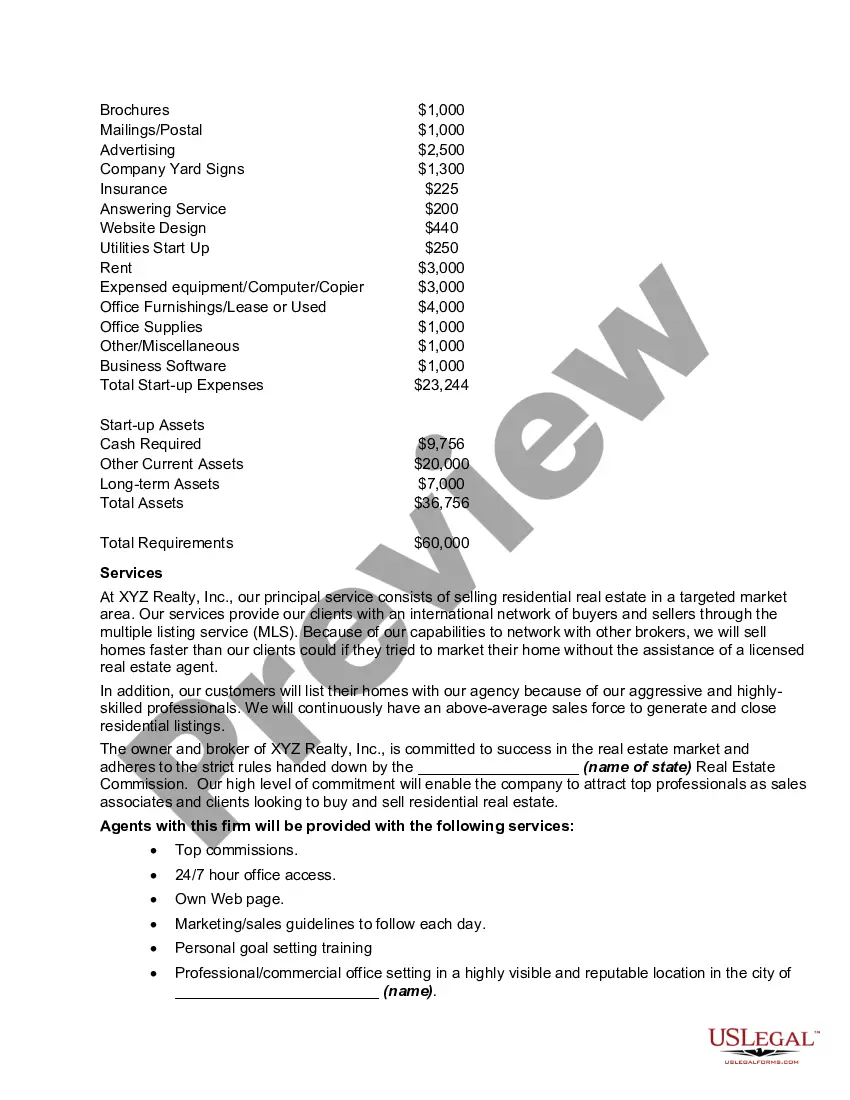
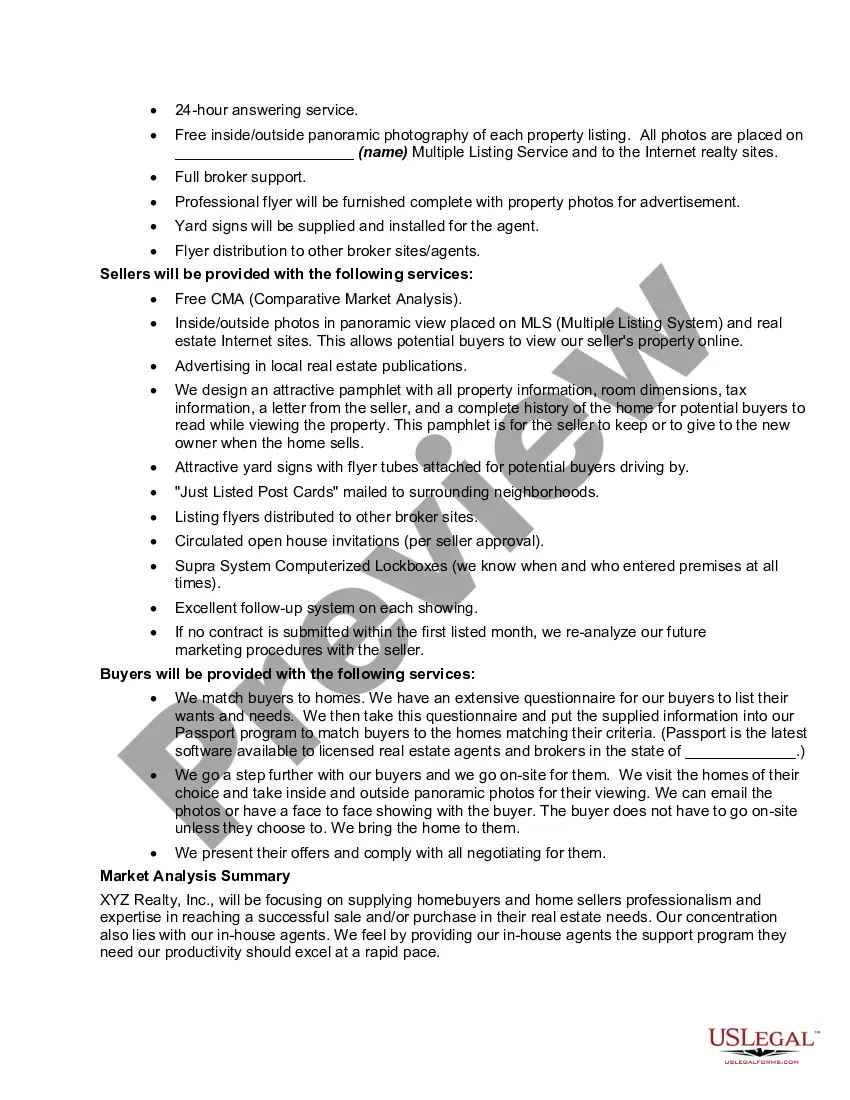
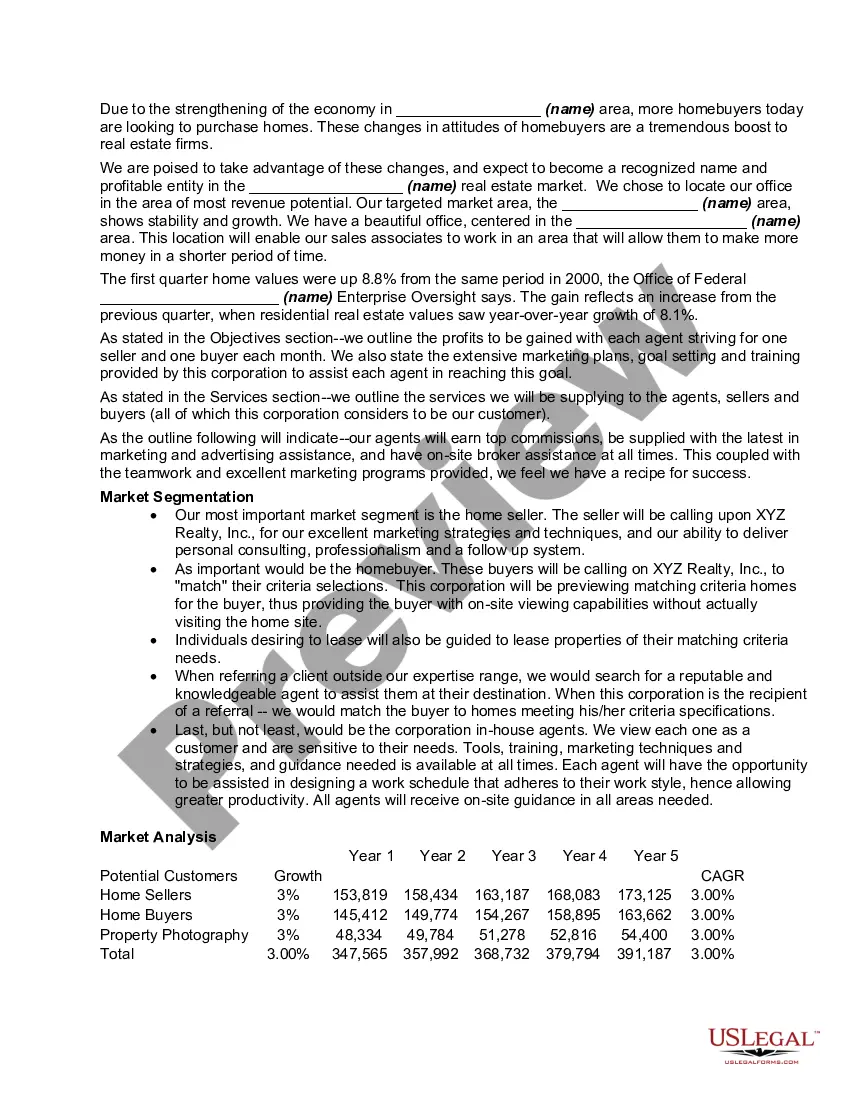
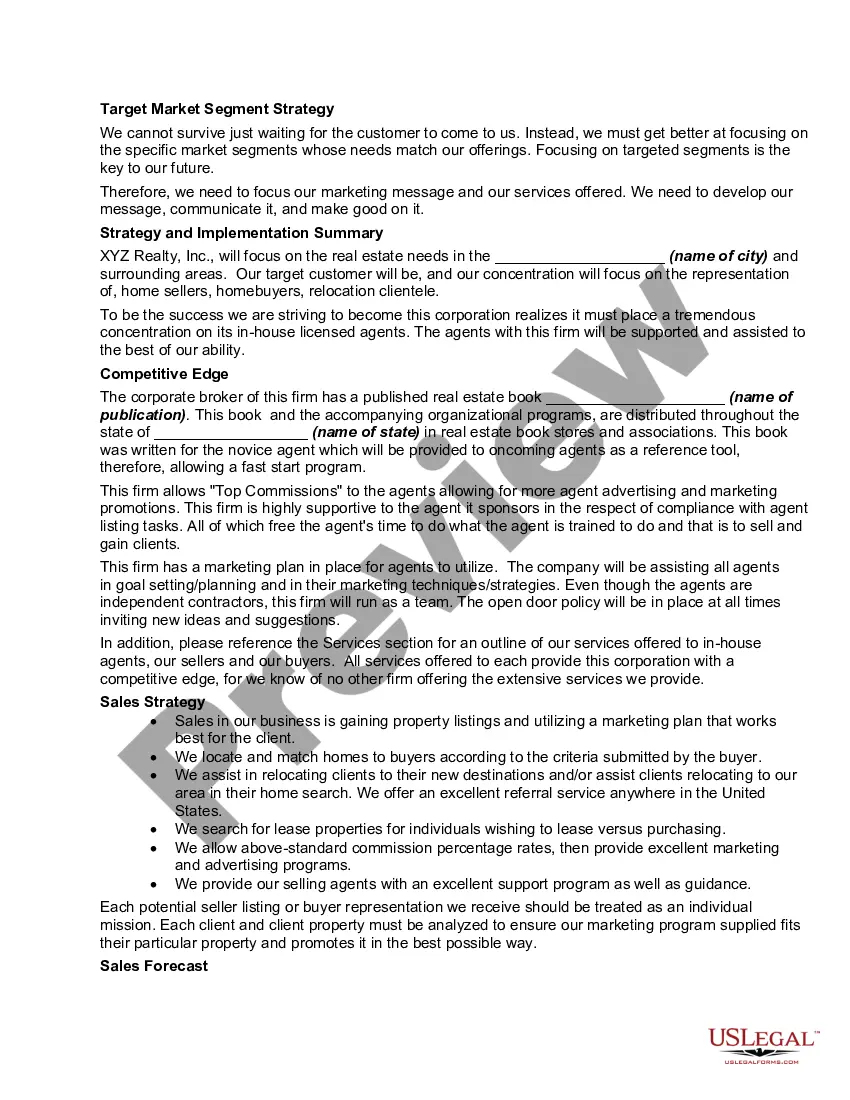

Get your form ready online
Our built-in tools help you complete, sign, share, and store your documents in one place.
Make edits, fill in missing information, and update formatting in US Legal Forms—just like you would in MS Word.
Download a copy, print it, send it by email, or mail it via USPS—whatever works best for your next step.
Sign and collect signatures with our SignNow integration. Send to multiple recipients, set reminders, and more. Go Premium to unlock E-Sign.
If this form requires notarization, complete it online through a secure video call—no need to meet a notary in person or wait for an appointment.
We protect your documents and personal data by following strict security and privacy standards.

Make edits, fill in missing information, and update formatting in US Legal Forms—just like you would in MS Word.

Download a copy, print it, send it by email, or mail it via USPS—whatever works best for your next step.

Sign and collect signatures with our SignNow integration. Send to multiple recipients, set reminders, and more. Go Premium to unlock E-Sign.

If this form requires notarization, complete it online through a secure video call—no need to meet a notary in person or wait for an appointment.

We protect your documents and personal data by following strict security and privacy standards.
Looking for another form?




How to fill out Real Estate Brokerage Business Plan?
- Begin by logging into your US Legal Forms account. If you’re a new user, create an account first.
- Search for the specific real estate business plan sample you need. Utilize the Preview mode and review the form description to ensure it aligns with your requirements.
- If the initial template doesn’t meet your needs, use the Search tab to find alternative forms that fit your criteria.
- Once you find the appropriate document, select the Buy Now button and choose a subscription plan that suits you.
- Complete your purchase by entering your payment information, either via credit card or PayPal.
- Download the template to your device. It will also be accessible in the My Forms section for future reference.
By following these steps, you'll efficiently navigate the US Legal Forms platform and acquire the necessary documentation for your real estate endeavors.
Take advantage of US Legal Forms today for a hassle-free experience in securing your legal documents. Get started now!
Form popularity
FAQ
Starting a real estate business can be a rewarding venture if you approach it with thorough research and a clear strategy. A detailed real estate business plan sample helps you identify your target market, set realistic goals, and plan for financial management. Many successful agents and investors find that with dedication, the potential for profit in real estate is significant. Moreover, platforms like US Legal Forms provide valuable resources and templates to help you craft a compelling business plan.
The most profitable type of real estate business often depends on market conditions and personal expertise. However, residential real estate investments frequently provide strong returns, especially with a well-structured real estate business plan sample that outlines strategies for buying, renovating, and selling properties. Additionally, rental properties can yield substantial passive income when managed effectively. Thus, focusing on residential real estate with a solid plan enhances the likelihood of success.
To write a business plan for beginners, start by outlining your main ideas and objectives. Break down your plan into easy-to-follow sections, using a real estate business plan sample as a guide. Focus on key areas like your target market, competition, and financial goals. Take your time, and don’t hesitate to seek feedback, as your plan will serve as a crucial tool for guiding your business towards success.
Filling out a business plan involves completing each section with specific information about your business. Begin with your executive summary, then move to detailed sections like market research and financial projections. By referencing a real estate business plan sample, you can better understand what information is necessary, making the process smoother. This approach also enhances clarity for potential investors and partners.
To fill a business plan, start by gathering relevant information about your business, market, and financials. Utilize a real estate business plan sample to steer your content and structure. Make each section clear and concise, ensuring you convey your vision and strategy effectively. Remember, this plan is a roadmap that helps you stay focused and communicate your goals to stakeholders.
Examples of business plans vary by industry but can include startup plans, operational plans, and growth plans. For instance, a real estate business plan sample might outline property management strategies, real estate investment plans, or marketing tactics for a real estate firm. These examples provide a concrete reference, guiding you in crafting your personalized plan and addressing your specific business needs.
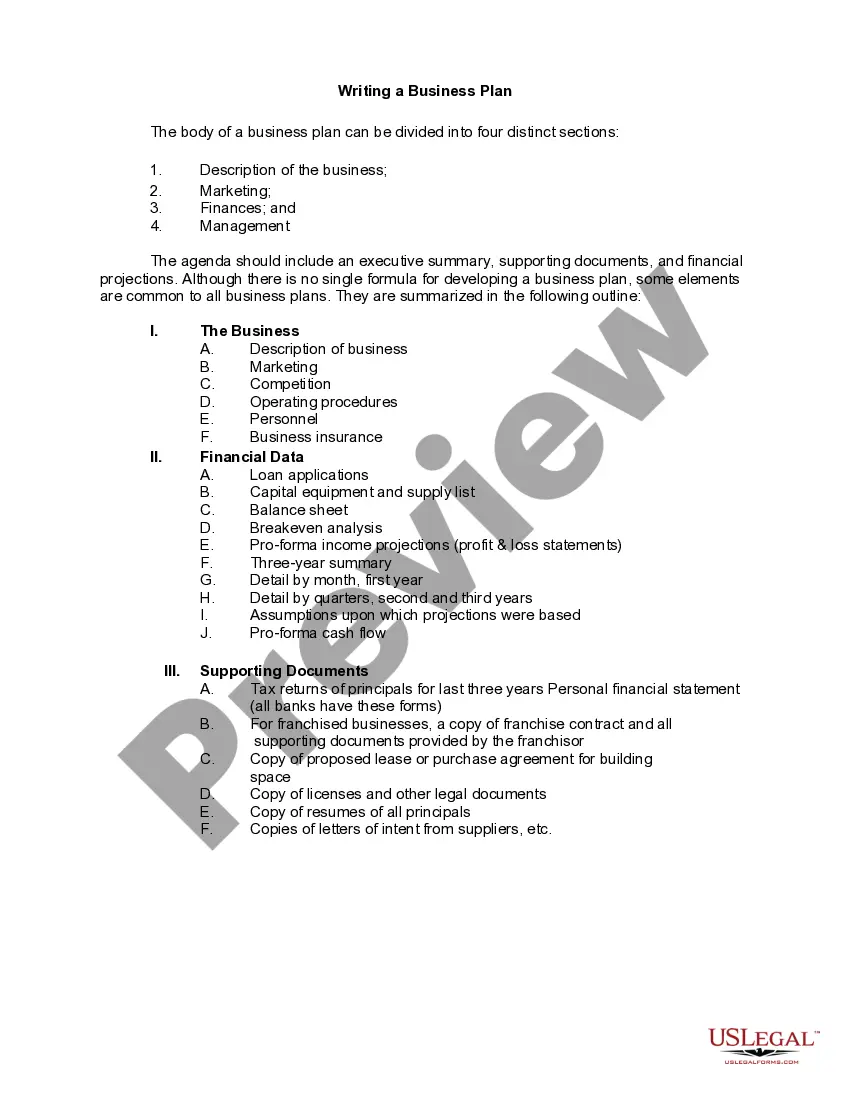
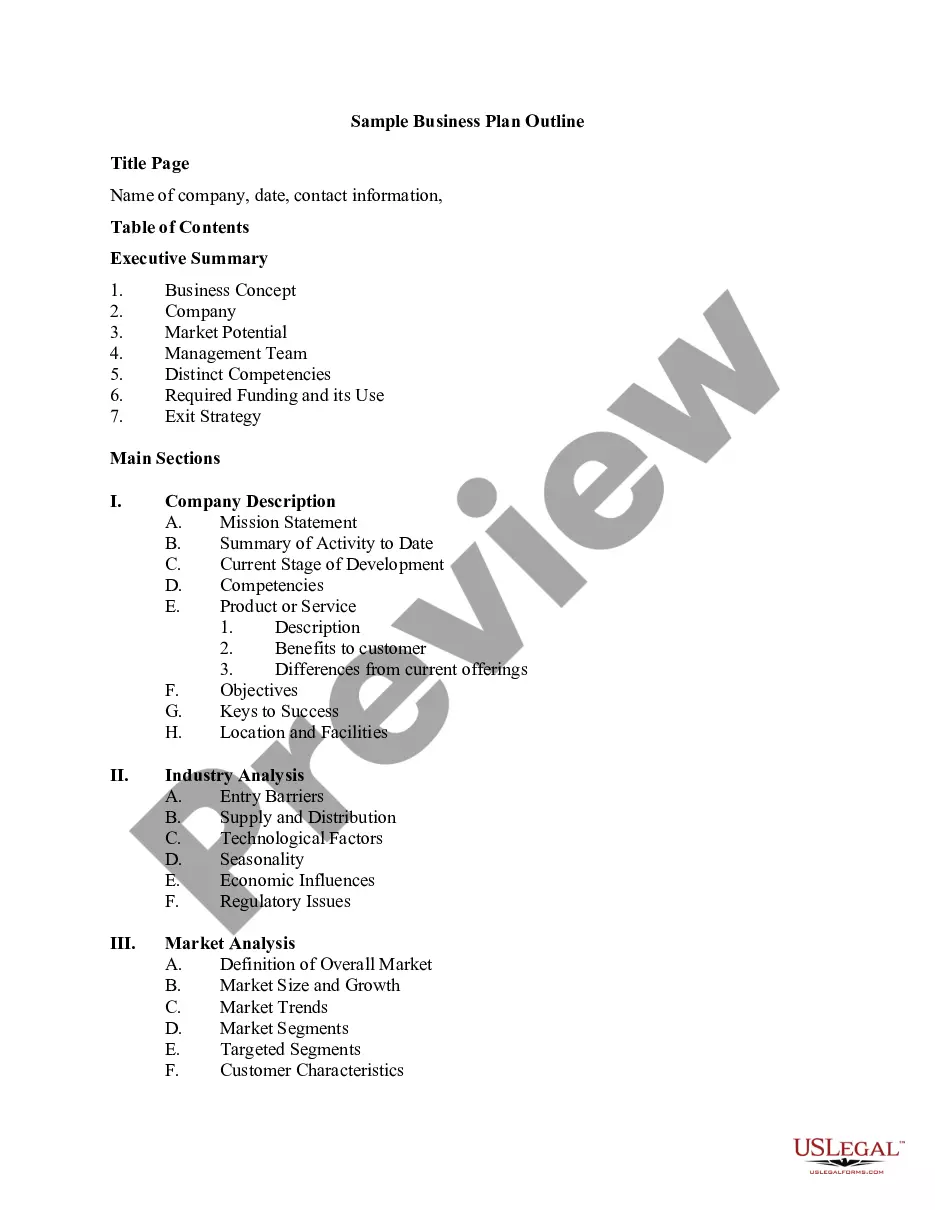
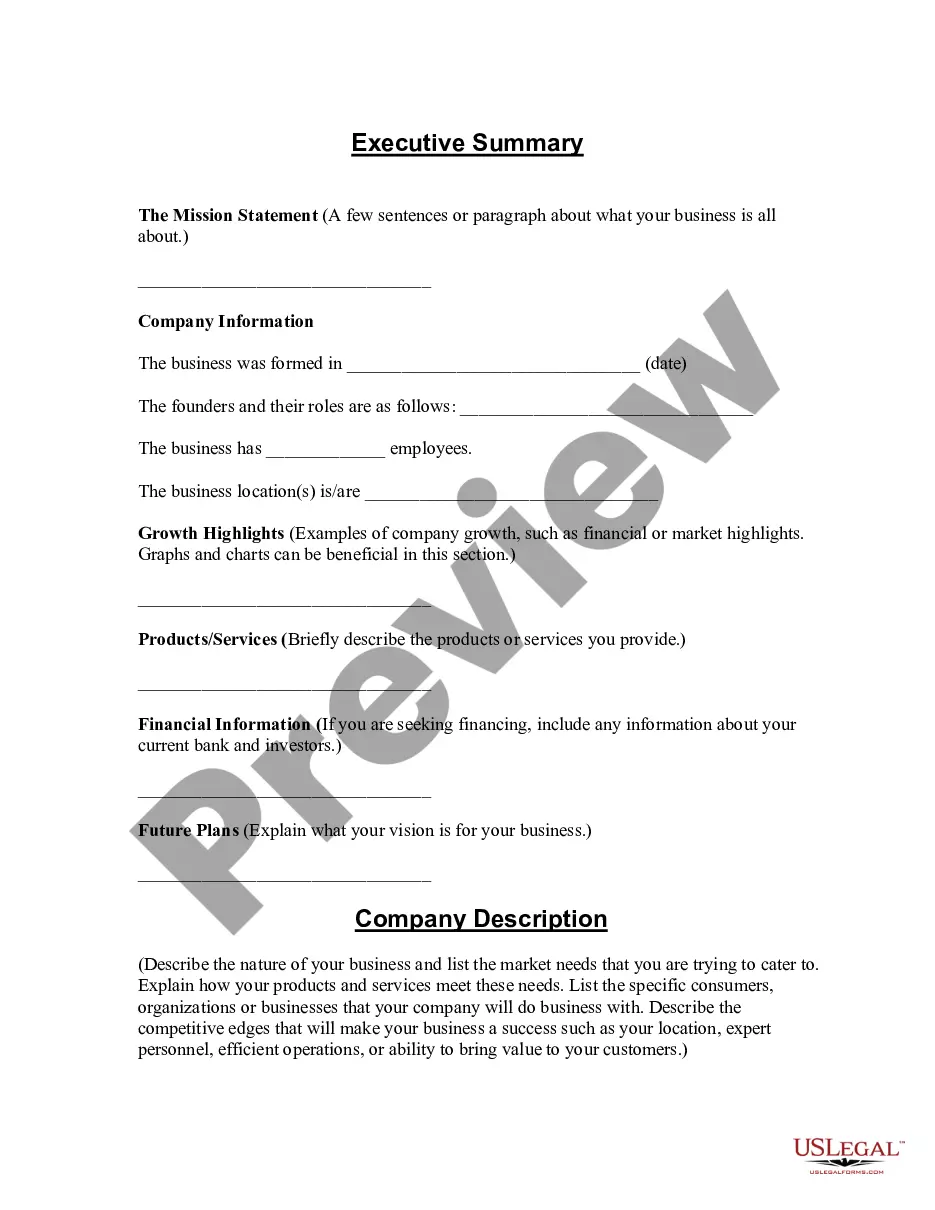
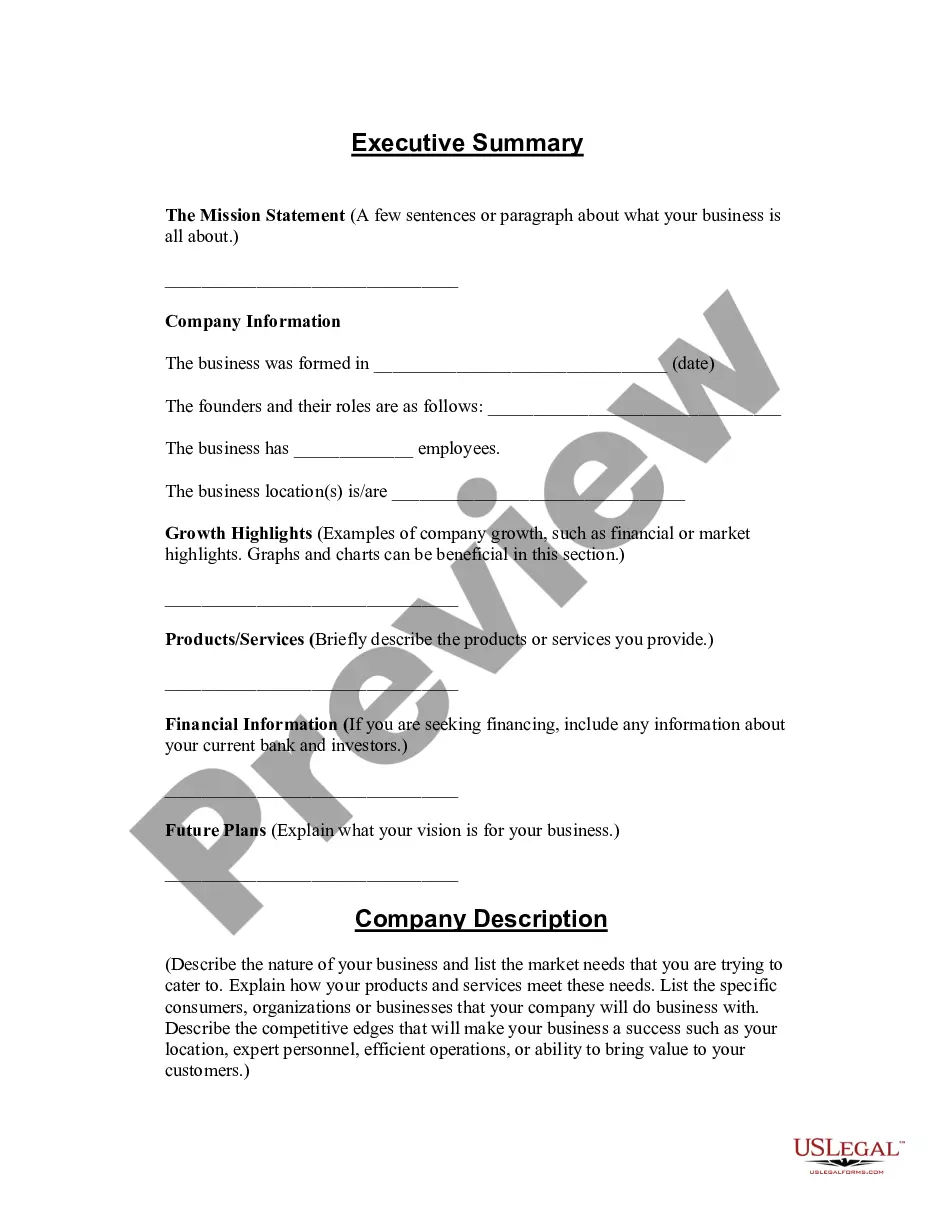
A business plan typically follows a structured format that includes an executive summary, company description, market analysis, organization and management, product line or services, marketing and sales strategies, funding request, and financial projections. By using a real estate business plan sample, you can easily visualize each section's requirements. This format helps ensure you cover all necessary aspects, making your plan comprehensive and effective.
The 7Cs of a business plan comprise Clarity, Conciseness, Consistency, Coherence, Completeness, Creativity, and Correctness. Each C emphasizes important aspects of communication within your plan. Using a real estate business plan sample can help you ensure that your plan meets these criteria effectively. This emphasis leads to a stronger presentation of your business vision.
The seven major elements of a business plan include the market analysis, marketing strategy, operational plan, financial plan, executive summary, management team, and funding request. Each element provides insight into your business's viability and potential for growth. A real estate business plan sample can demonstrate how to effectively showcase these components. This helps attract investors or lenders.
The 4 C's in a business plan refer to Customer, Company, Competitors, and Climate. Understanding each 'C' helps you focus on different aspects of your business. By developing a real estate business plan sample that emphasizes these elements, you can ensure a well-rounded approach. This framework supports clear thinking in your strategy.