Convertible Agreement With Japan
Description
Get your form ready online
Our built-in tools help you complete, sign, share, and store your documents in one place.
Make edits, fill in missing information, and update formatting in US Legal Forms—just like you would in MS Word.
Download a copy, print it, send it by email, or mail it via USPS—whatever works best for your next step.
Sign and collect signatures with our SignNow integration. Send to multiple recipients, set reminders, and more. Go Premium to unlock E-Sign.
If this form requires notarization, complete it online through a secure video call—no need to meet a notary in person or wait for an appointment.
We protect your documents and personal data by following strict security and privacy standards.

Make edits, fill in missing information, and update formatting in US Legal Forms—just like you would in MS Word.

Download a copy, print it, send it by email, or mail it via USPS—whatever works best for your next step.

Sign and collect signatures with our SignNow integration. Send to multiple recipients, set reminders, and more. Go Premium to unlock E-Sign.

If this form requires notarization, complete it online through a secure video call—no need to meet a notary in person or wait for an appointment.

We protect your documents and personal data by following strict security and privacy standards.
Looking for another form?








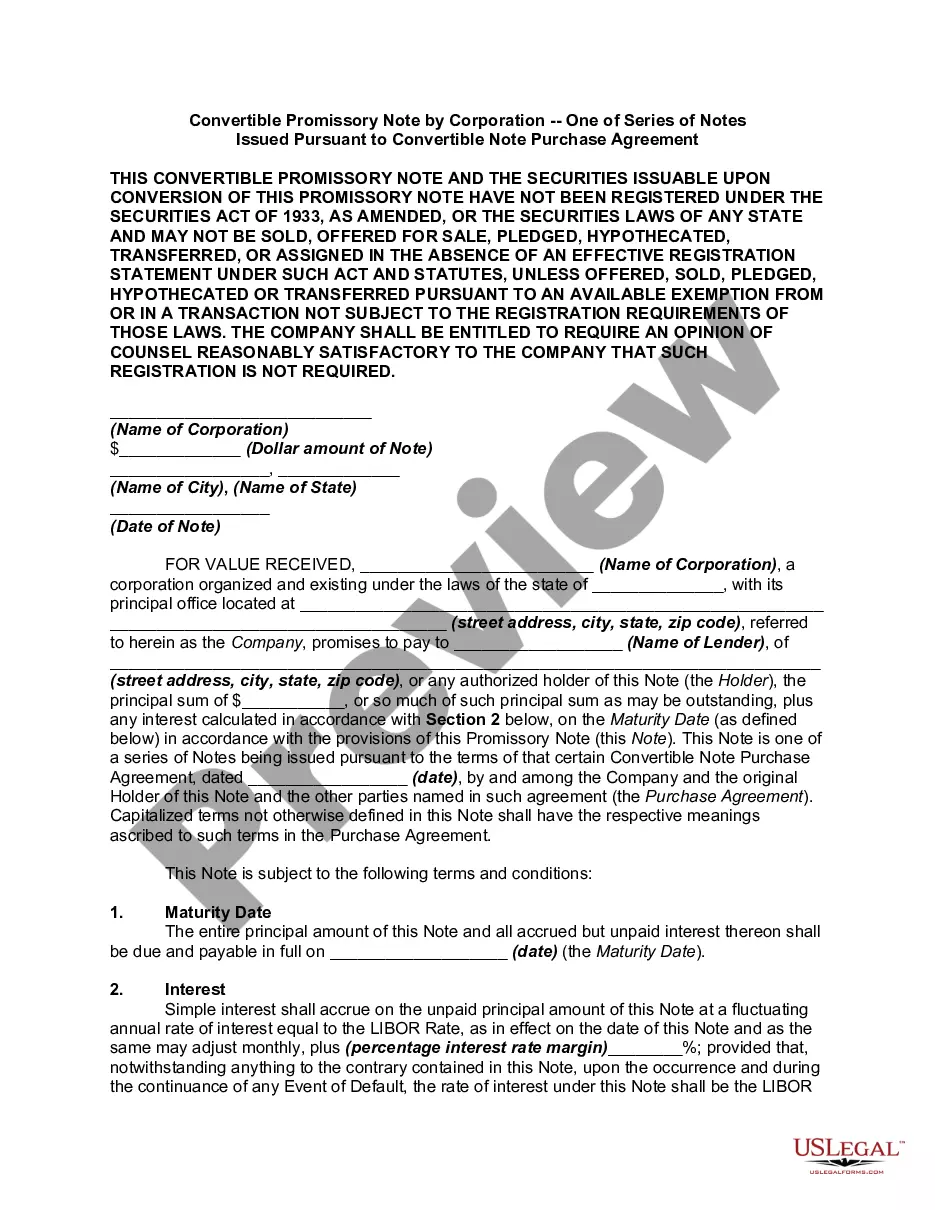
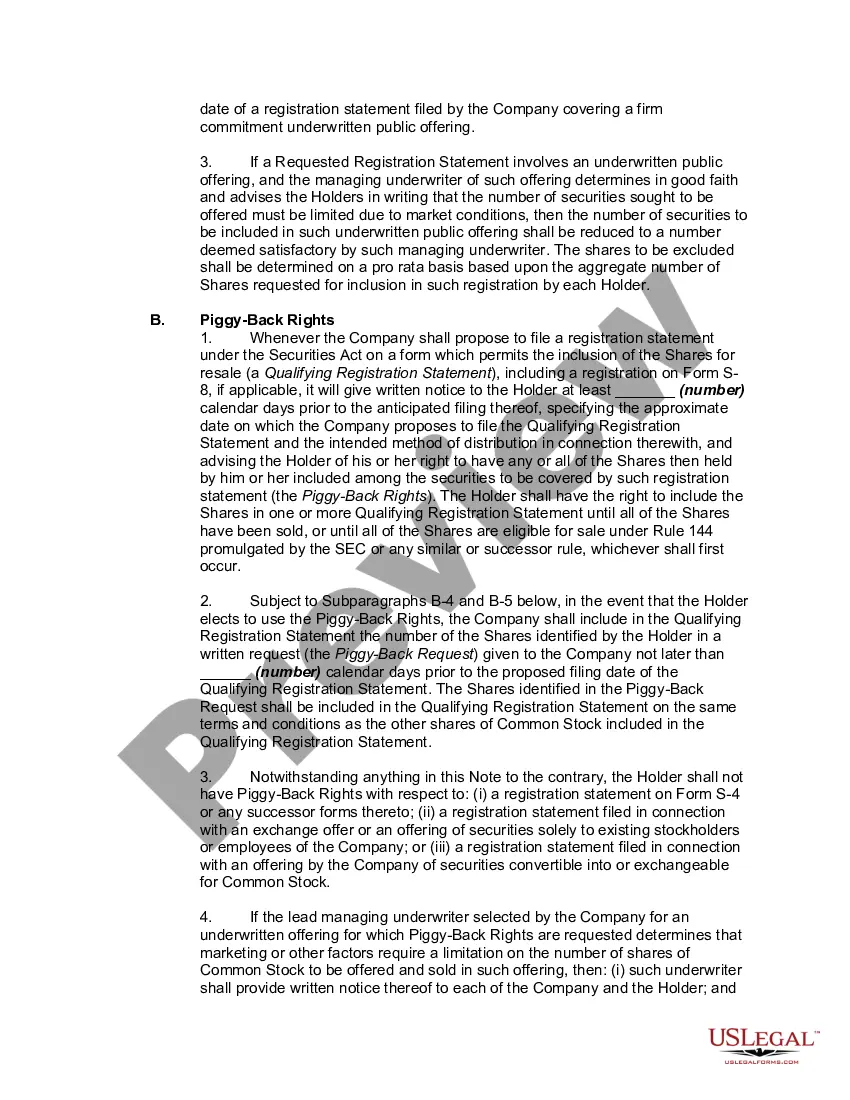
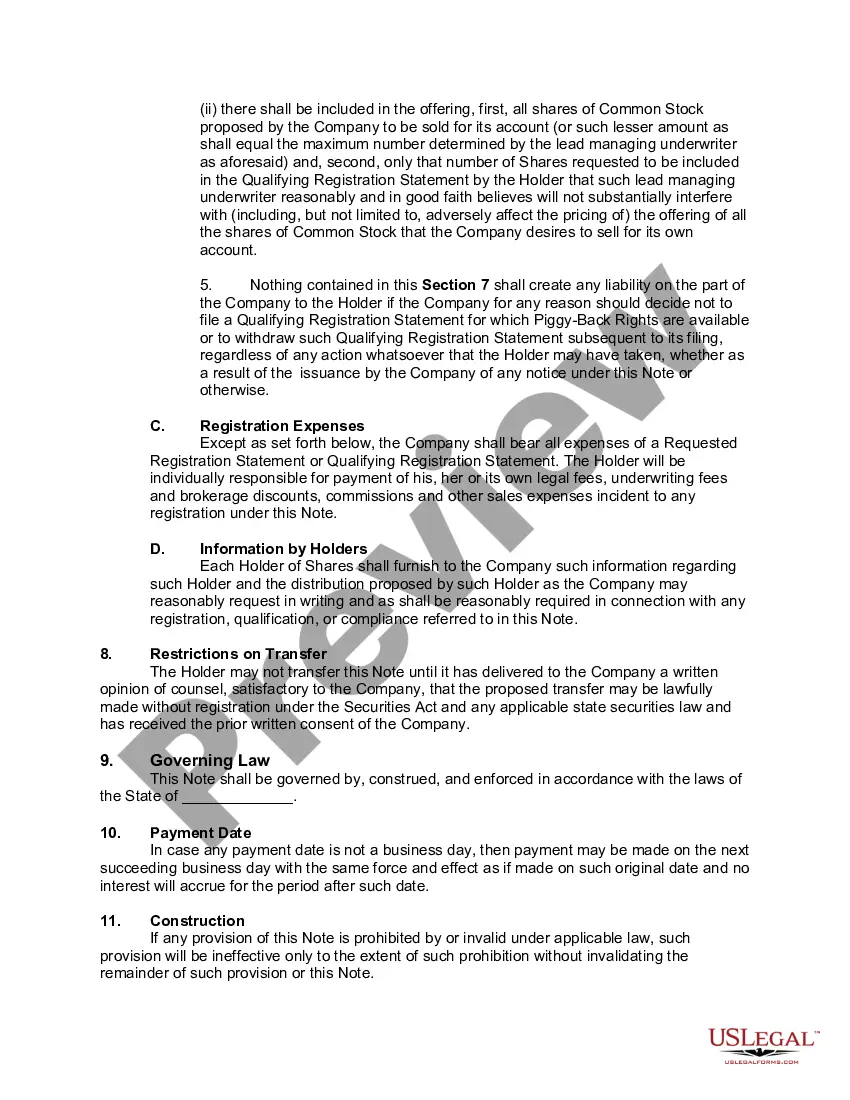
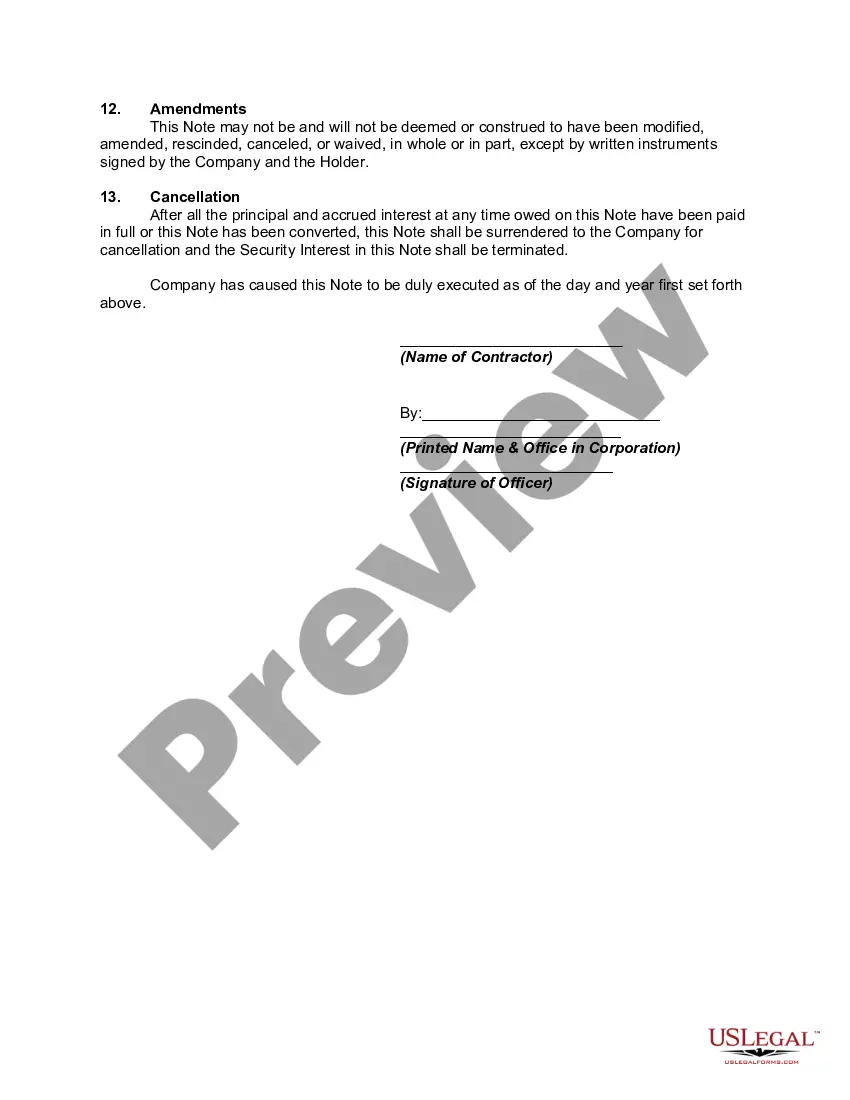
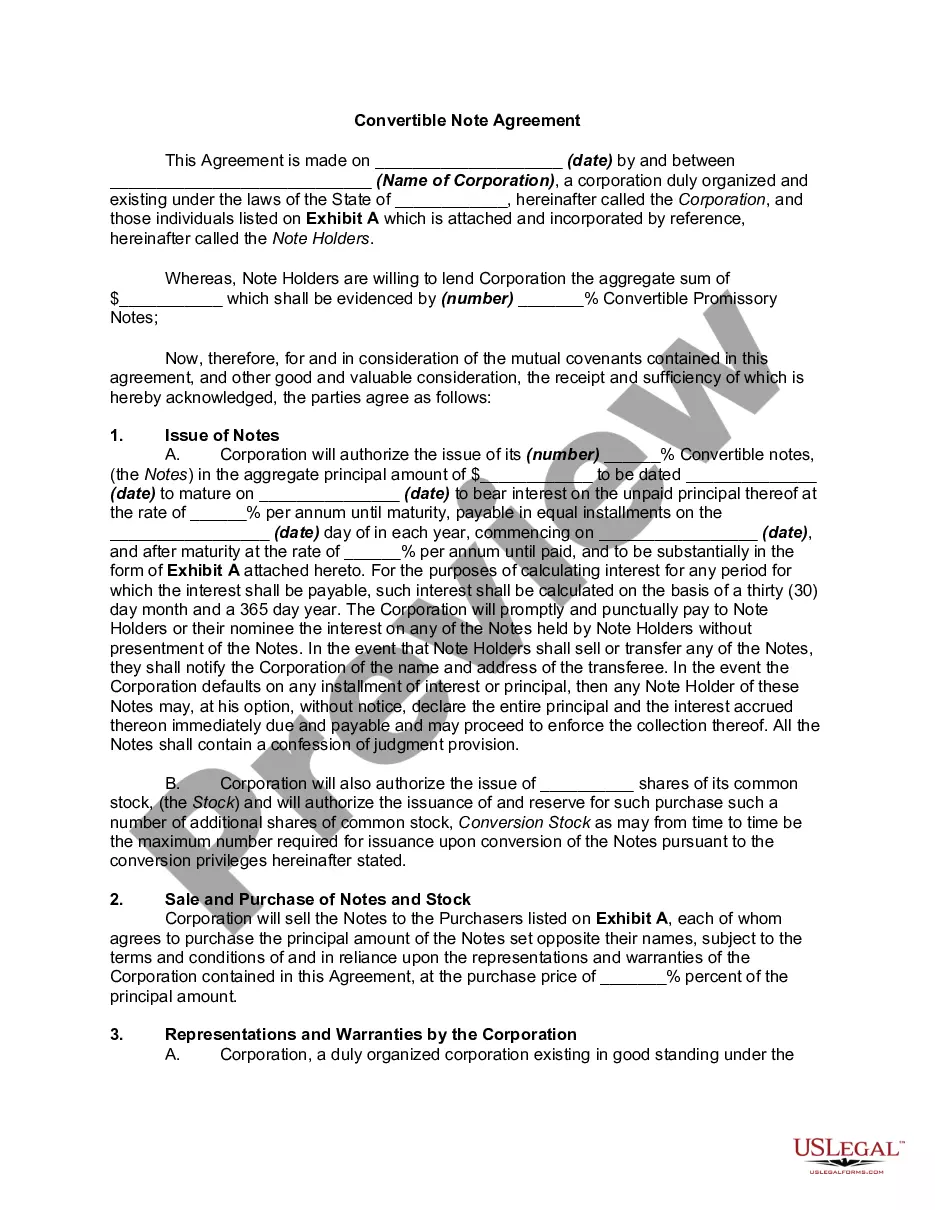
How to fill out Convertible Promissory Note By Corporation - One Of Series Of Notes Issued Pursuant To Convertible Note Purchase Agreement?
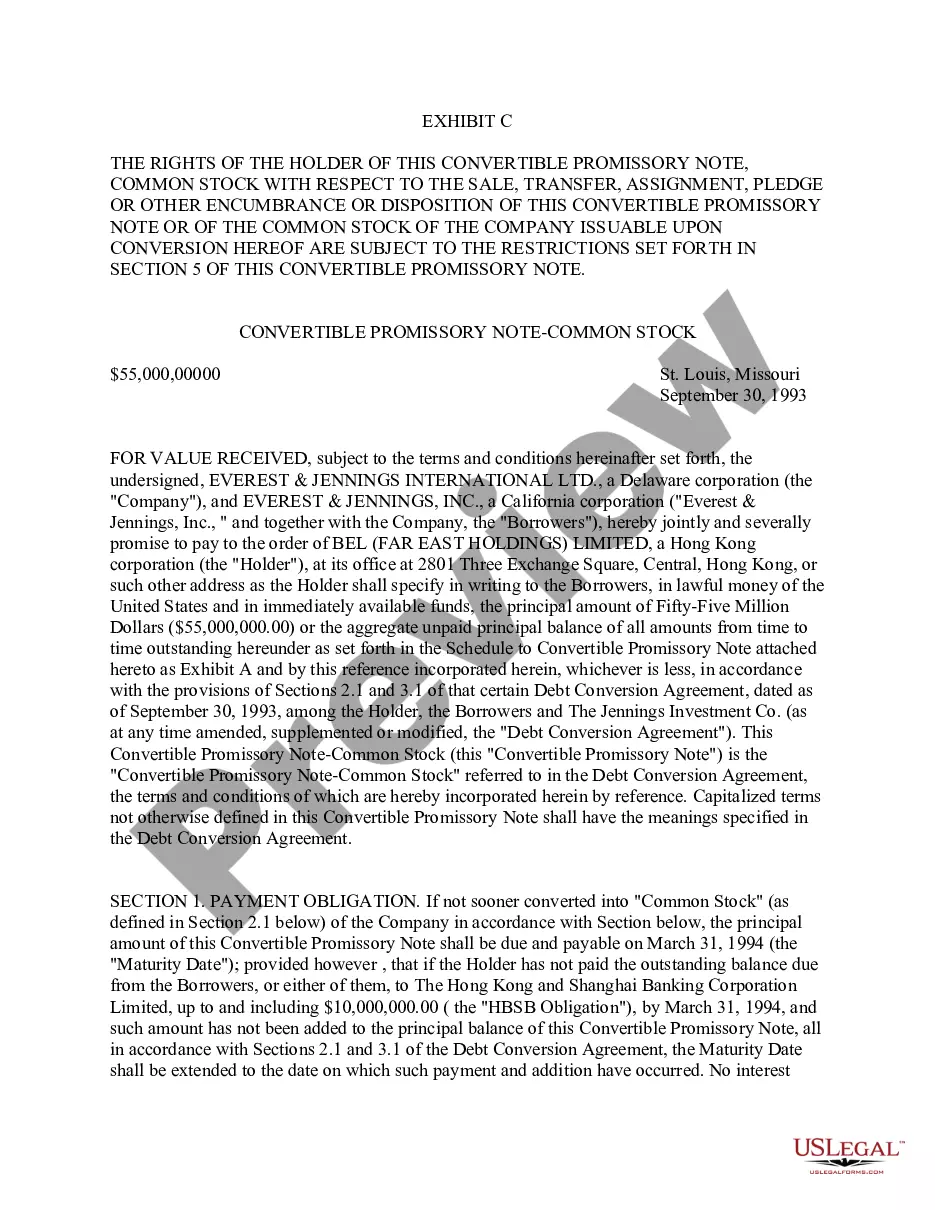
Regardless of whether it is for corporate reasons or personal matters, everyone must encounter legal circumstances at some stage in their lives. Completing legal documents necessitates meticulous care, beginning with selecting the correct form example. For instance, if you opt for an incorrect version of a Convertible Agreement With Japan, it will be rejected upon submission. Thus, it is crucial to obtain a trustworthy source of legal documents such as US Legal Forms.
If you need to acquire a Convertible Agreement With Japan template, adhere to these straightforward steps: Locate the template you require using the search bar or catalog browsing. Review the form’s details to ensure it aligns with your situation, state, and area. Click on the form’s preview to inspect it. If it is not the correct form, revert to the search function to find the Convertible Agreement With Japan template you need. Obtain the template when it fits your requirements. If you possess a US Legal Forms account, click Log in to access previously saved documents in My documents. If you do not yet have an account, you may download the form by clicking Buy now. Choose the appropriate pricing option. Fill out the account registration form. Select your payment method: use a credit card or PayPal account. Choose the file format you desire and download the Convertible Agreement With Japan. Once it is downloaded, you can fill out the form using editing software or print it and complete it by hand.
With an extensive US Legal Forms catalog available, you do not need to waste time searching for the appropriate template online. Utilize the library’s user-friendly navigation to find the suitable form for any circumstance.
- Regardless of whether it is for corporate reasons or personal matters, everyone must encounter legal circumstances at some stage in their lives.
- Completing legal documents necessitates meticulous care, beginning with selecting the correct form example.
- For instance, if you opt for an incorrect version of a Convertible Agreement With Japan, it will be rejected upon submission.
- Thus, it is crucial to obtain a trustworthy source of legal documents such as US Legal Forms.
- If you need to acquire a Convertible Agreement With Japan template, adhere to these straightforward steps.
- Locate the template you require using the search bar or catalog browsing.
- Review the form’s details to ensure it aligns with your situation, state, and area.
- Click on the form’s preview to inspect it.
- If it is not the correct form, revert to the search function to find the Convertible Agreement With Japan template you need.
- Obtain the template when it fits your requirements.
- If you possess a US Legal Forms account, click Log in to access previously saved documents in My documents.
- If you do not yet have an account, you may download the form by clicking Buy now.
Form popularity
FAQ
In Japan, verbal agreements can be binding, depending on the circumstances surrounding the agreement. However, to ensure clarity and enforceability, it is often recommended to document agreements formally. When dealing with convertible agreements with Japan, having a written contract can prevent misunderstandings and legal disputes. USLegalForms offers comprehensive resources to help you draft legally sound agreements.
The 25 5 rule in Japan refers to a guideline concerning capital gains tax on certain investments. This rule may influence how convertible agreements with Japan are negotiated, particularly in financial contexts. It's essential for businesses to be aware of such regulations to ensure compliance and optimize their agreements. USLegalForms provides tools and templates that can help clarify these complexities.
The US tariff agreement with Japan outlines the terms for trade between the two countries, impacting various goods and services. This agreement can affect how convertible agreements with Japan are structured, especially regarding import duties and tariffs. Understanding these terms is crucial for businesses looking to engage in trade and investment opportunities. For detailed insights, consider exploring resources available on the USLegalForms platform.
A convertible note should be classified as a Long Term Liability that then converts to Equity as stipulated from the contract (usually a new fundraising round).
The equity & liability portion for the convertible bonds can be calculated using the Residual Approach. This approach assumes that the value of the equity portion is equal to the difference between the total amount received from the proceeds of the bonds and the present value of future cash flows.
The settlement method of a convertible note refers to the manner in which the type and amount of consideration due upon conversion is determined. There are three primary settlement methods: physical, cash, and combination. Physical settlement is the simplest of the three.
A Convertible Agreement is a type of investment instrument that allows investors to convert their debt into equity in a company at a later stage. It is a hybrid investment tool that combines the features of debt and equity, offering investors the best of both worlds.
Convertible Notes are loans ? so they are recorded on the Balance Sheet of a company as a liability when they are made. Depending on the debt's maturity date, they can either be shown as a current liability (loans maturing within 12 months) or as a Long-term liability (loans maturing over 12 months).